
The silent filters are real. But they’re not as omnipotent as your 2 a.m. brain is telling you.
You’re not crazy for obsessing over this, by the way. “Hidden cutoffs,” “filters,” “auto-reject” — everyone talks about them in whispers, like there’s some secret ERAS kill switch that decides your future before a human even sees your name.
Let me say this clearly: yes, filters exist. Yes, they can hurt you. No, they do not automatically doom you if you’re below some magical number.
What “Filters” Actually Are (Not the Horror Story Version in Your Head)
Let’s strip the monster of its costume for a second.
Programs get hundreds to thousands of applications. They can’t manually read every single one in detail. So most use ERAS filters — basically search parameters — to shrink the pile.
Things they often filter on:
- USMLE/COMLEX scores (Step 1 sometimes, Step 2 almost always now)
- Visa status
- Graduation year (YOG)
- Home vs international med school
- State licensing requirements (like needing Step 3 for H-1B at some places)
- Sometimes: attempts/failures
This doesn’t mean:
- “If you don’t have a 250+ you’re trash.”
- “If you’re IMG you’re auto-deleted.”
- “One fail = zero interviews forever.”
It means: they’re using blunt tools to make a giant stack smaller before humans look at it.
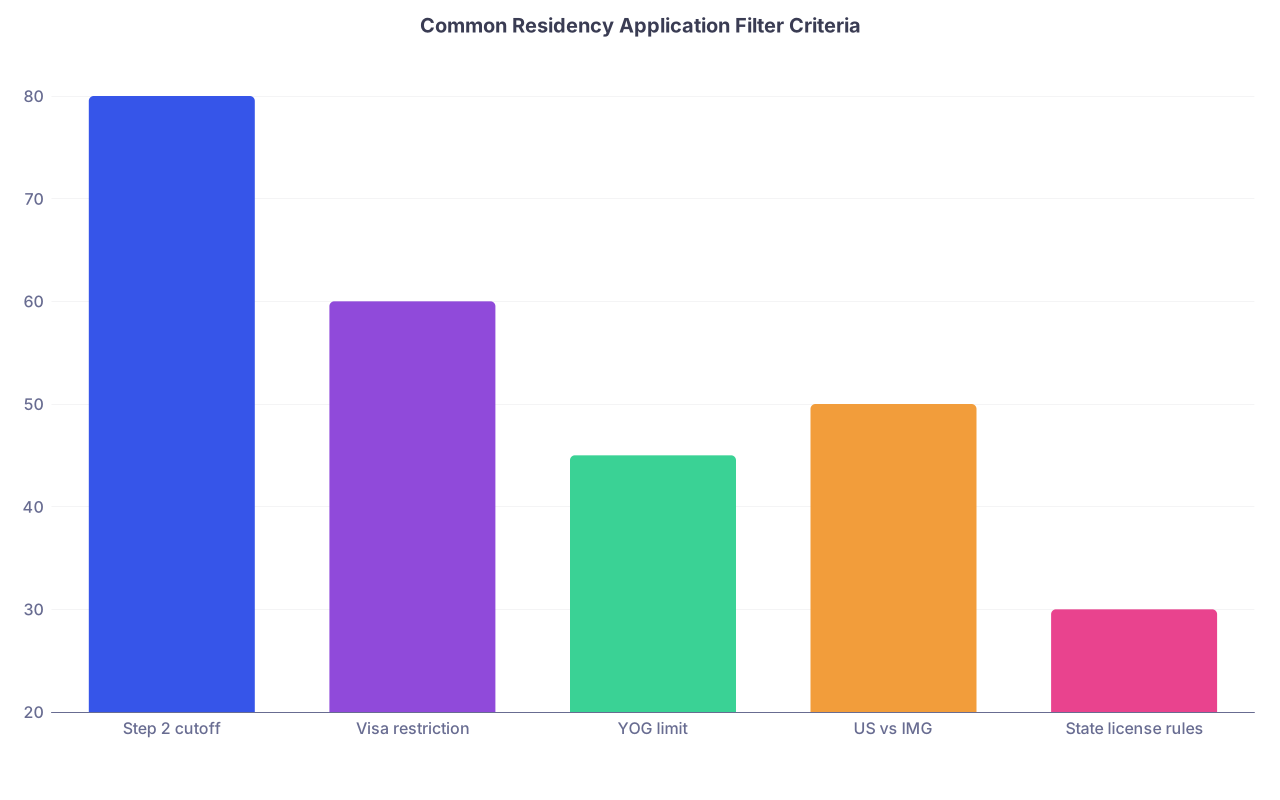
Here’s roughly how filters tend to be used:
| Category | Value |
|---|---|
| Step 2 cutoff | 80 |
| Visa restriction | 60 |
| YOG limit | 45 |
| US vs IMG | 50 |
| State license rules | 30 |
Are those exact numbers? No. But the pattern is right: score and visa are big ones; the rest vary a ton by program.
The ugly truth: some programs do hard-filter. If you’re below a number, a human will literally never open your file.
The other, less ugly truth: a surprising number of programs use “soft-ish” filters or lower thresholds than Reddit horror stories claim. And some don’t filter much at all, especially smaller or newer programs.
How Hidden Cutoffs Usually Work (And Where People Get It Wrong)
You’re probably imagining this scenario: ERAS uploads your app, a robot scans it in 0.3 seconds, sees “Step 2: 218” and just dumps you into a digital trashcan.
Sometimes? Yes. But not always. Let me break down the typical patterns I’ve actually seen and heard from PDs and residents.
1. Rigid numerical cutoffs
This is the nightmare version, and yes, it happens.
Common use:
- “Show me all applicants with Step 2 ≥ 230.”
- “Exclude anyone with YOG < 2019.”
- “Exclude anyone needing visa sponsorship.”
If you’re under that threshold, you don’t get seen. Period.
Where this is more common:
- Super competitive specialties (Derm, Ortho, ENT, Plastics, etc.)
- Over-saturated metro areas with 1,000+ apps
- Highly “brand name” academic programs
2. “Smart” filters that aren’t actually smart
Some programs will do something like:
- Step 2 ≥ 220 → high priority
- Step 2 210–219 → secondary review
- Step 2 < 210 → rarely reviewed but not formally excluded, especially if other things are strong (home student, strong letter, research tie, etc.)
This is where having:
- A connection
- A home rotation
- A mentor who emails the PD can yank you out of the low-priority bucket.
3. Filters that are really about logistics, not “worthiness”
Stuff like:
- Visa: they literally don’t have the capacity or legal structure to sponsor you
- YOG: their GME office says no one more than X years out
- Step 3 required for H-1B: not their “preference” — just the law / hospital rule
This feels personal when you’re the one getting screened out. But it’s not about you, it’s about paperwork and institutional rules.
4. Programs that barely filter
These exist more than people think:
- Community programs in less-popular locations
- Newer programs trying to build a reputation
- Some fields with fewer total applicants
They might:
- Only filter for absolute musts (passed Step 2, no huge professionalism red flags)
- Then do quick holistic scans of everyone else
You don’t read about these as much online because they’re not as “sexy” to talk about as being rejected by Mayo or MGH.
The Numbers: Where You Actually Stand in the Filter World
Let’s be honest. You’re probably reading this because you’re worried you’re “below the line.” Low Step 2, YOG > 3–4 years, IMG, visa, whatever.
Here’s a reality check using typical (approximate) patterns:
| Applicant Type | How Often Filters Hurt | Typical Issues |
|---|---|---|
| US MD, Step 2 ≥ 240 | Rarely filtered out | Mostly safe except hyper-elite programs |
| US MD, Step 2 220–239 | Occasionally | Some competitive programs set 230+ |
| US MD, Step 2 < 220 | More frequent | May be excluded from many academic/competitive places |
| US IMG, Step 2 ≥ 240 | Mixed | Still filtered by some places just for being IMG/visa |
| US IMG, Step 2 < 230 | Often | Need careful list building & strategy |
Again, not literal data pulled from one master list. But this is how it usually feels on the applicant side once interview invites roll out.
If you’re in a “likely to be filtered sometimes” bucket, the game is not: “Somehow convince all programs to ignore their cutoffs.”
The game is:
- Minimize how often you’re filtered out
- Maximize the number of programs that can see you
- Give the humans who do see you a reason to pull you into the interview list
How to Tell If You’re at Risk of Being Filtered Out
If you want to torture yourself, you can obsess over each program’s rumored cutoff. If you want to be strategic, do this instead.
Step 1: Look at your obvious “red flag to a filter”
Ask yourself what boxes might trigger an auto-screen:
- Step 2 < 220? < 210? Failed on first attempt?
- IMG? Non-US citizen? Need visa?
- YOG more than 3–5 years ago?
- Any exam failures?
You don’t have to say this out loud to anyone. Just be brutally honest with yourself.
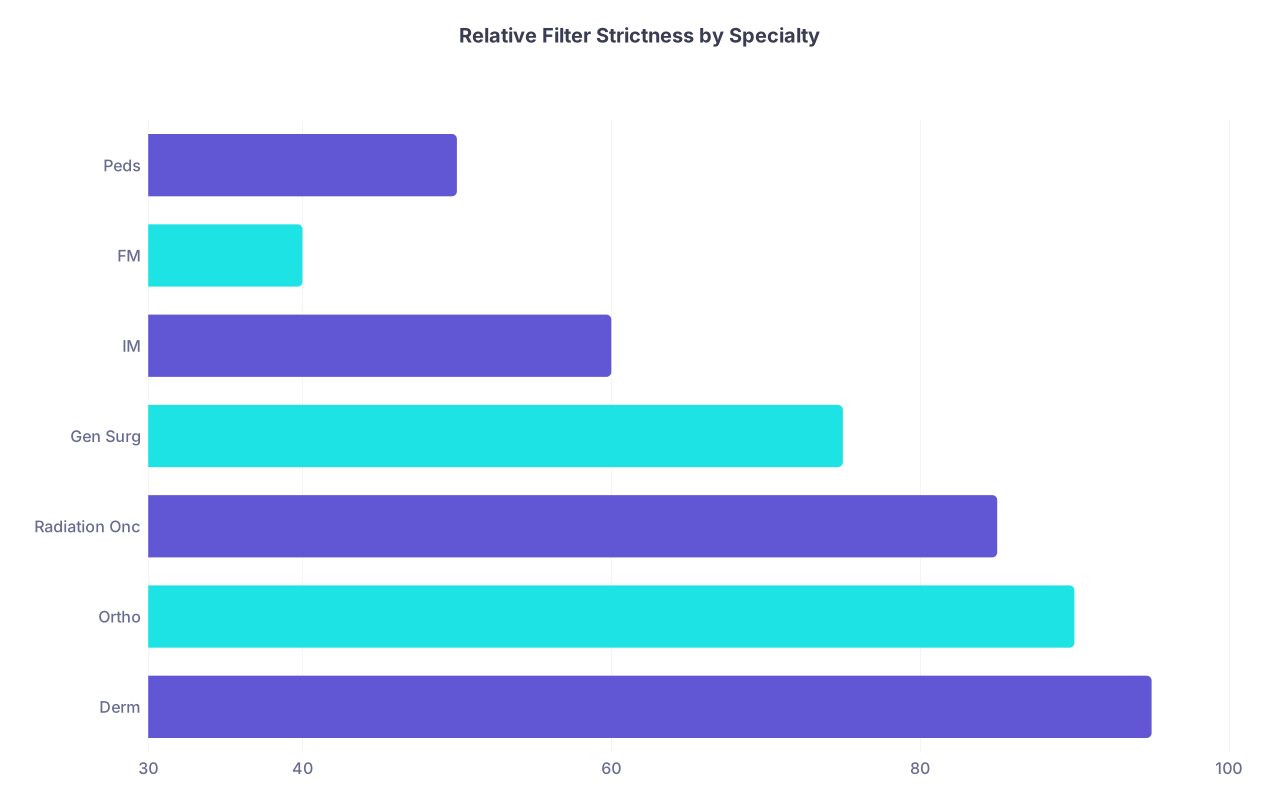
Step 2: Cross-check with the specialty norms
Different specialties have different levels of filter aggression.
| Category | Value |
|---|---|
| Derm | 95 |
| Ortho | 90 |
| Radiation Onc | 85 |
| Gen Surg | 75 |
| IM | 60 |
| FM | 40 |
| Peds | 50 |
Rough idea:
- Derm/Ortho/Rad Onc/ENT/Plastics: harsh filters, high step cutoffs
- Gen Surg/Anesthesia/EM: moderate to high, depends on region
- IM/Peds/FM/Neurology/Psych: very wide variation program-to-program
Step 3: Check actual program data where you can
Use:
- Program websites (some literally list “We generally consider applicants with Step 2 > X”)
- FREIDA
- NRMP Charting Outcomes (to see where your scores land relative to matched vs unmatched)
- Conversation with residents/PDs if you have connections
If multiple sources say:
- “We rarely take IMGs”
- “We prefer recent grads”
- “Median Step 2 is 245” then yes, filters are probably real there.
What You Can Actually Do About Filters (Besides Panic-Scroll Reddit)
You can’t hack ERAS. You can’t bribe the filter. But you do have more control than it feels like at 1 a.m.
1. Build your list like your life depends on it (because it kind of does)
This is the single biggest thing you can control.
If you’re at any risk of being filtered:
- Apply to a lot of programs. More than your classmates with 260s.
- Include:
- Community programs
- Less-popular geographic areas
- Newer or smaller programs
- Programs known to be IMG/visa friendly if that’s you
- Don’t waste half your list on long-shot “prestige” places that obviously filter hard.
If you’re thinking, “But I don’t want to live in [insert place]” — I get it. Also: unmatched is worse.
2. Use signals to force a human to look at you
Humans can override filters. They do it all the time. The trick is: how do you get in front of a human?
Ways that actually work:
- Away rotations / audition rotations
- Home institution programs (they see you as a person, not a score)
- Direct emails from a mentor to the PD/APD saying, “Please take a close look at this applicant”
- Targeted, thoughtful emails to PCs/PDs (not “dear sir/madam, I am very interested in your esteemed program” spam)
If a PD/resident wants to see your file, they tell the coordinator, and boom — filter doesn’t matter.
3. Crush the things that are visible after the filter
If you’re on the bubble numerically, you can’t afford a weak presentation.
Non-negotiables:
- Personal statement: not generic, not melodramatic, not “I love helping people” 20 times. Specific, grounded, shows you’re an actual human who understands the specialty.
- Letters: at least one strong specialty-specific letter from someone who knows you well and can speak concretely.
- Experiences: clear progression, no giant unexplained gaps, some evidence of commitment to the field.
- Application cleanliness: no typos, no sloppiness, no weird inconsistencies.
These don’t necessarily beat a hard filter, but they absolutely help in borderline cases and at programs with softer thresholds.
4. Be strategic about reapplication / backup specialties
If you’re very likely to be filtered out this cycle because:
- You have a fail and no time to retake
- Your Step 2 is very low for your dream specialty
- You’re many years out from graduation then your best move might not be “spray 200 apps and pray.”
Real options:
- Strengthen your file for 1 year (research, USCE, retake where possible) and apply stronger next year
- Apply more heavily to a less filter-heavy specialty as a primary or backup
- Expand geographically outside your comfort zone
None of these feel good. But they’re better than pretending the filters don’t exist and then being blindsided in February.
Common Nightmares About Being Filtered Out — And What’s Actually True
Let me hit some of the specific “what ifs” that circle the drain in your brain.
“If my Step 2 is under 230, I’m automatically done for IM / Peds / FM / Neuro / Psych.”
No. I’ve seen:
- IMGs with 220s match IM at solid university-affiliated programs
- US grads in the low 220s match neuro and psych
- FM and Peds programs that care much more about fit and commitment than a rigid cutoff
You’ll be filtered out more often than someone with a 250. But not everywhere.
“One exam failure = permanent auto-reject.”
It definitely raises the risk of filters. But:
- Some programs specifically say they consider applicants with one repeat attempt
- A strong upward trend on later exams + meaningful explanation + solid letters can salvage this story at many places
- You’ll just need more applications and more realistic expectations
“As an IMG, everyone filters me out unless I have a 250+.”
Blunt truth: some programs absolutely do. They just don’t have the bandwidth or bias tolerance to do otherwise.
But:
- There are many IMG-friendly programs that explicitly seek international grads
- Step 2 in the 230s + strong US clinical experience + good letters can still get you real interviews
- Your list strategy matters way more than Reddit admits
“If I need a visa, 90% of programs won’t even see my app.”
Visa is a big filter. But not 90%-doom in most core specialties.
What actually happens:
- Some programs: no visas at all, you’re filtered
- Some: J-1 only
- Few: J-1 + H-1B (these are the unicorns everybody wants)
So your move:
- Systematically identify visa-friendly programs (look at current residents, ask directly, read their websites)
- Apply broadly within that subset
- Don’t waste half your list on programs that haven’t sponsored a visa since 2004
How to Stay Sane While Knowing Filters Exist
You can’t unknow this stuff. But you also can’t function if you treat every silence as “I got auto-rejected by everyone.”
Couple things that help:
- Remember: filters happen early and silently. No news does NOT automatically equal filtered. Programs send invites in unpredictable waves.
- Stop refreshing forums where people brag about 30+ invites from programs that were never in your realistic range anyway.
- Focus on what you can still affect: your list, your communication, your interview prep, your Plan B.
And honestly? Give yourself permission to be pissed off at how arbitrary this can feel. Then channel that into being methodical, not paralyzed.
FAQ (Exactly 5 Questions)
1. How can I tell if a specific program is likely to filter me out?
Look for a combination of:
- Their residents’ profiles (website, LinkedIn): mostly US MDs with 250s and recent grads? That’s a sign.
- Website language: phrases like “we typically interview applicants with Step 2 > X” or “recent graduates preferred.”
- IMG/visa presence: if nobody in the last 3 classes needed a visa or is an IMG, assume strong filters or de facto ones. You’ll never know for sure, but patterns matter. If every signal screams “we don’t usually take applicants like me,” treat it as a reach, not an anchor.
2. Should I email programs to ask about their filters or cutoffs?
Don’t email asking, “Do you have a cutoff?” It usually annoys them and gets non-answers. Better angle:
- Ask targeted, respectful questions like: “Do you consider applicants who graduated more than 5 years ago?” or “Is there any flexibility for applicants with one exam repeat if they’ve shown improvement?”
You might still get vague answers, but occasionally you’ll get a clear yes/no that helps you decide.
3. Can a strong letter or connection really override a numeric filter?
Yes. Not always, but yes. I’ve watched applicants with below-cutoff scores get interviews because:
- A trusted faculty member emailed the PD and said, “This person is excellent, please look past the number.”
- They rotated there and impressed people.
- They were known to the department from research.
A random generic letter won’t do it. A letter from someone the PD respects, plus direct outreach? That can absolutely punch through a filter.
4. If I’m reapplying after being filtered out a lot, what should I do differently?
You can’t just hit “resubmit” with the same profile. Change at least one of:
- Stronger scores (if you have exams left you can improve)
- Added US clinical experience / research in your specialty
- Much better letters from people who actually know your work
- Totally overhauled program list with more realistic, IMG/visa-friendly or community programs
Also, be honest with yourself: if you applied to 80 programs and got zero interviews, your list and/or your application content need major revision, not just minor tweaks.
5. What’s one concrete thing I can do today to reduce my risk of being filtered out?
Sit down and go through your program list line by line. For each program, ask: “Is there clear evidence they take applicants like me — with my scores, my school type, my visa status, my YOG?”
If the answer is “no idea” or “probably not” for a big chunk of them, start replacing those with:
- Community or less-known programs
- Places with residents who look like you on paper
- Programs explicitly stating openness to IMGs/older grads/visa holders
Don’t just hope you’ll magically slip through their filter. Build a list that doesn’t rely on luck.
Now, actually do that: open your current program list and mark every program green (likely consider me), yellow (uncertain), or red (probably filter me). Then replace at least 5 “red” programs with realistic “green” ones before you go to bed.