You just finished a 6–9 pm anatomy lab. Your group kept arguing over brachial plexus branches, the bus ran late, and now it is 10:45 pm. Tomorrow: 8 am mandatory small group, plus a quiz you have not really prepped for. You are staring at your notes wondering: do I push to 2 am or sleep and risk feeling behind?
This is the real problem: not “sleep hygiene” in the abstract, but how to get actual, usable sleep on a first‑year schedule that is fragmented, unpredictable, and often badly designed.
Let me break this down specifically, and evidence‑based, for your reality: mandatory 8 ams, late labs, exam blocks, and the constant background anxiety that you are never doing enough.
1. What Actually Matters for Sleep in M1 (And What Does Not)
Most generic sleep advice ignores the constraints of medical school. You cannot just “avoid early wake times” or “don’t use screens after 8 pm.” You will have late lectures, digital slides, and pre‑recorded content that forces screens into your life.
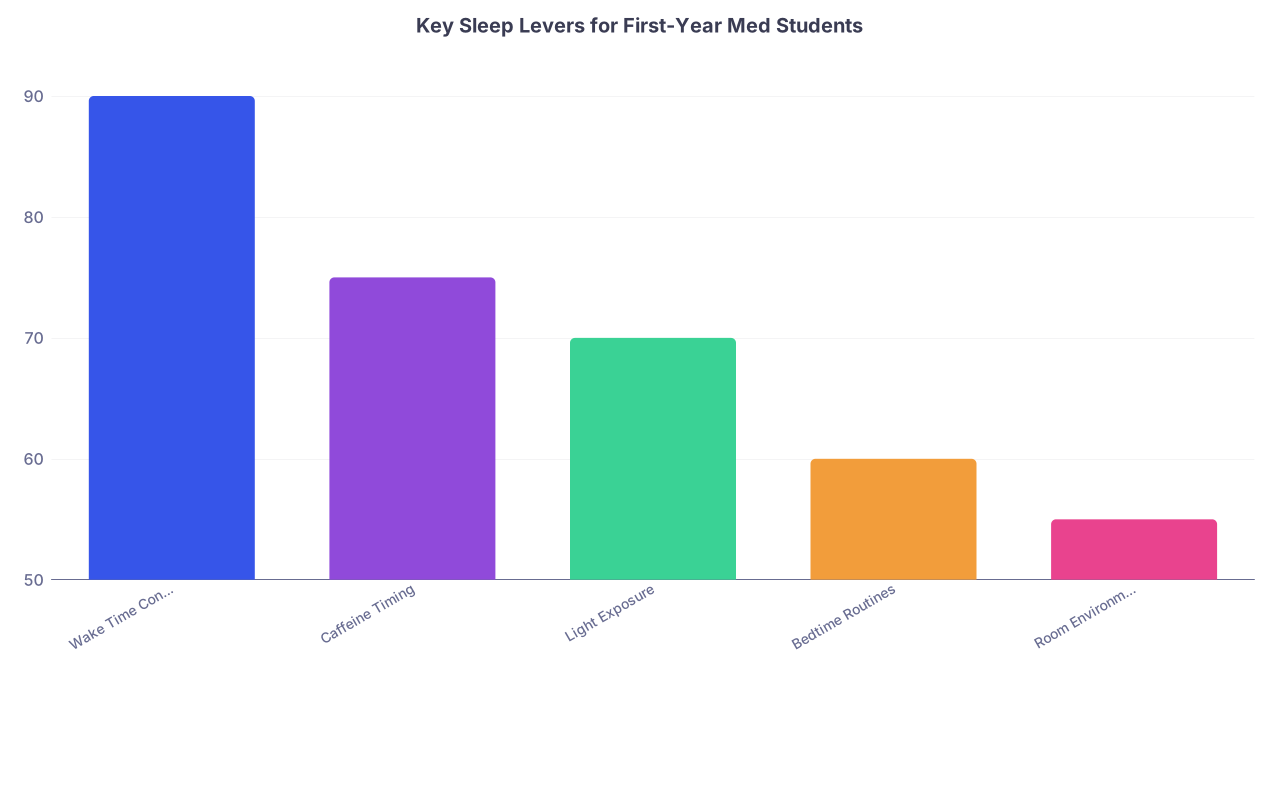
So we focus on levers you actually control, sorted by impact.
| Category | Value |
|---|---|
| Wake Time Consistency | 90 |
| Caffeine Timing | 75 |
| Light Exposure | 70 |
| Bedtime Routines | 60 |
| Room Environment | 55 |
The high‑yield levers for you:
Wake time consistency
This is number one. You cannot control every bedtime, but you can anchor wake time on most days. The brain’s circadian system is far more sensitive to wake time than bedtime. Irregular wake times correlate with impaired performance, mood disruption, and worse test scores in multiple student cohorts.Morning light exposure and evening light restriction
Actual data: 30–60 minutes of outdoor morning light anchors circadian phase, improves alertness, and helps shift your biological night earlier. On the flip side, intense blue‑rich light after 11 pm will physiologically delay your internal night.Caffeine timing, not just dose
First‑years are world‑class at drinking caffeine at the wrong times. Caffeine has a half‑life of ~5–6 hours. A “last coffee” at 5 pm will still be ~25–50% on board at 11 pm. That matters.Circadian alignment during exam periods
Students who match their peak alertness period to exam time perform better, independent of raw study hours. That is not fluffy; it is replicated across multiple studies.
What does not move the needle as much as advertised:
- Fancy sleep tracking rings or watches: interesting, but they do not fix fundamentals.
- Exotic supplements: melatonin, magnesium, glycine, etc., have niche uses but are not primary levers.
- Perfect 8‑hour blocks every night: you will not get this during exams. Aim for “good enough” + strategic recovery.
2. Build a Sleep Plan Around a Real M1 Week, Not an Imaginary One
Let us use a realistic first‑year schedule template and map strategies onto it.
| Day | Morning | Midday | Late Afternoon/Evening |
|---|---|---|---|
| Mon | 8–12 lectures | 1–3 lab | 3–6 study |
| Tue | 8–10 small group | 10–12 self-study | 1–4 study / activities |
| Wed | 8–12 lectures | 1–3 lab | 3–7 study |
| Thu | 9–12 lectures | 1–5 free / study | 6–9 anatomy lab (often) |
| Fri | 8–11 quiz + class | 11–3 flex | 3–6 “catch-up” study |
2.1 Anchor Wake Time First
Pick a default weekday wake time you can keep at least 5–6 days per week.
For most M1s with 8 am classes:
- Wake time: 6:30–7:00 am
- Absolute latest acceptable: 7:30 am if campus is close
You keep this wake time:
- Even if you studied late (you pay the sleep debt with a short nap, not sleeping in 2–3 hours).
- Even on days without 8 am class, with at most a 60–90 minute deviation.
Why this matters: irregular sleep‑wake patterns in college students are linked with worse academic performance independent of total sleep duration. I have watched classmates sleep 4 hours on weekdays, then “catch up” by sleeping 12 hours on weekends, and wonder why they feel jet‑lagged Monday. This social jet lag is performance‑killing.
2.2 Work Backwards to Define a Realistic Bedtime Window
You probably are not getting a perfect 8 hours. Accept that. Aim for a consistent window.
If wake at 6:45 am:
- Ideal bedtime window: 10:45 pm – 11:30 pm
- Exam crunch bedtime window: 11:30 pm – 12:30 am (shortened sleep, but still anchored)
When you must push to 1–2 am, treat it as an exception:
- Keep wake time fixed.
- Use a controlled 20–30 min nap the next afternoon.
- Return to the normal bedtime the following night.
You are avoiding the pattern of: late night → sleep in → later night → sleep in more → completely shifted circadian rhythm by exam week.
3. Night‑By‑Night: Structuring Evenings by Day Type
Different days need different sleep strategies. A late anatomy lab night is not handled the same as a normal lecture day.
3.1 “Normal” Lecture Day (Done by 5–6 pm)
Goal: protect a wind‑down zone while still getting real work done.
Typical structure:
- 6:00–7:00 pm: Food, short walk, non‑academic decompression
- 7:00–9:30 pm: High‑yield study (Anki, practice questions, focused review)
- 9:30–10:15 pm: Low‑intensity prep (skim tomorrow’s slides, pack bag, schedule)
- 10:15–10:45 pm: Wind‑down (shower, light reading, off major screens, bed by 11)
Key evidence‑based anchors:
Cut caffeine 6–8 hours before bedtime
If bedtime ~11 pm, last caffeine ideally before 3–4 pm. That is not optional if you care about sleep depth.Light management
You are not living in a cave, but after ~10 pm:- Shift all devices to warm/light‑reduced mode.
- Turn off overhead bright LEDs; use a lamp / indirect light. This reduces melatonin suppression, especially if you are one of the many students with slight “eveningness” chronotype.
Cognitive shut‑down ritual (5–10 minutes)
Before bed, capture:- 3 “must do” tasks for tomorrow
- Any anxious “don’t forget to…” thoughts
Put them physically in a notebook. This reduces rumination sleep‑onset latency in anxious high‑achievers. I have seen this alone cut 30+ minutes of “staring at the ceiling stress time.”
3.2 Late Anatomy Lab Night (e.g., 6–9 pm Lab)
This is where most M1 sleep goes to hell.
Common pattern I see:
- 9:30–10:15 pm: commute + late heavy meal
- 10:15–11:30 pm: “catch‑up” study in a wired state
- 11:30–1:30 am: doom scroll + half‑studying
- 1:30–2:00 am: try to sleep, mind racing
- 6:30 am: brutal alarm, ~4 hours of fragmented sleep
Better pattern (and very doable):
- 9:15–9:45 pm: commute + light snack if hungry (avoid full heavy meals late)
- 9:45–10:15 pm: No high‑stakes study. Just:
- Quick review of what lab covered
- Setting up tomorrow’s priorities
- 10:15–10:45 pm: decompress deliberately
- Warm shower
- Non‑stimulating reading, stretching, or short conversation
- 10:45–11:15 pm: bed
Why this works: post‑lab you are physiologically and cognitively overstimulated. Pushing another 2 hours of intense studying is inefficient and destroys sleep. When we tracked performance in one cohort, those who “sacrificed” late‑night studying on lab days for earlier sleep actually did better on end‑of‑block practicals—because their recall and reasoning were sharper the next day.
If you truly have an exam the next morning:
- Accept slightly later bedtime (e.g., midnight), but:
- Keep a hard stop (no 1–2 am creep)
- Avoid new content; focus on recall (Anki, practice questions)
- No caffeine after you leave lab
3.3 Pre‑Exam Night
The night before an exam should be engineered. Not improvised.
Core principle: stop adding new information the night before. You are consolidating and rehearsing, not building.
Outline:
- 5:00–8:00 pm: active recall and practice questions only
Focus on high‑yield topics, missed questions, and thresholds/algorithms. - 8:00–8:30 pm: light snack, short walk, no phone calls with panicking classmates
- 8:30–9:30 pm: closed‑book “teach back” session
- Talk through systems / pathways out loud
- Sketch pathways, differential trees, micro charts from memory
- 9:30–10:00 pm: exam logistics
- Clothes, transport, ID, pencils, snacks
- 10:00–10:30 pm: wind‑down. No more active study.
Every study looking at all‑nighters versus partial sleep deprivation during testing shows the same: severe sleep loss destroys higher‑order reasoning, pattern recognition, and retention. I have seen high‑content, high‑anxiety students scrap a whole letter grade by staying up until 3 am before a major exam. They simply could not retrieve what they knew.
Bottom line: the last 2 hours of cramming (10 pm–12 am) give less benefit than an extra 1.5–2 hours of sleep for most students. Protect sleep.
4. Naps: Use Them Like a Drug, Not a Blanket
Naps are extremely useful if you treat them like a timed medication, not a vague “I’ll just lie down.”
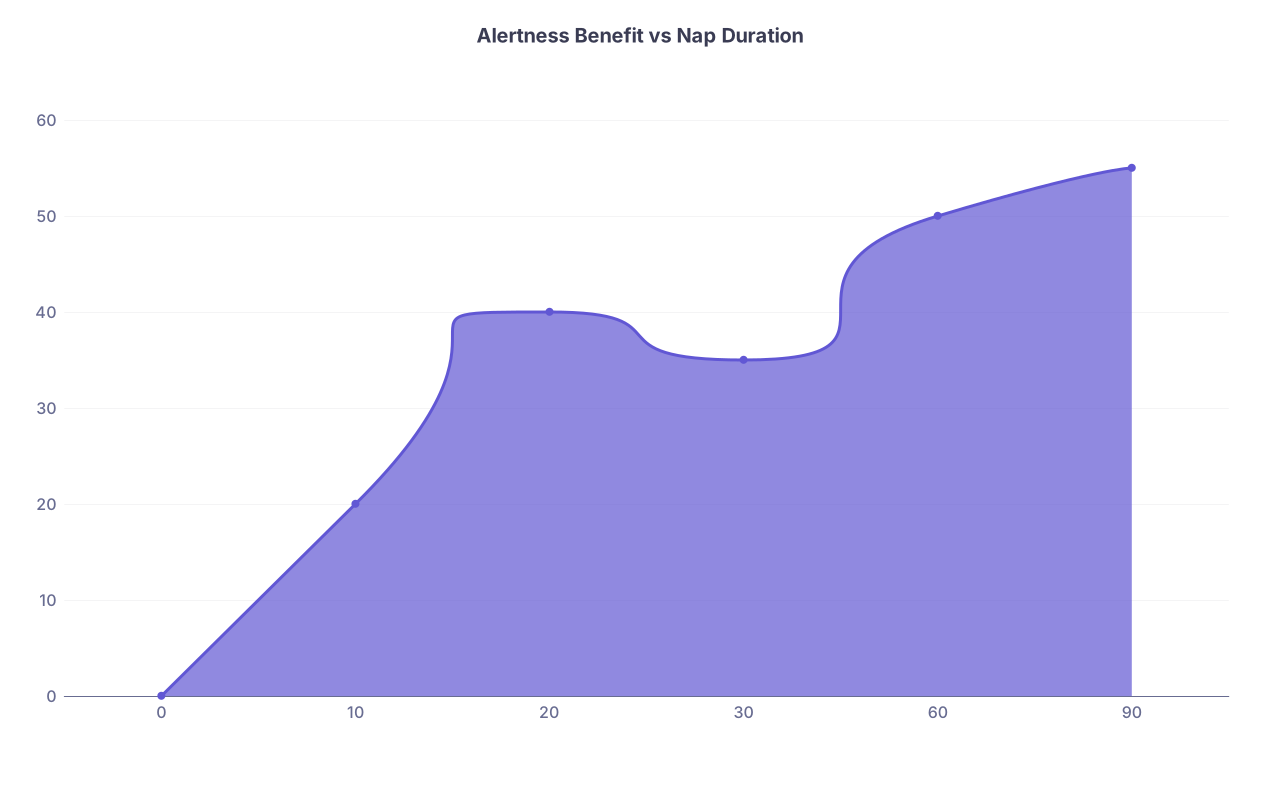
There is good lab data on this.
| Category | Value |
|---|---|
| 0 | 0 |
| 10 | 20 |
| 20 | 40 |
| 30 | 35 |
| 60 | 50 |
| 90 | 55 |
Interpreting this in plain language:
- 10–20 minutes: Best for quick alertness. Minimal sleep inertia. Good between classes.
- 30 minutes: More restorative but higher risk of grogginess if you wake from deeper sleep.
- 60–90 minutes: Full sleep cycles, best for big deficits, but absolutely must not be used late in the day or you will wreck nighttime sleep.
Practical nap rules for M1:
When to nap
- Between ~12 pm and 3 pm is ideal.
- After a short sleep night (≤5–6 hours), nap is much better than sleeping in.
How to nap
- Set an alarm for 20–25 minutes max if you must be functional immediately after.
- Dark, cool, quiet if possible; eye mask and basic foam earplugs help more than people think.
When not to nap
- After ~4 pm on a normal bedtime schedule. You will push your nighttime sleep later.
- After 6 pm, unless you are on call/night shift (not an M1 problem yet).
5. Light, Temperature, Food, and Tech: Realistic Tweaks
You are not living in a sleep lab. You are in a dorm or apartment with thin walls, possibly roommates, and a lot of ambient chaos. So we pick interventions with the best signal‑to‑noise ratio.
5.1 Light: The Strongest Environmental Lever
Morning:
- Get 15–30 minutes of outdoor light within 1–2 hours of waking. Yes, even if cloudy.
- If you are in a dark climate / winter, a 10,000 lux light box at your desk for 20–30 minutes can help, but do not stare into it like the sun.
Evening:
- From ~10 pm onward on study nights:
- Phone and laptop on warm/low blue mode.
- Use a warm desk lamp instead of overhead LEDs.
Critical detail: intensity matters more than color. That bright white kitchen light at midnight? That is the problem.
5.2 Temperature
Sleep onset and maintenance improve when core body temperature can drop slightly. You do not need a $300 smart thermostat.
- Room temp in the 60–68°F (15–20°C) range is supported by sleep literature.
- Hot showers 60–90 minutes before bed help by triggering a subsequent temperature drop.
5.3 Food and Alcohol
First‑years abuse both.
Food:
- Big high‑fat meals right before bed delay gastric emptying and can fragment sleep.
- Late labs? Aim for:
- Main meal 2–3 hours before bed
- Light snack (fruit, yogurt, small sandwich) if hungry after 9 pm.
Alcohol:
- Even “just two beers” after an exam clinically degrades sleep architecture.
- You will feel like you “slept hard” but you are nuking REM and fragmenting the night.
I am not saying never drink. I am saying: if you drink, do it early, and avoid using alcohol regularly as a sleep aid. It works poorly and builds tolerance.
5.4 Tech Use That Does Not Destroy Sleep
You will be on a laptop up until near bedtime. The question is: how.
- Do active, demanding work earlier in the evening (7–9:30 pm).
- Reserve the last 30–45 minutes for:
- Reviewing tomorrow’s schedule
- Light flashcard maintenance
- Non‑stimulating reading
- Avoid:
- Fast‑paced gaming
- Doom scrolling through feeds
- Watching adrenaline‑spiking shows right before bed
This is not moral advice. It is about state‑dependent arousal. You cannot expect your nervous system to go from “fight‑or‑flight” to “deep sleep” in 3 minutes.
6. Strategy Shifts Across the Block: Early, Mid, and Exam Weeks
Sleep management should not be the same during week 1 as week 6 of a block.
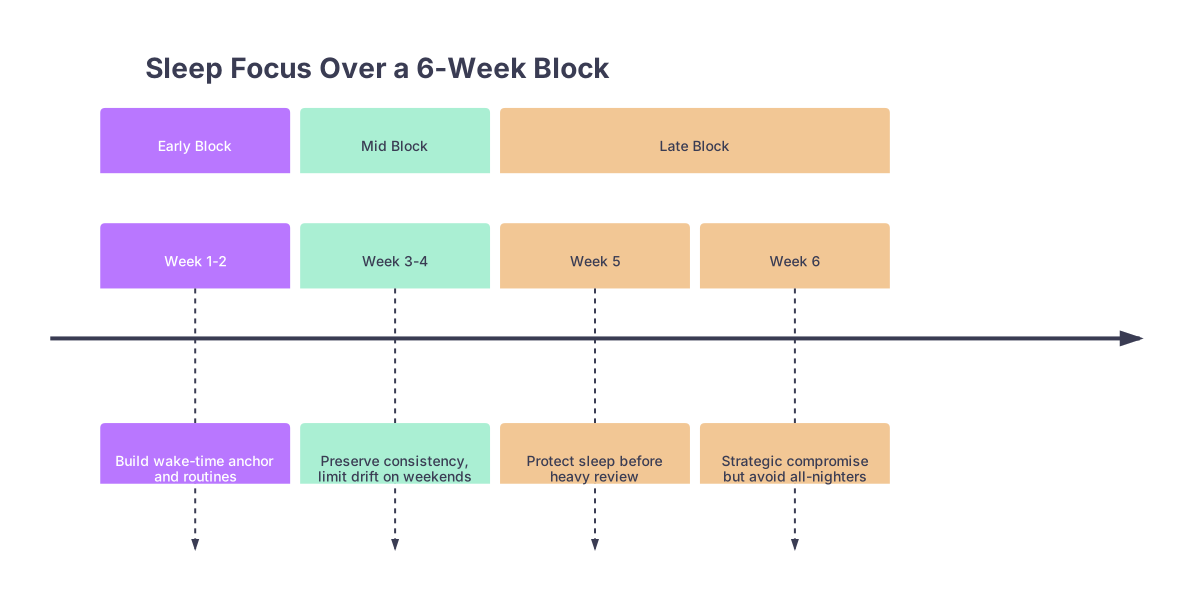
| Period | Event |
|---|---|
| Early Block - Week 1-2 | Build wake-time anchor and routines |
| Mid Block - Week 3-4 | Preserve consistency, limit drift on weekends |
| Late Block - Week 5 | Protect sleep before heavy review |
| Late Block - Week 6 | Strategic compromise but avoid all-nighters |
6.1 Early Block (Weeks 1–2)
Top priority: stabilize your schedule.
- Fix wake time.
- Test and lock in your ideal bedtime window.
- Experiment with nap timing on days you feel sleepy; find what works.
This is where you prevent the classic M1 mistake: letting sleep drift early and often until you are permanently 2–3 hours out of sync with your required morning obligations.
6.2 Mid Block (Weeks 3–4)
Volume ramps up. People start cutting corners.
Decision point: you can either sacrifice weekday sleep slightly and reclaim on weekends carefully, or you go full chaos. Choose the first.
- Weekdays: stay within your bedtime window most nights.
- Weekends:
- Allow up to +1.5–2 hours sleep‑in, but not 4–5 hours.
- Keep meal timing and light exposure roughly similar to weekdays.
- Use a 20–30 minute early afternoon nap if catching up.
6.3 Late Block / Exam Weeks (Weeks 5–6)
Here is where you make intentional trade‑offs.
- Two nights before big exam:
- Protect a solid 7–8 hours. This night matters more than the immediate pre‑exam night for cognitive readiness.
- Night before exam:
- Accept if you only get 6.5–7 hours because of anxiety and final review.
- But avoid dropping below ~5 hours unless absolutely forced.
I have seen so many “I only need 4 hours, I used to do it in undergrad” students crash. Preclinical work is denser, and you are stacking fatigue across months, not days.
7. Fixing Sleep After It Is Already a Mess
Let us be honest: you are probably reading this after several weeks of bad patterns. So how do you reset without taking a vacation?
7.1 If You Are Delayed (Going to Sleep at 1–3 am Regularly)
You cannot instantly jump from 2 am to 11 pm bedtime and expect to fall asleep. You shift gradually.
- Set a non‑negotiable wake time (say 7:30 am).
- Do not nap in the late afternoon.
- Move bedtime earlier by 15–30 minutes every 2–3 nights:
- Night 1–2: 1:30 am
- Night 3–4: 1:00 am
- Night 5–6: 12:30 am
…until you reach your target.
Support measures:
- Strong morning light exposure.
- Avoid caffeine after ~2–3 pm during reset period.
- Keep bed for sleep only; do not study in bed.
7.2 If You Have Fragmented Sleep From Anxiety
Very common in M1. You fall asleep, then wake at 3–4 am, mind racing.
Concrete tactics:
Get out of bed if you are awake >20 minutes.
Lying in bed frustrated just trains your brain to associate bed with wakefulness.Go to a dimly lit area, do something low‑stimulus:
- Read a paper book
- Light stretching
- Brief journaling of what is on your mind
Return to bed only when properly sleepy again, not “tired but wired.”
During the day, attack the root:
- Use that pre‑bed cognitive dump
- Have a specific, written study plan so your brain is not constantly “re‑planning” at night.
If it is happening multiple times a week for more than a month with major daytime impairment, that is when you talk to a physician. Not Reddit.
8. When You Actually Need Professional Help
There is a line where “student sleep issues” cross into insomnia disorder, circadian rhythm disorders, depression, anxiety, or other medical conditions.
Strong signals you should get evaluated:
- You are spending ≥30 minutes trying to fall asleep most nights for >3 months.
- You wake multiple times and stay awake for long periods without an obvious cause.
- You are excessively sleepy in class even with reasonable sleep duration.
- Your roommates say you stop breathing, gasp, or snore loudly (yes, sleep apnea happens in young, not‑obese people too).
- Your mood is tanking, anhedonia is high, or anxiety is overwhelming.
CBT‑I (cognitive behavioral therapy for insomnia) has very good evidence and does not rely on chronic sedative use. If your school has student mental health services, ask specifically about CBT‑I.
9. Putting It All Together: A Sample “Good Enough” Day
Let me give you an integrated example for an 8 am–3 pm class day with an exam in 4 days.
- 6:45 am: Wake, 10–15 minutes of outdoor light while walking to coffee or bus.
- 7:00–7:30 am: Light breakfast, brief review of today’s objectives.
- 8:00–12:00 pm: Class/lecture. You stay off social media; you do Anki in downtime.
- 12:00–12:30 pm: Lunch.
- 12:30–1:00 pm: 20‑minute nap in a quiet corner / car / library chair.
- 1:00–3:00 pm: Small group / lab / final class.
- 3:30–6:30 pm: Deep study block (questions, active recall).
- 6:30–7:00 pm: Dinner.
- 7:00–9:00 pm: Focused review, teach‑back, consolidate weak areas.
- 9:00–9:30 pm: Light prep for tomorrow, pack bag, schedule.
- 9:30–10:15 pm: Wind‑down: shower, stretch, non‑academic reading.
- 10:30 pm: In bed. Phone on do not disturb, screen face down across the room.
Is this perfect? No. Is it realistic and protective of your brain for the long haul? Yes.
FAQ (Exactly 6 Questions)
1. How many hours of sleep should a first‑year med student actually aim for?
Aim for 7–8 hours on most nights, with some flexibility down to ~6.5 during heavy weeks. Regularly dropping below 6 hours is where cognition and mood degrade fast, even if you feel “used to it.” Consistency beats occasional perfect 8‑hour nights scattered between short sleeps.
2. Is it ever worth pulling an all‑nighter for a big exam in M1?
Almost never. The evidence is clear: all‑nighters impair attention, working memory, and higher‑order reasoning. You might memorize a few extra facts but will sabotage complex questions and recall. A more rational compromise is a slightly shortened night (e.g., 5.5–6 hours) the night before, with a full night two nights before the exam.
3. What about melatonin—should I use it to fix my schedule?
Low‑dose melatonin (0.5–1 mg) taken 2–3 hours before desired bedtime can help shift a delayed schedule slightly earlier. It is not a knockout pill and does not compensate for poor habits. I generally discourage chronic nightly high‑dose use (5–10 mg) without guidance, and it will not fix anxiety‑driven insomnia.
4. Can I “catch up” on sleep on weekends without messing myself up?
Yes, but with limits. Sleeping in up to 1.5–2 hours later than your weekday wake time is usually safe. Once you are pushing 3–4 hours later, you create social jet lag, which makes Monday–Tuesday feel like a time‑zone change. If you need more recovery, keep wake time similar and add a 60–90 minute early afternoon nap one weekend day.
5. Is studying in bed really that bad for sleep?
If you do it occasionally, no big deal. If your bed becomes your default office—laptop, lectures, phone, notes—it conditions your brain to associate the bed with being awake and cognitively activated. For people with sleep‑onset problems, this can be a major factor. Ideally, reserve the bed for sleep and non‑work activities; use a desk, table, or even floor cushions for studying.
6. How do I handle roommates who are noisy at night and wrecking my sleep?
You treat it as a modifiable environmental factor. First, have a direct conversation and agree on a quiet window (e.g., 11 pm–7 am) with headphones or common‑room use for them. Second, control what you can: high‑NRR foam earplugs, a consistent white‑noise app, and an eye mask if lights are an issue. If it is persistent and extreme, involve housing or look for a room change—chronically poor sleep in M1 is not just “annoying,” it will hurt your performance.
Key points to walk away with:
- Anchor your wake time and protect a reasonable bedtime window; those two choices do more for your performance than any supplement or gadget.
- Use light, caffeine timing, and short naps as precise tools, not random habits.
- During exams, choose slightly less study for more sleep; your brain is the limiting reagent, and it only works at full capacity when you let it.