
You land in a new country with two suitcases, a laptop, and a half-charged phone. The taxi from the airport is more expensive than your weekly food budget. You get to your small room or dorm, drop your bags, open WhatsApp to text your friends… and realize everyone’s asleep because you’re six or nine hours ahead.
Classes start in a few days. Orientation was a blur of accents, acronyms, and people who all seemed to already know someone. The grocery store makes you feel stupid: labels you can’t read, foods you don’t recognize, prices in a currency that still does not feel real. Back home, you were “the smart one.” Here, you are the one who does not get what’s going on half the time.
This is what culture shock and isolation in first-year med school looks like for a lot of international students. You are not broken. You’re not alone. But if you just “wait it out,” you will suffer more than you need to.
Let’s treat this like a clinical problem: you have specific symptoms (loneliness, confusion, homesickness, academic stress), and you need a practical management plan.
Step 1: Recognize What’s Actually Going On (It’s Not Just “I’m Weak”)
You might be telling yourself: “Other people handle this fine. Why am I struggling?” That story is wrong. Most people struggle. Some are just quieter about it.
Culture shock usually comes in waves, not one dramatic crash. Rough pattern:
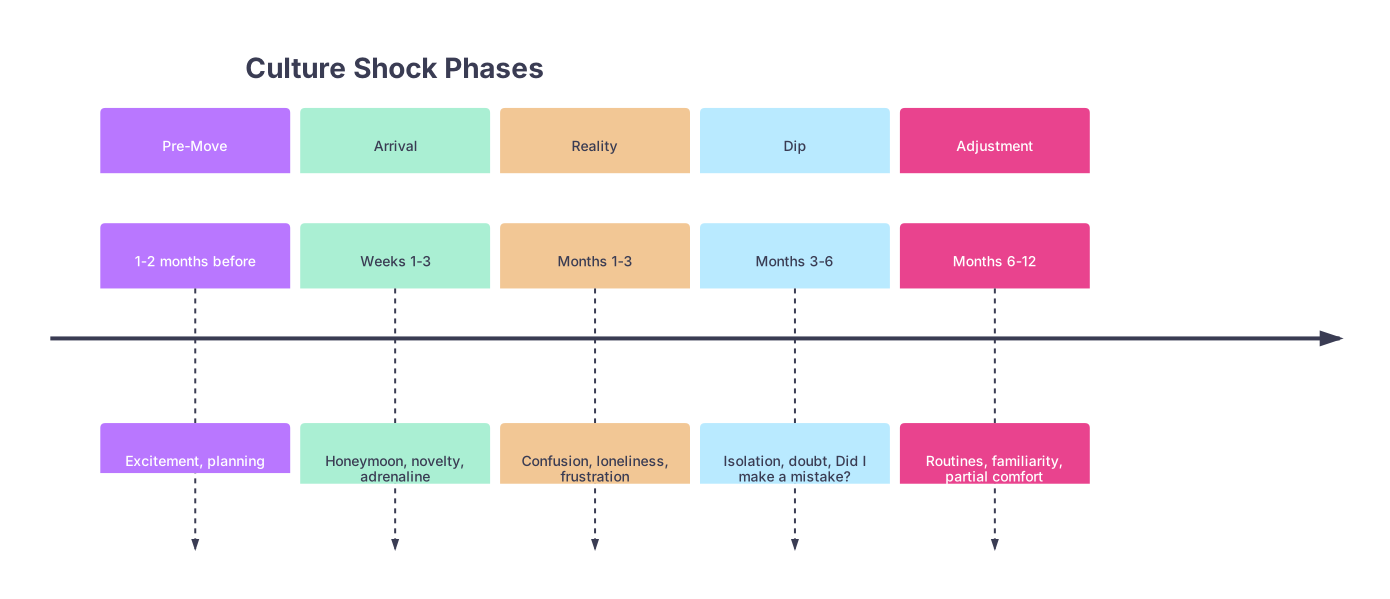
| Period | Event |
|---|---|
| Pre-Move - 1-2 months before | Excitement, planning |
| Arrival - Weeks 1-3 | Honeymoon, novelty, adrenaline |
| Reality - Months 1-3 | Confusion, loneliness, frustration |
| Dip - Months 3-6 | Isolation, doubt, Did I make a mistake? |
| Adjustment - Months 6-12 | Routines, familiarity, partial comfort |
Common signs I see again and again with first-year internationals:
- You’re mentally translating everything (lectures, signs, jokes) and it’s draining.
- You feel stupid in social situations even though you’re objectively very smart.
- You’re texting home constantly but feel worse after.
- You’re doing fine academically on paper but feel like you’re barely holding it together emotionally.
That’s not a personal failure. It’s what happens when you change:
- Language (even if you’re fluent, slang and speed are killers)
- Academic style (oral exams, multiple choice, pimping, whatever new system)
- Social norms (how people make friends, date, joke, argue)
- Support systems (family, old friends, mentors)
- Time zone (your support is literally asleep when you’re awake)
You treat it like a real problem, not a character flaw. That’s the mindset you need.
Step 2: Build a Survival Routine Before You “Feel Like It”
You will not feel like doing most of this. Do it anyway, because feelings lag behind habits.
Create a bare-minimum weekly structure that covers four things: sleep, food, movement, and human contact.
Sleep: Stabilize Your Time Zones
You’re probably trying to stay up to talk to people back home. You can’t do that long-term and survive med school.
Pick one:
- Option A: Prioritize local schedule. You sleep roughly local hours, accept you’ll miss some calls, and negotiate set times with family/friends that do not destroy your nights.
- Option B: Short-term hybrid (first 2–3 weeks only). Slightly later nights to catch home people occasionally, but you move steadily toward local time.
If your first-week schedule looks like this, you’re asking for a breakdown:
| Pattern Type | Bedtime | Wake Time | Effect |
|---|---|---|---|
| Jet-lag + Calls | 2–3 AM | 7–8 AM | Exhausted, foggy, emotional |
| Local-anchored | 11–12 PM | 7–8 AM | Stable, better focus |
| In-between | 12–1 AM | 7–8 AM | OK short-term, not ideal |
Commit: 7 hours minimum. Non-negotiable. You are studying medicine, not playing a sleep deprivation game.
Food and Movement: Don’t Let Them Slide
You are in a new food culture. You will be tempted to either:
- Live on cheap carbs and sugar.
- Starve because you hate or don’t understand the local food.
Both will wreck your mood and energy.
First month plan:
- Find 2–3 “default” meals you can always rely on: simple, cheap, available. Could be: rice + veggies + eggs, supermarket salads + canned tuna, basic pasta + sauce + frozen veggies. It doesn’t need to be pretty. It needs to be consistent.
- Move 20–30 minutes a day. Walking counts. You don’t need a gym membership yet. Put in headphones, walk your neighborhood, learn the streets. It doubles as orientation and mental reset.
Step 3: Attack Isolation on Two Fronts – Home and Local
You need both “home connection” and “local integration.” If you lean too heavily on either side, you pay for it.
Front 1: Manage Connection to Home So It Helps, Not Hurts
If every call home ends with you ugly-crying and wanting to buy a ticket back, you need to structure those calls.
What to do:
Set predictable times.
“Let’s talk Sundays and Wednesdays, my evening / your morning.” Routine is better than chaotic late-night calls.Keep some calls shorter and lighter.
Not every conversation needs to be a full emotional autopsy. Share one good thing and one hard thing, then stop.Watch your mental spiral after calls.
If you’re always wrecked after speaking to a certain person (overly anxious parent, pessimistic friend), reduce frequency or change the content:
“Med school stuff is stressing me, can we talk more about you and life at home this call?”
You’re allowed to protect your mental space. You’re not responsible for managing everyone’s anxiety about “you being so far away.”
Front 2: Force Local Contact Before You Feel “Ready”
You won’t magically “settle in” and then make friends. It’s the reverse: you make some human connections and then you start to feel settled.
Here’s the uncomfortable truth:
You need to reach out first more than feels fair.
Concrete moves:
Use orientation and the first two weeks ruthlessly.
Those awkward “where are you from?” conversations? They matter. This is when people are still open and not cliqued up yet. Say yes to the dumb coffee invite. Go to the boring campus tour.Initial scripts so you’re not stuck thinking what to say:
- In lecture: “Hey, I’m [Name], I just moved here from [Country]. Do you know if they post these slides online after?”
- After lab: “I’m still figuring out the city—do you know any cheap places nearby for lunch?”
- Via message (class group chat): “Anyone else new to [city]? Maybe we can figure out good study spots together.”
Find at least one other international.
Doesn’t have to be from your country. Just someone who also had to open a bank account and get a SIM card last week. They will understand your particular flavor of chaos.Join one low-pressure, non-med activity.
Not 5. One. A basic gym class, a language exchange meetup, a student club that actually meets in person (not just WhatsApp spam about events).
Step 4: Deal with Language and Classroom Culture Shock Directly
You can’t out-will-power your way through a language barrier and new academic norms. You need tactics.
If You’re Studying in a Non-Native Language
Here’s what usually hits international students hardest:
- Professors speaking fast with local slang
- Jokes and side comments you don’t catch (you miss context)
- Oral exams or small groups where you feel slow and stupid
Tactics that work:
Pre-read in your strongest language, then review in the teaching language.
If there’s a standard English text (e.g., for physiology, anatomy), read that first. Then attend lecture. Then skim local-language notes. You’re layering, not trying to digest everything via one channel.Record lectures when allowed.
Listen again at 0.8x speed. You pick up words you missed live. Do NOT spend hours making perfect transcripts. You just need enough to fill the gaps.Language clinic: 30–45 minutes, 4–5 times a week.
Not random Duolingo. Target your reality:- Write out 10–15 medical terms you didn’t understand that week
- Learn what they mean + how they’re pronounced
- Practice saying them out loud once or twice
You’re training for OSCEs and clinicals where you need real words, not cute phrases.
If the Teaching Style Is Very Different
Maybe you’re used to structured multiple-choice exams, and now you’re in a school heavy on oral exams or essay questions. Or you came from a very hierarchical system and now it’s casual and discussion-based.
Find a local “translator” for the academic culture. One specific person who:
- Has done at least 1–2 years at that med school
- Is willing to be blunt
- Knows what teachers actually care about
Ask targeted questions:
- “For anatomy, do they care more about fine detail or big-picture understanding for the exams?”
- “In oral exams, do they expect you to use very formal language or is it okay to be a bit casual?”
- “If you don’t know an answer, what’s the best way to respond here?”
Ten minutes with the right person beats ten hours of anxious guessing.
Step 5: Emotional First Aid for When It Hits Hard
There will be days, especially months 2–4, where you think: “I made a huge mistake. I do not belong here.”
Instead of treating those days like a catastrophe, treat them like a flare-up of a known condition. You have a protocol.
Have a “Crisis Routine” Ready
Write this down somewhere you’ll see when you’re spiraling. On your wall, in your notes app, whatever.
Something like:
- I will not decide anything permanent today (no flight searching, no “I’m quitting” emails).
- I will text or call one person who “gets it” (back home or local).
- I will leave my room for at least 20 minutes (walk to a café, park, library).
- I will do the smallest piece of school work I can manage (10 Anki cards, 1 lecture summary).
- I will sleep.
That’s it. Not “fix my life.” Just contain the damage.
Normalize Wanting to Go Home
Every international I’ve worked with has had at least one serious “Why don’t I just leave?” episode. That’s not a sign you’re supposed to quit. It’s a sign your brain is under stress and wants what’s safe and familiar.
You evaluate later, when:
- You’ve had at least a few good days in recent weeks
- You’ve passed an exam or two and seen that survival is possible
- You’ve built at least minimal local connections
Decisions made in the worst week of first term are usually bad decisions.
Step 6: Make Your Room and Routine Feel Less Like a Hotel
If your living space feels temporary and impersonal, your brain never fully relaxes. You’re living in “airport mode.”
Take one afternoon and make your space feel like yours.
Practical moves:
- Print 5–10 photos from home. Put them on the wall or desk.
- Get one soft thing (blanket, pillow, rug) that makes the room stop feeling like a bare cell.
- Designate a specific “work zone” and “non-work zone,” even if it’s just two sides of the same desk.
Also, create tiny local rituals. They sound stupid. They work.
Examples:
- Friday morning coffee from the same place after your 8 AM.
- Sunday evening walk the same route while calling home.
- Midweek cheap lunch at the same little spot.
Those small repeated things are how people go from “I live in this city” to “I live here.”
Step 7: Use Student Services and Counseling Without Overthinking It
A lot of international students carry this idea: “Therapy is for people who are really messed up. I just need to try harder.”
You moved countries, started med school, lost your support system, and are functioning in a new language. You are the exact use case for built-in counseling services.
Look for:
- International student office (they’ve seen your problems 1000 times)
- University counseling / mental health services
- Peer mentoring programs (sometimes hidden on the website in small print)
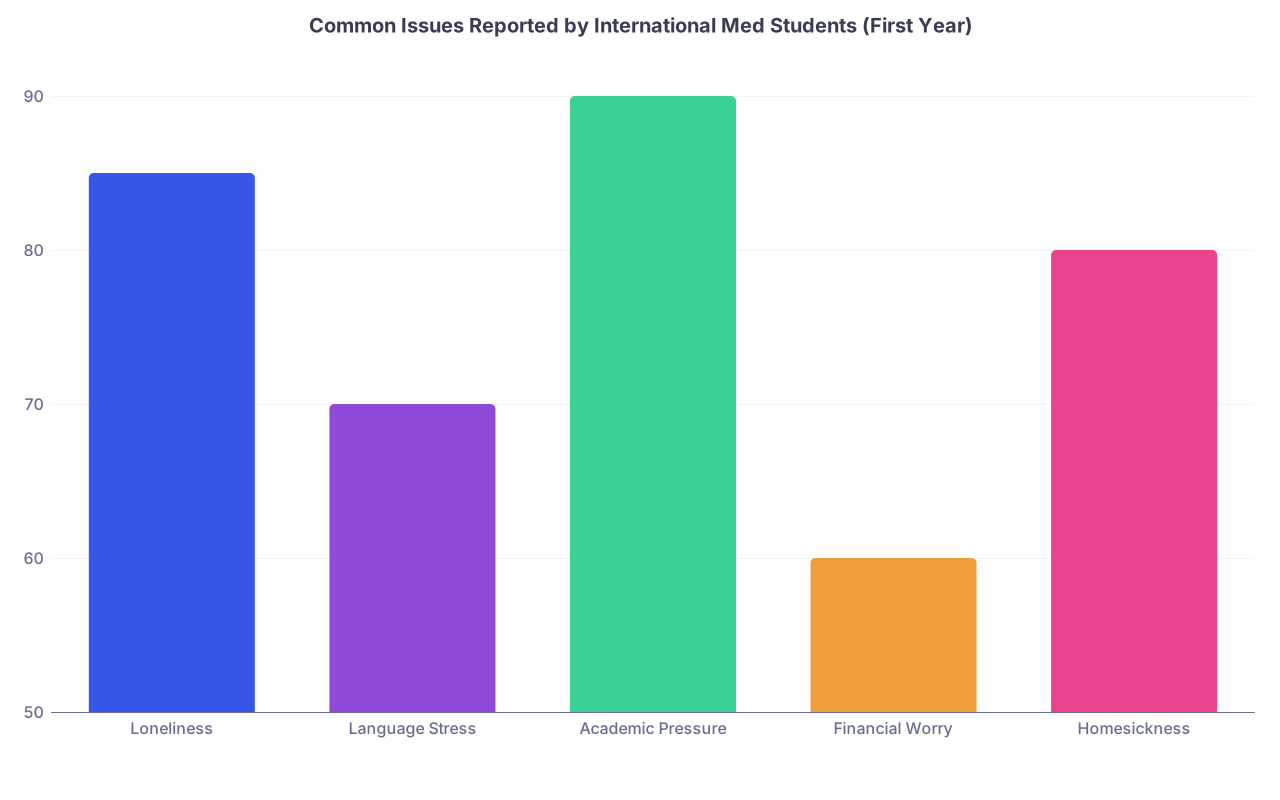
| Category | Value |
|---|---|
| Loneliness | 85 |
| Language Stress | 70 |
| Academic Pressure | 90 |
| Financial Worry | 60 |
| Homesickness | 80 |
If the first counselor or advisor feels useless, try another. You do not have to bond for life with the first person you meet.
Don’t romanticize suffering in silence. No one gives extra honors for “almost had a breakdown but told no one.”
Step 8: Manage the Academic Load While You’re Still Adapting
Med school itself is a full-time job. Now you’ve stacked “new country adaptation” on top. You cannot operate like a local who lives 20 minutes away from family and went to undergrad down the street.
You need to be more selective.
Pick Your Battles Academically
In first year, there are:
- “Kill you if you fail” exams
- “Annoying but survivable” assignments and quizzes
Get clarity, fast, on which is which. Ask older students:
- “If I’m struggling with language and adjustment, which subjects are absolutely critical to keep up with weekly?”
- “What can I afford to just pass and not ace this term?”
You don’t aim to get 100% in everything your first semester while you’re barely sleeping and crying over SIM card issues. That’s how people burn out and start hating medicine itself.
Use Short, Focused Study Blocks
With culture shock, your attention span is trash at first. Fine. Work with it.
Aim for:
- 25–40 minutes focused
- 5–10 minutes off screens, move, breathe
- Repeat 3–5 times per day
Use the off-time for micro-connection: quick message to a classmate, a 5-minute audio message to someone back home, a walk down the hall.
Step 9: Handle Microaggressions, Stereotypes, and “Where Are You REALLY From?”
You’re not imagining it. Some people will:
- Talk slower and louder to you like you’re dumb
- Make jokes about your country, name, accent
- Assume you’re “taking someone’s spot” or are only there because of quotas or international fees
You decide when it’s worth responding and when it’s energy wasted.
Three basic playbooks:
Brush-off + redirect (for minor, annoying stuff)
“Yeah, I get that a lot. Anyway, did you understand what we’re supposed to prep for lab tomorrow?”Clear boundary (for repeated or nasty behavior)
“I don’t find that funny. Let’s talk about something else.”
Or: “I’m here for the same reason you are. Let’s focus on the work.”Escalate (for serious or persistent issues)
Document specifics (date, what was said, who was there).
Take it to: student rep, advisor, international office, or faculty you trust.
You are allowed to protect yourself. Not every battle, but some.
Step 10: Plan for the Long Game – This Gets Different After Year One
The worst part of culture shock is that it tricks you into thinking, “It will always feel like this.”
Very often, year 1 looks like:
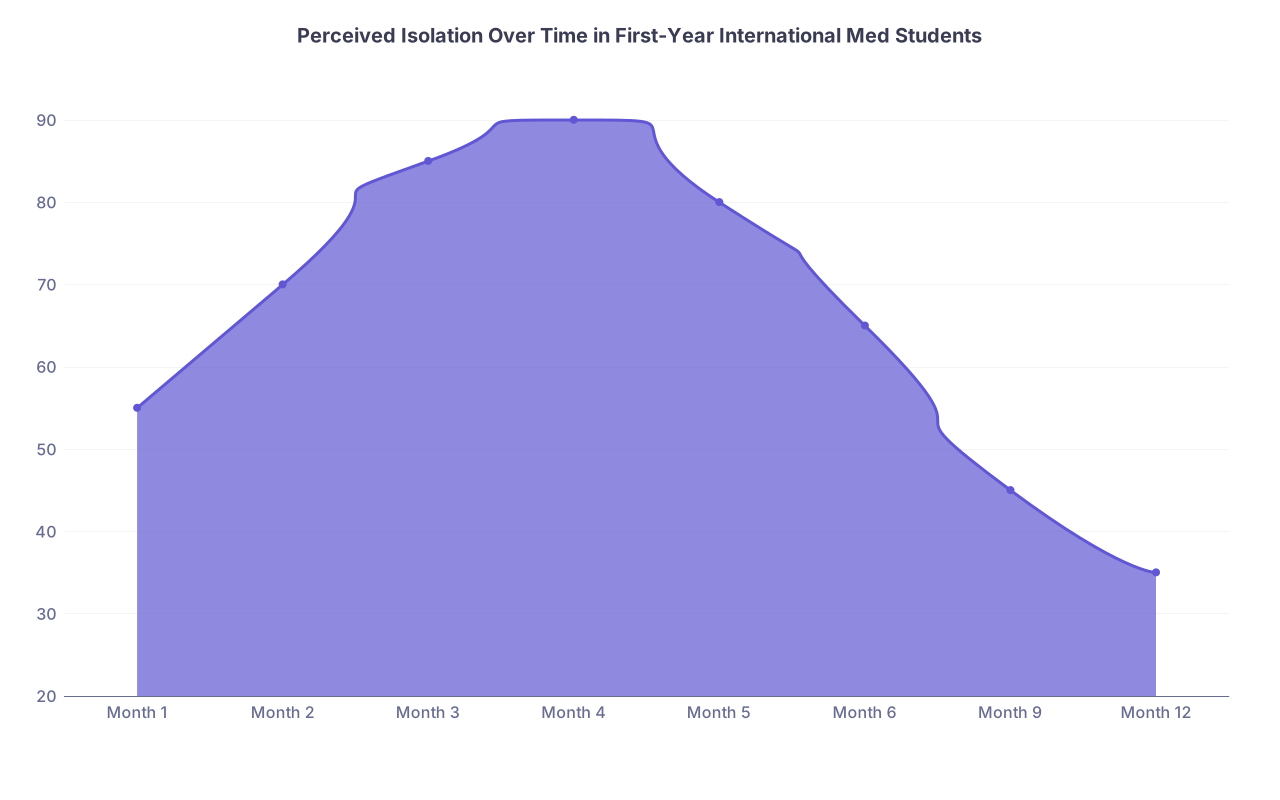
| Category | Value |
|---|---|
| Month 1 | 55 |
| Month 2 | 70 |
| Month 3 | 85 |
| Month 4 | 90 |
| Month 5 | 80 |
| Month 6 | 65 |
| Month 9 | 45 |
| Month 12 | 35 |
You feel the most alone right after the initial novelty wears off and before your routines and friendships really set in. That months 3–4 spike is where people either:
- Blow up (fail exams, go home suddenly, emotionally collapse), or
- Implement boring, consistent habits and slowly crawl into something that looks like a life.
You do not need to love it here in month 2. Your goal is very small:
- Pass your core exams
- Keep your mental health above “emergency”
- Build 2–3 human connections and 1–2 stable routines
The rest comes later.
A Quick Reality Check Before You Go
You moved countries and started one of the hardest professional programs at the same time. Feeling overwhelmed, lonely, and disoriented is not proof you chose wrong. It’s proof you’re human.
Keep three things front and center:
- You’re not weak or behind because you feel culture shock and isolation; you’re doing something objectively hard, and it will feel like this at first.
- Don’t wait to “feel ready” to build local connections and routines; do the small, uncomfortable things early and consistently.
- Use every tool available—sleep, food, movement, counseling, peers—so you’re not trying to brute-force your way through with willpower alone.
You do not have to love every day. You just have to make it livable while you get strong enough to make it good.


