
What do you do when your body simply cannot keep up with full clinic days or call, but walking away from medicine feels worse than the disease itself?
If that’s where you are, this is for you. You’re not “burned out.” You’re not “just tired.” You’re chronically ill and your current version of practice is incompatible with a human body that needs more care and control than medicine usually allows.
So the real question becomes: can you build a remote‑first career that’s financially viable, clinically meaningful, and does not wreck your health?
Yes. But you have to be strategic and slightly ruthless.
Step 1: Get brutally clear on your medical and functional limits
Before you start scanning remote job boards, you need medical clarity. Vague “I don’t feel well” will not protect you in a job negotiation. Specific, documented limitations will.
You need two things:
- A realistic functional profile
- Documentation from your treating clinicians
Your functional profile should answer:
- How many predictable hours per day can you work on average? (Not on your best day. On a realistic week.)
- What’s your max continuous sitting / screen time before you tank?
- How does your condition fluctuate? Daily? Weekly? Unpredictable flares?
- Any hard no’s: night work, rapid context switching, phone-heavy tasks, lifting, in-person presence, exposure to infections, etc.
- Cognitive impact: fatigue, brain fog, attention span, speed of processing, visual issues.
Write this down like a consult note. Something like:
“Can sustain 3–4 hours of focused computer-based work/day most days, best in late morning and early afternoon. Needs flexibility for 1–2 flare days/week where work is impossible or limited to low-cognitive tasks. Cannot commit to fixed call schedule or nights. Should avoid high-volume phone work and video visits longer than 20–25 minutes.”
Then you get your clinicians to support this reality. Not with essays. With clear, concrete restrictions and needs:
- “No more than X hours/day of continuous computer use.”
- “Needs frequent breaks and ability to work lying down part of day.”
- “Unpredictable exacerbations making same-day cancellations necessary.”
This is what you’ll lean on for accommodations, disability, and shaping your job. Not inspirational quotes. Documentation.
Step 2: Understand what “remote‑first” can actually look like for a physician
Remote is not one thing. There are several workable models, and some will mesh better with chronic illness than others.

Here’s a quick comparison of common remote options:
| Role Type | Schedule Flexibility | Clinical vs Nonclinical |
|---|---|---|
| On-demand telemed | High | Clinical |
| Scheduled tele-clinic | Medium–Low | Clinical |
| Utilization management | Medium | Nonclinical |
| Chart review/risk adj. | High | Nonclinical |
| Medical writing / CME | Very High | Nonclinical |
| Informatics / product | Medium | Mixed |
Notice: the more “clinical” and directly patient-facing you go, the more someone is tracking your minutes. The more nonclinical, the easier it is to build around flares, but the harder it can be to break in if you only have traditional clinical experience.
So you need to decide where on that spectrum you’re aiming:
- If you still want active patient care and can handle reasonably predictable blocks: consider lower-intensity tele‑primary care, specialty e‑consults, or chronic care management.
- If your energy is volatile and you need true as‑you‑can work: chart review, risk adjustment, asynchronous care, medical writing, or consulting are usually better.
A dealbreaker if you’re truly ill: avoid anything promising “flexibility” but really meaning “you can choose which 10‑hour shift to work.”
Step 3: Decide your financial and disability strategy early
If you have disability insurance (own-occupation or any-occupation), stop guessing and start reading the policy. Better: talk to a disability attorney who deals with physicians. I’ve seen too many doctors sabotage their own claim by rushing into “light” work without understanding how insurers interpret it.
Key questions:
- Are you pursuing full disability, partial/residual, or not filing at all?
- Does your policy define disability by inability to practice your specialty (own‑occ), or any reasonably suitable medical work (any‑occ)?
- Will telemedicine or nonclinical work count as “gainful employment” and undercut your claim?
- What income thresholds trigger reduction or denial?
For some, the right move is:
- Secure a full or residual disability determination for your prior high‑intensity role (e.g., inpatient IM, surgery, EM).
- Then craft a narrower, lower‑hour, remote role that still fits within the residual rules.
Is this a hassle? Yes. Is it a hassle worth thousands per month, sometimes for decades? Also yes.
Do not ask your hospital HR “Is this okay?” Their priority is not your long‑term disability income. Get independent advice.
Step 4: Match roles to your actual disease pattern, not your fantasy future self
This is where people get themselves in trouble. They job‑search for the person they were, not the person they are now.
Let’s walk through typical chronic illness patterns and what tends to work:
Pattern A: Predictable but limited stamina
Example: stable heart failure, POTS with decent day‑to‑day control, treated cancer with chronic fatigue, controlled autoimmune disease with steady but low energy.
You can usually:
- Work most weekdays
- Manage consistent short blocks
- Plan your life reasonably well
Remote‑first clinical options that can work:
- Part‑time teleprimary care (e.g., 3–4 half days, no call, panel size limits)
- Specialty tele-consults (derm e‑consults, endocrinology follow‑ups, rheum medication management)
- Chronic care management / remote patient monitoring oversight with set hours
Nonclinical:
- Part‑time utilization management with defined shifts but no nights/weekends
- Medical education content creation with soft deadlines
What you must negotiate hard: panel size, visit length, no “sneaky call,” and protected off days. You’re not signing up to be their “flex provider.”
Pattern B: Unpredictable flares
Example: lupus, severe migraine, inflammatory bowel disease, mast cell disease, ME/CFS where some weeks are decent and some are disasters.
You probably cannot promise:
- Reliable early mornings
- Daily continuity
- Consistent synchronous contact
For you, asynchronous and project‑based work is usually safer:
- Asynchronous telemedicine (message-based care, e‑consults that can be answered over a 24–72 hour window)
- Chart review (risk adjustment, QA, peer review) where work is done in batches whenever you’re functional
- Medical writing, guideline development, question writing (e.g., for question banks), CME modules
If you do synchronous video visits, cap them. For example: two 2‑hour blocks on your “most reliable” days, and never full days of back‑to‑back visits.
Pattern C: Cognitive hit / brain fog
Example: post‑COVID cognitive impairment, neurologic conditions, medication effects.
Things you may struggle with:
- Rapid multi‑tasking
- High volume of complex decision‑making in short time
- Prolonged real‑time interactions without breaks
Roles to prioritize:
- Slower‑paced chart review and UM (utilization management) with ability to pause, reread, and use templates
- Editing or reviewing clinical content rather than generating it from scratch
- Highly protocolized telemedicine with strong decision support
And absolutely enforce:
- Longer visit times or lower visit caps
- Strict no‑double booking
- Time for documentation during the day, not piled at night when your cognition is shot
Step 5: Learn the real telemedicine and remote job landscape (not the Instagram version)
The remote physician market is not what it was in 2020, but there’s still plenty of space—if you know where to look and what’s realistic.
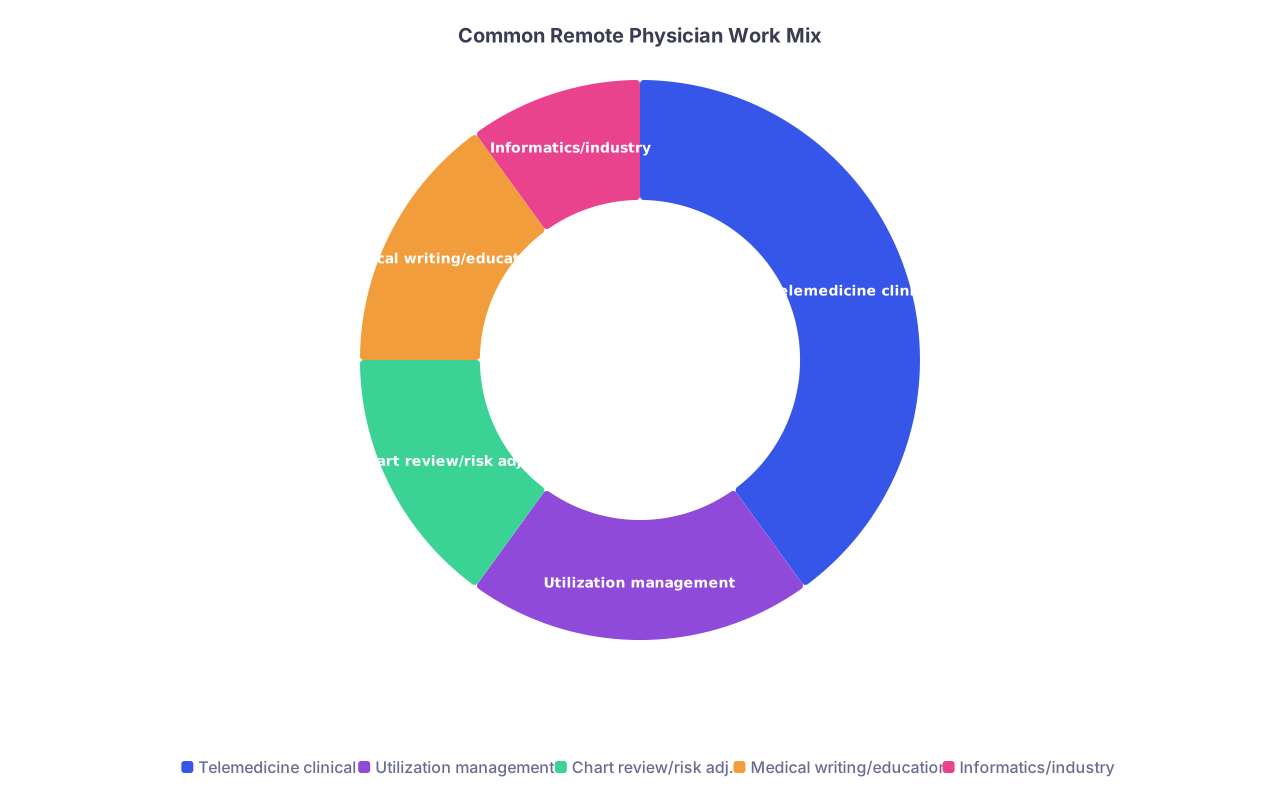
| Category | Value |
|---|---|
| Telemedicine clinical | 40 |
| Utilization management | 20 |
| Chart review/risk adj. | 15 |
| Medical writing/education | 15 |
| Informatics/industry | 10 |
Typical buckets:
High‑volume direct‑to‑consumer telemedicine
- Think: urgent care, DTC platforms (birth control, hair loss, weight loss, etc.)
- Pro: work from anywhere, sometimes 1099, potentially decent pay if you tolerate volume
- Con: can be relentless, metric‑obsessed, often low control over scheduling. Awful fit for unstable disease in most cases.
Platform‑based tele‑primary care / chronic disease care
- Often W‑2, benefits, panels, but with productivity pressures
- Better but still can become a treadmill if you’re not careful
Utilization review / medical director work (payers, UM companies)
- Reviewing charts, approving/denying procedures/meds, appeals
- Often full‑time but some genuinely part‑time or contractor roles exist
- Quietly one of the better options for physically limited physicians
Risk adjustment, CDI (clinical documentation improvement), audits
- Reviewing charts for coding and risk gaps
- Flexible hours, lower stress, often fully remote
- Less glamorous, but who cares—you need sustainable, not glamorous
Content and education
- Writing exam questions, CME modules, clinical content for startups, guideline work
- Project‑based, very flexible, income can be lumpy
Informatics / industry roles
- Product physician, clinical informatics, pharma, digital health
- Often 40‑50 hours/week, meetings heavy, but many are remote‑friendly
You’re not trying to “find the perfect job.” You’re trying to assemble a portfolio of work that, combined, respects your body.
Think 0.4 FTE UM + 0.2 FTE tele‑consults + ad‑hoc writing projects. Or one 0.6 FTE UM job and that’s it.
Step 6: Design your day and tech around your body, not your ego
Say you land a remote role. That’s not the finish line. Now you have to make it livable.

Non‑negotiable setup pieces:
- Ergonomics: adjustable chair, keyboard, maybe a sit‑stand desk, footrest if POTS, monitor at eye level. You cannot power through musculoskeletal pain on top of everything else.
- Multiple input modes: dictation software (Dragon, built-in OS dictation), good noise‑canceling headset, large monitor fonts.
- Break structure: 5–10 minutes away from screen every hour. Set timers if you have to.
And workflow:
- Block scheduling: If you know mornings are rough, schedule all visits and meetings afternoon. Don’t apologize. That’s your rhythm.
- Energy accounting: Track your days for 2–3 weeks. Notice what actually wipes you out—video visits, appeals calls, long writing sessions—and adjust.
- Flare protocols: In advance, decide: “When I wake up in a flare, I do X.” Maybe that’s:
- Drop all synchronous work
- Email your team / scheduler with a pre‑written template
- Switch to low‑cognition tasks (simple chart review, template cleanup) if possible
You’re not lazy. You’re managing a limited resource. Treat your energy like you used to treat the last ICU bed.
Step 7: Disclosure, accommodations, and not getting screwed
You don’t have to lead with “Hi, I’m chronically ill” in every interview. But you do need to protect yourself.

| Step | Description |
|---|---|
| Step 1 | Clarify limits |
| Step 2 | Search remote roles |
| Step 3 | Interview |
| Step 4 | Accept offer contingent |
| Step 5 | Negotiate schedule only |
| Step 6 | Provide medical documentation |
| Step 7 | Adjust schedule and duties |
| Step 8 | Need formal accommodations? |
Practical approach:
During interviews, talk in terms of work style, not diagnosis.
Instead of:
“I have lupus and sometimes have flares so I might miss work.”
Try:
“I do my best work in structured, predictable blocks and I’m looking for a role where I can commit to, say, three 4‑hour shifts/week with no nights or weekends, plus some asynchronous work. I need a position that doesn’t require last‑minute coverage or heavy call.”
You’re describing functional constraints. They either can or cannot work with it.
After you have a written offer (critical), you decide how formal to go:
- If you only need minor tweaks (starting later, caps on visits), sometimes you can arrange this informally with your supervisor.
- If your needs are substantial (flexible flare days, protected breaks, no metrics beyond a certain level), you likely want formal ADA accommodations through HR with your clinician documentation.
Yes, this can feel exposing. But the alternative is ending up in a “performance improvement plan” for not hitting unrealistic metrics with no legal protection.
Red flags during hiring:
- “We’re like a family; everyone pitches in when needed.” Translation: boundaries will be ignored.
- “We just need someone flexible; volume can spike some days.” Translation: they will burn you.
- “Most docs here comfortably see 20–25 tele‑patients per day.” Translation: misaligned with low stamina or cognitive limitations.
You’re not desperate. You’re selective. Chronic illness gives you permission to stop pretending you can do everything.
Step 8: Building a portfolio career instead of another single point of failure
Depending on your disease and finances, one W‑2 job may feel too risky. If you have a bad flare and lose it, you’re suddenly at zero.
A portfolio approach—several smaller roles or revenue streams—can be more resilient:
- One anchoring role (e.g., 0.4–0.5 FTE UM or tele‑primary care) for baseline income and benefits.
- One truly flexible clinical side (asynchronous telemedicine, occasional consults) that you can dial up or down.
- One or two project-based nonclinical streams (writing, consulting, question writing) that can survive if you disappear for a month.
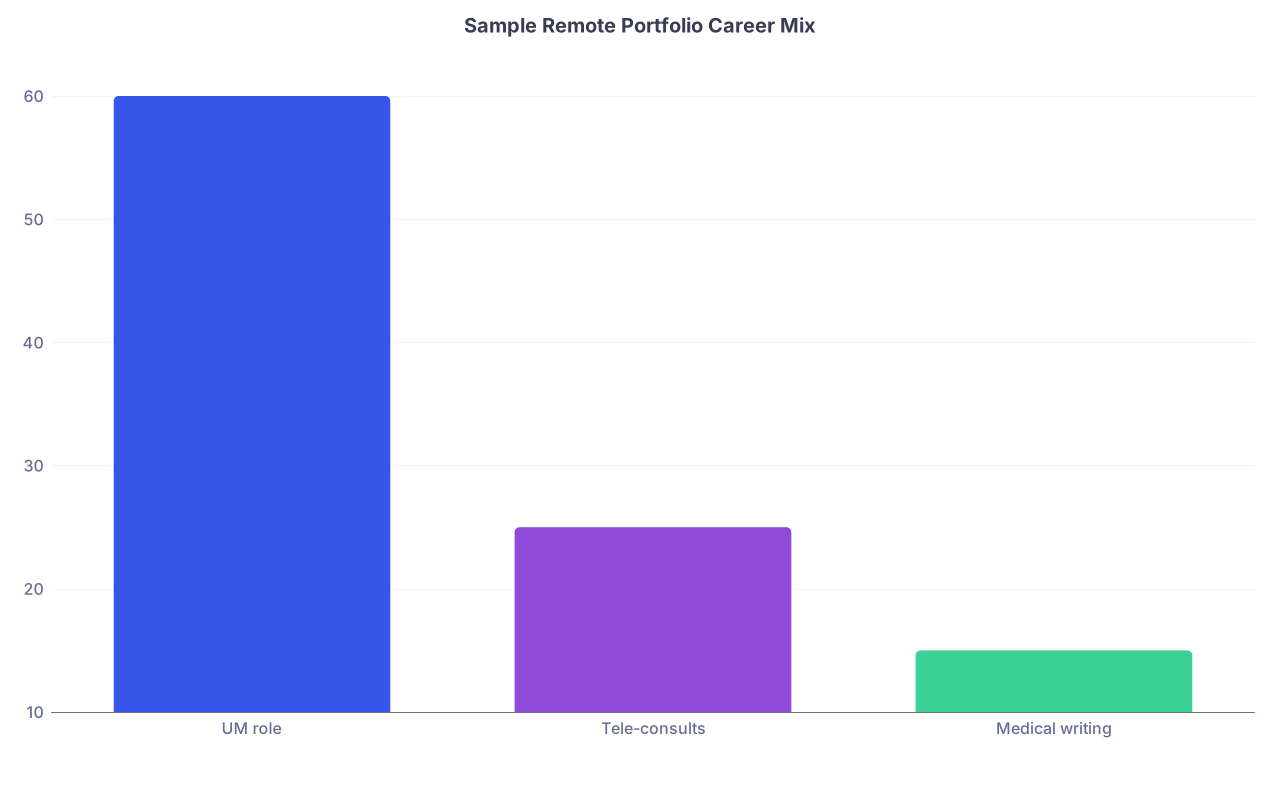
| Category | Value |
|---|---|
| UM role | 60 |
| Tele-consults | 25 |
| Medical writing | 15 |
This also hedges against markets shifting. If one company goes under or changes its model, you still have others.
The trap: overcommitting “just a little” everywhere until you’re spread across four EMRs, six inboxes, and no off time. Do not do that. Cap total weekly hours and guard them.
Step 9: Licensing, malpractice, and practical overhead
Some remote paths spiral into an administrative nightmare. Keep it sane.
Licensing:
- Multi‑state telemed sounds great until you’re juggling 12 license renewals with CME tracking while ill.
- If your disease limits bandwidth, focus on:
- Your home state
- One or two large tele-friendly states if absolutely needed (e.g., FL, TX, CA, depending on your employer)
- If you already have an IMLC license, use it strategically but do not keep renewing everything forever by default.
Malpractice:
- W‑2 telemedicine and UM roles often cover you. Confirm in writing.
- 1099 telemed may require your own policy or will cover you under theirs for that platform only.
- Nonclinical work (UM, pure chart review, writing) sometimes doesn’t require malpractice at all—but get that confirmed in the contract.
Technology:
- Hardwire internet if possible. Laggy Wi‑Fi during flares is a special kind of torture.
- Simple, familiar tools over fancy ones. You do not want to troubleshoot new software mid‑migraine.
Step 10: Emotion, identity, and the reality of “less”
Let me be blunt: a remote‑first, illness‑adapted career often means:
- Less pay than peak full‑time clinical
- Fewer hero stories
- Less respect from people who measure worth in RVUs and overnight calls
You’ll hear: “But you’re so smart, you could just push through a bit more.” Sometimes from your own head.
You’re not trying to prove you’re still “strong.” You’re trying not to end up in the hospital or permanently disabled at 50 because you insisted on operating like a 28‑year‑old intern.
What you gain instead:
- Control over your day
- The ability to schedule your life around infusions, PT, bad symptom days
- A long-term sustainable connection to medicine, instead of an all‑or‑nothing cliff

A quiet, steady remote career might not impress your old program director. But your future self—who can still work some, still earn, still contribute, and isn’t completely broken—will absolutely thank you.
Step 11: A concrete transition plan (12–18 months)
If you’re currently in a traditional role and know it’s unsustainable, here’s a realistic arc:
Months 0–3
- Get brutally clear functional assessment and documentation from your clinicians.
- Review disability policies with a specialist if relevant.
- Start tracking your true work tolerance. No heroics.
Months 3–6
- Decide: aiming for partial exit (reduce to 0.5–0.6 FTE + remote work) or full pivot to remote‑first.
- Start low‑commitment remote work on days off—chart review, small writing gigs, a few tele shifts—to test what your body tolerates.
- Begin pruning your licenses to what actually supports your plan.
Months 6–12
- Apply seriously for aligned remote roles (UM, tele‑consults, etc.), using your test period data.
- Negotiate from your documented limits: hours, schedule windows, caps, no call.
- If needed, file for disability and adjust your clinical job down.
Months 12–18
- Fully exit the role that’s killing you.
- Stabilize your remote workload. Cut anything that consistently triggers flares.
- Iterate: add or drop roles until your health and income both feel “good enough,” not perfect.
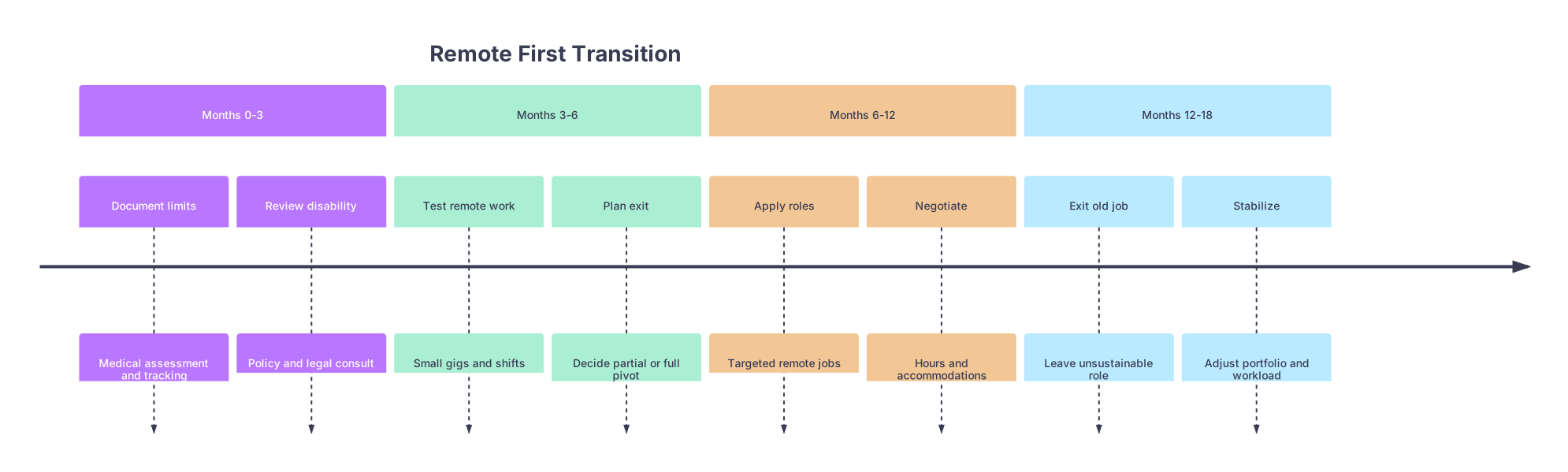
| Period | Event |
|---|---|
| Months 0-3 - Document limits | Medical assessment and tracking |
| Months 0-3 - Review disability | Policy and legal consult |
| Months 3-6 - Test remote work | Small gigs and shifts |
| Months 3-6 - Plan exit | Decide partial or full pivot |
| Months 6-12 - Apply roles | Targeted remote jobs |
| Months 6-12 - Negotiate | Hours and accommodations |
| Months 12-18 - Exit old job | Leave unsustainable role |
| Months 12-18 - Stabilize | Adjust portfolio and workload |
The bottom line
Three things to walk away with:
- You are not obligated to destroy your body to “deserve” a career in medicine. Chronic illness changes the rules. Honor that.
- A sustainable remote‑first career is built from brutal honesty about your limits, not wishful thinking about your “good days.” Structure everything—role choice, schedule, tech—around your worst realistic week.
- Stop chasing the one perfect job. Build a portfolio that spreads risk, fits your disease pattern, and lets you stay in the game on your own terms.
That is not giving up. That’s practicing medicine like your life actually matters.