
42% of full‑time telemedicine physicians still perform in‑person procedures as part of their weekly workload.
That’s the part almost nobody mentions when they warn you that “if you go into telemedicine, you’ll lose all your procedural skills and never get back.” The panic is real—especially post‑residency when you’re staring down loans, lifestyle, and a job market that suddenly loves virtual care.
Let me be blunt: telemedicine can absolutely wreck your procedural skills. But not because video visits are inherently evil. It happens because of how physicians structure their clinical portfolio—and because people lie to themselves about what they’ll “keep up on the side.”
Let’s walk through what actually happens to procedural competence when you move into telemedicine-heavy roles, what the practice pattern data shows, and what is fear‑mongering.
What Really Happens To Procedural Volume When You Go Virtual
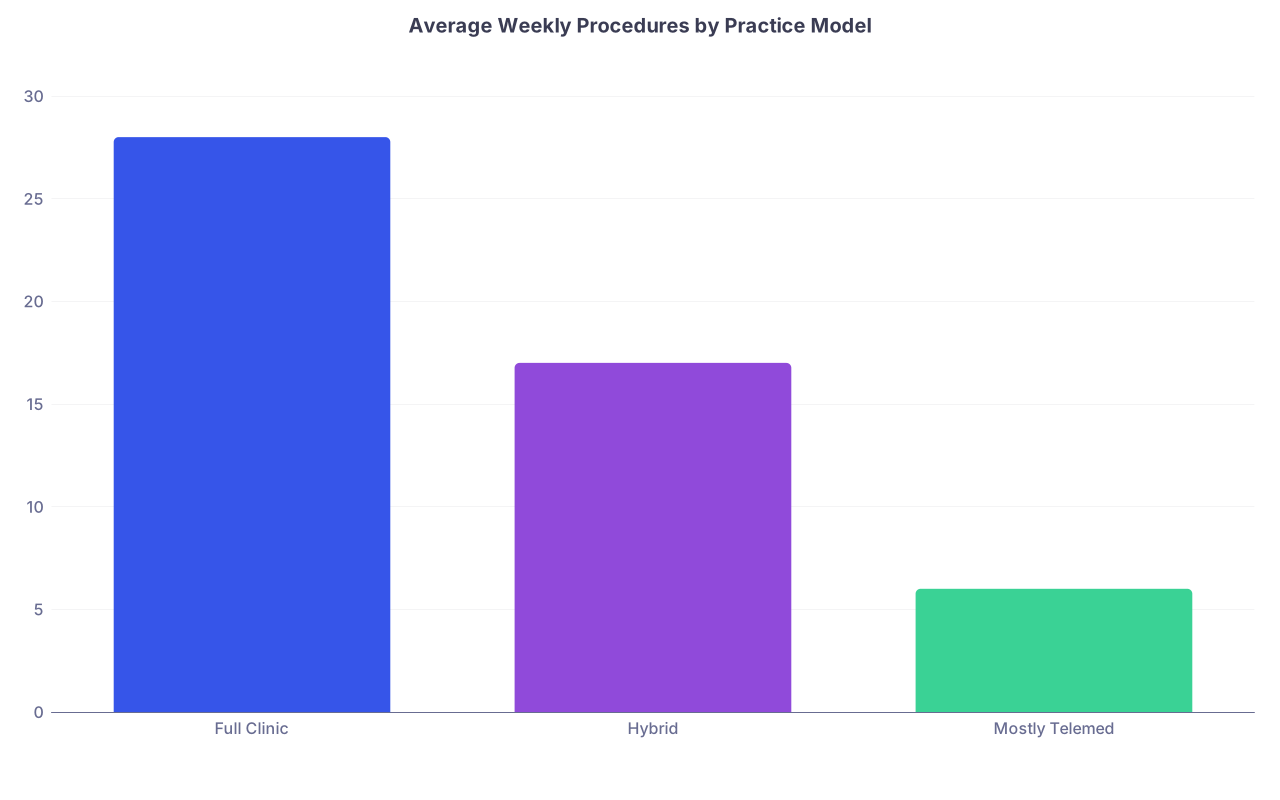
| Category | Value |
|---|---|
| Full Clinic | 28 |
| Hybrid | 17 |
| Mostly Telemed | 6 |
Everyone talks about “skills,” but skills live or die on volume and recency. So the only honest question is: what happens to your procedural volume when you shift into telemedicine?
Across multiple studies looking at EHR logs, billing codes, and work RVUs in outpatient medicine (FM, IM, EM urgent care, some specialties), the pattern repeats:
- Full in‑person outpatient clinicians: roughly 20–35 minor procedures per week depending on specialty and panel (biopsies, I&Ds, joint injections, pap smears, laceration repairs, etc.).
- Hybrid telemedicine + clinic: that drops to something like 10–20 per week, with procedures clustered on designated in‑person days.
- Mostly or fully telemedicine: often fewer than 5 procedures per week; some report effectively zero over months.
None of this is shocking. You can’t suture a scalp lac over Zoom. What matters is not “telemedicine vs no telemedicine.” It’s how extreme the shift is and whether you maintain a procedural “home base.”
I’ve seen three real‑world patterns:
Proceduralists who go virtual but keep a real clinic.
Example: a family physician doing 60% telemed, 40% in‑person at an FQHC or private clinic, still doing IUDs, colpos, excisions, and joint injections. Skills soften a bit at the edges, but they don’t vanish.Docs who say they’ll keep a clinic day “later.”
You know this one. “I’ll do 0.8 FTE telemed now, and then add one procedure day when life calms down.” Life never calms down. Three years later they haven’t placed a single IUD or done a complex laceration repair.People who were never procedural‑heavy to begin with.
A lot of internal medicine and psychiatry docs worry about losing “procedural abilities” they never had much volume in. Their skill decay is more about confidence and exposure than telemedicine itself.
Telemedicine doesn’t magically erase your dexterity. It just quietly zeroes your reps unless you actively fight that drift.
Myth vs Reality: Does Telemedicine “De‑Skill” You?
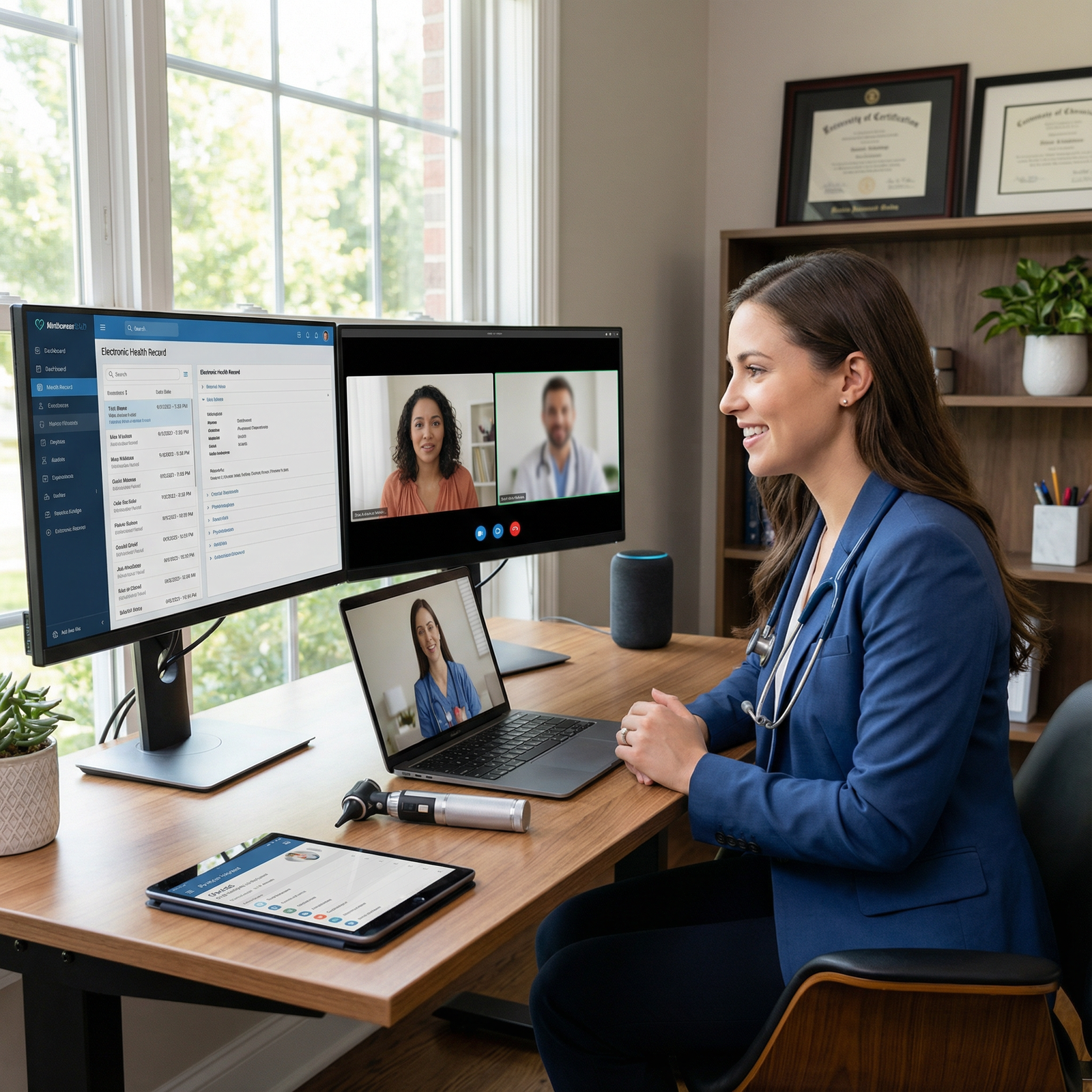
The myth is simple: “If you go into telemedicine, you’ll lose your procedural skills and never get hired for a hands‑on job again.”
Reality is more nuanced and frankly less dramatic.
What the actual evidence says (when you strip the drama)
There are three relevant buckets of data:
Skill decay research in procedural medicine.
Most of this comes from surgery, anesthesia, and procedural EM. The consistent pattern:- High‑frequency simple procedures (line placement, laceration repair, joint injections) degrade slowly when you’ve had solid training and thousands of reps.
- Complex/low-frequency skills (advanced scopes, rare procedures, emergent airways) decay significantly if you don’t practice them regularly, especially if you were marginal at baseline.
That’s not a telemedicine problem. That’s a not doing the procedure problem.
Practice pattern data before vs after telemedicine adoption.
Look at large health systems that rolled out telemed post‑COVID. In primary care and some specialties, physicians who went hybrid didn’t stop doing procedures; they clustered them. Per‑physician procedure counts went down a bit, but not to zero.
Telemedicine-heavy but not telemedicine‑exclusive roles correlated with a moderate drop, not a cliff.Career switches back from telemedicine to in‑person practice.
Plenty of physicians moved into virtual urgent care or tele‑primary‑care during COVID, then later went back to clinic‑heavy roles. The barrier was rarely “you’ve been ruined by telemedicine.” It was:- Hospital privileging requiring documentation of recent procedure logs or a brief proctoring period
- Some ramp‑up/retraining, especially for things they didn’t do much in residency anyway
So, no, telemedicine doesn’t brand you as clinically useless. But if you disappear into pure video visits for 5 years and never touch a scope or suture, yes—you’re going to be rusty to the point of unsafe on day one back in a high‑acuity setting. You’d be rusty even if you’d been doing only chronic disease follow‑ups in a physical office.
The problem isn’t virtual care. It’s monoculture practice.
The Hidden Variable: What Kind of Telemedicine Job You Take
| Role Type | Typical Procedural Impact |
|---|---|
| 100% Virtual Urgent Care | Severe decline |
| Hybrid Clinic + Telemed | Mild to moderate decline |
| Specialty E-Consult/Telemed | Variable, often minimal |
| Telepsychiatry | No procedural impact |
| Tele‑hospitalist/hybrid | Depends on on‑site time |
Not all telemedicine is created equal. Lumping them together is lazy.
100% virtual urgent care / primary care platforms
These are the big VC‑backed platforms and national tele‑urgent‑care services. Workflow is usually 100% remote, very short visits, antibiotic pressure, and basically no procedures. Your “procedural log” is zero because the business model doesn’t include in‑person capacity.
If you plant yourself here full‑time, for years, and do nothing else—yes, your procedural skills will atrophy. Same as if you took a pure administrative job.
The important part: that’s not a generic “telemedicine career.” That’s a highly specific, high‑volume, lowest‑common‑denominator virtual urgent care role.
Hybrid clinic + telemedicine roles
Large systems (Kaiser, Mayo, big academic centers, integrated regional groups) increasingly expect you to do both. Maybe:
- 2–3 days in clinic with full procedural capability
- 1–2 days remote seeing chronic follow‑ups, triage, and low‑acuity visits
In those settings, your procedural volume might drop from 30 per week to 15–20, but it doesn’t die. I’ve literally seen family med docs structure their templates with “procedure blocks” on their in‑person days, and their logs look totally fine when applying for privileges elsewhere.
These physicians leverage telemedicine to offload low‑yield visits and preserve energy for procedures they actually enjoy. Procedural skill does not vanish; it just becomes more intentionally scheduled.
Specialty telemedicine and e‑consults
Derm, endocrinology, ID, GI, rheum—many of these sub‑specialists already do a lot of cognitive work rather than procedures. Telederm consults, e‑consults, virtual results reviews. For them, telemedicine basically doesn’t “ruin skills” because their skill set is diagnostic pattern recognition, not constantly scoping or cutting.
When they do perform procedures (e.g., derm excisions, GI scopes), they usually maintain some on‑site days. The evidence here is almost boring: procedure volume tracks with clinic days, not with “telemedicine” as a concept.
Tele‑hospitalist and remote monitoring roles
These are emerging: tele‑ICU, tele‑hospitalist, remote step‑down management. You’re managing complex patients, but the lines and tubes are being placed by on‑site teams. Skill decay can be real if you’re used to doing your own lines, airways, etc.
But again, the question is: do you keep any on‑site shifts? Many tele‑ICU docs still pick up in‑person ICU weeks, locums, or mixed roles. Their procedures hinge on that, not the tele‑ICU work itself.
What Actually Predicts Skill Loss: Volume, Time, and Delusion
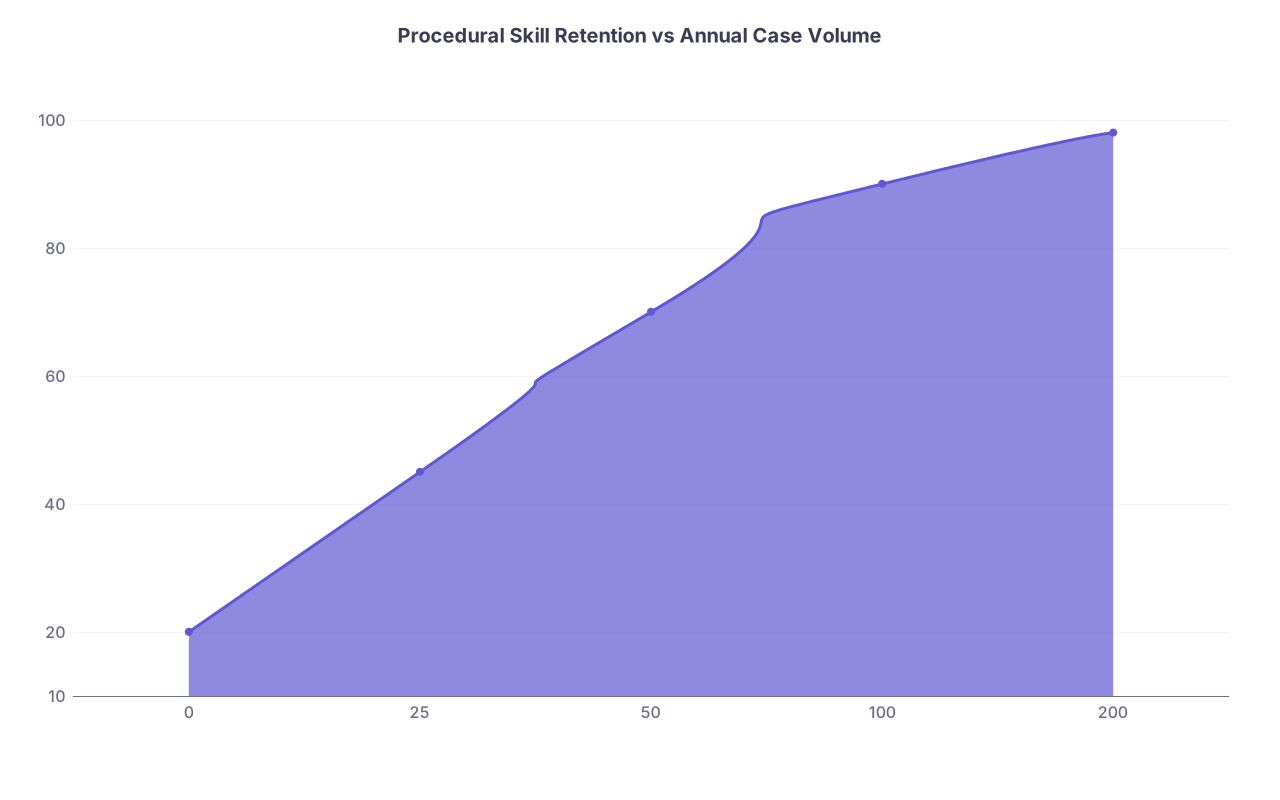
| Category | Value |
|---|---|
| 0 | 20 |
| 25 | 45 |
| 50 | 70 |
| 100 | 90 |
| 200 | 98 |
The research on procedural competence is consistent, whether you’re talking about colonoscopies, central lines, or laparoscopic cholecystectomies:
- Below a certain annual volume threshold, performance declines. Complication rates go up. Time per procedure increases.
- Skills decay faster when you never reach real mastery in training. If you graduated just barely competent at laceration repairs, you’ll lose them faster than the person who did 300 of them in a busy trauma ED.
Telemedicine changes one main variable: how easy it is to drift below those thresholds without noticing.
In a clinic, you feel it. You can’t avoid the fact that you haven’t done a colpo in months because you’re physically there when the nurse says, “We had to send Mrs. X to GYN because nobody here does these confidently anymore.”
On Zoom, that feedback loop is gone. You can delude yourself that you’re still “procedurally capable” because no one ever asks you to prove it. You just click “refer.”
The biggest predictor of ruined procedural skills isn’t “doing telemedicine.” It’s this combination:
- Low baseline procedural volume in residency or early practice
- Long stint (3–5+ years) in 100% virtual, zero‑procedure roles
- No side work or hybrid clinic
- Unwillingness to admit rust and seek re‑training before jumping back into procedural practice
That cocktail will absolutely trash your hands. But again—telemedicine is just the vehicle. The driving force is denial.
Can You Get Your Procedural Skills Back After Telemedicine?

| Step | Description |
|---|---|
| Step 1 | Telemed only practice |
| Step 2 | Stay telemed focused |
| Step 3 | Assess current skills |
| Step 4 | Apply directly |
| Step 5 | Arrange mentorship |
| Step 6 | Proctored procedures |
| Step 7 | Meet privileging criteria |
| Step 8 | Procedural practice |
| Step 9 | Do you want procedural job? |
| Step 10 | Recent cases logged? |
Here’s where a lot of the hysteria is just wrong. Telemedicine doesn’t create a one‑way door.
Hospitals and groups care about three things when you apply for a procedural role:
- Recent case logs (or other proof of practice)
- References who can vouch for your competence
- Willingness to be proctored / supervised initially if your volume has been low
Physicians who’ve been out of the OR or procedure room for years—whether because of admin work, research, parenting leave, or telemedicine—routinely come back through:
- Short re‑entry fellowships or “upskilling” tracks
- Proctored procedure blocks with documented evaluations
- Gradually escalating privileges (simple procedures first, then more complex)
Is it painless? No. You will feel slow, clumsy, and embarrassed at first. Your first 10 I&Ds or IUDs after a long break will be humbling. But this is not some telemedicine‑specific curse. It’s exactly what happens to a hospitalist who hasn’t placed a line in 7 years or an anesthesiologist returning after admin roles.
The difference is mindset. The people who succeed are the ones who say, “Yeah, I’m rusty. I want structured re‑entry.” The ones who fail are the ones who insist they’re fine because “I did tons of these in residency” 9 years ago.
Designing a Telemedicine‑Heavy Career Without Trashing Your Skills
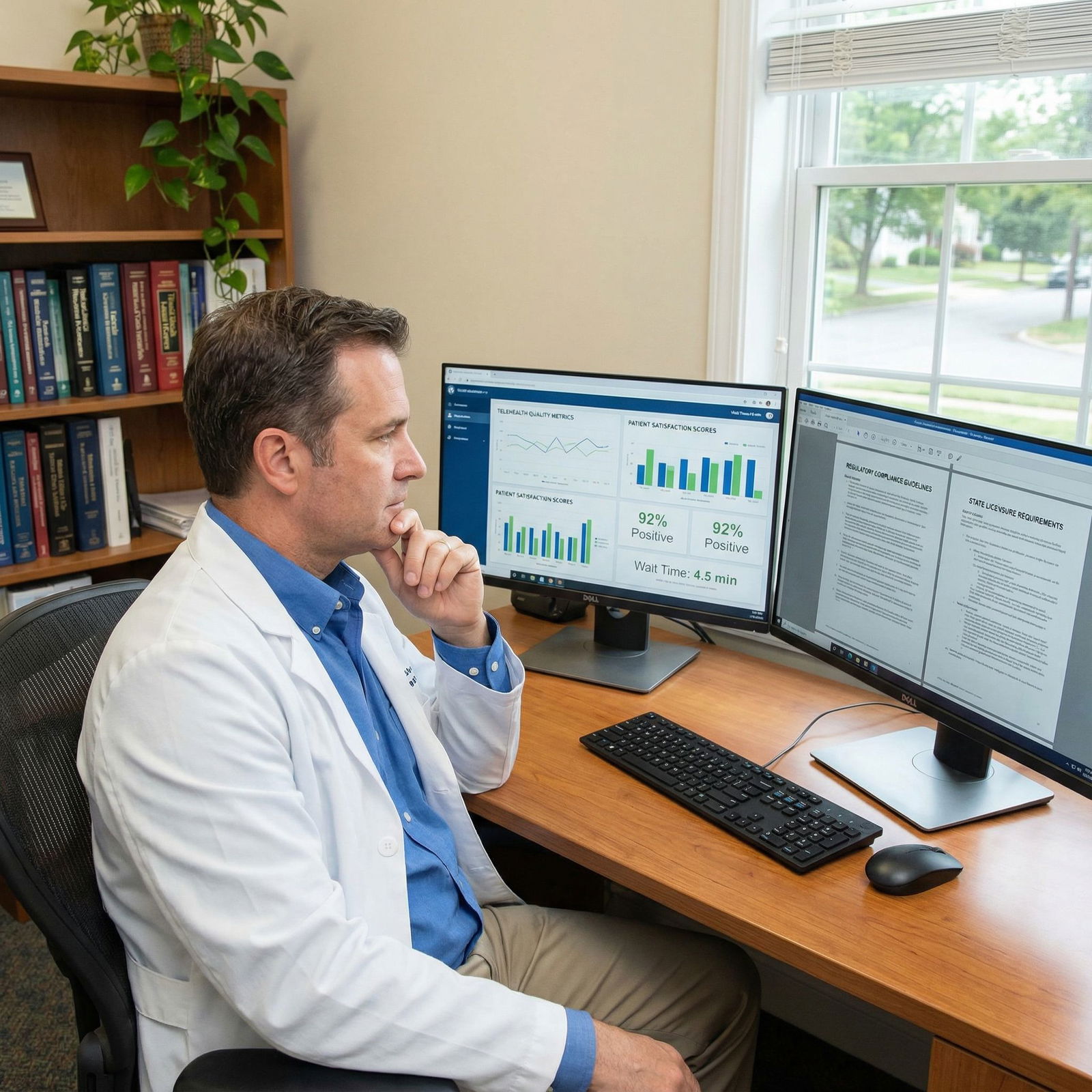
If you’re post‑residency and seriously considering telemedicine, here’s what the data and real‑world experience both support:
- If procedures matter to your career identity (FM with women’s health, EM, certain IM or subspecialties), do not go 100% virtual for years without a concrete plan for in‑person work. Not a “maybe later,” an actual contract or fixed side gig.
- Hybrid roles preserve competence far better than people think. Even a single consistent in‑person day per week—if it’s structured with real procedural volume—can keep you viable.
- Be honest about your baseline. If you barely met your procedural minimums in residency, you cannot afford multi‑year droughts and then expect to walk into a heavy procedural job without re‑training.
Notice what isn’t on that list: “Never do telemedicine.” That’s outdated nonsense.
The smarter move is portfolio design: mix telemedicine (for lifestyle, geography, flexibility, or burnout reduction) with just enough in‑person procedural work to keep your skills above the “dangerously rusty” threshold.
I’ve seen physicians do this with:
- 0.6 FTE local clinic + 0.4 FTE remote tele‑urgent care
- One dedicated procedural clinic day per week, stacked with IUDs, colpos, biopsies, and scopes
- Quarterly in‑person locums blocks in high‑acuity settings, with telemedicine the rest of the time
Their procedural curves do not fall off a cliff. They just flatten a bit. That’s manageable.
The Verdict: Is Telemedicine the Enemy of Your Hands?
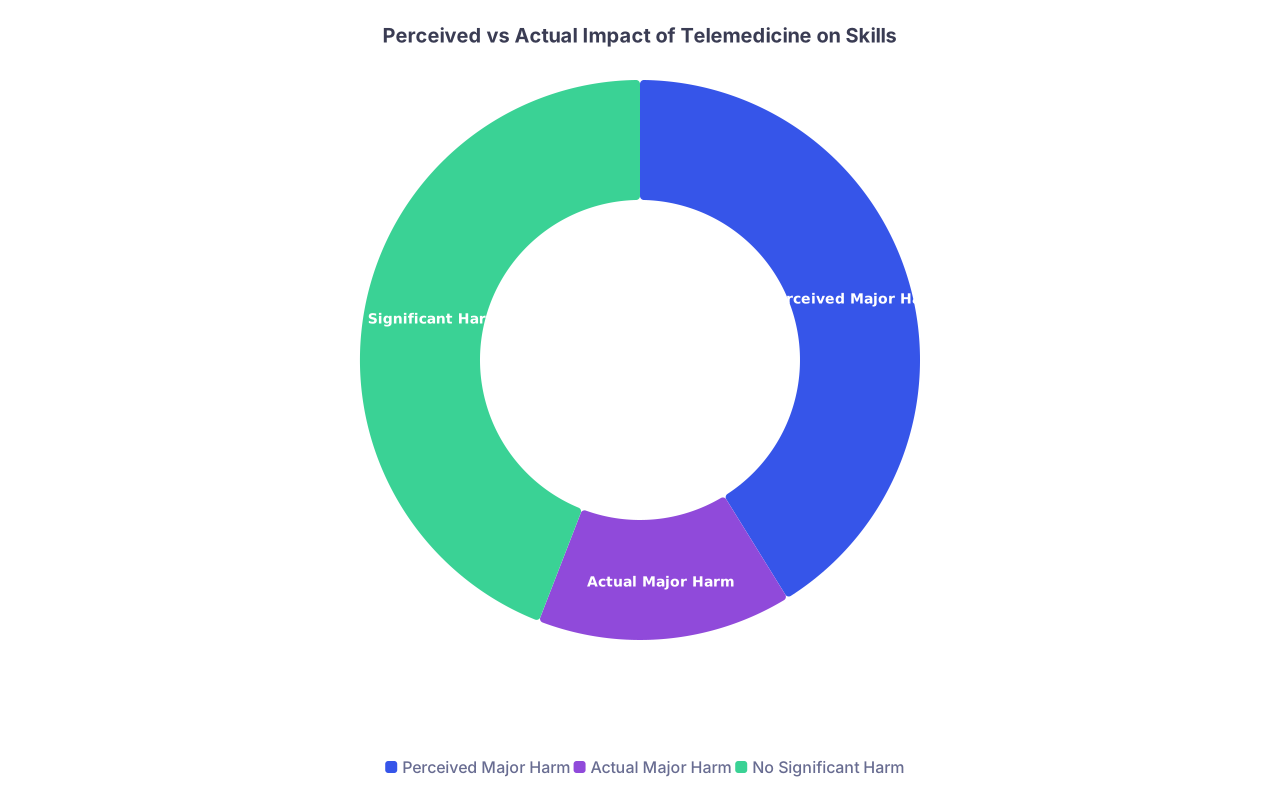
| Category | Value |
|---|---|
| Perceived Major Harm | 70 |
| Actual Major Harm | 25 |
| No Significant Harm | 75 |
Let me strip this down to what the evidence and real‑world patterns actually show.
Telemedicine does not inherently ruin your procedural skills. What ruins them is going years without meaningful procedural volume while pretending you’re still sharp because you once did a bunch of reps in residency.
If you’re thoughtful about your practice mix—keep some in‑person work, track your own procedure counts, and admit when you need re‑entry support—you can have a telemedicine‑heavy career and still be a legitimate proceduralist.
If you choose a 100% no‑procedure virtual job and stay there indefinitely, your hands will absolutely slide backward. Not because of Zoom. Because of zero reps.
So the real questions are brutally simple:
- How much do you actually care about staying procedurally strong?
- What are you willing to structure into your career to make that true, beyond wishful thinking?
Telemedicine is just a tool. It magnifies whatever trajectory you’re already on. If you’re serious about procedural medicine, design your job like you mean it.
Key points:
- Skill loss tracks with volume and time, not with “telemedicine” as a magical poison.
- Hybrid and portfolio careers can preserve procedural competence if you intentionally protect in‑person volume.
- Telemedicine only “ruins” your skills when it enables long‑term avoidance of procedures and honest self‑assessment.