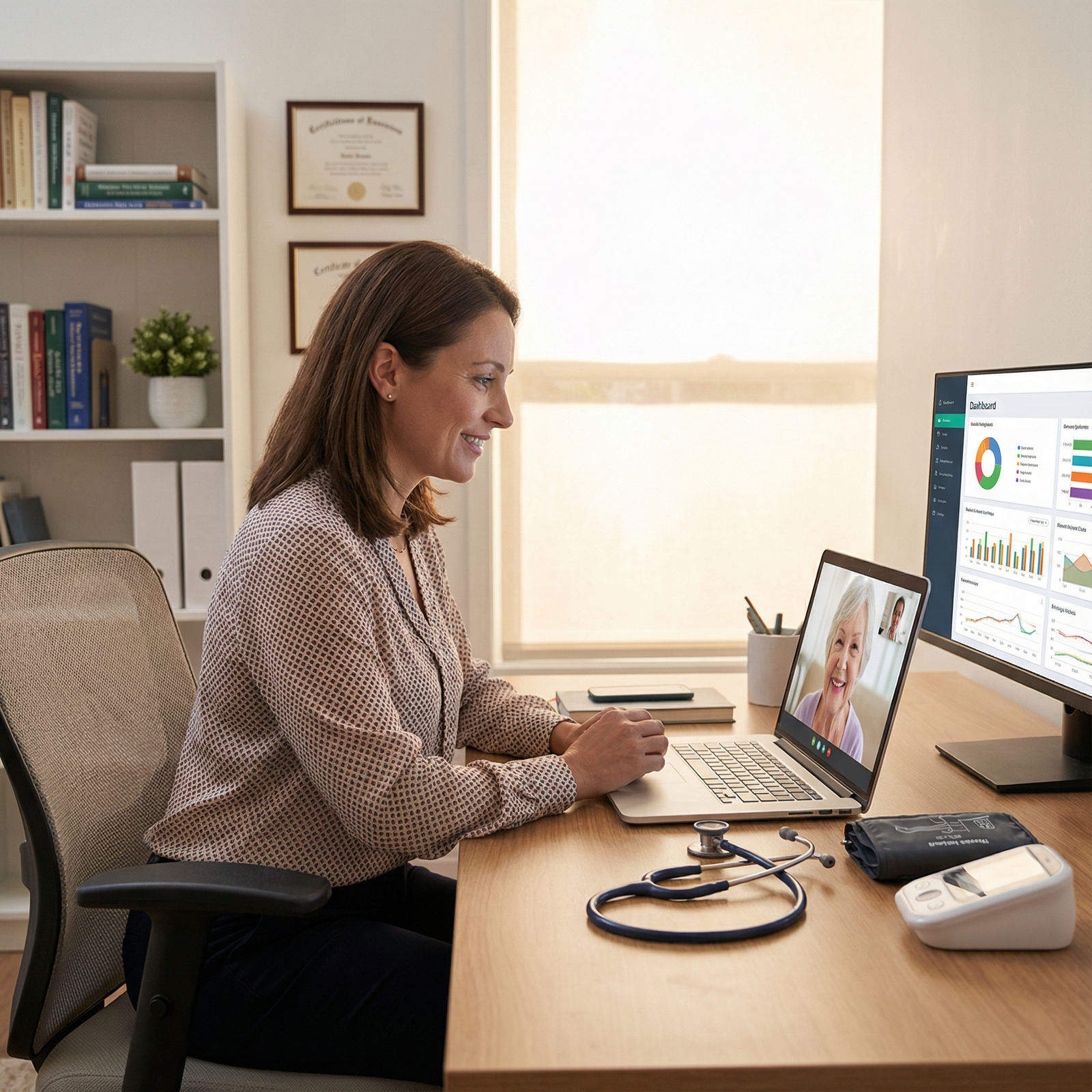
The way most new attendings structure their week is broken—especially if you just became a parent.
You do not need to accept a 5-day grind of 12-hour days plus pumping in supply closets, missing daycare pickup, and FaceTiming your kid goodnight from the parking lot. Telemedicine is the lever you use to blow up that default schedule and rebuild something that actually fits your life.
This is not theoretical. I’ve watched brand-new attendings quietly renegotiate entire weeks—sometimes entire jobs—by strategically adding telehealth. They did not ask permission from the gods of medicine. They designed it.
Here is how you do the same.
Step 1: Get Real About Your Constraints (Not Your Dreams)
You’re a new parent. Start with non‑negotiables, not fantasies.
Ask yourself, concretely:
What times of day are impossible for you to be reliably “on” for patients?
(e.g., 6–8 AM meltdown window, 5–7 PM dinner/bath, middle of the night if you’re the default parent)What do you have to be present for?
Daycare drop-off or pickup? Pediatrician visits? Weekly lactation appointment? Partner’s shift schedule?How many days per week can you handle commuting without losing your mind or your marriage?
Write this down. Not in your head. On paper.
Example of one new attending’s constraints:
- Must pick up from daycare at 4:30 PM three days a week
- Breastfeeding, needs predictable pumping or baby access
- Partner on 7-on/7-off nights as a hospitalist
- No overnight call if at all avoidable first year post-baby
Once you see your reality, you can see where telemedicine fits. Because telehealth is not about “work from anywhere.” It’s about moving clinical hours into the slots that actually work with your parenting life.
Step 2: Understand Your Telemedicine Options (So You Don’t Get Screwed)
Telemedicine is not one thing. It’s several different beasts.
| Job Type | Schedule Control | Pay Style | Best For |
|---|---|---|---|
| Big national platform | Medium | Per visit | Extra income, flexibility |
| Health system teleclinic | Low-Medium | Salary/RVU | Hybrid jobs, benefits |
| Direct-to-employer | Medium-High | Salary/contract | Stable daytime work |
| Your own telepractice | High | You set it | Long-term control |
1. Big National Telemedicine Platforms
Think Amwell, Teladoc, MDLive, etc.
Pros:
- You log on, see patients, log off.
- Often evenings/weekends which may actually be good if your partner can cover then.
- No overhead, no marketing.
Cons:
- Rates can be mediocre.
- You’re a widget in their machine. No one cares about your daycare pickup.
This is good as an add‑on for extra money or to replace one clinic half‑day, not as your entire career start.
2. Health System Teleclinics
Your hospital or large group may have an existing telehealth arm: virtual primary care, follow‑up visits, triage.
Pros:
- Salary, benefits, and internal RVU credit.
- Easy continuity with your in‑person patients.
- IT, compliance, malpractice already handled.
Cons:
- Less control; you live by their templates and schedules.
- Administrators may still think “tele” means “extra work after clinic.”
This is ideal if you want a hybrid job with a steady paycheck and your badge still works for the hospital parking garage.
3. Direct‑to‑Employer or Health Plan Telemedicine
These are contracts where a group (could be your own) provides telehealth to a defined population: self‑insured employer, Medicaid MCO, etc.
Pros:
- More predictable panel and schedule.
- Often daytime hours only.
- Can negotiate strongly for remote and flexible work since it’s a selling point.
Cons:
- Harder to break into without connections.
- Contract risk: payer changes, employer switches vendor.
4. Your Own Telepractice
You either set up a virtual clinic from scratch or bolt telehealth onto a very small in‑person practice.
Pros:
- You call the shots. Schedule, patient type, visit length, pay structure.
- Massive flexibility as a parent once it’s running.
Cons:
- Slow ramp-up. You are now the IT, HR, legal, and marketing departments.
- Requires comfort with business and some risk tolerance.
If you’re a brand‑new attending and a brand‑new parent, I’d usually say: hybrid first, full solo telepractice later. Do not try to DIY every variable at once with a newborn.
Step 3: Map a Weekly Grid and Plug Telemedicine In
Stop thinking in “clinic days.” Start thinking in blocks.
Pull up a weekly grid (I like 30‑minute blocks) from 6 AM to 10 PM. Put in:
- Sleep (realistic, not idealized)
- Childcare hours
- Commute time
- Partner’s schedule
- Fixed obligations (M&M, tumor board, etc.)
Now ask: Where are the clean 2–4 hour blocks when you:
- Have quiet + reliable childcare or partner coverage
- Are still a functioning human mentally
Those blocks are your telemedicine gold.
Here’s what a realistic “new parent attending” hybrid week might look like in year one:
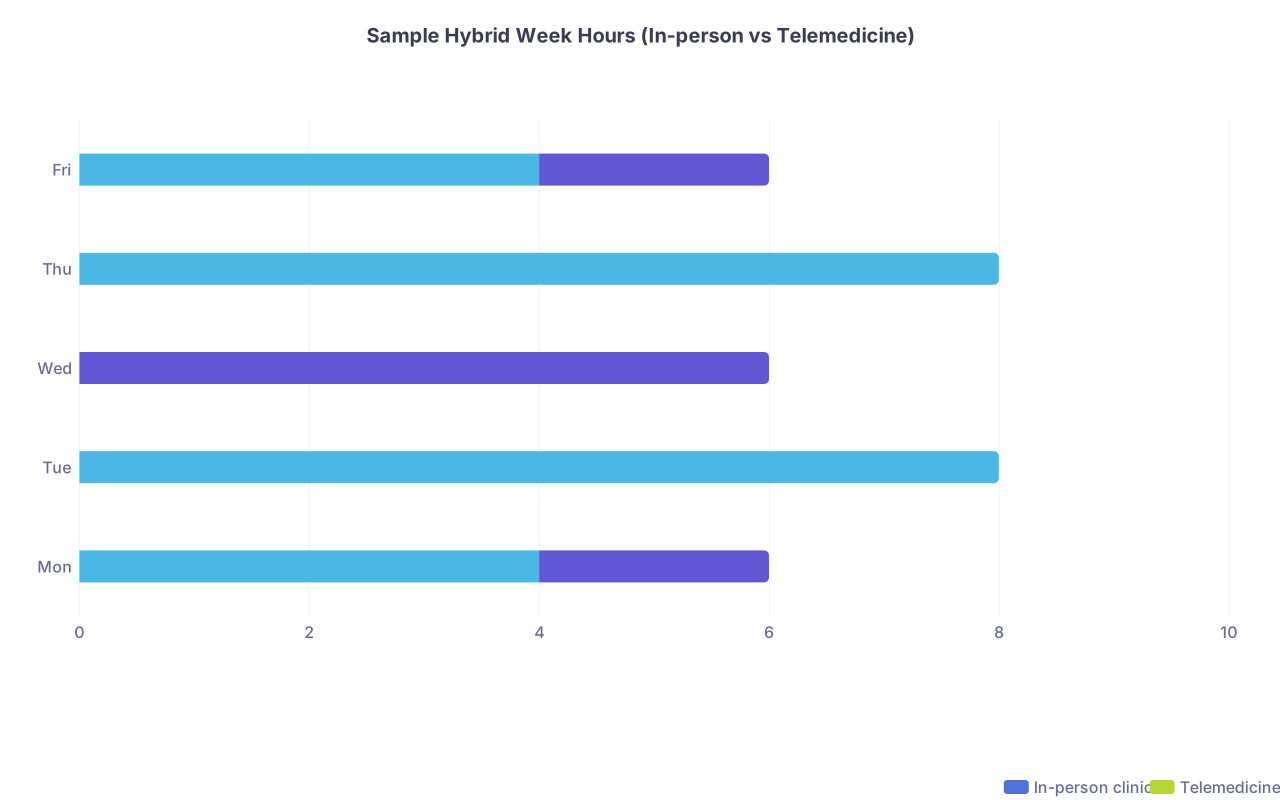
| Category | In-person clinic | Telemedicine |
|---|---|---|
| Mon | 4 | 2 |
| Tue | 8 | 0 |
| Wed | 0 | 6 |
| Thu | 8 | 0 |
| Fri | 4 | 2 |
Example structure:
Monday
8–12: In‑person clinic
1–3: Telemedicine from hospital office or home
3:30 pickup + parentingTuesday
8–5: In‑person, but no telemed added. This is your heavy face‑to‑face day.Wednesday
8–2: Telemedicine from home (grandparent or nanny at house)
2:30–5: Pediatric visits, errands, nap on couch if your soul requires itThursday
8–5: In‑person clinic, maybe procedures if your field uses them.Friday
8–12: Telemedicine
Afternoon: admin, notes, and actually seeing your child before dark.
That week is roughly a 35–40 clinical‑hour workload when you count charting, but only 2–3 commute days and two solid telehealth blocks.
Is every employer going to hand you this on a platter? Of course not. You will design and then negotiate it.
Step 4: Negotiating Telemedicine as a Core Part of Your Job
If you’re still in offer phase or renegotiation, this is where you stop being passive.
Your ask is not: “Can I sometimes work from home?”
Your ask is: “Here’s the clinical value I’ll provide, and here’s the modality mix that delivers it.”
Go In With a Concrete Proposal
Do not say “a telemedicine day.” Say something like:
“I’d like to structure 2–3 half‑days per week of scheduled telemedicine visits, primarily follow‑ups and chronic disease management. Here’s what that might look like in visit volume and RVUs.”
Spell it out:
- Number of tele visits per half‑day
- Expected show rate (tele no‑shows can actually be lower)
- Type of visits suitable for telehealth in your specialty
Then explicitly say how it helps them:
- Frees physical rooms for higher acuity/new patients
- Expands access (lunch, early morning, later evening blocks)
- Allows you to be more available for call or urgent tele slots without driving in

| Step | Description |
|---|---|
| Step 1 | Define weekly ideal |
| Step 2 | Draft specific tele blocks |
| Step 3 | Translate to visit numbers |
| Step 4 | Frame benefits to group |
| Step 5 | Meet with leadership |
| Step 6 | Adjust but keep core blocks |
| Step 7 | Get schedule in writing |
| Step 8 | Pushback? |
Anticipate the Pushback
You will almost certainly hear some version of:
- “We tried tele, patients prefer in‑person.”
- “How do we know you’ll be productive at home?”
- “But everybody else is on site those days.”
You respond with data and guardrails:
- Offer a 3–6 month pilot with clear metrics: show rates, RVUs, patient satisfaction scores.
- Volunteer to do a few group‑benefiting tasks in those tele blocks (e.g., urgent same‑day tele slots, triaging messages) so they see you as high‑value, not “the one who works from home.”
And then you insist on this: your tele blocks are protected clinical time. Not dumping grounds for every admin task no one else wants.
Step 5: Set Up a Telemedicine Home Base That Actually Works With a Baby Nearby
Telemedicine from home with a baby in the house is absolutely doable. As long as you stop pretending you can “just wing it” between naps.
Minimum requirements:
- A door that closes. I do not care if it’s a converted closet. Patients do not need to see your toddler streaking by.
- Reliable childcare or partner coverage for the entire tele block. “The baby is usually chill at that time” is a failure plan.
- Redundant internet (hotspot backup, at least).
Think like you’re on call in a home reading room, not “just at home.”

Tech Setup (Don’t Skimp Here)
Bare minimum:
- External webcam (built‑in cameras make you look like a hostage)
- Decent ring light or window light from in front of you
- Wired or high‑quality wireless headset (tiny baby screams travel through walls)
- Second monitor if your EMR is a nightmare
- Physically separate work and baby zones so you are not tempted to bounce a baby while managing a complex televisit
Also: position your desk so patients see a neutral wall/bookshelf, not the crib behind you. This is about professionalism and also boundaries.
Step 6: Decide What You Will Not Do Via Telemedicine
Rebuilding your work week with tele doesn’t mean stuffing everything into a screen.
Choose deliberately:
Good telemedicine visit types (varies by specialty, but generally):
- Chronic disease follow‑ups (hypertension, diabetes, depression check‑ins)
- Medication management
- Lab/imaging result discussions
- Post‑op checks where wound can be visually inspected
- Triage visits for “do I need to come in?”
Bad telemedicine visit types (for most):
- New patients with complex, multi‑system issues
- Anything that truly needs a physical exam to make a safe decision
- High‑risk or highly emotional conversations if you don’t have privacy or time buffer
If you’re in primary care, for example, an efficient model is:
- Tele blocks: 80% follow‑ups, 20% triage / acute minor complaints.
- In‑person days: new patients, procedures, exams that need hands.
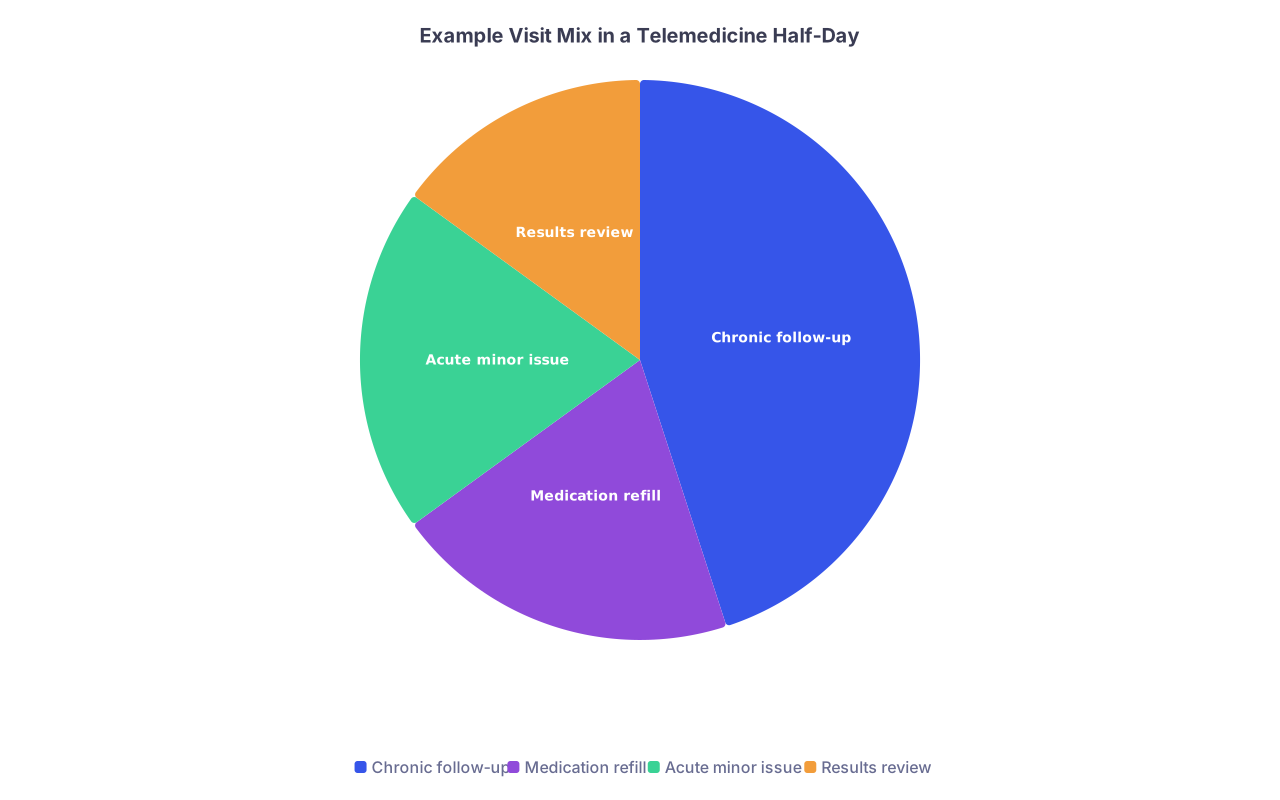
| Category | Value |
|---|---|
| Chronic follow-up | 45 |
| Medication refill | 20 |
| Acute minor issue | 20 |
| Results review | 15 |
Do not let your group dump all the 25‑minute trainwreck patients into your 15‑minute tele slots “because you’re at home.”
Step 7: Money, RVUs, and Not Underselling Yourself
Huge trap: viewing telemedicine as “lighter work” and accepting lighter pay.
If your group pays by RVU: tele visits should have the same RVU credit as equivalent in‑person codes. The documentation and liability aren’t lower just because you’re in yoga pants.
If you’re per‑visit with a national telecompany:
- Calculate your effective hourly rate, including charting, messages, and pre‑chart review.
- If you’re consistently below what you’d make in clinic, you’re subsidizing them with your time.

| Category | Value |
|---|---|
| In-person clinic | 180 |
| Health system tele | 170 |
| National tele platform | 110 |
Use telemedicine to shift when and where you work, not to accept a permanent pay cut.
A reasonable approach your first attending year as a parent:
- Lock in a stable base salary with hybrid (in‑person + internal tele).
- Use external tele (if you want) as variable income when baby sleep is stable and you know your limits.
Do not build your entire mortgage on a per‑visit gig that can change rates overnight.
Step 8: Guardrails So Telemedicine Doesn’t Eat Your Life
Here’s the dark side: done badly, telemedicine turns into “I’m always sort of working and sort of parenting and not really doing either well.”
Protect yourself:
Hard starts and stops for tele blocks.
You’re on at 8:00, off at 12:00. No “just one more” 11:58 add‑on when daycare pickup is 12:15.No asynchronous inbox chaos bleeding out of hours.
Push your group toward pooled tele inbaskets, clear coverage rules, and defined message time. Tele + parenthood + 200 unchecked messages is a straight shot to burnout.No camera‑on while feeding or soothing your child.
You’re a professional. Your patients are not your parenting audience.Built‑in buffer after emotionally intense tele sessions.
Taking a fetal demise consult from your bedroom and then walking directly into bath time with your toddler is psychologically brutal. Block 15 minutes here and there if your specialty goes there.

Step 9: Re‑Evaluate Every 3–6 Months as Your Kid Grows
The tele week that works with a 3‑month‑old will not work with a 2‑year‑old.
Every few months, reassess:
- Is the timing of tele blocks still working with naps, preschool, partner schedule?
- Are you drowning in messages because tele visits generate more “quick follow‑up” than you expected?
- Are you hitting your RVU or income targets, or is tele secretly underpaying you?
Do small iterative changes instead of waiting until you are completely miserable.
Some common pivots I’ve seen:
- Moving early‑morning tele to mid‑day once daycare drop‑off stabilizes
- Swapping one in‑person day for tele when second baby arrives
- Adding a short evening tele block 1–2 days a week once kids have predictable bedtimes (and you’re actually okay working then)
Think of your schedule as a versioned piece of software, not stone tablets. Version 1.0 is not the final form.
Frequently Asked Questions
1. I’m starting my first attending job soon—how early can I bring up telemedicine in negotiations without looking “lazy”?
You bring it up while discussing clinical load and schedule, not as an afterthought. The key is framing. You’re not asking to “work less.” You’re saying: “Here’s how I can cover X patient hours per week, expand access, and still be sustainable long‑term.” Have your numbers: projected visits per block, types of visits appropriate for tele, how it uses physical space more efficiently. If you sound like you’re solving their problems, not just your childcare, you won’t look lazy—you’ll look strategic.
2. What if my group has no telemedicine structure at all—am I stuck?
No, but you’ll have to do more groundwork. Start with a small pilot: one half‑day per week of tele visits for established patients. Work with IT/compliance to use the existing EMR’s telehealth module or a HIPAA‑compliant platform. Offer to track basic metrics—no‑show rate, patient satisfaction, RVUs—and present back after 3–6 months. Many groups are tele‑skeptical mainly because no one’s taken ownership. You become that person…with the side benefit of locking in your tele blocks early.
3. Is it realistic to rely on telemedicine income if I cut my in‑person FTE to be home more?
It can be, but you have to be cold‑eyed about the math and the risk. Internal tele (within your system) usually tracks your existing pay structure, so cutting to 0.6 FTE in‑person and adding 0.2 FTE internal tele is often fine. Relying on external per‑visit tele companies for core income is riskier: rates can drop, volume can crash, contracts can change. Use external tele as a supplement or bridge, not the entire foundation, especially with a new baby and fixed expenses.
4. How do I keep tele days from turning into “I’m at home so I should also do chores and childcare”?
You draw a line and enforce it like an ICU attending on rounds. During tele blocks, you’re at work. That means: childcare is covered, door is closed, you’re in professional mode. No laundry flips “between patients,” no watching the baby “until the next visit.” If your partner or family keeps treating tele days as flexible, have a blunt conversation: these hours are what make the whole hybrid schedule possible. Break them, and you lose the case to your group that tele is viable. Protect those blocks, or this whole redesign collapses.
Bottom line:
- Design your ideal week around your actual parenting constraints, then plug telemedicine into the best‑fit blocks.
- Negotiate tele as a core, measurable part of your job—not a perk you quietly squeeze in.
- Protect your tele time, tech setup, and income like a professional, and keep iterating as your kid (and career) grows.