The future of outpatient addiction medicine is being built on Zoom and e-prescribing platforms, not in hospital basements.
If you have any interest in addiction medicine post‑residency, telehealth is not a side curiosity. It is the dominant growth area. Especially for buprenorphine.
Let me break down exactly what that looks like as a career: clinical realities, regulatory traps, monitoring workflows, and how to stay out of trouble with the DEA, payors, and your medical board.
1. The Regulatory Reality After the “X-Waiver” Era
The marketing pitch from telehealth companies is simple: “No X-waiver, work from home, prescribe bupe anywhere.” That is about 40% true and 60% dangerously incomplete.
Where the rules actually stand (post-2023)
As of late 2023, the X‑waiver is gone, but buprenorphine is still a Schedule III controlled substance. That means three buckets of rules:
- Federal controlled substance law (DEA / Ryan Haight Act)
- State medical and pharmacy law (including telemedicine‑specific rules)
- Payer rules (Medicare, Medicaid, commercial plans, PBMs)
The Ryan Haight Act historically required an in‑person evaluation before prescribing controlled substances. During COVID, that was waived under a public health emergency. Those flexibilities were extended and then DEA released proposed permanent changes. The final permanent rule set is still evolving, but the direction is fairly clear:
- Pure telemedicine initiation of buprenorphine will remain possible under defined circumstances.
- There will be documentation and verification requirements that are significantly more structured than what you might have seen in 2020‑2021 “startup cowboy” days.
- Cross‑state practice without appropriate licensure is still a career‑ending mistake. No telehealth rule changes that.
If you are signing a telehealth addiction job now, you must ask:
- How does your company comply with Ryan Haight (or its replacement framework)?
- Who is tracking the end dates of temporary waivers and state‑level telehealth emergency rules?
- What is the protocol when a patient needs to transition from tele-only to hybrid or in‑person?
If all you get is hand‑waving: walk away.
2. Tele-Buprenorphine as a Clinical Job: What Your Day Actually Looks Like
Forget the glossy brochure about “flexible remote work.” The work itself is highly structured if done correctly.
Patient flow and visit mix
Most tele‑addiction practices that emphasize buprenorphine will have roughly:
- New patient intakes: 20–30 minutes
- Follow‑ups: 10–20 minutes
- Panel size per full‑time clinician: 250–400 buprenorphine patients is common once established
A typical day in a scaled tele‑bupe practice might look like:
- 18–25 patient encounters per day
- 2–4 new intakes
- The rest short follow‑ups, med refills, lab and UDS result reviews, and a trickle of crisis calls/messages
Your actual work:
- Assessing opioid use disorder severity and appropriateness for office‑based buprenorphine
- Induction management (home inductions, increasingly the default)
- Dose titration and maintenance
- Co‑occurring substance use (stimulants, benzodiazepines, alcohol)
- Basic mental health comorbidities (often with collaborative psychiatrists/NPs, but not always)
- Documentation that is audit‑proof
The biggest misconception: that telehealth somehow “simplifies” addiction medicine. It does not. It just compresses it into shorter, denser visits and adds logistical complexity for monitoring and compliance.
3. Buprenorphine via Telehealth: Induction, Dosing, and Safety
Telehealth buprenorphine is clinically safe and effective when done properly. The problems arise when speed, volume, or startup pressure replaces clinical judgment.
Who is appropriate for tele-buprenorphine?
If you plan to do this seriously, you should have a clear internal triage framework. Something like this:
Good tele‑only candidates:
- Stable housing
- Smartphone or device literacy
- No history of severe precipitated withdrawal with bupe
- No uncontrolled benzo use, no severe alcohol withdrawal history
- No active suicidal ideation or psychosis
- Able to access a lab or mailed UDS kits
Tele‑first but likely needing local backup:
- Complex medical comorbidities (advanced liver disease, pregnancy, severe COPD)
- Heavy polysubstance use where inpatient or intensive outpatient might be needed
- History of overdose in the last 3–6 months
Poor tele‑only candidates (should have local in‑person resource ready):
- Unstable housing / no private space
- No reliable way to receive meds or testing (no address, changing phones)
- Recurrent diversion or repeated lost scripts early in treatment
- Uncontrolled severe psychiatric illness
If your telehealth employer wants every single referral started and kept in tele‑only, regardless of red flags, you should assume the business model is volume first, risk management second.
Tele-induction: how it works when done correctly
Home inductions are now standard, but doing them via telehealth needs structure. A reasonable protocol:
- Verify diagnosis of OUD, prior treatment history, and previous bupe exposure.
- Confirm actual opioid being used (heroin, pressed “M30” pills, fentanyl powder, methadone, etc.).
- Educate on precipitated withdrawal with concrete examples, not vague warnings.
- Use objective tools (e.g., COWS) but also very clear, plain language: “shaking, sweating, runny nose, yawning, stomach cramps, pupils large, cannot sit still”.
Typical approach:
- Short‑acting opioids (heroin, oxycodone): wait 12–24 hours after last use and until moderate withdrawal.
- Methadone: usually not appropriate for classic home induction; either micro‑induction or taper to lower methadone dose with coordination. Many tele practices will not touch direct methadone‑to‑bupe transitions.
- Fentanyl: here is where people get burned. Fentanyl’s pharmacokinetics make traditional timing unreliable. Micro‑induction or higher‑tolerance protocols can help, but you need a system, not just “wait longer.”
You will often:
- Send bupe prescription (usually films) in advance
- Provide written induction instructions via patient portal or secure message
- Schedule follow‑up tele‑visit within 24–72 hours
- Have on‑call or messaging backup for patients in distress during induction
If the company you are considering has “induction by automated text bot” with minimal human backup, that is a malpractice case waiting to happen, and you will be the name on the chart.
4. Monitoring in a Telehealth Addiction Practice: UDS, PDMP, and Red Flags
You cannot do tele‑addiction medicine safely at scale without a tight monitoring system. Period.
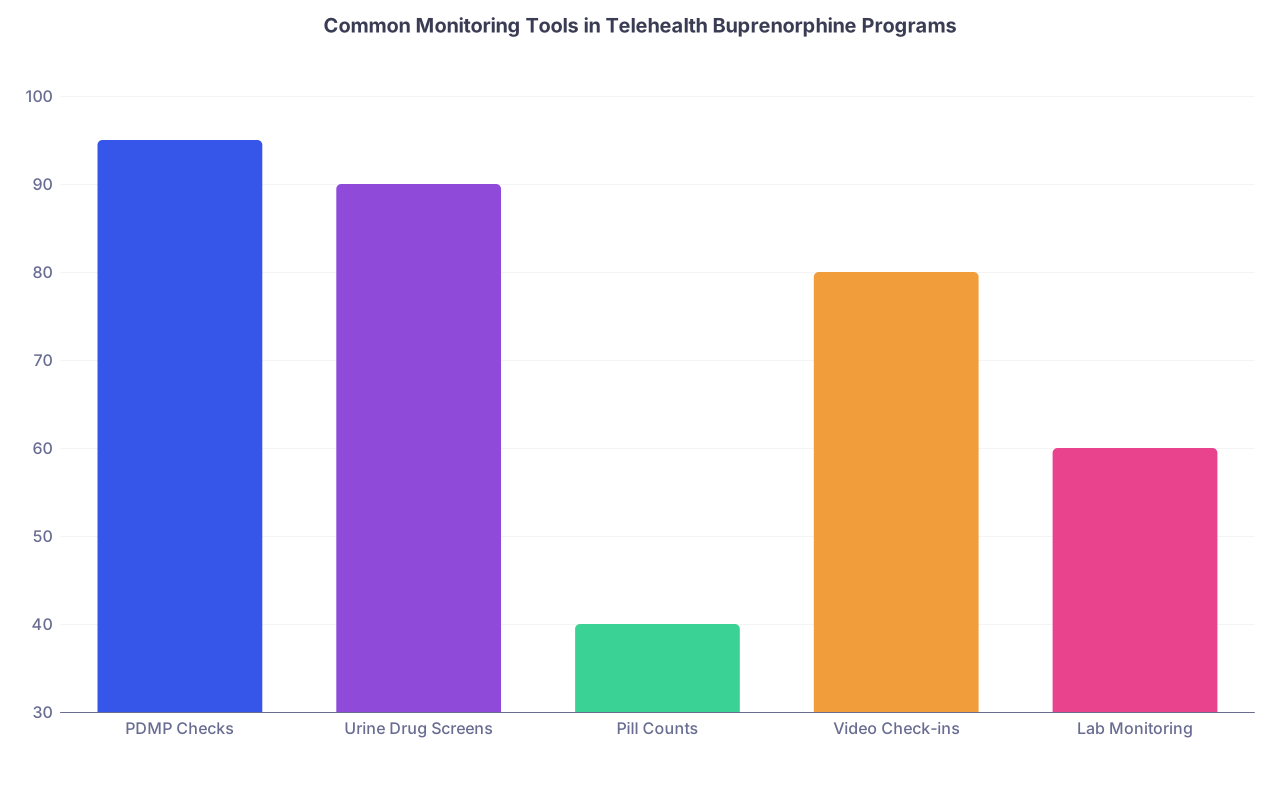
| Category | Value |
|---|---|
| PDMP Checks | 95 |
| Urine Drug Screens | 90 |
| Pill Counts | 40 |
| Video Check-ins | 80 |
| Lab Monitoring | 60 |
Urine drug screens (or oral fluid): logistics and strategy
The old model: you have a clinic, you have a bathroom, you collect UDS in person.
Telehealth breaks that. Now you have three options:
Lab‑based UDS:
- Electronic lab orders (Quest, Labcorp, regional labs)
- Patient travels to a draw site or PSC
- Pros: most legitimate in the eyes of payors/state boards; chain of custody is built‑in
- Cons: rural access, transportation barriers, delays in results
Mailed home UDS kits with remote observation:
- You or staff mail CLIA‑waived cups
- Patient does test on camera (or uploads time‑stamped photos)
- Pros: high feasibility; quick feedback
- Cons: weaker chain of custody; higher risk of substitution/adulteration; state boards vary in how much they respect this
Hybrid models:
- Some patients use labs, others home kits based on risk stratification
- New or higher‑risk patients often lab‑based; stable long‑term patients sometimes step down to less frequent / less intensive monitoring
Frequency usually depends on phase:
- Induction / early maintenance: monthly or even every 2 weeks
- Stable long‑term on a steady dose without red flags: every 3 months is common, sometimes longer if regulations allow and risk is low
- High‑risk patterns (ongoing illicit use, early refills): more frequent, often with confirmatory testing
Learn to read UDS patterns, not single results. For example:
- Buprenorphine negative, norbuprenorphine negative, but prescription active → diversion or non‑adherence likely
- Bupe positive but no metabolite in confirmatory testing → spiking the sample
- BZD or stimulant positives in someone who “forgot” their Adderall prescriber’s name for the 3rd time → you know what that is
PDMP checks: non‑negotiable
If your telehealth employer does not have PDMP integration or a clear manual workflow, they are inviting DEA problems.
Reasonable standard:
- PDMP check at intake
- PDMP check at every refill or at defined intervals (e.g., every 30–90 days) depending on state rules
- Document: “PDMP checked [date], no additional opioid or BZD prescriptions detected outside known prescribers” or similar
Red flags on PDMP that you cannot ignore:
- Multiple buprenorphine prescribers simultaneously
- Ongoing high‑dose short‑acting opioid or BZD prescriptions from other prescribers you were not told about
- Out‑of‑state pharmacies that suggest doctor‑shopping
Other monitoring tools
You will see and possibly be asked to use:
- Video “pill counts” (patient shows medication on camera, counts out remaining films or tabs)
- Smart pill bottles (adherence monitoring)
- Geofencing or app‑based “check‑ins” (some startups tried this; results mixed and can feel intrusive)
- Collateral contacts (family/caregivers) with patient permission
The big picture: You want enough objective data to defend your prescribing decisions in front of a medical board.
5. Compliance: DEA, Boards, and Corporate Oversight
“Compliance” in tele‑addiction medicine is not a bureaucratic sideline. It is the line between a sustainable career and being the scapegoat when a startup implodes.
| Domain | What You Must Have in Place |
|---|---|
| Licensure | Active license in patient’s state at time of visit |
| DEA Registration | DEA number valid in prescribing state(s) |
| Telehealth Rules | Clear policy on audio vs video, first visit rules |
| Documentation | Problem list, assessment, rationale, monitoring |
| Monitoring | UDS/PDMP protocols with documented review |
| eRx Controls | EPCS setup, pharmacy verification process |
Licensure and DEA: boring but lethal if ignored
You can only practice medicine—and prescribe buprenorphine—in states where:
- You hold an active, unrestricted medical license
- Your DEA registration is valid for that state (multi‑state registrations are possible; confirm with your employer who holds what)
Common telehealth company failure: scheduling you with patients in a state where your license or DEA is “processing” or “about to be renewed.” If you prescribe in that window, you are exposed, not their scheduling department.
You should have:
- A written list of states you are allowed to see patients in
- Direct access to a credentialing contact who updates you when a state flips from “pending” to “active”
Documentation that survives audits
Here is where you separate yourself from the “visit factory” mentality.
For each buprenorphine patient you should habitually include:
- Clear OUD diagnosis and severity
- Treatment goals (not just “continue buprenorphine,” but mention function: work, parenting, reduced use)
- Rationale for dose and any increases
- Reference to monitoring: “UDS on [date]; PDMP reviewed; no aberrant findings” or “UDS positive for cocaine, addressed in visit, harm reduction counseling, close follow‑up planned”
- Risk‑benefit discussion when continuing bupe in context of continued non‑opioid substance use
DEA and boards care about patterns. If every note is two lines and all say “stable, refill,” you will not look good in any investigation.
Corporate pressure and red flags in job offers
You are entering a market where:
- Investors want growth
- Payers want utilization management
- Regulators want evidence of control over controlled substances
That tension lands directly on the clinician.
Things that should make you very suspicious:
- “We expect 30+ visits per day, mostly 10‑minute follow‑ups” for a full‑time role
- No scheduled breaks to review labs, PDMP, or messages
- No clear medical director or compliance lead who actually practices addiction medicine
- Compensation heavily tied to visit volume without any acknowledgement of complexity or risk
Ask blunt questions:
- What do you do when a patient has repeated negative UDS for bupe?
- How often do you discharge for non‑adherence or diversion concerns?
- Who decides when a patient needs a higher level of care (IOP, residential) and how is that coordinated?
If the answer is “we do not discharge; we just keep seeing them” or “we leave that to the clinician” without infrastructure, you know how that story ends.
6. Telehealth Addiction Jobs: Pay, Workload, and Career Trajectory
Now let us talk about the part everyone cares about but few companies are transparent about: your job as an actual physician.
Compensation models
Tele‑addiction medicine jobs after residency commonly fall into 3 buckets:
Salaried with RVU/bonus component
- Base W‑2 salary (for full‑time often in the $220–300k range for general psychiatry or FM/IM with addiction focus; higher if board‑certified in addiction medicine / psychiatry or if leadership role)
- Productivity bonus if you exceed a visit or RVU threshold
- Pros: stability, benefits, malpractice provided
- Cons: volume pressure if bonus structure is aggressive
Hourly 1099 contractor
- Flat rate per hour (e.g., $120–$200/hr depending on demand, board certification, and whether nights/weekends)
- Sometimes with minimum hours per week
- Pros: flexibility, no direct volume pressure
- Cons: no benefits, you carry tax burden, easier for company to cut you during downturns
Per‑visit / per‑encounter pay
- Paid per completed visit (e.g., $50–$90 per follow‑up, $100–$200 per new patient, wildly variable)
- Pros: high upside if volume is available and you can work fast without burning out
- Cons: strong incentive misalignment; risky in any setting that involves controlled substances
Be wary of per‑visit compensation that incentivizes speed over judgment for buprenorphine prescribing. It looks good in the short term, then shows up as a risk profile on your NPI in payor and regulator data.
Workload and lifestyle
Tele‑addiction work can be:
- Fully remote, multi‑state
- Hybrid, attached to a health system with some in‑person days
- Shift‑based (evenings / weekends to meet patient demand)
Be honest with yourself about emotional load. Tele‑addiction visits can be intense. You will:
- Hear overdose stories weekly
- Manage crises through a screen
- Deal with relapses, deaths, child protective issues
- Fight with pharmacies about bias against buprenorphine scripts ordered from a “tele‑clinic”
This is not “easy remote med refill” work, even if some startups sell it that way.
7. Risk Management for You Personally
You are not just a cog in a telehealth platform. You have your own license, DEA number, and long‑term career to protect.
Practical boundaries to set from day one
- Know your maximum safe panel size. If you are full‑time, 300–350 active bupe patients is already a serious clinical load. Above 400 with no mid‑level or care coordinator support, you start cutting corners.
- Refuse to sign protocols or policies that say one thing while the actual workflow does another. For example, if the official policy says “UDS every 3 months,” but operationally no one orders them or tracks completion.
- Insist on clinical control over treatment decisions: dose changes, discharges, escalations of care. Business people do not get to tell you to increase every patient to 24 mg strips “because retention.”
Malpractice and telehealth
Confirm, in writing:
- That your malpractice coverage explicitly covers telemedicine addiction work in all the states you see patients
- Who is listed as “named insured” and what tail coverage exists if the company folds or you leave
- Whether there have been prior board or DEA investigations involving the company’s prescribers
If the company balks at sharing whether they have ever had medical board issues, assume the answer is “yes” and significant.
8. Where Telehealth Addiction Medicine Is Going (And How To Position Yourself)
The Wild West phase of tele‑buprenorphine is already ending. The future looks like:
- More integration with primary care and behavioral health
- More structured hybrid models (tele first, then as‑needed in‑person partners)
- Tighter payer scrutiny of dose, duration, and monitoring
- Increased use of standardized measures (PHQ‑9, GAD‑7, craving scales, quality‑of‑life metrics)
If you want a long‑term career here:
- Get formal addiction training if you do not have it (addiction medicine fellowship, ASAM course work, or substantial supervised experience).
- Learn the policy landscape: follow ASAM, APA, AMA updates on telehealth and controlled substances.
- Consider roles that allow you to shape protocols: medical director, regional lead, or QI roles inside these telehealth organizations.
Your value will not just be writing buprenorphine scripts. It will be designing safe, scalable systems to do it right in a telehealth environment.
The Bottom Line
Three key points, and then I am done:
- Telehealth buprenorphine is absolutely a viable, meaningful post‑residency career path, but only inside organizations that take monitoring and compliance as seriously as access.
- Your name, license, and DEA number are on every script. Do not let corporate volume pressure or sloppy protocols push you into patterns you would be ashamed to defend.
- The clinicians who will thrive in this space are not the fastest prescribers. They are the ones who understand addiction medicine deeply, know the regulatory terrain cold, and are willing to set boundaries—even when the startup Slack channel is screaming for “more visits.”