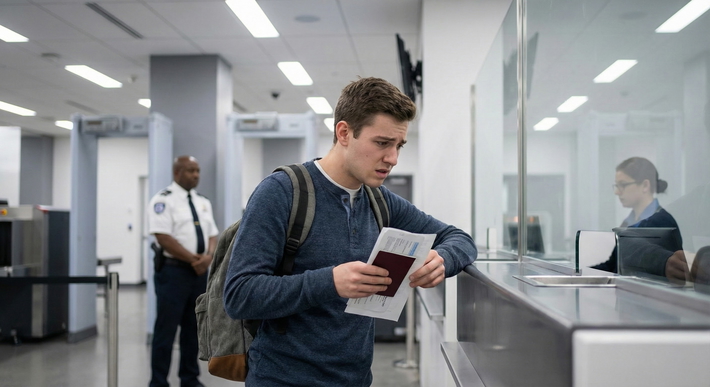
It’s 2:37 a.m. You have a board exam in a few hours.
You’ve done the UWorld blocks, you’ve highlighted First Aid into oblivion, you’ve watched every sketch you can remember.
And you’re just. Lying. There.
Heart pounding. Mind running worst-case scenarios on loop:
- “If I don’t sleep, my brain won’t work.”
- “If my brain doesn’t work, I’ll bomb this exam.”
- “If I bomb this exam, there goes residency. There goes Match. There goes… everything.”
You check the time again and do the mental math:
“If I fall asleep right now, I can still get 4 hours.”
Then 3. Then 2. Then you’re wondering if you should just stay awake and cram.
And underneath all of that is one huge fear:
“If I don’t sleep the night before, will this destroy my board score?”
Let me answer that first, bluntly, because I know that’s the thing chewing a hole in your stomach.
Will One Bad Night of Sleep Ruin My Boards?
Short answer: No. One bad night by itself will not ruin your board score.
Is it ideal? Obviously not. But is it catastrophic the way your brain keeps telling you? Also no.
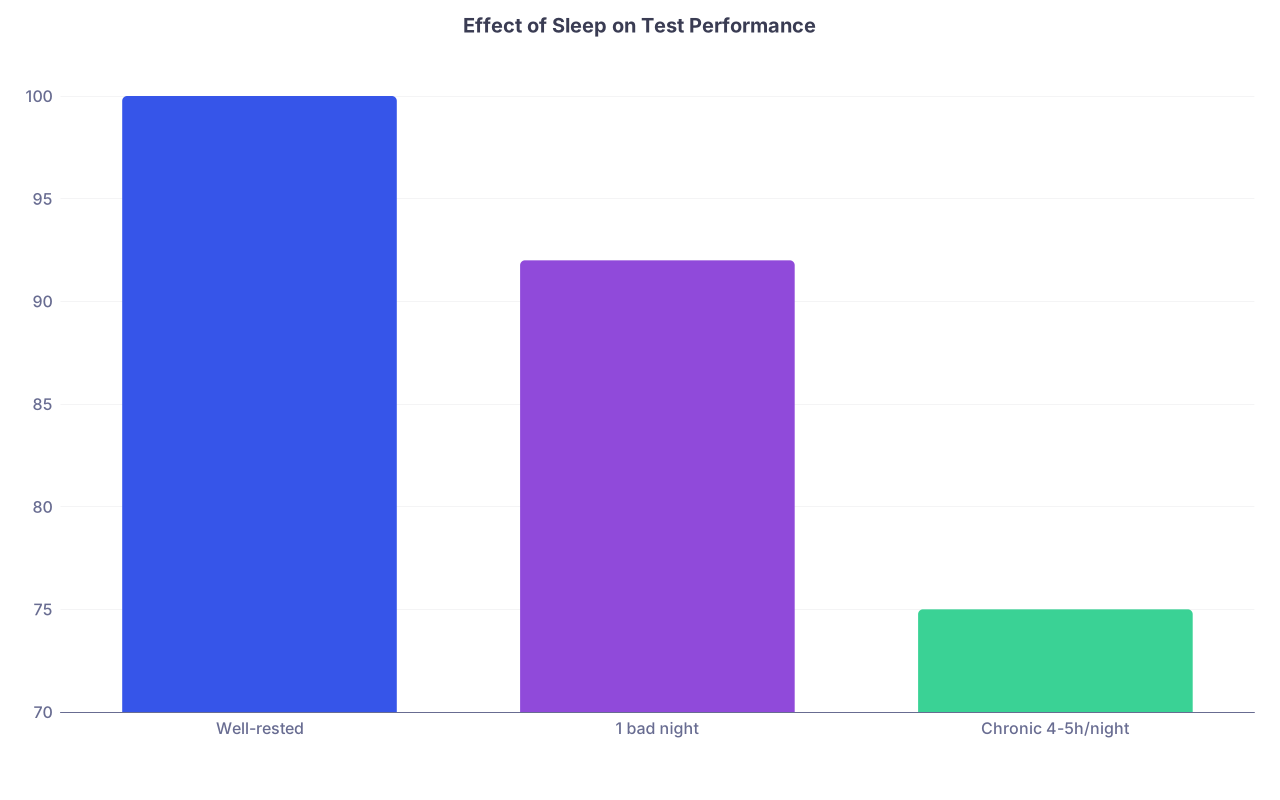
The research is actually kinder than your anxiety. Most of the damage from sleep deprivation comes from chronic sleep loss over days and weeks, not from one crappy night before an exam.
| Category | Value |
|---|---|
| Well-rested | 100 |
| 1 bad night | 92 |
| Chronic 4-5h/night | 75 |
That rough shape is what I’ve seen in real people:
Students with decent sleep in the week leading up to the exam but a terrible pre-test night?
Their performance drops a little, but nowhere near “I failed” level. Maybe they miss a few questions they might’ve gotten.Students who’ve been sleeping 4–5 hours a night for weeks, stressed, overcaffeinated, miserable, then also don’t sleep before the exam?
Those are the ones who look dazed, burn out halfway through, and score way below practice.
So if your pattern has been: mostly okay sleep the last several days → horrible night before exam?
Annoying but survivable.
Not “my life is over” material.
The thing that actually wrecks test performance is the spiral:
“I’m not sleeping → I’m going to fail → I must force sleep → I can’t sleep → I’m definitely going to fail.”
That spiral is what keeps you awake. Not the exam itself.
Why You Can’t Sleep Before Exams (Even When You’re Exhausted)
You’re not broken. Your nervous system is just doing its overprotective, unhelpful thing.
Here’s what’s actually happening:
You’ve convinced your brain the exam is a threat on the level of a tiger.
Your sympathetic nervous system goes: “Cool, life or death, let’s go.”
- Heart rate goes up
- Cortisol goes up
- Muscles tense
- Thoughts race (“What if I blank on cardio murmurs? What if there’s some weird derm question?”)
Your body is now in fight-or-flight, which is the exact opposite of “let’s peacefully drift off to sleep.”
The cruel part? The more you try to sleep, the more your brain treats sleeplessness as proof of the threat.
“I can’t sleep → that means something is wrong → I must try harder → why isn’t this working → I’m doomed.”
So your bed becomes associated with:
- Staring at the clock
- Panicking about scores
- Mentally redoing UWorld blocks from 3 weeks ago
That turns “bedtime” into “anxiety theater.”
You’re not failing some basic human function. Your brain thinks it’s protecting you from academic death.
What Actually Matters More Than The Night Before
If you remember nothing else from this, remember this part.
Your exam performance is like a three-layer cake.
The night before is frosting. It matters, but it’s not the cake.
| Factor | Relative Impact on Score |
|---|---|
| Months of consistent studying | Very high |
| Sleep in the 3–7 days prior | High |
| Night-before sleep | Moderate |
| Cramming day-of | Low to negative |
If your prep looked like:
- Steady studying over weeks/months
- Reasonable practice tests
- Some kind of review schedule
- Not perfect, but not chaos
Then one bad night is almost never the thing that makes or breaks you.
On the other hand, if your studying has been:
- Inconsistent
- Panic-driven
- Massive cramming at the end
- Chronic 3–5 hour nights for weeks
Then yeah, your score risk is real. But that’s not because of last night. That’s because of the entire lead-up.
This distinction matters because anxiety loves lying to you. It says:
“If I don’t sleep tonight, I’ve wasted all my work. This one night is everything.”
That’s simply not true. The bulk of your score was built long before tonight.
What To Do If You Can’t Sleep The Night Before
Let’s say you’re the person reading this at 1–4 a.m. right now.
You’re probably thinking: “Fine, great, sleep matters, whatever. I still can’t sleep. What do I do?”
Here’s what I’d tell an actual classmate if they texted me: “Dude, I haven’t slept and my exam’s at 8.”
1. Stop forcing sleep. Aim for “rested but awake.”
You can’t brute-force yourself into unconsciousness. That fight is what’s keeping you up.
Instead of “I have to sleep,” switch the goal to:
“I’m going to give my brain and body the best rest I can, even if I don’t fully fall asleep.”
That means:
- Lights low
- Phone away from your face (hate this one, but yeah)
- Lying down or semi-reclined
- Eyes closed or mostly closed
- Slow breathing, even if your mind is fast
Your brain does get some recovery from quiet rest, even without full sleep. Not the same as 8 hours, but not zero.
2. Use structure, not YouTube rabbit holes
You don’t need a wellness retreat. You need something simple you can actually do at 2 a.m. in a panic.
Pick one of these, set a timer for 10–15 minutes, and just do it:
- Box breathing: inhale 4 sec, hold 4, exhale 6, hold 2. Repeat.
- Body scan: start at your toes, mentally move up your body, noticing tension, letting each part “drop” into the bed.
- Counting breaths: count from 1 to 10 on your exhales. If you lose count, start at 1 again. (You will lose count. That’s fine.)
Not because this is magic.
Because it gives your brain a job that isn’t “invent new catastrophic fantasies.”
If after 20–30 minutes you’re still fully wired, get out of bed. Sitting there stewing in panic just trains your brain that “bed = anxiety.”
Go to a chair, dim light, and:
- Read a boring physical book (NOT med content, NOT your exam material)
- Listen to a calm podcast or audiobook at low volume
- Do a couple light stretches
After 15–20 minutes, go back to bed. Repeat the cycle as needed.
3. Don’t suddenly cram new material
This is one of the biggest traps.
“I’m awake anyway, I might as well be productive.”
What actually happens:
- You see a topic you barely remember → panic spikes.
- You discover random details you’ve never seen → “I know nothing.”
- Your confidence tanks → sleep becomes even more impossible.
If you absolutely must look at something exam-related:
- Skim a short, familiar, high-yield summary (like your own condensed notes or AnKing tags you already know)
- Don’t open UWorld. Don’t start a new question block at 3 a.m. Just don’t.
But honestly? At a certain point, any new studying is more anxiety fuel than help.
4. Morning-of: protect your brain like it’s ICU-level fragile
Say you end up with 0–3 hours of messy, fragmented sleep. Now what?
You’re in “damage control, not perfection” mode.
Think of your brain like an already-overworked resident on hour 28. You do not want to throw extra garbage at them.
Morning-of rules:
- Light breakfast with actual calories: think toast + peanut butter, yogurt, egg, banana. Not just coffee.
- Go easy on caffeine. If you usually drink 1 cup, don’t suddenly drink 3. Overshooting → jitters, palpitations, mind racing faster than the questions.
- No score-checking, no comparing to friends, no “I had a dream I failed Step 1” texting marathons.
Right before the exam:
- 2–3 minutes of slow breathing
- Remind yourself: “My job is to get through the next block, not the whole exam at once.”
- Accept that you might feel “off.” That doesn’t automatically mean your score is wrecked.
Your performance will dip a little. That’s reality. But “a little” is not the same as “down in flames.”
How To Stop This From Happening Every Exam
The real nightmare isn’t one bad night. It’s that this happens before every big test.
If your pattern is:
- Week before an exam: you sleep badly almost every night
- Night before: nearly no sleep
- Day of exam: brain fog, panic, exhaustion
Then your insomnia isn’t random. It’s a conditioned response to exams.
Your brain learned:
“Exam = danger → sleep = unsafe.”
You have to retrain that. Not with vibes. With reps.

| Step | Description |
|---|---|
| Step 1 | Exams trigger anxiety |
| Step 2 | Cant sleep |
| Step 3 | Try to force sleep |
| Step 4 | More anxiety |
| Step 5 | Exhausted on exam |
| Step 6 | Link exam to panic |
What actually helps over weeks/months:
Daytime anxiety management: If your brain is on fire all day, it won’t shut off at night. Therapy (especially CBT), meds if needed, or structured anxiety tools aren’t weakness—they’re how you get your future career back from your own nervous system.
Quit saving all your fear for 11 p.m.
Have a 10–15 minute “worry session” earlier in the day where you literally write down:
“What I’m scared of about this exam,” and “What I can actually do about it.”
So night isn’t the first time your brain processes fear.Pre-exam evenings that are boring on purpose
Same dinner time, same wind-down ritual. Light review at most, but cut it off 2–3 hours before bed.
Your brain needs a consistent signal: “oh, this pattern = we sleep, even when exams exist.”
None of this is instant. But it is fixable. I’ve watched people go from “zero sleep before every test” to “still anxious, but I get 5–6 hours and function.”
The Worst-Case Scenario You’re Secretly Obsessed With
Let’s play out the thing your brain keeps replaying:
“I don’t sleep at all. I completely bomb. I fail. That’s it.”
Here’s the frustrating reality: even that is usually not the end.
If you did fail:
- You’d cry, panic, spiral. Then eventually talk to your dean, your advisor, whoever.
- You’d get a retake plan.
- You’d study again, this time probably with more support and a different strategy.
- People match every year with ugly Step stories. Remediation. Even failures.
Is it miserable? Yes. Embarrassing? Probably. Career-ending? Usually no.
I’m not saying that to minimize how awful that would feel.
I’m saying it because your brain insists: “If I fail, my life explodes into nothingness.”
Reality: it sucks. Then life keeps going. With extra steps.
Knowing that the actual worst case is survivable can loosen the chokehold of “I MUST SLEEP OR EVERYTHING IS OVER.”
Because your body can’t sleep if it believes the stakes are literally life or death.
Quick Reality Checks To Tell Yourself At 3 A.M.
If you’re reading this in a pre-exam panic right now, screenshot this part:
- One bad night ≠ instant score collapse.
- My months of studying count more than tonight.
- Resting quietly is still better than doom-scrolling.
- Forcing sleep doesn’t work; making space for rest does.
- Feeling anxious is normal before big exams, not a sign I’m unprepared.
- Even in a worst-case scenario, there’s almost always a path forward.
You don’t have to believe all of that. Just repeat it like you’d talk a friend off the ledge.
Because you’d never tell a friend, “Yeah, if you don’t sleep tonight, your career’s done.”
But your brain tells you that every single time.
FAQ (Exactly 4 Questions)
1. I slept 2–3 hours before my exam. Should I consider rescheduling?
If rescheduling is realistically possible (some shelf exams, certain schools, or non-NBME tests) and you know your anxiety + sleep issues are severe, it might be reasonable. But for USMLE/COMLEX and most boards, rescheduling is either not feasible last minute or creates a whole new wave of anxiety and logistical chaos. If you’ve put in solid prep and your sleep has been okay in the days before, I’d still sit for it. One bad night is rarely worth derailing the whole schedule over.
2. Should I take a sleep aid the night before boards?
Honestly? This is risky if you haven’t tried that med before. The night before your exam is not the time to experiment with new meds or new doses. Some people do fine with something they’ve already been prescribed and used (like a low-dose trazodone or hydroxyzine), but that’s a decision to make with an actual doctor well before test week. Do not pop random OTC pills at 11 p.m. out of desperation. The hangover effect can hurt you more than the insomnia.
3. My practice tests went well, but I slept terribly. Will my score actually be way lower than my practice average?
Usually, no. You might dip a bit from your practice range, but it’s rarely a nose-dive unless the sleep problem is layered on top of chronic burnout, sickness, or under-preparation. I’ve seen people with 240/245 practice averages sleep 3 hours, feel awful, and still walk out with like a 232–238. Not their dream, but not the 190-disaster their 4 a.m. brain predicted.
4. How early should I start fixing my sleep before a big exam?
If you know you’re “that person” who can’t sleep before anything high-stakes, start working on it at least 3–4 weeks before. Not with elaborate routines. Just: consistent bedtime/waketime, wind-down ritual, some kind of daily anxiety outlet (exercise, journaling, therapy, something). The goal is to convince your nervous system, over and over, that sleep is safe—even with big stuff coming.
Here’s your next step, today, not “eventually”:
Open your calendar and pick one upcoming exam that makes your stomach drop. Then block off a 30-minute slot on the evening before it labeled: “No studying. Wind-down only.”
That’s it. One box on a calendar.
You’re teaching your future brain that the night before is for calming, not cramming—so it doesn’t have to fight you every time you try to sleep.