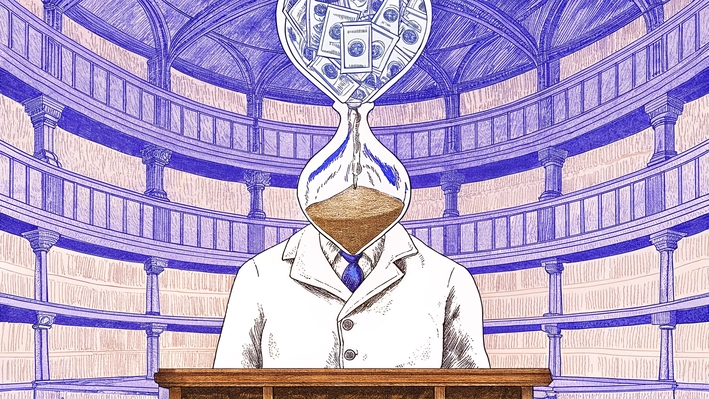
The part nobody says out loud: one anxiety-driven fail can mess with your head way more than it messes with your record.
You’re not just scared of failing. You’re scared of failing again — and confirming that awful story your brain’s already telling you about not belonging in medicine.
Let’s name what’s actually going on in your head, because I know how ugly it sounds in there:
“What if that last fail wasn’t a fluke?” “What if I blank again and they realize I’m not cut out for this?” “What if I use up all my retakes and then I’m done?” “What if everyone else is secretly fine and I’m the only one falling apart?”
You’re not crazy. This is exactly what happens when performance anxiety hijacks your brain, especially after a high-stakes exam goes sideways.
You didn’t just fail a test. Your nervous system learned: “Exams = danger.” Now every time another one shows up, your body remembers — heart racing, tunnel vision, sweaty palms, thoughts scattering everywhere — and you’re terrified you’ll relive it.
Let’s talk about what you actually do now. Not vague “manage your stress” nonsense. Concrete, what-do-I-change-before-the-next-exam steps.
First: That Fail Was Real — But the Story You Built Around It Is Lying
You failed an exam. Maybe a block exam. Maybe an OSCE. Maybe a shelf. Maybe Step/Level. Whatever it was, your brain did the usual catastrophic thing:
“I failed → I’m broken → I’ll always choke under pressure → I’m going to keep failing → I’m not meant for this.”
Here’s the nasty trick: your brain takes one data point and turns it into a prophecy.
I’ve seen students fail a cardio block exam because they had a panic attack halfway through, then pass the remediation comfortably with barely any extra content review — because the content was never the main problem. It was the anxiety storm.
Your fail feels like proof you’re not good enough. But it’s mostly proof of this:
- Your anxiety response overpowered your actual knowledge
- Your exam strategy is tuned for normal stress, not panic-level stress
- Your brain hasn’t learned how to trust itself under fire after a bad experience
That’s fixable. Annoying and painful, but fixable.
The Real Fear: “What If It Happens Again?”
This is the part that actually keeps you up at 2 a.m.
It’s not just, “I might fail.” It’s, “I might lose control again and watch myself fail in slow motion, knowing I can’t stop it.”
That’s trauma-adjacent stuff. Your body remembers that horrible moment — question 12, hands shaking, can’t understand the words, clock ticking louder than your thoughts — and it’s trying to protect you from ever going through it again.
So now, as the next exam comes up, you’re in this awful loop:
- Trying to study
- Thinking about last fail
- Heart rate goes up
- You imagine failing again
- You “pre-feel” the shame and panic
- Studying gets harder because you’re exhausted from just being afraid
Anxiety-driven failure isn’t just a bad day. It rewires how you approach every test afterward. Unless you deliberately retrain it.
Let me show you where the leverage actually is.
Separate Three Things: Content, Strategy, and Nervous System
Most people just ask, “Did I study enough?” That’s actually the wrong question now.
Your situation is more like this:
| Domain | Question to Ask Yourself |
|---|---|
| Content | Did I truly not know it, or did I blank on it? |
| Strategy | Did I panic with timing, question approach, pacing? |
| Nervous System | Did my anxiety symptoms drown out what I knew? |
If your fail was anxiety-driven, your weakest link is probably that third column.
You might’ve had enough knowledge to pass, but your nervous system didn’t let you access it.
So your next plan can’t just be “study more.” You’ve already tried “just work harder.” It didn’t work. Now you have to work differently in all three domains.
Content: You Don’t Need to Become a Genius, You Need a Buffer
Let’s get the obvious out of the way: you do need to know your stuff. But the goal after an anxiety fail isn’t perfection. It’s enough mastery that even with some anxiety, you can still squeak past the passing line.
Think: building a buffer.
If the pass mark is 70%, and anxiety steals 10–15% of your potential, you want your “calm” performance to sit around 80–85%. Not 100%. Not god-tier. Just buffered.
How to build that without burning out more:
- Focus on high-yield, not everything. In medical school, “learn everything” is how people drown.
- Practice recall, not just re-reading. Questions, flashcards, teaching out loud.
- Simulate exam conditions in small bursts. 10–15 question timed blocks, then stop. Don’t wait for full-lengths only.
Most anxious test-takers know more than they think. They just never see what they’re truly capable of in a relatively calm state because every test feels like a firing squad.
Strategy: Anxiety Loves Chaos — So You Remove the Chaos
You need a boring, repeatable test-day routine. Anxiety hates structure because structure steals its drama.
I’m talking unsexy, almost scripted details:
- Exact breakfast that won’t upset your stomach
- Exact time you’ll wake up, leave, and arrive
- Exact routine for the first 5 questions
- Exact plan for “I’m stuck” moments
You want muscle memory. So when your brain starts to spiral, your body can go, “Nope, we do it this way.”
Here’s a simple, not-glamorous, but surprisingly powerful exam-flow pattern:
- First 5 questions: super strict. If you don’t have a clear path after 60 seconds, you mark and move. No “just one more minute.”
- Questions where you feel mild panic: you physically lean back, take one slow breath, then rewrite the question in simpler words in your head. Your job is to slow down enough to see what’s actually being asked.
- One mini-reset every ~15 questions: shoulders roll, deep exhale, quick glance at time vs question number to recalibrate. No math spirals. Just: “On track / a bit behind / a bit ahead.”
If you’ve failed before, you need this kind of structure. Free-styling under anxiety is a disaster.
Nervous System: This Is Actually the Main Boss Fight
This is the part medical schools and advisors usually hand-wave with “manage stress” and then walk away.
Managing test anxiety after a fail is not “just relax.” It’s training your body like you’d rehab an injury.
Here’s what actually helps retrain your nervous system:
1. Practice feeling anxious on purpose in small doses
You can’t avoid exam feelings and magically be calm on test day. Your body has to learn: “I can feel this and still function.”
Mini-drills you can do:
- Timed 10-question blocks when you’re a bit tired and your heart rate’s already up (like at night).
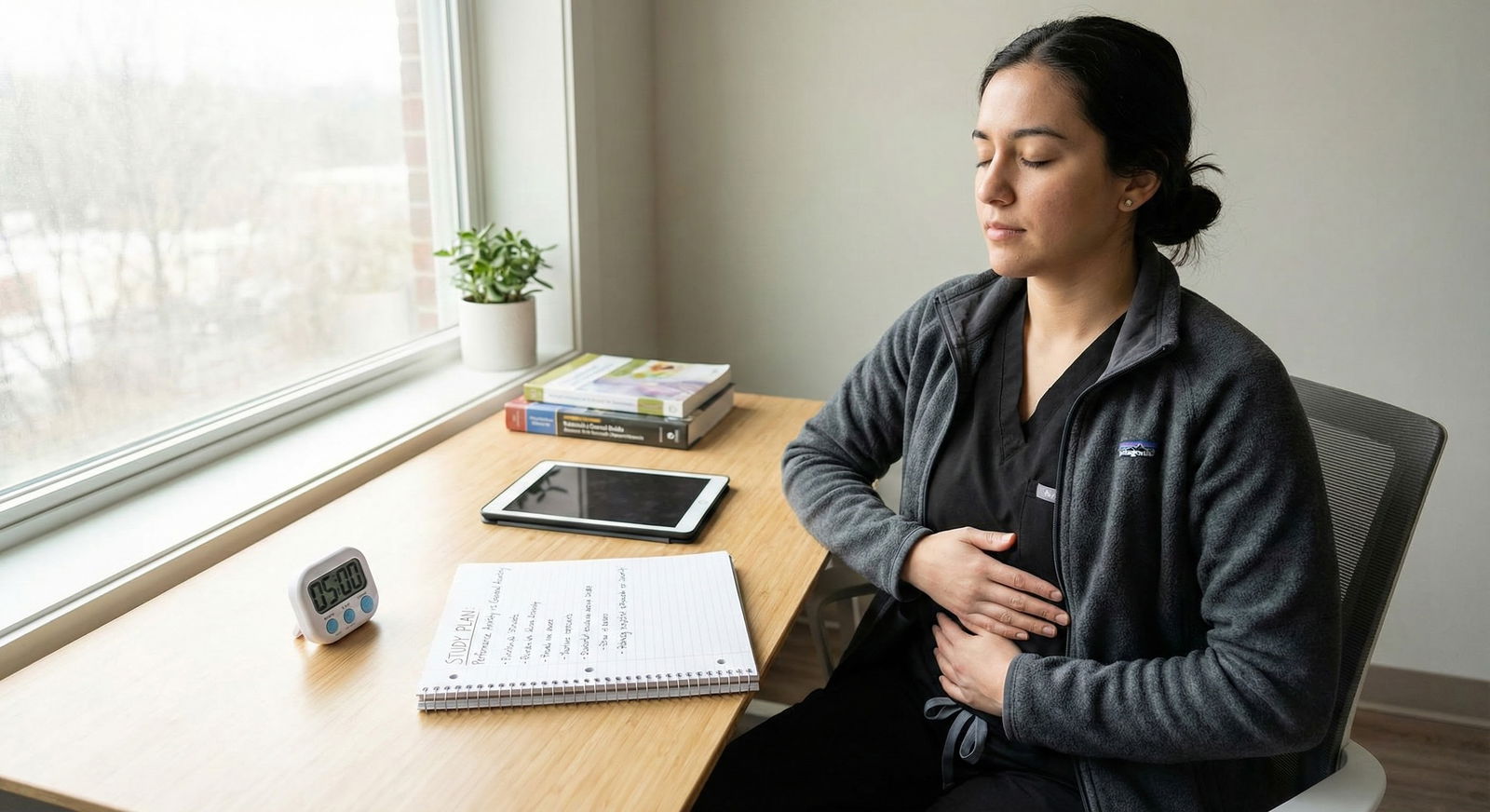
- Sitting at your desk, closing your eyes, imagining walking into the exam room, feeling your heart speed up… then practicing breathing through that and still doing 2–3 questions afterward.
You’re teaching your system: “We don’t shut down when we feel this.”
2. A specific, not-generic, calm-down script
“Just breathe” under pressure doesn’t work. Your anxious brain needs something structured.
Something like:
- 4-count inhale through the nose
- 6-count exhale through the mouth (longer exhale is key for down-regulating)
- Name 3 things you can feel physically (feet on floor, pen in hand, back on chair)
- Then say (internally): “I can do the next question. Not the whole exam. Just the next one.”
You’re shrinking the problem from “OMG whole test” to “one item.” That’s survive-able.
Timeline Reality Check: Are You Actually Out of Chances?
Let’s hit the worst-case thinking head-on.
You might be spinning on:
“What if I fail this next block, then remediation, then the shelf, then they dismiss me?”
Harsh truth: schools do dismiss students sometimes. Licensing boards do limit attempts on big exams.
But also true: most students who fail once — even twice — don’t end up dismissed. They end up rerouting. Slower. Messier. But not dead in the water.
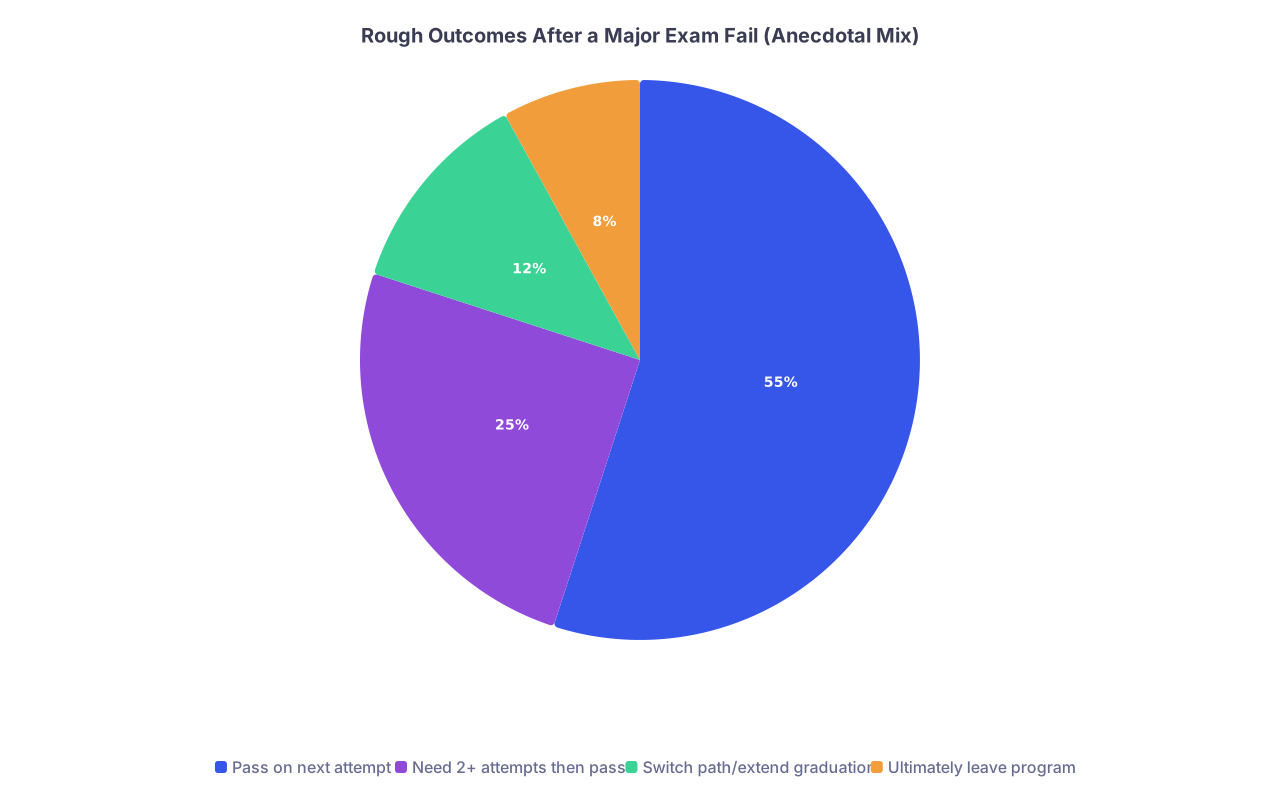
| Category | Value |
|---|---|
| Pass on next attempt | 55 |
| Need 2+ attempts then pass | 25 |
| Switch path/extend graduation | 12 |
| Ultimately leave program | 8 |
Those numbers aren’t from one magical study. They’re roughly what I’ve seen watching cohorts cycle through over the years.
The point isn’t the exact percentages. It’s this: the majority who fall once don’t keep falling forever. Unless they convince themselves it’s hopeless and stop fighting early.
Your situation is scary. But it’s not hopeless. You’re not on attempt 6 with the board breathing down your neck. You’re a terrified human who had anxiety eat one test (or maybe a few), and your brain is screaming “permanent failure” when that’s not the only path.
The Conversation You Probably Need to Have (Even if You Hate It)
You can’t white-knuckle this alone forever. At some point you need at least one of:
- A dean or academic support person who actually understands test anxiety
- A therapist, ideally with CBT or performance-anxiety experience
- Disability/learning support office, if accommodations might help
And yeah, I know: “But if I tell them, they’ll judge me. Or they’ll think I’m making excuses. Or it’ll go on my file forever.”
I’ve heard that fear from so many students.
Still, the students who actually turn things around usually do something like:
- Meet with academic support and say: “I failed X. I studied. But my anxiety went through the roof on test day.”
- Ask directly: “What structured help does the school have for test anxiety or exam skills? Are accommodations ever granted for this?”
- If appropriate, get documentation from a therapist or psychiatrist. Not to game the system. To get your brain an actual fighting chance.
Sometimes you get extra time. Sometimes a quieter room. Sometimes just a structured remediation plan. But doing this shifts you from “secretly drowning” to “people with power actually know I need help.”
You Also Need to Redraw Your Definition of “Failing Again”
Here’s a maybe uncomfortable take: not every bad outcome on the next exam counts as “failing again.”
Your anxious brain currently defines “failure” as:
- Any score that isn’t amazing
- Any moment of panic
- Any time you don’t feel in control
That’s messed up, because it gives you no room to improve gradually.
What if you defined “failing again” like this instead:
- I ignore my anxiety completely and change nothing from last time
- I refuse to get any support and hope magically I’ll be a different person on test day
- I let one score decide that I’m fundamentally not cut out for medicine
If you study with a better plan, practice test-day skills, get some support, and still end up with a barely-passing or even slightly-below-passing score? That’s not “I failed again, I’m doomed.” That’s:
“I’m still in the fight. This problem is clearly deeper than just content, but I’m trending in the right direction.”
Does that magically erase how scary it feels? No. But it gives you a way to read your results without automatically going, “See? I knew I was trash.”
Real Talk: What If You Do Fail Again?
Let’s say it out loud: yes, you might fail another exam.
Not because you’re broken. Because this is hard, and anxiety is sticky, and real change takes more than one try.
If that happens, what then?
You’ll feel crushed for a bit. You’ll probably cry. You’ll replay every moment. You’ll think very seriously about quitting.
Then it becomes less about that one exam and more about:
- Do you still want this life badly enough to try a different approach again?
- Are you willing to listen to feedback, even when it hurts your pride?
- Are you open to medication, therapy, formal accommodations — or does your shame wall block all of that?
I’ve watched people fail Step 1 or Level 1 twice, then pass on the third attempt after they finally accepted they needed more than “study harder.” They needed SSRIs. Or beta blockers. Or weekly CBT sessions. Or reduced course load. Or a leave of absence to fully reset.
Were those paths fun? No. Did they feel like “everyone else is moving on without me”? Absolutely. But they still ended up physicians.
You failing again doesn’t mean “story over.” It might mean “story longer and uglier than I wanted.” That’s different.
Quick Mental Reset: You’re Not an Impostor, You’re a Human Under Load
Impostor syndrome loves to weaponize an anxiety-driven fail: “See? You never belonged.”
Here’s the quieter truth your brain doesn’t broadcast:
- Dumb people don’t make it into medical school. Seriously. The admissions filter is brutal.
- Smart people can still have extremely sensitive nervous systems. That’s not a moral failing.
- High achievers are often more prone to panic when they lose control, because they’ve tied their worth to performance for years.
Your fail wasn’t a verdict on your intelligence. It was data about your current limits under extreme stress, after multiple years of grind, with probably not enough sleep, support, or margin.
That’s not a personality flaw. That’s a system under strain.

| Step | Description |
|---|---|
| Step 1 | Anxiety-driven fail |
| Step 2 | Honest post-mortem |
| Step 3 | Content adjustments |
| Step 4 | Strategy changes |
| Step 5 | Nervous system work |
| Step 6 | Small timed practice blocks |
| Step 7 | Talk to support / dean / therapist |
| Step 8 | Structured plan for next exam |
| Step 9 | Execute + track anxiety + scores |

What You Can Actually Do This Week
You’re probably reading this between study blocks or doom-scrolling after a bad score. So here’s what “Now what?” can look like in the next 7 days — not some abstract future.
This week, aim for:
- One honest post-mortem session: 30–45 minutes, writing out what happened last time — before, during, after the exam. No sugarcoating, but no self-abuse.
- Two or three 10–15 question timed blocks where your primary goal is not the score, but practicing your calm-down script when you feel your heart rate spike.
- One conversation with someone who has institutional power: academic support, a dean, or a trusted faculty member. Tell them: “I failed [exam] and anxiety was a major factor. I’m restarting with a structured plan. What resources or accommodations exist here for test anxiety?”
- Looking up one therapist (if you don’t have one) who lists performance anxiety, test anxiety, or CBT in their profile and sending exactly one inquiry message.
No, that won’t fix everything. But it moves you from frozen terror to doing something.
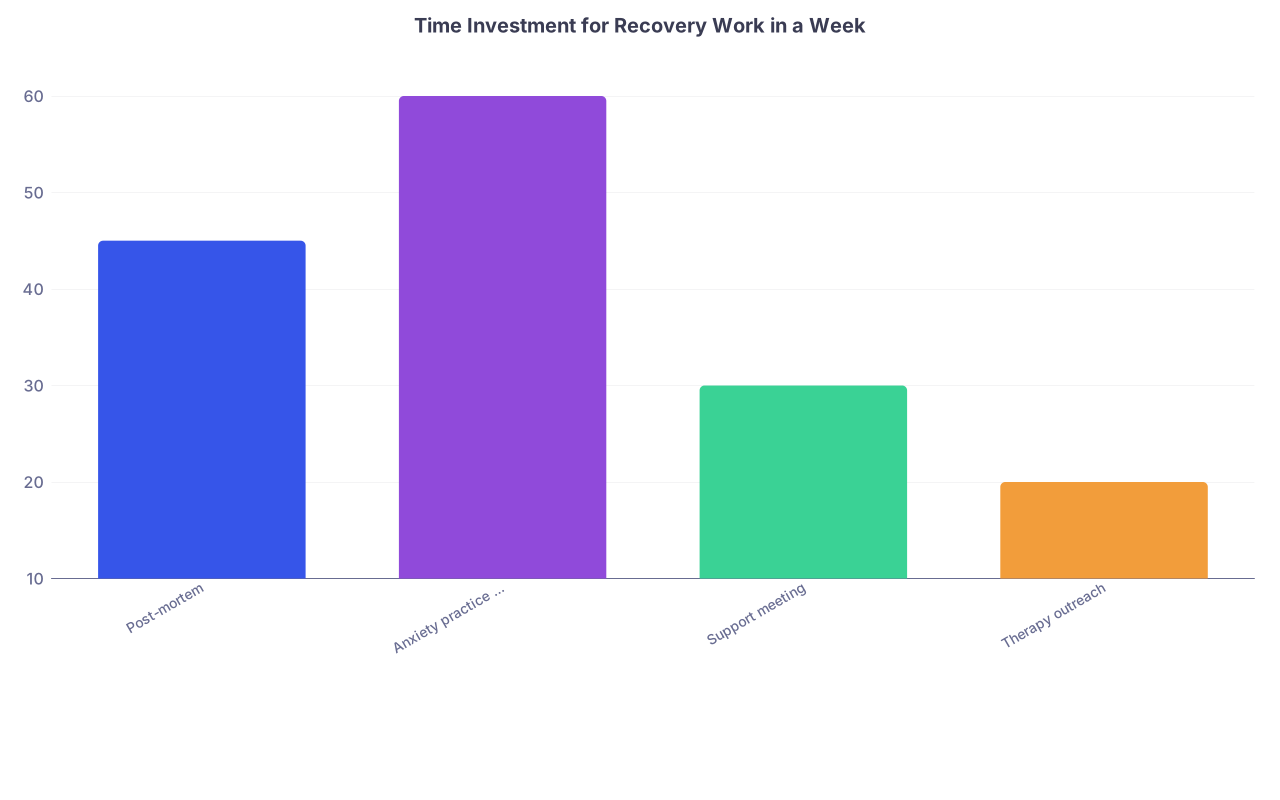
| Category | Value |
|---|---|
| Post-mortem | 45 |
| Anxiety practice blocks | 60 |
| Support meeting | 30 |
| Therapy outreach | 20 |
That’s under 3 hours total. Not nothing. But not impossible.
FAQ: The Things You’re Probably Still Afraid to Ask
1. What if my school thinks I’m just making excuses by blaming anxiety?
Some people will think that. Especially older faculty who lived through the “just tough it out” era. But the people whose opinions matter most for your trajectory — deans of students, learning specialists, mental health professionals — see test anxiety issues constantly. You’re not the first. You’re not special in that way. If you walk in saying, “I failed, I take responsibility, and I need help building specific skills and support,” that doesn’t read as excuse-making. It reads as problem-solving.
2. How do I know if I should get accommodations like extra time or a quiet room?
Ask yourself: on untimed or low-pressure practice, do you perform significantly better than on real exams, with a big gap that can’t be explained by content alone? Do you experience intense physical anxiety symptoms (pounding heart, shaking, tunnel vision) that make it hard to even read the question? If yes, it’s at least worth getting evaluated. Accommodations aren’t cheating. They’re a way to level the playing field so your brain can show what it actually knows.
3. I’m scared medication will change me or “fake” my success. Should I avoid it?
This is a common fear. SSRIs, beta blockers, or other meds don’t implant knowledge. They lower the volume on your nervous system so you can access what you already studied. You’re not faking anything — you’re removing a handicap that’s distorting your performance. Plenty of residents and attendings you’d never suspect are on meds for anxiety or mood. They’re still competent physicians. They just have their biology supported instead of sabotaging them.
4. What if my next exam is really soon — like 2–3 weeks away? Is there even time to change anything?
You’re not going to fully “cure” your anxiety in a couple weeks. But you can make small, meaningful changes. You can tighten your content focus to high-yield topics instead of trying to relearn everything. You can start daily 10–15 minute anxiety practice drills. You can schedule a quick meeting with academic support or reach out to a therapist. The goal in a short time frame isn’t total transformation. It’s “slightly less chaos than last time” — and that alone can move you from fail to borderline, or borderline to pass.
5. How do I stop obsessing about the possibility of getting dismissed from school?
You probably won’t stop thinking about it, but you can stop letting that thought run the show. Make two separate lists: (1) things that would actually increase the chance of dismissal (ignoring emails, skipping exams, refusing help, lying), and (2) things that objectively reduce the risk (meeting with deans, documenting issues, following a plan, showing up). Then, when your brain starts spiraling, ask: “Am I doing more from the first list or the second?” If you keep stacking actions in the second category, your fear and your actual risk stop lining up so neatly.
6. How do I know when it’s time to actually consider leaving medicine?
This is the nightmare question. Here’s my blunt answer: not after one fail. Not after a second fail if you haven’t yet tried therapy, support services, or accommodations. You seriously entertain that question after you’ve given yourself a fair shot with all the tools available and you still feel constantly miserable, detached from any sense of purpose, and unable to imagine a version of this path that doesn’t feel like sustained self-destruction. That’s not a decision you make alone, in your room at 3 a.m. That’s a decision you make with a therapist, a trusted mentor, and probably your dean, in daylight, with your nervous system at least somewhat regulated.
Go do one very specific thing right now: open a blank page and write a brutally honest, no-filter account of what actually happened during your last anxiety-driven fail — minute by minute, thought by thought. Then highlight anything that wasn’t about content knowledge. That’s your starting map for what needs to change before the next exam.