
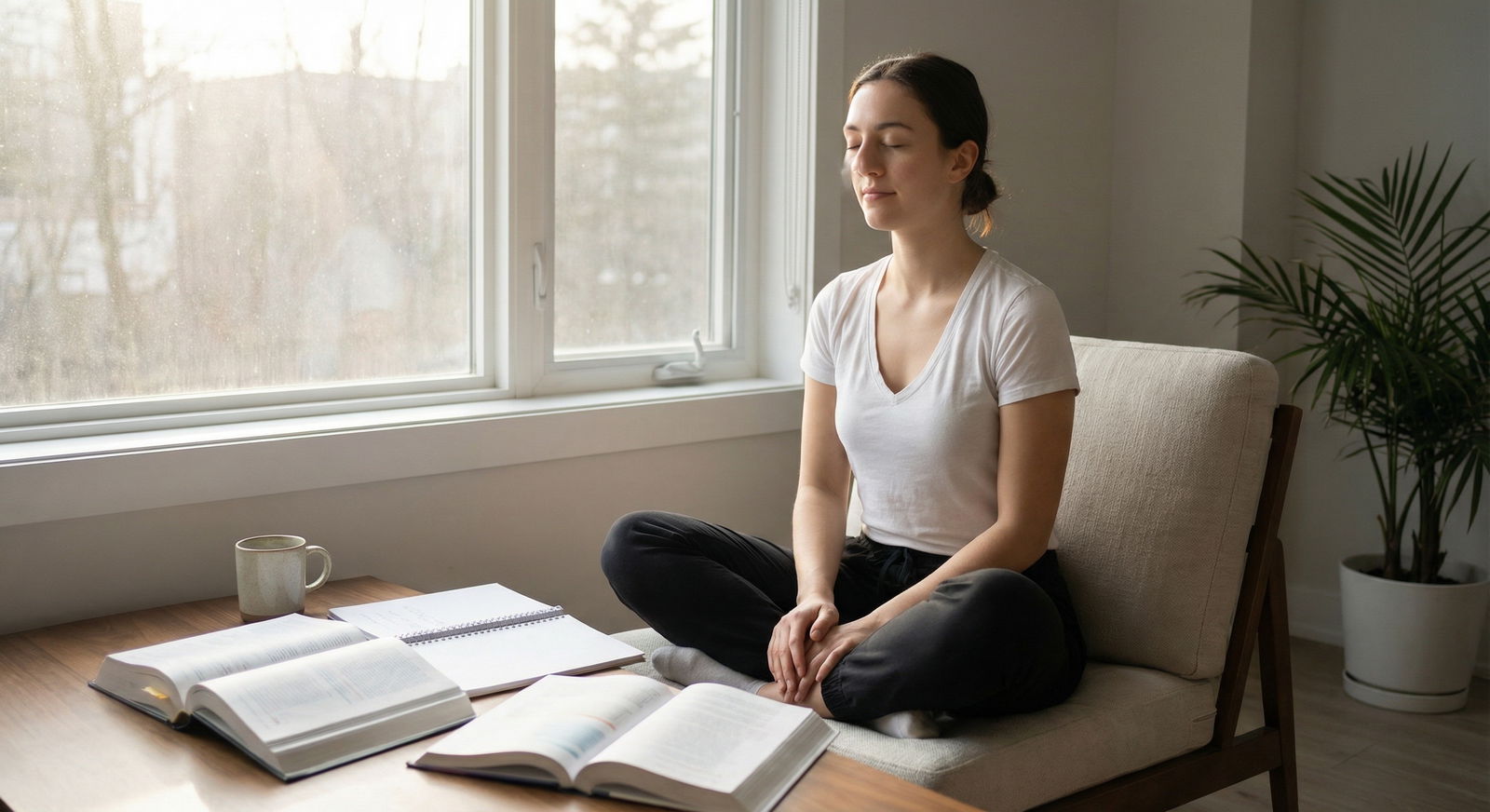
The narrative that “a meditation app will fix your exam stress” is wildly oversold.
Meditation apps are not snake oil. But they’re not the magic armor a lot of med students are hoping for when they hit download at 2 a.m. the week before a shelf or Step 2. The data is pretty clear: they can help a bit, under specific conditions, for specific people. They are not a substitute for sleep, a broken study plan, or chronic burnout.
Let’s cut through the wellness marketing and talk about what these apps actually do, what the evidence says in medical learners specifically, and how to use them without kidding yourself.
What Meditation Apps Actually Do (And Don’t Do)
Strip away the pretty UI and soothing voices and you’re left with three things most meditation apps offer:
- Guided mindfulness/meditation audio
- Breathing exercises and short relaxation practices
- “Calm-down” features: nature sounds, sleep stories, background music
None of that is inherently bad. In fact, mindfulness-based interventions (MBIs) have a decent body of evidence behind them. But that evidence rarely looks like: “Third-year med students used Headspace for 7 minutes the night before an exam and their scores jumped 10 percentile points.”
Most of the serious research involves:
- Structured programs (e.g., 8-week Mindfulness-Based Stress Reduction)
- Regular practice (often daily or near-daily)
- Guided by trained instructors, not just an app
Meditation apps are the cheap, on-demand, self-serve version of that. So their ceiling is lower from the start.
The fantasy:
“I’ll download Calm/Headspace/Balance, do a 10-minute session, and feel normal again.”
The reality:
You might feel a bit less keyed up. But the underlying problem—chronic sleep debt, unrealistic expectations, poor exam strategy, or a toxic environment—is still fully intact.
What The Research Actually Shows (Not The App Marketing)
Let’s look at the evidence, not the app store blurbs.
Most app studies fall into a few categories:
- General adult samples (office workers, community adults)
- College students
- Healthcare workers or med students (smaller but growing)
Anxiety and stress: Small but real effects
Multiple randomized controlled trials on app-based mindfulness show modest reductions in stress, anxiety, and depressive symptoms. We’re not talking life-changing; we’re talking “helpful but not transformative.”
Think effect sizes in the small to moderate range. Enough that someone might notice, not enough to rebuild your personality.
For medical students and residents, the pattern is similar:
- Short app-based mindfulness programs can reduce perceived stress and anxiety scores.
- Benefits often show up after a few weeks of consistent use, not two panic sessions before your exam.
- The biggest gains usually show up in burnout and emotional regulation, not directly in exam performance.
You might have seen or heard things like:
- “Meditation improves memory and concentration, so you’ll ace your exam.”
That’s a stretch. Improvements in attention/working memory are usually subtle and require regular practice over time. Not a weekend cram of guided breathing.
Sleep: Where apps probably help the most
There is better evidence that meditation and relaxation practices help:
- Decrease sleep onset latency (how long you take to fall asleep)
- Reduce nighttime rumination
- Improve subjective sleep quality
If you’re lying in bed the night before an exam with your heart rate at 120 and your brain looping through “I’m going to fail,” a 10–20 minute body scan or breathing session may actually get you to sleep faster.
Does that matter for exams? Yes. Sleep has a much stronger, clearer relationship to cognitive performance than any mindfulness app ever will.
So here’s the irony: meditation apps probably help exam performance mostly indirectly—by nudging your sleep and baseline anxiety, not through some magical focus upgrade.
Where Meditation Apps Fail Med Students
Meditation apps get misused in predictable, almost boring ways. I’ve watched this play out enough times to recognize the pattern.
1. Using apps as a band-aid for a broken study system
Here’s the recurring scenario:
- Student is 2–3 weeks from Step 1/2, already behind on UWorld, inconsistent with Anki, and half their “review plan” is aspirational.
- Panic hits. They feel overwhelmed.
- They download a meditation app and start using it “to handle the anxiety.”
They’re calmer for 10 minutes. Nothing else changes.
Meditation does not fix:
- Poor question strategy
- Unrealistic daily targets
- Lack of spaced repetition
- Trying to master instead of prioritize
If your exam prep is structurally bad, the correct move is to rebuild the plan, not layer calm breathing on top of chaos.
2. Treating meditation like emergency Ativan instead of training
Mindfulness is like fitness: you cannot be sedentary all year and expect a single HIIT workout to get you through a marathon.
The evidence consistently shows: benefits come from repeated practice, often over weeks. That’s where you get:
- Better meta-awareness of your thoughts (“Oh, that’s just my brain catastrophizing again”)
- More emotional space between “I feel anxious” and “I must obey this anxiety”
- Slightly better control over attentional drift
Using meditation only “when things are really bad” is like only going to PT when you tear the ACL. You skipped the strengthening that might have reduced the injury risk in the first place.
3. Confusing relaxation with avoidance
I’ve seen med students proudly say, “I got really stressed so I did a 20-minute meditation and felt better—but then I couldn’t get back into studying, so I watched Netflix.”
That’s not stress management. That’s avoidance wrapped in a soothing soundtrack.
Relaxation is useful when it helps you return to action.
Relaxation that repeatedly derails your study sessions is a red flag, not a success.
So… Do Meditation Apps Improve Exam Scores?
Short answer: there’s no strong evidence they directly boost exam performance, especially in high-stakes, content-heavy exams like Step, shelf exams, or board exams.
There are three links in the chain:
- Meditation app use →
- Lower perceived stress / better sleep / slightly improved attention →
- Better studying and performance
The first link has some evidence.
The second and third are plausible, but not well-demonstrated in med exam contexts.
You can’t ethically randomize hundreds of med students to “no coping tools vs guided mindfulness” and then compare their Step 2 scores. So what we mostly have are:
- Self-selected samples
- Self-report measures
- Short-term follow up
- Surrogate outcomes (stress scores, burnout scales, etc.)
Translation: good enough to say “this might help you feel less terrible.”
Not good enough to say “this will raise your percentile rank by X.”
When Meditation Apps Actually Make Sense For Med Students
Here’s where I stop being purely contrarian and tell you how to use these things like an adult.
Think of meditation apps as tools for specific jobs, not a lifestyle brand.
| Scenario | App Use Effectiveness |
|---|---|
| Chronic insomnia during rotations | Helpful |
| Mild to moderate baseline anxiety | Helpful |
| Night-before-exam panic | Mildly helpful |
| Fixing terrible study habits | Useless |
| Overwhelming burnout and depression | Insufficient alone |
Use them for sleep, not as a study hack
If you’re going to lean on these apps, focus on pre-sleep routines:
- 10–20 minute body scan before bed
- Guided relaxation or breathing when you wake up in the middle of the night anxious
- Consistency: same time, similar routine
You’re not meditating “to get better at meditating.” You’re lowering arousal enough that your brain actually downshifts. That will do more for your exam performance than any supposed “focus session” at 3 p.m.
Use them to train your response to anxiety, not erase it
You will not get rid of exam anxiety. Nor should you. Some activation is normal and even helpful.
What mindfulness can train is your relationship to that anxiety:
- Notice anxiety as a transient state, not a verdict on your ability
- Interrupt catastrophic spirals (“I’m going to fail → I’ll never match → my life is ruined”)
- Let discomfort be present while you continue studying anyway
For that, short daily practice actually matters more than occasional crisis usage.
A Practical, Evidence-Respecting Way To Integrate Meditation Apps
Here’s a realistic way to use these tools that doesn’t insult your intelligence.
1. Set a specific, modest target
Not “I will become a mindful person this semester.”
Try:
- 10 minutes, 5 days a week, for 4 weeks
- Any time of day you can consistently protect
Track it like you track Anki. Don’t “vibe it.”
2. Focus on 2–3 types of sessions
You do not need the full library of “sound baths,” “manifestation,” or “abundance mindset” nonsense.
Stick to:
- Basic mindfulness of breath
- Body scan
- Simple guided relaxation (progressive muscle relaxation, etc.)
This is not spirituality training. This is nervous system training.
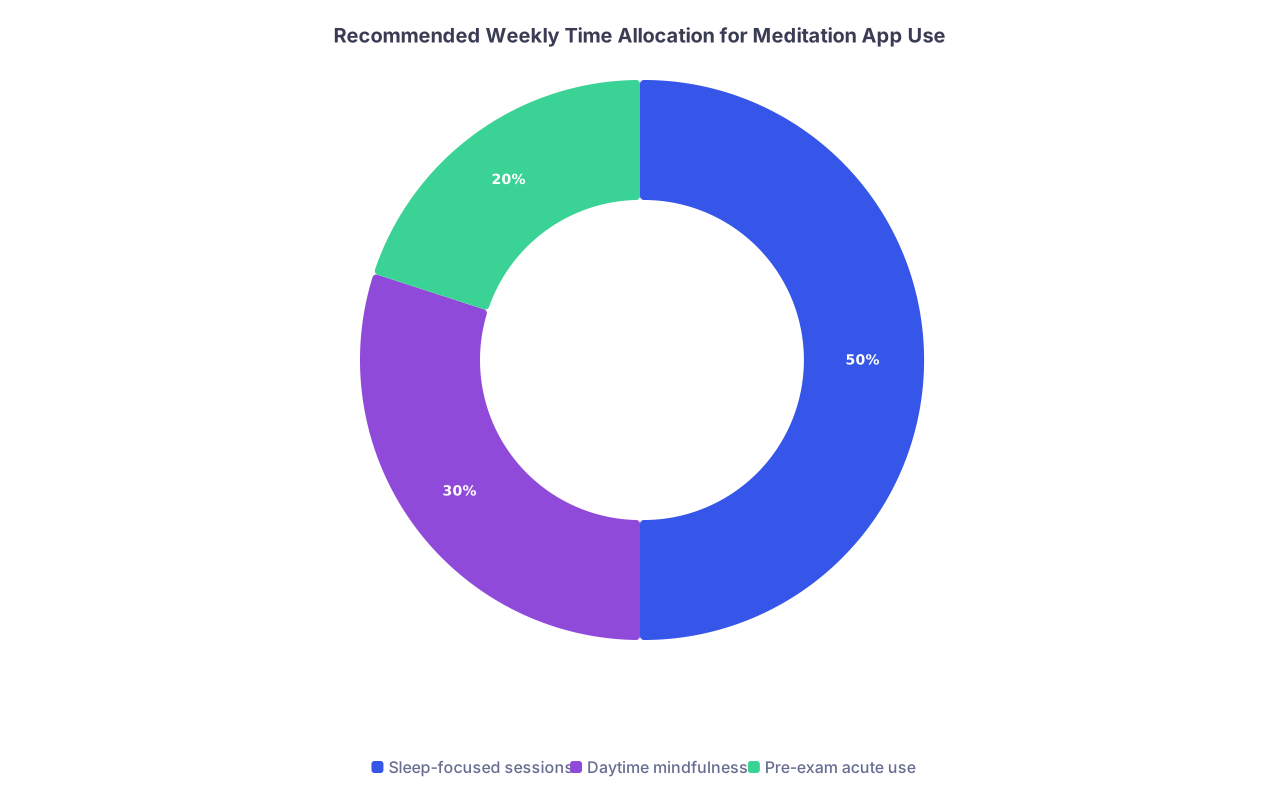
| Category | Value |
|---|---|
| Sleep-focused sessions | 50 |
| Daytime mindfulness | 30 |
| Pre-exam acute use | 20 |
3. Connect it directly to your study process
Meditation is not separate from your exam prep. It’s a support.
You can:
- Use a 5-minute breathing exercise as a transition into a long question block, especially if you’re wound up.
- Use a short grounding exercise after a particularly bad UWorld block, before you start catastrophizing and throwing your entire plan out.
- Use a 10-minute body scan before bed to stop doom-scrolling and actually go to sleep.
The key: every practice has a job. “Feel vaguely calmer” is too vague.
4. Know when the app is not the right tool
If any of these are true:
- You dread waking up daily
- You have persistent suicidal thoughts
- Your functioning is crashing—skipping rotations, can’t study at all, withdrawing from people
- Panic attacks are frequent and intense
You are past the “meditation app” zone. That is clinical territory: therapy, medication evaluation, or both. Apps can be a side dish there, not the main course.
The Other 90% of Exam Stress Management You Can’t Outsource to an App
This is the part no app company wants to talk about because they can’t sell it.
Meditation apps live here: roughly 5–15% of the solution.
The rest is brutally unsexy:
- Structuring your study in a way that creates earned confidence (question-based learning, consistent review, honest self-assessment)
- Protecting sleep like it’s exam content
- Avoiding last-minute all-nighters that absolutely trash performance
- Basic physical maintenance: food, movement, hydration
- Social support: talking like a human to other humans who get it
If those foundations are trash, meditation apps are just scented candles in a burning building.
Here’s the uncomfortable truth: a lot of “exam anxiety” is not a mysterious brain quirk. It’s a rational response to:
- Under-preparation
- Chronic overextension
- A culture that glorifies suffering and then slaps “resilience” workshops on top
Meditation can help you cope. It cannot fix systemic problems. It cannot grant you knowledge you never learned. It cannot compensate for never saying “no” and overcommitting to research, leadership, and 12 side projects.
So, Should You Use a Meditation App?
Yes—if you’re clear about what it can and cannot do.
Use one if:
- You struggle to wind down before sleep and are willing to practice consistently
- You want a structured way to build basic mindfulness skills
- You recognize this is support, not salvation
Be skeptical if:
- You’re hoping it will magically erase test anxiety without changing how you study, sleep, or live
- You’re reaching for it only during panic but never building a baseline practice
- You’re treating it as a stand-in for professional help when your distress is clearly severe and persistent

| Step | Description |
|---|---|
| Step 1 | Exam Stress |
| Step 2 | Fix Study Strategy |
| Step 3 | Protect Sleep |
| Step 4 | Seek Support/Treatment |
| Step 5 | Use Meditation App Wisely |
| Step 6 | Improved Performance |
| Step 7 | Reduced Acute Distress |
Meditation apps are not useless. They’re just overhyped. They can take the edge off, help you sleep, and train a slightly better relationship with your thoughts—if you put in the reps. But they will never be the main reason you pass or fail a major exam.
Years from now, you will not remember which mindfulness app you used. You’ll remember whether you built a life and study system you could actually stand to live inside.


