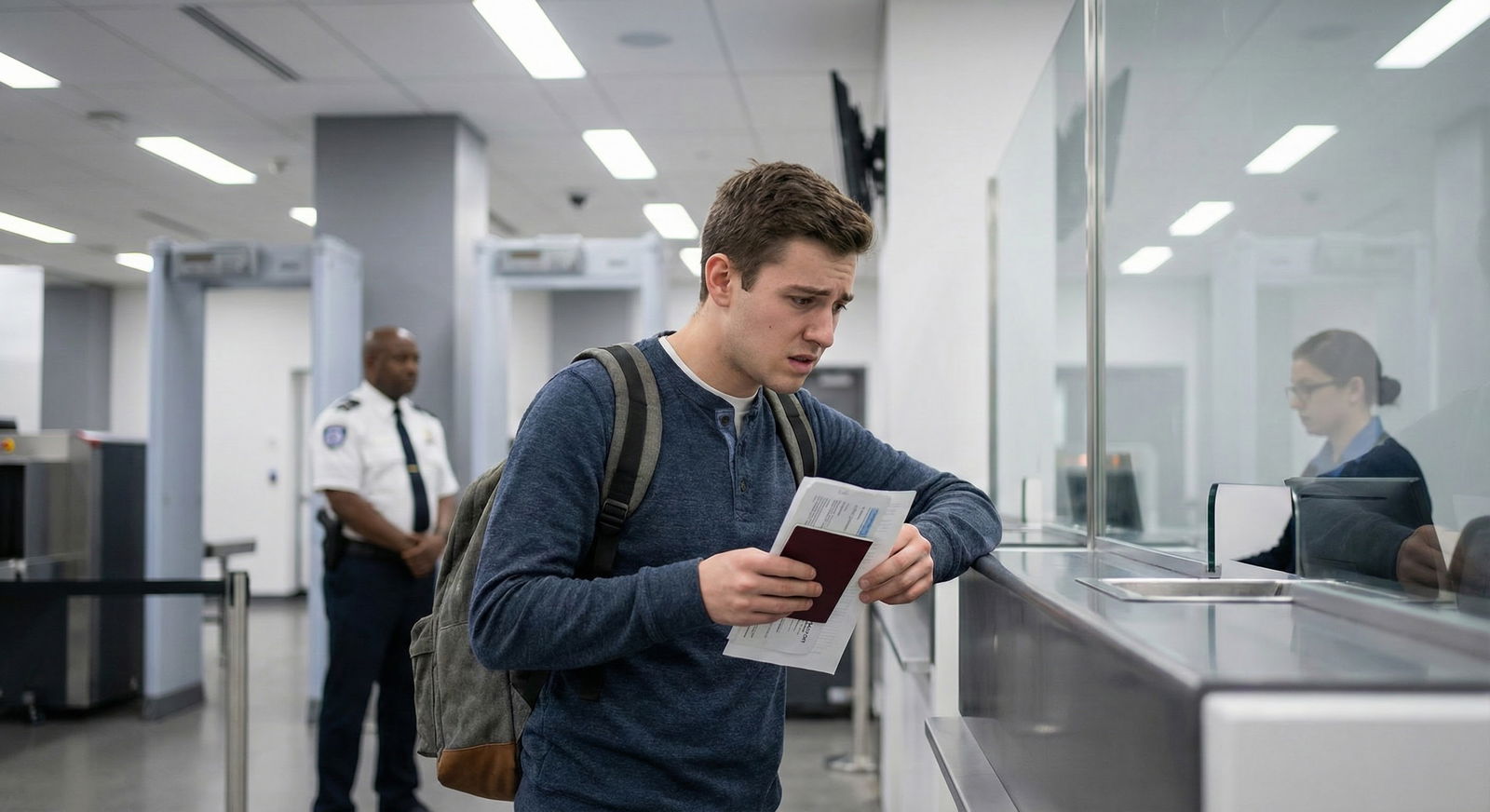
It’s 10:17 a.m. You’re in a gray cubicle at Prometric, halfway through your Step/COMLEX block. You click “Next” and suddenly your brain turns into static. Heart pounding. Palms sweating on the mouse. Your vision feels a little tunneled. You read the same sentence three times and it might as well be written in Cyrillic.
You know this feeling. Test anxiety. But this time it’s not in your bedroom with a Qbank; it’s in the actual exam. Clock ticking. No pause button. No “I’ll come back when I feel better.”
Here’s what to do in that exact moment. Not tomorrow. Not “in general.” Right now, mid-exam, in a Prometric center with a camera over your head and a proctor behind glass.
Step 1: Recognize What’s Actually Happening (In 10–15 Seconds)
Do not try to “tough it out” blindly. That’s how people spiral and lose entire blocks.
You’re not “suddenly stupid.” You’re in a fight-or-flight response. Sympathetic system cranked up, prefrontal cortex half-offline. Classic.
Give it a name in your head. Keep it short.
Something like:
- “This is a panic spike.”
- “This is my anxiety, not my ability.”
- “This is just my brain misfiring.”
You’re labeling, not judging. Why? Because the moment you name it, you’ve shifted from “I am failing” to “I am experiencing something.” That gap is where you can act.
You have 10–15 seconds for this. You’re not wasting time; you’re preventing a 20-minute meltdown.
Step 2: Do a 60-Second Reset Without Leaving Your Seat
Before you hit the “I need to leave the room” button, try a seated reset. You can do this discreetly without attracting the proctor.
Here’s the script. Follow it, do not improvise.
- Take your hands off mouse and keyboard.
- Sit back against the chair.
- Put both feet flat on the floor.
- Look down at the desk or your knees, not the question.
Now breathe on a count. Not dramatic yoga breathing. Subtle.
Use this pattern:
- Inhale through nose: 4 count
- Hold at the top: 2 count
- Exhale through mouth: 6 count
Do that 4 times. You’re aiming for about 40–60 seconds total.
While you’re doing this, repeat one line in your head on each exhale. Pick one:
- “I can still finish this block.”
- “One question at a time.”
- “Anxiety up, performance still possible.”
You’re doing two things simultaneously:
- Physiology: slowing your heart rate, shifting your nervous system a notch toward parasympathetic.
- Cognition: interrupting the disaster narrative (“I’m failing Step, I’ll never match”) and replacing it with something functional.
You just invested 1 minute. That 1 minute can save you 15 questions of nonsense clicking.
If after this minute you feel even 20–30% calmer, move to the next step. If you’re still shaking, dizzy, or fully out of it, skip to the section on leaving your station and using a break.
Step 3: Switch to “Stabilization Mode” Question Strategy
When anxiety spikes, people try to “make up for lost time” by going faster and pushing harder. That just burns more cognitive fuel and deepens the spiral.
You’re going to do the opposite for the next 3–5 questions: stabilization mode.
Here’s how:
Shrink your time horizon.
Forget the whole block. Your job is: answer just this next question in a reasonable way. Then the next. That’s it.Simplify your approach per question:
For each new question:- Ignore the stem for 2 seconds. Look only at the answer choices.
- See what type of question this is (diagnosis, next best step, mechanism, side effect, etc.).
- Then read the stem with that question type in mind.
This keeps your brain from wandering and anchors your focus.
Accept a “good enough” answer.
While you’re anxious, perfection will kill you. For these stabilization questions:- Eliminate obvious wrongs.
- Pick the best remaining answer.
- Mark it if you really hate it.
- Move on.
Give yourself permission to be slightly less precise for 5–10 minutes to protect the rest of the exam.
You’re not trying to crush every question here. You’re trying to put the bleeding under control.
Step 4: Decide If You Need an Immediate Break (And How to Take It Without Making Things Worse)
Sometimes the seated reset and stabilization mode are enough. Sometimes they are not. If your hands are still shaking, you feel like you might cry, or your vision is weird, take the hint: you need to physically step away.
Here’s the rule I use:
If you’ve done the 60-second reset, tried 2–3 questions, and your anxiety is still at an 8–10/10, you should take a break. Not after 15 more questions. Now.
You do not pause the test mid-question. You finish the question you’re on, pick your best answer, then:
- Click “Next” to move to the next question.
- Immediately click “Back” to come back to the question you just answered.
- Confirm your answer is still there.
- Now raise your hand.
Why the Next–Back dance? It forces the test to log your answer. You don’t want to walk away mid-question with a blank screen and hope it autosaved.
When the proctor comes:
- Keep it simple: “I need to use my break.”
- Don’t give them a five-minute explanation about panic; they’re not your therapist and they’re on a schedule.
You’ll be escorted out, you’ll sign out on the board, and your clock keeps ticking unless you’re between blocks. For most med exams, breaks draw from a shared pool (you know this). You’re deciding to spend some of that bank now, to rescue the block you’re in.
Step 5: What To Do Once You’re Actually Out of the Room
This is where people waste break time pacing, catastrophizing, and checking the clock every 7 seconds.
You need a predefined break script. Use this one:
First 30 seconds – Physical reset
- Walk to the bathroom or water fountain at a normal pace. Not rushing, not dragging.
- Shake out your hands a bit. Roll your shoulders. Loosen your jaw.
- Do one yawn (even a fake one); it signals your body that you’re not in mortal danger.
Next 60–90 seconds – Controlled breathing
Find a spot to stand or sit where you’re not in anyone’s way. Now do a tighter, more structured pattern:
- Inhale for 4
- Hold for 4
- Exhale for 4
- Hold with lungs empty for 4
That’s box breathing. Do 4–5 rounds. This is not spiritual; it’s vagus nerve manipulation and CO₂ balance. It works.
Next 30–60 seconds – Grounding
Use a 5–4–3–2–1 style check-in, but keep it fast:
- 5 things you can see (chair, carpet, clock, sign, proctor room).
- 4 things you can feel (badge lanyard, shoes on feet, air on skin, hand on table).
- 3 things you can hear (air conditioner, muffled typing, hallway noise).
- 2 things you can smell or taste (coffee, hand sanitizer, gum).
- 1 sentence you say to yourself: “I can finish this exam in an anxious state.”
Notice that last line. Not “I will be calm.” That’s fantasy. You’re acknowledging: “I can perform even while anxious.” That’s a realistic standard.
Final 30 seconds – Tactical check
Quick mental checklist:
- How many blocks left?
- How’s my time roughly? (Do not recalc every minute; get a ballpark.)
- What’s my simple rule for the rest of this current block? (e.g., “No more than 75 seconds per question.”)
You’re out for maybe 3–4 minutes total. Then you walk back, sign in, sit down, do one more small breath cycle, and restart.
Step 6: Time Management When Anxiety Has Already Eaten Up Minutes
You’re back at your station. Maybe you used 2–5 minutes mid-block. Maybe you didn’t, but you know you were frozen for a while.
Here’s the harsh truth: those minutes are gone. Staring at the clock wishing you had them back is dead weight.
You need a recovery plan that trades perfection for completion.
First, reset your per-question rule. Example for a 40-question, 60-minute block:
- Ideal pace: ~90 seconds per question.
- Post-anxiety recovery pace: set a hard cap of 75–80 seconds per question for the next 10–15 questions to claw back a few minutes.
How to enforce it:
- Glance at the on-screen clock only every 5 questions.
- If you’re behind, you consciously lower your bar: quicker elimination, more willingness to pick a best guess and move.
Second, stop obsessing about flagged questions.
Flagging is not a moral obligation. Over-flagging is a common anxiety behavior: “I’ll deal with this later when I’m magically smarter.” You won’t be. Future you will be the same tired you, with fewer minutes and more stress.
From this point forward:
- Only flag a question if:
- There is a specific, targeted piece of information you might recall later (e.g., “I know this drug’s side effect, just not right now”), and
- You are currently spending less than your target per-question time.
No vague “I don’t like this” flags. That’s just procrastination with branding.
If you hit the last 5 minutes of the block and still have unanswered questions, do a rapid-fire best-guess run. An answered guess is always better than a blank.
Step 7: Handling the “I’m Failing” Spiral During the Exam
Every Prometric meltdown has the same soundtrack: “I’m failing this exam. I’ve ruined my chances. I won’t match. My life is over.” You know it’s irrational, but in the moment it feels very real.
You’re not going to argue with the whole spiral. You don’t have time. You’re going to pin it down to a smaller, more manageable thought.
When you notice the spiral, answer it with one line like this:
- “I don’t need to feel confident to get questions right.”
- “I can miss a lot and still pass.”
- “My job is not to pass right now; my job is to answer this one question in front of me.”
Pick one and stick to it. Same line every time. Do not start negotiating complicated cognitive therapy in the middle of block 6.
I’ve watched people walk out convinced they bombed and end up with 250+ scores. I’ve also watched people who felt “okay” score far lower. Your emotional read mid-exam is garbage data. Treat it accordingly.
Step 8: When Anxiety Hits Repeatedly Across Multiple Blocks
Sometimes it’s not just a one-time spike. You get through one block, then it all happens again in block 3 or 5.
That’s when you need to formalize a block-to-block protocol, not wing it every time.
Between-block mini-protocol (2–3 minutes max):
- Stand up as soon as the block ends. Don’t sit and stew.
- Leave the room, even if just to the locker area.
- Drink a small amount of water. Not half a liter—your bladder will punish you.
- One minute of box breathing.
- Pick one mental rule for the next block:
- “I don’t read the answer choices before the stem this block.”
- “I move on after I’ve eliminated at least two choices.”
- “I will not reread any stem more than twice.”
You’re giving your brain structure. Anxiety loves open, vague situations. Specific micro-rules cut it down to size.
Step 9: What To Do If You Have a Full-Blown Panic Attack
Let’s talk worst case. You’re dizzy, breathing fast, can’t focus on the words, maybe tingling in your hands. You’re afraid you might pass out or completely lose it.
This is not the time to be a hero.
You:
- Mark the current question’s best guess.
- Do the Next–Back trick to confirm it’s saved.
- Raise your hand and tell the proctor: “I’m feeling unwell; I need to step out.”
You’re allowed to be a human being. You do not need to give them the term “panic attack” if that feels exposing. “Not feeling well” is usually enough.
Outside, you do:
- Sit, not stand, if you’re lightheaded.
- Slow, counted breathing for at least 2–3 minutes.
- If you truly think you’re medically unsafe, say so. They’re obligated to follow a protocol.
Once the acute episode drops from 9/10 to 5/10, you have a decision: resume or not. This depends on the exam, your state, and your personal risk tolerance. No generic rule covers it, but I’ll say this: many people have gone back in feeling shaky and still passed or even done well. Do not assume the day is automatically lost.
Step 10: What You Should Not Do During an Anxiety Spike
There are a few behaviors that feel comforting in the moment and absolutely tank performance.
Avoid these:
- Do not reread the same question 5–6 times hoping it suddenly “feels right.” After 2 thorough reads, your marginal benefit drops off a cliff.
- Do not obsessively check the clock every 1–2 questions. That’s how you transform mild anxiety into crisis mode.
- Do not compare yourself to the invisible people around you. You have no idea what they’re taking or how they’re doing. That guy clicking fast might be failing gloriously.
- Do not mentally rewrite your CV (“I’ll never get derm/ortho/IM at a good place”). You can cry about competitiveness later.
- Do not decide your future specialty mid-block because of how you feel. It’s not a personality test; it’s a licensing exam.
Your only job is focused, imperfect execution under stress.
Quick Reference Table: Mid-Exam Anxiety Moves
| Situation | Action |
|---|---|
| Sudden anxiety spike, still functional | 60-second seated reset |
| Anxiety + can’t focus on next 2–3 questions | Take 3–5 minute break |
| Running behind on time after spike | Tighten to 75–80 sec/question |
| Repeated spikes across blocks | Use between-block mini-protocol |
| Full-blown panic (dizzy, short of breath) | Leave room, stabilize, then decide to resume |
Visualizing the On-the-Day Flow

| Step | Description |
|---|---|
| Step 1 | Notice anxiety spike |
| Step 2 | 60-second seated reset |
| Step 3 | Answer 2-3 questions in stabilization mode |
| Step 4 | Continue block with time cap |
| Step 5 | Take 3-5 min break |
| Step 6 | Breathing + grounding outside |
| Step 7 | Notify staff, consider stopping |
| Step 8 | Can you still read and think? |
| Step 9 | Anxiety decreasing? |
| Step 10 | Safe to continue? |
How to Practice This Before Test Day (So It’s Not All New)
Yes, the question is about what to do mid-exam. But here’s the truth: the people who handle anxiety best at Prometric are the ones who have rehearsed their scripts during practice tests.
Two things to start doing now in your NBME/UWSA/COMSAE world:
Simulate the Prometric environment.
- Same start time as your real exam.
- Earplugs or headphones.
- Same snack pattern and break structure.
- No phone checking between blocks. You are not special.
Drill your anxiety protocol.
Any time you feel stress rising during a practice block:- Run the same 60-second reset.
- Use the same stabilization mode.
- Take the same style of short, structured breaks.
You’re training your brain: “When this feeling shows up, I know what to do.” On test day, that familiarity is gold.
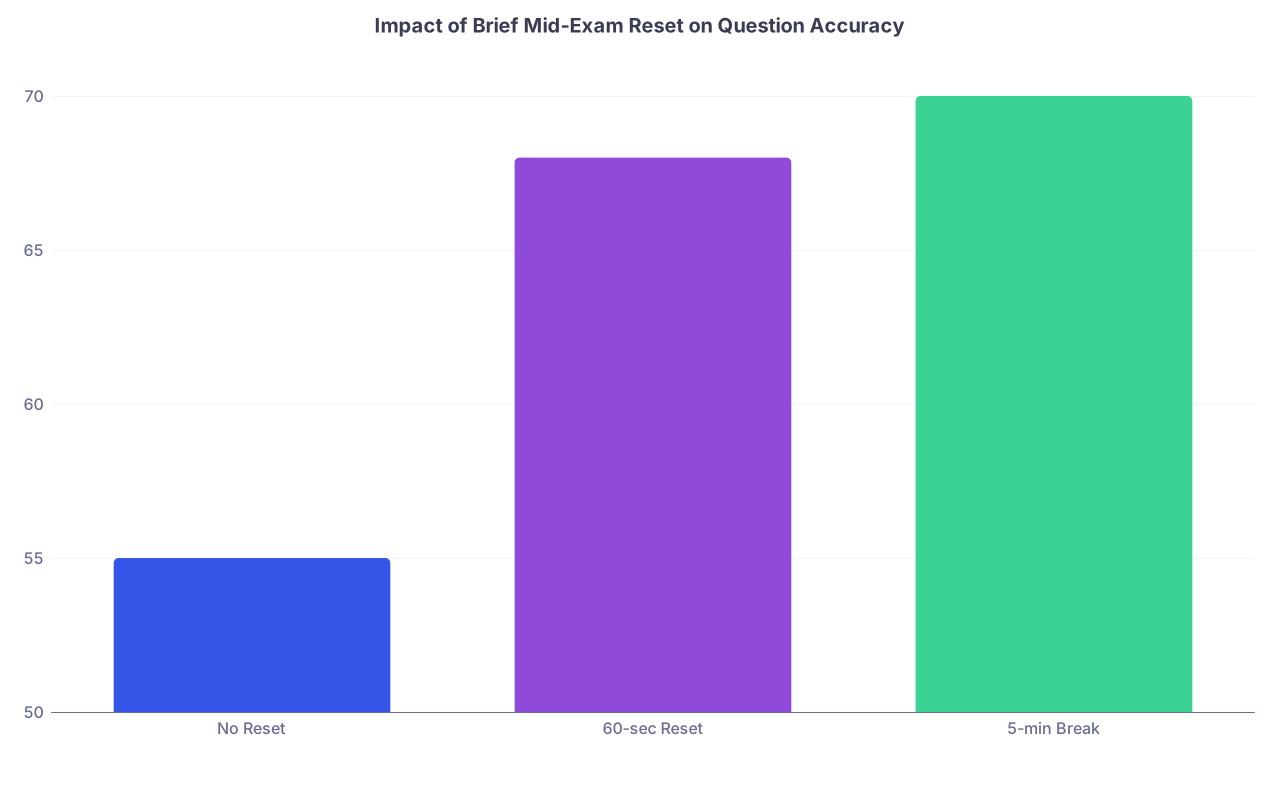
| Category | Value |
|---|---|
| No Reset | 55 |
| 60-sec Reset | 68 |
| 5-min Break | 70 |
(Those numbers are illustrative, but they match what I’ve seen anecdotally: tiny time investments can yield big jumps in stability and performance.)
FAQ (Exactly 3 Questions)
1. If I lose 3–5 minutes to anxiety in a block, is my score ruined?
No. That’s catastrophic thinking talking. On Step-style exams, you can miss a lot and still pass, and you can miss a decent chunk and still score above average. Losing a few minutes might cost you a handful of questions at most. What actually ruins scores is letting anxiety derail entire blocks because you panic about those lost minutes and then rush, overthink, and mismanage timing. Spend the 1–3 minutes to reset; it’s insurance, not sabotage.
2. Should I take medication (like propranolol or benzos) for test anxiety on exam day?
If you’re going to use medication, it must be under the guidance of a clinician and tested in advance on full-length practice days. No “first time ever” doses on exam day. Propranolol can help physical symptoms (tremor, heart pounding), but it can also lower blood pressure and make you tired or foggy in some people. Benzos can blunt anxiety but also slow processing and memory. I’ve seen them help a few, and absolutely wreck others. Bottom line: talk to your doctor, trial it properly, and if you do not like the effect during practice, do not use it at Prometric.
3. What if I walk out of the exam feeling like I bombed everything because of anxiety?
You’re not a reliable narrator about your own performance right after a high-stakes test. Med students with 250+ scores routinely walk out saying, “I think I failed.” Your brain is filtering for what felt hard, where you panicked, the questions you flagged. It ignores the 60–70% you answered decently. After the exam, your only jobs are: decompress, sleep, move your body, and stay off obsessive score calculators and Reddit doom threads. Evaluate your performance when you have data (your actual score), not when your nervous system is still in emergency mode.
You’re going to have stress on test day. That’s normal. The difference between people who survive it and people who get steamrolled is not who feels calm; it’s who has a plan for what to do when calm disappears.
Now you’ve got that plan. The next phase is up to you: bake these responses into your practice tests, tune what works for your body and brain, and walk into Prometric already knowing how you’ll respond when anxiety knocks.
With that groundwork laid, you’ll be ready not just to get through this exam, but to carry those skills into clerkship shelf exams, in-training tests, and board recerts down the line. But that is a problem for future you—and future you is more capable than you think.