
Most IMGs ruin their strongest US clinical experiences with one thing: sloppy, vague, or misleading wording in ERAS.
Let me fix that for you.
You are not losing interviews because you “only” did observerships. You lose them because your experiences look unclear, inflated, or legally risky. Program directors have seen every possible exaggeration from IMGs. The minute your description smells off, they move on.
This is a documentation problem. And documentation is completely under your control.
I will walk you through exact phrasing for ERAS that clearly distinguishes:
- True hands-on USCE
- Pure observerships / shadowing
- Mixed or “grey-zone” experiences
- Tele-rotations / remote “USCE”
…without shooting yourself in the foot.
1. The Fundamental Distinction: What Counts as “Hands-On” vs Observership
Let me be blunt: programs care far more about what you were actually allowed to do than how fancy the hospital name sounds.
Hands-on USCE usually means:
- You had direct patient contact (history, physical, counseling)
- You had some level of responsibility under supervision
- You were typically covered by malpractice / institutional liability
- Your role was formally recognized (elective, sub‑internship, acting intern, extern, resident)
Pure observership:
- You do not touch patients. No exams, no orders, no notes that enter the chart as your work.
- You watch: rounds, clinics, procedures, discussions.
- You may discuss cases, read charts, present literature, but there is no clinical responsibility.
Where IMGs get in trouble: calling an observership “externship,” or hinting at patient care where none was actually allowed. Programs recognize the code words. Lawyers do too.
Quick role reality check
Use this mental test: if a malpractice lawyer asked “Did this person ever independently examine, document in the chart, or make management decisions about my client?”, could the hospital honestly answer “yes, under supervision, and they were covered”?
If the honest answer is “no, they just watched”, that is not hands-on. It is observership. You must label it that way.
2. How ERAS Sees Your Experience: Where Wording Actually Matters
On ERAS, your clinical experiences mainly show up in three places:
- Experience Entries (Work, Volunteer, Research, Other)
- Training / Education (if it was an official rotation during med school)
- Letters of Recommendation (what your attendings say about your role)
The screening PD or chief resident typically scans:
- Experience Type / Title
- Organization name and setting
- Start/End dates and hours per week
- Your Description (first 2–3 lines at most)
- LoRs: how the writer describes your involvement
Your job: make the status of your role obvious in the Title and unambiguous in the Description.
3. Exact Title Wording: Hands-On vs Observership vs Tele-Experience
Title mistakes are one of the fastest ways to look dishonest.
Here is how to fix that.
| Scenario type | Recommended ERAS Title |
|---|---|
| True hands-on elective/sub‑I | Clinical Elective – Internal Medicine |
| IMG externship with patient contact | Clinical Extern – Family Medicine |
| Pure observership (in-person) | Clinical Observer – Cardiology |
| Shadowing with minimal structure | Shadowing – Outpatient Pediatrics |
| Tele-observership (remote) | Remote Clinical Observership – Psychiatry |
Rule: if you did not touch patients or write in the chart, do not use “extern,” “elective,” or “sub‑internship” in ERAS, even if the hospital’s website loosely used those words.
4. Exact Wording Templates – HANDS-ON USCE
Let me break down wording you can almost copy-paste (after tailoring to reality). I will divide this into common scenarios.
A. US Medical School Clinical Elective / Sub‑Internship (IMG Visiting Student)
This is gold-standard USCE. Do not undersell it, but do not sound like an unsupervised resident either.
ERAS Title
“Clinical Elective – Internal Medicine”
or
“Sub‑Internship – Internal Medicine”
Experience Type
Work Experience or Other (depending how you structure, but both are acceptable)
Description – Template (Elective)
Participated as a visiting 4th-year medical student on the inpatient internal medicine service at [Hospital Name], a [tertiary/community] teaching hospital affiliated with [US med school]. Performed supervised history and physical examinations, presented new admissions and daily progress notes to the resident and attending, and contributed to assessment and plan discussions. Wrote daily notes in the electronic medical record which were reviewed and co-signed by residents/attendings. Assisted with routine bedside procedures (e.g., IV placement, venipuncture) under supervision. Attended daily teaching rounds, noon conferences, and case-based didactic sessions.
You can adjust details, but keep these elements:
- “Supervised history and physical examinations”
- “Presented … to the resident and attending”
- “Notes reviewed and co-signed”
That language screams “real hands-on USCE done properly”.
Description – Template (Sub‑Internship)
Functioned in a sub‑intern role on the general internal medicine service at [Hospital Name]. Managed 3–5 patients under resident and attending supervision, including supervised admission H&Ps, daily rounds, progress notes, and discharge summaries. Proposed diagnostic and management plans which were reviewed and finalized by the team. Participated in cross‑coverage, sign‑out, and multidisciplinary rounds. Received formative feedback on clinical reasoning, efficiency, and communication.
Do not claim “independently managed” or “primary provider”. You were not. “Proposed plans,” “under supervision,” “sub‑intern role” is the correct tone.
B. US IMG Externship with True Patient Contact (Non‑LCME/Sponsored Program)
Some hospital-based IMG externship programs are legitimate hands-on USCE, especially if you had:
- Malpractice coverage
- An ID badge with defined role
- Structured responsibilities documented by the host site
ERAS Title
“Clinical Extern – Family Medicine”
or
“Clinical Externship – Internal Medicine”
Description – Template
Completed a structured hands-on clinical externship in outpatient family medicine at [Clinic/Hospital Name]. Under direct supervision of attending physicians, obtained focused histories and physical examinations, presented patients in a structured SBAR format, and documented visit notes in the electronic medical record for preceptor review and co-signature. Assisted with patient education on chronic disease management and preventive care. Participated in pre‑visit planning, medication reconciliation, and follow‑up phone calls under supervision.
The key words you want:
- “Under direct supervision”
- “Documented visit notes … for review and co-signature”
- “Assisted with…” not “independently performed” for procedures
If you did any procedures:
Assisted with simple procedures (e.g., EKGs, wound care, injections) under the direct supervision of the attending physician.
Not: “performed minor procedures independently”.
C. Research + Hands-On Hybrid (rare but exists)
Example: You were a research scholar in a US department but also had scheduled clinic time with supervised patient contact.
ERAS Title
“Research Scholar & Clinical Elective – Cardiology”
Description – Template
Full-time research position in the Division of Cardiology at [Institution], combined with a supervised clinical elective in the cardiology outpatient clinic. Conducted outcomes research on [brief topic]. In the clinic, obtained focused histories, performed cardiovascular examinations under supervision, and presented patients to the attending. Drafted preliminary clinic notes for attending review and co-signature. Observed invasive procedures (cardiac catheterizations, echocardiography) and participated in weekly case conferences and journal clubs.
You separate the roles clearly: research + supervised clinical tasks.
5. Exact Wording Templates – PURE OBSERVERSHIP / SHADOWING
Now the part IMGs hate to label honestly. But you must.
A. Formal Observership Program (Teaching Hospital)
ERAS Title
“Clinical Observer – Internal Medicine”
Description – Template
Participated in a structured observership on the internal medicine inpatient service at [Hospital Name], observing daily rounds, case discussions, and multidisciplinary care. Reviewed patient charts, imaging, and laboratory results to follow disease progression and management decisions. Presented literature reviews on selected cases during team discussions. No direct patient care or documentation responsibilities.
That last sentence is crucial:
“No direct patient care or documentation responsibilities.”
It does two things:
- Protects you legally and ethically.
- Signals to PDs that you understand the boundary and you respect it.
You can add:
Attended resident teaching conferences and morning report sessions, focusing on differential diagnosis and evidence-based management.
Fine. But do not drift into hands-on language.
B. Shadowing a Private Physician (Informal, Outpatient)
ERAS Title
“Shadowing – Outpatient Cardiology”
Description – Template
Shadowed a board‑certified cardiologist in an outpatient clinic, observing patient encounters, diagnostic decision-making, and counseling on risk factor modification. Reviewed prior workups and test results to understand management choices. Discussed clinical reasoning and guideline-based therapy with the preceptor between patient visits. No direct patient interaction or EMR documentation.
Again, you explicitly say:
“No direct patient interaction or EMR documentation.”
That one line protects everything.
C. Mixed Reality: You Did a Little More, but No Official Role
Here is where people are tempted to lie: you were “just an observer,” but the attending occasionally asked you to listen to heart sounds or take a focused history off the record.
Legally, this is still observership. For ERAS, you must treat it as such.
You can phrase it like this:
Observed inpatient rounds and, on occasion, performed focused bedside examinations or history-taking exercises directly supervised by the attending as informal teaching activities. These interactions were educational only and not part of formal patient care or documentation.
Then still end with:
No independent clinical responsibility or EMR documentation.
This is the clean way to acknowledge reality without pretending you were an extern.
6. Tele-Rotations / Remote USCE: How to Describe Without Looking Desperate
Most PDs are unimpressed by “tele-rotations” advertised as equivalent to USCE. They are not. But they can still be listed as educational experiences.
A. Remote Observership / Virtual Clerkship
ERAS Title
“Remote Clinical Observership – Psychiatry”
Description – Template
Participated in a remote clinical observership with the Department of Psychiatry at [Institution]. Joined live telehealth clinics and inpatient case conferences via secure video platform, observing patient interviews and multidisciplinary treatment planning. Reviewed anonymized case summaries and discussed differential diagnosis and psychopharmacologic management with faculty. No direct patient contact or participation in documentation or orders.
Key phrases:
- “Joined live telehealth clinics… observing”
- “No direct patient contact or participation in documentation or orders.”
B. Remote Case-Based US Program (No Real-Time Patients)
This is basically an online course. Do not pretend otherwise.
ERAS Title
“Virtual Case-Based Coursework – Internal Medicine”
Description – Template
Completed a structured virtual course offered by [Organization], focused on US-style inpatient internal medicine. Worked through simulated cases involving admission orders, diagnostic workups, and progress note drafting, followed by faculty feedback. Participated in weekly small-group discussions on clinical reasoning and documentation practices. No interaction with actual patients.
That is honest and appropriate.
7. Common Pitfalls That Make PDs Distrust You
I have seen these mistakes over and over in IMG applications.
1. Inflated Titles
Red flags:
- Calling something “Externship” when US docs know that hospital only allows observers
- Using “Resident,” “Junior Doctor,” or “House Officer” for US settings when you were none of those
- Listing “USMLE Clinical Instructor” because you tutored other IMGs for Step 2
Fix: Use conservative, specific titles. “Clinical Observer,” “Research Volunteer,” “Clinical Extern,” “Medical Student Elective” are all clear.
2. Vague Descriptions That Smell Like Hype
Example of bad wording:
“Managed complex patients in the ICU, made decisions about treatment, and independently performed procedures.”
You were an observer. In a US ICU. No, you did not.
Better:
“Observed the care of critically ill patients in the ICU, with case-based teaching focused on ventilator management, hemodynamic monitoring, and sepsis protocols. No direct patient care responsibilities.”
The more dramatic the claims, the faster PDs assume you are embellishing.
3. Hiding the Lack of Patient Contact
Some applicants remove any mention either way and hope PDs “assume” hands-on.
Experienced screeners do not assume. They mark it mentally as observership or fluff.
It is smarter to be explicit:
“No direct patient care responsibilities.”
You are not losing interviews because you told the truth. You lose them when you look untrustworthy.
8. Documenting Hours, Dates, and Scope Accurately
ERAS makes you enter:
- Start and End dates (month/year)
- Average hours per week
- Whether you will continue during residency
Typical ranges that look reasonable:
- Full-time clinical elective / externship: 35–60 hours/week
- Observership: 20–40 hours/week
- Shadowing around another job/research: 4–20 hours/week
Do not claim “80 hours/week” for an observership. You were not on 24‑hour call as an observer.
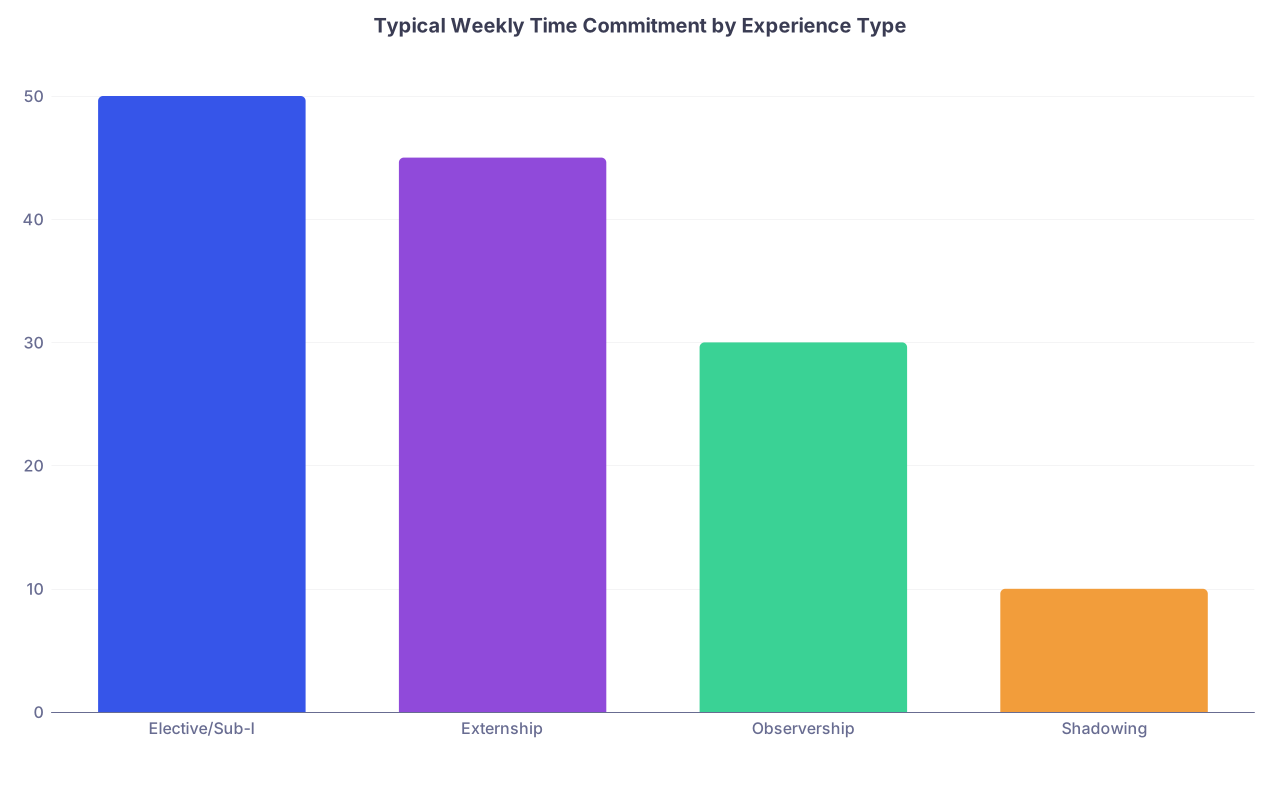
| Category | Value |
|---|---|
| Elective/Sub-I | 50 |
| Externship | 45 |
| Observership | 30 |
| Shadowing | 10 |
If it was intermittent (e.g., shadowing 2 afternoons a week for 6 months), you still list the full date range and then approximate hours per week at 6–8. That is fine. ERAS is about typical weekly intensity, not minute-perfect accounting.
9. Aligning ERAS Wording with Letters of Recommendation
This is where people accidentally expose themselves.
If your ERAS description says:
“Performed supervised H&Ps, wrote notes in the EMR, and actively managed patients…”
but your letter writer describes you as:
“…an observership participant who was very enthusiastic in following patients and discussing management…”
You are done. PDs will trust the attending, not your entry.
So before you finalize your ERAS wording:
- Reread the letter (if you have access) or recall how the experience was framed.
- Match the level of responsibility. Add detail, but do not upgrade your role.
- Use similar verbs: “observed,” “discussed,” “presented literature” vs “examined,” “documented,” “proposed management”.
If you are unsure whether what you did counts as hands-on, assume the stricter category.
10. Concrete Examples: Side‑by‑Side Good vs Bad Wording
Let us clean up some real‑world style mistakes.
Example 1 – Observership Misrepresented as Hands-On
Bad:
Title: Externship – Internal Medicine
Description: Worked as a clinical extern, seeing patients, performing physical exams, and managing treatment plans in a US hospital.
Better (for what it really was):
Title: Clinical Observer – Internal Medicine
Description: Participated in a structured observership on the internal medicine service at [Hospital], observing daily rounds, patient presentations, and team discussions. Reviewed charts, imaging, and laboratory results to follow clinical reasoning and evidence-based management. No direct patient care or documentation responsibilities.
Example 2 – Hands-On Elective Undersold
Bad:
Title: Rotation – Medicine
Description: Joined a US team and attended rounds.
This wastes your best USCE.
Better:
Title: Clinical Elective – Internal Medicine
Description: Visiting 4th-year medical student on the inpatient internal medicine service at [Hospital]. Performed supervised history and physical examinations, presented new admissions and daily progress notes to the team, and drafted documentation in the EMR for resident/attending review and co-signature. Actively participated in diagnostic and management discussions during rounds and case conferences.
Example 3 – Tele-Rotation Hype
Bad:
Title: US Clinical Experience – Telemedicine
Description: Managed US patients via telehealth and learned US documentation.
Better:
Title: Remote Clinical Observership – Internal Medicine
Description: Observed telehealth internal medicine clinics and case conferences at [Institution] via secure video platform. Followed anonymized cases, reviewed diagnostic workups, and discussed clinical reasoning and documentation standards with faculty. No direct patient contact, orders, or EMR documentation.
11. Step-by-Step: How to Decide Wording for Your Own Experiences
Use this simple internal algorithm.

| Step | Description |
|---|---|
| Step 1 | US Clinical Experience |
| Step 2 | Observership/Shadowing |
| Step 3 | Limited Hands-On / Teaching Only |
| Step 4 | Hands-On USCE |
| Step 5 | Use Clinical Observer or Shadowing |
| Step 6 | Describe supervised exams as teaching; clarify no responsibility |
| Step 7 | Use Clinical Elective or Clinical Extern |
| Step 8 | Direct patient contact? |
| Step 9 | EMR notes or orders under supervision? |
Then:
- Name it conservatively.
- In the description, clearly mention:
- Setting (inpatient/outpatient, specialty, institution)
- Supervision structure
- What you actually did day-to-day
- One explicit statement clarifying whether you had clinical responsibility / documentation or not
When in doubt, downgrade the label, upgrade the clarity.
12. Final Check: A Quick “Audit” Before You Submit ERAS
Before you hit submit, go through every USCE entry and ask:
- If my PD called the hospital and read this description out loud, would the coordinator there say, “Yes, that is accurate”?
- Does the title clearly reflect hands-on vs observership vs remote?
- Do I explicitly state “no direct patient care / documentation” where appropriate?
- Does this align with what my letter writers are likely to say?
- Are hours/week and dates realistic for the type of experience?
If you can answer yes all the way down, your documentation is solid.

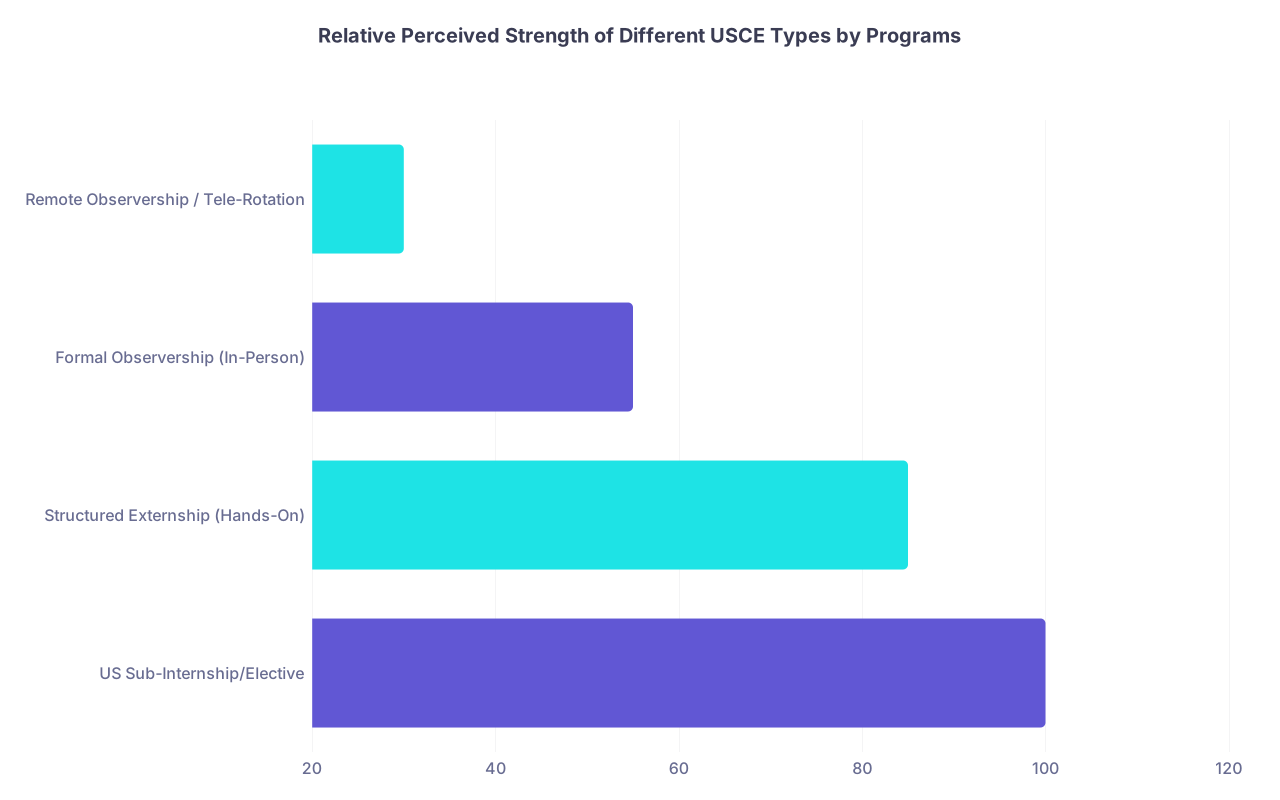
| Category | Value |
|---|---|
| US Sub-Internship/Elective | 100 |
| Structured Externship (Hands-On) | 85 |
| Formal Observership (In-Person) | 55 |
| Remote Observership / Tele-Rotation | 30 |
Key Takeaways
- Hands-on vs observership is about responsibility and documentation, not just being in the building.
- Use honest, explicit wording: “Clinical Elective/Extern” for supervised hands-on; “Clinical Observer/Shadowing” when you had no patient care role, with a clear statement like “No direct patient care or EMR documentation.”
- Consistency between titles, descriptions, and letters of recommendation matters more than trying to “upgrade” your experiences on paper.