The last month before Step 2 CK is where strong prep quietly goes to die.
You can work hard for months, have solid UWorld stats, good NBME scores—and still sabotage yourself in the final four weeks with a few predictable, avoidable mistakes. I have watched this happen over and over: students who were cruising toward a 250+ crash into the 220s because they “turned it up” at exactly the wrong time, in exactly the wrong way.
Let me walk you through the landmines so you do not join them.
1. The “New Resources Panic” Spiral
The most common last‑month disaster is simple: changing the plan when you are finally close to the finish line.
Mistake: Adding brand‑new resources in the final month
Typical version:
- You have done most of UWorld.
- You have a set of NBMEs with a clear upward trend.
- Then someone on Reddit or a classmate says: “You need [insert resource: AMBOSS, random pdf, last-minute bootcamp, 500-page review book] or you will miss X questions.”
So you:
- Start a new Qbank “just to see different questions”
- Buy a crash course and feel compelled to finish it
- Download 3 new “high‑yield” PDFs and try to memorize them
That is how you turn a solid, coherent plan into a scattered mess.
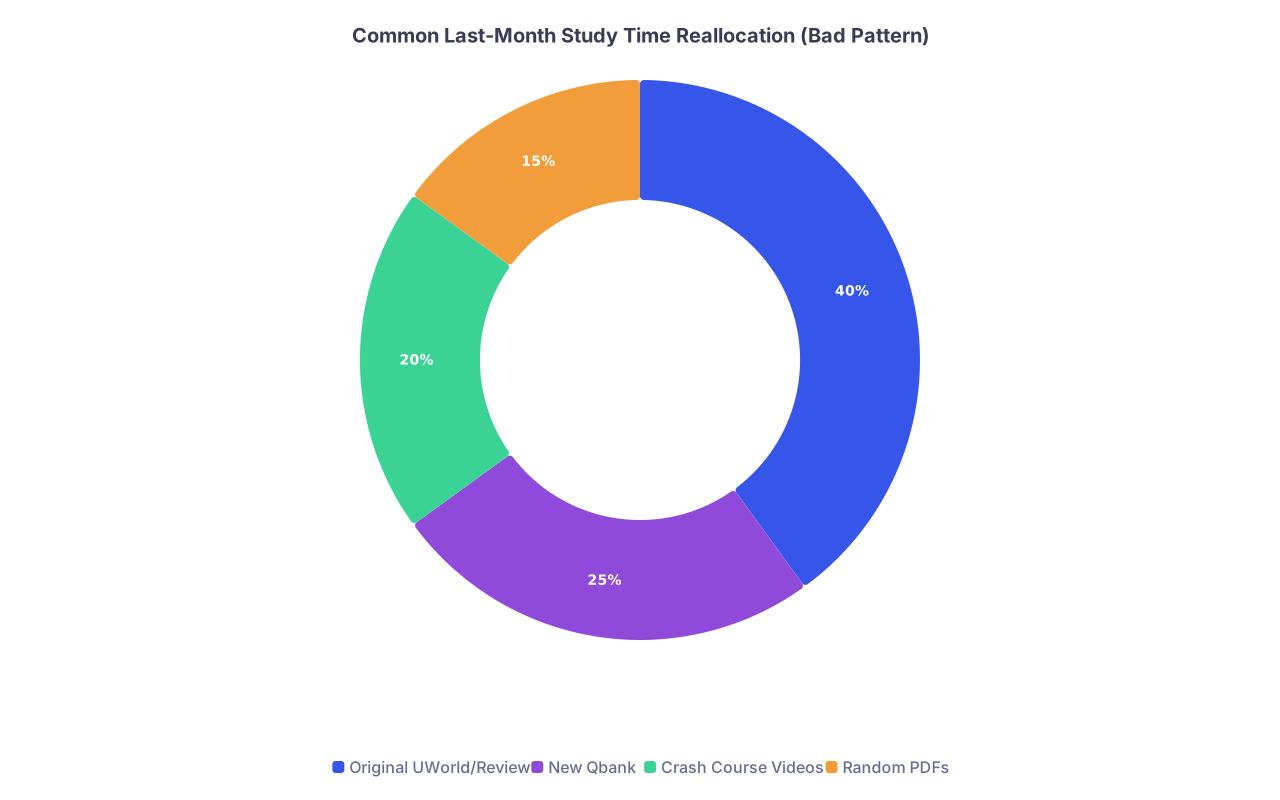
| Category | Value |
|---|---|
| Original UWorld/Review | 40 |
| New Qbank | 25 |
| Crash Course Videos | 20 |
| Random PDFs | 15 |
Here is what actually happens:
- You stop deepening knowledge from your main resource.
- You start sampling from too many things, retaining little.
- Your brain is flooded with new formats, but not clearer concepts.
- Your confidence drops because you feel behind on everything.
What you should do instead
Last month is for:
- Consolidation
- Targeted patching of weaknesses
- Polishing test‑taking habits
Not for reinventing your entire approach.
Unless your baseline is truly poor (e.g., NBMEs in the <210 range), you should:
- Stick with your primary Qbank (usually UWorld)
- Use ONE secondary source surgically (e.g., specific AMBOSS articles for weak topics)
- Avoid large, new video series or review books
If you catch yourself saying, “I think I need to start X now,” that is a red flag. Ask instead: “Is this fixing a real deficit, or is this just fear?”
2. Abandoning NBMEs or Misusing Them
The last 4–6 weeks are when your practice tests matter most. This is where many people either avoid them or weaponize them against their own sanity.
Mistake A: Skipping NBMEs because “I don’t want to get discouraged”
I have literally heard: “I feel like I’m doing better, I don’t want an NBME to freak me out.” That is how you walk into a 9‑hour exam blind.
Skipping NBMEs leads to:
- No calibrated sense of timing
- No realistic sense of stamina
- No objective score estimate
- Surprise on test day about question style and fatigue
Mistake B: Taking too many NBMEs too close to the exam
The opposite extreme:
- NBME 9 on Friday
- NBME 10 on Monday
- UWSA 1 on Wednesday
- Free 120 on Thursday
- Real exam Monday
You are not a machine. All you do here is:
- Burn mental reserves
- Reduce time to actually review them
- Overreact to score jumps or drops you do not understand
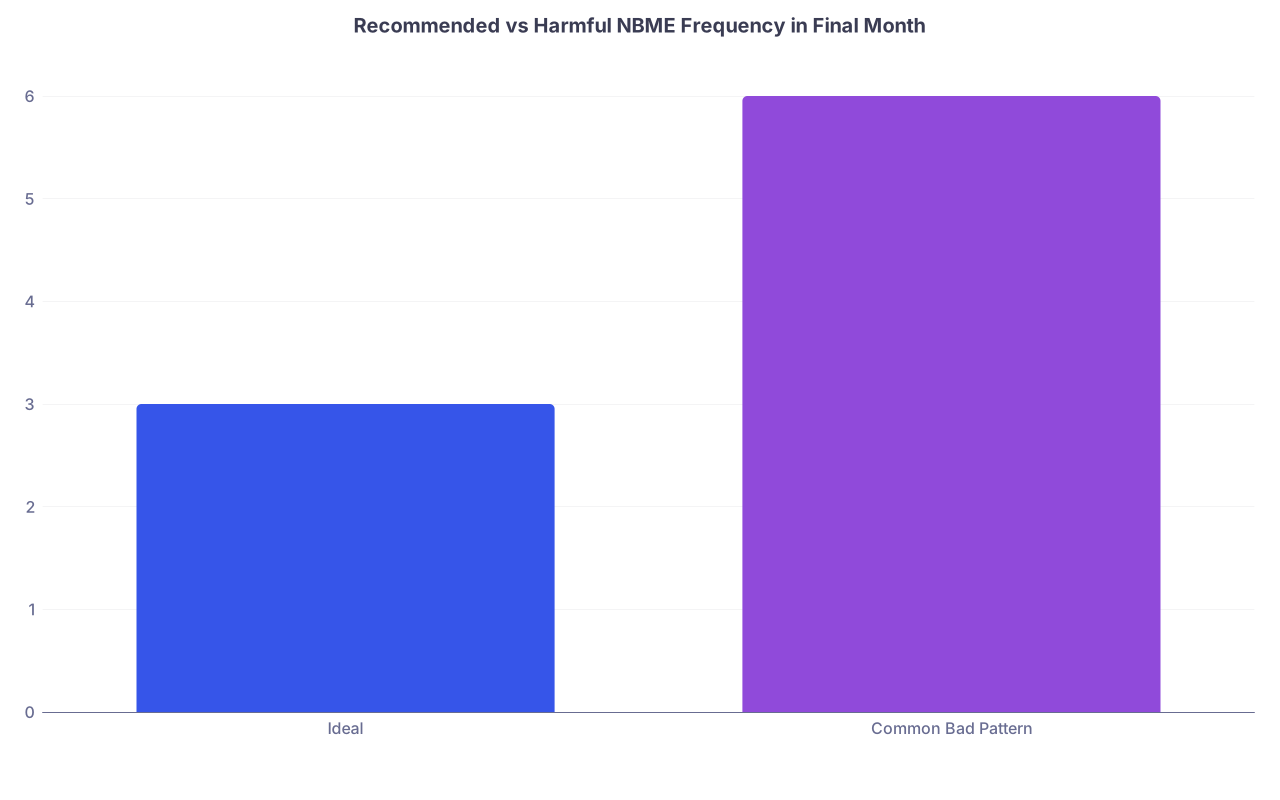
| Category | Value |
|---|---|
| Ideal | 3 |
| Common Bad Pattern | 6 |
Mistake C: “Reviewing” NBMEs by just checking answers
Clicking through to see “correct vs incorrect” is not review. That is entertainment.
You need:
- A log or notebook where you write:
- Question ID or topic
- Why you missed it (knowledge, misread, test‑taking error)
- The key principle you should have used
- Patterns across forms:
- “I miss endocrine questions with labs”
- “I change from correct to wrong under time pressure”
- “I misinterpret vague abdominal pain stems”
What you should do instead
In the final month:
- Take 2–3 major practice tests spaced about 7–10 days apart
- Always take them under real conditions:
- 4 blocks minimum in a row
- Real breaks
- No pausing
- Spend a full day reviewing each one thoroughly
- Use the last one 7–10 days before the real exam, not 48 hours before
3. Over‑Emphasizing Volume Over Understanding
Another classic way to ruin solid prep: chasing raw question counts.
Mistake: “I need 120 questions a day no matter what”
You see this on group chats all the time:
- “How many questions/day are you doing?”
- “I’m at 160/day”
- “Wow I’m only at 80, I’m behind”
This is childish benchmarking. Your goal is not to click boxes. Your goal is to reliably answer Step 2‑level questions on exam day.
Doing 120–160 questions/day in the last month often leads to:
- Rushed reading of stems
- Superficial reviews: “Oh yeah, I remember this” and move on
- No actual pattern recognition building
- Cognitive fatigue that makes you less sharp on exam day

The hidden trap: illusion of productivity
You feel productive because:
- The question counter keeps going up
- Your Anki stats show more reviews
- Your daily to‑do list is getting checked off
But your weakest topics are not improving. You are just doing medium‑difficulty stuff you kind of already know, repeatedly.
What you should do instead
In the final month:
- Prioritize quality of review over raw volume
- Typical sweet spot: 60–80 carefully reviewed questions/day
- For each missed or guessed question:
- Identify the exact decision point in the stem
- Ask: “What should I have recognized earlier?”
- Write a single sentence summary rule (e.g., “In suspected SAH with normal CT >6h, do LP to look for xanthochromia.”)
- Revisit tough questions or topics 2–3 days later
Your metric is not “questions done per day.” It is “concepts I will never miss again.”
4. Destroying Your Sleep and Circadian Rhythm
This is the silent killer. I have seen people with 250–260 practice test scores drop 20+ points because of this alone.
Mistake: Shifting sleep schedule in the final week
Common pattern:
- All month: studying noon–midnight, sleeping 2 am–10 am
- Exam scheduled at 8 am
- Last few days: “I’ll just shift my sleep earlier”
- Reality:
- You fall asleep at 1–2 am anyway
- You wake up at 5–6 am anxious
- You perform the exam on 4 hours of low‑quality sleep
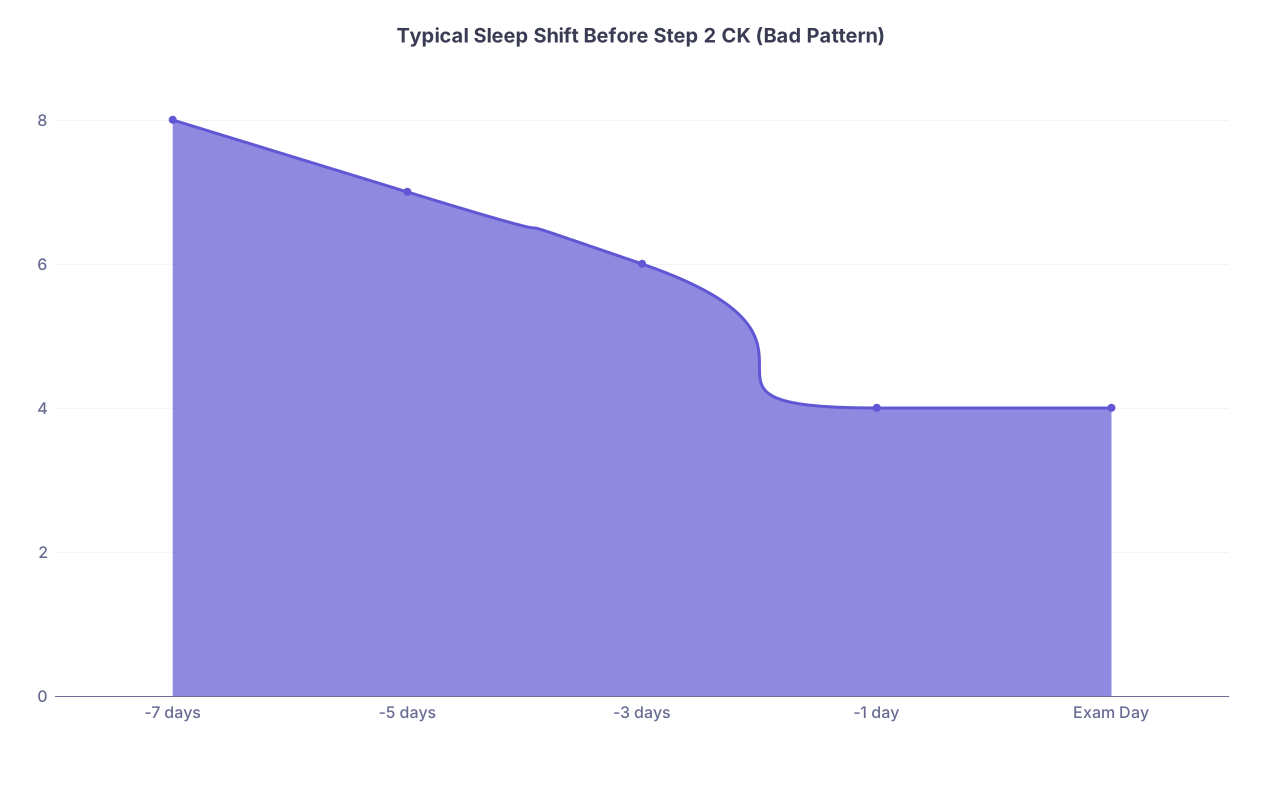
| Category | Value |
|---|---|
| -7 days | 8 |
| -5 days | 7 |
| -3 days | 6 |
| -1 day | 4 |
| Exam Day | 4 |
Sleep deprivation does not just make you tired. It specifically destroys:
- Working memory (holding details from long stems)
- Processing speed (timing per question)
- Emotional regulation (not panicking after one bad block)
Mistake: “One last big push” the night before
People cram UWorld incorrects until 11 pm “just to feel ready.” That is not readiness. That is fear.
The real exam requires:
- Sustained attention for 9 hours
- Reading and re‑reading borderline insane stems
- Making subtle calls between similar answer choices
You will not gain anything meaningful from those last 40 questions at midnight. You can easily lose 10–15 points from impaired cognition.
What you should do instead
- Two weeks out:
- Start aligning your sleep with exam day timing
- One week out:
- Protect sleep like it is part of your study schedule
- Two nights before:
- Aim for stable, consistent sleep, not “super sleep”
- Night before:
- Light review only (Free 120 review, skim your error log)
- Cut all studying at least 10–12 hours before your wake‑up time
On exam day, I want you slightly under‑crammed and fully awake. Not the other way around.
5. Ignoring Test‑Taking Strategy and Timing
Your knowledge can be strong and still be misapplied under Step 2 CK conditions. This is where you lose points you already “know.”
Mistake: Never practicing strict timing
If you always:
- Pause blocks
- Take long breaks between blocks
- Review while doing questions
You are not practicing for Step 2 CK. You are practicing for a fantasy exam.
On the real day:
- You get 40 questions / 60 minutes / 8 blocks max
- You do not get to pause
- Stems will feel longer than anything you saw on your phone in bed
If you have not practiced real‑time decision making, you:
- Over‑invest in early questions
- Panic when you see “15 minutes left, 12 questions remaining”
- Rush and make dumb errors on the last 5 questions of each block
Mistake: Over‑flagging and under‑deciding
Some of you flag 20–25 questions per block “to come back if I have time.” You never have that time.
What this really means:
- You refuse to commit to your first‑best answer
- You waste cognitive energy remembering which ones to revisit
- You run out of time and randomly click the last few
What you should do instead
In the final month:
- Do at least half your blocks in random‑timed, full block mode
- Set rules:
- Max 5–8 flags per block
- First answer must be your best educated guess
- Do not reread full stems on revisit unless absolutely necessary
- Practice skipping:
- If you get stuck beyond 75–90 seconds, choose your best option and move on. You are not married to it; you can revisit if time allows.
Test‑taking is a skill. Last month is when you sharpen it, not ignore it.
6. Letting Anxiety Drive Schedule Changes
This one is huge and subtle.
Mistake: Constantly rearranging the plan based on fear
You have probably seen some version of this:
- Monday: “I am weak in cardio, whole day cardio.”
- Tuesday: “I saw 3 OB questions I missed, now I am terrified of OB, whole day OB.”
- Wednesday: “My friend said neuro is huge on her exam, I need to do neuro all day.”
Days go by and:
- Nothing gets systematically covered
- You overreact to small samples of questions
- Your schedule becomes a reflection of anxiety spikes, not actual data

Mistake: Over‑obsessing about others’ exam experiences
You hear:
- “My exam was 50% OB and psych.”
- “Mine was heavy on renal and biostats.”
- “I barely had any surgery.”
So you:
- Over‑correct toward what they saw
- Under‑prepare bread‑and‑butter medicine
- Forget that question pools are massive and randomized
Their exam is not your exam. Drawn from the same universe, sure. Identical? Not even close.
What you should do instead
- Create a simple weekly structure:
- Example:
- Mon: Cards + Pulm focus
- Tue: GI + Hepato
- Wed: Neuro + Psych
- Thu: OB/Gyn + Peds
- Fri: Renal + Endo + Rheum
- Sat: Mixed Qbank + NBME if scheduled
- Sun: Lighter review / high‑yield skim
- Example:
- Allow small adjustments, not full‑scale daily overhauls
- Use objective data (NBME breakdown, UWorld performance by system) to choose focus areas
Your job is not to predict the exact content map of your exam. Your job is to be unremarkably competent across the board.
7. Neglecting Boring but High‑Yield Topics
Last‑month brain loves drama. It loves rare zebras, weird factoids, and “super high‑yield niche topics” people brag about online.
The exam, however, still pays rent in boring medicine.
Mistake: Chasing zebras and ignoring fundamentals
Examples of misplaced focus:
- Spending hours on rare vasculitides, but still mixing up HFrEF vs HFpEF treatment
- Memorizing every biostat formula, but not knowing how to manage DKA vs HHS
- Obsessing over single‑gene disorders while still screwing up prenatal screening questions
| Topic Area | Why It Gets Ignored | Why That Is Dangerous |
|---|---|---|
| Bread-and-butter IM | Feels “too basic” | Massive representation |
| OB routines | Seen as niche or scary | Many algorithm-style questions |
| Peds URIs/fevers | Seems like clerkship stuff | Very testable clinical reasoning |
| Hospital guidelines | Boring memorization | Step 2 loves updated management |
What you should do instead
In the last month:
- Review:
- Hypertension, diabetes, lipid management
- CHF, COPD/asthma, pneumonia, PE management
- Prenatal care schedules, fetal testing algorithms, induction decisions
- Febrile infant workups, vaccination schedules, common peds rashes
- For each big area, know:
- First‑line diagnostics
- First‑line treatment
- When to admit / escalate / call surgery
You are scored for reliably managing real patients, not for sounding impressive in a rare disease clinic.
8. Underestimating Mental Burnout
You are not lazy if you feel cooked in the last month. Honestly, you probably are cooked. And pretending otherwise is a great way to underperform.
Mistake: Zero scheduled recovery
I see this too often:
- 7 days/week
- 10–12 hours/day of “studying” (real efficiency probably 5–6)
- No real days off, just “lighter blocks” that turn into scrolling and guilt
Burnout symptoms in the last month:
- You read a stem, realize you have no idea what you just read
- You keep missing questions in your strong systems
- You start catastrophizing after every missed question
- You hate everything and everyone

| Step | Description |
|---|---|
| Step 1 | Exhausted but anxious |
| Step 2 | Increase daily study hours |
| Step 3 | Lower efficiency & more errors |
| Step 4 | More anxiety & self-doubt |
| Step 5 | Cut breaks and sleep |
| Step 6 | Worsening performance |
What you should do instead
- Build in real off‑time:
- Half‑day off per week minimum
- Non‑medical activities that actually relax you
- Protect:
- Sleep
- Basic nutrition
- Movement (even a 20‑minute walk daily)
- Treat cognitive fatigue as a legitimate threat to your score, not a moral failing
One of the quiet “cheats” to doing well is simply showing up to the exam with a brain that is not fried.
FAQ (Exactly 4 Questions)
1. How many full practice tests should I take in the last month before Step 2 CK?
Aim for 2–3 full‑length exams (NBMEs, UWSA, or a mix), spaced 7–10 days apart. More than that usually produces diminishing returns and contributes to burnout. Less than 2 leaves you under‑calibrated for timing and stamina.
2. Should I add a second Qbank during the last month if I have finished most of UWorld?
Usually no. In the final month, depth of understanding and high‑quality review are far more valuable than sampling new styles. If you are scoring reasonably on NBMEs, stick with UWorld and maybe use targeted AMBOSS articles or a small subset of additional questions for specific weak spots, not a full “second Qbank run.”
3. How many questions per day is ideal in the final month?
For most students, 60–80 well‑reviewed questions per day is the sweet spot. That means full explanation reading, error analysis, and concept consolidation. 120+ questions/day often signals rushed, low‑yield work and leads to fatigue without proportional gains.
4. What should my last 48 hours before the exam look like?
Two days before: light to moderate review only (selected incorrects, high‑yield lists, maybe partial Free 120). The day before: no new content, no full blocks, no late‑night studying. Focus on sleep, logistics (testing center route, snacks, ID), a brief skim of your highest‑yield notes, and going to bed on time. You do not “gain” points the night before; you mostly risk losing them.
Here is the bottom line:
- Do not blow up a solid plan in the last month with panic‑driven changes.
- Protect sleep, stamina, and strategy as fiercely as you chase content.
- Use objective data—not anxiety—to drive every adjustment you make.