
It’s 1:47 a.m. Your UWorld block ended 40 minutes ago, but you’re still scrolling through explanations with half-glazed eyes. Tomorrow is an inpatient medicine day that starts at 6:30. Your exam is in 9 days. You told yourself you’d “push just a bit more” because Step 1 was pass/fail and Step 2 CK now “has to carry you.”
You’re not alone. And you’re walking straight toward the mistake that quietly kills more Step 2 scores than “not working hard enough” ever did: overstudying yourself into the ground before test day.
Let me be blunt: most people who underperform on Step 2 CK didn’t lose because they were lazy. They lost because they didn’t respect fatigue. They treated this exam like a 5K cram instead of a marathon they’ve already been running for two full clinical years.
This is the guide I wish more people read before they hit that wall.
Mistake #1: Treating Step 2 Like Step 1 and Ignoring Clinical Fatigue
Step 1 was mostly about raw content. Sit, memorize, repeat. Step 2 CK is built on something else: pattern recognition plus clinical judgment layered on top of already busy rotations.
The first mistake? Studying as if you still live in your M2 basement library cave.
I’ve seen people on medicine wards “studying for Step 2” like this:
- Pre-round at 5 a.m.
- Work a full 10–12-hour day.
- Come home and grind 2–3 UWorld blocks + full review.
- Sleep 5 hours.
- Repeat for weeks.
They convince themselves this is “what it takes.” What it really takes is recognizing that you’re not an M2 anymore. Your brain has been on fire daily—pages, admissions, notes, sign-outs, call. That’s all cognitive load. If you stack full-time Step studying on top, you don’t become more prepared. You become cooked.
Here’s the trap: the worse you feel, the more you panic-study. The more you panic-study, the worse you feel. That spiral is where burnout explodes.
The smarter move:
- Moderate intensity during busy rotations.
- Use light review + targeted practice questions.
- Push volume only on lighter rotations or during a dedicated period.
“More hours” after a 12-hour shift doesn’t equal more score. Past a certain fatigue threshold, your retention goes close to zero.
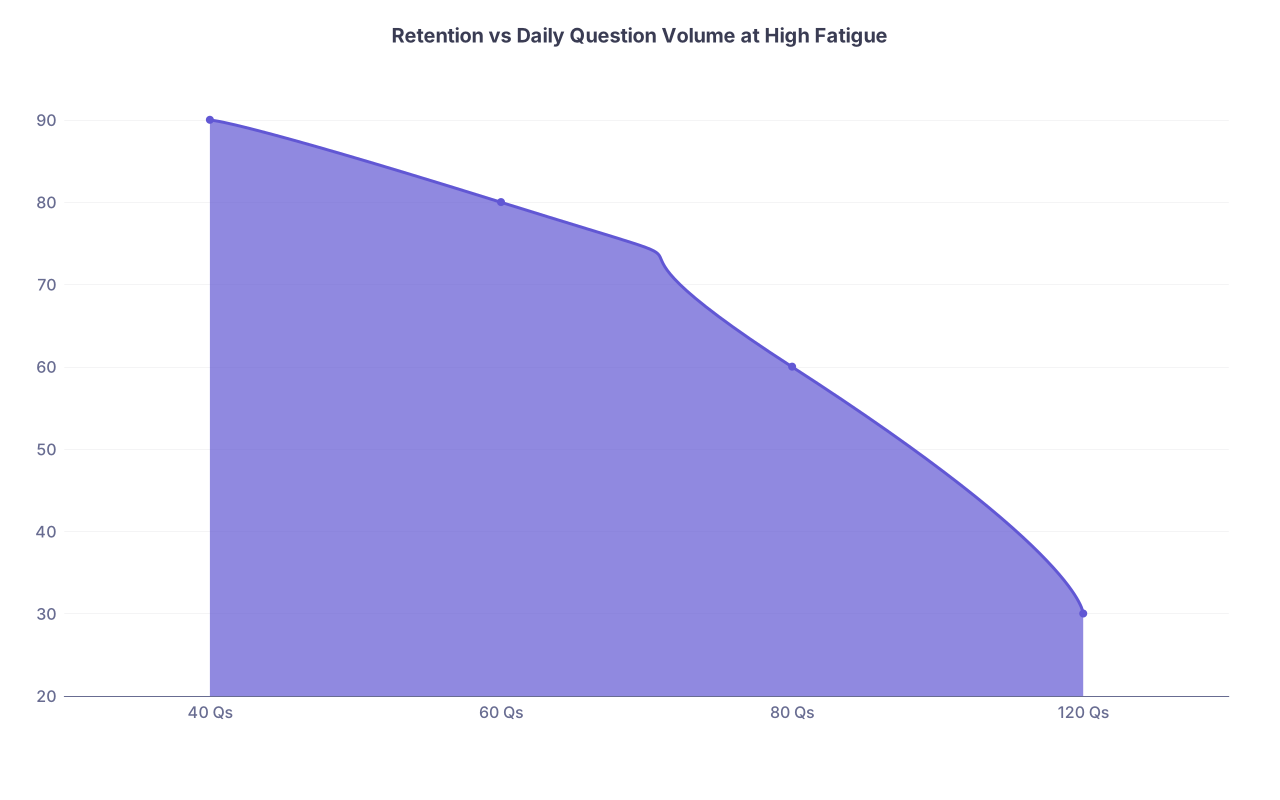
| Category | Value |
|---|---|
| 40 Qs | 90 |
| 60 Qs | 80 |
| 80 Qs | 60 |
| 120 Qs | 30 |
Those numbers aren’t from a journal—this is what I’ve watched repeatedly. Once people cross that 80–100 Q/day line on top of a full day in the hospital, their review becomes checkbox behavior, not learning.
Mistake #2: Worshipping Question Count Instead of Learning
You’ve heard it: “Do UWorld twice” or “Aim for 8,000 questions or you’re not serious.”
That’s how you end up with people bragging:
- “I did all of UWorld, Amboss, and NBME CMS in 6 weeks.”
- Translation: “I skimmed a terrifying amount of content, forgot 70% of it, and never deeply fixed my weaknesses.”
Raw question count is one of the most abused metrics in Step prep. People treat the QBank like a checklist, not a tool.
Here’s what overstudying looks like in practice:
- Rushing through 3–4 blocks a day with shallow review.
- Reading only green answers, skipping deep review of wrong/guessed questions.
- Skimming explanations while half-thinking about something else.
- Chasing “completion” instead of comprehension.
If you’re doing 120+ questions a day plus full explanations, you’re either not actually reviewing them, or you’re sacrificing sleep and sanity to pretend you are.
Better rule of thumb:
- Any day where you truly review your questions in detail, 40–80 high-quality questions is usually enough.
- If you're fried and zoning out? 20–40 questions done carefully are worth more than 120 done as background noise.
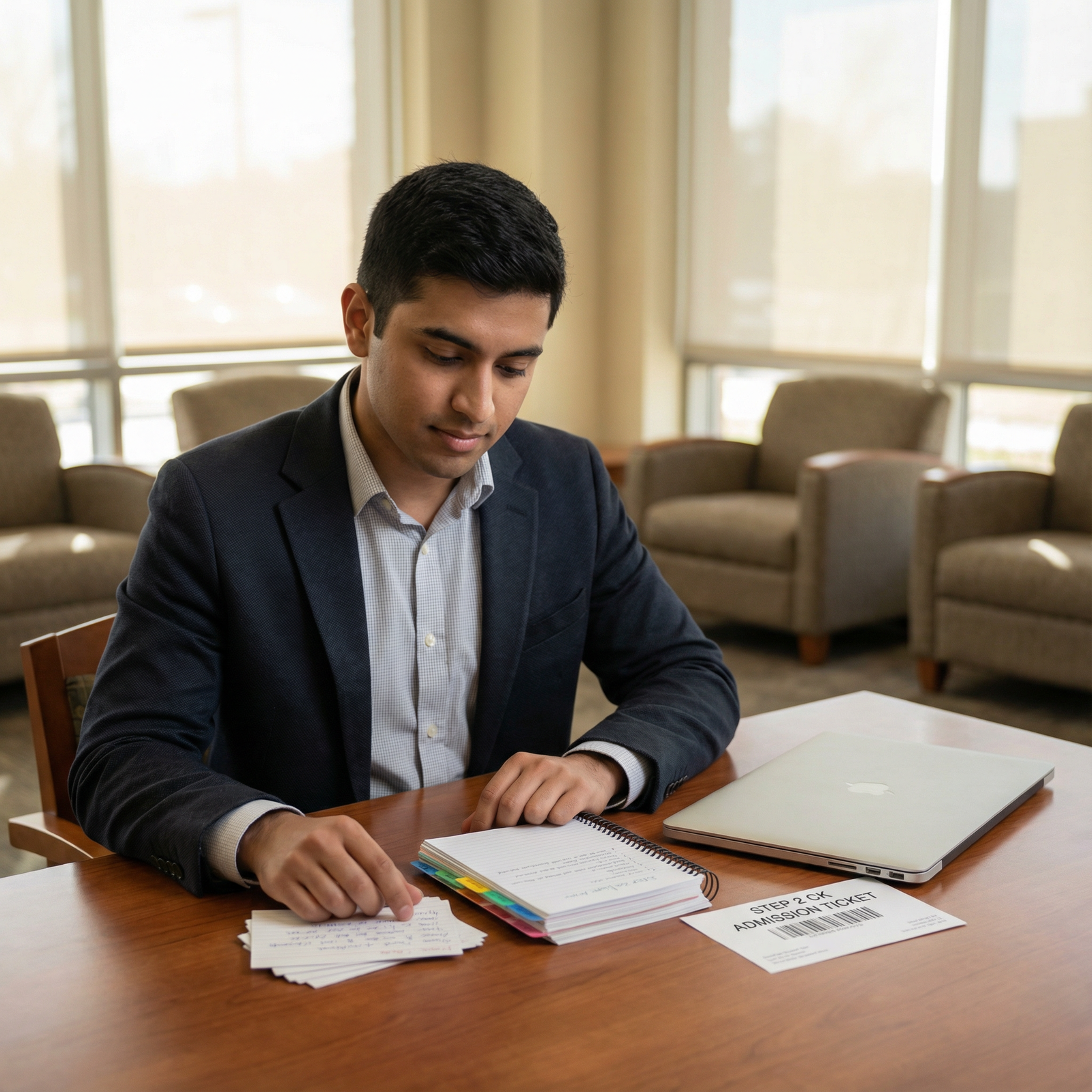
The mistake is not “doing too many questions” in isolation. It’s doing so many that:
- You stop writing down key takeaways.
- You never circle back to patterns of error.
- You miss concepts you keep getting wrong because you never analyze them.
If you find yourself unable to recall what you learned from the last 2–3 blocks beyond “that was rough,” you’re not building knowledge. You’re just draining your reserves.
Mistake #3: Turning Dedicated into a 6–8 Week Death March
Your “dedicated” period isn’t supposed to be punishment. It’s supposed to be consolidation.
But every year I see this:
- Someone schedules 6–8 weeks of dedicated.
- Plans 10–12-hour study days.
- Tries to finish all of UWorld (maybe again), an entire second QBank, full re-reads of notes, plus 6–8 NBMEs.
- By week 3–4, they’re mentally gone. Anxiety up. Sleep down. Scores plateau.
Long dedicated seems safer. More time, right? In reality, most people’s cognition and motivation fall apart when they try to keep up sprint-level intensity beyond 3–4 weeks.
Here’s the curve I’ve watched over and over:
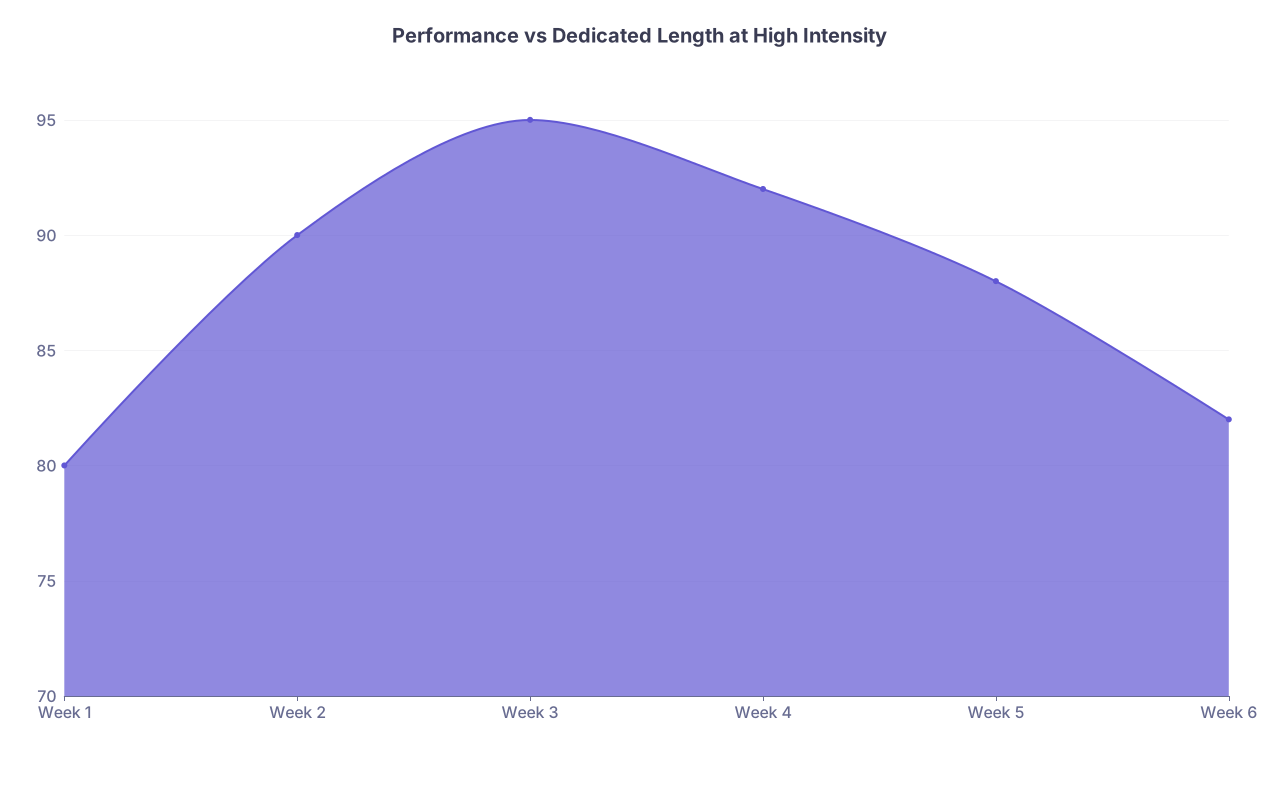
| Category | Value |
|---|---|
| Week 1 | 80 |
| Week 2 | 90 |
| Week 3 | 95 |
| Week 4 | 92 |
| Week 5 | 88 |
| Week 6 | 82 |
The first few weeks? Strong. Then the crash. They’re too committed to the original schedule to back off, so they white-knuckle it. That’s how you walk into test day exhausted instead of sharp.
Common over-dedicated mistakes:
- Zero true rest days for 4+ weeks.
- “I’ll power through” when practice test scores start dropping.
- Ignoring emotional burnout because “I already booked the test.”
What a saner dedicated looks like:
- 3–4 weeks of focused work for most people.
- 1 lighter day per week (not necessarily zero, but <50% load).
- Planned downshifts in the final 5–7 days, not accidental collapses.
If you’re already 3–4 weeks into grinding and you feel like your brain is mud, extending your test date and continuing the same pace is not always the answer. Sometimes the answer is less time, better rested.
Mistake #4: Destroying Sleep in the Name of “One More Block”
This is the ugliest, most stubborn mistake. The martyrdom of “I’ll just cut sleep this week.”
You know this intellectually: sleep is when consolidation happens. But Step panic does something nasty—you stop caring about biology and start playing emotional whack-a-mole with practice tests.
The sleep-deprivation pattern looks like this:
- “I’ll stay up till midnight to finish this block.”
- “I’ll wake up at 4:30 to review these notes before rounds.”
- “I couldn’t sleep last night so I did more questions instead.”
Here’s the problem: Step 2 CK is an 8+ hour day. Concentration, attention shifting, impulse control—it all tanks when you’re sleep deprived. You might be “fine” for a 2-hour block of UWorld. You will not be fine at hour 6 of the real exam after 2–3 weeks of chronic partial sleep loss.
I’ve seen people with NBMEs in the 250s drop 15–20 points on the real exam. Not because their prep was wrong. Because they were half-awake.
You cannot “cram” alertness.
If your choice on a given night is:
- 6 hours of sleep + 40 questions
- 8 hours of sleep + zero questions
Take the sleep. Every time. Anyone who tells you otherwise is choosing vibes over physiology.
Mistake #5: Cramming New Resources Too Close to Test Day
Another flavor of overstudying: resource hoarding in the last month.
Here’s the pattern:
- 4 weeks out: “Everyone’s using OnlineMedEd/Anki/Sketchy/Amboss/Boards & Beyond—maybe I should add those.”
- 2 weeks out: “People say you have to do all the CMS forms or you’re screwed.”
- 5 days out: “I haven’t touched this rapid-review PDF; I’ll speed-read it.”
That anxiety-driven resource hopping creates two problems:
- You never finish or deeply learn from any single resource.
- You waste energy onboarding new formats when your brain should be sharpening familiar patterns.
Late-phase mistakes that wreck people:
- Starting a new full QBank with <3 weeks left.
- Downloading huge Anki decks and trying to blitz them.
- Switching note systems or study methods in the last 10–14 days.
Your question bank and core notes should be mostly locked by the last month. The final weeks are for:
- Consolidation.
- Weakness targeting.
- Practice exam timing and stamina.
Not for reinvention.
| Change Type | Safe or Risky |
|---|---|
| Switching primary QBank | Risky |
| Adding a few targeted CMS forms | Safe |
| Changing your entire note system | Risky |
| Lightly using a new review video | Safe |
| Starting a huge new Anki deck | Risky |
If you catch yourself saying, “I know it’s late, but people swear by X,” that’s usually a red flag. Very rarely will a brand-new resource in the last 2 weeks save you. It’s more likely to dilute you.
Mistake #6: Misusing Practice Tests and Letting Them Dominate Your Life
Practice exams are tools, not personality tests.
The overstudying twist: they become emotional weapons you use against yourself.
Common practice-test mistakes:
- Taking full NBMEs every 3–4 days.
- Re-taking the same form just to see a higher number.
- Obsessively dissecting every single question while ignoring patterns.
- Letting one bad score trigger an immediate “I must double my studying” reaction.
There’s a simple rule: if you are taking practice tests more often than you can meaningfully review them and adjust your studying, you are overusing them.
Healthy approach:
- 1 NBME or UWSA every 1–2 weeks in the 4–6 weeks before your exam.
- Full review of incorrect and guessed questions.
- Writing down patterns: misread question, missed step in workup, gaps in guidelines, etc.
- Study plan for the next 7–10 days driven by those patterns.
If your score drops on one exam, your reaction should be:
- “What changed in my life/sleep/stress?”
- “What specific content or reasoning patterns did I miss?”
Not:
- “I must now study 4 more hours per day until the test.”
Burnout often shows up as weird score fluctuation. A sudden dip might be fatigue, not lack of content. Doubling your load after that dip is how people blow themselves up.
Mistake #7: Ignoring Mental Health and Calling It “Just Stress”
Step 2 CK prep lives on top of:
- Rotations
- Shelf exams
- Letters of recommendation
- ERAS anxiety (for many of you)
- Personal life that hasn’t paused just because UWorld exists
There’s a difference between normal exam stress and something more corrosive.
Red flags I see before burnout disasters:
- You start crying randomly while reviewing questions.
- You can’t read a paragraph of an explanation without re-reading it 3–4 times.
- You feel a constant dread rising in your chest when you open your QBank.
- You’re thinking, “If I bomb this, my career is over,” multiple times per day.
At that point, more studying does not fix the problem. It worsens it. You’re teaching your brain: “Every time I open this material, I suffer.” That is how avoidance and panic get wired.
If you’re here, your real tasks are:
- Cut your daily load.
- Restore sleep.
- Talk to someone—advisor, mental health professional, trusted attending, upperclassman who isn’t a chaos machine.
- Consider a short extension if possible and if it will be used to stabilize, not cram.
And no, this isn’t coddling. A numb, depleted brain is not going to magically think straight on 8 blocks of high-stakes questions.
Mistake #8: Peaking Too Early and Coasting into Exhaustion
There’s a timing problem nobody warns you about: peaking a month early, then trying to hold that peak until test day by pure force.
Here’s the classic story:
- 6–8 weeks out: student goes “all in,” huge question volume, aggressive schedule.
- 4–5 weeks out: scores climb nicely.
- 2–3 weeks out: scores plateau or slightly dip.
- Last 1–2 weeks: they’re over it, burnt, dragging through review, feeling guilty, so they add even more late-night blocks.
This is how people walk into test day saying, “I just want it to be over,” instead of, “I’m ready to rip through this.”
Your aim isn’t to be at your absolute max 5 weeks before test day. You want:
- Solid foundation early.
- Increasing sharpness and test endurance in the last 2–3 weeks.
- Mental freshness and confidence in the final days.
That means you don’t try to maintain redline pace for 6–8 weeks straight. You pulse the intensity:
- Heavier weeks followed by slight downshifts.
- Building, not just maintaining.
Overstudying ignores that rhythm and pretends you’re a machine.
Mistake #9: Refusing to Taper Before Game Day
This one is non-negotiable, and almost everyone has the urge to screw it up.
You cannot sprint through the final 48–72 hours and expect to perform your best.
I’ve seen:
- Full UWSA the day before the exam “just to confirm I’m okay.”
- 100–150 questions the day before, plus late-night review.
- Sleeping at 2 a.m. for an 8 a.m. test because “I had to get through GI and neuro.”
And guess what? A nontrivial number of those people underperformed exactly the way you’d expect: careless errors, not finishing blocks, zoning out mid-question.
Your last 48 hours should look something like:
- 2 days before: light review, no full practice tests, maybe 20–40 easy questions at most.
- Day before: primarily rest. Very light, confidence-boosting review if you must do something. No full blocks, no new high-yield PDF marathons.
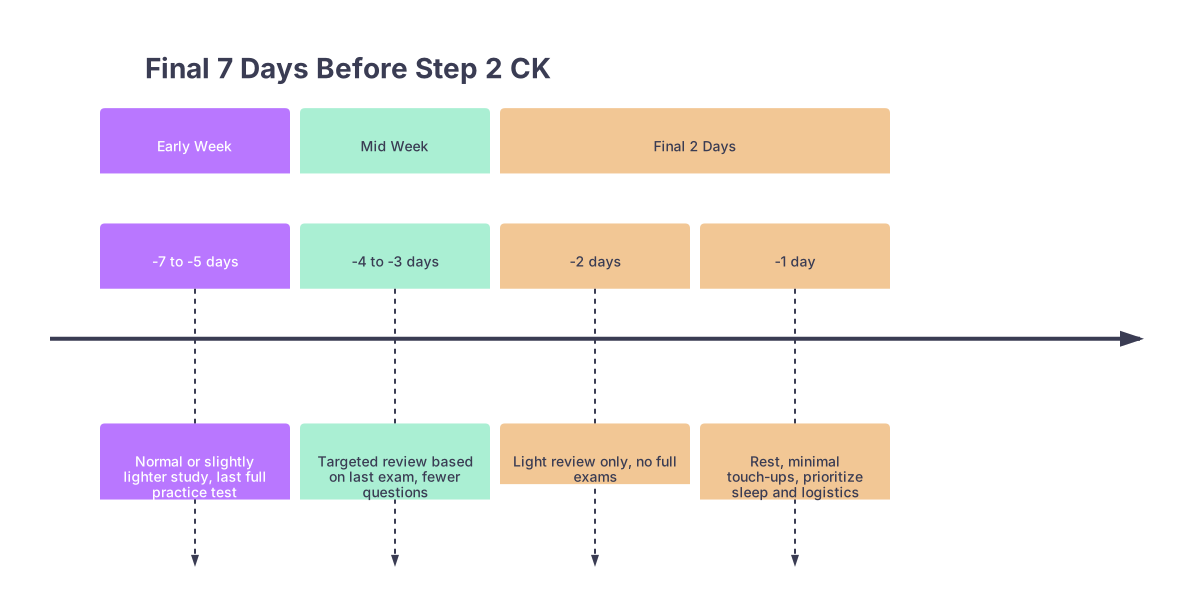
| Period | Event |
|---|---|
| Early Week - -7 to -5 days | Normal or slightly lighter study, last full practice test |
| Mid Week - -4 to -3 days | Targeted review based on last exam, fewer questions |
| Final 2 Days - -2 days | Light review only, no full exams |
| Final 2 Days - -1 day | Rest, minimal touch-ups, prioritize sleep and logistics |
If you’re thinking, “But I’m behind; I can’t afford to taper,” I’ll be direct: walking in 10% less prepared but fully rested usually beats walking in 5% more prepared but half-conscious.
Putting It All Together: A Saner Step 2 CK Approach
Let’s be clear: I’m not telling you to go easy on yourself. Step 2 CK matters for residency. You should work.
What I’m telling you is this: the line between hard work and self-sabotage is thinner than you think.
Basic “anti-burnout before test day” rules:
- Don’t try to run M2-style study hours on top of full clinical days for weeks on end.
- Value depth of review over raw question volume.
- Keep dedicated periods intentional and time-bounded; 3–4 weeks of high-quality work often beats 6–8 weeks of erosion.
- Protect sleep like it’s part of your prep—because it is.
- Don’t reinvent your resource stack in the last month.
- Use practice tests strategically, not compulsively.
- Taper before game day, even if your anxiety screams otherwise.
You’re not competing to see who suffered the most. You’re trying to walk into that testing center alert, confident, and with a brain that still works.
FAQ (Exactly 5 Questions)
1. How many questions per day is “too many” for Step 2 CK prep?
If you’re on a full clinical day, more than 40–60 well-reviewed questions often becomes counterproductive. During dedicated, 60–80 questions with real, thorough review is usually plenty. Once you’re pushing 100–120+ questions daily consistently, ask yourself: am I actually learning from them, or just chasing numbers?
2. Is it a mistake to do UWorld twice for Step 2 CK?
Not automatically. The mistake is forcing a second pass at high volume when you’re already exhausted or don’t have time to review properly. A targeted second pass of weak areas, or re-doing only incorrect/flagged questions, is usually safer than mindlessly redoing the entire bank when your exam is close.
3. How many NBMEs or practice tests should I take before Step 2?
For most people, 3–5 full practice exams (mix of NBMEs and UWSAs) is enough to calibrate and improve. More than that starts to eat into study time and recovery. If you’re taking a full exam more often than every 7–10 days, you’re probably overdoing it and under-reviewing.
4. What if my last NBME before the test is lower than my earlier ones?
Do not respond by tripling your studying in the final days. First, check for obvious causes: poor sleep, rushing, distractions, mental exhaustion. Then use the result surgically: identify 3–5 key weak areas and spend the remaining time shoring those up while still protecting sleep and tapering before test day.
5. How do I know if I should postpone my Step 2 CK date?
Consider postponing if: your recent practice scores are far from your goal and not improving; you’re severely sleep-deprived and can’t correct it in a week; or your mental health is clearly deteriorating (panic attacks, constant dread, inability to focus). But postponing only helps if you plan to use the extra time differently—often that means stabilizing your life and then studying smarter, not just “more.”
Key takeaways:
Respect your fatigue as much as you respect your QBank. Depth of learning, consistent rest, and a real taper beat macho, unsustainable grind every single time. Walk into Step 2 CK as a rested clinician, not a wrecked question machine.