
The fear of freezing on Step 2 PE isn’t irrational. It’s exactly what happens to smart people under pressure.
The Ugly Thought You’re Having (And Don’t Want To Say Out Loud)
You’re not scared of the content. You’re scared of your mind betraying you.
Not remembering what to ask.
Not knowing what to do with your hands.
Blanking on basic questions like, “Any chest pain?”
Staring at the patient while the clock melts down in the corner.
And the worst part: you’re not imagining some abstract exam room. You’re seeing yourself standing in front of that standardized patient, heart racing, thinking, “This is it. I’m failing my whole future in real time.”
Let me be very clear: freezing for a few seconds is normal. Freezing for a whole encounter is rare. And even if you have one bad room, that alone almost never fails you.
But your brain doesn’t care about statistics. It cares about worst‑case scenarios. So let’s actually walk through those.
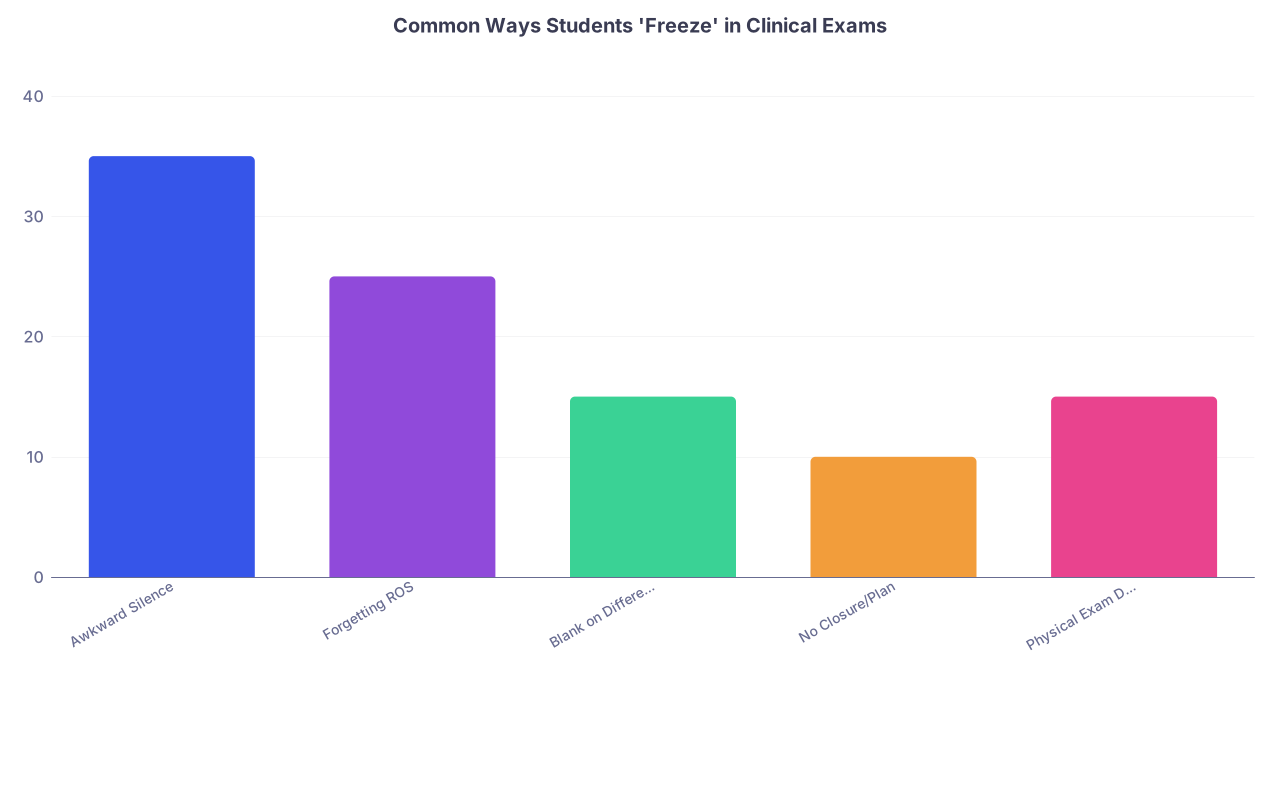
What “Freezing” Actually Looks Like on Step 2 PE
| Category | Value |
|---|---|
| Awkward Silence | 35 |
| Forgetting ROS | 25 |
| Blank on Differential | 15 |
| No Closure/Plan | 10 |
| Physical Exam Disorganized | 15 |
People think “freezing” means standing in a corner, mute, for 15 minutes. That’s not what happens 99% of the time.
Here’s what I’ve actually seen:
- You walk in and forget the patient’s name. Recover 10–15 seconds later.
- You’re mid‑history, and suddenly you can’t remember what to ask next. There’s a weird pause.
- You finish the history and realize you forgot to ask about red flag symptoms. You scramble and backtrack.
- You start the physical exam and your brain goes, “Wait… what do I actually need to check for abdominal pain again?”
- You get to the end and say something vague like, “We’ll run some tests,” and then hate yourself as you walk out.
That’s freezing. And it is baked into how the exam is graded. They know you’re not an attending. They’re not expecting a perfect TV doctor performance.
There are three big fears under the “freeze” umbrella:
- What if I blank on the history?
- What if I blank on the physical exam?
- What if I blank on the assessment/plan and sound like an idiot?
Let me walk through each of those and what actually happens from the exam’s perspective.
Worst-Case Fear #1: “I Forget Everything During the History”
You’re imagining walking in, saying “Hi, I’m… uh…” and then going totally silent.
I’ve seen students do this. They still passed.
Here’s what usually saves you:
- Muscle memory from a simple structure, not intelligence.
- Having go‑to phrases you can say while your brain reboots.
- Realizing you don’t have to be smooth, just safe, respectful, and semi‑organized.
If your mind truly goes blank in the room, here’s a very concrete script to fall back on:
- You: “Hi, I’m [Name], one of the medical students working with your team today. What brought you in?”
- Let them talk.
- You (if your mind is empty): “Can you tell me more about that?”
Buy time. Let them keep talking. - Remember this backbone:
OLD CARTS (or similar) for the main symptom.- Onset
- Location
- Duration
- Character
- Aggravating/relieving
- Radiation
- Timing
- Severity
- If you’re still stuck: “Have you noticed any other symptoms like fever, weight loss, chest pain, shortness of breath, or anything else that’s been worrying you?”
Is that elegant? No.
Is it passable? Yes.
The standardized patient isn’t grading your style. They care: were you respectful, did you try to understand the problem, did you ask about safety/red flags, did you completely ignore something major?
And even if you forget big chunks of ROS or PMH in one case, remember:
- The exam is composite. Multiple encounters, multiple domains.
- A shaky history in one room can be balanced by a solid one in another.
You are not being graded on “did they have a single awkward silence.”
Worst-Case Fear #2: “I Forget the Physical Exam and Look Clueless”
This one hits deep because you’re terrified the SP will see you not knowing what you’re doing.
Here’s the reality: the bar isn’t, “Do you remember a fellowship‑level exam for every chief complaint?” It’s:
- Did you wash your hands?
- Did you ask permission?
- Did you examine the right region and some related systems?
- Did you look roughly like a person who has seen a patient before?
Let’s say you totally freeze. You’re in a chest pain encounter and your brain empties out.
Here’s your emergency salvage pattern for almost any case:
- Always: vitals (ask for them), general observation.
- Always: heart and lungs.
- Region‑specific:
- Chest pain? Add chest wall palpation, maybe JVD, extremity edema.
- Abdominal pain? Add abdomen: inspect, auscultate, palpate.
- Headache? Neuro: cranial nerves quick screen, strength, sensation, gait if time.
- Shortness of breath? Lungs carefully, extremities for edema, maybe neck veins.
Even if you forget half of what you planned, if you do:
- Hand hygiene
- Heart + lungs
- Something in the right area
…you haven’t “failed the exam.” You’ve maybe lost some points in that domain, in that station.
The SP is not thinking, “Wow, they forgot the exact order of abdominal exam, automatic fail.” They’re thinking, “Did they treat me professionally? Did they roughly know what they were doing? Did they hurt me? Did they do anything unsafe?”
You are much more likely to lose points for:
- Skipping any exam entirely (“No physical exam? Really?”)
- Doing an exam that doesn’t match the case at all
- Being rough, not asking permission, ignoring pain
- Never explaining what you’re doing
So even if your exam is basic and incomplete, if it’s logical, kind, and roughly on target, you’re still in the passing range.
Worst-Case Fear #3: “I Won’t Know What to Say in the Assessment and Plan”
This one is brutal because you imagine standing there knowing the SP is waiting, and you have… nothing.
You don’t need a fancy, board‑style differential with six zebra diagnoses. You need three things:
- A plausible leading diagnosis
- One or two reasonable alternatives
- A safe, non‑reckless “next steps” plan
If you totally freeze, here’s your bare‑minimum script:
- “Based on what you’ve told me and the exam today, my top concern is [something broad but reasonable: ‘a problem with your heart,’ ‘an infection in your lungs,’ ‘a possible ulcer or gallbladder issue’].”
- “Other things we’re also considering include [one or two related ideas, not random nonsense].”
- “To figure this out, we’d like to get some tests such as blood work and imaging, and we’ll also monitor you closely. Once we have the results, we can talk more specifically about treatment.”
Is that generic? Yes.
Is that enough to not fail? Also yes.
You get credit for structure, not just content:
- Did you summarize what you heard?
- Did you name a general direction?
- Did you offer some concrete next steps?
- Did you check for questions or concerns?
- Did you show empathy about their worry?
You don’t fail because you didn’t say “acute coronary syndrome vs GERD vs costochondritis” in pristine order. You fail if every encounter ends with you basically saying: “Okay, we’re done,” and walking out without any explanation or plan.
The Real Failing Pattern (What Actually Gets People)

If you want something concrete to fear, fear this, because this is what I’ve seen hurt people:
- They panic in multiple rooms, not just one.
- They shut down when something goes wrong (missed question, awkward moment) and don’t recover.
- They completely skip critical safety questions: suicidal ideation, domestic violence, chest pain red flags, etc.
- They become so focused on the checklist that they stop listening to the patient at all.
- They forget basic professionalism: introducing themselves, washing hands, draping, asking permission.
Freezing once? Human.
Freezing every time? That’s when it becomes dangerous.
The exam is built assuming you will:
- Mess up a case.
- Forget something you know.
- Panic a little in at least one encounter.
What they’re trying to see is: What do you do after that? Do you stay with the patient or disappear into your mind?
How to “Pre‑Plan” Your Way Out of a Freeze
This is what I’d do if I were you and terrified of going blank.
1. Script a Default Opening
You should never be improvising your first 20–30 seconds. That’s where anxiety spikes.
Have this basically memorized:
“Hi [Mr./Ms. Last Name], I’m [Your Name], one of the medical students working with your team today. I’ll be talking with you and, if it’s okay, doing a brief exam to better understand what’s going on. What brought you in today?”
The moment you say that, you’re not frozen. You’re already moving.
2. Use One Simple History Skeleton for Almost Everything
Stop pretending you’ll remember 10 different mnemonics under stress. Pick one:
Chief complaint → OLD CARTS → Relevant ROS → PMH/meds/allergies → Social (smoking, alcohol, drugs, sexual, work, home) → Family.
Even if it’s not perfect, it’s better than “uhhhhh.”
3. Build 3 Default Exam Packages
You need auto‑pilot patterns, not improvisation.
For example:
- Chest pain / SOB package: vitals, general, neck (JVD), heart, lungs, extremity edema, maybe pulses.
- Abdominal pain / GI package: vitals, general, heart, lungs (brief), abdomen (inspect, auscultate, palpate), maybe CVA tenderness.
- Neuro / headache package: vitals, mental status, cranial nerves (quick), motor, sensation, reflexes (if time), gait/coordination.
When you walk in, your brain goes: “Okay, this sounds like chest pain → chest package,” instead of “What exam do I invent from scratch now?”
4. Memorize a Default Closure Script
Again, don’t improvise the last 1–2 minutes while panicking about time.
Something like:
“Let me just quickly summarize what I’ve heard to make sure I’ve got it right…”
[1–2 sentence summary]
“Based on this, my main concern is [broad idea]. We’re also considering [one or two others]. To help figure this out, we’d like to do [a couple labs/imaging/basic steps], and we’ll use that information to decide on the best treatment for you.”
“Does that make sense? Do you have any questions or specific worries I haven’t addressed?”
“I know this can be stressful. We’ll do our best to figure out what’s going on and help you feel better.”
If you say that in every room, even with so‑so content, your closure scores are not tanking.
What If You Actually Freeze in the Real Exam?

| Step | Description |
|---|---|
| Step 1 | Feel yourself freezing |
| Step 2 | Pause & breathe once |
| Step 3 | Use default phrase: Can you tell me more about that? |
| Step 4 | Return to OLD CARTS backbone |
| Step 5 | Start with vitals, heart, lungs |
| Step 6 | Summarize out loud to regain flow |
| Step 7 | Use default closure script |
| Step 8 | History or Exam? |
Let’s say the nightmare happens.
You’re 4 minutes in. Time’s running. Your mind is a blank white wall.
Step‑by‑step:
Micro‑pause.
Look at your notepad for 1–2 seconds. Take one slow breath. The SP will not fail you for pausing.Use a lifeline phrase.
- “Can you tell me a bit more about that?”
- “Let me just make sure I’ve got this right…” and start summarizing what you do know.
Return to your backbone.
- If in history: go back to OLD CARTS or ask about red flags: fever, weight loss, chest pain, SOB, etc.
- If in exam: just do heart + lungs + region‑specific basic exam.
Don’t confess your panic.
Saying, “I’m so nervous, I’m blanking” doesn’t help your score. It breaks the illusion of professionalism. You can be anxious internally and still appear functional externally.Salvage with a clean closure.
Even if the encounter was rough, a calm, empathetic closure can seriously soften the damage.
You’re not being judged on never having an awkward moment. You’re being judged on being a minimally competent, safe, somewhat organized junior‑level clinician.
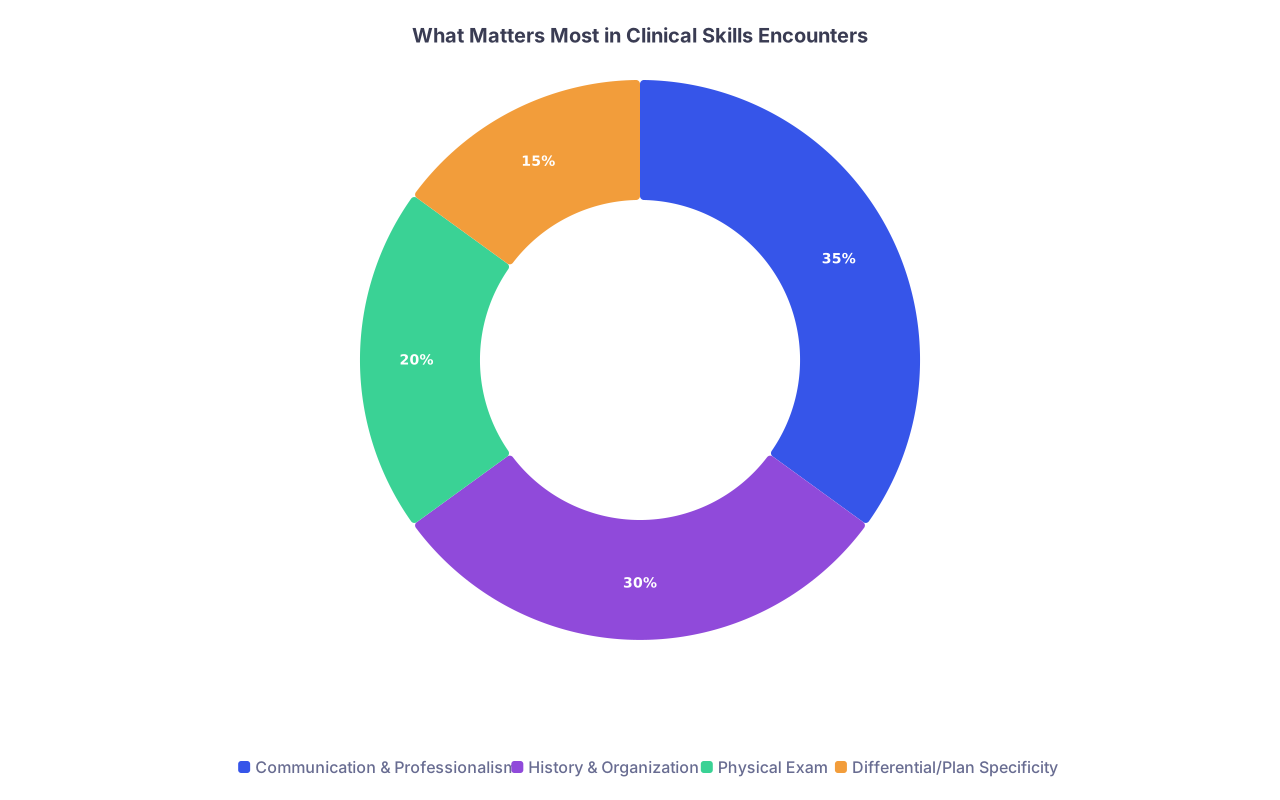
What the Graders Actually Remember About You
| Category | Value |
|---|---|
| Communication & Professionalism | 35 |
| History & Organization | 30 |
| Physical Exam | 20 |
| Differential/Plan Specificity | 15 |
People obsess about the differential. The graders obsess about something else.
The big themes that stick:
- Were you respectful, nonjudgmental, decent to the patient?
- Did you ask the obvious things you’d expect any safe clinician to ask?
- Did you have some structure, or were you just flailing randomly?
- Did you say completely unsafe or wildly inappropriate things?
- Did you abandon the patient emotionally when you got stressed?
You could miss a rare diagnosis and still pass.
You cannot consistently ignore pain, skip handwashing, or bulldoze past the patient’s fears and expect a miracle.
Quick Comparison: Imagined vs. Realistic Freeze Outcomes
| Scenario | What You Imagine | What Usually Actually Happens |
|---|---|---|
| 5–10 second silence | Automatic fail | No one cares; you regroup and move on |
| Forget ROS in one case | Whole exam ruined | Lose some points in that station, still pass overall |
| Weak physical exam | Seen as dangerous | Seen as inexperienced but acceptable if safe and logical |
| Generic plan/closure | Penalized heavily | Often still gets credit for structure and communication |
| One terrible encounter | Fails entire exam | Often balanced by stronger performance in other rooms |
FAQs

1. What if I completely blow one encounter? Is that an automatic fail?
No. One bad encounter is not an automatic fail. The exam is designed to sample you across multiple stations and domains. You can have:
- One rushed or incomplete history
- One exam that misses pieces
- One closure that’s awkward and vague
…and still pass, as long as the rest of your encounters are at least average and you’re consistently safe and professional.
The danger is when you repeat the same problems across many cases: never washing hands, always forgetting introductions, repeatedly failing to ask key safety questions, or never offering any coherent plan.
2. What if I freeze and forget super basic questions—won’t they think I’m incompetent?
They already assume you’re not fully baked. You’re a student. They expect gaps.
Forgetting a basic question in the moment doesn’t make you look incompetent; it makes you look human under pressure. What actually makes you look incompetent is:
- Dangerous omissions (e.g., no chest pain questions in a clear chest pain case)
- Dismissing serious symptoms
- Faking parts of the exam
- Saying obviously wrong things with total confidence
If you forget something basic, but you still show you’re trying to understand the problem, care about the patient, and avoid harm, you’re still operating in the “pass” zone.
3. Can I recover if I realize halfway through that I forgot to ask something important?
Yes, and you absolutely should. Just say:
“Let me go back for a second—I realized I didn’t ask you about [X], and that’s actually important for understanding what’s going on. Have you had any…?”
That doesn’t look bad. It looks thoughtful. Graders like that. It shows you’re monitoring your own process and correcting yourself instead of blindly plowing ahead.
4. How do I stop my brain from going blank the second the timer starts?
You won’t always stop it. You reduce it.
You do that by:
- Having fixed scripts for your opening, basic history backbone, and closure.
- Practicing out loud with a partner or even alone in your room, not just “in your head.”
- Running enough full timed mock encounters that the situation feels familiar, so your brain doesn’t treat it like an alien battlefield.
The goal is not “no anxiety.” The goal is “I’ve done this enough that even when I’m anxious, my mouth knows what to say next.”
5. What if I cry or visibly panic during an encounter?
Honestly? I’ve seen tears. It’s not ideal, but it’s not some career‑ending event unless you fully lose the ability to function.
If you feel yourself spiraling:
- Take a slow breath.
- Focus on one simple next step: “Let me summarize what you told me so far.”
- Anchor yourself in the task, not the fear.
If you were generally competent across the exam and had one emotionally rough encounter, that’s not the sole determinant of pass/fail. They’re assessing clinical skills, not whether you’re a robot.
6. Will the examiners think I’m unsafe if my plans aren’t very detailed?
No. They’re not expecting a subspecialist‑level diagnostic workup. They’re expecting:
- You don’t send a clearly unstable person home casually.
- You don’t ignore huge red flags.
- You at least propose basic, reasonable next steps: labs, imaging, monitoring, maybe hospital vs outpatient when appropriate.
A simple, safe plan like “We’ll get some blood tests, maybe an X‑ray/CT/ultrasound, and monitor you while we figure out what’s going on” can earn a lot more credit than you think, especially if you communicate it clearly and kindly.
Years from now, you won’t remember every clumsy question or awkward silence with a standardized patient. You’ll remember that you were terrified, and you still walked into that room and did your job anyway.