
The usual advice to “just wing COMLEX Level 3 during intern year” is lazy and expensive.
If you have a clean 4-week block after graduation, you can turn Level 3 from a nagging threat into a fast, contained project. But you have to treat it like a sprint, not background noise.
Below is a day‑by‑day, week‑by‑week COMLEX Level 3 plan for a fresh graduate with 4 dedicated weeks before intern year starts. I will assume:
- You passed Level 1 and 2 on the first attempt
- You are reasonably fresh on basic science but rusty on OMM and CCS-style cases
- You can give this 6–8 focused hours per day, 6 days per week
Adjust hours if you are working part-time or moving, but keep the structure.
Big Picture: The 4-Week Sprint Structure
Before we zoom into the calendar, you need the scaffolding.
Core tools (pick 1 from each line and commit):
| Category | Primary Choice | Backup / Add-On |
|---|---|---|
| Qbank (main) | COMQUEST Level 3 | TrueLearn Level 3 |
| Qbank (extra) | UWorld Step 3 (targeted) | AMBOSS Step 3 style |
| Cases | COMBANK / COMQUEST CCS-like | UWorld CCS (for flow) |
| Rapid review text | First Aid for USMLE Step 3 | Step-Up to Medicine |
Plan structure:
- Week 1 – Systems sweep + OMM rebuild
- Week 2 – Bread-and-butter primary care + hospital flow
- Week 3 – Full exam simulation + cases + targeted weaknesses
- Week 4 – Sharpen + taper + test-day rehearsal
You are racing a very specific enemy: rust. Level 3 is not about esoteric minutiae; it is about messy real‑world decisions, safety, and order sets. If your plan does not include timed blocks and repeated exposure to CCS-style thinking, it is weak.
Pre‑Week: 1–2 Days Before You “Start”
You do not waste Week 1 figuring out your logins.
At this point you should:
-
- Place it on Day 26–27 of the 4-week block (not Day 28; give yourself one buffer day in case of meltdown, illness, or moving chaos).
Activate all resources.
- Qbank accounts, CCS/cases platform, digital or physical reference book.
- Install mobile apps for quick review during errands or travel.
Set your daily schedule (and protect it). Typical model:
- 08:00–10:00 – Timed block (40–44 questions)
- 10:00–11:00 – Review
- 11:00–12:00 – OMM / micro / pharm review
- 13:00–15:00 – Second block
- 15:00–16:30 – Review
- 16:30–17:30 – Light reading / flashcards / cases
Do a 40-question baseline block (untimed, mixed).
- Do not panic about score. Use it to find:
- “I have no idea” zones (OB, OMM, peds, ethics).
- Timing issues (are you reading too slowly? second‑guessing too much?).
- Do not panic about score. Use it to find:
Write your three worst areas on an actual piece of paper. They will steer Week 1–2.
Week 1: Systems + OMM Reboot (Days 1–7)
Goal this week: shake off rust and re‑prime your brain for clinical reasoning.
You are not chasing a score curve yet. You are rebuilding foundations and regaining speed.
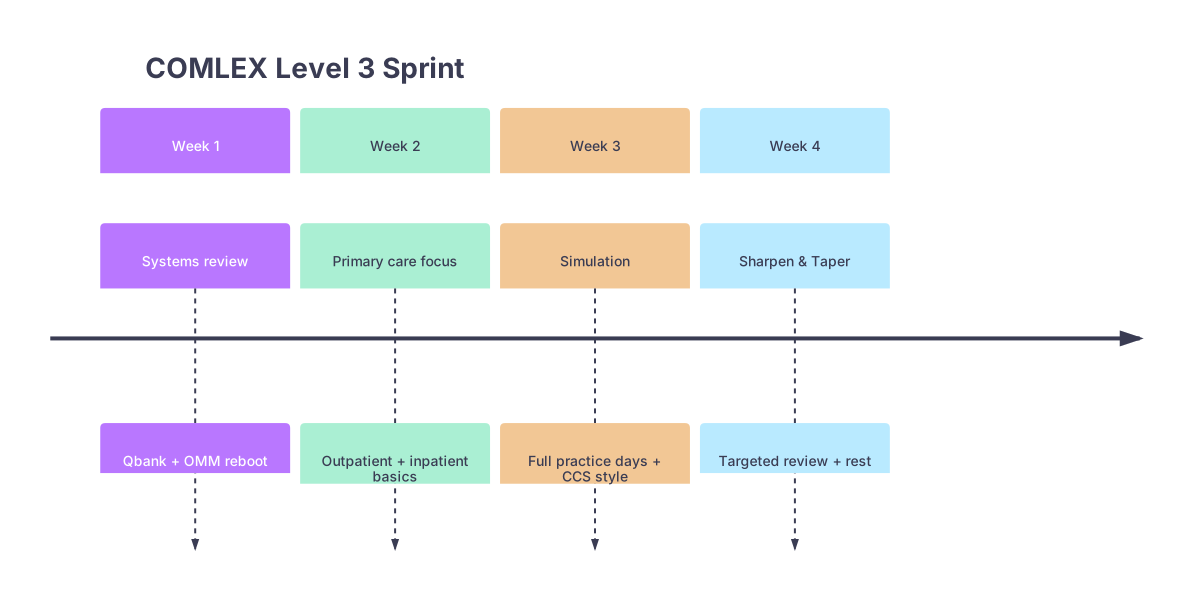
| Period | Event |
|---|---|
| Week 1 - Systems review | Qbank + OMM reboot |
| Week 2 - Primary care focus | Outpatient + inpatient basics |
| Week 3 - Simulation | Full practice days + CCS style |
| Week 4 - Sharpen & Taper | Targeted review + rest |
Days 1–2: Internal Medicine Spine + OMM Orientation
At this point you should:
- Do 2 timed blocks per day (40–44 each) of mixed, but IM‑heavy questions.
- Spend as long reviewing as you spent answering.
Focus:
- Chest pain, dyspnea, GI bleed, AKI, sepsis, diabetic emergencies.
- Always ask:
- What is the immediate stabilization?
- What is the safest next step?
- What can kill them in the next hour?
OMM task:
- 45–60 minutes per day:
- Rebuild the spinal level map (T1–L2 sympathetics, cranial nerves, sacrum in pregnancy, Chapman points basics).
- Relearn the patterns that show up in test questions, not in lab:
- Psoas syndrome vs appendicitis.
- Radiculopathy vs peripheral nerve lesions.
- Somatic dysfunctions tied to common diseases (e.g., asthma – upper thoracics).
By end of Day 2, you should have:
- ~160 Qs done.
- A marked list of “pain points” in IM and OMM.
Days 3–4: OB/GYN + Pediatrics – No More Guessing
Level 3 punishes weak OB/peds. Residents are forced into these calls on night float.
At this point you should:
- Do 2 blocks per day (aim 80–88 Qs).
- Force at least one block each day to be OB/peds-heavy (filter if your qbank lets you).
Daily focus:
OB/GYN
- Prenatal labs schedules, Rh issues, hypertensive disorders, GDM management timelines.
- Fetal heart tracing interpretation – what demands delivery now vs surveillance.
- Postpartum hemorrhage algorithms.
Pediatrics
- Vaccine schedule (you must at least know red‑flag contraindications, catch‑up logic).
- Common infections (AOM, pneumonia, bronchiolitis) and when to admit.
- Neonatal basics – jaundice thresholds, sepsis workup, bilirubin phototherapy logic.
OMM:
- 30–45 minutes:
- Pregnancy OMM: sacral dysfunctions, contraindications to HVLA, what is safe.
- Rib dysfunctions and respiratory issues.
You should end Day 4 with roughly 320–350 questions completed.
Days 5–6: Surgery, Trauma, Emergency – Stabilize First, Then Think
At this point you should:
- Run 2 mixed blocks per day, but bias toward surgery/trauma/ED.
- Review with a “residency lens”: what would you do right now, not what lab to send.
Focus:
- Trauma surveys, indications for CT vs FAST vs straight to OR.
- Common postop complications: POD3 fever, atelectasis vs pneumonia vs DVT/PE.
- Bowel obstruction vs ileus, acute abdomen differentials.
OMM:
- 30 minutes a day:
- Rib mechanics with trauma, respiratory failure, thoracic outlet ideas.
- Quick review of counterstrain, muscle energy “testable favorites,” not 80 obscure tenderpoints.
Day 7: Light Day + Targeted Patch
You do not grind yourself into paste.
At this point you should:
- Do 1 timed block only (mixed).
- Spend the rest of the study time on:
- Reviewing your worst two systems based on Week 1 stats.
- Creating a 1–2 page “Level 3 OMM cheat sheet” (levels, patterns, contraindications).
Aim end of Week 1:
- Question count: ~400–450
- You can walk through:
- Chest pain algorithms without checking a book.
- Basic OB emergencies and hypertensive disorder management.
- Top pediatric vaccines and red‑flag symptoms.
Week 2: Real‑World Primary Care and Inpatient Flow (Days 8–14)
Now you know where the holes are. This week you pivot to thinking like an intern: continuity, safety, and next steps over weeks to months.
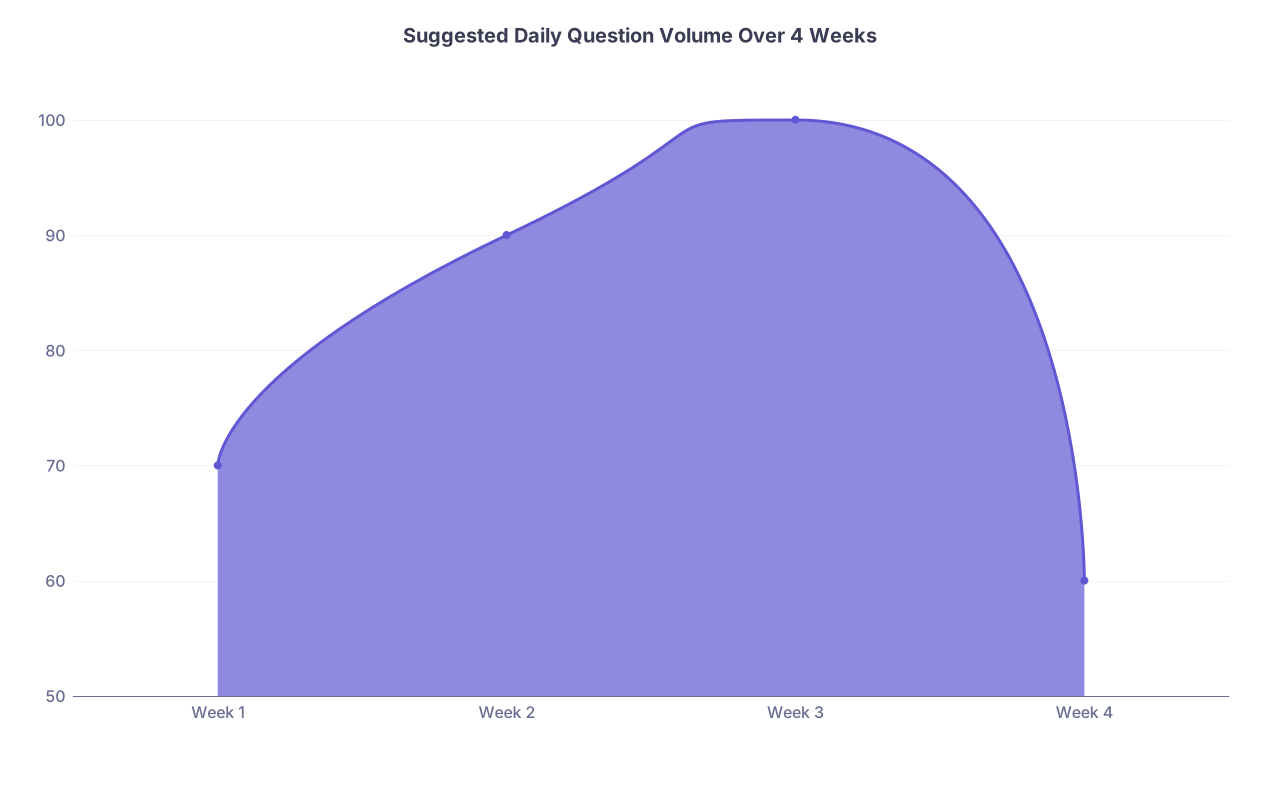
| Category | Value |
|---|---|
| Week 1 | 70 |
| Week 2 | 90 |
| Week 3 | 100 |
| Week 4 | 60 |
Days 8–9: Outpatient Medicine + Preventive Care
At this point you should:
- Increase to 90–100 questions per day (2–3 blocks, depending on length).
- Emphasize ambulatory scenarios:
- Diabetes follow‑up, HTN titration, lipid management for different ages and risk levels.
- Cancer screenings: who gets colonoscopy at what age, lung CT criteria, pap/HPV rules.
- Thyroid, osteoporosis, depression follow‑up.
As you review:
- Build mini‑algorithms. Example:
- ASCVD risk thresholds and statin intensity.
- BP targets in diabetics, CKD, pregnancy.
OMM:
- 30 minutes:
- Common musculoskeletal complaints you will see in clinic:
- Low back pain, neck pain, headaches and which techniques are appropriate.
- Common musculoskeletal complaints you will see in clinic:
Days 10–11: Inpatient Medicine + Orders Mindset
Level 3 likes “what to order” more than Level 2.
At this point you should:
- Do 2 timed blocks + 1 shorter “speed drill” block (20–25 Qs very fast).
- Focus on:
- Admissions criteria (who goes home, who stays).
- Initial order sets: fluids, labs, monitoring, DVT prophylaxis, diet orders.
- Antibiotic choices upfront (and when to de‑escalate).
In review, make sure you can:
- Name at least one reasonable antibiotic for:
- CAP inpatient vs outpatient.
- UTI vs pyelo vs urosepsis.
- Cellulitis vs necrotizing fasciitis.
OMM:
- Fold OMM into IM where possible:
- For COPD, asthma, pneumonia – recall rib and thoracic techniques that improve ventilation.
Days 12–13: Ethics, Risk Management, Public Health
This is where many strong test‑takers hemorrhage points because they find it “annoying.”
At this point you should:
- Do 2 mixed blocks with a filter or tag toward:
- Ethics, legal, end-of-life, informed consent, capacity.
- Occupational health, epidemiology, screening yield questions.
Create a one‑page Ethics Rules You Do Not Break:
- Never breach confidentiality without one of the classic exceptions (harm to self/others, abuse, public health reportables).
- Always respect capacity unless properly assessed otherwise; know how to test capacity.
- Understand surrogate decision-making hierarchies and advanced directives.
Day 13 evening:
- Quick sweep of your OMM cheat sheet.
- Light skim of preventive care tables in your reference book.
Day 14: Half Sim, Half Review
At this point you should:
- Do a single 6‑hour “mini‑simulation”:
- 3 back‑to‑back blocks with 10–15 minute breaks, timed.
- Try to replicate test conditions: no phone, no constant snacking, sit at a desk.
The remaining time:
- Debrief:
- Where did your concentration die?
- Any consistent time crunch?
- Which topics felt like random guessing?
End of Week 2 target:
- Total Qs completed: ~900–1,000
- You have a functioning sense of:
- Clinic follow‑ups and screening intervals.
- Admission vs discharge reasoning.
- Ethics calls that match NBOME’s worldview, not just your opinion.
Week 3: Full Simulation + CCS/Case Logic (Days 15–21)
This is the make-or-break week. You will now train for the psychology and pacing of a 2‑day exam.

Day 15: Full-Length Practice Day 1
At this point you should:
- Do a full-length practice test if your qbank offers it, or:
- 6–7 timed blocks back‑to‑back, standard break structure.
Rules:
- Sit the whole thing. No random texting, no long lunch.
- Use scratch paper as you would on the real exam (especially for complex multi‑step cases).
Afterward:
- Only skim review the same day. You will be mentally fried.
- Mark the questions that felt:
- Conceptually unfamiliar.
- Guessy due to poor strategy (not knowledge).
Day 16: Targeted Autopsy of Day 15
At this point you should:
- Spend most of the day on deep review of yesterday’s test:
- For each miss: was it knowledge, misread question, or poor risk/safety instinct?
- Build a “Patterns that Beat Me” list (e.g., over-ordering imaging, under-treating pain, missing red flags).
Supplement with:
- 1 short timed block (20–25 Qs) just to keep question muscles warm.
- 30 minutes of OMM focused on patterns that actually showed up in questions.
Days 17–18: Case / CCS-Style Thinking
COMLEX Level 3’s case component is different from USMLE CCS but the mindset is the same: order, monitor, re‑assess.
At this point you should:
- Spend 2–3 hours/day on:
- Whatever COMLEX‑style cases or interactive scenarios your resource offers.
- If you have UWorld CCS, use it for flow only:
- Admit orders.
- Hourly vs daily rechecks.
- Discharge criteria.
Key habits to train:
- Always stabilize first: airway, breathing, circulation, IV, monitor, O2.
- Do not shotgun labs; order what directly changes management.
- Move the clock forward deliberately; do not stare at static cases.
The rest of each day:
- 1–2 regular blocks (mixed).
- Focus especially on your worst domains from the full-length.
Day 19: Full-Length Practice Day 2
Same concept as Day 15, but you should be a little sharper now.
At this point you should:
- Sit another 6–7 block simulation (or at least 5, if resource limited).
- Notice:
- Are you more efficient?
- Are you changing answers more or less? (Usually, more changes = more errors.)
Again, very light review in the evening.
Day 20: Final Big Patch Day
At this point you should:
- Deep review of Day 19 misses.
- Build or refine:
- OB cheatsheet (hypertensive disorders, FHR, labor stages, postpartum emergencies).
- Peds cheatsheet (vaccines, fever in various age groups, milestones).
- Top 20 OMM patterns (spinal levels, autonomics, high-yield dysfunctions).
Do 1–2 light blocks to keep timing.
Day 21: Strategic Rest + Light Synthesis
End Week 3 with a controlled downshift.
At this point you should:
- Do 1 relaxed block (untimed) in the morning only.
- Spend the rest on:
- Organizing notes into 3–4 one‑page summaries.
- Walking through 2–3 case scenarios in your head:
- Chest pain in ED to discharge plan.
- 32‑week pregnant patient with decreased fetal movement.
- Toddler with fever and no source.
Go to bed like it is a work night. Week 4 is about sharpening, not hammering.
Week 4: Sharpen, Taper, and Execute (Days 22–28)
You are not going to “cram” everything this week. You will:
- Solidify high-yield patterns.
- Protect your brain.
- Rehearse test‑day so it feels familiar, not intimidating.
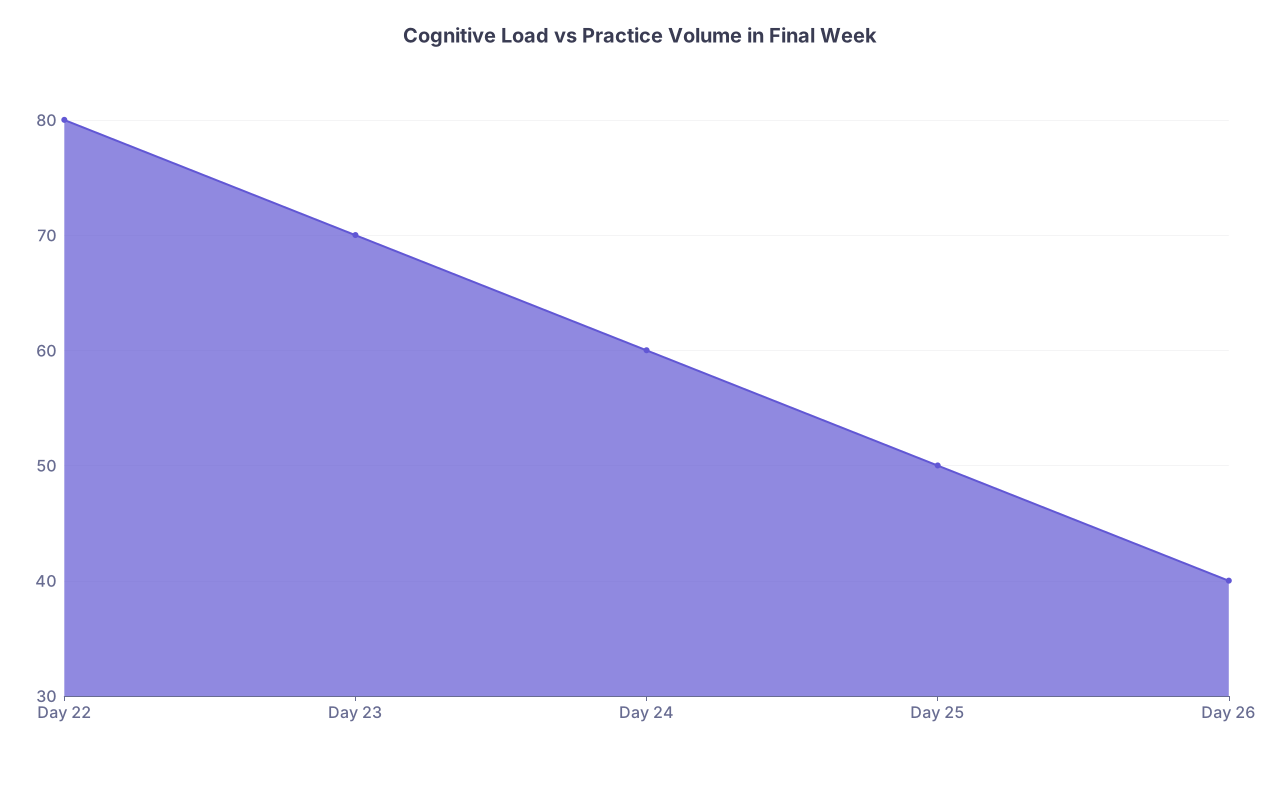
| Category | Value |
|---|---|
| Day 22 | 80 |
| Day 23 | 70 |
| Day 24 | 60 |
| Day 25 | 50 |
| Day 26 | 40 |
Days 22–23: High-Yield Circuits Only
At this point you should:
- Drop to 60–70 questions per day, all targeted:
- OB/peds.
- Ethics and risk.
- OMM.
- Whatever your stats still show as weaker.
For each missed question, force yourself to articulate:
- “The safest choice is X because Y. The tempting but wrong choice is Z because…”
- You are training your internal attending, not just your memory.
Spend at least an hour across these two days revisiting:
- Your OMM cheat sheet.
- Your 3–4 system cheatsheets.
Day 24: Dress Rehearsal Lite
At this point you should:
- Do a half-day simulation:
- 3 timed blocks in the morning.
- Same wake time, breakfast, hydration plan that you will use for the real exam.
Afternoon:
- Review only big, repeated themes.
- Light walking, stretching; protect your neck and back (you are about to sit a lot).
Day 25: Content Polish + Logistics
This is your last real study day.
At this point you should:
- Do 1–2 short blocks in the morning (max 40–50 questions total).
- No more giant new topics. Only reinforce patterns you already know.
Logistics checklist:
Confirm:
- Test center location and drive time.
- Required IDs.
- Arrival time and expected length each day.
Pack:
- Snacks (simple carbs, nothing experimental).
- Water bottle (if allowed).
- Comfortable clothing layers.
Stop structured studying by late afternoon. Light skim of your cheatsheets only.
Day 26–27: Exam Days
Assuming a standard 2‑day COMLEX Level 3 schedule.
Morning of each day:
- Wake up at least 2 hours before exam.
- Small, stable breakfast with some protein.
- 10–15 minutes:
- Skim OMM levels, OB emergencies, and your ethics “never break” rules.
- Nothing new.
During the exam:
- First pass through each block:
- Answer all straightforward questions.
- Flag true dilemmas only.
- Do not let a single question eat >90 seconds on first pass unless it is trivial math.
During cases (if interactive):
- Stabilize. Always.
- Ask yourself after every action:
- “Did this change anything?” If not, move time or reassess orders.
Evening between days:
- Do not open the qbank.
- Short walk, real food, hydration.
- Sleep over everything else.
Day 28: Decompression and Zero Review
Exam is done. You do not “postgame analyze” every missed question. That way lies madness.
At this point you should:
- Do nothing academic.
- Let your brain reset before you step into intern year.
If You Are Starting Behind (Low Level 1/2 Scores, Longer Rust)
You may be thinking: this is aggressive. You are right.
If you have:
- Multiple Level failures, or
- Have been out of school >1 year with no clinical activity,
then a pure 4‑week sprint is risky. You should:
- Extend to 6–8 weeks if at all possible.
- Double down on:
- Core IM, OB, peds via a text like Step-Up to Medicine + a Level‑specific qbank.
- Doing at least 1,500+ questions before exam day rather than 1,000.
| Profile | Weeks Available | Total Q Target |
|---|---|---|
| Strong Level 1/2, recent | 4 | 900–1,100 |
| Average scores, minor gaps | 4–5 | 1,200–1,400 |
| Prior failures / long gap | 6–8 | 1,500–2,000 |
Key Takeaways
- Treat COMLEX Level 3 like a contained 4‑week project, not background noise. Anchor your days around timed blocks and deliberate review.
- Build cheatsheets and patterns, not stacks of random facts. Safety, order sets, and OMM patterns win this exam.
- Use Week 3–4 to rehearse the actual exam experience—fatigue, timing, and case flow—so test day feels familiar, not hostile.