
The biggest lie about Step 3 is that you can “just wing it” during intern year. You can pass that way. You will not perform your best. And if you are in a competitive specialty or considering fellowship, that gap matters.
You have six months. That is both more than enough time and barely enough, depending on whether you use it deliberately or let call schedules chew it up. I am going to walk you month-by-month, then week-by-week in the final stretch, with very specific “at this point you should…” milestones.
Assume you are:
- A busy intern (IM, peds, FM, surgery, OB, whatever)
- Working 60–80 hour weeks with call/night float
- Wanting a safe margin above “just pass”
If you are already at 4 months instead of 6, compress the early milestones, but keep the order.
Big Picture: 6-Month Step 3 Plan
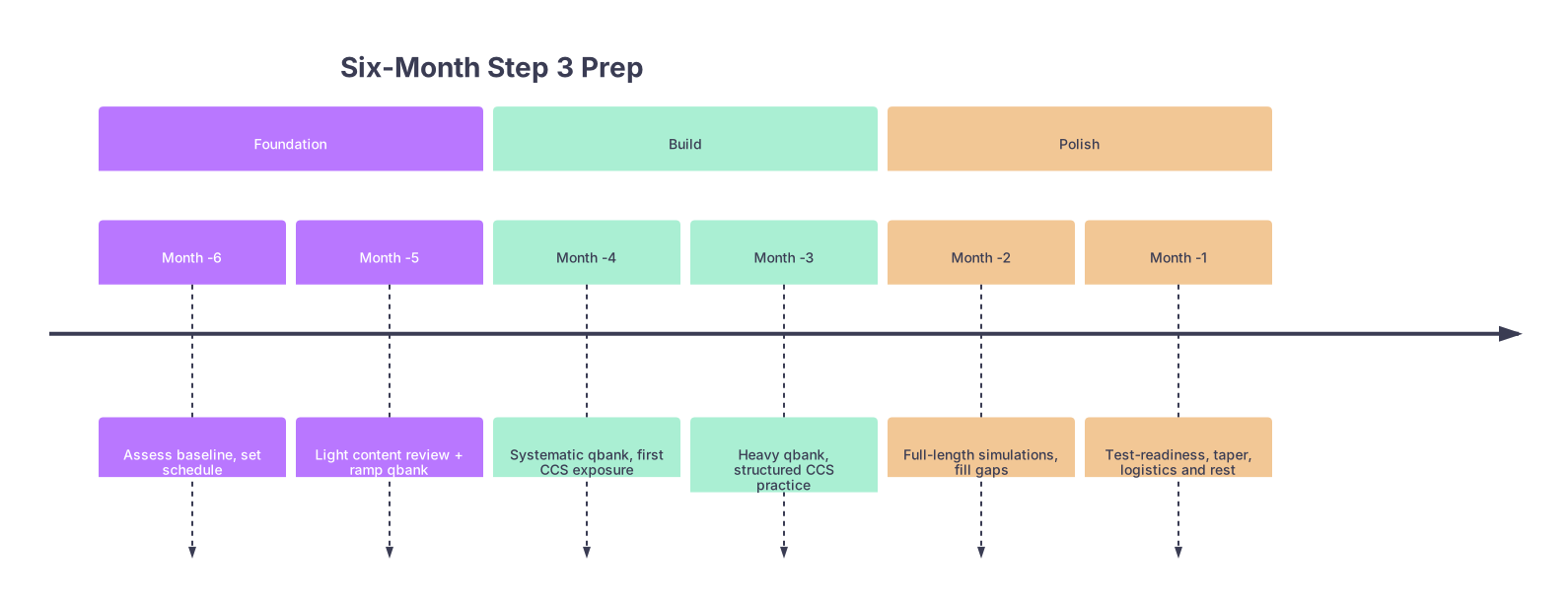
Before we zoom into each month, look at the overall arc.
| Period | Event |
|---|---|
| Foundation - Month -6 | Assess baseline, set schedule |
| Foundation - Month -5 | Light content review + ramp qbank |
| Build - Month -4 | Systematic qbank, first CCS exposure |
| Build - Month -3 | Heavy qbank, structured CCS practice |
| Polish - Month -2 | Full-length simulations, fill gaps |
| Polish - Month -1 | Test-readiness, taper, logistics and rest |
At a high level, the non‑negotiables over 6 months:
- 1 full pass of a major Step 3 question bank (UWorld is still king)
- Exposure to at least 80–100 CCS cases (mix of official practice + commercial)
- 2–3 full-length practice blocks back-to-back on multiple occasions
- Strategic review of ambulatory medicine, biostats, ethics, and CCS structure
The priority is not “finishing a book.” It is building test stamina and fast clinical decision-making that matches how the exam is scored.
Month −6: Baseline, Logistics, Non‑Negotiables
At this point you should stop telling yourself you will “get serious later” and actually create a plan that fits around your rotations.
This month you:
- Nail down logistics.
- Assess your starting point.
- Design a realistic weekly study template.
Step 1: Book Your Exam Window
By six months out, you do not need the exact dates yet, but you do need a target month.
- Pick a 2–3 week window around:
- A lighter rotation (ambulatory, elective, research), or
- The end of intern year when call is lighter
- Make sure you can take:
- Day 1 and Day 2 within a 2–4 week span
- At least one day fully off before Day 2, if possible
If your residency demands Step 3 completion by a certain date (many IM programs want it done by end of PGY-1), reverse engineer from that.
Step 2: Quick Self‑Assessment
You do not need a full-length test yet, but you do need to know where you stand:
- Do 1–2 mixed 38–40 question blocks in timed mode from UWorld or similar.
- Focus on:
- How many you get right (fine, but not the point yet)
- Where you are rusty: peds, OB, psych, outpatient adult, hospital protocols
- How your timing feels — are you rushing the last 5 questions?
Write down your weak systems and topics in a single page “hit list.” You will use this every month.
Step 3: Design Your Base Schedule
You are an intern, not a full-time student. Magical-thinking schedules die by week 2.
Pick a realistic, sustainable minimum:
- Heavy inpatient month:
- 20–30 questions per day, 5 days a week
- Lighter month:
- 40–60 questions per day, 5–6 days a week
Block this out like a clinic schedule:
- “Post‑call: zero questions. Sleep.”
- “Pre‑call: max 20 questions.”
- “Golden weekend: 2 blocks + 1–2 hours review each day.”
At this point you should have:
- Exam window chosen
- Qbank subscription set up
- A written, rotation‑specific study template
Month −5: Light Content Review + Qbank Ramp-Up
Now you start building momentum without burning out.
Focus for Month −5
- Get back into exam‑style thinking.
- Start content review only where needed.
- Build the habit of daily questions.
Target volume:
- 300–500 total questions this month (depends on schedule)
Split your efforts:
- 70–80%: Timed, random, mixed blocks (Day 1 style bias: IM, peds, OB, surgery, psych)
- 20–30%: Targeted review of your weakest big buckets:
- Ambulatory adult medicine
- OB/GYN protocols (prenatal care, labor management, postpartum complications)
- Peds well‑child, vaccine schedules, common ED presentations
Ignore the temptation to read a full Step 2 book cover‑to‑cover. You do not have the time, and Step 3 is less about esoteric details and more about choices and management steps.
At the end of this month, you should:
- Have done at least 10–12 full timed blocks
- Know your 3–4 worst domains with painful clarity
- Have a rhythm: specific days and times that are “Step 3 time” by default
Month −4: Structured Qbank + First CCS Exposure
By now, the exam should have moved from “abstract future problem” to “active project.”
This month you:
- Increase volume.
- Start systematically hitting all systems.
- Open the CCS can of worms.
Target:
- 500–700 questions this month (total running count ~800–1000)
- First 10–20 CCS cases
Build a Simple System-Based Sweep
For 4–6 weeks, run through the major systems:
- Week 1: Cardio + Pulm + random mixed block
- Week 2: GI + Renal + random mixed block
- Week 3: Endo + Rheum + Heme/Onc + random mixed block
- Week 4: OB/GYN + Peds + Psych + random mixed block
Do not obsess over strict segmentation. The point is to ensure you are not unintentionally neglecting a whole field.
Start CCS (Do Not Wait)
At this point you should at least be familiar with:
- How to:
- Admit vs discharge
- Order initial stabilization
- Advance the clock
- Order consults and appropriate imaging
- Basic outpatient vs inpatient CCS structure
Use:
- Official NBME/USMLE sample CCS cases
- A commercial CCS bank or software for additional practice

You are not chasing perfection here. The goal is comfort with the interface and understanding what the exam expects: early, appropriate orders and safe management.
Month −3: Heavy Qbank and Structured CCS Practice
This is the “engine” of your prep. If you waste this month, you will feel it in the final two.
At this point you should be:
- Halfway or more through your main question bank
- Comfortable doing 2 consecutive timed blocks on a day off
- Able to sit with the CCS interface without panic
Target this month:
- 700–900 questions (cumulative ~1500–1900)
- 30–40 CCS cases
Integrate CCS into Your Week
Do not batch CCS into one weekend and forget it. You will not retain the pattern recognition that way.
Example weekly structure (on a moderately busy rotation):
- 4 days/week:
- 1 full 38–40 question timed block
- 45–60 minutes review
- 1 day/week:
- 2 blocks back‑to‑back (simulate fatigue)
- 2–3 evenings/week:
- 1–2 CCS cases (20–30 minutes total)
Common CCS mistakes you should actively avoid:
- Not ordering basic stabilizing measures (O2, IV access, monitors) quickly
- Forgetting patient education, counseling, vaccines, and screening
- Leaving the patient in limbo (not advancing time, not re‑examining, not checking results)
Start Thinking Like Step 3, Not Step 1
Notice what Step 3 actually asks:
- Next best step in management, not obscure mechanisms
- Outpatient follow‑up schedules
- Risk stratification (admit vs observe vs safe to go home)
- This vs that imaging, not just “what is the diagnosis”
If your explanations are full of Step 1‑style pathophys and light on: “Do X now, then Y in 3 months,” your mindset is off.
By the end of Month −3, you should:
- Be consistently completing blocks with 5+ minutes to spare
- Have a growing mental library of CCS patterns (chest pain, DKA, COPD flare, prenatal care, febrile infant)
Month −2: Full-Length Practice and Gap-Filling
Two months out is where you move from “content and question exposure” to “performance.”
Now you:
- Simulate longer test days.
- Identify remaining weak zones and patch them.
- Tighten CCS efficiency.
Target:
- Finish or nearly finish your main qbank (90–100% complete)
- Total CCS exposure: 60–80 cases
- Do at least 2 “mini Day 1” simulations (3–4 blocks in one sitting)
Use Data, Not Vibes
Look at your performance breakdown:
| Domain | Correct % | Priority |
|---|---|---|
| Ambulatory IM | 65% | High |
| OB/GYN | 58% | Critical |
| Pediatrics | 70% | Medium |
| Psychiatry | 78% | Low |
| Biostats/Ethics | 60% | High |
At this point you should:
- Protect 1–2 focused sessions per week just for:
- Biostatistics and ethics questions
- OB and peds algorithms (ACOG/ACIP style thinking)
- Do 1–2 half‑days that look like this:
- 3 timed blocks back‑to‑back, short break only
- 60–90 minutes rapid review of only the questions you flagged or missed
Upgrade Your CCS Approach
Move from “I finished the case” to “I maximized points efficiently.”
Work on:
- Speed of initial orders: in the first 1–2 simulated minutes, you should have:
- Vitals, IV access, O2 if needed
- Basic labs and imaging appropriate to the complaint
- Pain control and symptomatic treatment
- Thinking in bundles:
- ACS: EKG + troponins + aspirin + beta‑blocker (if not contraindicated) + statin + heparin, admit telemetry
- Prenatal: labs + ultrasound + folic acid + counseling
- COPD exacerbation: steroids + bronchodilators + ABG + CXR + O2 titrated, consider antibiotics
You do not need to memorize every order, but you must internalize patterns: “This complaint → this stabilizing set + this diagnostic set.”
| Category | Value |
|---|---|
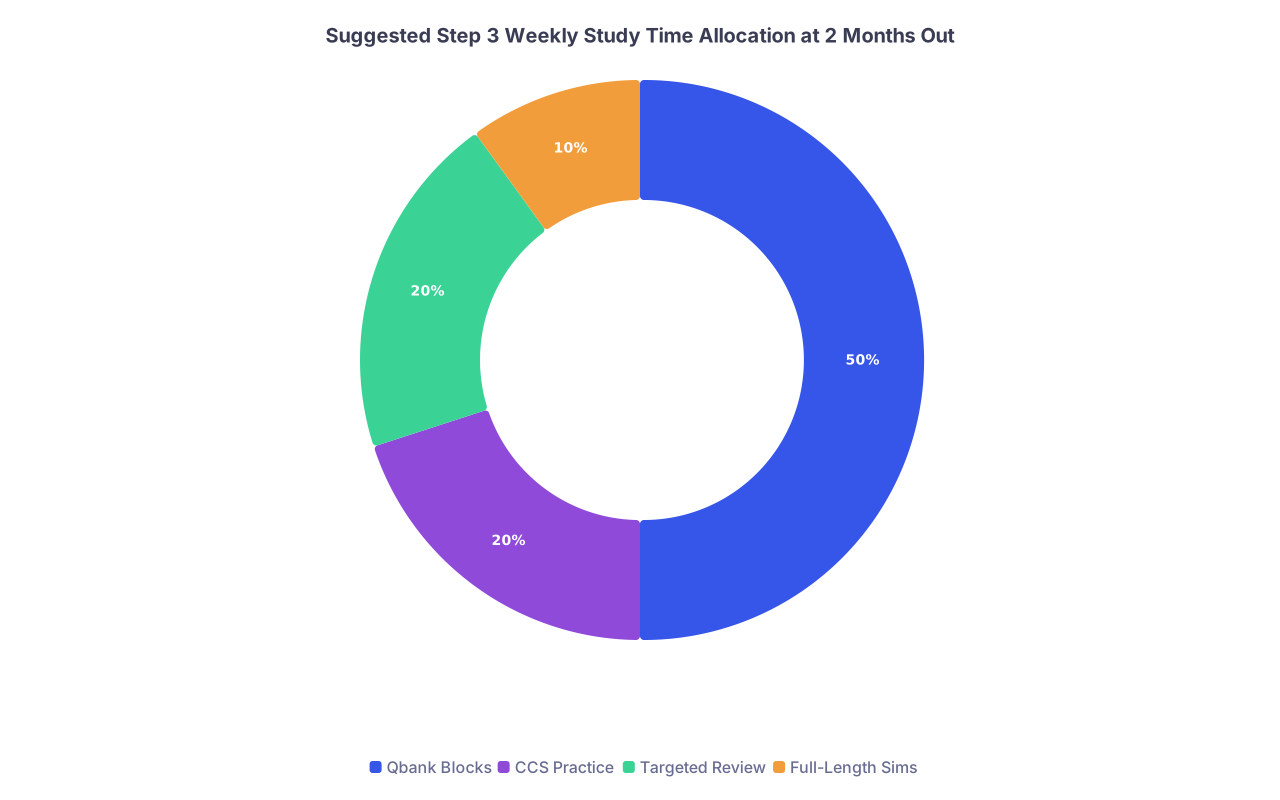
| Qbank Blocks | 50 |
| CCS Practice | 20 |
| Targeted Review | 20 |
| Full-Length Sims | 10 |
By the end of Month −2, you should:
- Have at least one long-sit experience (3–4 blocks)
- Know exactly which 2–3 content buckets scare you and have a plan for them
- Feel CCS moving faster, with less fumbling through menus
Month −1: Final Month, Week‑by‑Week
Now we zoom in. This is where people either sharpen or burn out.
Week −4: Confirm Test Dates and Lock Schedule
At this point you should:
- Lock in your exact Day 1 and Day 2 dates if you have not already.
- Request/confirm:
- Light call schedule in the 3–4 days before each test day, if at all possible
- A post‑exam zero‑responsibility day after Day 2
This week:
- Do another “mini Day 1”:
- 3–4 timed blocks in one sit
- Light CCS: 3–5 cases
- Short, focused refreshers on:
- Biostats
- Consent/ethics (capacity, minors, end‑of‑life decisions)
Week −3: Focused Weak Zone Assault
This is your last real “content” week. After this, it is mainly performance and stabilization.
Identify your worst 2 subjects. For most interns: OB/GYN and biostats or ambulatory IM.
Plan:
- 3–4 dedicated sessions:
- 1–2 hours each
- Only questions from that weak domain
- Make a one‑page “cheat sheet” from each session with:
- Top algorithms (e.g., abnormal Pap, preeclampsia, gestational diabetes)
- “Always/never” type rules (imaging in pregnancy, anticoagulation in pregnancy, vaccine contraindications)
Keep doing:
- 1–2 CCS sessions this week (4–6 cases total)
- 1 day with 2 consecutive blocks in timed mode
Week −2: Full Simulation and Taper Planning
Now you test your system.
You need at least one, ideally two, serious simulations:
- Simulation 1 (early in the week):
- 4 blocks + 2–3 CCS cases later in the day
- Simulation 2 (end of week or early following week):
- 3–4 blocks again, different mix of systems
| Category | Value |
|---|---|
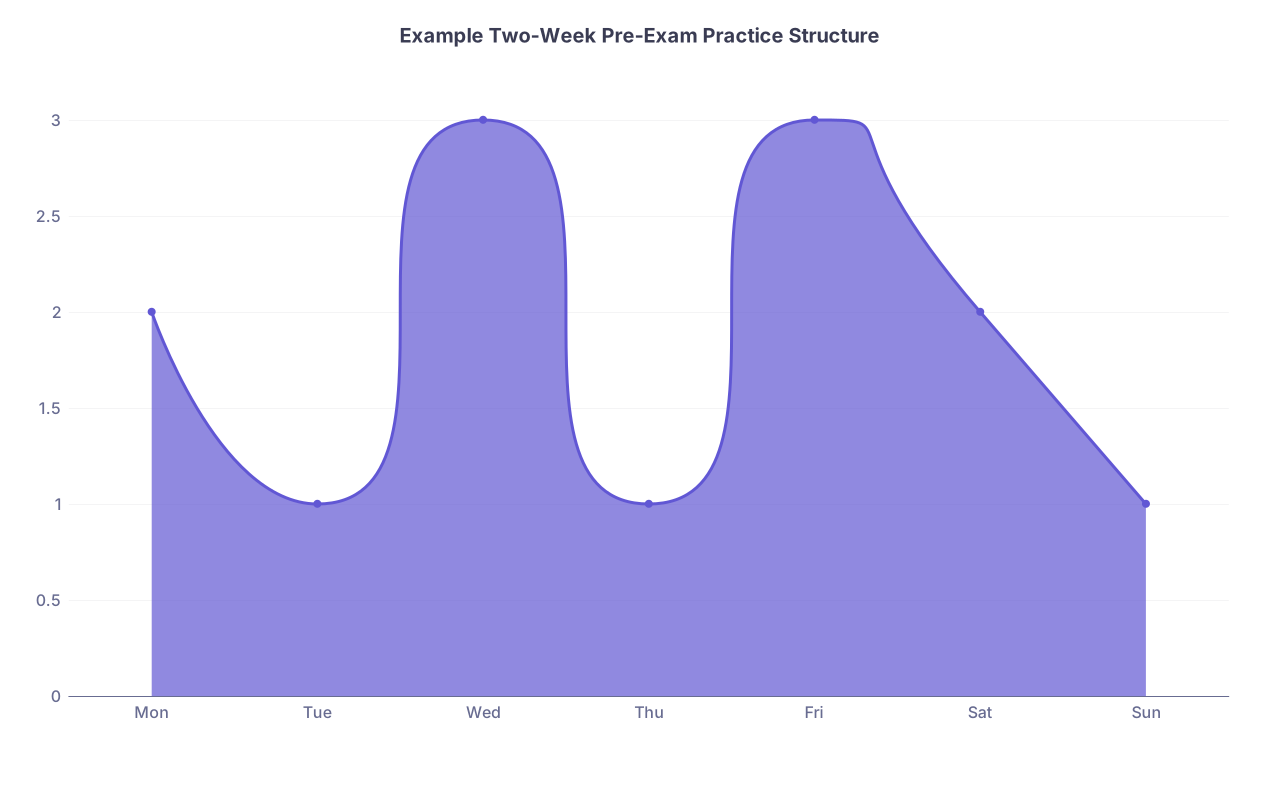
| Mon | 2 |
| Tue | 1 |
| Wed | 3 |
| Thu | 1 |
| Fri | 3 |
| Sat | 2 |
| Sun | 1 |
(values = number of hours devoted to Step 3 that day)
Pay attention during sims to:
- Break strategy: When to take them, what you eat/drink, caffeine timing
- Timing: Are you routinely finishing with 10+ minutes left? That is fine. Step 3 is not a speed contest.
- Energy: When does your brain really crash? Mid‑afternoon? Plan a slightly longer break there.
By the end of Week −2, you should:
- Have no “mystery” content areas left. You might still be weaker in some, but you know what they are and what your basic plan is.
- Be confident in your ability to sit for several hours and still think clearly.
Week −1: Taper, Don’t Cram
The last week is where a lot of interns sabotage themselves. They panic, add hours, and show up exhausted.
At this point you should:
- Cut total study time by 30–50% vs peak weeks.
- Prioritize:
- Light mixed question review (not new qbanks)
- Skimming your personal notes and one‑page sheets
- A small number of CCS cases just to keep the pattern alive (2–4 total this week)
Day-by-day suggestion if your Day 1 is on a Friday:
- Saturday (−6):
- 2 timed blocks, normal review
- 2 CCS cases
- Sunday (−5):
- Off or very light (20–25 untimed questions max)
- Monday (−4):
- 1–2 blocks timed, focus on weak topics
- Tuesday (−3):
- 1 light block + 1–2 CCS cases
- Start shifting sleep wake-time to match exam schedule
- Wednesday (−2):
- No full blocks
- Skim notes, algorithms, biostats formulas
- Go to bed on time
- Thursday (−1):
- Zero questions or at most 10 very easy warm‑up questions in the afternoon
- Pack your bag, plan your route, confirm IDs and confirmation email
- Early, tech‑free night
Then:
- Day 1: Treat it as a long but manageable shift.
- Between Day 1 and Day 2 (if separated):
- Do not “re‑prep” entire domains.
- At most, 10–20 mixed questions + 1–2 CCS cases just to stay in the rhythm.
- Prioritize sleep.

How This Fits with Real Intern Life
You are not living in a vacuum. You have:
- 28‑hour calls that wreck the next day
- Night float that scrambles your circadian rhythm
- Rotations that are absolute black holes (ICU, busy wards)
So at each point:
During brutal rotations (ICU, heavy wards):
- Non‑negotiable floor: 10–20 questions on non‑call days
- Post‑call: zero studying
- Expect progress to slow; that is fine, but do not stop completely
During lighter months (clinic, elective):
- This is where you make big gains:
- 2 blocks/day on some days
- Extra CCS practice
- Long-sit simulations
- This is where you make big gains:
If you accept that some months will be “maintenance” and others “growth,” you will stop beating yourself up for not being a machine. Intern year already does that.
Final Checkpoints: Are You Actually Ready?
A week before Day 1, you should be able to answer “yes” to most of these:
- I have completed at least 70–80% of a high‑quality Step 3 qbank.
- I have done at least 40–60 CCS cases and understand the interface.
- I can sit for 3–4 blocks in a row without my brain completely melting.
- I know my 2–3 weakest subjects and have at least a minimal algorithm for each.
- I have a concrete sleep plan and test‑day logistics sorted.
If you are far from these, the answer is not “cram more in the last 72 hours.” It is either:
- Move the test (if allowed and sensible), or
- Accept that your goal is a safe pass, lean hard on test‑taking strategy and safety-first medicine, and protect your sleep.
Open your calendar right now and mark the date 6 months from today. Then block three specific one‑hour Step 3 sessions in the next 7 days. If those blocks are not on your schedule by tonight, this six‑month plan will stay theoretical and your intern year will eat it alive.