
The fantasy of the “perfect” Step 3 prep timeline is dead. You’ve got three weeks. You haven’t started. And no, that doesn’t automatically mean you’re going to fail.
Let me be blunt: this is not ideal. But it’s not a disaster-by-default either. You’re not the first resident or late MS4 to wake up three weeks before Step 3 and realize… you’ve done nothing. No UWorld. No CCS. Maybe you don’t even remember which exam sections are on which day. And your brain immediately jumps to: “I’m going to fail. Program will hate me. I’ll never match/fellowship/whatever.”
Let’s untangle this in a way that actually helps, not just “it’ll be fine” nonsense.
First: Are You Actually in Trouble?
You’re scared you’ve already lost. Before we map out a plan, we need to answer one question: are you walking into this exam totally cold… or just unprepared on paper?
Be honest about these:
- You passed Step 1 and Step 2 CK on the first try
- You’re currently in residency or at least clinically active
- You see patients regularly and you’re not constantly lost on basic management
- You can read a CBC, BMP, LFTs, ABG, chest x‑ray, ECG without going into a full panic
If most of that sounds like you, your clinical brain has been studying for Step 3 the whole time. The exam is not Step 1-style molecular hell. It’s:
- “What’s the next best step?”
- “Do you admit or discharge?”
- “Which test first?”
- “Is this an emergency or can it wait?”
Where you are behind is:
- Exam format familiarity
- Question bank exposure (style, pacing)
- CCS case structure
- Endurance across two long days
So no, you’re not doomed. But you also don’t have time to be sloppy or “see how it goes.” Three weeks is short, but if you’re starting now, you can still make a serious dent.
Reality Check: What Can You Actually Get Done in 3 Weeks?
You’re probably thinking: “There’s no way I can get through all of UWorld and CCS and review everything and also be on wards and sleep and not die.”
You’re right. You can’t do everything. So you have to stop thinking in terms of “complete” and start thinking in terms of “strategic.”
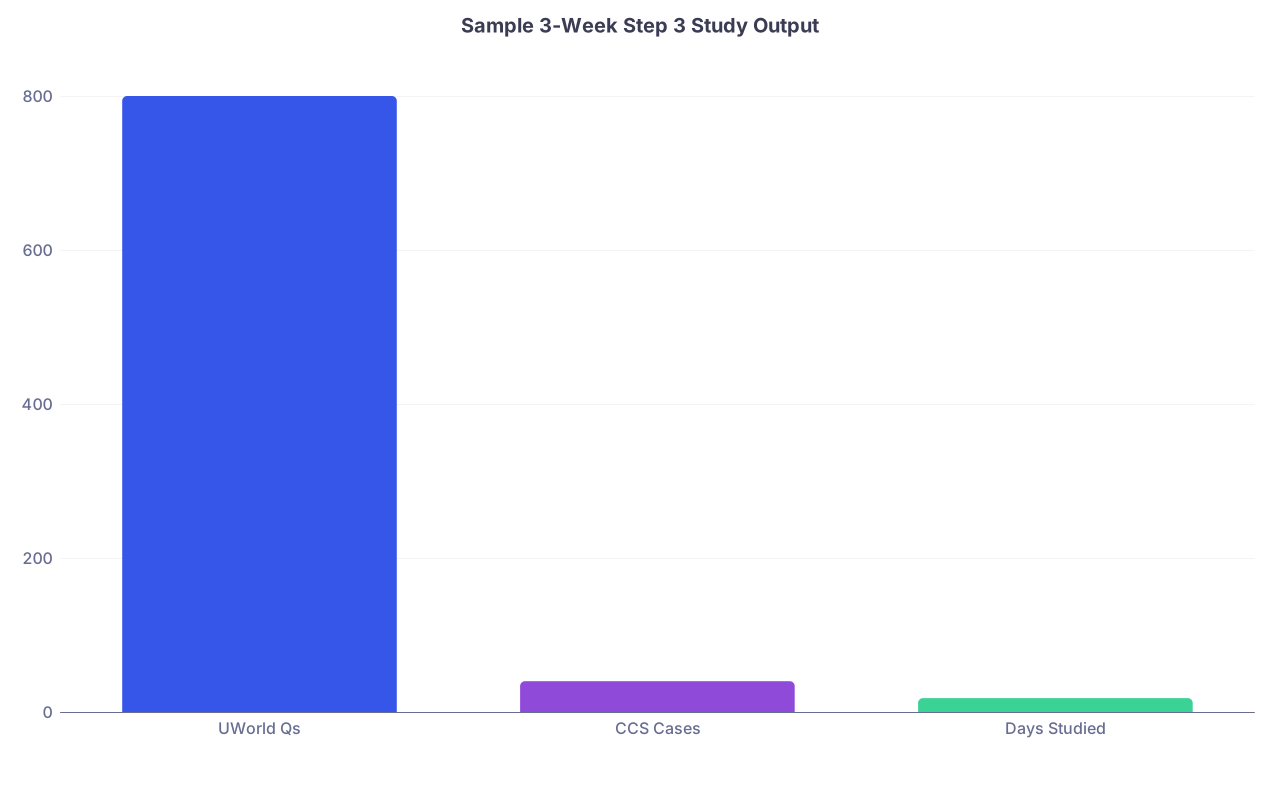
Here’s what is actually realistic for many people in 3 weeks (assuming you’re a busy intern or MS4 on rotations):
| Category | Value |
|---|---|
| UWorld Qs | 800 |
| CCS Cases | 40 |
| Days Studied | 18 |
That’s not perfection. That’s “good enough to pass with focused effort.”
You’re aiming for:
- ~600–1000 high‑yield UWorld questions
- ~20–40 CCS cases (mixture of interactive + read‑only)
- A realistic practice test or at least a set of long blocks to test stamina
- Zero time wasted on reading giant textbooks front to back
If you’re picturing some 10‑week pristine schedule with 100% of UWorld completed and then sighing because you’re not there—stop. That’s gone. You don’t need perfect. You need sufficient.
The 3‑Week Plan When You’re Starting at Zero
This is where your brain goes, “There’s no way I can organize this.” So I’ll lay it out and you can adapt based on your schedule.
Overall structure
- Daily: 40–80 UWorld questions (depending on rotation demands)
- 4–6 CCS cases per week (not per day)
- Short, targeted review of missed topics—not a huge content binge
Let’s break it down by week.
Week 1: Get Oriented and Build Momentum
Goal: Learn the exam while relearning the medicine.
Priority #1 – UWorld Questions Every Single Study Day
- Start with timed, random blocks of 10–20 questions if you’re rusty.
- By end of week, work up to full 40‑question blocks.
- Don’t untimed-review your life away. Do the block → thoroughly review wrongs + guesses → move on.
Focus on why you got questions wrong:
- Didn’t know the info? Fine. Jot a couple notes.
- Misread the question? Fix your exam habits.
- Knew it but changed your answer? Confidence problem.
If you’ve truly done nothing, skip using UWorld as a “reading resource.” Questions first, learning second.
Priority #2 – Learn What CCS Even Is
You don’t need to master CCS in Week 1, but you do need to stop being scared of it like it’s some mythical beast.
- Watch 1–2 short CCS strategy videos (YouTube is fine).
- Complete 2–3 interactive CCS cases just to see the interface:
- A straightforward case (uncomplicated pneumonia, appendicitis)
- A chronic disease follow‑up (diabetes/HTN outpatient)
You’re not trying to max your score here. You’re just killing the “I have no idea what this even is” anxiety.
Priority #3 – Identify Your Weakest Areas Fast
You’ll notice a pattern in your early UWorld:
- Always guessing on OB intrapartum management?
- Constantly missing psych questions?
- Chest pain workup a mess?
Write these down. You’re going to target them in Week 2.
Week 2: Heavy Practice, Targeted Patching
This is the workhorse week.
UWorld: Push the Volume
Aim for:
- 60–80 questions per day on lighter days
- 40 on brutally busy days, but don’t go to zero unless you’re literally post‑call delirious
You want to experience:
- Multi-block fatigue
- Switching rapidly between specialties
- Time pressure
Don’t do “Cardio only” or “Peds only” blocks. Step 3 is mixed. Force your brain to switch context.
Targeted Review Instead of Broad Reading
After each block:
- Identify 1–3 topics that are repeatedly showing up as weak (e.g., anticoagulation in pregnancy, diabetic foot, COPD exacerbation management, child abuse reporting).
- Spend 15–30 minutes max reviewing those topics using:
- UWorld explanations
- A concise Step 3 book or outline if you have it
- UpToDate for one or two key unclearly remembered algorithms
Not five resources. Not three hours on one topic. Fast and focused.
CCS: Start Treating It Like a Real Exam Component
This week, aim for:
- 2–3 CCS cases, twice a week
- Mix of:
- Emergency scenarios (chest pain, sepsis, ectopic pregnancy)
- Inpatient (CHF exacerbation, COPD flare, DKA)
- Outpatient (well‑child visit, chronic disease follow‑up)
Your goal is pattern-recognition:
- Stabilize first (ABC, monitors, IV access)
- Order appropriate initial labs/imaging
- Don’t forget pain control, DVT prophylaxis, vaccines, counseling, etc.
You’re training your brain to think in “Step 3 language”: safe, guideline-based, practical management.
Week 3: Simulation and Damage Control
Now your anxiety does its thing: “I’ve done all this and I still feel like I know nothing.” That feeling doesn’t mean you’re not ready. It usually just means you’re not perfect. And you don’t have to be.
Early Week 3 – Do Something Full-Length-ish
You may not have time/sanity for the full official practice exam, but you need at least:
- 3–4 consecutive blocks one day (to simulate Day 1)
- 2–3 more another day (to simulate Day 2 MCQ fatigue)
Why?
- So that on the real exam, your brain doesn’t hit Block 4 and go, “Oh, we’ve never been this tired while thinking before.”
- You learn your pacing, water/coffee/snack patterns, bathroom needs.
If you can do an NBME or practice form, great. If not, use UWorld self-assessments or just chained blocks.
Late Week 3 – Lighten Volume, Tighten Execution
This is when people panic and try to cram 200 questions/day and destroy themselves.
Bad idea.
Instead:
- Shift to 40–60 questions/day with high-quality review.
- Do a few CCS cases, focusing on common bread‑and‑butter rather than obscure zebras.
- Skim your own notes from UWorld incorrects and repeated patterns.
Your brain will not magically absorb dense new material in the last 48 hours. But it will benefit from reinforcing patterns you’ve already seen.
“What If I Truly Have No Time Because of Rotations?”
You might be on nights, ICU, or some malignant service that treats Step 3 like an optional hobby.
Here’s the harsh truth: if your schedule is so bad that you can’t do anything most days, your real issue isn’t your intelligence, it’s your time constraints. And that’s fixable in one of two ways:
Micro-blocks strategy
- 10–15 questions during pre‑round coffee
- 10–15 questions during lunch (if that exists for you)
- 10–15 post‑shift before you completely crash
- CCS on post‑call or one weekend day
Rescheduling if your baseline is very shaky
If:- You barely passed Step 1 and Step 2
- You’re failing a lot of UWorld questions and not understanding why
- You’re in pure survival mode and haven’t done more than ~200 questions total by 1 week out
Then yes, rescheduling might be the rational, not cowardly, move. Programs care more that you pass than that you took it on your original date.

| Step | Description |
|---|---|
| Step 1 | 3 Weeks Until Step 3 |
| Step 2 | Stay on Original Date |
| Step 3 | Aggressive 3-Week Plan |
| Step 4 | Strongly Consider Rescheduling |
| Step 5 | Done >400 Qs by 1 Week Out? |
| Step 6 | Can You Study Most Days? |
“What If I Fail?” – The Catastrophe Loop
This is the soundtrack in your head right now:
- “If I fail, my program will think I’m stupid.”
- “Fellowship will be impossible.”
- “I’m going to be the one resident people talk about.”
Here’s the less dramatic reality:
- People do fail Step 3. They retake it.
- Programs don’t love it, but it’s not automatic career death.
- A pass on the second attempt plus strong clinical performance usually repairs a lot of the damage.
Failure is obviously something you want to avoid, and with three weeks, you still can. But making yourself so anxious you can’t focus is how you increase that risk.
Your job isn’t to be perfect. It’s to raise your passing probability as much as possible in the time you have.
Fast Triage: What To Focus On Content-Wise
You can’t review everything. You just can’t. But Step 3 is predictable in the types of thinking it wants.
Here’s where I’d spend mental energy if I were in your exact shoes:
| Area | Why It Matters Most |
|---|---|
| Emergency stabilization | Huge points in CCS and MCQs; ABCs, sepsis, chest pain, trauma |
| Common inpatient issues | CHF, COPD, PNA, DKA, AKI, GI bleed, delirium, electrolyte issues |
| Outpatient adult care | HTN, DM, lipids, cancer screening, vaccines, depression/anxiety |
| OB/GYN basics | Prenatal care, ectopic, preeclampsia, labor management basics |
| Peds fundamentals | Well-child, vaccines, common infections, abuse red flags |
You don’t need to perfectly memorize every rare disease. But you do need solid instincts on:
- When to admit vs send home
- When to image vs watch
- When to call surgery vs monitor
- When to give IV vs PO
- How to not miss life‑threatening emergencies
That’s what Step 3 rewards.
How to Keep Your Brain from Imploding
You’re already anxious. Now you’re about to stack aggressive studying on top of that. You’re at real risk of burning out before test day if you don’t manage this.
A few non‑fluffy but necessary rules:
Sleep is not optional
- Less than 5–6 hours repeatedly and your question performance will tank no matter how “hard” you’re trying.
Don’t doom‑scroll Reddit/SDN Step 3 threads
- You’ll only find people who did 100% of UWorld twice, read six resources, and still claim they “barely passed.”
- That mentality is toxic when you’ve got three weeks. Different situation, different rules.
Practice your test-day logistics
- What are you eating for breakfast?
- Are you drinking coffee or are you going to crash halfway through?
- Have you driven to the testing center before?
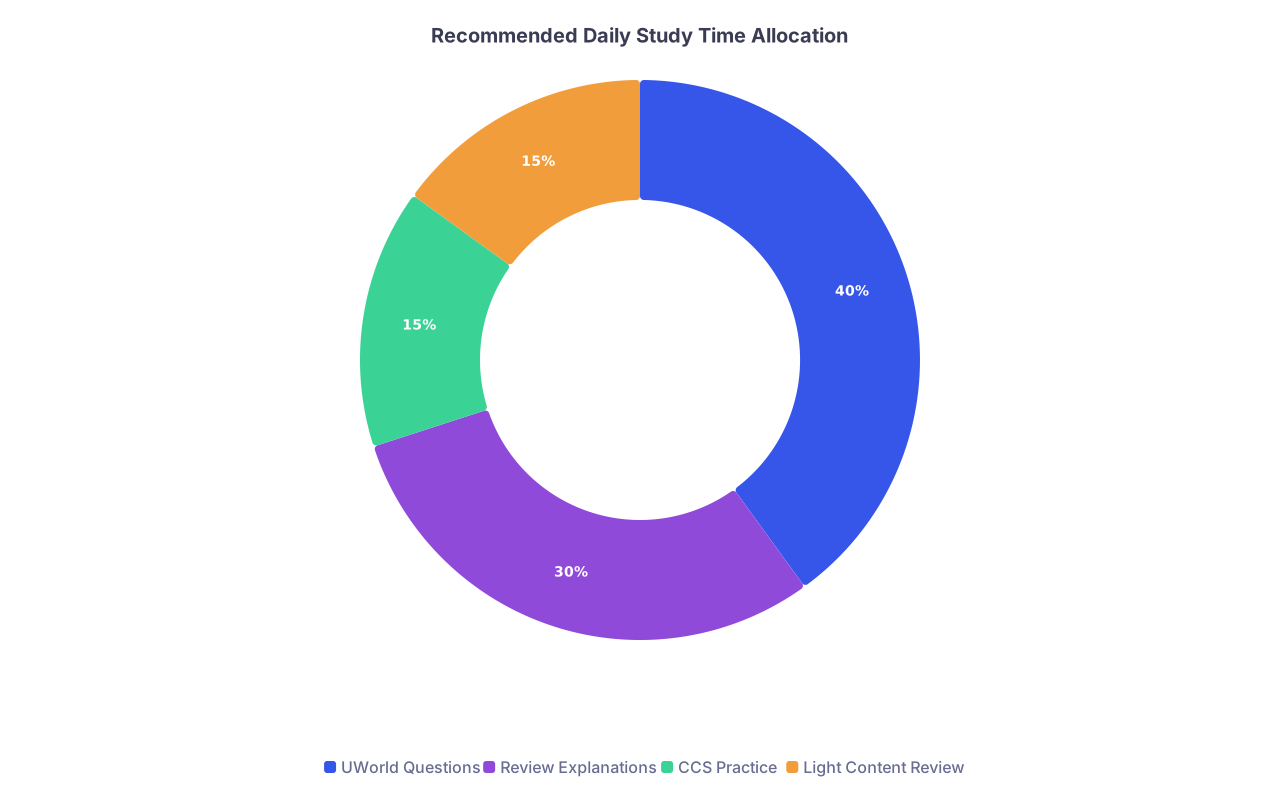
Set small, non-negotiable daily goals
- “Today: 40 questions + review + 1 CCS.”
- If you overshoot, great. If not, at least you didn’t blow the whole day.
| Category | Value |
|---|---|
| UWorld Questions | 40 |
| Review Explanations | 30 |
| CCS Practice | 15 |
| Light Content Review | 15 |
The Day Before the Exam (AKA Peak Panic Day)
You’re going to want to do 200 questions “just to be sure.” Don’t.
Instead:
- Do a light 20–40 question block in the morning if you need the confidence.
- Skim high-yield lists (screening ages, vaccines, emergency drugs, pregnancy meds).
- Walk away by mid‑afternoon. Seriously.
- Get your documents ready, clothes picked, snacks arranged.
And then the hard part: accept that what you’ve done is what you’re going into the exam with. No more last-minute “maybe I should review all of OB.”
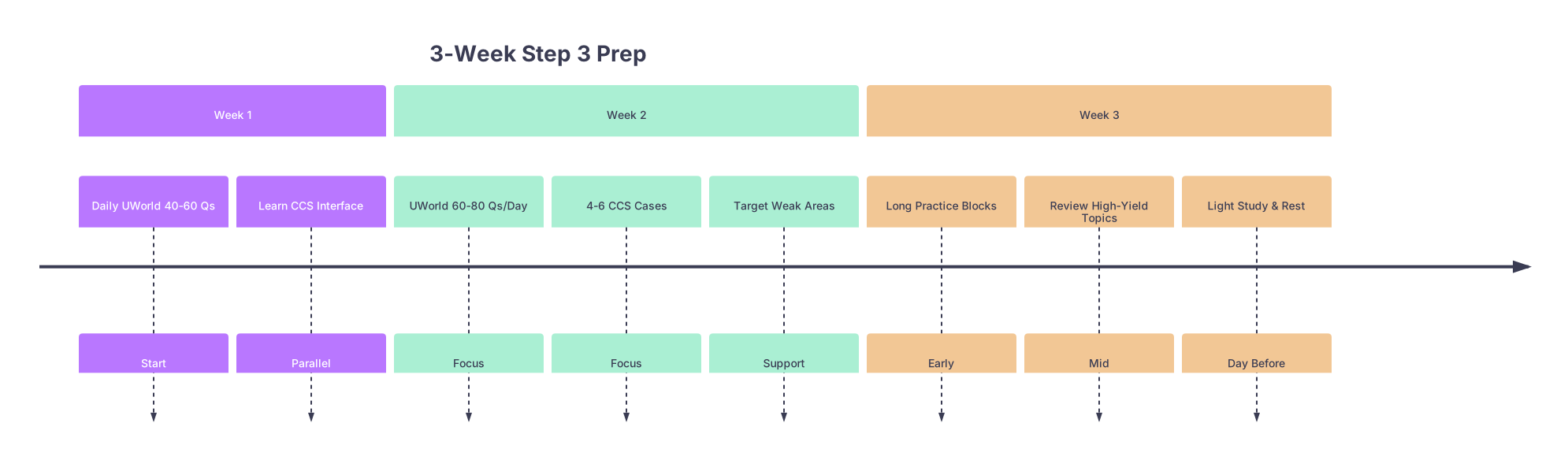
Quick Visual of the 3-Week Crunch Plan
| Period | Event |
|---|---|
| Week 1 - Daily UWorld 40-60 Qs | Start |
| Week 1 - Learn CCS Interface | Parallel |
| Week 2 - UWorld 60-80 Qs/Day | Focus |
| Week 2 - 4-6 CCS Cases | Focus |
| Week 2 - Target Weak Areas | Support |
| Week 3 - Long Practice Blocks | Early |
| Week 3 - Review High-Yield Topics | Mid |
| Week 3 - Light Study & Rest | Day Before |
FAQ (Exactly 5)
1. Is it even worth taking Step 3 if I’ve only prepped for 3 weeks? Should I just reschedule?
If you’ve actually used those 3 weeks to do several hundred UWorld questions, some CCS, and a practice block or two—and your scores aren’t catastrophic—yes, it’s worth taking. If you’re truly starting from zero with 3 weeks and can’t reliably study most days (e.g., brutal ICU rotation, constant post‑call), then rescheduling is a serious option. The question isn’t “3 weeks vs ideal world”; it’s “3 weeks of real work vs pushing it and probably still not studying much.”
2. How many UWorld questions do I need to finish to feel somewhat okay?
There’s no magic number, but in your situation, I’d aim for 600–1000. Less than ~400 and you’re mostly just learning the interface. More than 1200 is unlikely in 3 weeks without sacrificing quality review and sleep. Remember: understanding patterns and fixing repeated mistakes matters more than brute question count.
3. I’m bombing UWorld (like 40–50% correct). Does that mean I’ll definitely fail?
No. UWorld percentages are brutal and not 1:1 with your real score. What matters is trend and comprehension. If you’re learning from each block, seeing similar concepts again and finally getting them right, and your stamina is improving, you can still pass. If you’re at 40% because you’re rushing, half-asleep, and not reviewing, that’s a different story—and more about process than intelligence.
4. How screwed am I if I barely touch CCS?
You’re not automatically sunk, but you’re handicapping yourself. CCS is a meaningful chunk of Day 2. Even 10–20 decent practice cases can dramatically cut down the “what the hell is this interface?” shock and help you avoid obvious blunders (like forgetting to admit a clearly unstable patient). In three weeks, you don’t need to be a CCS wizard. You do need to not be clueless.
5. What if I walk out feeling like I guessed on everything? Does that mean I failed?
That feeling is ridiculously common—especially for Step 3. The questions are vague, real-life-ish, and you’ll second-guess a lot. The exam is designed so that even strong test-takers feel unsure. Don’t assume “I guessed” means “I failed.” What matters was: did you systematically eliminate bad options, choose safe management, and avoid dangerous decisions? That’s what the scoring algorithm really cares about.
Key points:
- Three weeks isn’t ideal, but it’s not automatic failure—if you use them aggressively and intelligently.
- Prioritize UWorld, CCS familiarity, and high-yield management patterns; forget perfection or full-content review.
- Protect your sleep and sanity, simulate real testing conditions at least once, and walk in aiming for “good enough to pass,” not “I must feel 100% ready,” because almost nobody ever does.