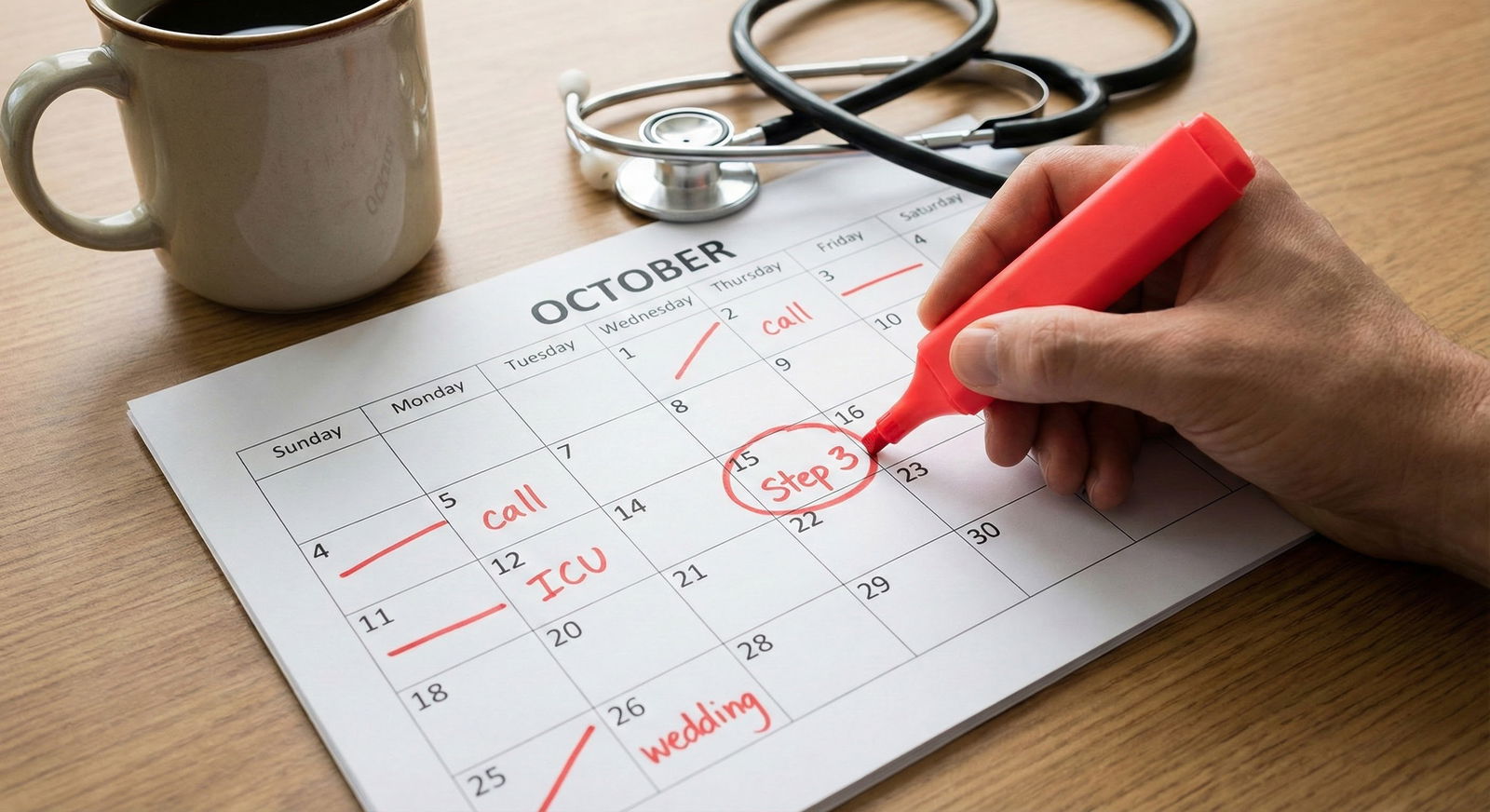
You are post-call on a Thursday, half-asleep on your couch, scrolling through messages. Credentialing just emailed: they need your Step 3 result. Your test is scheduled in six weeks because that was literally the only opening that fit your schedule. You have no true “dedicated.” You have two free weekends and scattered evenings. And you have no desire to relive Step 1 era misery.
This is where the two‑weekend, minimal‑dedicated Step 3 strategy lives.
You are not going to read three textbooks. You are not going to watch 60 hours of video. You are going to be methodical, efficient, and a little ruthless.
Below is the timeline: from 4 weeks before your exam down to the hour‑by‑hour plan for those two anchor weekends.
Big‑Picture Structure: How the Two‑Weekend Strategy Works
Step 3 is weird. Half clinical medicine you already practice. Half “can you manage this over time and not kill anyone.”
Your constraints:
- Limited bandwidth on weekdays
- Two relatively open weekends in the 3–5 weeks before test day
- Enough baseline knowledge from Step 2 + residency
The core of this plan:
- Total prep window: ~4 weeks before test day
- Two “anchor” weekends: 10–14 days apart
- Weekdays: light but consistent QBank and CCS touchpoints
- Zero fluff. Only high‑yield tools: UWorld QBank + UWorld/CCS cases (or CCS Cases software) + one short notes resource if you insist
Think of it as:
- Weekdays = “maintenance and exposure”
- Weekends = “simulation and calibration”
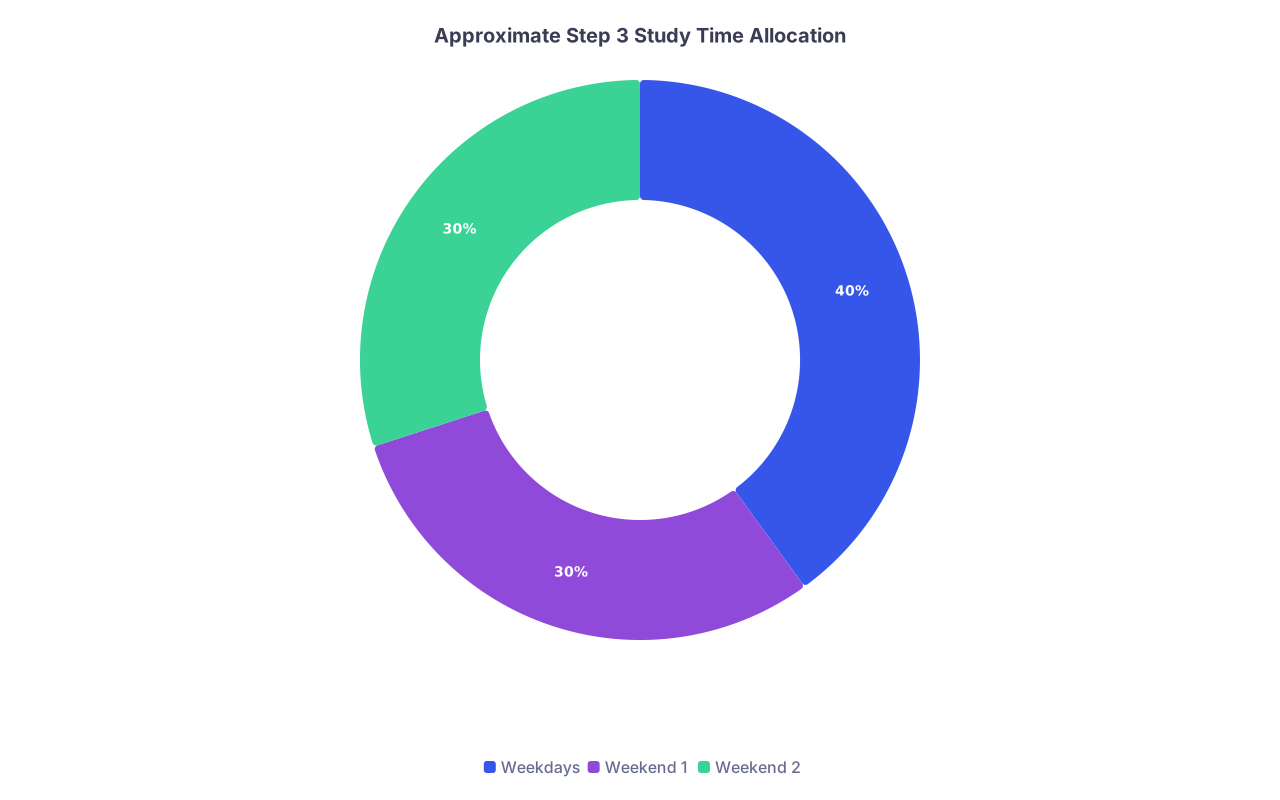
| Category | Value |
|---|---|
| Weekdays | 40 |
| Weekend 1 | 30 |
| Weekend 2 | 30 |
4 Weeks Before Exam: Set the Framework (1 Evening)
At this point you should not touch any question yet. You should set the constraints properly.
One planning evening (60–90 minutes):
-
- Ideally:
- Weekend 1: ~3 weeks before test day
- Weekend 2: ~1 week before test day
- You want:
- At least one call‑free day each of those weekends
- No 24‑hour call directly before a heavy study day if you can help it
- Ideally:
Decide your tools
- I recommend:
- UWorld Step 3 QBank (non‑negotiable)
- UWorld CCS or NBME CCS interactive software (optional but strongly preferred)
- One short review outline / notes set only if it keeps you sane. Not a 700‑page textbook.
- I recommend:
Set realistic weekday quotas
- Minimal but consistent target:
- 10–15 questions per weekday (timed, random, mixed)
- 1–2 CCS cases per week (even if you half‑guess your way through)
- Minimal but consistent target:
Book the exact study blocks in your calendar
- Put these in your phone as real events:
- Weekday “Micro‑Block”: 30–45 minutes on most workdays
- Weekend 1 “Sim Day” (long block)
- Weekend 2 “Polish Day” (long block)
- Put these in your phone as real events:
At this point you should have:
- Test dates locked
- Two anchor weekends protected as much as your schedule allows
- Realistic daily and weekly quotas, written down, not in your head
Week −4: Soft Start, Zero Guilt
Goal: Wake up your Step‑3‑specific brain without burning yourself out.
Target for the week:
- 50–70 UWorld questions total
- 1–2 CCS cases
Day‑by‑day (assume M–F schedule, adjust as needed):
Monday (Evening, 30–40 min)
- 10–12 UWorld questions
- Mode: Timed, random, mixed
- After block: Skim explanations, tag “incorrect” and “marked”
Tuesday (Short night shift? Busy day?)
- If destroyed:
- Read only explanations for yesterday’s block for 20 minutes
- If functional:
- Another 10–12 UWorld questions, same pattern
Wednesday
- 10–15 UWorld questions
- Do one question block on a laptop in exam‑like layout, not on your phone while walking between rooms
Thursday
- 1 CCS case (even if messy)
- Goal: Just get used to interface and timing
- Focus: Ordering “basic needs” quickly (vitals, pulse ox, O2, IV access, monitor, etc.)
Friday
- 10–15 UWorld questions
- Quickly list your top 3 weak categories seen so far (e.g., OB inpatient management, peds rashes, outpatient psych)
Weekend (if free-ish)
- Optional: 10–20 more questions spread between Sat/Sun, untimed, focus on explanations
- If you are completely wiped from call, skip. This is the “soft start” week.
At this point you should:
- Have broken the inertia
- Have 50–70 questions in and at least seen the CCS platform once
- Know what feels rusty (e.g., outpatient diabetes titration, prenatal labs)
Week −3: Build Volume, Prepare for Weekend 1
This is your first real working week.
Weekly goals:
- 100–120 UWorld questions
- 2–3 CCS cases
- Get used to sitting 30+ minutes without touching your phone
Weekday Pattern (Mon–Fri)
Daily (aim 5 days):
- 2 mini‑blocks of 7–8 questions each OR
- 1 larger block of 15–20 if your day allows a single uninterrupted time
Structure for each block:
- Timed block, do not pause, no checking references
- Immediate review of explanations (1–2 minutes per question)
- Note recurring patterns (e.g., always forgetting when to do V/Q vs CT‑PA)
One evening this week (preferably midweek):
- 1 CCS case start‑to‑finish
- Practice:
- Global orders: O2, monitors, NPO, IV, vitals frequency
- Transfer level of care (ICU vs floor vs outpatient)
- Reassessment – advancing time properly
By Friday night you should:
- Have 80–100 questions done since Monday
- Know your worst 2–3 content areas
- Be mentally ready for a heavier first weekend
Weekend 1 (Anchor Weekend #1): Simulation and Assessment
This is the first cornerstone. You simulate a condensed Step 3 Day 1 and use it to calibrate.
Saturday: “Mock Day 1”
Total study time: ~6–7 hours, with real breaks.
Morning (3–3.5 hours)
At this point you should mimic test conditions as much as possible.
- 8:00–8:15
- Light breakfast, coffee, no phone scrolling
- 8:15–9:15
- UWorld block #1 – 38–40 questions, timed, mixed
- 9:15–9:35
- Review key explanations only (focus on why you missed things, not copying notes)
- 9:35–10:35
- UWorld block #2 – another 38–40, timed
- 10:35–10:55
- Review, short snack break
- 10:55–11:55
- UWorld block #3 – 38–40, timed
You will feel tired. That is exactly the point.
Afternoon (2.5–3 hours)
- 13:00–13:45
- Review the highest‑yield misses from the morning
- Create a “Hit List” document:
- Items like: “Status epilepticus sequence,” “Pre‑eclampsia severe features management,” “When to do colonoscopy vs imaging in lower GI bleed”
- 13:45–15:00
- 1–2 CCS cases
- Pick variety: one ED acute, one outpatient or inpatient follow‑up
- 15:00–15:30
- Quick pass through your Hit List and add 3–5 lines of summary for each weak topic
Done. Stop. Do not burn the entire night.
Sunday: Focused Clean‑Up
Total: ~3–4 hours, lighter.
Morning (2–2.5 hours)
- One 20‑question timed block
- Deep review of:
- All infectious disease misses
- All OB/male/female GU misses
Afternoon (1–1.5 hours)
- 1 CCS case, focusing on:
- Efficient ordering
- Not forgetting consults (surgery, neuro, OB) when warranted
- 20–30 minutes skimming your Hit List
At this point after Weekend 1 you should:
- Have 250–350 total questions done
- Have ~5–10 CCS cases under your belt
- Have a concise Hit List of weak areas to attack on weekdays
Weeks −2 and −1: Smart Maintenance Between the Two Weekends
These two workweeks are where people either coast or panic. You are going to do neither.
Global goals for these 2 weeks combined:
- 180–250 more UWorld questions
- 4–6 more CCS cases
- Refinement, not expansion
Week −2 (right after Weekend 1)
Mon–Wed: Stabilize
- Each day:
- 10–15 questions, timed, random
- 15–20 minutes Hit List review
- One evening:
- 1 CCS case with deliberate practice:
- Write down your “opening orders template” on paper before starting
- Then try to execute it as fast as possible in the system
- 1 CCS case with deliberate practice:
Thu–Fri: Targeted work
- On one of these days:
- 15–20 question block focused on your worst subject (e.g., OB, peds, psych)
- On the other:
- Mixed block but filter: your top two weak categories only
Weekend between Anchor Weekends (not a heavy one)
If you are on call, accept that productivity will be lower. That is fine.
If at least one half‑day is free:
- 20–40 mixed questions, unrushed
- 1–2 CCS cases, especially:
- DKA
- Chest pain
- Sepsis
- Asthma/COPD exacerbation

Week −1 (leading into Weekend 2)
This is polish week. Do not try to start a brand‑new resource. That would be a waste.
Mon–Wed: Tighten screws
- Daily:
- 10–15 mixed, timed questions
- 10–15 minutes CCS interface review or one short case
- Revisit Hit List nightly:
- Trim anything you truly have down cold
- Circle or highlight the 10 topics that still feel shaky
Thu–Fri: Pre‑Final‑Weekend
- Aim for:
- One 20–25 question block each day, timed
- Begin sleep and caffeine routine that you want on test days
- Go to bed somewhere near your planned test‑day time.
- If your exam starts at 8:00, you have no business staying up until 1 a.m. now.
At this point you should:
- Have seen most of UWorld Step 3 at least once (or a solid majority)
- Have a short, brutal list of “must‑know cold” topics
- Feel tired but not destroyed
Weekend 2 (Anchor Weekend #2): Exam‑Focused Polish
This weekend happens 5–9 days before your actual exam. This one is less about brute volume, more about exam‑style thinking and CCS confidence.
Saturday: Mixed Strategy & CCS Confidence
Total study: ~5–6 hours.
Morning (2.5–3 hours)
- 8:30–9:30
- UWorld block – 30–34 questions, timed, random
- 9:30–10:00
- Review most important misses, focusing on thinking process, not trivia
- 10:00–11:00
- 2 CCS cases back‑to‑back (one ED/acute, one inpatient or clinic)
- 11:00–11:15
- Quick reflection:
- Did you forget DVT prophylaxis?
- Did you under‑order or massively over‑order?
- Did you reassess at reasonable intervals?
- Quick reflection:
Afternoon (2.5–3 hours)
- 13:00–14:00
- Focus block on your worst content (20–25 questions total)
- 14:00–14:30
- Review those questions, then immediately:
- 14:30–15:00
- Hit List: aggressively compress into a “Last 2 days” one‑page document
You should end Saturday with:
- A short 1–2 page handwritten or typed “Final Sheet”
- Increased comfort with CCS pacing
Sunday: Light but Intentional
You are one week out or less. Do not fry yourself.
Total: 3–4 hours max.
- 1–2 short blocks (10–15 questions each)
- One mixed
- One in your rustiest domain (often OB or peds)
- 1 CCS case, preferably tough (e.g., shock, meningitis, complicated pregnancy)
- 60–90 minutes reorganizing your Final Sheet
- Focus on:
- Algorithms (chest pain, stroke, PE, sepsis)
- Must‑not‑miss emergencies and red flags
- Drug choices and durations you always blank on (e.g., TB regimens, endocarditis therapy)
- Focus on:
After this Sunday, you should:
- Stop doing heavy new questions
- Shift into short daily maintenance until the exam
Final 5–6 Days Before Step 3
These days are about staying sharp, not cramming brand‑new minutiae.
Mon–Thu: Micro‑Blocks and Review
Daily plan (20–45 minutes):
- 5–10 timed questions, mixed
- 10–15 minutes reading through:
- Final Sheet
- High‑yield notes from your Hit List
- If possible, 1 CCS case early in the week only (Mon or Tue)
Do not stay up late doing questions the night before Day 1. That is amateur behavior.
Day Before Step 3, Day 1
- No full question blocks
- If you must do something:
- 5–10 very easy questions to stay in rhythm
- 20–30 minutes reviewing Final Sheet algorithms
- Organize:
- Snacks
- ID, confirmation email
- Route and timing to the testing center
Sleep is higher yield than 40 more questions at this point.
How This Looks on a Simple Calendar
| Time Frame | Main Focus |
|---|---|
| Week −4 | Setup + 50–70 Qs + 1–2 CCS |
| Week −3 | 100–120 Qs + Weekend 1 Sim |
| Weekend 1 | Mock Day 1 + CCS intro |
| Week −2 | 90–120 Qs + targeted CCS |
| Week −1 (pre Wknd2) | 90–130 Qs + polish |
| Weekend 2 | Mixed practice + Final Sheet |
| Final 5–6 Days | Micro‑blocks + light review |
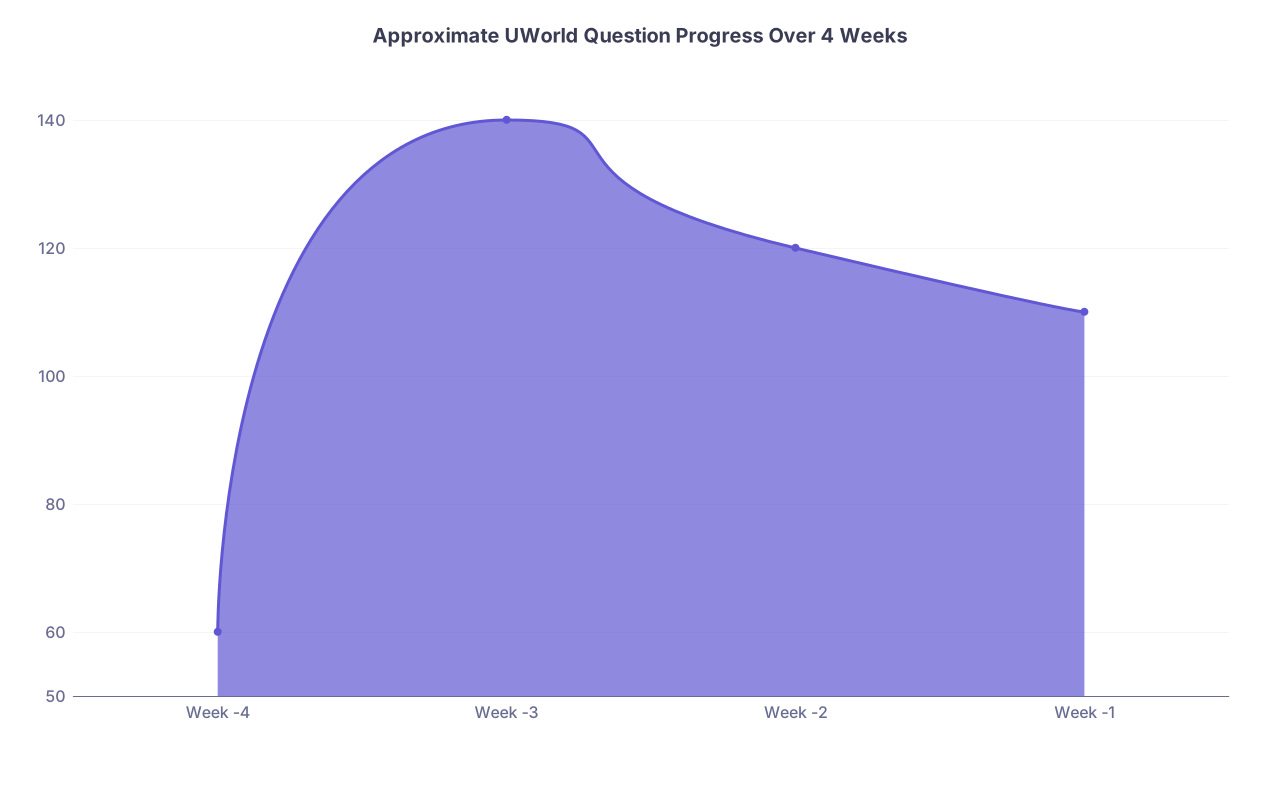
| Category | Value |
|---|---|
| Week -4 | 60 |
| Week -3 | 140 |
| Week -2 | 120 |
| Week -1 | 110 |
Minimal‑Dedicated Does Not Mean Minimal Standards
One point I need to hammer: a two‑weekend strategy is not an excuse to wing it. Step 3 is passable with moderate prep, but I have watched residents fail because they assumed “I do this every day at work” was enough. It usually is not. The exam tests breadth and tedious outpatient details that you do not see on your current service.
Non‑negotiables in this plan:
- Timed, mixed blocks. Not cherry‑picking topics you like.
- Real CCS practice. Not just reading case write‑ups.
- Sleep and exam‑like conditions for at least one big simulated day.
Optional and lower yield in this specific tight schedule:
- Full commercial lecture series
- Long‑form textbooks
- Obsessively tracking percentile scores
You are aiming for safe, solid performance, not a 270 flex.
Your Next Step Today
Do one concrete thing right now:
Open your calendar and block off two anchor weekends—one about three weeks before your Step 3 date, one about one week before. Label them clearly: “Step 3 Anchor Weekend #1” and “Anchor Weekend #2.” Then, add a 30‑minute recurring evening event on three weekdays titled “Step 3 – 10 Qs + 1 topic.”
Once those are on the calendar, you are no longer “hoping to study.” You have a schedule.