
The usual advice about Step 3 is backwards: you don’t “study into” a good score; you rotate into it.
If you want Step 3 to feel manageable instead of miserable, the rotations you choose (and how you use them) matter more than which question bank you buy. Step 3 is essentially “real-world primary care + acute management in test form.” So the best prep comes from rotations that mirror that.
Let’s cut to it.
The Short Answer: The 5 Most Valuable Rotations for Step 3
If you remember nothing else, remember this list. These rotations give you the highest yield for Step 3:
| Rank | Rotation |
|---|---|
| 1 | Inpatient Internal Medicine |
| 2 | Outpatient/Primary Care Clinic |
| 3 | Emergency Medicine |
| 4 | Obstetrics & Gynecology |
| 5 | Pediatrics (outpatient + inpatient) |
Here’s why each one matters and how to milk it for all it’s worth.
1. Inpatient Internal Medicine: The Core of Step 3
If you can only have one strong rotation before Step 3, make it this one.
Step 3 is obsessed with bread-and-butter inpatient problems:
- Chest pain rule-outs
- COPD/asthma exacerbations
- DKA/HHS
- Sepsis, PNA, UTI, pyelo
- CHF exacerbation
- AKI and electrolyte disturbances
- Alcohol withdrawal, GI bleeds, PE/DVT
Where do you see those constantly? Inpatient medicine.
How Inpatient Medicine Directly Matches Step 3
On the exam, you’ll be asked:
- What’s the next best step in managing a hospitalized patient?
- What labs or imaging do you order right now?
- Who needs ICU vs floor vs outpatient follow-up?
- When to start or stop anticoagulation, antibiotics, fluids, pressors
On the wards, you’re literally answering those questions every day. If you actually engage and don’t coast, inpatient medicine becomes a living Step 3 question bank.
How to Use This Rotation for Step 3 Prep
Do these three things consistently:
- For every patient, ask yourself:
“If this were a Step 3 question, what would be the next best step and why, not just what my attending likes to do?” - After rounds, pick 1–2 patients and quickly read guidelines or UpToDate on:
- Initial workup
- First-line treatment
- Disposition and follow-up
- Pay attention to common management patterns:
- When they order CT vs ultrasound vs MRI
- When they start heparin vs DOAC vs nothing
- When they “watch and wait” vs “call a consult now”
You’re training the exact decision-making muscle Step 3 is testing.
2. Outpatient/Primary Care: This Is What Step 3 Thinks You’ll Be Doing
People underestimate how outpatient-heavy Step 3 is. Big mistake.
A huge chunk of questions are straightforward clinic scenarios:
- Hypertension and diabetes management
- Lipid control and ASCVD risk
- Thyroid disease follow-up
- Depression, anxiety, insomnia
- Back pain, headaches, fatigue
- Preventive care and screening schedules
- Vaccines and well visits
Primary care clinic is where this all lives.
Why This Rotation Is Gold
Step 3 loves:
- Long-term management questions
- “What’s the best next step in follow-up?”
- Choosing between lifestyle change vs meds vs specialist referral
- Screening timelines (colon, breast, cervical, lung, AAA, osteoporosis)
Outpatient medicine teaches you the rhythm of “What do I do with this patient today, and when do I see them next?”
How to Turn Clinic into Step 3 Prep
In clinic, focus on:
- Every patient’s preventive care gaps
Ask yourself: “What cancer screenings or vaccines is this person due for?” - Chronic disease titration:
- When to add a second antihypertensive
- When to intensify diabetes meds
- When to start statins/ACEi/aspirin
- Safe prescribing:
- When not to give opioids or benzos
- Which meds to avoid in pregnancy, CKD, or elderly
If your attending answers with, “We’ll just follow up in 6 months,” mentally convert it into: why 6 months and not 3? Or 12? That’s exactly how Step 3 frames questions.
3. Emergency Medicine: Acute Management Under Time Pressure
If inpatient and outpatient medicine teach you what to do, EM teaches you how fast you need to do it.
Step 3’s CCS (case simulations) especially reward people who think like EM:
- Stabilize airway/breathing/circulation first
- Order time-sensitive studies early
- Start treatment before every lab result is back
What EM Gives You for Step 3
You’ll get constant reps in:
- Chest pain workup (STEMI vs NSTEMI vs non-cardiac)
- Stroke alerts
- Trauma basics
- Acute abdomen
- Anaphylaxis and allergic reactions
- Overdose and tox screens
- Psych emergencies (SI/HI, acute agitation)
These are the classic “Don’t screw this up or the patient dies” questions that Step 3 loves.
How to Maximize EM for Step 3
In the ED, always think in this order:
- Is this patient stable? What do I need right now?
- What do I need in the next 30–60 minutes?
- What can wait until they’re on the floor or gone home?
Translate that to CCS cases:
- Immediately order ABC basics (oxygen, IV, monitor) when appropriate
- Don’t wait to order EKG for chest pain
- Don’t wait to give epinephrine in anaphylaxis
- Don’t over-order nonsense tests that waste time
If you’ve done EM seriously, CCS feels a lot less foreign.
4. Obstetrics & Gynecology: High-Yield, High-Punishment If You Ignore It
You don’t need to be an OB/Gyn expert. You do need to not miss:
- Pre-eclampsia vs eclampsia
- Gestational diabetes management
- Vaginal bleeding in pregnancy (1st vs 3rd trimester)
- Fetal heart rate interpretation basics
- Contraception choices and contraindications
- Pap/HPV screening algorithms
Step 3 doesn’t ask for obscure OB; it asks you not to be dangerous.
What to Focus on During OB/Gyn
On L&D:
- Learn the “must-know” triage:
- When do you do emergent C-section?
- When do you give magnesium?
- When is induction appropriate?
In clinic:
- Master contraception counseling (IUDs, implants, combined pills, progestin-only, permanent options)
- Know Pap/HPV guidelines and basic follow-up pathways
- Understand routine prenatal visit timeline and labs
You’ll see the same few patterns over and over. That’s basically your Step 3 OB section.
5. Pediatrics: Where Prevention and Vaccines Come Alive
Peds is huge for:
- Vaccine schedules and catch-up
- Developmental milestones and red flags
- Common outpatient issues: otitis media, bronchiolitis, asthma, viral URIs, gastroenteritis
- Infant and child well visits
Step 3 peds questions often boil down to:
“Is this normal? If not, who needs workup vs reassurance vs social intervention?”
How to Use Peds as Step 3 Prep
In clinic:
- Ask yourself: “Is this kid growing and developing on track?”
- Practice giving anticipatory guidance (sleep, diet, safety)
On inpatient:
- Pay attention to:
- Pediatric sepsis workup
- Fever in neonates vs older children
- Fluid management and dehydration
- Asthma exacerbation treatment steps
If you come out of peds comfortable with vaccines and milestones, you’ve already picked up a surprising number of easy Step 3 points.
Helpful but Secondary Rotations
These won’t carry Step 3, but they can round you out.
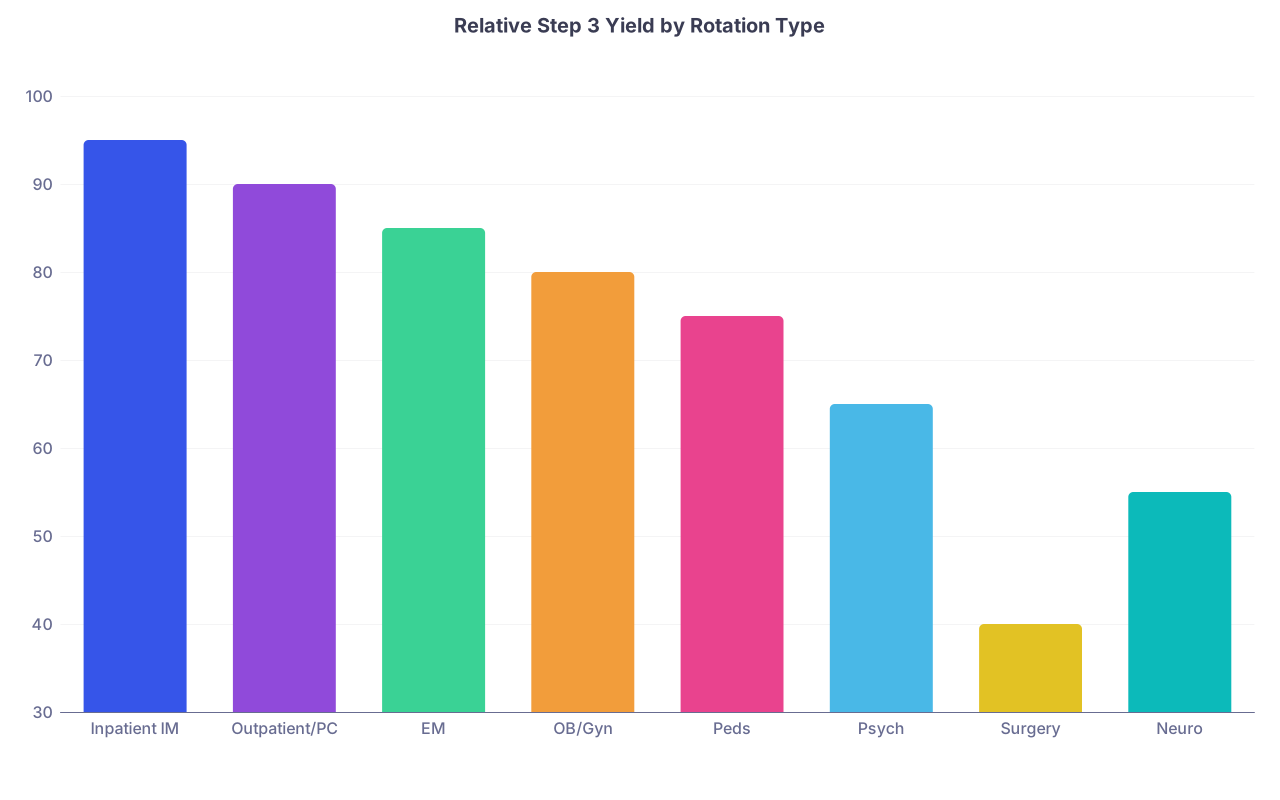
| Category | Value |
|---|---|
| Inpatient IM | 95 |
| Outpatient/PC | 90 |
| EM | 85 |
| OB/Gyn | 80 |
| Peds | 75 |
| Psych | 65 |
| Surgery | 40 |
| Neuro | 55 |
Psychiatry
Step 3 has a solid psych chunk: depression, anxiety, bipolar, schizophrenia, substance use, risk assessment, capacity, and emergency holds.
Psych rotation helps you:
- Get comfortable with first-line meds (SSRIs, SNRIs, antipsychotics, mood stabilizers)
- Recognize high-risk patients (SI/HI)
- Understand when inpatient psych is necessary
Useful, but you can catch up with focused studying if your psych experience was weak.
Surgery
Step 3 doesn’t care about how to do a Whipple. It cares about:
- Pre-op and post-op care
- DVT prophylaxis and early ambulation
- Managing post-op fever
- Recognizing surgical abdomen
- Basic trauma steps (primary/secondary survey)
On surgery, don’t just live in the OR. The floor and pre/post-op clinics map much more directly to Step 3.
Neurology
Worth it for:
- Stroke/TIA management
- Seizure workup and meds
- Headache red flags
- Demyelinating disease basics
If you had a solid IM neuro exposure, a full neuro rotation is helpful but not mandatory.
If You’re Already a Resident: What Now?
You might be thinking, “Cool, but I can’t go back and redo rotations.”
Fine. Here’s how to compensate quickly:
If you’re on IM now:
Start asking Step-3-style questions on rounds: “What would be tested here as the ‘next best step’?”If you’re in a non-IM residency (e.g., surgery, psych, OB):
Use your clinic and ward patients to practice primary care thinking: comorbidities, chronic management, and preventive care.If you’re in a prelim year with scattered rotations:
Consider doing an elective in outpatient internal medicine or family med before you sit for Step 3. Even a few weeks helps.
How to Integrate Rotations with Actual Step 3 Studying
Rotations alone won’t carry you. You still need question practice. Here’s the simple, realistic way to combine them:

| Step | Description |
|---|---|
| Step 1 | On Rotation |
| Step 2 | See Patient |
| Step 3 | Ask: Next Best Step? |
| Step 4 | Look Up Guideline/Review |
| Step 5 | End of Day: 10-20 Step 3 Qs |
| Step 6 | Flag Weak Topics |
| Step 7 | Reinforce on Next Patients |
Practical pattern:
- During the day: Treat patients like live Step 3 cases. Think in terms of “next best step,” “most appropriate test,” “most likely diagnosis.”
- After the day: Do 10–20 Step 3-style questions (UWorld, etc.) focused on what you actually saw: IM on IM days, peds on peds days, etc.
- On weekends: One half-day of questions + quick review of CCS basics.
That’s it. No heroic 8-hour study blocks if you’re actually present on rotations.
Quick Ranking: Which Rotations to Prioritize (If You Can Choose)
If you have any say over your schedule before Step 3, use this priority list:
| Priority | Rotation Type | Notes |
|---|---|---|
| 1 | Inpatient Internal Medicine | Non-negotiable if possible |
| 2 | Outpatient IM/Family Med | Ties Step 3 together |
| 3 | Emergency Medicine | Especially helpful for CCS |
| 4 | OB/Gyn | Prevent fatal OB mistakes |
| 5 | Pediatrics | Vaccines + milestones |
| 6 | Psychiatry | Chronic and acute psych management |
| 7 | Neurology | Stroke, seizures, headaches |
| 8 | Surgery | Pre/post-op and basic trauma only |
If you can stack 2–3 of the top 5 in the 3–6 months before your exam, you’re in great shape.
FAQs
1. If I can only have one strong rotation before Step 3, which should it be?
Inpatient internal medicine. No contest. It covers the widest range of Step 3 content: cardiology, pulmonology, nephrology, infectious disease, endocrine, fluids/electrolytes, anticoagulation decisions, and discharge planning. It also lines up directly with CCS-style hospital cases. If you do IM well, you’ll feel more comfortable on at least half the test.
2. How important is Emergency Medicine specifically for CCS?
Very helpful, but not absolutely required. EM trains you to think in terms of immediate stabilization, time-sensitive interventions, and appropriate triage, which is exactly what the CCS engine rewards. If you haven’t done EM recently, you can still do fine by:
- Learning an “ABCs first” structure
- Practicing a small set of CCS cases
- Memorizing key emergency orders for chest pain, sepsis, anaphylaxis, stroke, trauma
But if you have the option to do EM before your exam, take it.
3. My OB/Gyn rotation was weak. Will that sink my Step 3 score?
No, but you can’t ignore OB/Gyn when you study. The test expects:
- Basic prenatal care knowledge
- How to handle hypertensive disorders of pregnancy
- Third-trimester bleeding differentials
- Contraception choices and Pap/HPV follow-up
You can realistically catch up in a focused few days of review plus questions. A weak rotation is not fatal; a total blind spot on OB/Gyn topics is.
4. Does Surgery really matter for Step 3?
Only in a limited way. You don’t need to know surgical techniques or rare operations. You do need:
- Post-op fever workup (POD 1 vs POD 5, etc.)
- DVT prophylaxis principles
- Management of acute abdomen and basic trauma approach
- Pre-op risk assessment in patients with bad hearts/lungs
If your surgery exposure covered those, you’re good. If not, a short targeted review plus some questions is enough.
5. I’m already a PGY-1. When’s the best time in intern year to take Step 3?
The sweet spot is usually:
- After you’ve done at least one solid IM block
- Ideally with an IM or lighter outpatient month just before the exam
- Not during ICU or a brutal night float month
Early enough that you remember med school content, but late enough that your day-to-day decision-making has improved. For most, that’s somewhere between month 4 and month 10 of intern year.
Bottom line:
- Inpatient IM and primary care do most of the heavy lifting for Step 3.
- EM, OB/Gyn, and peds fill in critical gaps (especially for CCS and safety questions).
- Use every rotation as live practice for “next best step” thinking, and Step 3 stops feeling like a mystery exam and starts feeling like what it is: supervised real-world medicine in multiple choice form.