
The most dangerous thing about “backup” specialties is simple: most of them are not backups at all. They are just different ways to lose the Match.
You are not sabotaged by your dream specialty. You are sabotaged by your fake safety plan.
Let me walk you through the traps I see every year.
The Core Problem: Your Backup Is Just As Competitive
Applicants routinely make one fatal assumption:
“If I do not match into Dermatology, I will be fine—I am applying to Radiology and Anesthesia as backups.”
No. You will not be fine.
“Backup” does not mean “vaguely less competitive.” It means:
- Significantly easier to match into with your stats and profile
- Realistic based on your application history, letters, and geography
- Aligned enough with your skills and life goals that you will not be miserable
If the step score expectations, required research, and fill rates for your backup are basically the same as your primary, you do not have a backup. You have a parallel high‑risk plan.
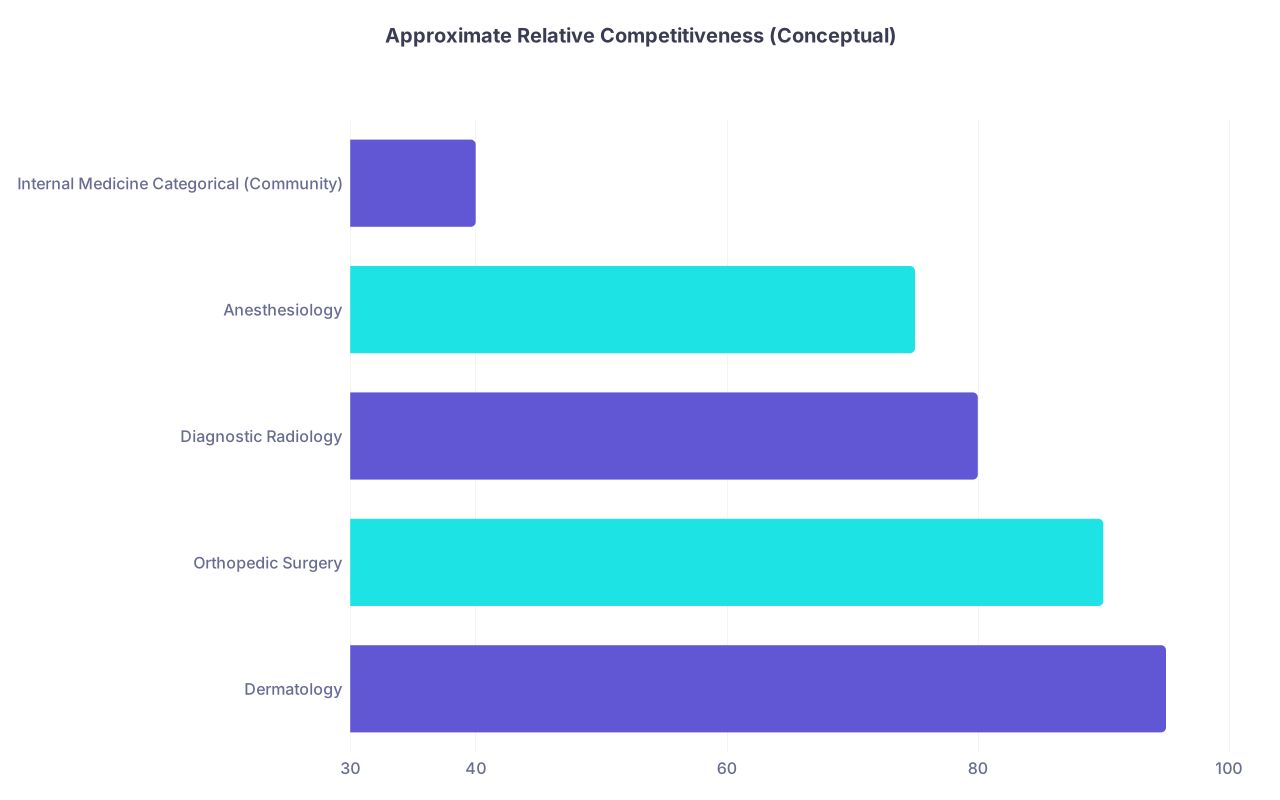
| Category | Value |
|---|---|
| Dermatology | 95 |
| Orthopedic Surgery | 90 |
| Diagnostic Radiology | 80 |
| Anesthesiology | 75 |
| Internal Medicine Categorical (Community) | 40 |
(These numbers are conceptual, not actual NRMP data. The point is the order of magnitude, not the exact value.)
If your “backup” lives in the 70–90 range and your actual profile is mid‑tier, you are playing with fire.
Mistake #1: Confusing “I Like It Less” With “It Is Easier”
A specialty is not a backup just because you like it less. Or because your aunt has never heard of it. Or because your classmates say, “I would never do that.”
I have heard versions of this in advising meetings:
- “Derm is my dream. Rads is the backup.”
- “I am going for Ortho, but Gen Surg is the fallback.”
- “EM is my backup in case Anesthesia does not work out.”
- “If I cannot do ENT, I will just do Ophtho or Plastics.”
You see the problem.
Those “backups” are:
- Often similarly selective (or require different gatekeeping exams like SF Match/early match)
- Heavily Step‑driven, research‑driven, or letter‑driven
- Filled with applicants who are only focused on that one specialty and optimized for it
You, on the other hand, are splitting time, letters, and signals.
How to avoid this mistake:
- Pull actual data for your year: fill rates, applicant‑to‑position ratios, Step 2 averages, IMG proportions.
- Then ask one brutal question:
- “Would a program director in this backup specialty describe me as an above average applicant for this field?”
If the answer is “maybe” or “depends,” that is not a backup. That is another reach.
Mistake #2: Ignoring the Single Most Predictive Metric for Your Backup
Your backup does not care about your love letter to Cardiology or your derm case report.
For your backup to work, you need:
- Credible performance in core rotations that align with it
- Letters from recognizable faculty in that field
- Evidence that you are not obviously using them as a dumping ground
Many applicants blow this entirely. Classic scenario:
- MS3: “I am 100% going into Ortho.”
- MS4 August: No dedicated Medicine Sub‑I. No IM‑specific letters. Step 2 = barely above average.
- September: Panic. “I will just add Internal Medicine as a backup.”
Programs see an ERAS file that screams: “Orthopedics applicant who realized they might not match.” Not “future internist.”
Backup specialties are not stupid. They see this pattern every year.
Do not make this mistake:
- If IM is your backup, your file must look like:
- Solid Medicine clerkship comments and grade
- At least one strong IM letter, ideally two
- A believable personal statement that actually talks about Internal Medicine, not “I love procedures and MSK but I also kind of like comprehensive care.”
- If Anesthesia is your backup:
- Evidence of comfort with critical care, OR environment, physiology
- An actual anesthesiology letter if possible
- Step 2 that is not screaming “borderline for anesthesia”
Mistake #3: Backups That Compete For The Same Limited Resource
Here is another subtle way applicants sabotage themselves: they pick two specialties that require the same scarce resource in their application.
Examples:
- Both require:
- High Step 2 scores
- Heavy research in one domain
- U.S. clinical experience in a specific setting (for IMGs)
- Super niche letters from department chairs
When you pick:
- Primary: Dermatology
- Backup: Radiology
You are still betting everything on:
- High Step performance
- Strong academic reputation
- Competitive home institution or away rotations
If you miss those marks, you just undermined both choices simultaneously.
Better backup logic:
- Primary: Highly competitive field (Derm, Ortho, ENT)
- Backup: Field where:
- The average matched applicant profile is below yours
- There is less dependence on ultra‑elite research
- Your existing clinical performance still looks good
- Programs regularly match people like you (USMD, DO, IMG—be honest about your category)
| Primary Specialty | Bad Backup Choice | Better Backup Direction |
|---|---|---|
| Dermatology | Radiology | Internal Med, Pediatrics, Family Med |
| Orthopedic Surg | Plastic Surg, Neurosurg | General Surg (targeted), IM prelim |
| ENT | Ophthalmology | Categorical IM, Transitional Year (realistic) |
| Radiology | Anesthesiology | IM, FM, Neurology (depending on profile) |
| Urology | General Surgery (academic) | Community Gen Surg, IM |
Again: this table is conceptual. The pattern is what matters.
Mistake #4: Geographic Delusions About “Backup” Programs
Applicants love to say:
- “I am applying more broadly for my backup.”
- Then their ERAS list: 40 reach programs in their dream city and 10 “backup” programs… in the same city.
If you want your backup to mean anything, you must give up geographic ego. That is the cost of insurance.
I have seen people:
- Apply Derm + IM “backup”
- But only to IM programs in Boston, SF, NYC
- With mid‑tier stats and no real IM focus
- Then act shocked on Match Day
The market does not care that your partner’s job is in Brooklyn or that your dog sitter lives in Seattle.
Actual backup behavior looks like:
- Applying to:
- A full range of program tiers
- Multiple regions, including less trendy states
- Community programs, not just big‑name academic centers
- Accepting that your backup might mean:
- Medium‑sized city in the Midwest
- Community program in the South
- Not your ideal weather, sports team, or nightlife
If your backup is limited to the same super‑competitive cities everybody wants, you did not choose a backup. You chose denial.
Mistake #5: Split Identity Across Letters, Statements, and Signals
Program directors hate one thing more than a slightly weaker application: an incoherent one.
Typical multi‑specialty mess:
- Two letters from Ortho
- One generic “Medicine” letter from a hospitalist who barely knows you
- Personal statement for Ortho that is actually good
- Hastily written IM backup statement that reads like: “I like procedures and MSK but I also enjoy the complexity of internal medicine.”
- Signaling (if your Match year uses it) almost entirely to your primary specialty
From the IM PD’s perspective:
- You have:
- Weak evidence of commitment
- No real track record in their field
- An application that screams “If I match with you, it is because Plan A failed.”
Guess what? They rank real medicine applicants ahead of you.
To avoid this:
- Decide early if you are truly dual‑applying.
- Not in October. By late spring / early summer going into MS4.
- Build a parallel but believable profile:
- Letters that match each field
- Separate personal statements
- A CV where each specialty can see itself
- Do not send obviously primary‑specialty‑dominated letters to your backup:
- An IM program does not care what the Ortho chair thinks about your knot tying.
Mistake #6: Under‑applying To The Backup (Pride Masquerading as Strategy)
The ego move I see constantly:
“I am applying to 70 programs in my dream field and 15 in my backup. That should be enough.”
No. It should not. If you are serious about a backup, you must treat it as a second full‑scale application, not a token gesture.
Look at this conceptual comparison:
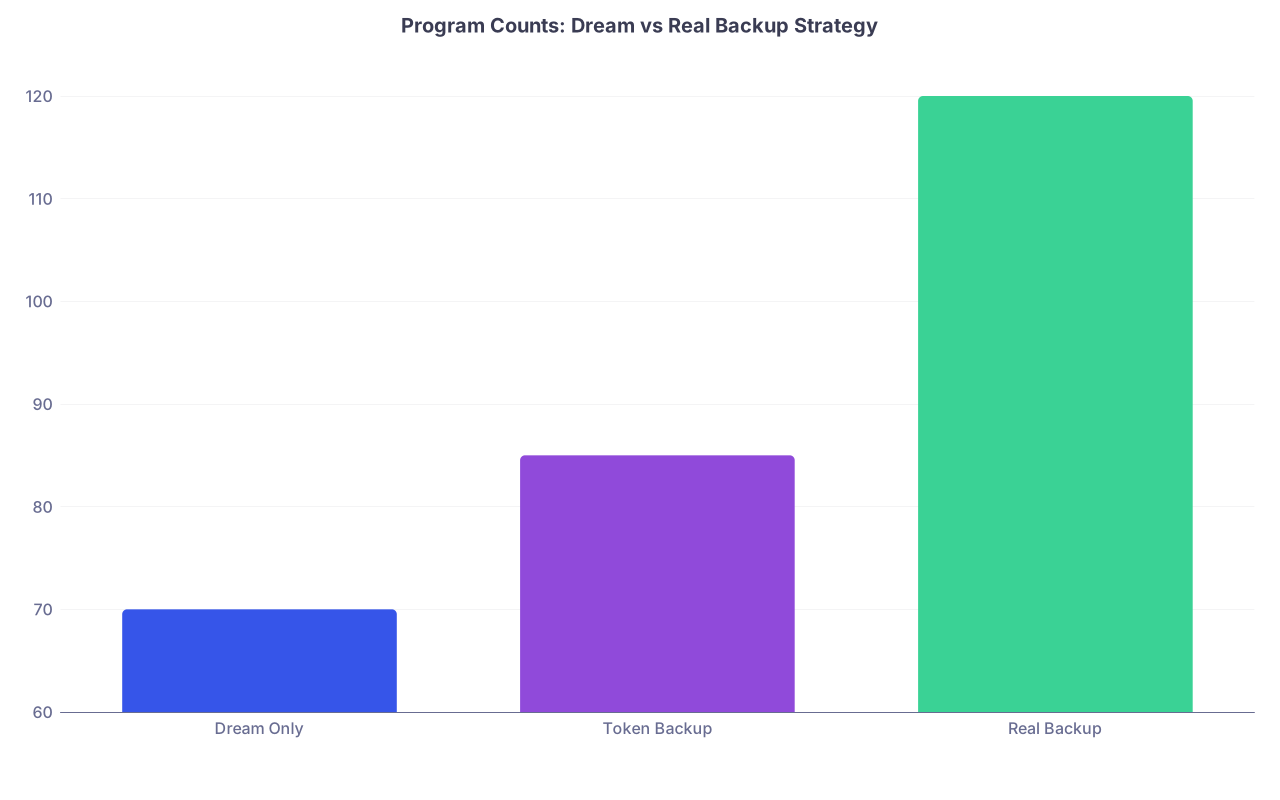
| Category | Value |
|---|---|
| Dream Only | 70 |
| Token Backup | 85 |
| Real Backup | 120 |
- Dream only: 70 in a highly competitive field
- Token backup: 70 dream + 15 backup = 85 total; backup is symbolic
- Real backup: 70 dream + 50 backup = 120 total; backup has real volume
Is it expensive? Yes. Is it annoying? Yes. Is it cheaper than going unmatched and losing a year of physician salary? Also yes.
If you will only grudgingly apply to a handful of backup programs, admit reality: you are not actually backing up. You are gambling on your dream specialty and using the backup to feel “responsible.”
Mistake #7: Backups That You Will Actually Hate (And Then Quit)
Another common disaster: choosing a “less competitive” field that you will despise, simply because you think it is safer.
Examples:
- Hardcore proceduralist applying to:
- Primary: Ortho
- Backup: Psychiatry
- Has never enjoyed long counseling visits, hates paperwork, gets restless sitting
- Extroverted clinic‑lover applying:
- Primary: Pediatrics
- Backup: Pathology
- Cannot tolerate long stretches of solo work at a microscope
Here is what happens when the backup is a terrible fit:
- You will write a forced personal statement.
- Your interviews will feel off. Program directors notice when your energy spikes only when they ask about Plan A.
- If you match, you are at high risk for:
- Being miserable
- Struggling with motivation and performance
- Attempting to re‑apply or transfer, which is much harder than doing it right the first time
Backup specialties must pass two tests:
- Reasonable match probability
- Tolerable long‑term life for you
They do not have to be your dream. But they must not be an obvious psychological mismatch.
Mistake #8: Making Backup Plans Too Late To Matter
Timing kills more applications than intelligence ever will.
Here is the standard late‑panic timeline:
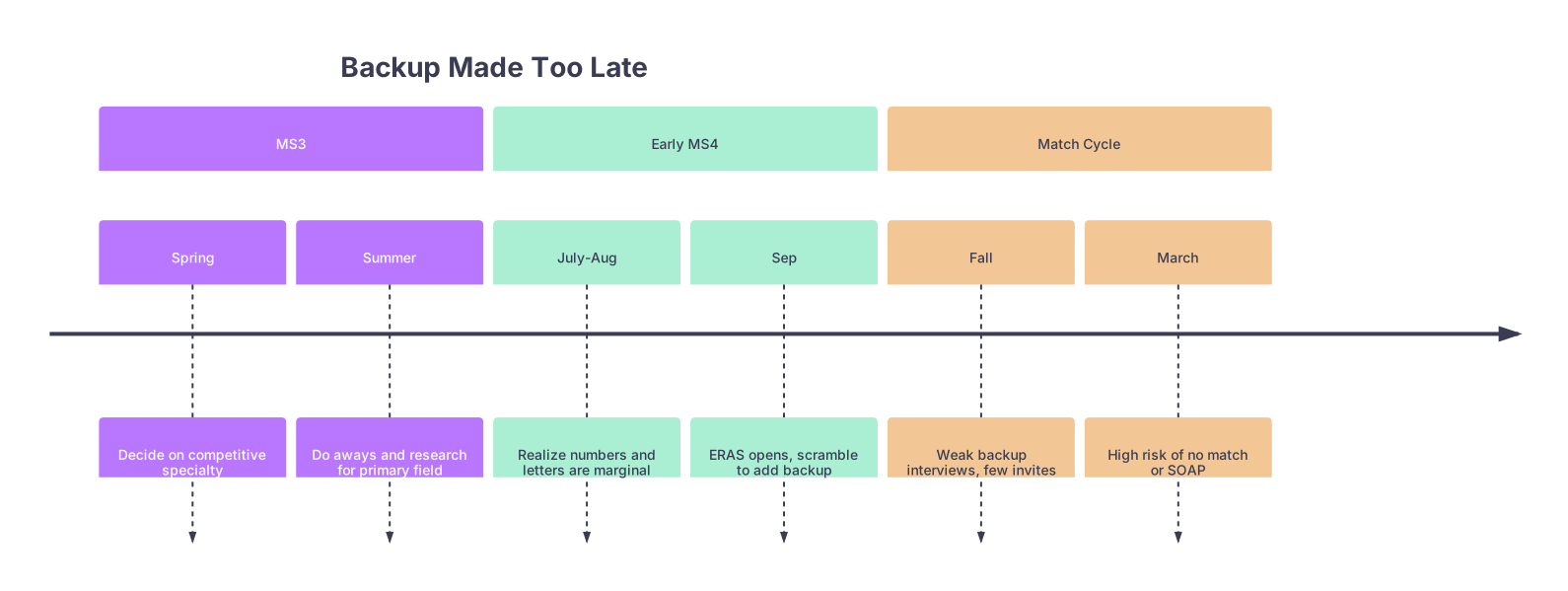
| Period | Event |
|---|---|
| MS3 - Spring | Decide on competitive specialty |
| MS3 - Summer | Do aways and research for primary field |
| Early MS4 - July-Aug | Realize numbers and letters are marginal |
| Early MS4 - Sep | ERAS opens, scramble to add backup |
| Match Cycle - Fall | Weak backup interviews, few invites |
| Match Cycle - March | High risk of no match or SOAP |
By the time you realize your primary specialty might not work:
- You have already:
- Chosen away rotations in the wrong field
- Dedicated research to one niche
- Used up the best letter writers for that field alone
- You have no runway to build a credible alternate narrative
To avoid this, you need early, ruthless self‑assessment:
- By end of MS3:
- Look at:
- Step 2 score (if available)
- Clerkship grades
- Strength and source of potential letters
- Compare to:
- NRMP data for your target field
- Recent matches from your school
- Look at:
If you are clearly below the median for matched applicants, plan a backup then, not in September.
Mistake #9: Blindly Copying Your Classmates’ Backup Strategy
One of the more toxic things I hear on the wards:
- “Everyone doing Ortho here backs up with Gen Surg. That is what our school recommends.”
- “At my school, all derm folks add IM. It worked for so‑and‑so last year.”
- “My friend matched rads after failing to match derm, so I will just copy that.”
Here is what you are ignoring when you copy:
- Their:
- School prestige
- Home program reputation
- Research portfolio
- Personality and interview skills
- Connections and mentors
- Their year’s:
- Match dynamics
- Step scoring environment
- Immigration/visa shifts (for IMGs)
You only see the outcome. Not the thousand hidden variables.
You must personalize your backup plan:
- Look at your:
- Exact Step 2 score
- Class rank or clinical comments
- Immigration status
- Geographic flexibility
- Real feedback from faculty who know you
If your advisor says, “You are a stretch even for our mid‑tier Ortho programs,” and your classmate was AOA with a 260, you cannot use their “backup = Gen Surg” strategy as a blueprint.
Mistake #10: Thinking SOAP Will Fix A Broken Plan
Some applicants quietly think:
“If I do not match, SOAP will rescue me. There are always leftover spots.”
This is magical thinking.
SOAP is:
- Brutal
- Fast
- Highly competitive
- Mentally draining
And it is getting tighter. More people apply to more programs; fewer spots remain unfilled at the start of SOAP in many popular categories.
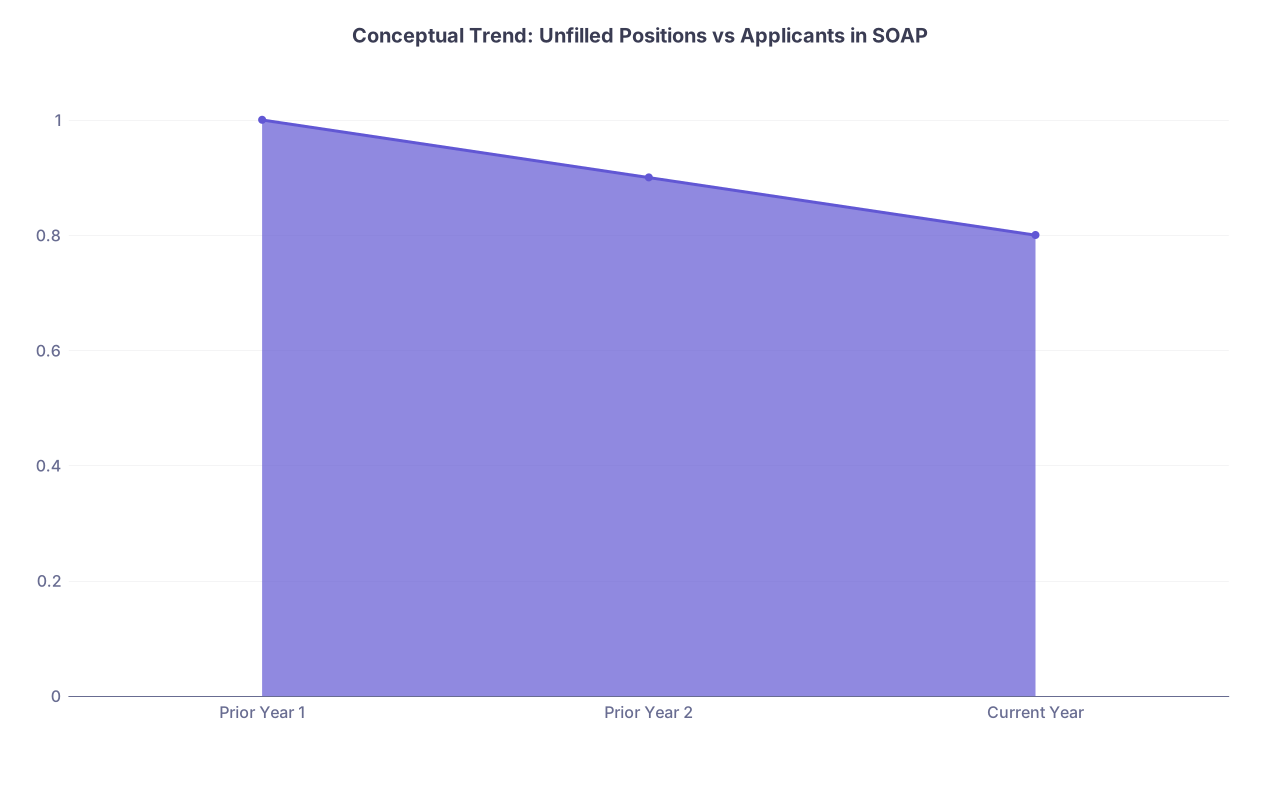
| Category | Value |
|---|---|
| Prior Year 1 | 1 |
| Prior Year 2 | 0.9 |
| Current Year | 0.8 |
Again, conceptual, not actual numbers. The direction is what matters: you cannot rely on SOAP as your backup strategy. It is an emergency parachute, not a flight plan.
If you walk into Match season thinking, “Worst case, I SOAP into something,” you are already planning to fail.
How To Build A Real Backup Strategy (Without Sabotaging Yourself)
Let me be constructive for a moment. Here is what actually works.
1. Brutal Self‑Assessment By Late MS3
Sit down with:
- Your:
- Step 2 (or Step 1 if relevant for your year) performance
- Clerkship evaluations
- Research output
- Class rank (if available)
- A trusted advisor or mentor who has seen multiple match cycles in your specialty
Ask them:
- “If I apply only to [Primary Specialty], what is my realistic probability of matching?”
- If the answer is anything like “maybe” or “it depends how broad you apply,” you are in backup territory, not certainty.
2. Choose a Backup That Is Actually Easier—For You
You are not looking for the mythical “easy specialty.” You are looking for the specialty where:
- Your current numbers are above the typical matched applicant
- Your existing clinical performance already supports that field
- Your letters can be built without gutting your primary plan
This might be:
- For USMD with decent scores aiming high:
- IM, Peds, FM, community General Surgery, Neurology, etc.
- For DO/IMG:
- Be even more conservative. Look at where people like you from your school actually match.
3. Give the Backup Full‑Scale Respect
If you commit to a backup, commit fully:
- Real number of applications
- Real time on a personal statement
- At least one rotation where you are clearly exploring that field
- At least one letter from a faculty member in that specialty
This will cost effort and pride. That is the price of reducing the chance of going unmatched.
The 3 Things You Must Not Forget
- A “backup” that is nearly as competitive as your dream field is not a backup. It is just a second way to go unmatched.
- If your letters, rotations, and geographic list do not make sense for the backup field, programs will see you as a tourist, not a real candidate.
- Real backup planning starts early, is data‑driven, and hurts your ego a little. If it does not, you probably did not back up at all.