What if night float and call completely destroy my board prep and I fail?
That’s the actual fear, right? Not “time management.” It’s: what if I’m so wrecked from nights and 28‑hour calls that I walk into my in‑training exam or boards underprepared, bomb it, and permanently screw my career?
You’re not crazy for thinking that. I’ve seen residents cry in stairwells at 3 a.m. because they hadn’t opened a question bank in a week. I’ve heard: “I’m going to fail Step 3 and my PD will think I’m stupid,” whispered in the resident lounge after sign‑out. This is the quiet panic that follows people through residency.
Let me walk through this the way your brain is processing it: worst‑case first, then what’s actually real, and then what you can do when you feel like you have zero control over your own time.
The nightmare scenarios (that your brain keeps replaying)
You’re probably cycling through some version of these:
- “I’m on six weeks of night float right before my exam. I’ll be a zombie. I won’t study. I’ll fail.”
- “Everyone else is doing 40 questions a day and Anki and reading. I can barely shower between shifts.”
- “If my score is bad, fellowship is dead. Or I’ll be the ‘weak’ resident forever.”
- “If I ask for anything (time off, a quieter rotation) I’ll look lazy and I’ll tank my evals.”
Let me be blunt.
You can pass your boards and even do reasonably well without a perfect daily study routine. But you cannot pretend you’re a robot who doesn’t get tired, and you can’t keep trying to copy the Instagram version of residency studying while working nights and q4 call. That’s how people burn out, then actually stop studying entirely, then panic 3 weeks before the exam.
The problem isn’t just nights and call.
The problem is the mismatch between what you think board prep “should” look like and what your actual schedule and brain can support.
What actually happens to your brain on nights and call
You’re not just “a bit tired.” Night float and heavy call absolutely trash:
- Short‑term memory
- Focus
- Motivation
- Emotional regulation
You might notice it like this:
You finally sit down post‑call, open UWorld, and you literally reread the same question stem three times and still have no idea what it’s asking. Then you hate yourself for being “lazy” or “undisciplined,” when actually your prefrontal cortex is just offline from sleep debt.
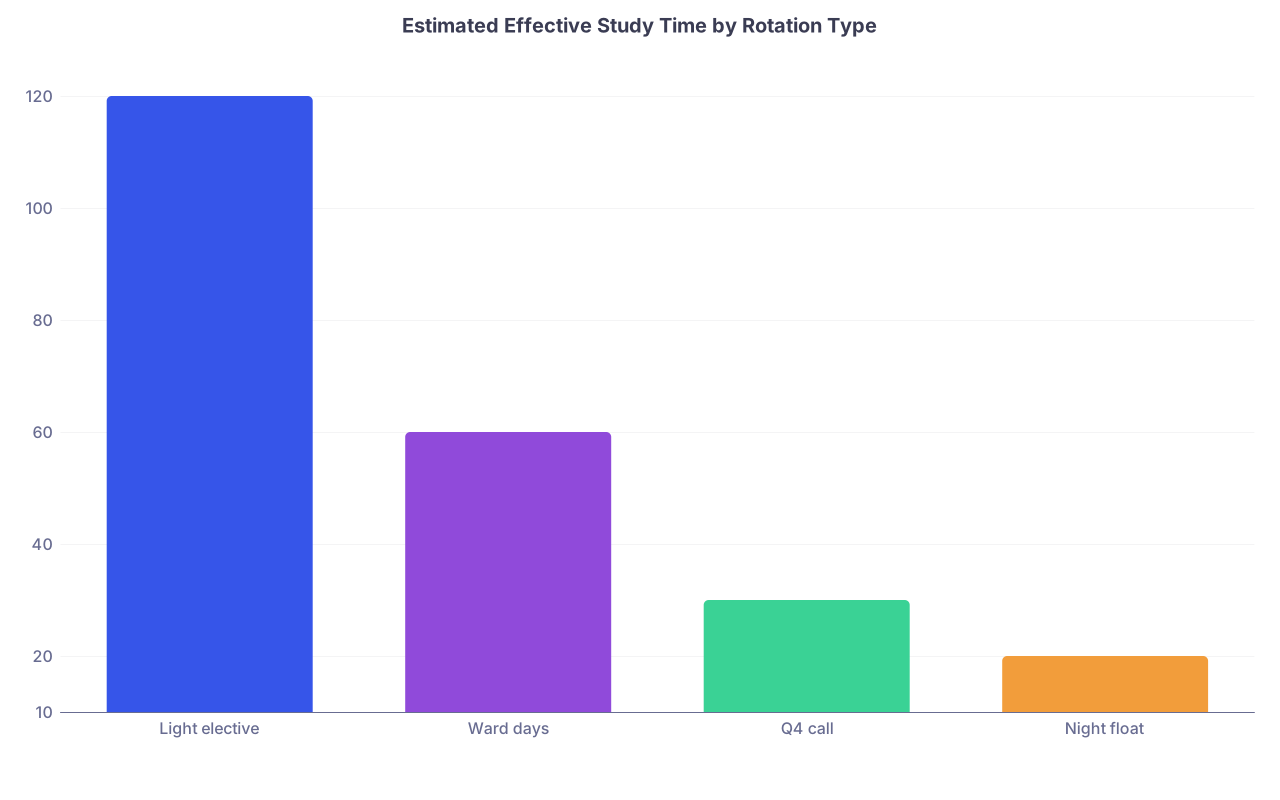
Here’s roughly how much productive “board brain” you’ll realistically have in different scenarios:
| Category | Value |
|---|---|
| Light elective | 120 |
| Ward days | 60 |
| Q4 call | 30 |
| Night float | 20 |
Think of those numbers as approximate minutes per day where you can actually absorb something new. Not hours. Minutes.
Night float isn’t a time‑management issue. It’s a cognitive‑capacity issue.
If you keep trying to force a “2–3 hours daily QBank” routine while you’re on nights, you’ll fail at it repeatedly, feel like garbage, and then stop trying altogether. That spiral is way more dangerous than simply scaling your expectations to match reality.
The unsexy truth: you don’t need perfect consistency, you need strategic inconsistency
Everyone talks about “consistency is key.” In residency, that ideal version of consistency is usually a fantasy.
The residents who survive boards during brutal rotations use something closer to strategic inconsistency:
You have:
- High‑yield phases (electives, lighter months)
- Survival phases (nights, heavy call)
And you treat them completely differently on purpose.

| Step | Description |
|---|---|
| Step 1 | Now |
| Step 2 | High yield phase |
| Step 3 | Survival phase |
| Step 4 | Full QBank blocks, reading, Anki |
| Step 5 | Micro sessions, maintain streak |
| Step 6 | Protect sleep and sanity |
| Step 7 | Exam ready |
| Step 8 | Light or Heavy rotation |
On light months, yes, you should absolutely grind more:
- Full 40‑60 question blocks on days off
- Timed practice tests on weekends
- Real incremental learning
On night float / heavy call, your goal changes:
- Not “get ahead”
- Just “don’t lose everything”
That means:
- Maybe 10–20 questions a day on post‑call days, or even just on your “better” nights
- Or 5 flashcards while you eat
- Or listening to one short audio review on the drive home
That shift alone cuts your self‑loathing in half. Because you’re suddenly “on plan,” not “failing” some unrealistic grind schedule.
Okay, but how do I study when I literally feel like a corpse?
This is the part where you’re thinking, “Yeah, but my nights are particularly terrible.” Fine. Let’s assume the worst.
On night float
Most people overestimate what they can do during the shift and underestimate what they can do around it.
Here’s a rough template that’s actually survivable:
Before night 1 (when you’re still semi‑human):
- 30–40 questions in the afternoon, max, reviewed quickly
- Then protect sleep like it’s an order from your PD
During nights:
- If your nights are slammed: drop expectations to almost zero
- Maybe 5–10 very short cards or 1–2 questions during quiet moments
- If it’s insanely busy, you’re allowed to do nothing. Seriously.
- If you have occasional lulls:
- 5–10 questions in “mini sprints,” not a full block
- Stop the second your brain fogs; forcing it beyond that is pointless
- If your nights are slammed: drop expectations to almost zero
Post‑call:
- Eat, shower, sleep.
- If you wake up semi‑functional and you want to, 10–20 untimed questions. If you don’t, you’re not failing. You’re prioritizing survival.
On a full week of nights, you might only get 80–120 decent questions done. That’s okay if your other months carry more of the load.
During q4 / q3 call months
Let’s say your call nights are wrecked and your post‑call days are zombie days.
Try this instead of the “I’ll study every day!” fantasy:
Pre‑call day:
- 20–40 questions, reviewed quickly
- That’s your main study day in the call cycle
On‑call:
- Nothing required
- If you randomly have a quiet lull, you can open a few rapid‑review notes, but zero guilt if you don’t
Post‑call:
- Sleep, food, shower
- If you wake up and feel vaguely alive, maybe 10–15 flashcards or 5–10 questions
- But again, that’s a bonus, not the standard
Basically: you front‑load on pre‑call days and accept that some days will be effectively lost to service.
“But I’m behind. Like, catastrophically behind.”
This is the voice that says: everyone else is already on their second pass of UWorld, and you’re still on block 5 with incomplete notes.
Here’s the harsh truth with a bit of hope baked in:
You probably are behind compared to the keeners who had light rotations and no kids and no major life stress. And that’s okay. Because most residency exams and Step 3 are not Step 1‑level bloodbaths (except some specialty boards, which are more intense, but the same logic still applies).
What matters most for not failing:
| Priority Level | Focus Area |
|---|---|
| 1 | Question bank exposure |
| 2 | Weak topic identification |
| 3 | Targeted high-yield review |
| 4 | Fancy extras (lectures, apps) |
You don’t need:
- Perfect notes
- Beautiful Anki decks
- To read every page of the big black review book
You do need:
- A critical mass of questions done
- Some repetition of high‑yield concepts
- Enough sleep that you aren’t hallucinating in the exam
If your exam is 3–4 months away and you’re only now starting to take it seriously, you’re not doomed. But you can’t keep pretending your future schedule is going to be magically easier. You need a realistic plan that includes night float, call, random disasters, and you occasionally just crashing.
Talking to your program without sounding “weak”
This is the part that scares people almost more than the exam: admitting to a PD or chief that you’re struggling to prep.
Here’s the trick: don’t frame it as “I can’t handle this.” Frame it as “I’m trying to be responsible about my exam and my performance as a resident.”
There are often levers you can pull:
- Scheduling a lighter elective or outpatient block in the 4–6 weeks before your exam
- Not stacking night float directly up against exam week
- Protecting a genuine study week or a couple of golden weekends
You can say something like:
“I’m concerned that with back‑to‑back night float and call, I might not be at my best for the boards. I want to represent the program well and pass on the first try. Is there any way to align a lighter rotation or some protected time closer to my exam date?”
That doesn’t make you sound lazy. That makes you sound like someone who understands that failing boards is a problem for them too.
And if your program is the type that shrugs and says “Figure it out, we all did it”? Then at least you know you can stop hoping they’ll save you. You’ll stop waiting for the perfect rotation and start planning based on reality.
What if I actually fail?
Let’s go straight into the darkest corner of your brain.
No sugarcoating: failing boards sucks. It’s stressful, humiliating, and logistically painful. It can delay licensure, fellowship applications, etc.
But. It is not an automatic career death sentence.
I’ve seen:
- Residents fail Step 3, retake it, and still get solid fellowships
- People fail their specialty in‑training exam multiple times, then pass the real boards after finally getting structured time and support
- PDs who were annoyed at a fail… then completely moved on once the person passed on the second try
Residency culture makes it feel like one strike and you’re out. That’s not how this works. It’s more like: one strike, now you have to have some uncomfortable conversations and a tighter plan. That’s it.
You’re scared of failing alone. Failing quietly and nobody knowing what to do with you. But if that happened, your program would actually have skin in the game. They’d have to help. They want their pass rates high.
So yes, avoid failing if you can. Absolutely. But don’t give it power like it’s an irreversible life sentence.
A more honest study blueprint when nights and call own you
If I had to boil this into something you can actually cling to when you’re exhausted, it’s this:
Stop pretending every month will be “ideal study month.”
Label the next 6–9 months as:- High yield (elective, clinic, lighter wards)
- Medium (regular inpatient)
- Survival (nights, brutal call)
Assign realistic question goals broken down by phase.
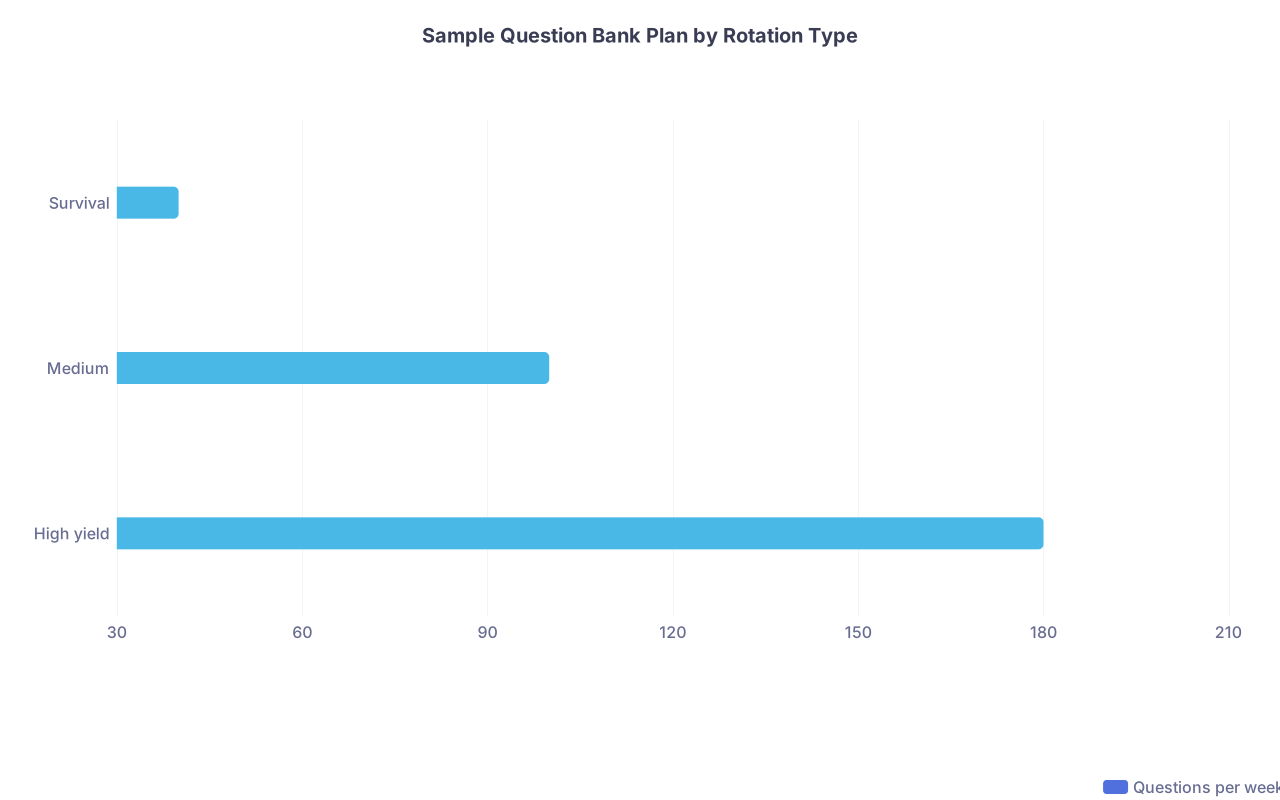
Example for a 2,000‑question QBank:
| Category | Questions per week |
|---|---|
| High yield | 180 |
| Medium | 100 |
| Survival | 40 |
That might look like:
- High yield months: ~180/week (e.g., 30/day, 6 days a week)
- Medium: ~100/week
- Survival: ~40/week (e.g., 10 on 4 post‑call/better days)
Sleep is part of your study plan. Not separate.
If you’re trading sleep for questions, you’re undercutting the memory part of studying. A half‑awake 20‑question block at 2 a.m. is not heroic; it’s almost useless.Pick one primary resource and stop resource‑hopping.
One QBank + one concise review (book/podcasts/short videos). That’s it. Nights and call will destroy any complex, 5‑resource system.
Quick reality check before you spiral again
You’re working in a system that demands:
- Service first
- Study second
- Wellness somewhere in the basement
Of course you’re scared boards will slip through the cracks. Of course you look at your co‑resident who somehow does 80 questions on a ward day and feel like a failure.
But your fear is louder than the data. Most residents, even the tired, messy, behind ones, do pass. Usually because, at some point, they stop trying to win the consistency Olympics and instead build a brutal, honest plan around their actual life.
You don’t need to be superhuman. You need to be strategic, forgiving of yourself on survival days, and ruthless about using your better days. That’s it.