
The most dangerous thing you’ll hear on the interview trail is not about call schedule or case volume. It’s “We’re a family.”
That one line, plus a handful of other code words, tells you more about a residency than their glossy website, their PowerPoint, and their Chief’s speech combined. The problem is, no one teaches you how to translate it. I’m going to.
I’ve sat in the back of those pre-interview dinners. I’ve heard program directors practice their “culture” speech before walking into the room. I’ve been in the post-interview debrief where faculty laugh about what they didn’t say out loud. You’re about to get the version they give each other, not the one they give you.
Let’s crack the code.
What “We’re a Family” Almost Always Really Means
Sometimes “we’re a family” is genuine. Often it’s not. The trick is knowing which version you’re looking at.
Here’s the translation faculty use when we’re talking among ourselves: “We’re a family” = “We expect a lot of emotional labor and loyalty, and we may or may not respect boundaries.”
There are three common flavors.
Version 1: The Healthy Family (Rare, But Real)
This is what every program claims to be.
Signs it’s genuine:
- Residents joke with each other in front of faculty without looking scared.
- When someone mentions a bad outcome or a rough night, the room doesn’t go weirdly silent.
- Seniors help juniors at sign-out without making it a performance for you.
At these places, “family” means:
- You can say “I’m drowning” and someone will actually help instead of telling you to “embrace the grind.”
- Faculty know residents’ lives outside work—who’s married, who has kids, who’s caring for a sick parent—and quietly adjust things when they can.
- When a resident has a serious issue (illness, pregnancy complication, mental health crisis), they rally instead of punish.
How you spot it: ask a resident, “What do you think this program does better than other places?” If they say, “Honestly, I feel like people had my back when X happened” and it sounds specific, not rehearsed, you might’ve found the real thing.
Version 2: The Smothering Family
This is more common than anyone admits.
In these programs, “We’re a family” really means “We are your only acceptable priority.”
Typical behind-the-scenes comments:
- “If they’re serious about this program, we’ll know it. They’ll show up to everything.”
- “We’re not just a job. We’re a lifestyle.”
Watch for:
- Residents who insist “we do everything together” and can’t name a single hobby or friend outside the program.
- Social events that feel mandatory, even though everyone says “optional.”
- Faculty bragging that their residents are “so committed, they’re always here” and saying it like that’s normal, not a red flag.
You’ll hear lines like:
- “We really spend all our time together.”
- “No one ever wants to go home after shift.”
- “We don’t really need wellness days because hanging out is our wellness.”
Translation: They expect total immersion and emotional availability. If you have a spouse, kids, or just a life, you’ll be seen as less committed.
Version 3: The Dysfunctional Family (The One No One Warns You About)
This is the one PDs try to patch with forced warmth and slogans.
What it usually covers:
- Chronic understaffing.
- Toxic attendings who never get disciplined.
- Residents turning on each other because there’s no safe way to be angry at the system.
The “family” talk shows up as:
- Overcompensating, almost desperate language: “We’re sooo close,” “We’re really tight knit,” “No one ever leaves.”
- Odd defensiveness if you ask about conflict: “We don’t really have issues like that here… we’re more of a family.”
You’ll see:
- One resident doing all the talking while others sit rigid and quiet.
- Weird tension when someone mentions administration.
- People glance at each other before answering your questions.
If the only people who parrot “we’re a family” are the Chief and the PD, and the interns look like they’re trying not to roll their eyes, believe the interns.
The Other Big Code Words You’ll Hear on the Trail
Let me be blunt: PDs are not stupid. They know what applicants want to hear. So they’ve developed stock phrases that sound benign but are doing a ton of work in the background.
Here’s the decoder ring.
“We’re Resident-Driven” / “Resident-Led”
On the surface: “We trust our residents with autonomy.”
What it often really means: “We have too few attendings, you’ll run the hospital at 2 a.m., and if something goes sideways, it will be ‘a good learning opportunity.’”
You’ll hear this a lot in:
- Community programs with thin attending coverage.
- Surgical or EM programs selling “early hands-on experience.”
- Any place struggling to recruit faculty.
Behind closed doors, I’ve heard:
- “Our residents are like junior attendings by second year.” (Said proudly. Reality: they’re unsupervised.)
- “We expect them to act like colleagues.” (Translation: attendings don’t want to be called at night.)
How to test it:
Ask a resident: “Tell me about the last time you felt too autonomous.”
If they hesitate, look down, and then give you a vague answer, you’ve hit something real.
True healthy autonomy has a partner phrase: “with excellent backup.” If no one ever mentions backup, that’s not autonomy; that’s neglect.
“We’re A Hidden Gem”
Sometimes this is true. More often, it’s branding for a program that knows it doesn’t look competitive on paper.
Real “hidden gem”:
- Strong case volume.
- Solid fellowship placement.
- Faculty who trained at legitimate places and came back intentionally.
Fake “hidden gem”:
- Residents telling you “people just don’t know about us” but can’t explain any actual strengths beyond “we see a lot of pathology.”
- A PD who keeps emphasizing “you’ll get tons of experience” but never shows fellowship match lists or actual data.
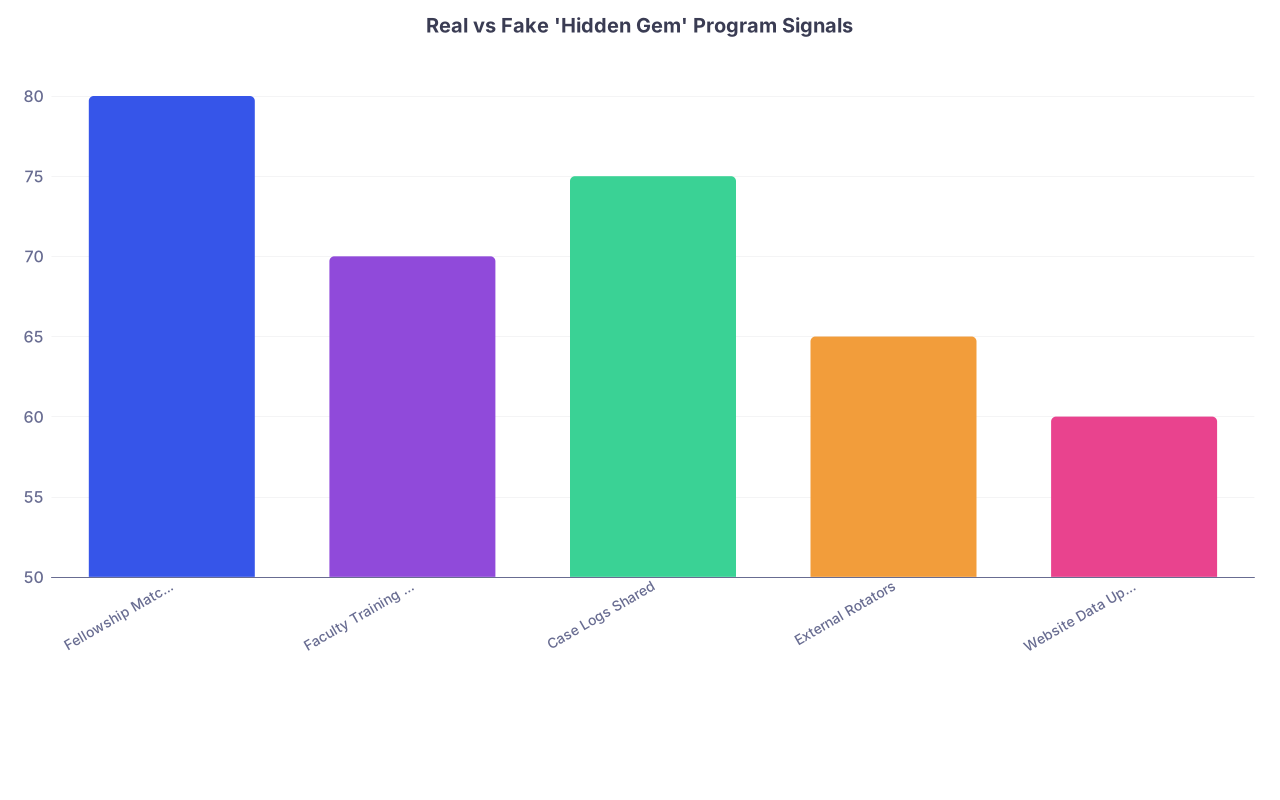
| Category | Value |
|---|---|
| Fellowship Match Transparency | 80 |
| Faculty Training Pedigree | 70 |
| Case Logs Shared | 75 |
| External Rotators | 65 |
| Website Data Updated | 60 |
Behind the scenes, when PDs call each other, “hidden gem” often means: “We’re not competitive on Step scores, but we’re not malignant. Send us people who’ll work.”
If their pitch is “We’re a hidden gem” but their residents are average, their fellowship matches are local/community only, and they can’t show you numbers, it’s not hidden. It’s just a gem to them because you’ll keep the place running.
“We Emphasize Work-Life Balance”
This phrase is weaponized in two directions. Both should make you listen very carefully.
Version 1: “We were on ACGME probation once and we’re still paranoid.”
These programs have been burned before and over-corrected:
- Tons of checkboxes, duty-hour policing, sign-out rituals.
- Residents leaving right at hour 80 whether or not they’re drowning.
- Faculty quietly resenting residents for “not staying to finish the work.”
You’ll hear:
- “We’re very strict about duty hours.”
- “We really protect your time.”
Watch the residents’ faces when those words come out. If you see even a hint of an eye-roll, it probably means the culture is: “Call us if you’re over 80, but god help you if you do.”
Version 2: “We are not academically ambitious.”
Code for: “We’re chill, you won’t be pushed, we know you’re tired.”
What it really means:
- Minimal research.
- No one cares about QI unless the ACGME forces it.
- Attendings who do their job then go home, and that’s it.
This is attractive to burned-out MS4s. Totally understandable. But know what you’re trading: competitive fellowships, letters from big names, advanced skills. The trick is figuring out whether you actually need those things.
Ask a hard question: “If I wanted a competitive fellowship (cards, GI, heme-onc, trauma, etc.), how many residents in the last 3 years have done that from here?”
If they talk around it instead of answering directly, they’re selling relaxation, not opportunity.
“We Support Diverse Career Paths”
Translation depends on context.
Sometimes it’s real:
- They have residents doing hospitalist, fellowship, academics, community, maybe admin/leadership.
- Faculty actually mentor into these different tracks.
Sometimes it’s cover for: “We don’t have a strong identity as a program, so we’re hedging.”
You’ll recognize the latter because:
- No one can name alumni who’ve done anything distinctive.
- “Diverse career paths” is paired with a vague “residents do all sorts of things” but no specifics.
If it’s real, they can say:
- “X is at MGH for fellowship.”
- “Y stayed as core faculty.”
- “Z is in rural practice and loves it.”
Push them: “Who’s the last graduate who did something unusual that you’re proud of?” If they can’t answer, it’s marketing copy, not reality.
“We’re Like a Community Hospital with Tertiary Care Pathology”
You’ll hear this line a lot in mid-size programs pretending they can give you “the best of both worlds.”
What faculty mean when we say this to each other: “We’re trying to look big enough to be serious, small enough to feel friendly, and hoping no one questions the cracks in between.”
The cracks:
- Faculty stretched thin trying to staff ICU, ED, and specialty services.
- Hit-or-miss subspecialty exposure.
- Fellowship applications that rely heavily on a couple of overworked “big name” letter writers.
Listen for:
- “We rotate at three different hospitals.” That can be good or terrible. If residents need Google Maps to tell you where they’re going tomorrow, it’s chaos.
- “You’ll see everything here.” Often true. But who supervises that “everything”? Two attendings and a locums? Or a cohesive faculty actually invested in teaching?
Pay attention to how consistently residents describe the different sites. If they say, “The VA is great, County is rough but good learning, Private is… well, it depends,” believe that.
“We’re Growing” / “We’re Expanding”
This line scares experienced faculty more than it scares applicants. You should be at least cautious.
Behind scenes, “we’re expanding” very often means:
- They added positions before adding infrastructure.
- They’re trying to cover a new hospital/ICU/ED with the same number of attendings.
- They’re chasing GME money.
| Signal | Red Flag | Green Flag |
|---|---|---|
| New Positions | +6–8 at once | +1–2 over years |
| Faculty Hires | 0–1 new | Several, named |
| New Rotations | Vague | Clearly structured |
| Housing/Space | No mention | Dedicated resident area |
| Chief Bandwidth | Overwhelmed | Protected time |
Questions no one asks, but should:
- “How many new attending hires have you made to support the increased resident numbers?”
- “What did you stop doing to make room for growth?”
If they can’t point to concrete changes—new clinics, new reading rooms, new ICU, added faculty—you’re the stopgap, not the beneficiary.
How PDs Actually Talk When You’re Not in the Room
I’ll give you a taste of the language used in rank meetings. It will help you read between the lines on interview day.
“Seems like a good fit for our culture.”
Often code for: “They’ll tolerate our workload and won’t complain.”“Very independent. Will do well here.”
Translation: “We’re going to leave them alone a lot, and we think they won’t collapse.”“Might struggle with our volume.”
Translation: “We have no intention of changing our system; we’ll just blame the resident.”“They asked a lot of questions about wellness.”
Tone matters here. Said neutrally, fine. Said with an edge? It means, “We think they might push back when things are unreasonable.”
What you need to understand: the same coded thinking shows up on interview day, just dressed up a little. When they say “We want residents who are all-in,” that often means “We like people who won’t push boundaries.”
How to Test Whether the Culture Matches the Words
Stop listening to the PD’s speech like it’s the State of the Union. The truth lives in the inconsistencies.
Here’s how people inside programs quietly size up whether a place is what it says it is.
Watch the Residents When Faculty Speak
This is the single most reliable data point.
When the PD says “We’re very supportive”:
- Do residents subtly nod because that’s actually their lived experience?
- Or do they stare at the table, expressionless, like hostages?
When someone mentions duty hours:
- Do residents laugh in a “yeah, they police us too much” way?
- Or do they go still and give you bland rehearsed lines?
You’re not looking for one person. You’re looking for the pattern. In a healthy program, you see a spectrum of reactions, but no one looks afraid.
Ask for an Example, Not a Philosophy
Everyone has learned the buzzwords: wellness, support, autonomy, culture.
Your job is to force them into specifics. That’s where programs crack.
Ask:
- “Tell me about a time a resident was really struggling. What did the program do?”
- “Tell me about a resident who didn’t fit well here. What happened?”
Then shut up and wait.
If answers sound like:
- “We… worked with them.”
“We’re always supportive.”
“We have resources.”
They’re reciting lines.
If you get:
- “We pulled them off nights for a block.”
“We extended their training but protected them from the worst of the schedule.”
“We ultimately helped them transition to a smaller program and stayed in touch.”
That’s real. It’s messy and honest and specific.
Notice Who You Actually Spend Time With
Look at your interview schedule. Programs choose who you see very deliberately.
- All your resident time is with Chiefs and PGY-3s? They’re controlling the narrative.
- No one lets you hang with interns? They’re hiding how rough the transition is.
- A program that’s genuinely proud of its culture will throw you into the workroom and disappear. They want you to see the unfiltered version.

| Step | Description |
|---|---|
| Step 1 | Interview Schedule |
| Step 2 | Controlled Narrative |
| Step 3 | More Honest |
| Step 4 | Dig Deeper |
| Step 5 | Ask Hard Questions |
| Step 6 | Resident Access |
Programs terrified of being exposed keep you in conference rooms, on curated tours, with pre-briefed residents.
Take a Hard Look at How They Talk About Graduates
“Alumni success” is one of the few things that is almost impossible to fake.
Ask:
- “Of your residents who start here, how many actually graduate from this program?”
- “Where did your last 3 classes go, roughly? Fellowship vs hospitalist vs other?”
Then: “What happens to the ones who leave?”
Healthy answer: “We’ve had a few who realized this wasn’t the right fit or needed to be closer to family. We worked with them to find new positions.”
Toxic answer (watch the tone): “We have had a couple who… struggled.” Followed by a weird pause and no detail. That usually means things ended badly and no one wants to admit how.
The Trap of Believing You Can “Fix It From the Inside”
Let me address the heroic streak a lot of you have.
I’ve watched countless MS4s match into programs with obvious red flags, convinced they’ll be the ones to “push for change” or “set boundaries” or “raise concerns.”
Here’s the truth you will not like: as an intern, the system will eat you before you change it.
By the time you’re senior enough and secure enough to shape the program:
- Your priorities will be survival and graduation.
- Your social capital will depend on not making too much noise.
- You’ll be mentoring juniors and applying for jobs, not redesigning call schedules.
Change in residency culture almost always comes from:
- A new PD with institutional backing.
- A major ACGME citation.
- Or a catastrophic event that forces admin to finally act.
Not from the heroic PGY-2.
So when you hear any of these phrases—“we’re a family,” “we’re growing,” “we’re resident-driven”—do not translate them as, “Hmm, I’ll come fix that.” Translate them as, “Can I live with the current reality for 3–7 years?”
That’s the real question.
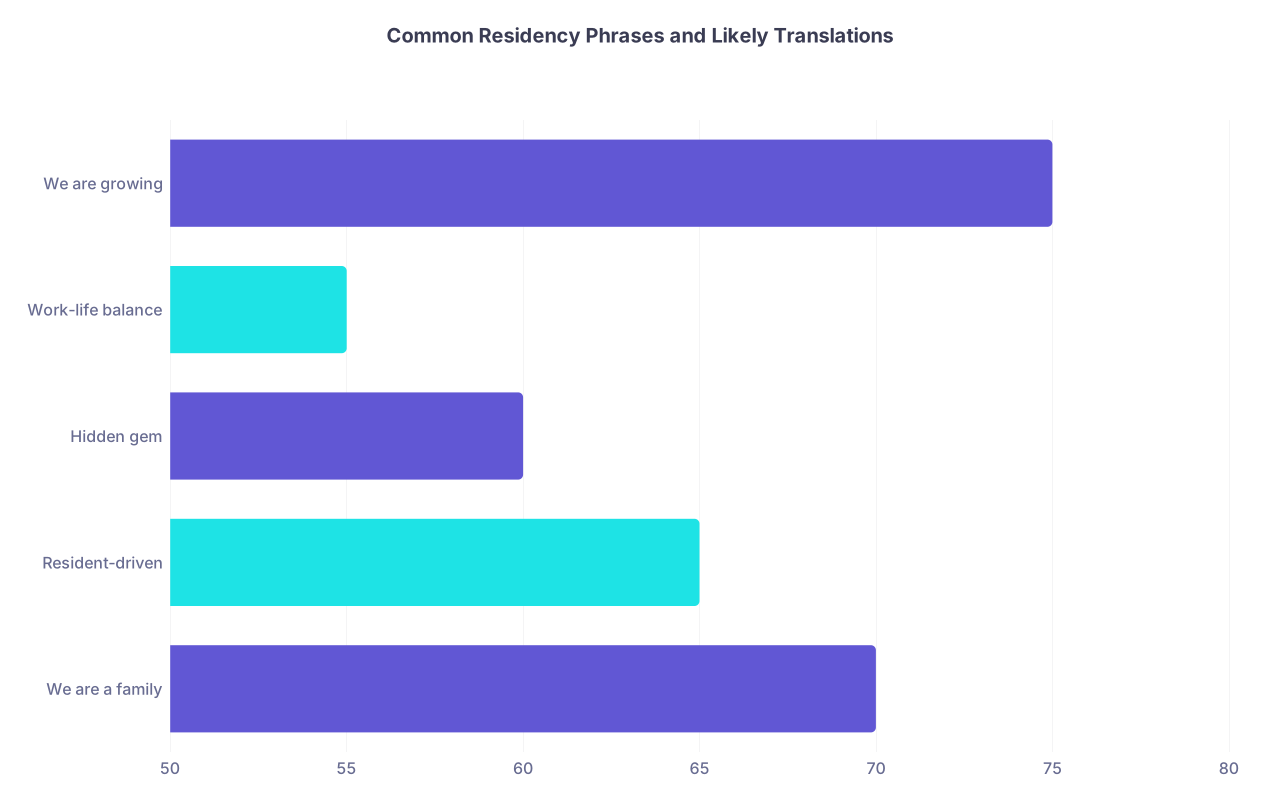
| Category | Value |
|---|---|
| We are a family | 70 |
| Resident-driven | 65 |
| Hidden gem | 60 |
| Work-life balance | 55 |
| We are growing | 75 |
You’re not just picking a program. You’re picking which set of problems you’re willing to own.
Every place has them. The smart move is not to hunt for a unicorn with no issues. It’s to learn the language well enough that when someone smiles and tells you “we’re a family,” you can smile back, nod—and actually know what they just told you.
Years from now, you won’t remember every tour or every lunch spread. You’ll remember the nights you felt truly alone… or the nights someone quietly showed up and said, “I’ve got you.” The code words on interview day are your only preview of which version you’re signing up for. Use them wisely.