

It’s 4:30 pm. Rounds are over. Everyone scattered back to their notes, pagers, and Starbucks. You’re alone in the stairwell replaying every second of the last four hours.
“Say something. Anything. Present a paper. Ask a question.”
And you… didn’t.
You stood at the back of the team. You followed. You wrote notes when they told you to. You checked the chart when asked. You smiled politely. You maybe offered one or two suggestions the whole week. And now your brain has latched onto one terrifying conclusion:
“I was too quiet. I wasted my US clinical experience. Programs will see this and just… toss my application.”
Let me say this directly:
No, you did not automatically waste your US clinical experience by being quiet on rounds.
But I also won’t sugarcoat it: if you stay in that same mode for every USCE, you’re leaving a lot on the table.
Let’s pull this apart properly, because your brain is catastrophizing and you need actual signal, not just panic noise.
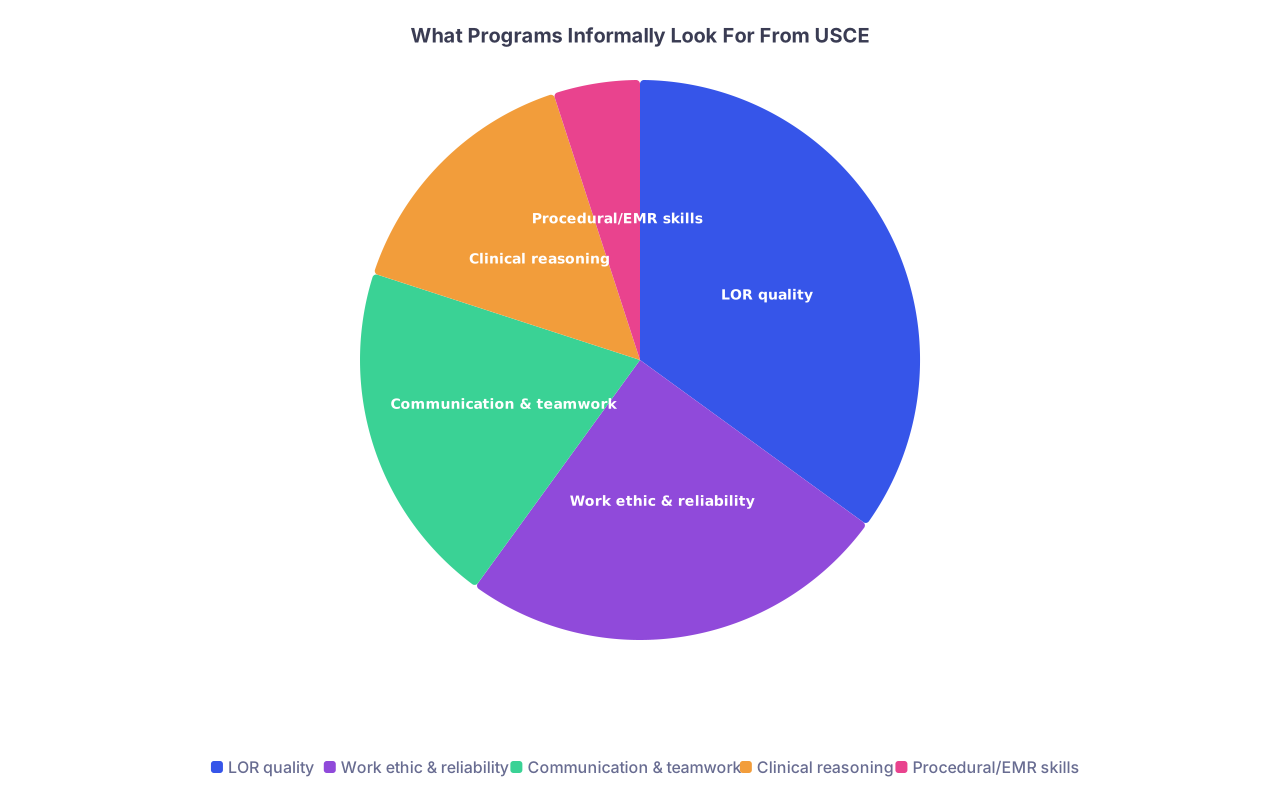
What Programs Actually Care About From Your USCE
| Category | Value |
|---|---|
| LOR quality | 35 |
| Work ethic & reliability | 25 |
| Communication & teamwork | 20 |
| Clinical reasoning | 15 |
| Procedural/EMR skills | 5 |
Programs are not sitting there asking, “Did this IMG dominate rounds with brilliant speeches?” That fantasy is in your head, not in their selection meetings.
From your US clinical experience, especially as an IMG, they’re mostly trying to answer:
- Can this person function on a US team without being a burden?
- Do they understand basic hospital flow, EMR, notes, calling consults, etc.?
- Are they safe? Humble? Teachable?
- Would I trust this person with my patients at 2 am?
The main way they get those answers is not your self-assessment. It’s your letters.
Attending in their head: “Ok, I have an IMG from a school I don’t know. What do I have? Oh, a letter from Dr. X, who I know is not easy to impress. It says they showed up early, followed through, were respectful, and improved a lot. Good.”
Notice the missing phrases:
“Dominated rounds.”
“Talked the most.”
“Answered everything before residents.”
That’s not what they need.
I’ve seen glowing letters for students who were quiet but reliable: showed up early, asked thoughtful questions one-on-one, took feedback seriously, never disappeared, never argued. Those people matched. Repeatedly.
You’re overvaluing volume and undervaluing consistency.
Being Quiet vs Being Invisible: There’s a Difference
Here’s the uncomfortable middle ground: you don’t have to be loud, but being a ghost is a problem.
Let me draw a line between “quiet” and “invisible.”
Quiet looks like:
- You answer when spoken to, but you don’t volunteer much.
- You’re listening, taking notes, and trying to follow the plan.
- You ask questions in more private settings: in the workroom, pre-rounds, or at the end of the day.
- You do what you’re asked without needing constant reminders.
Invisible looks like:
- You stay at the back so much that no one remembers your name by week two.
- You rarely make eye contact. You never ask anything. Not even, “Can I help with something?”
- You’re physically present but mentally checked out or terrified to the point of paralysis.
- On eval day, the attending is like: “Who was that again? The quiet one… uh… acceptable performance.”
Quiet is fine.
Invisible kills your letter.
If your “quiet” was actually “I did my work, I followed patients, I was prepared, I just didn’t speak up a lot on rounds,” that’s not fatal. That’s actually what a lot of IMGs do on their first USCE.
The real question is: did you build any relationship with your residents or the attending? Did anyone see you as a person instead of just “the IMG observer”?
If yes, you’re probably in better shape than your impostor-syndrome brain is telling you.
Did I Waste This Rotation? Honest Ways to Judge
Let’s be brutally practical. Ask yourself these things:
Did I show up on time every day, prepared for my patients?
If the answer is yes, you already avoided the biggest red flag: unreliability. Programs will forgive “shy.” They do not forgive “late and disorganized.”Did I know my patients?
Even if you didn’t talk much, could you have answered: “What’s the plan today?” “What were their vitals overnight?” “Any new labs?” If yes, that’s real learning and real contribution, even if it wasn’t flashy.Did I ever ask for feedback, or ask how I could help?
One simple sentence like, “Is there anything else I can do for the team today?” is enough to register you as engaged. If you did that, you weren’t invisible.Did anyone offer you a letter of recommendation?
This is big. Attendings don’t randomly offer letters to useless students. If someone said, “I’d be happy to write you a letter,” your rotation was not wasted. They saw enough to vouch for you.Did I improve between day 1 and day X?
The trajectory matters more than where you started. Many USCE supervisors love “quiet but clearly growing.” It’s much better than “confident but not listening.”
If your honest answers are mostly “yes,” then no, you did not waste it. You may not have squeezed every drop out of it, but you didn’t burn it either.
How “Quiet” Plays Out in Letters
Here’s how this often looks in real life.
You: “I was useless. I barely talked. I froze when they asked me about management of DKA.”
The letter six weeks later:
“Dr. ___ was a quiet but diligent student. They consistently arrived early, knew their patients well, and were receptive to feedback. Over the course of the rotation, I observed steady improvement in their clinical reasoning and comfort with US hospital systems. I believe they will be a hardworking and reliable resident.”
That’s not a bad letter. That’s actually a usable letter for many IMGs.
Does it sound like you’re the next PD at MGH? No.
Does it say “do not rank”? Also no.
The letters that hurt are the vague, two-paragraph ones:
“___ completed a four-week observership in our department. They were present and professional. I wish them well in their future endeavors.”
Translation: they barely remember you.
That often correlates with “invisible,” not just “quiet.”
If you’re unsure where you fall, here’s the harsh test:
If you emailed your attending right now, would they actually remember you and a specific patient or moment with you? If yes, you made enough of a mark to work with.
You’re an IMG: You’re Allowed a Learning Curve

Let’s be real. You were not just dealing with “rounds.” You were dealing with:
- A new healthcare system
- New EMR
- Rounded English at native-speed with acronyms thrown like grenades
- Fear of your visa, your future, your Step scores, your family’s expectations
US MD students are nervous too, but you had an extra layer: “If I mess this up, will they say IMGs are bad?”
A lot of IMGs respond to that pressure by shrinking. They wait until they’re 100% sure to say anything. Which means they barely say anything.
Programs know this. Attendings know this. They’ve seen it for years. A timid start from an IMG on their first USCE is not disqualifying. It’s standard.
The real failure isn’t “I was quiet the first few days.”
The real failure is “I stayed the same for four weeks and never once pushed myself even 10% out of that comfort zone.”
If you already finished the rotation and that’s what happened, fine. Own it. Learn from it. Then don’t repeat it on the next one.
What You Can Still Do After a “Too Quiet” Rotation
You can’t go back in time and suddenly transform into that vocal, fearless student you imagine everyone else is. But you’re not as stuck as you think.
Here’s what you can still do now.
1. Email Your Attending (Yes, Really)
Send a short, respectful email:
- Thank them for the opportunity.
- Briefly mention what you learned or how it helped.
- Ask if they’d be comfortable writing you a letter if needed, if you genuinely think they saw enough of you.
Something like:
“Dear Dr. X,
I wanted to thank you again for the opportunity to rotate on your service in November. I learned a lot about managing decompensated heart failure and felt especially grateful for your teaching on interpreting volume status at the bedside.
As I’m preparing my residency applications in Internal Medicine, I’m hoping to obtain letters from attendings who’ve observed my clinical work in the US. If you feel you know my performance well enough, I would be very grateful for a letter of recommendation. If not, I completely understand and still appreciate the chance to learn from you.”
If they say yes and you get a decent letter, that rotation wasn’t wasted. It literally converted into application capital.
2. Reframe the Experience in Your Application
You’re allowed to talk about growth in your personal statement or ERAS descriptions. Just don’t throw yourself under the bus.
Bad version:
“I was very shy and didn’t speak on rounds and regret wasting the opportunity.”
Better version:
“Initially, I was hesitant to speak up on rounds as I adjusted to the pace and structure of a US teaching hospital. Over the course of the rotation, I became more comfortable presenting patients, clarifying plans with the residents, and asking questions about management decisions. This experience pushed me to be more proactive in my subsequent rotations and taught me how to contribute to a team even while still learning the system.”
You admit the truth without branding yourself as “the useless quiet one forever.”
3. Upgrade Your Next Rotation Strategy
You get another shot. Probably multiple.
For the next USCE, go in with a concrete plan, not just “I’ll try to talk more.” That’s vague and will collapse on day one when the first attending grills you.

| Step | Description |
|---|---|
| Step 1 | Start New Rotation |
| Step 2 | Meet Senior Resident |
| Step 3 | Ask Expectations |
| Step 4 | Take 1-2 Patients |
| Step 5 | Pre-round Independently |
| Step 6 | Speak Once per Patient on Rounds |
| Step 7 | Ask Feedback End of Week |
| Step 8 | Adjust and Improve |
Even one sentence per patient per day is progress. “Overnight they had X, so today I think Y is the main priority.” That’s it. You don’t have to give a grand rounds lecture.
How Much Does One “Meh” Rotation Really Matter?
Here’s the part your brain refuses to believe: your application is not decided by one rotation.
Programs look at a pattern. Clinical experiences, letters, Step scores, personal statement, interview. No one is saying, “Well, they were quiet on that one IM rotation, so reject.”
If you have:
- 2–3 USCEs
- 2–3 letters, including at least one solid US letter
- A clear story in your personal statement
- Step scores that at least meet their bar
Then one lower-yield rotation doesn’t break you.
Where you get into trouble is:
Only 1 USCE + lukewarm letter + generic personal statement + borderline scores. Then yeah, the quietness hurts more because you needed that one rotation to sing for you.
But even then, the solution is not “spiral and hate yourself.” The solution is: get another rotation and approach it deliberately.
Comparing “Ideal” vs “Quiet but Solid” USCE Outcomes
| Profile | Rounds Style | Letter Quality | Impact on Match Chances |
|---|---|---|---|
| Ideal IMG Rotator | Confident, engaged | Strong, detailed LOR | Clearly positive |
| Quiet but Prepared IMG | Low-volume, steady | Moderate–good LOR | Neutral to mildly positive |
| Invisible IMG | Barely noticed | Vague, short LOR | Neutral to mildly negative |
You’re terrified you’re in category 3.
Most likely you’re actually in category 2.
And category 2 is not a death sentence.
You Didn’t Waste It. You Just Didn’t Maximize It. That’s Different.
Your brain is binary: either I was phenomenal or I wasted it. That’s not how real life works.
Most IMGs don’t “crush” their first USCE. They survive it. They figure out what “rounding” actually is, how to write notes, how to not get lost in the hospital. Then they improve on the second one.
Did you learn anything? EMR clicks, progress notes, American bedside manner, how to not panic when pagers beep nonstop? Then the experience already changed you. That growth will bleed into every future rotation and your intern year.
You didn’t waste it. You just underused it. And now you know.
FAQs
1. I hardly spoke on rounds, but I always showed up and did my notes. Is that enough?
Enough to not be a red flag? Usually yes. Enough to make you stand out in a competitive pile? Probably not. But “not standing out” is still a lot better than “standing out badly.” If your attendance, preparation, and attitude were solid, you have a usable experience—especially if it led to a letter.
2. My attending seemed distant. Does that automatically mean I’ll get a bad letter?
No. Some attendings are just like that with everyone—US students included. What matters more is whether they saw you consistently doing your work and whether you followed through on what they asked. I’ve seen “distant” attendings write surprisingly strong letters when a student was dependable and low-drama, even if there weren’t warm fuzzy moments.
3. Should I even ask for a letter if I feel I was too quiet?
If you were reliable, prepared, and not a problem? Yes, you should ask. Worst case, they say they don’t feel they know you well enough. That’s an awkward email response but not fatal. Best case, they say yes and you get a letter that’s better than what you’re imagining.
4. How do I fix this on my next rotation without pretending to be someone I’m not?
Aim for “slightly more visible,” not “totally different personality.” Set tiny goals: present your patients clearly, volunteer to check on something, ask one question a day, ask for feedback once a week. You don’t have to become the loudest person. You just need to be clearly engaged.
5. Will interviewers grill me about specific USCEs if I was quiet?
They’re more likely to ask general questions: “Tell me about your US clinical experience,” “What did you learn from working in a US hospital?” If you can describe what you learned, how you grew, and maybe a specific patient story, they won’t know—or care—that you were quieter than you wanted to be.
6. I feel like I ruined my chance at matching because of this rotation. Is that realistic?
No. One rotation almost never “ruins” someone’s match. Patterns ruin matches: no growth, no letters, unprofessional behavior repeated across sites. A single under-optimized USCE is common and survivable. Use it as a lesson, not a verdict.
Key points, so your brain has something solid to hold on to:
- Being quiet on rounds does not automatically mean your USCE was wasted or your letter will be bad.
- The real danger is being invisible, not simply shy—if you were reliable and prepared, you’re likely okay.
- You can still recover: ask for a letter, frame your growth honestly in your application, and approach your next rotation with a concrete plan to be just a bit more visible.


