Are Thank‑You Notes Required? What Programs Actually Care About
Did you really just blow your shot at a top residency because you forgot to send a thank‑you email?
Let me be direct: the residency world is obsessed with rituals that make anxious applicants feel “productive” and program directors feel… nothing at all. Thank‑you notes sit right at the top of that list.
People talk about them like they’re Step 1 for post‑interview etiquette. “Always send one.” “Send a personalized one to each interviewer.” “Follow up or they’ll think you’re not interested.” You’ll hear this from fourth‑years, advisors, random Reddit strangers, sometimes even faculty who haven’t actually looked at a rank list in ten years.
So here’s the uncomfortable question: do thank‑you notes actually matter for your rank, or are you just stress‑writing emails at midnight for no measurable gain?
Let’s dismantle this cleanly.
What the Data (and PDs) Actually Say About Thank‑You Notes
Programs have told you what they think. People just prefer the myths.
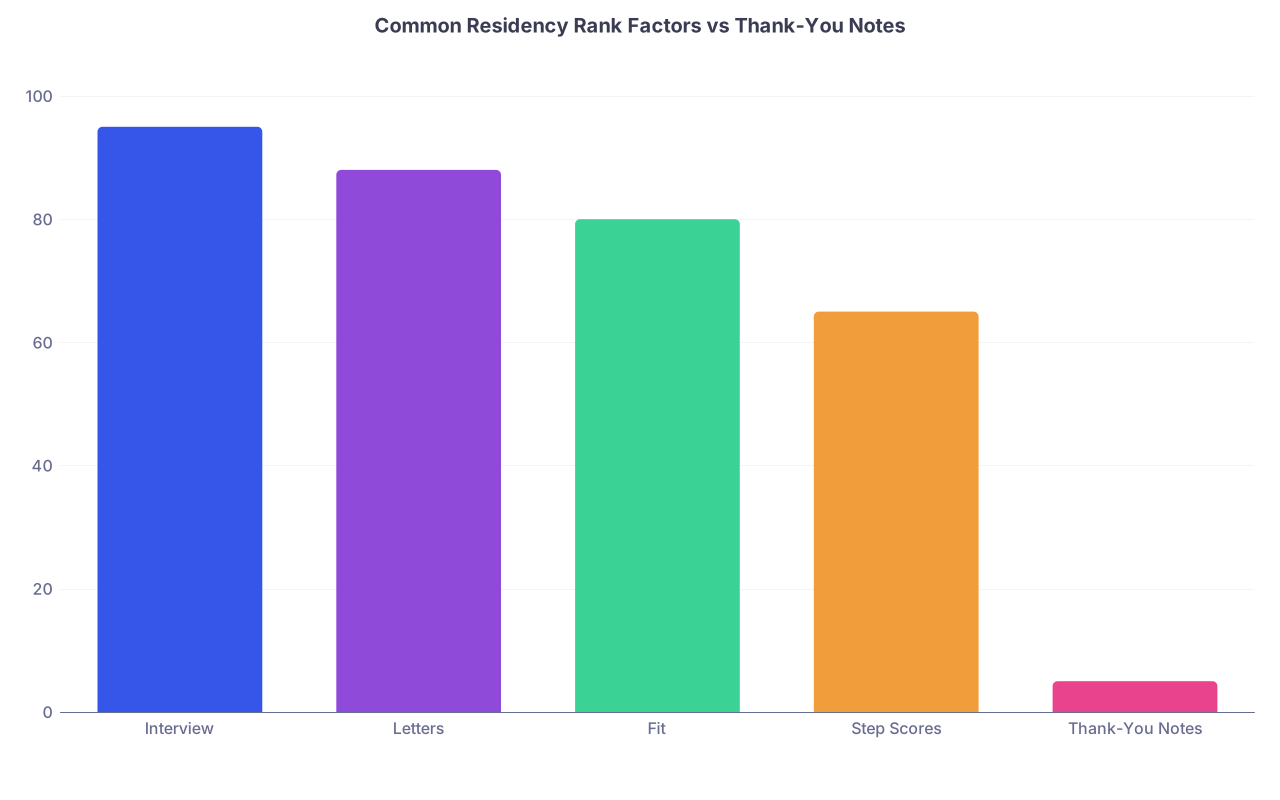
Look at surveys from NRMP, FREIDA data summaries, and specialty‑specific program director surveys over the last decade. When PDs are asked what influences their rank list decisions, you see the same top elements over and over: interview performance, letters of recommendation, perceived “fit,” clinical grades, sometimes Step scores (depending on specialty).
Thank‑you notes? They don’t even crack the serious categories.
| Category | Value |
|---|---|
| Interview | 95 |
| Letters | 88 |
| Fit | 80 |
| Step Scores | 65 |
| Thank-You Notes | 5 |
Those numbers here are representative, but they mirror the general pattern in published PD surveys: interview and letters are nearly universal; thank‑you notes are essentially statistical noise.
I’ve sat in rank meetings. The conversations sound like this:
- “She was fantastic. Good questions, good rotations, everyone liked her.”
- “His letters are stellar. Strong chair letter, research mentor raving.”
- “Great on paper, but the interview was flat. Maybe lower on the list.”
What you do not hear is:
“Her thank‑you email really changed my mind.”
“Let’s move him up because he wrote a very professional note.”
If a program is already excited about you, a thank‑you note doesn’t make you more accepted. If a program wasn’t impressed, a thank‑you note doesn’t resurrect you.
So is it all pointless?
Not entirely. But it helps in a different way than students imagine.
A decent thank‑you note can:
- Make you harder to forget if they were already leaning positive.
- Keep you on someone’s mental radar when they’re trying to recall who was who a week later.
- Smooth the social fabric, especially at smaller programs where people actually read them.
But note the order: performance first, paper file second, vibes third… and somewhere far down the list, etiquette.
The myth is “Thank‑you notes are required.”
Reality: They’re optional, marginal, and way less important than almost everything else.
The Only Three Ways Thank‑You Notes Can Actually Matter
Let’s be surgical about this. There are really three situations where your thank‑you behavior can have any real-world effect.
1. When programs explicitly tell you not to send them
Some programs now state on their website or during interview day: “Please do not send thank‑you notes; they will not be read.” Or they may say, “Please send all communication through the program coordinator only.”
In that setting, blasting out thank‑you emails to every faculty member is not “eager.” It’s “cannot follow instructions.”
At the very least, it signals you didn’t pay attention. At worst, it makes you look like you think the rules don’t apply to you. Neither helps you.
So in that specific scenario:
- Not sending notes = following directions.
- Sending them anyway = small, negative signal.
No, they’re probably not dropping you 20 spots over it. But when all they have otherwise is a generic “seems fine” impression, you do not want the only distinct thing about you to be “ignored what we said.”
2. When your note is clumsy, needy, or unethical
Bad thank‑you notes can hurt you more than no note.
I’ve seen emails that read like this:
“This program is my clear #1 and I will rank you first above all others. I love [program name] more than any other place I have interviewed.”
Then we see the same person send the same “you’re my #1” line to three different programs. Faculty talk. Coordinators talk more. It gets around.
Or this favorite:
“If you rank me highly, you will not regret it.”
That one got read out loud in the workroom. Not kindly.
Red flags in thank‑you notes:
- Overpromising or misleading “you’re my #1” statements
- Asking for special consideration or updates that cross into begging
- Critiquing the program or trying to “negotiate” anything
- Sounding like a template you barely edited with the wrong names
In other words, a thank‑you note doesn’t usually help you. But a desperate, manipulative, or obviously copy‑pasted one can definitely hurt you.
3. When you’re in a true tie with someone else
Here’s the one sliver of reality where thank‑you notes might tilt something.
Occasionally, at the very bottom or margins of a rank list, two applicants look almost identical: similar scores, similar interviews, nobody has a strong opinion. At that point, emotion sneaks in. Memory sneaks in.
“Who was the one that followed up with that thoughtful note about X patient story?”
“Oh yeah, she was good. I remember her better than the other guy.”
In a tie situation, anything that makes a faculty member remember you as a human being, not a slide on a PowerPoint, can nudge you upward a spot.
Notice what I said: thoughtful note. Not generic flattery or copy‑paste nonsense. Something that shows you were engaged and present on the interview day.
Is this common? No. Is it guaranteed? Definitely not. But if thank‑you notes have any “positive” power, this is where they live.
Why the Myth Survives: Applicant Anxiety and Advisor Folklore
So why do people keep pushing the idea that you “must” send a thank‑you to every human you met?
Because it gives anxious people something to do when they no longer control anything.
After the interview, your file is mostly baked. Your Step scores are set. Your clerkship grades are old news. Your letters are already written. The rank meeting will happen with or without your input.
You feel powerless. So the lore steps in.
“Make sure you send thank‑yous within 24 hours.”
“Handwritten notes are more meaningful.”
“Mention something specific each interviewer said to stand out.”
Everyone repeats it, because it feels better to say, “Do this and you’ll be safe” than, “Honestly, just wait and see what happens.”
There’s also the faculty side. Some older attendings came up in an era when handwritten notes were common and email wasn’t the default. They genuinely like etiquette. They’re not lying when they say, “I appreciate thank‑you notes.”
But appreciating something as a social nicety is very different from moving you five spots up the rank list. They’re giving you social advice. Applicants are hearing it as strategic advice.
Those are not the same thing.
What Programs Actually Care About After the Interview
Instead of obsessing over whether you sent 3 versus 7 thank‑you notes, you should be thinking about the thing programs truly care about: how much risk you represent.
Programs want residents who:
- Will actually show up in July.
- Will not be miserable or toxic to work with.
- Will not require endless remediation or constant damage control.
- Will make them look good to patients, other services, and the ACGME.
By interview time, they’ve already used your scores, grades, and letters to roughly estimate that risk. The interview refines it. After interview season, only a few things still move the needle meaningfully.

Those include:
- Major professionalism issues discovered late.
- Big updates with real substance (new first‑author paper, significant award, clear change in Step 2 if they care about it).
- Convincing, honest, limited communication of intent in specialties where that’s still part of the culture.
Notice what’s missing: “Applicant sent thank‑you note within 12 hours.”
Programs are not AAA hotels rating you on etiquette. They’re running a four‑year HR gamble with a tiny margin for error.
When a Thank‑You Email Is Reasonable (and When It’s Not)
So what should you actually do?
Here’s the contrarian, but reality‑based approach.
Reasonable approach
If the program has not explicitly told you not to email, sending one short, specific, non‑needy thank‑you to your primary interviewer or the PD is completely fine. Think 4–6 sentences, max. Something like:
- A genuine thank you for their time.
- One specific thing you appreciated or learned.
- A calm, non‑desperate line about your continued interest.
That’s enough. You’re polite, you’re not trying too hard, and you’re not pretending this email will decide your fate.
If you had a particularly meaningful connection with one faculty member or resident and it would feel weird not to follow up, send a similarly short email. Again, targeted. Genuine. No theatrics.
Overkill (and counterproductive) behavior
Where applicants start shooting themselves in the foot is when they:
- Email every single interviewer, the PD, APD, coordinator, and three residents.
- Send long, essay‑like messages trying to “re‑argue” their candidacy.
- Repeatedly “check in” to see “how the process is going.”
- Try to use thank‑you emails as a channel to lobby or campaign.
That turns you from “polite applicant” into “extra work in my inbox.” And when the resident or faculty is skimming 200 emails between consults, guess where that lands.
If you’re about to send an email and the real subtext is “Please pick me, I’m begging,” do not send it.
What You Should Do Instead of Obsessing Over Thank‑Yous
Since everyone loves “action items,” here’s where your energy is much better spent.
| Task | Impact on Rank | Time Cost |
|---|---|---|
| Improving Step 2 / clinical work | High | High |
| Thoughtful program list updates | Medium | Medium |
| Strategic communication of intent | Low–Medium | Low |
| Thank-you notes | Very Low | Low–Medium |
| Rewriting every email 10 times | Zero | High |
After interviews, focus on:
- Being excellent where you currently are: sub‑I, acting internship, ongoing rotations. Word travels. A bad eval late in the season is more harmful than any thank‑you is helpful.
- Sending only real updates that clearly change your application story: a major publication, significant award, or something that answers a known weakness.
- Carefully finalizing your rank list based on fit, geography, support, and training, not on which program answered your emails faster.
If you absolutely need to channel your anxiety into writing, journal about the interviews. Don’t send five versions of the same thank‑you note into the void.
How This Plays Out in Real Life
Let me walk through two typical scenarios I’ve seen.
Applicant A: The Over‑Thanker
Applicant A is solid but not spectacular. Mid‑tier Step scores, decent letters, fine interview performance.
After each interview, they send:
- A thank‑you email to every interviewer (6–8 people).
- Another email to the coordinator thanking them for “organizing such a wonderful day.”
- A follow‑up “just wanted to reiterate my interest” note a few weeks later.
On the program side, here’s what happens:
- Three faculty never even see the email — their inbox filters it or they just ignore anything from “ERAS applicant.”
- One faculty responds with a polite “thank you, best of luck.”
- One resident thinks, “Nice person,” and then moves on.
- Nobody opens the applicant’s file again just because of those messages.
At rank meeting, the discussion is about their interview demeanor, file strength, and fit. The enthusiasm level is “fine.” The thank‑you emails are not mentioned. Not once.
Applicant B: The Ghost
Applicant B destroys the interview. Great letters, strong performance, people like them. They send no thank‑you notes. Zero. Program doesn’t get a single email beyond what ERAS already delivered.
At rank meeting, they end up near the top because… they impressed everyone.
Nobody says, “But they never thanked us.” People are too busy arguing about who should be at spot #5 versus #6.
Could one old‑school faculty privately think, “Shame they didn’t send a note”? Sure. Will that outweigh a stellar interview and strong file? Not a chance.
If Applicant B somehow drops on the list, it’s because someone else looked even better, not because of etiquette.
The Bottom Line: What Actually Matters
Strip away the folklore and it comes down to this:
- Thank‑you notes are not required and are almost never decisive. They’re low‑impact courtesy, not a core strategy.
- Bad or rule‑breaking thank‑you behavior can hurt you more than no note at all. If you’re going to send something, keep it short, specific, and sane.
- Your time and mental energy are far better spent on your ongoing performance, genuine updates, and an honest, thoughtful rank list than on chasing the illusion that one more email will “save” your match.
If you send a couple of clean, polite thank‑you notes, fine. If you do not send any at all, you have not sabotaged your career.
Programs match the best residents they can find. Not the best stationary.

| Step | Description |
|---|---|
| Step 1 | Post-Interview Period |
| Step 2 | Clinical Performance & Step 2 |
| Step 3 | Major Application Updates |
| Step 4 | Rank List Strategy |
| Step 5 | Thank-You Notes |
| Step 6 | Repeated Check-In Emails |
| Step 7 | Real Impact on Rank? |