
The idea that “small inconsistencies don’t matter” between ERAS and your CV is wrong. Programs absolutely notice—especially the patterns they reveal about you.
Let me walk you through what actually happens and what you should fix, tolerate, or worry about.
Do Programs Really Compare ERAS and My CV?
Short answer: sometimes. But when they do, the details can matter a lot.
Here’s how it usually plays out in real life:
Most residents and some attendings doing initial file review live primarily in ERAS. That’s the standardized format. Dates, roles, experiences, publications—everything’s right there.
The CV often gets:
- Skimmed if they’re on the fence about you
- Pulled up for academic-heavy fields (neuro, derm, rad onc, physician-scientist tracks)
- Read more closely if you’re an IMG or non-traditional applicant where the timeline is more complex
- Examined when something feels “off” or confusing in ERAS
So no, people aren’t sitting there cross-walking every line like an auditor. But these red-flag moments trigger comparisons:
- A gap no one can explain
- Different dates for the same job
- Publications listed in two different “stages”
- Leadership roles that look inflated on one document
That’s when someone opens your CV and starts trying to figure out: Is this just sloppiness? Or dishonesty?
What Types of Inconsistencies Actually Matter?
Some inconsistencies are annoying but harmless. Others scream “this applicant may not be trustworthy.”
Here’s how to think about it.
| Type of Inconsistency | How Programs See It | Risk Level |
|---|---|---|
| Slight month differences | Sloppy but often tolerated | Low |
| Title wording differences | Usually fine | Low |
| Different hours/commitment | Questionable story | Medium |
| Overstated role/responsibility | Possible embellishment | Medium |
| Major date conflicts/gaps | Timeline integrity issue | High |
| Publication status conflicts | Academic integrity issue | High |
Low-Risk Inconsistencies (Annoying, But Usually Okay)
Examples:
- ERAS says volunteer start date: 06/2021. CV says 07/2021.
- ERAS role: “Student Volunteer.” CV: “Volunteer, Pediatrics Clinic.”
- Minor word changes in descriptions or titles.
Programs don’t love this, but almost everyone has one or two small differences. This alone won’t sink your application.
What these tell reviewers:
- You probably copy-pasted from older versions
- You didn’t fully proofread
- But you’re not clearly lying
Medium-Risk Inconsistencies (Raise Eyebrows)
Examples:
- ERAS: 10 hrs/week research; CV: “Full-time research fellow” during the exact same time you were in full-time school
- ERAS: “President, Student Interest Group 2021–2022”; CV: “Founder and President 2020–2022”
- ERAS says you’re still in a role; CV shows it ended 6 months ago
These inconsistencies make people question judgment and accuracy. Not automatic rejection, but you may get:
- Down-scored for “professionalism” or “attention to detail”
- Tougher questions on interviews
- Quietly moved lower on rank lists when compared to an equally strong but cleaner app
High-Risk Inconsistencies (These Can Hurt You)
This is where you get real consequences—especially if the specialty/program is competitive.
Categories that freak programs out:
Timeline Conflicts
- ERAS: “Research fellow 07/2022–06/2023 in Boston”
- CV: “Transitional Year Intern 07/2022–06/2023 in Chicago”
Same dates, different states, both full-time. Impossible.
Publication Status
- ERAS: Article marked as “Published.”
- CV: Same article listed as “In preparation” or “Submitted.”
Or vice versa.
This looks like you don’t understand the stages—or worse, you inflated the status later.
Degrees/Certifications
- ERAS: “MBA, 2021–2023”
- CV: “MBA Candidate, expected 2025”
If it looks like you’re claiming a degree you don’t have, that’s a big problem.
Awards/Leadership
- ERAS: “National award for top medical student researcher”
- CV: “Selected to present poster at regional meeting”
That’s not a “difference in wording.” That’s embellishment.
These can absolutely harm your chances, especially if discovered during:
- Committee discussion
- Pre-ranking review
- Or worst-case, post-interview integrity review
What Reviewers Actually Think When They See Mismatches
Let me translate how it lands in a reviewer’s head. Because that’s what matters.
They’re not thinking: “This date is off by one month; this person is evil.”
They’re thinking something more like:
- “If this person can’t keep their own timeline straight, what’s their sign-out going to look like?”
- “If they inflated their publication once, what else is padded?”
- “Are they just careless, or are they comfortable bending the truth?”
- “We have 400+ applicants. I don’t need to work this hard to figure them out.”
Residency is about trust. Your PD needs to trust you with:
- Patients
- Orders
- Documentation
- Reporting errors honestly
Your application is their first test of your honesty and attention to detail. That’s why “small” inconsistencies aren’t dismissed as trivial if there’s a pattern.
How Much Precision Do I Actually Need?
You don’t need forensic-level precision, but you do need internal consistency and plausibility.
Here’s a practical standard to aim for:
- Months should match across ERAS and CV for major items (education, full-time jobs, research fellowships).
- Titles should be recognizably the same. “Research Assistant” vs “Research Fellow” is not a trivial change.
- Ongoing activities: either update both to show an end date, or both to “present.”
- Hours/week: If you write 5 hrs/week on ERAS, don’t say “significant time commitment” on your CV and then describe three other 20 hr/week roles happening simultaneously. People do that. Reviewers notice.
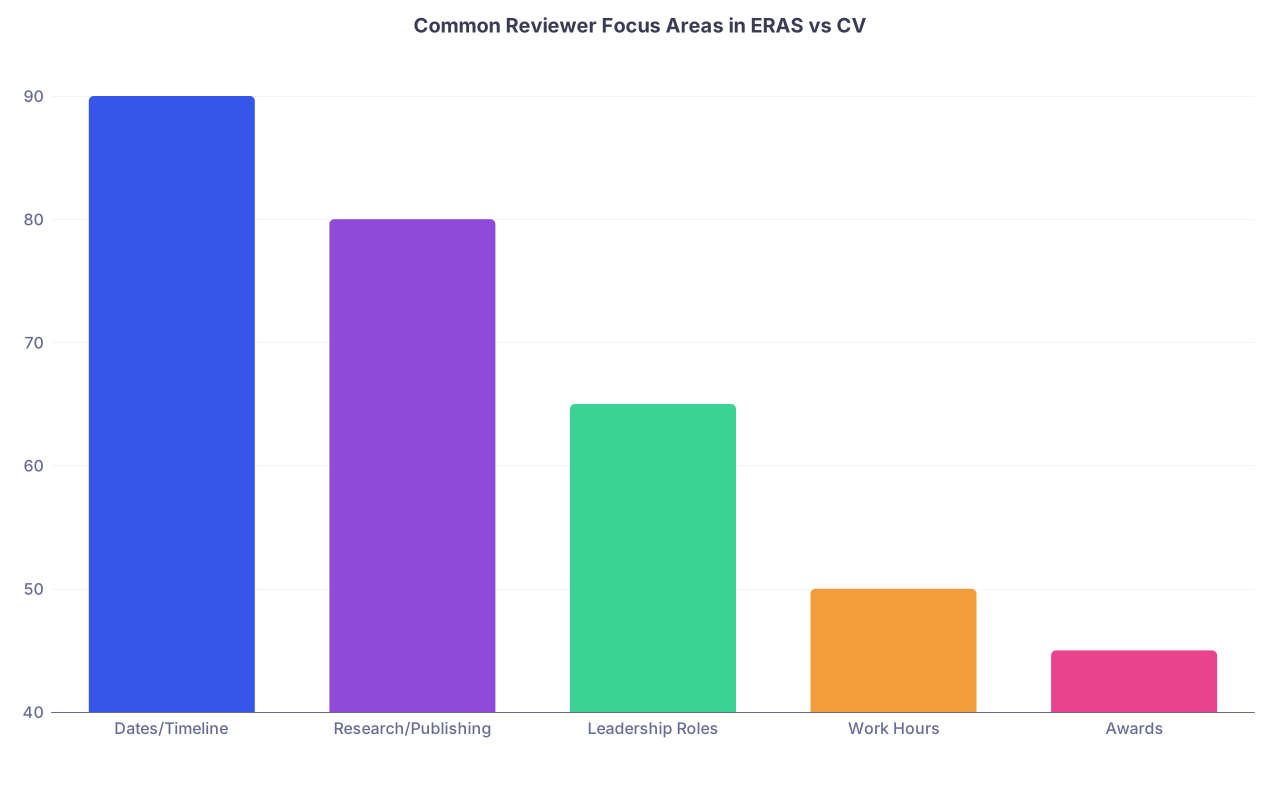
| Category | Value |
|---|---|
| Dates/Timeline | 90 |
| Research/Publishing | 80 |
| Leadership Roles | 65 |
| Work Hours | 50 |
| Awards | 45 |
Roughly speaking, the things that get checked most:
- Dates and sequence
- Research and publications
- Major leadership and awards
Less checked, but still noticed: - Minor volunteering
- Shadowing details
How to Audit and Fix Your Application Before Submitting
Here’s the no-BS checklist you should run through before you hit submit.
1. Lock One Document as Your “Source of Truth”
Pick one: ERAS or your CV. Usually ERAS, because that’s what programs see first.
Decide: “This is the master. Everything else must match this.”
Then consciously sync:
- Education dates
- Positions and titles
- Research roles
- Publication statuses

| Step | Description |
|---|---|
| Step 1 | Choose ERAS as Source of Truth |
| Step 2 | Update All Experience Dates |
| Step 3 | Align Titles and Roles |
| Step 4 | Standardize Publication Status |
| Step 5 | Scan for Overlapping Commitments |
| Step 6 | Have Someone Else Review |
2. Fix These High-Risk Areas First
Go line-by-line in both ERAS and your CV for:
- Education and training:
- Med school dates
- Prior grad degrees
- Any prior residency time or withdrawals
- Full-time roles:
- Research years
- Work before/during med school
- Military service
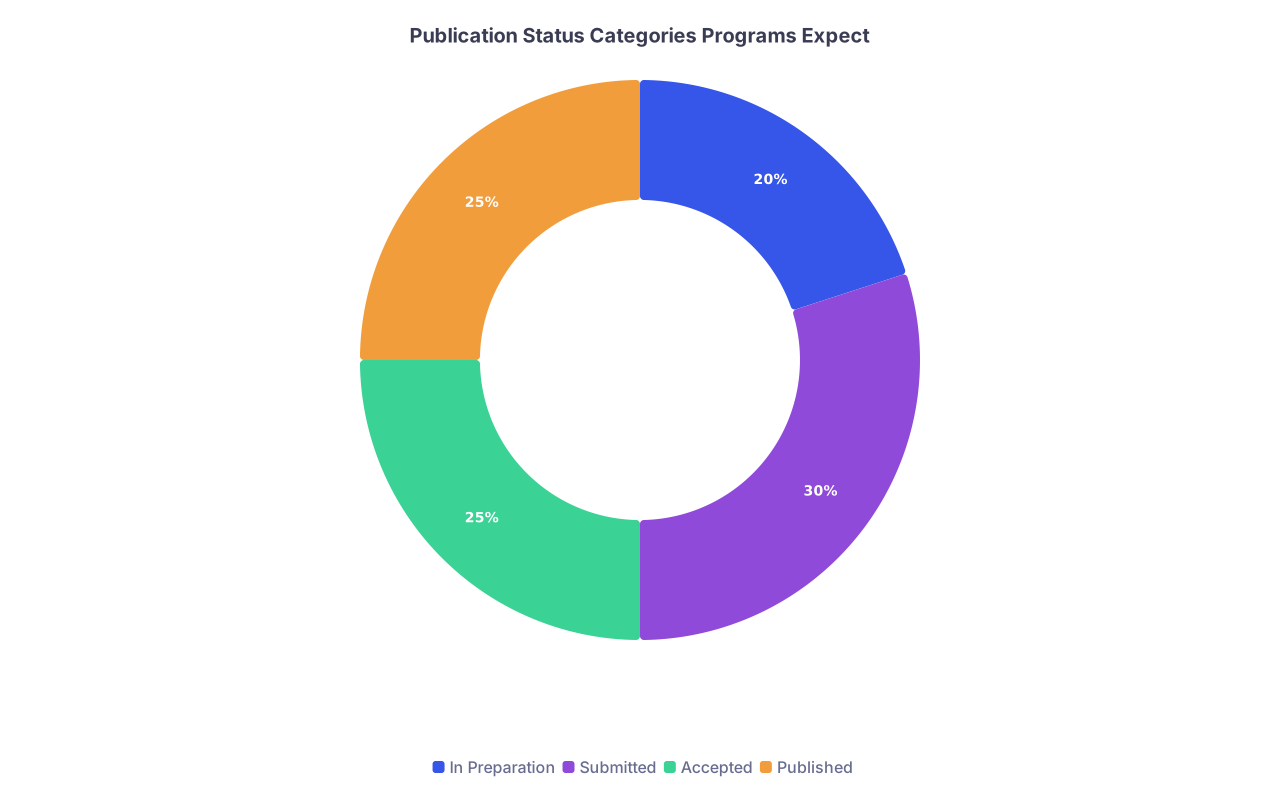
- Publications:
- Use one consistent set of terms:
- “In preparation”
- “Submitted”
- “Provisionally accepted”
- “Accepted”
- “Published (Journal, Year)”
- Don’t call something “published” if it’s not indexed and public yet.
| Category | Value |
|---|---|
| In Preparation | 20 |
| Submitted | 30 |
| Accepted | 25 |
| Published | 25 |
3. Check for Timeline Nonsense
Ask yourself:
- Could a reasonable person believe I was doing all this at once?
- Am I full-time in two different cities on paper?
- Do I have unexplained “dead space” that I’ve listed differently in two places?
Overlaps aren’t automatically bad. You can do:
- Research 10 hrs/week during med school
- Volunteer 2–3 hrs/week at a clinic
- Tutor 5 hrs/week
But it starts to look fake when:
- You’re claiming 30+ hrs/week for 3+ roles all year, on top of full-time med school
- Or roles jump from “occasional volunteering” on your CV to “key leadership 15 hrs/week” on ERAS
What If I Already Submitted with Inconsistencies?
You’re not doomed. But you shouldn’t ignore it.
Here’s how to triage:
| Situation | Recommended Action |
|---|---|
| Small month differences | Leave as is, fix on future docs |
| Title wording only | Leave unless misleading |
| Overstated hours/roles | Clarify verbally if asked |
| Wrong dates for big roles | Consider program update email |
| Publication status inflated | Correct ASAP, update programs |
When You Don’t Need to Do Anything
Examples:
- ERAS: July 2020 start. CV: August 2020 start.
- Minor phrasing differences that don’t change the substance.
File it under: “Remember to clean this up next cycle if needed.” Not worth cluttering PD inboxes.
When You Should Correct It
You should consider sending a brief, clear update if:
- You misrepresented a publication status (e.g., said “accepted” but it’s only “submitted”)
- You listed dates that are flat-out wrong for a major role (e.g., made a 1‑year thing look like 2 years)
- You accidentally duplicated or mislabelled a degree or certification
Keep it tight:
- Subject: “Application Update – [Your Name, AAMC ID]”
- 3–4 sentences:
- Acknowledge the error
- Provide correct info
- Take responsibility without drama
PDs appreciate people who own mistakes like adults.
How to Handle It in Interviews
If it comes up, don’t waffle.
Bad response:
- “Oh, I’m not sure how that happened, the system must have…”
Good response:
- “You’re right—the dates on my CV and ERAS don’t match for that role. The ERAS dates are correct; I didn’t update my older CV carefully enough. That’s on me, and I’ve since standardized everything to avoid confusion.”
Own it, correct it, move on.
How to Keep Things Clean Going Forward
Make your future life easier:
Keep a single running “master list” of:
- Roles
- Exact dates
- Typical hours/week
- Contact info for supervisors
Whenever something changes:
- Update the master list
- Then update both ERAS (if still editable) and your CV template
Before uploading or sending any doc:
- Compare against the master list for the “big stuff”
- Don’t rely on memory
It’s boring. But so is reviewing 300 applications. And the people doing that will absolutely notice the difference between a clean, coherent story and a patched-together one.



| Step | Description |
|---|---|
| Step 1 | Inconsistencies Present |
| Step 2 | Usually Ignored but Noticed |
| Step 3 | Triggers Concern |
| Step 4 | Lower Interview Priority |
| Step 5 | Questioned at Interview |
| Step 6 | Possible Lower Rank |
| Step 7 | Minor or Major? |
Key Takeaways
- Programs do notice inconsistencies between ERAS and your CV—especially around dates, roles, and publications.
- Small mismatches usually won’t kill your chances, but patterns of sloppiness or exaggeration absolutely can.
- Use one “source of truth,” sync everything to it, and fix serious errors quickly and directly if they’re already out there.
FAQ: ERAS vs CV Inconsistencies
1. Is it okay if my ERAS and CV have slightly different start/end months for an activity?
Yes, if it’s off by a month and clearly not deceptive, most reviewers won’t care. Still, you should aim for exact matches going forward. Tight applications stand out.
2. Can I describe the same role differently on ERAS and my CV?
You can change wording and emphasis a bit, but the core facts must match: title, level of responsibility, and time commitment. Don’t call yourself “Director” in one place and “Volunteer” in the other.
3. How big a deal is it if my publication status differs between ERAS and my CV?
This is one of the biggest red flags. If you’ve inflated status (e.g., “published” vs “submitted”), fix it and send a brief correction. PDs care a lot about honesty in research.
4. Do programs even look at my CV, or just ERAS?
Many reviewers live mostly in ERAS, but CVs get opened for more serious consideration—especially at academic programs or for top candidates. Think of the CV as a magnifying glass on your story, not a throwaway extra.
5. I realized after submitting that I overstated my hours for an activity. What should I do?
If it’s a minor inflation (5 vs 7 hrs/week), you can clarify in interviews if asked. If you significantly misrepresented the commitment, consider sending an update email owning the mistake and providing correct numbers.
6. Will one inconsistency automatically get me rejected?
No. People understand that humans make small errors. What hurts you is either a major discrepancy (like impossible timelines or misleading publications) or a consistent pattern suggesting you’re careless—or worse, dishonest. Clean up what you can and keep everything aligned from now on.