
Most rank list disasters do not come from bad programs. They come from bad timing.
You are not just choosing where to train. You are choosing when to think, who to listen to, and how long to sit with your own priorities before you lock them in. Get the timing wrong, and even a strong application can end in a match you quietly regret for years.
Here is a structured, time-based guide for the post‑interview month—from the moment your last interview ends until you certify your rank order list (ROL). I will walk you through week-by-week and then day-by-day in the final stretch, with the most common timing mistakes called out exactly where they occur.
Big Picture Timeline: The Post‑Interview Month
At this point you should step back and see the entire month as a timeline, not a blur of “I’ll think about it later.”
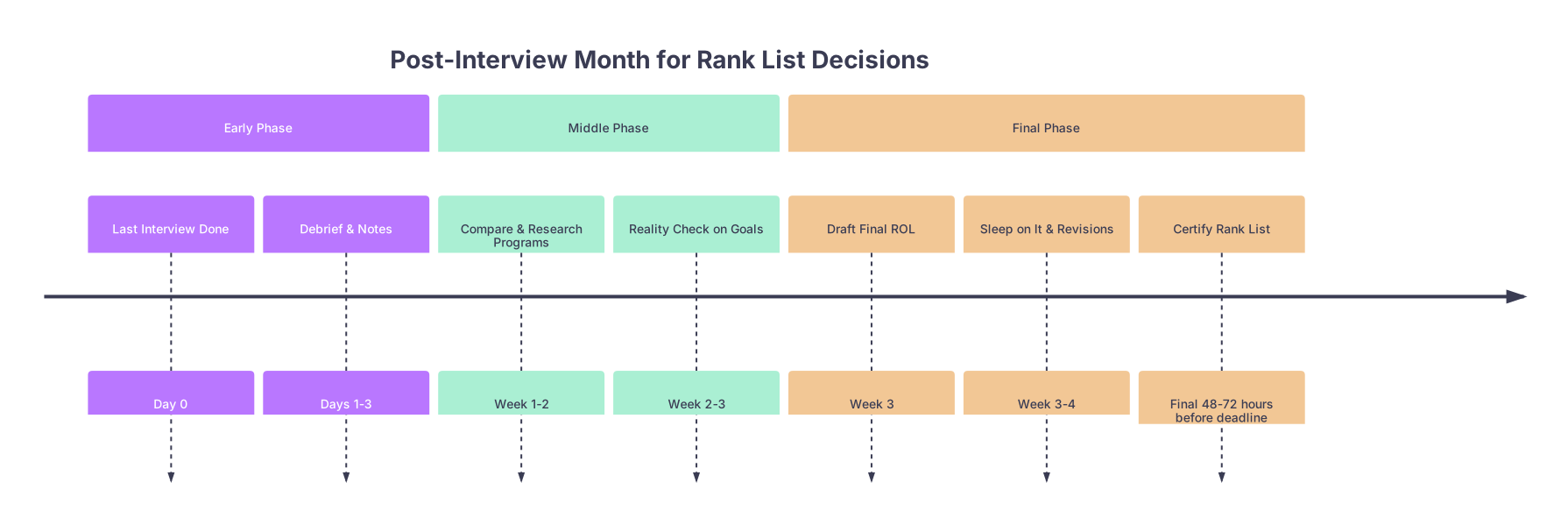
| Period | Event |
|---|---|
| Early Phase - Last Interview Done | Day 0 |
| Early Phase - Debrief & Notes | Days 1-3 |
| Middle Phase - Compare & Research Programs | Week 1-2 |
| Middle Phase - Reality Check on Goals | Week 2-3 |
| Final Phase - Draft Final ROL | Week 3 |
| Final Phase - Sleep on It & Revisions | Week 3-4 |
| Final Phase - Certify Rank List | Final 48-72 hours before deadline |
Think in three phases:
Early Phase (Days 0–3 after last interview)
Capture your impressions before they decay into mush.Middle Phase (Weeks 1–2)
Structured comparison, outside input, and research. This is when people usually make their worst mistakes.Final Phase (Weeks 3–4 / Last 7–10 days before deadline)
Cleaning up, pressure management, and locking the list—without last‑minute sabotage.
Phase 1: Days 0–3 – Immediate Post‑Interview Reset
Right after your last interview, your brain wants to stop thinking about residency. That is exactly why you need a short, structured reset instead of drifting.
Day 0 (Last Interview Day)
At this point you should:
- Get back to your hotel/home and spend 15–20 minutes per program you interviewed at in the last week.
- For each one, answer in writing:
- What was the best part of this program?
- What was the worst or most worrying part?
- How did the residents look at 3 p.m.? Tired but okay, or dead behind the eyes?
- Could you see yourself being on call there at 2 a.m. and not hating everything?
Do not try to rank yet. Your only job is to capture raw data while it is fresh.
Common mistake #1 in this window:
Trying to lock your rank list the same day as your last interview.
You will overweight the final program just because it is freshest. I have seen exceptional applicants drop clearly better programs below their last interview purely from recency bias.
Days 1–3: Structured Debrief
By now, you should:
- Organize your notes into a simple grid. Nothing fancy. Something like:
| Program | Gut Feeling (1–10) | Location Fit | Resident Vibe | Education | Red Flags |
|---|---|---|---|---|---|
| A | 9 | Strong | Very positive | Strong | None |
| B | 7 | Medium | Mixed | Excellent | Call load |
| C | 6 | Weak | Neutral | Good | Morale |
- Flag any program that felt “off” even if everyone told you it is prestigious. Write down why. Do not trust yourself to remember this later when prestige and rank anxiety start screaming at you.
Common mistake #2 here:
Deleting programs too early.
You are tired. You are biased. Give every program at least a week in the “maybe” pile before you cut it, unless there was a true dealbreaker (eg, blatant toxicity, personal safety concerns).
Phase 2: Weeks 1–2 – Building the Rank List Without Sabotage
This is the heart of your post‑interview month. At this point you should be expanding your understanding, not shrinking it to what your group chat thinks.
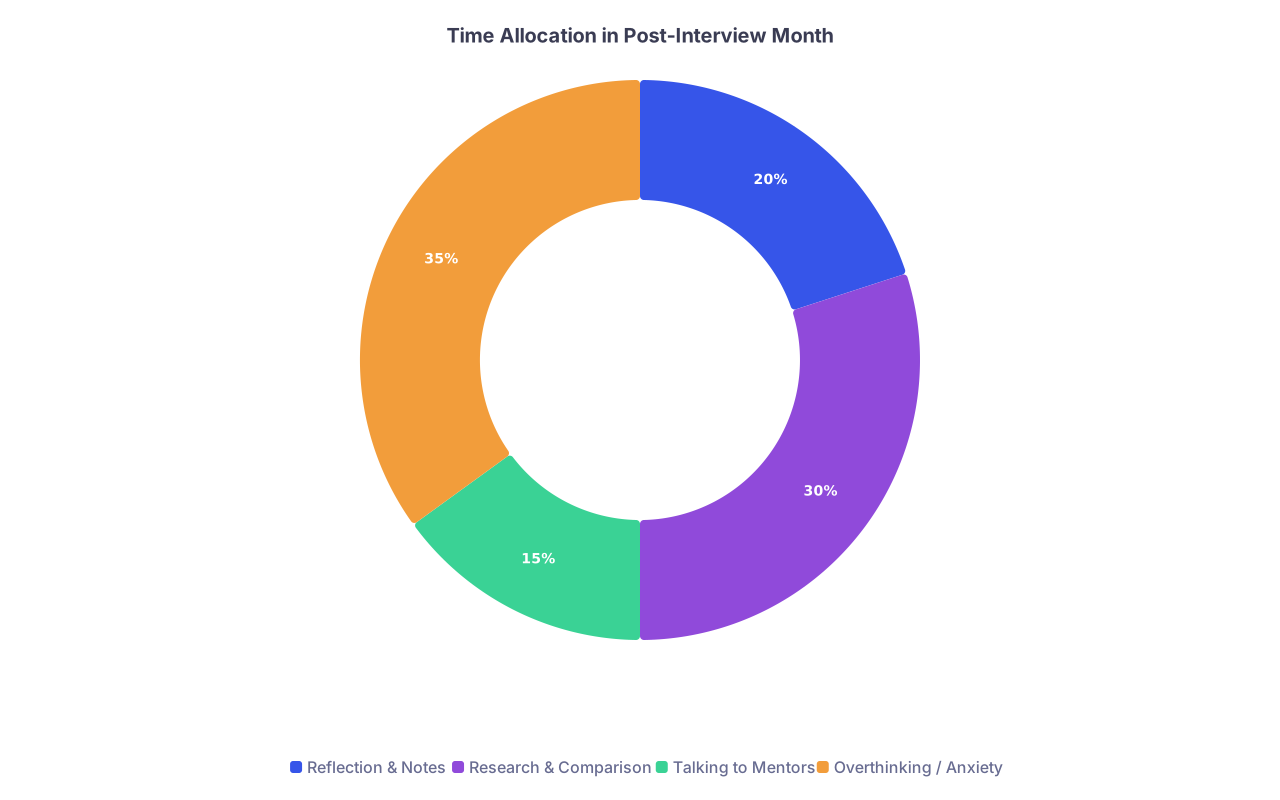
| Category | Value |
|---|---|
| Reflection & Notes | 20 |
| Research & Comparison | 30 |
| Talking to Mentors | 15 |
| Overthinking / Anxiety | 35 |
Week 1: Turn Impressions Into a Preliminary Order
Days 4–7: First Draft Rank List
By the end of week 1, you should:
Define your non‑negotiables.
Not vague dreams. Concrete criteria, like:- Must be within 1 flight of family
- Needs strong fellowship placement in cardiology
- Prefers 4+ residents per class for social support
- Cannot tolerate >1 hour commute or heavy driving
Translate those into 4–6 weighted factors. Example:
- Location / support system – 30%
- Training quality / fellowship outcomes – 25%
- Resident culture / wellness – 25%
- Cost of living – 10%
- Program stability / leadership – 10%
Score each program quickly (1–5) in each category, without overthinking. If you are stuck between a 3 and 4, call it a 3. You want relative differences more than perfection.
Generate a provisional rank order by your overall score.
Common mistake #3:
Letting “program prestige” override your own rubric.
If you are about to move a program up just because it “sounds better,” ask:
- Did I like the residents more?
- Did it meet more of my actual criteria?
If the answer is no and you still move it up, you are serving ego, not your future self.
Week 2: Outside Input – The Right Time, Right People
Week 2 is when people blow up a solid list by asking the wrong person at the wrong time.
At this point you should:
- Have a clear draft list (even if messy) before you ask anyone else.
- Decide whose voice actually matters:
- 1–2 trusted faculty mentors in your specialty
- Maybe 1 resident who knows you and the programs
- That is it. Not 12 classmates. Definitely not Reddit.
Days 8–12: Mentor Check‑In
When you meet your mentor:
Bring:
- Your draft rank list
- Your criteria and weighted factors
- Any specific questions: “Program X vs Program Y for someone aiming for GI fellowship but needing to stay near the East Coast.”
Ask them:
- “Is there anything I am missing about these programs—reputation, leadership changes, hidden strengths or problems?”
- “If you were me, with my goals, would you switch any of these top 3–5?”
Then listen, but do not hand over your brain.
Common mistake #4:
Mentor overreach.
Some faculty love to play “chessmaster” with your list. If they try to re‑engineer your top half for prestige alone, push back:
“I really valued the culture and support at Program B. Given my priorities, would you still move it below Program A?”
If they cannot give a concrete reason beyond reputation, keep your original order.
Days 13–14: Controlled Peer Input
If you ask peers, apply strict filters:
- Only ask people:
- Who share similar goals and risk tolerance
- Who interviewed at the same programs
- Who are not in a panic spiral themselves
Ask questions like:
- “How did you feel about resident morale at Program C compared with D?”
- “Did you hear anything from residents about fellowship support?”
Then stop. No ongoing group text debates about rank lists. Those conversations tend to drift toward:
- Overvaluing name recognition
- Underestimating your own fit
- Catastrophizing the match
Phase 3: Weeks 3–4 – Finalization and Deadline Management
This is where timing really matters. Programs have stopped courting you. The NRMP clock is ticking. Your anxiety spikes. Good decisions crumble if you let the final week become chaos.
Week 3: Solidifying Your Top and Bottom
By now, you should have:
- A clear top 3–5 that you feel genuinely good about.
- A long tail of programs that are “fine but not ideal.”
Days 15–18: Stress‑Test the Top of the List
For your top 5, do the following for each:
- Visualize a full year of your life there:
- Who is in your support system?
- What does a post‑call day look like?
- Do you have mentors for your interests?
- Ask: “If I matched here, would I feel:
- Relieved and excited?
- Neutral?
- Secretly disappointed?”
If a program in your top 3 feels like a “meh, I guess,” it probably does not belong there.
Common mistake #5:
Ignoring your body’s reaction.
I have watched smart people rationalize themselves into a “top” program that made them physically tense just thinking about it. Your shoulders, your jaw, your sleep—those are data points.
Days 19–21: Clean Up the Bottom of the List
At this point you should:
- Identify true no‑go programs.
Only remove a program from your list if:- You would truly rather reapply than train there.
- We are talking serious concerns: toxic leadership, unsafe city situation for you, impossible distance from any support, or a specialty you have decided you cannot do.
Common mistake #6:
Over-aggressive pruning at the bottom “to send a message.”
The match algorithm favors your preferences. You do not “signal” anything by dropping safer programs. You just increase your odds of not matching.
If you would be “fine but not thrilled” to go there, keep it on the list.
Final 7–10 Days: Micro‑Timeline to Certification
Here is where you need a day-by-day plan so you do not self‑sabotage with last‑minute chaos.
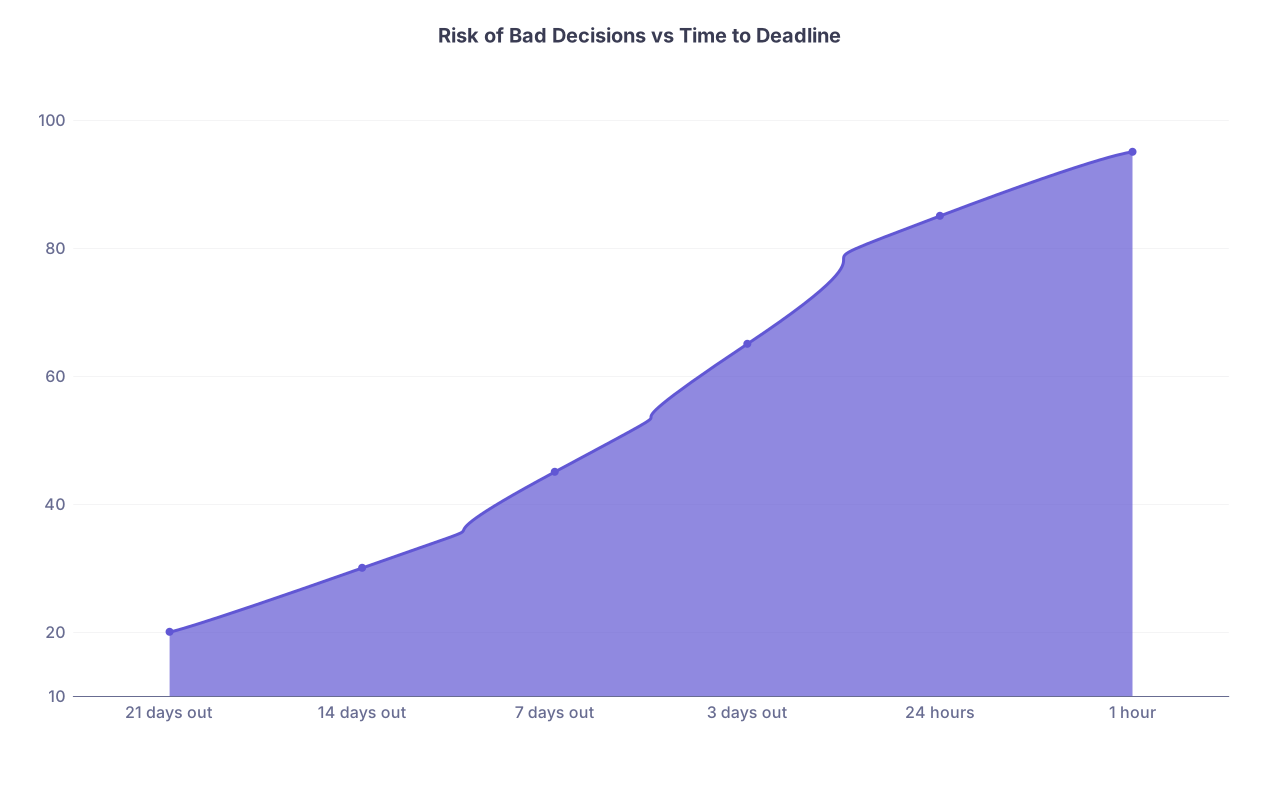
| Category | Value |
|---|---|
| 21 days out | 20 |
| 14 days out | 30 |
| 7 days out | 45 |
| 3 days out | 65 |
| 24 hours | 85 |
| 1 hour | 95 |
Day ‑10 to ‑7 Before Deadline: Draft Final Version
At this point you should:
- Log in to NRMP / CaRMS / your system of choice.
- Enter your current rank list exactly as you think it should be today.
- Save it, but do not certify yet.
Do a sanity check:
- Is your true #1 at the top, regardless of perceived odds?
- Are you accidentally ranking by:
- Alphabetical order?
- Interview date?
- Name prestige alone?
Common mistake #7:
Trying to game the match.
Ranking a “more realistic” program above your dream program because you think it improves your chances is simply wrong. The algorithm already optimizes for your preferences. Put your real #1 first.
Day ‑6 to ‑4: The “24‑Hour Swap Test”
If you are torn between two programs (say #2 vs #3):
- Swap them for 24 hours in your list.
- Go about your day.
- Watch your subtle emotional reaction:
- Do you feel relieved by the swap?
- Or vaguely annoyed / unsettled?
Then look again the next day. Your irritation or relief is data.
At this point you should be making only small position adjustments, not blowing up the entire list daily.
Common mistake #8:
Endless reshuffling.
If you are reordering the middle of your list more than once per day at this stage, you are no longer improving it. You are soothing anxiety by clicking.
Day ‑3: Lock Content, Not Certification
Three days before the deadline:
You should be done changing the content of your list unless:
- You discover new, major information (like loss of accreditation or major leadership collapse—rare, but it happens).
Take screenshots or print your list and step away from the portal for 24 hours.
Common mistake #9:
Letting late rumors dictate big changes.
“Someone said the chair at Program X might leave.” Unless this is confirmed by a reliable mentor or official source, you are reacting to noise.
This is the point to rely on your earlier, calmer decisions.
Day ‑2 to ‑1: Technical and Emotional Checklist
Technical checks:
At this point you should:
Verify:
- Every program code is correct.
- You did not duplicate or accidentally drop a program.
- Your specialty-specific and prelim / advanced lists are properly linked if relevant (TY + advanced positions, etc).
Confirm time zone of the deadline. People trip here more than you think.

Common mistake #10:
Procrastinating certification to the final hour “just in case I change my mind.”
You are not waiting for insight. You are waiting for panic. Do not do this.
Emotional checks:
- Ask yourself:
- “If this list locks exactly as is and I match to any of my top 5, would I feel good?”
- “Do I have any program ranked above somewhere I would clearly prefer?”
If you answer “no” to both, you are done.
Final 24–48 Hours: Certify and Walk Away
By now, you should:
- Certify your list no later than 24 hours before the deadline. Earlier is fine.
- Confirm you see the “certified” status and save a PDF or screenshot of your certified list and confirmation page.

Common mistake #11:
Logging in repeatedly after certification to “double-check” and accidentally uncertifying or editing.
Check once. Maybe twice. Then stop. If you must look again, confirm only that it is certified and do not click edit unless you truly intend to change something.
A Quick Word on Special Situations (Couples Match, Advanced + Prelim)
If you are in the couples match or doing advanced + prelim positions, your timing errors can compound fast.
At this point you should build timing in to account for:
Couples match:
- Start combining lists at least 2 weeks earlier than you think.
- First build solo rank lists. Then merge. Do not start with the merged list; you will lose sight of your own priorities.
- Common mistake: trying to “optimize” every possible pair and ending up with a bloated list that does not actually reflect either partner’s true preferences.
Advanced + prelim:
- Confirm all pairings are legal and correctly linked at least 1 week before the deadline.
- Have a realistic conversation with a mentor about how many prelims to rank and which ones are acceptable.
- Do not leave this to the final 48 hours; the logistics are fiddly and easy to mess up when you are rushed.
What Your Timeline Should Look Like (Condensed)
| Timeframe | Main Task | Key Pitfall to Avoid |
|---|---|---|
| Days 0–3 | Capture impressions, debrief | Prematurely locking your list |
| Week 1 (Days 4–7) | Build criteria, first draft ROL | Letting prestige outrank your priorities |
| Week 2 (Days 8–14) | Mentor + limited peer input | Overhauling list based on others’ fears |
| Week 3 (Days 15–21) | Stress-test top & trim bottom | Over-pruning “ok” safety programs |
| Final 7–10 days | Stabilize, minor adjustments | Endless reshuffling |
| Final 48–72 hours | Certify early, verify details | Last-minute changes in a panic |

Three Things To Remember
- Your timing is part of your decision. Sloppy, last‑minute thinking almost always produces a list that serves anxiety and ego, not your actual future.
- Rank the programs in your true order of preference. Do not try to game the algorithm. Do not rank prestige over fit unless it genuinely aligns with your values.
- Finish early and walk away. Certify 24 hours before the deadline, confirm it once, and then let the list stand. Your earlier, calmer self almost always thinks more clearly than your last‑hour, sleep‑deprived one.