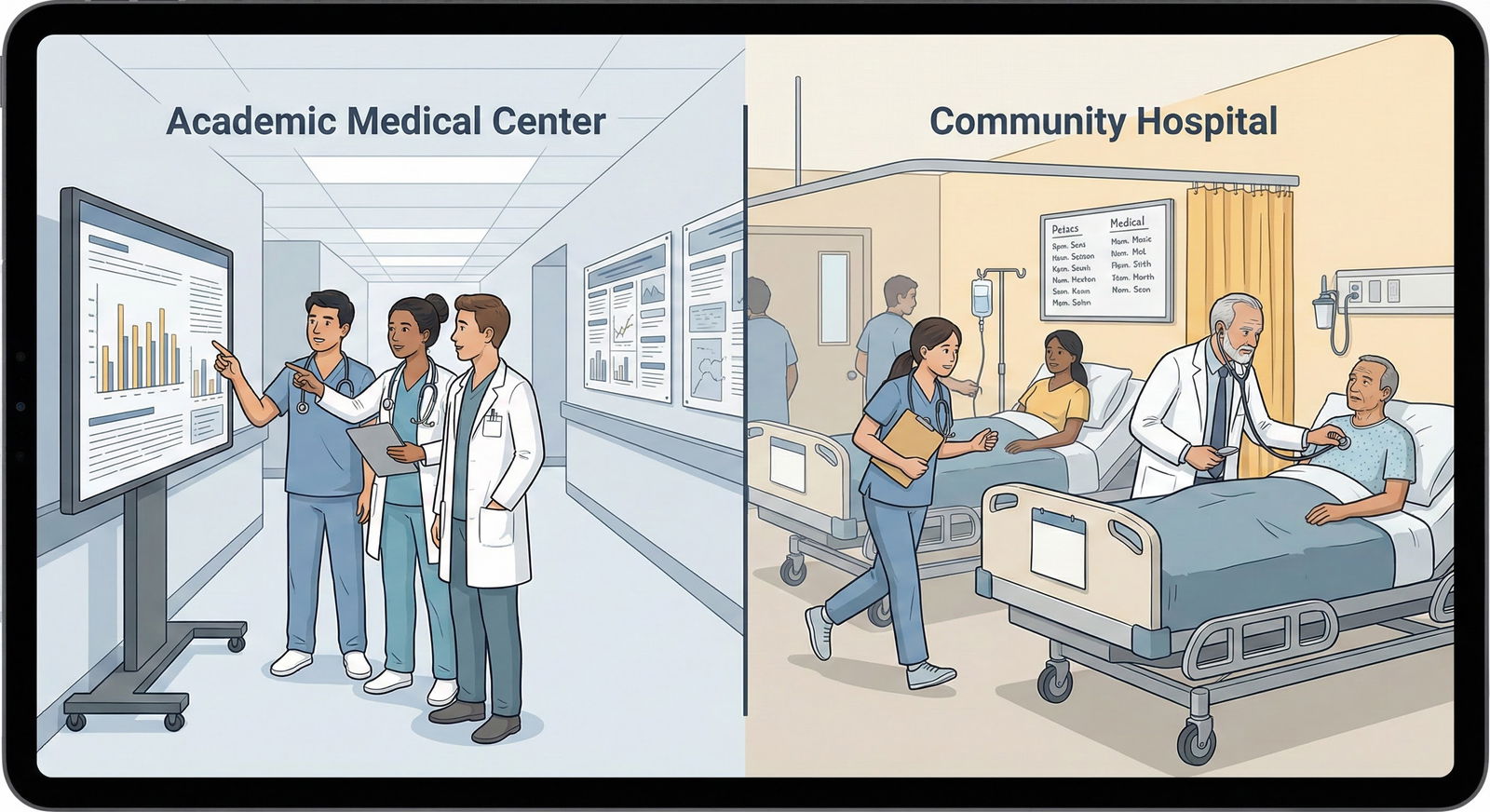
The belief that community residency programs kill your chances at competitive subspecialty fellowships is flat-out wrong.
They can hurt you. They can also help you. It depends less on the word “community” on your badge and much more on what that specific program actually offers and what you do with it.
Let’s go straight at the real question you’re asking:
“If I train at a community internal medicine/peds/surgery program, will it hurt my chances at cardiology/GI/heme-onc/other fellowship compared to training at a big-name academic center?”
Here’s the honest answer:
A strong community program with the right ingredients will put you in a perfectly competitive position for most fellowships. A weak community program without those ingredients absolutely can box you out of the top and most academic-heavy fellowships.
Your job is to tell the difference before you sign a contract.
Step 1: Understand What Fellowship Programs Actually Care About
Fellowship selection isn’t magic. Programs look at the same buckets, whether you’re at MGH or “Nobody’s Heard of Us Medical Center.”
Roughly, for competitive subspecialties (cards, GI, heme/onc, pulm/crit, etc), people get filtered on:
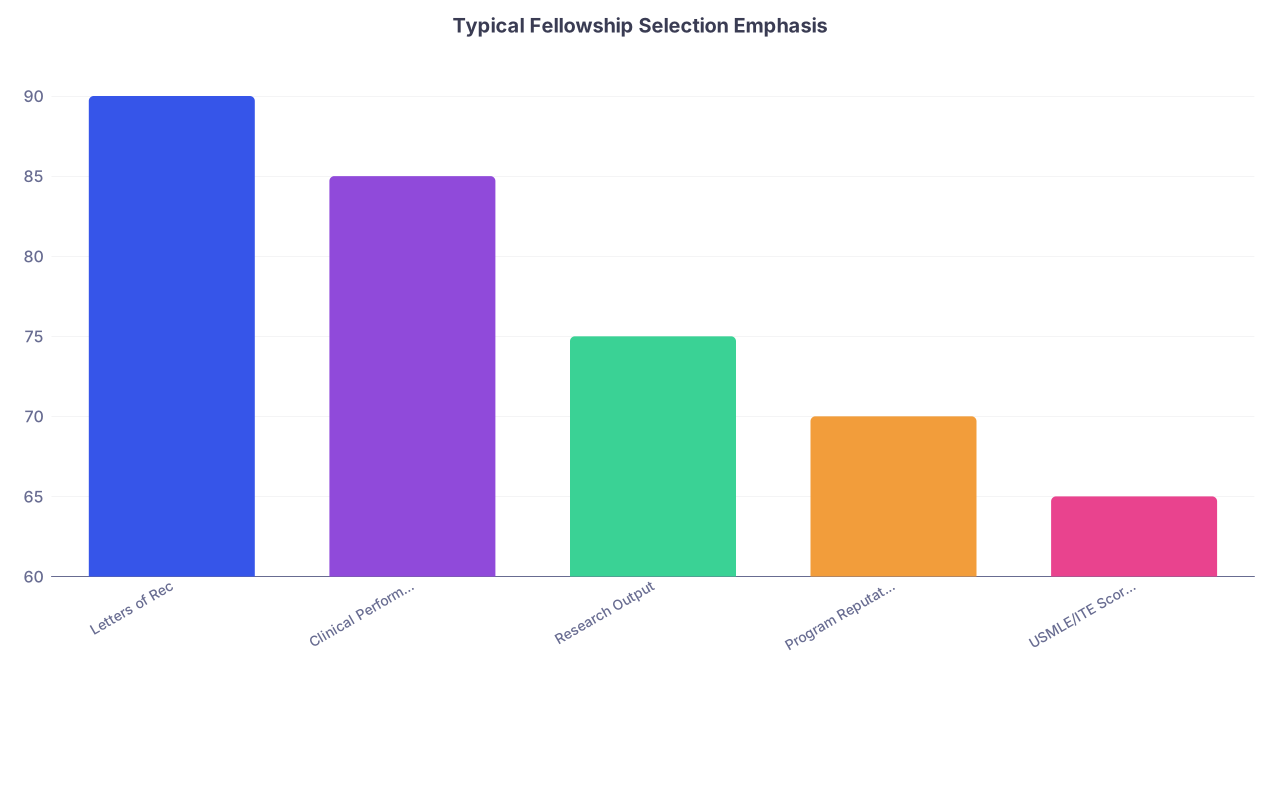
| Category | Value |
|---|---|
| Letters of Rec | 90 |
| Clinical Performance | 85 |
| Research Output | 75 |
| Program Reputation | 70 |
| USMLE/ITE Scores | 65 |
Here’s what’s really driving outcomes:
- Letters of recommendation from people fellowship directors trust
- How strong of a resident you are (evaluations, rank within class, “would rehire” factor)
- Research or scholarly output (especially for academic fellowships)
- Program reputation and prior match history
- Scores/board performance (USMLE/COMLEX, ITEs)
A community label mostly affects #3 and #4, and indirectly #1. It doesn’t change #2 and #5—that’s on you.
So the right question is not “community vs academic?”
It’s: “Does this program give me what I need in those five buckets to be competitive?”
Step 2: The Types of Community Programs – Not All Equal
Community programs are not one thing. Huge range. I group them like this:
| Program Type | Typical Fellowship Potential |
|---|---|
| Community + University-Affiliated | Strong, especially regionally |
| Large Community with In-House Fellowships | Often very strong for those fields |
| Classic Community (no fellows, modest research) | Variable, mid-tier fellowships realistic |
| Small Isolated Community | Tough for competitive subspecialties |
1. Community + University-Affiliated
Example: “St. Something Medical Center, affiliated with State University School of Medicine.”
These often:
- Share faculty with a med school
- Have residents rotating at the university hospital
- Send a few graduates each year into solid fellowships
For fellowship, these programs are often just fine, particularly for:
- Regional academic fellowships (within the same health system or region)
- Less cutthroat subspecialties (renal, endo, ID, rheum)
2. Large Community Programs with In-House Fellowships
These are sleepers that can be excellent launching pads:
- Big community hospital with its own cardiology, GI, heme/onc, pulm/crit fellowships
- High patient volume, often with very strong clinical training
- Faculty who are fellowship PDs themselves
If they regularly take their own residents into fellowship, that’s a huge plus.
Your fellowship path might look like:
- IM residency at that community program → in-house fellowship → academic job elsewhere if desired
3. Classic Community – No Fellows, Limited Research
This is what most people imagine with “community program”:
- No or minimal in-house fellowships
- Attending physicians mostly clinicians, not researchers
- Research output exists, but limited and requires resident hustle
You can match into subspecialty from here—people do every year. But:
- Top-10 academic fellowships in cards/GI/heme-onc? Tough, not impossible but rare
- Mid-tier academic or strong community fellowships? Very realistic if you’re a star
4. Small Isolated Community Programs
Red flags:
- No history of graduates going into competitive subspecialties
- No research infrastructure
- Faculty not connected to academic leaders elsewhere
If your goal is a highly competitive fellowship at a top academic center, this is where training can genuinely hurt your odds, unless you bring extraordinary hustle and strategy.
Step 3: How Community Training Can Actually Help You
Let’s talk upside, because there is some.
1. Clinical Autonomy and Volume
Many fellowship PDs love residents who trained in community settings because:
- They’ve actually run codes, not just watched
- They can handle an unfiltered mix of pathology
- They’re used to functioning with less “cushion” and more responsibility
In interviews, I’ve seen community grads impress by describing:
- Managing complex ICU patients without layers of fellows
- Leading night float teams
- Being the point person for sick patients
That kind of autonomy can differentiate you against someone who was shielded by multiple supervisory layers at a large academic center.
2. Strong Relationships with Faculty
At community programs, there are fewer residents and usually fewer layers between you and attendings. That’s gold for:
- Deep mentorship
- Detailed, personalized letters of recommendation
- Opportunities to be “the go-to resident” for certain attendings
A fellowship director reading “top 5% of all residents I’ve worked with in 20 years” from a PD or subspecialist—that matters more than the logo on your white coat.
Step 4: Where Community Training Can Hold You Back
Here’s where the “it hurts” part is real.
1. Name Recognition and Track Record
Programs absolutely care about “Can I trust this residency’s evaluation of this person?”
If the fellowship PD has:
- Never heard of your hospital, and
- Never seen an applicant from your program, and
- Sees limited research from your institution
…you’re starting from slightly behind compared with someone from a known academic powerhouse.
Does that doom you? No. But it means your application needs to hit harder on:
- Letters
- Research
- Personal statement and interviews
2. Lack of Built-In Research
Many community faculty are busy clinicians with little time or support for research. Common issues:
- No formal research curriculum
- No protected time
- Limited biostat/IRB support
- Few ongoing projects to “plug into”
For very academic fellowships (especially GI, cards EP, heme-onc at big universities), this is the single biggest disadvantage of many community programs.
If you want a research-heavy career and your program has no infrastructure, you’re swimming upstream.
Step 5: How to Evaluate a Community Program If You Want Fellowship
This is the part people skip, then regret later.
Here’s the checklist you should aggressively ask about and verify.

| Step | Description |
|---|---|
| Step 1 | Considering Community Program |
| Step 2 | Program Reputation Less Critical |
| Step 3 | Check Fellowship Match History |
| Step 4 | High Risk for Fellowship Goals |
| Step 5 | Assess Research Options |
| Step 6 | Need Massive Personal Hustle |
| Step 7 | Program Likely Suitable |
| Step 8 | Wants Competitive Fellowship |
| Step 9 | Good Track Record? |
| Step 10 | Real Research Support? |
1. Fellowship Match History – Show Me the Receipts
You must know:
- How many residents in the last 3–5 years applied to your target fellowship?
- Where did they match?
- Who’s the most “competitive” match they’ve had—and how often?
If a program can’t or won’t give you real data, that’s a bad sign.
2. In-House Fellowships and Internal Promotions
If your goal fellowship exists in-house:
- How many of their fellows are their own residents?
- What percentage of interested residents stay?
If a community program has a cards fellowship and never takes their own residents, that’s telling you something.
3. Research: Not Theoretical, Actual
Ask very specific questions:
- Are there ongoing projects right now residents are on?
- How many residents present at regional/national meetings each year?
- Is there a research director or coordinator?
- Can residents realistically get first-author anything?
If you hear: “Residents can do research if they want” but no one can quickly name recent projects or abstracts, assume it’s mostly talk.
4. Mentorship and Connections
You want at least one of:
- Subspecialty faculty who are known in their field (regional or national)
- Faculty with prior academic appointments who still have connections
- Program leadership who actively call/email on behalf of strong applicants
You’re looking for people who can (and will) pick up the phone for you when you apply.
Step 6: Strategies to “Offset” Being at a Community Program
Let’s say you’ve chosen or landed at a community program, and you want cards/GI/heme-onc/etc. What do you actually do?
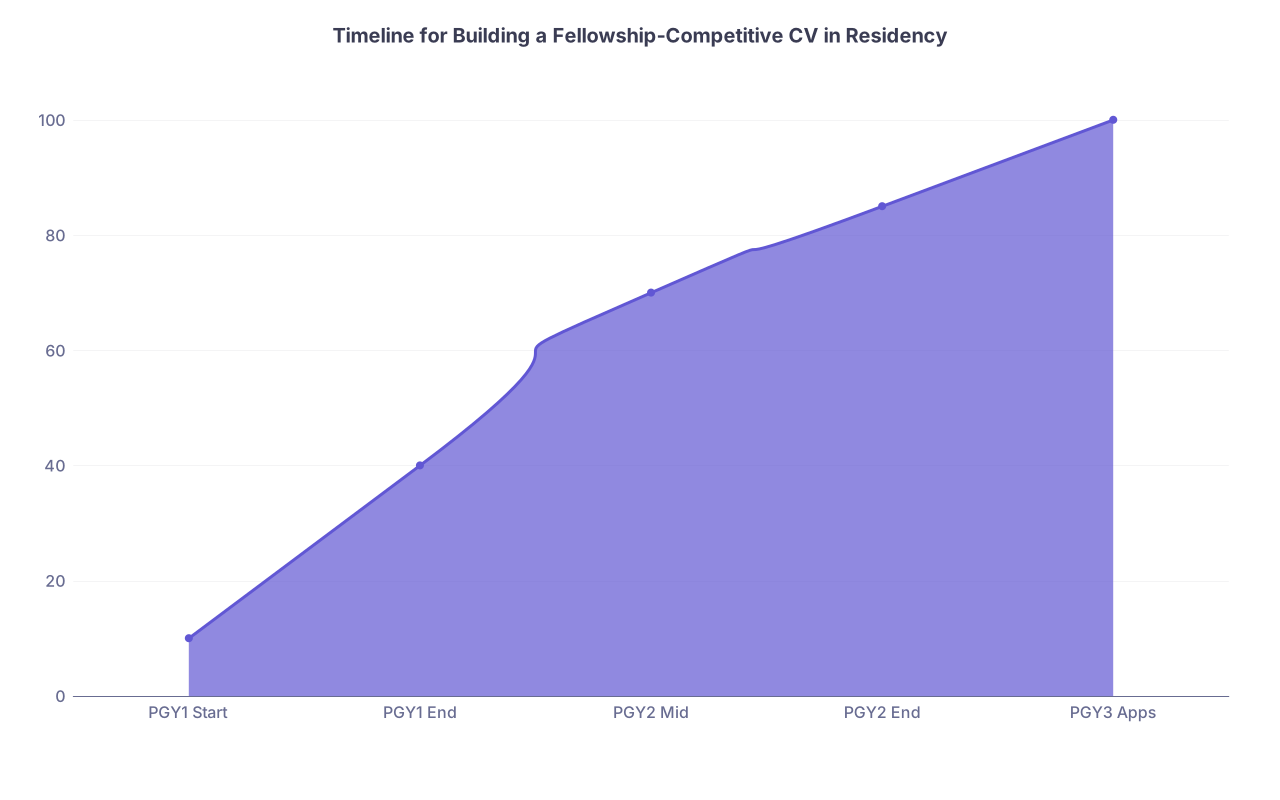
| Category | Value |
|---|---|
| PGY1 Start | 10 |
| PGY1 End | 40 |
| PGY2 Mid | 70 |
| PGY2 End | 85 |
| PGY3 Apps | 100 |
Think of that “competitiveness” score as cumulative effort/signal, not perfection.
Here’s the playbook I’ve seen work:
Decide early (by mid-PGY1) that fellowship is the goal
Late decisions make research and networking much harder.Lock in a mentor in your subspecialty
Be the resident who shows up, reads, and follows through. Ask directly:
“I’m interested in GI fellowship. Can you help me build toward a competitive application from here?”Attach yourself to at least one real project
Case series, retrospective chart review, QI with publishable outcome—anything that gets your name on a poster or paper. Aim for:- 1–2 abstracts by mid-PGY2
- 1 manuscript submitted before ERAS opens
Crush clinical work and be find-your-name-on-the-schedule reliable
You can’t be “average clinically but loves research” at a community program and expect support. You need attendings saying:“Best resident we have. Handles sick patients really well. I’d take them as a fellow tomorrow.”
Network beyond your hospital
Options:- Present at regional/national meetings and actually talk to faculty from other programs
- Do away electives at academic centers in PGY2 if allowed
- Email academic faculty elsewhere to collaborate on small projects (this takes hustle, but I’ve seen it work)
Take your ITEs seriously, not as a joke
Fellowship programs look at these when they can. Strong ITE scores signal you’ll pass boards and that you actually know your stuff.
When You Really Should Favor Academic Programs
If any of these are true, I’d strongly lean academic if you have the option:
- You’re dead set on very competitive, research-heavy fellowships at brand-name places (MGH cards, UCSF GI, MSK heme-onc, etc.)
- You want a physician-scientist track or heavy bench research
- You don’t trust yourself to go find research and mentors without structure
Academic programs simply lower the activation energy for these paths. They’re not the only way, but they’re the path of least resistance.
Bottom Line: Does Community Training Hurt Your Chances?
Here’s the clearest answer you’re going to get:
For most fellowships at mid-tier or regional academic centers and strong community fellowships:
Training at a solid community program does NOT significantly hurt you, as long as you perform exceptionally, get strong letters, and build some scholarly activity.For the most competitive, research-heavy, top-brand fellowships:
Training at a typical community program does put you at a disadvantage, unless that program is unusually strong, well-connected, and you aggressively build a robust CV.For residents at small, isolated community programs with no track record, no research, and no connections:
Yes, that can seriously hurt your odds at the higher end of subspecialty training unless you create your own path in a pretty heroic way.
It’s not “community vs academic.” It’s:
“Does this specific program produce the kind of fellowship outcomes I want—and will I be one of their best residents?”
If the answer to both is yes, your chances are just fine.