It’s April of your third year. You just finished an away-friendly core rotation, you’re falling hard for a competitive specialty (let’s say derm, ortho, ENT, optho, or plastics), and you’ve done the math: your CV isn’t there yet. Not for this year’s ERAS.
You’re seriously considering — or have decided on — a gap year to boost specialty competitiveness.
Here’s the catch: a “gap year” that isn’t tightly planned turns into 12 months of vague “research,” a couple of half-finished projects, and one poster you share with eight other people. Programs see right through that. They know the difference between a structured, purposeful year and “I didn’t match so I hid for 12 months.”
So let’s build an actual calendar. Month-by-month, then week-by-week early on, so by the time ERAS opens you look like someone they want.
Step 0: 18–15 Months Before ERAS – Decide You’re Taking the Gap Year (and Own It)
Timeline reference:
You’re 18–15 months before your ERAS submission for the cycle you’ll apply in after the gap year.
At this point you should:
Commit to the gap year mentally.
- Stop pretending you’ll “maybe just see how it goes this year.” That limbo kills planning.
- Decide: “I am not applying this coming cycle. I am applying the following one with a fortified application.”
Clarify your target specialty tier. Competitive specialties where a gap year can matter a lot:
- Dermatology
- Orthopedic surgery
- Plastic surgery (integrated)
- ENT
- Ophthalmology
- Neurosurgery
- Some radiology, urology, and anesthesiology programs (especially academic, top-tier)
Audit your current application honestly. Sit down with:
- Your Step/COMLEX scores
- Clinical grades & honors
- Research output (not just “I worked on something” — actual abstracts, pubs, posters)
- Letters potential
- Home program strength
Then categorize yourself:
| Area | Strong Enough Now? | Needs Gap Year Help? |
|---|---|---|
| Board Scores | ||
| Clerkship Honors | ||
| Research Output | ||
| Home Mentorship | ||
| Specialty Exposure |
If you’re weak in 2+ of those and you’re aiming derm/ortho/ENT/ophtho/plastics/neurosurgery, a gap year is usually smart, not optional.
- Identify your primary gap-year objective.
You don’t get to do everything at once. Pick your anchor:
- Research year (the most common)
- Dedicated Step 2/Level 2 + research combo
- Clinical fellowship-type year (e.g., prelim surgery + heavy research)
- Funded research fellowship (T32, HHMI, NIH, etc.)
Your whole calendar will pivot around that choice.
Step 1: 15–12 Months Out – Lock In the Structure of the Gap Year
This is where people blow it by “starting to email around” in June, then somehow “don’t find anything good” and drift.
At this point you should:
Months 15–14 Out: Target and Apply to Positions
Make a specialty-specific plan.
For the ultra-competitive fields:
Derm: Aim for a full-time research year in derm at your home or a strong outside institution. Look for:
- NIH-funded faculty
- A PI who churns out 5–10+ papers a year
- An existing pipeline of med students matching derm
Ortho / Plastics / ENT / Neurosurgery:
- Dedicated research fellow roles are common. 1–2 years.
- Often involve database mining, retrospective chart reviews, and helping with manuscripts.
Ophthalmology:
- Clinical research coordinator roles in large academic departments
- Work on surgical outcomes, imaging, or genetics projects
Start contacting PIs and program leadership. Weekly target: 5–10 high‑quality, tailored emails.
Your email should:
- State your year and school
- Explicitly say you’re planning a dedicated research year prior to residency application
- Include:
- 1-page CV
- 1 paragraph on why their niche (e.g., sarcoma, pediatric ENT, cornea, Mohs) matters to you
- Ask clearly: “Do you take medical students for 1-year full-time research positions?”
Leverage your own institution first. I’ve seen too many students chase “famous name” institutions and end up with:
- No salary
- Little face time with the PI
- No meaningful authorship
A mid-tier home program where you’re first or second author on 3–5 papers beats a big-name place where you’re author #11 on one.
Months 13–12 Out: Secure Commitments & Funding
By 12 months out, you should have:
A firm “yes” from a PI or department:
- Role description (research fellow, coordinator, etc.)
- Expected workload (~40+ hrs/week)
- Start and end dates
Clarity on:
- Funding (stipend vs. unfunded; if unfunded, your alternative financial plan)
- Workspace, badge access, and IRB exposure
- Data sources you’ll use (registry, single-center, multi-center collaborations)
If you do not have this by 12 months out, you’re behind. At that point, you increase volume:
- Double your outreach
- Consider related but adjacent fields (e.g., you want ortho, but you do musculoskeletal outcomes in PM&R or sports medicine)
Step 2: 12–9 Months Out – Build the Project Pipeline Before the Gap Year Starts
Here’s where you frontload the work so your “gap year productivity” doesn’t start in Month 5.
At this point you should:
Month 12: Set Specific Output Targets
Define concrete numeric goals with your PI:
- Abstracts: e.g., 3–5 submitted to major specialty meetings
- Manuscripts: 2–4 submitted, at least 1–2 where you’re first or second author
- Posters/Presentations: 2–3 local or national
If your PI says, “We’ll see what comes up,” push back. Vague goals = vague CV.
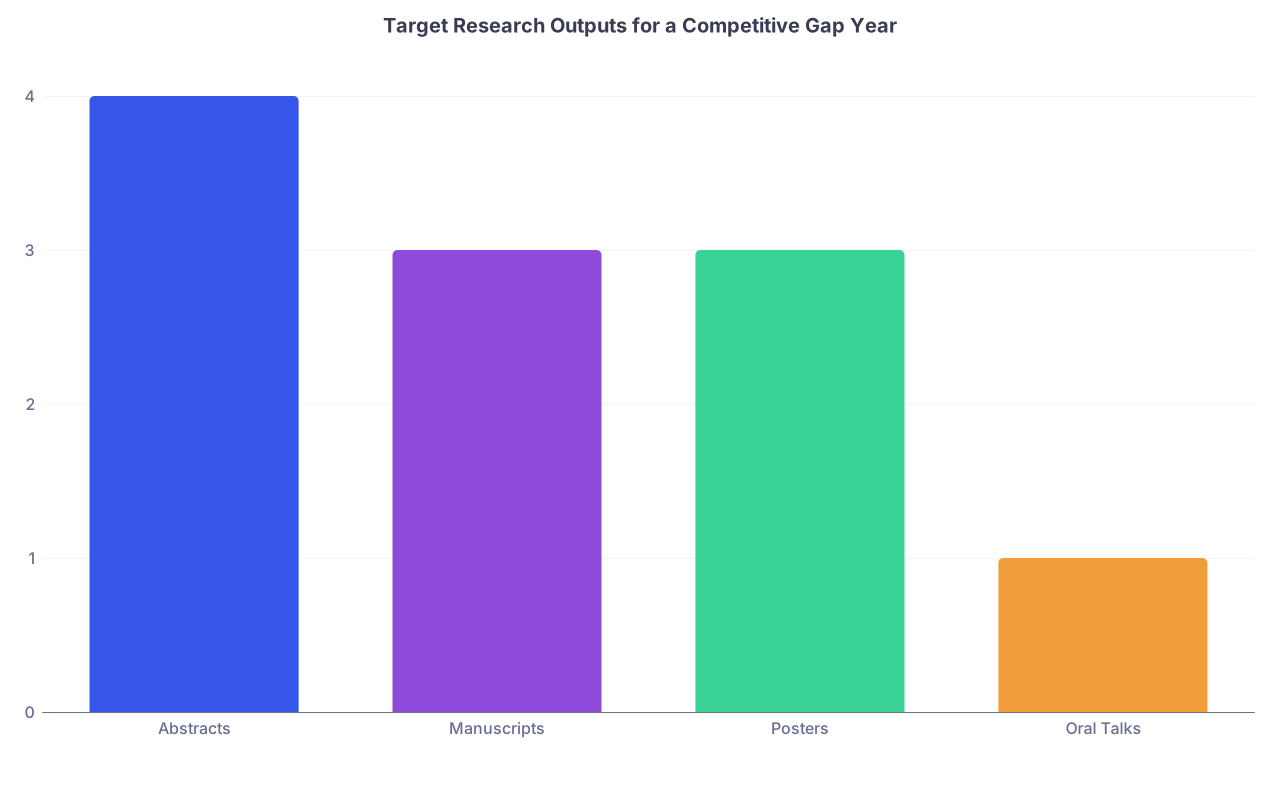
| Category | Value |
|---|---|
| Abstracts | 4 |
| Manuscripts | 3 |
| Posters | 3 |
| Oral Talks | 1 |
Months 11–10: Get Projects Ready to Run
Weekly checklist:
Meet with PI and collaborators to:
- Finalize research questions
- Confirm feasible datasets
- Outline timelines and division of labor
Start the IRB process:
- Draft protocol
- Complete IRB training modules
- Submit at least one protocol by Month 10
Build your skills:
- Learn the stats software you’ll actually use (R, Stata, SPSS, Python)
- Do 1–2 online courses specifically for your expected methods (e.g., survival analysis, logistic regression)
You want your IRB clock to be ticking before the gap year “starts.”
Month 9: Logistics and Life Setup
(See also: How Away Rotations Actually Work in Hyper-Competitive Specialties for more details.)
Administrative but crucial:
- If you’re pausing med school:
- Confirm official leave of absence status
- Check impact on loans and insurance
- Housing near your research site
- Schedule any remaining core rotations you must complete before stepping away
You don’t want to be signing lease papers in Month 2 of your research year while trying to debug your first dataset.
Step 3: Gap Year Months 0–3 – Hit the Ground Sprinting, Not Jogging
Month 0 = your first month “off” from regular med school and fully in the gap year.
At this point you should:
Month 0: Onboarding & Systems
Week 1–2:
Get all access:
- EMR login
- REDCap or database logins
- Secure drive access
Sit down with your PI:
- Review all active and pending projects
- Ask which 2–3 you “own” as point person
- Clarify authorship expectations now, not later
Week 3–4:
- Create your master project tracker:
- Columns: Project title, Type, PI, Your role, IRB status, Data status, Analysis, Manuscript, Target journal, Target meeting
- Block your weekly schedule:
- 3–4 half-days: pure data/analysis
- 2 half-days: writing
- 1 half-day: meetings/mentorship
- 1 half-day: Step 2/Level 2 or skills if needed
Month 1–3: Data and Drafts
Non-negotiables for a productive start:
- By the end of Month 1:
- At least one IRB approved (or exempt determination received)
- One project with data extraction started
- By the end of Month 2:
- At least one project with a complete dataset ready for analysis
- One abstract or manuscript outline written
- By the end of Month 3:
- One abstract submitted (even if local/regional meeting)
- One manuscript draft in circulation among co-authors
If you’re three months in and still “waiting on IRB” with no writing done, that’s a red flag. It means you must add lower-hanging projects:
- Case series with existing data
- Secondary analyses of already-approved projects
Step 4: Gap Year Months 4–6 – Peak Research Productivity + Specialty Exposure
This is the heart of your year. This is where your CV transforms or doesn’t.
At this point you should:
Month 4–5: Turn Work into Outputs
Focus shifts to:
- Completing analyses
- Drafting manuscripts
- Stacking abstracts for upcoming deadlines
Weekly plan (rough template):
- 1–2 days: Hard analysis time
- 1–2 days: Writing and figure/table creation
- Half-day: Meetings with PI/co-authors
- Half-day: Clinical shadowing in your specialty (if possible)
- Remaining time: New project setup and data cleaning
You want several projects staggered:
- 1 in data collection
- 1 in analysis
- 1 in writing
- 1 under review / revision
Month 6: Strengthen Clinical/Specialty Identity
Programs don’t want just a spreadsheet robot. They want future colleagues.
So in Month 6:
- Arrange regular clinical presence:
- 1 half-day/week in clinic or OR with your PI or another mentor
- Attend M&M conferences, tumor boards, or subspecialty case conferences
- Join specialty organizations:
- Resident & student sections (e.g., AAOS, AAD, AAO-HNS, AUPO)
- Sign up for their student research or mentorship lists
This allows you to:
- Get real specialty-specific letters later
- Actually talk like someone who knows the field at interviews
Step 5: Gap Year Months 7–9 – Convert Productivity to a Polished Application
You’re now within ~6 months of ERAS opening for your target cycle.
At this point you should:
Month 7: Start Pre-writing ERAS and Personal Statement
You don’t wait until August.
- Draft:
- Personal statement #1: research‑heavy, big academic focus
- Personal statement #2 (optional): more clinical/patient-centered version if you want flexibility
- List your most significant experiences:
- Pick 3–5 research projects that show leadership, not just “helped with data”
- Identify 3–4 letter writers:
- Two from your specialty if possible
- At least one being your research PI
- One strong clinician letter from core rotations
Month 8: Polish Letters and Add Final Projects
By month 8:
You should have:
- 1–2 submitted manuscripts
- Multiple abstracts under review or accepted
- At least a couple of posters/talks scheduled (even if in the future)
Ask for letters:
- Provide each writer: CV, personal statement draft, bullet list of your strengths and major contributions
- Ask them directly if they can “write a very strong letter of support for a competitive match in [specialty].” You want honesty here.
Month 9: ERAS Work and Step 2 If Needed
If you still have Step 2/Level 2 hanging over your head:
- Months 7–9 is a good window for:
- 6–8 weeks of structured study (while still keeping research projects moving)
- Set a hard exam date; don’t let it bleed into full ERAS season if you can help it.
You should also:
- Finalize your program list
- Reach out to:
- Program coordinators to ask about visiting your department/attending conferences
- Residents you’ve met through your gap year for informal advice
Step 6: Gap Year Months 10–12 – Application Submission and Interview Season
Now you’re in the zone where all the work becomes visible.
At this point you should:
Month 10: ERAS Submission Month
Assume ERAS opens ~June and submission around September (adjust to exact year).
- Complete:
- All experiences with clear, outcome-based descriptions
- Publications with status clearly labeled (accepted, in press, submitted)
- Make sure your research story is coherent:
- Not 20 totally random case reports
- Ideally a theme (e.g., spine, pediatric ortho, cutaneous oncology, cornea, craniofacial)
Use your PI to:
- Review your personal statement
- Edit the way you’re framing your gap year in ERAS
Your narrative should not be “I took a year because my stats were bad.”
It should be: “I invested a year to deepen my expertise and contribute meaningfully to the field through X, Y, Z.”
Month 11–12: Interviews and Ongoing Work
Interview season hits. Here’s how to handle it:
Keep producing:
- Aim to submit one more manuscript or abstract during interview months
- Mention ongoing work in interviews: “We’re finalizing a paper on [topic] that we plan to submit to [journal] next month.”
Prep your “gap year pitch”: In interviews, you should be able to concisely say:
- Why you chose a gap year
- What you specifically accomplished (numbers matter: X manuscripts, Y abstracts, Z presentations)
- How it changed your understanding of the specialty
- How it prepared you to be an efficient, academic-minded resident
Stay in touch with mentors:
- Update your PI with interview outcomes
- Ask them, when appropriate, to send targeted advocacy emails to select programs where they have connections
Specialty-Specific Nuances: Where the Gap Year Matters Most
You’re planning month by month, but you should also understand where the payoff is biggest.
| Specialty | Gap Year Value | Primary Focus |
|---|---|---|
| Dermatology | Very High | High-yield research, networking |
| Ortho | High | Outcomes, biomechanics, sports research |
| ENT | High | Clinical research, skull base, oncology |
| Ophthalmology | High | Imaging, surgical outcomes |
| Plastics | Very High | Craniofacial, hand, outcomes research |
Putting It All Together: Visual Timeline
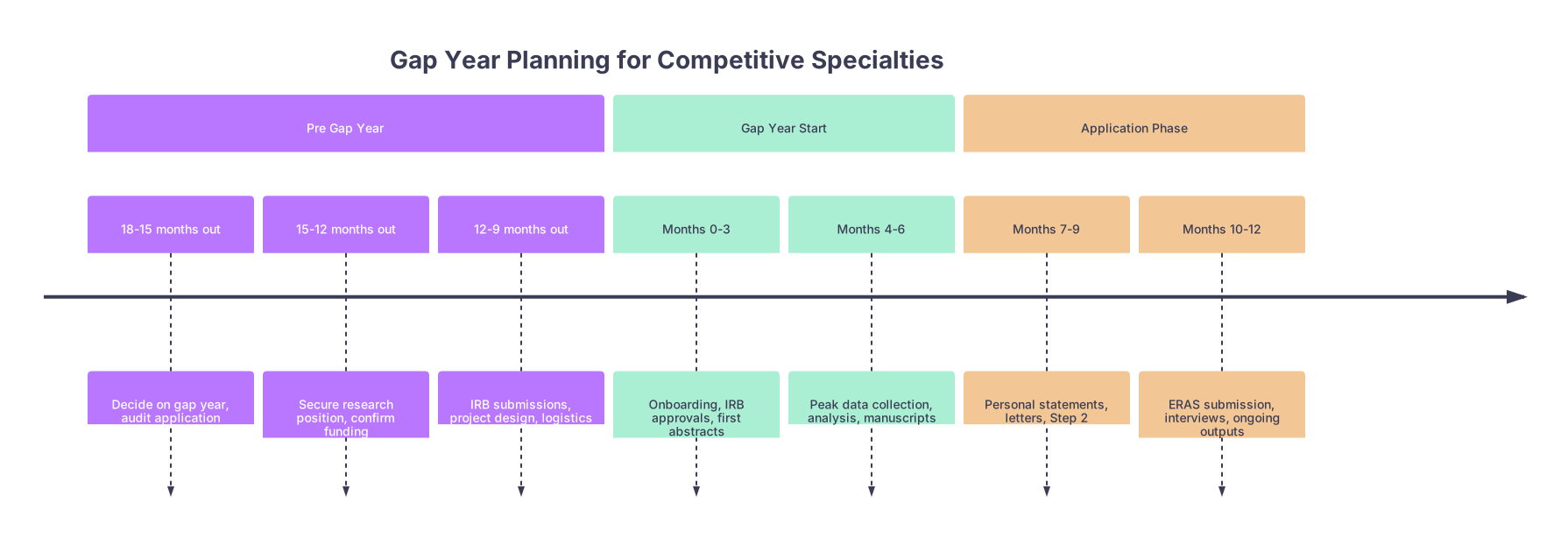
| Period | Event |
|---|---|
| Pre Gap Year - 18-15 months out | Decide on gap year, audit application |
| Pre Gap Year - 15-12 months out | Secure research position, confirm funding |
| Pre Gap Year - 12-9 months out | IRB submissions, project design, logistics |
| Gap Year Start - Months 0-3 | Onboarding, IRB approvals, first abstracts |
| Gap Year Start - Months 4-6 | Peak data collection, analysis, manuscripts |
| Application Phase - Months 7-9 | Personal statements, letters, Step 2 |
| Application Phase - Months 10-12 | ERAS submission, interviews, ongoing outputs |
Two Quick Trap Warnings
The “Name Brand, No Output” Trap
Working at a famous institution with a disengaged PI and no real authorship is a bad deal. Programs care about what you did, not just where you stood around.The “I Did Research” Without Receipts Trap
Saying “I did a research year” without concrete outputs is almost worse than doing nothing. You must have:- Measurable products (submissions, acceptances)
- Clear roles you can explain
- A mentor willing to vouch for your contribution
Final Takeaways
- At each point in the year, you should know exactly what the deliverables are: IRB submitted, abstract drafted, manuscript out, letter requested.
- A gap year that boosts competitiveness isn’t about time off; it’s about compressing 3–4 years of research and specialty immersion into 12 aggressive, structured months.
- If you plan backward from ERAS day, build real project pipelines, and stay visible clinically in your target specialty, your “gap year” stops looking like a detour and starts looking like a launchpad.