
It is December 15th. You are staring at the results of your military match rank order list, toggling between “general surgery,” “orthopedics,” and “ENT,” and your roommate just said the classic line: “Well, ortho is the most competitive, right?”
That answer is half‑true in the civilian world. In the military match, it can be dead wrong in a given year.
Let me walk you through how this actually works, because the usual internet advice is written by people who have never seen a GME selection board packet or heard a specialty leader say, “We have 3 billets this year instead of 10.”
This is not just “what’s competitive” in vibes. It is: number of spots, number of applicants, board culture, and service‑specific needs. And surgery is where the military weirdness shows up the most.
The Framework: Why “Competitiveness” Is Different in the Military
First, reset your mental model. The usual civilian metrics (Step 1/2, AOA status, away rotations) still matter. But in the military, competitiveness is completely distorted by three forces:
Tiny numbers
Civilian ortho might have 800+ PGY‑1 spots in a year. The Army ortho training system might be selecting 15–25 direct PGY‑1s across all programs, sometimes less. ENT? Some years you are fighting for 4–6 PGY‑1 positions service‑wide. Same for neurosurgery and plastics: low single digits.Fluctuating billets
GME billets are mission driven. One year the Navy may fund 6 general surgery PGY‑1 spots. Another year, 3. That is not theoretical. I have seen specialties drop their intake by half for a cycle. Competitiveness that year goes from “doable” to “bloodbath” even if your CV did not change.Service and accession mix
An Army HPSP student is not competing in the same pool as an Air Force USUHS student for every program. Some programs are tri‑service; others are single‑service. Some take almost all internal USUHS grads; others relatively more HPSP or GMO returnees. That mix changes the real odds.
So when someone asks, “How competitive is ortho vs ENT vs general surgery in the military?” the correct answer is: “It depends on your service, the year, and which specific program, but the pattern is still pretty clear.”
Let me break it down by major surgical specialties and put actual structure on this.
Quick Comparison: Surgical Specialty Competitiveness at a Glance
This is the 30,000‑foot view you probably want before we go deep.
| Specialty | Typical PGY-1 Spots (per service) | Relative Competitiveness* | Common Pathway Mix |
|---|---|---|---|
| General Surgery | 5–15 | Moderate–High | Straight-through + GMO |
| Orthopedics | 5–10 | Very High | Straight-through + GMO |
| ENT (Otolaryngology) | 2–6 | Very High | Mostly straight-through |
| Neurosurgery | 1–3 | Extreme | Almost all straight-through |
| Plastics (Integrated) | 1–3 | Extreme | Almost all straight-through |
| Urology | 2–6 | Very High | Straight-through + GMO |
*Relative to other military specialties, not civilian.
Now we will go specialty by specialty and talk about what actually makes them competitive in the military environment.
General Surgery: The “Baseline” Competitive Surgical Specialty
General surgery in the military is the default surgical workhorse. Every service needs deployable, broad‑scope surgeons. You see more general surgery billets than any other surgical field.
But here is the trap: “More spots” does not equal “easy.”
Why general surgery is competitive in the military
Volume of applicants
Every “I like the OR and do not hate nights” student lists general surgery somewhere. It becomes the catch‑all surgical choice for people who either:- Did not get ortho / ENT / urology interviews, or
- Want procedural work and trauma exposure without hyper‑narrow subspecialization.
Strong GMO pipeline
General surgery is the classic landing spot for strong GMOs who crushed their operational tours. You are not just competing with MS4s. You are up against:- Flight surgeons with combat deployments
- Battalion surgeons with glowing CO letters
- Prior selection board deferrals coming back with better profiles
I have seen boards where a mediocre MS4 with 235 Step 2, minimal research, and one rotation at the home program simply gets buried under GMO returnees with combat experience and 250+ Step 2 scores.
- Program cultures vary wildly
Some general surgery programs weigh research heavily. Others care almost exclusively about:- “Will this person deploy well?”
- “Can I put this resident in charge of a forward surgical team someday?”
So personality, team fit, and leadership evaluations can swing decisions more than in a highly academic civilian program.
Numbers and competitiveness pattern
Broadly:
- Army: more programs and more slots, but also the largest pipeline of applicants and GMOs.
- Navy: fewer programs, some years 3–6 funded PGY‑1s; heavy GMO returnee pressure.
- Air Force: fewer training platforms; tends to feel “tight” every year.
In practice, I would rank military general surgery as “moderate‑to‑high competitiveness,” equivalent to a solid mid‑tier civilian competitive specialty. Not the bloodbath of derm or ortho, but absolutely not a safety specialty.
Orthopedics: The “Classic” Competitive Surgical Field… With a Twist
Yes, ortho is very competitive. That part of the rumor mill is correct. But in the military, the reasons are slightly different than in the civilian world.
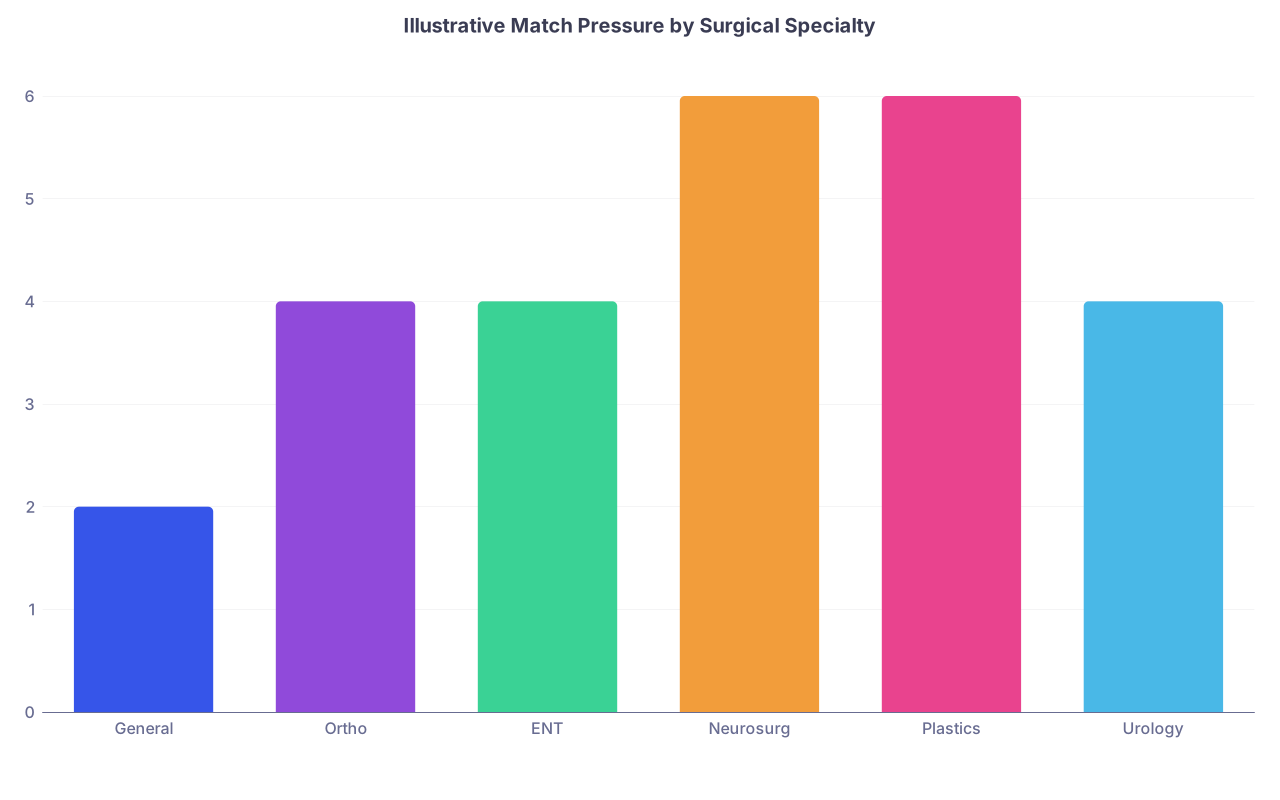
| Category | Value |
|---|---|
| General | 2 |
| Ortho | 4 |
| ENT | 4 |
| Neurosurg | 6 |
| Plastics | 6 |
| Urology | 4 |
Scale here is a rough “pressure score” – higher means more applicants per spot plus board selectivity. It is not exact, but it reflects reality reasonably well.
Why military ortho is so hard to match
Very high interest, especially among HPSP students
Orthopedics attracts a disproportionate number of prior‑service, athletic, or combat‑leaning students. Those are exactly the people the military tends to recruit into medicine. So your applicant pool is dense with “leadership‑heavy, PT stud, infantry‑adjacent” types. That tilts competitive.Limited training sites and slots
You might have, for example, 6–10 Army PGY‑1 ortho spots in a given year for the entire service. Many more applicants than spots. A single program dropping from 4 to 2 interns changes the entire field that cycle.Very unforgiving boards
Orthopedics selection boards in the military are blunt. They want:- High Step 2 (and now strong clinical evaluations since Step 1 is pass/fail)
- Clear ortho commitment (sub‑Is at military ortho programs, research, faculty advocacy)
- Excellent physical fitness and officer potential
I have seen ortho boards pass over “solid” students who would match community civilian ortho simply because their file did not scream “top‑tier future attending and battalion asset.”
GMO vs straight‑through in ortho
Historically, military ortho has used both straight‑through training and GMO deferment models. The mix changes year to year and by service.
- Some years: many direct PGY‑1s, fewer GMO → ortho.
- Other years: more GMOs will be tagged to come back later.
This means: an unsuccessful MS4 ortho applicant who accepts a GMO may actually have a better shot three years later if they perform well operationally and maintain academic engagement.
So for timing:
- Straight‑through applicants need a nearly complete ortho‑ready file by early MS4.
- GMO‑bound students can build a stronger portfolio over time but must not disappear academically.
Bottom line on ortho
In most recent cycles, military orthopedics sits at or near the top for competitiveness among surgical specialties. If a student tells me, “I am choosing between ortho and general surgery based on what is easier to match,” I tell them bluntly: that is the wrong reason, and also, general is still not easy.
ENT (Otolaryngology): Small Numbers, Sharp Edges
ENT in the military is one of those specialties where raw numbers hurt you. The difference between “competitive” and “brutal” might be a single billet cut.
What drives ENT competitiveness
Very small intake
Some services will have 2–4 ENT PGY‑1 spots any given year. Others may not sponsor any that cycle. You are often looking at single digits system‑wide.High academic bar
Military ENT faculty tend to come from strong civilian fellowships and bring that culture with them. They push for applicants with:- High Step 2 scores
- Strong clerkship grades (Honors in surgery, ENT sub‑I)
- Real research output, often ENT‑related
A “B+ student” with limited research is essentially out of the running most years.
Narrow pipeline
Unlike general surgery and ortho, the ENT applicant pool is smaller but heavily self‑selected. You do not have many “backup ENT” applicants. So almost everyone in the pool is all‑in and well prepared.Limited GMO return slots
ENT does take GMO returnees, but the numbers are tiny. That means if you are thinking, “I will do a GMO tour then match ENT,” you are realistically looking at a very narrow target.
Personality and board perception
ENT boards tend to care a lot about:
- Work ethic and team function during ENT rotations
- Communication style (you are managing airways, complex oncology, etc.)
- Long‑term retention and leadership traits
If you rotated at the program and did not leave a strong positive impression, your paper metrics may not save you.
ENT in the military effectively sits at the same competitiveness tier as ortho and urology. The difference is just that the applicant pool is smaller and more self‑filtered.
Neurosurgery: Micro‑Numbers, Macro‑Selectivity
Neurosurgery in the military is about as close as you get to “single‑digit lottery” while still being a real training pathway.
Reality check on neurosurgery slots
You are often looking at:
- 1–3 PGY‑1 positions per service per year, sometimes fewer.
- Some years where a service may choose not to sponsor a neurosurgery PGY‑1 if billet planning changes.
You are competing for literal single seats at the table.
Who the neurosurgery boards select
Boards are extremely conservative. They want people who will finish seven‑plus years of training, handle high‑acuity care, and function in deployed / resource‑limited settings.
That translates to:
- Top academic performance (high Step 2, top clerkship evaluations)
- Demonstrated stamina and resilience (they look hard at narrative comments)
- Rotations at military neurosurgery sites with enthusiastic faculty advocates
- Research is strongly preferred, often with neurosurgery or neuroscience relevance
The board will also worry about retention. Someone who looks like they will do 4 years post‑residency and bolt for private practice is less attractive than someone oriented toward long‑term service and academic leadership.
Straight-through vs deferred
Military neurosurgery has historically made use of:
- Straight‑through military programs, and
- Civilian deferments for some residents.
Deferments are not guaranteed. When they exist, they go to the strongest files. If you are thinking neurosurgery, you need to build a file that would also be competitive in the civilian neurosurgery match, not just “good for the military.”
In competitiveness terms, neurosurgery is in its own category: “extreme” primarily because of micro‑numbers and high board selectivity.
Plastics: Integrated Programs and “One‑Slot Years”
Plastic surgery in the military is similar to neurosurgery in competitiveness profile but with some quirks.
Integrated vs independent pathways
Historically, some plastic surgeons trained via general surgery first then plastics. There are also integrated plastic programs. The mix shifts over time.
The key points for you:
- Integrated plastics PGY‑1 seats are extremely scarce. One to three at best per service; some years, none.
- Independent plastics positions (after general surgery) also have few billets and are highly selective.
Why military plastics is so competitive
Micro‑numbers again
“We have one slot this year” is something you might literally hear. In that context, being in the top third of your class is irrelevant. You must be near the absolute top of the applicant pool.Heavy research and academic expectations
Plastic surgery has a strong academic and cosmetic / reconstructive innovation culture. The military overlay adds:- Complex trauma reconstruction (burns, blast injuries)
- Craniofacial reconstruction for wounded service members
Programs want residents who will publish, present, and represent the military in national academic circles.
- Delayed commitment paths
Many eventual military plastic surgeons start in general surgery, demonstrate excellence, then compete for plastics fellowships. This means: you may not be competing against MS4s; you might be up against finished chief residents with years of evaluations.
Plastics sits alongside neurosurgery in the “extreme” tier for military match competitiveness. If you are serious about this path, your planning needs to start early MS2.
Urology: Quietly As Competitive As Any Surgical Specialty
Urology is often misunderstood by students. In the military match, it is easily as competitive as ortho or ENT, sometimes more so, because of the similar dynamic: high interest, low numbers.
Structural factors in urology competitiveness
Separate national match tradition, modified in military
Civilian urology uses its own match system; the military overlays its GME selection process on top of that culture. So urology programs expect:- Strong academics
- Solid research
- Clear early commitment to the specialty
Low number of billets
You are again looking at a few PGY‑1 slots per service, usually in the low single digits. Any swing in billets heavily shifts competitiveness that year.Very strong letter culture
Military urology decisions are heavily influenced by:- Letters from military urologists you rotated with
- How clearly they say “we want this person” vs “fine resident”
This is not a specialty where you can be anonymous. A neutral letter can hurt more than no letter.
- Mix of MS4 and GMO applicants
Some services have seen strong GMO‑to‑urology pathways. A GMO with outstanding performance, board scores, and urology research / rotations can be highly competitive.
Urology is “very high competitiveness” year after year in the military. If you are choosing between urology and general surgery solely for match odds, you are thinking about the problem in the wrong direction.
How Program Type and Service Change the Competitiveness Equation
You cannot talk about military competitiveness without acknowledging that the patch on your shoulder changes your odds.
Tri-service vs single-service programs
Tri‑service programs (e.g., some general surgery and ortho sites) will consider applicants from Army, Navy, and Air Force.
This increases the applicant pool per slot. Good for exposure, bad for odds.Single‑service programs (e.g., some Army‑only or Navy‑only sites) limit the pool but may also have fewer billets.
You will see situations where:
- An Army ortho applicant has 3 programs with 8 total spots to target.
- A Navy ENT applicant has a single program with 2 spots.
Same Step 2 score, very different real‑world competitiveness.
Active duty vs reservist / NG pathways
For some specialties, especially highly subspecialized surgery, there may be:
- Active duty training pathways (most common), and
- Occasional reserve component sponsorships through civilian training.
Those are rare, and you should not rely on them as a primary plan, but they exist and change the long‑term picture for a few people.
Practical Implications for Applicants: How to Think About Competitiveness
Let us translate all this into decisions you actually have to make.
1. Do not play “specialty shopping” based solely on perceived odds
Switching from ortho to general surgery purely because “ortho is hard” is naïve. General surgery is still competitive enough that you can fail to match if:
- Your file is mediocre, and
- You do not have strong rotations and letters at military programs.
If you love ortho, pursue ortho with an eyes‑open understanding of the numbers. If you love general surgery, good, you still need to build a strong file.
2. Understand your service’s patterns, not just generic “military” trends
An Army HPSP student trying for orthopedics has a different competitive reality than a Navy USUHS student trying for urology. Talk to:
- Recent grads from your school in your service
- Residents at the specific programs you are targeting
- Your service’s GME office (they actually know the billet history)
Do not rely on a single Reddit thread from 2019.
3. Match your profile to your goal specialty early
Here is the rough bar (very generalized, but you get the point):
| Tier | Example Specialties | Typical Successful Profile* |
|---|---|---|
| Extreme | Neurosurgery, Plastics | Top grades, high Step 2, strong research, major advocacy |
| Very High | Ortho, ENT, Urology | Above-average scores, strong rotations, some research |
| Moderate–High | General Surgery | Solid scores, strong clinical evals, excellent rotations |
*There are exceptions, but this pattern holds often enough that ignoring it is foolish.
If your Step 2 is 220 and you are mid‑class with limited research, neurosurgery or integrated plastics is fantasy. Ortho / ENT / urology are uphill. General surgery may still be realistic if you crush rotations and secure strong letters.
4. Use GMOs strategically, not as a punishment
One of the biggest misunderstandings:
“Did not match → stuck as a GMO → career ruined.”
I have seen the opposite. Someone fails to get ortho as an MS4, goes GMO, scores outstanding officer evaluations, does research on the side, rotates back at ortho as a GMO, and matches on the second try because the board sees a mature, high‑value officer.
That said: if you hate the idea of GMO work and have zero interest in operational medicine, you need to be brutally honest about that before signing an HPSP contract for a hyper‑competitive surgical field.
Frequently Asked Questions
1. Is there a “safest” surgical specialty to match in the military?
No genuinely safe surgical specialty exists. General surgery has more slots but also more applicants and GMO competition. The so‑called “less competitive” fields either have low numbers of billets or are only “easier” compared with neurosurgery / plastics, which are extreme outliers.
If you are purely risk‑averse about matching, surgery in the military is the wrong ecosystem. Choose surgery because you want the work and you accept the competitive landscape.
2. Are civilian deferments easier or harder to get than military training spots?
Civilian deferments are not a back door. For most surgical specialties, they are at least as competitive as military spots, often more so, because:
- The services grant very few deferments.
- Those slots go to the strongest academic files and the highest‑priority specialties for that year.
Plan your file as if you must be competitive for a military training spot first. If a deferment appears, great. But do not bank on it.
3. How much does research matter in the military surgical match?
It depends on specialty:
- Neurosurgery, plastics, ENT, and urology: research can be decisive. You are competing against people with publications and national presentations.
- Orthopedics: research helps, especially ortho‑related, but stellar clinical performance and letters can still outweigh it.
- General surgery: useful, particularly for academic‑leaning programs, but less mandatory than for subspecialties.
Bottom line: for the very high and extreme tiers, you should have some meaningful research, preferably in that field.
4. Can a strong GMO tour “erase” a mediocre medical school performance?
It can mitigate it, but not erase it. A stellar GMO tour does several things:
- Shows maturity, leadership, and officer performance.
- Generates powerful command and specialty letters.
- Gives you time to add research and maybe improve test performance (Step 3, etc.).
But consistently weak academic performance, failed boards, or poor clinical evaluations will still weigh heavily. The GMO tour is an amplifier, not magic.
5. If I am undecided among multiple surgical specialties, when is it “too late” to choose?
If you want neurosurgery or integrated plastics, you need to lean in by early MS2 or very early MS3. You will need that time for research and specialty rotations.
For general surgery, ortho, ENT, and urology, you realistically need to commit by early MS3, so you can:
- Schedule sub‑internships at relevant military sites
- Build relationships and letters in that field
- Shape your fourth‑year schedule around that specialty
Waiting until late MS4 to “pick a surgical field” in the military structure is how people end up with weak specialty exposure and unconvincing applications.
With this mental map, you are no longer just guessing that “ortho is hard” and “general surgery is easier.” You know why each surgical specialty behaves the way it does in the military match, and where the traps live.
The next step in your journey is not another blog post. It is concrete: figure out which surgical work you genuinely want to do, talk to people at the actual military programs, and start building a file that fits that reality. Once you do that, then we can have the next conversation—about how to use away rotations and your MS4 schedule to make the GME board look at your packet and say, “We want this one.”