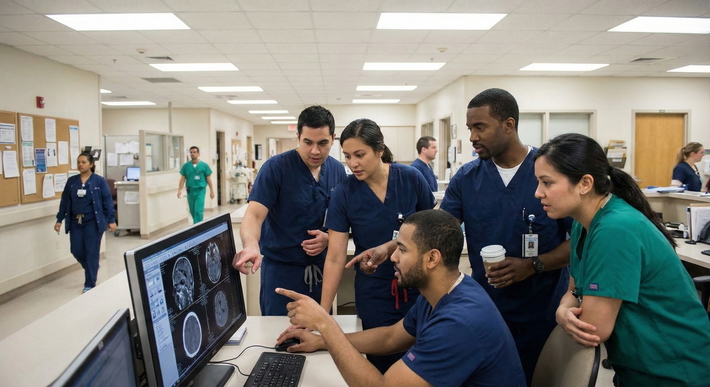
It is January. You are on your neurosurgery sub‑I, standing at the back of M&M. Someone mentions, almost offhand, “We only have two spots this year.” You do the math in your head. Two positions. Dozens of applicants rotating. Hundreds more you will never meet. That is the neurosurgery match dynamic in one line: tiny absolute numbers, massively amplified consequences.
Let me break this down specifically. Neurosurgery is not dermatology or orthopedics where “competitive” means 500+ positions and broad variability across programs. This specialty runs on thin margins: a limited number of programs, extremely small class sizes, long training, and faculty who remember every applicant. One flawed letter. One mediocre rotation. One off‑the‑cuff comment on Zoom. It all lands harder because the denominator is so small.
We will go through how that plays out: numbers, interview economics, away rotations, letters, Step scores, red flags, and what actually moves the needle when only a few spots exist.
1. The Numbers: Why Neurosurgery Feels Different
First, scale. Neurosurgery is numerically tiny.
| Specialty | Programs | Positions/Year | Typical Categorial Class Size |
|---|---|---|---|
| Neurosurgery | ~120 | ~240 | 1–3 |
| Dermatology | ~150 | ~500 | 3–6 |
| Orthopedics | ~190 | ~900 | 4–8 |
| ENT (Otolaryngology) | ~120 | ~370 | 3–4 |
A few points that matter:
- Many neurosurgery programs have 1–2 residents per year. A “bad” match year is catastrophic for them.
- Losing one candidate to another program can mean a third of a class gone.
- Because training is 7 years, any mismatch impacts the department for almost a decade.
This is why neurosurgery PDs and chairs behave differently. They are less tolerant of risk. They rely heavily on personal knowledge, phone calls, and informal vetting. The entire system tilts toward people they know (or who are known by someone they trust).
Match Rate and Self‑Selection
Raw match rates can be misleading because neurosurgery applicants are self‑selected. By ERAS time, many weaker students have already peeled off.
But even within that filtered pool, the match rate is lower than “big” specialties. You will typically see:
- High unmatched rate among independent neuro applicants
- Very few “scramble” opportunities—there is not a safety net of unfilled positions
Neurosurgery does not behave like internal medicine, where a strong unmatched candidate can just apply SOAP and land at a decent program. If you miss, you often miss completely. Or you pivot out of the field.
2. Class Size and Risk: Why Fit is Magnified
Imagine a medicine program with 30 residents per class. One mediocre resident is 3.3% of the class. Annoying, but manageable.
Now imagine a neurosurgery program with 2 residents per year. One problematic resident is 50% of the class. For seven years. PDs do not forget that math.
That reality drives several “weird” features of the neurosurgery match:
Programs are obsessively careful with “fit.”
I have heard a PD say, “I would rather not fill than match the wrong person.” In neurosurgery, that is not hyperbole.Residents have disproportionate influence.
At small programs, residents live with the consequences. Their voice carries weight. If the chief says, “I cannot work with this person for 7 years,” you are done, no matter your Step score.A single red flag is fatal more often than not.
A professionalism incident, repeated poor teamwork feedback, or serious concern on an away rotation can sink you across multiple programs because faculty talk.
When you are one of two categorical residents, you are not just “a trainee.” You are 50% of the call pool, 50% of the junior manpower, and a visible part of the program’s identity to medical students and hospital leadership.
3. Step Scores and Metrics: Still a Filter, Not the Final Filter
Neurosurgery has historically been near the top of the Step 1 score heap. Step 1 going pass/fail shifted some of that pressure to Step 2 CK and to non‑numeric signals. But do not fool yourself: numbers still matter.
Common pattern I see:
- Step 1: Now a screening “must‑pass, no drama” metric, but fails or marginal passes will be scrutinized.
- Step 2 CK: Numeric stand‑in for Step 1. 250+ is common among competitive applicants; mid‑240s can be fine if the rest is strong.
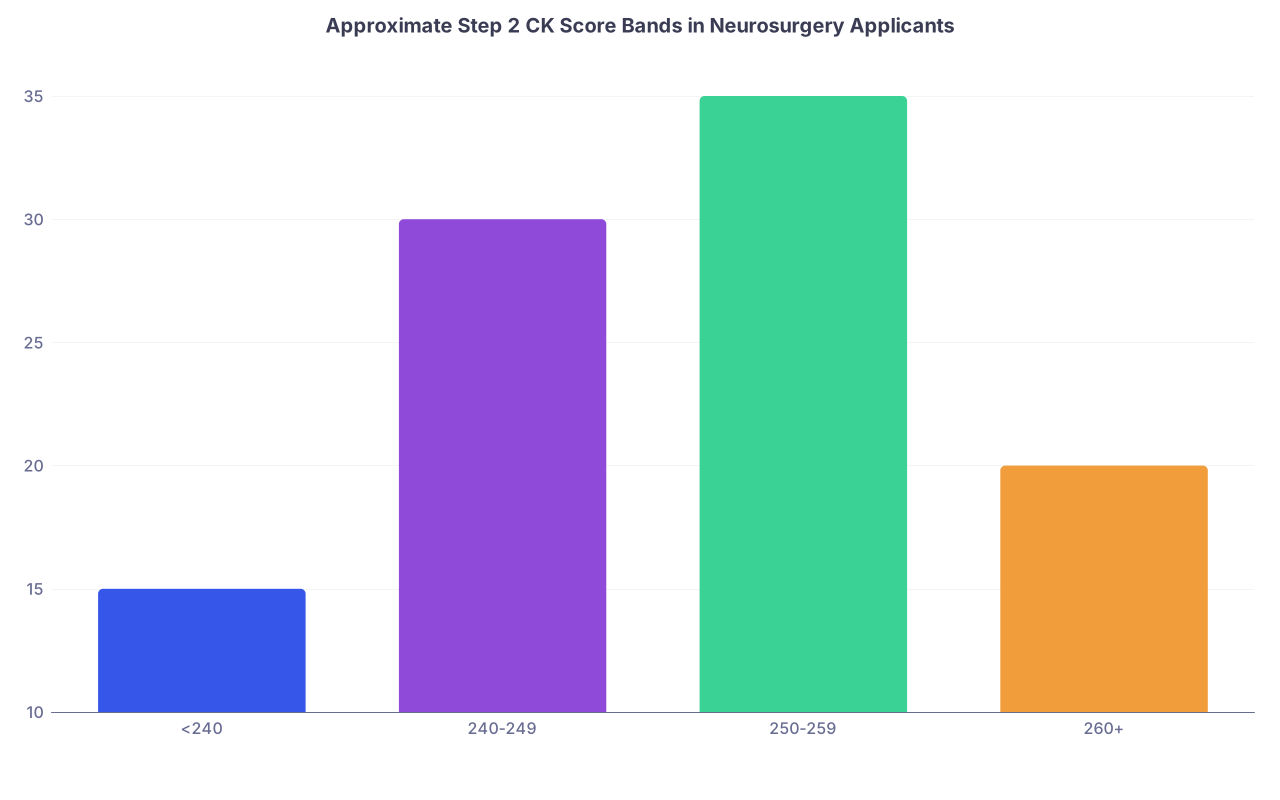
| Category | Value |
|---|---|
| <240 | 15 |
| 240-249 | 30 |
| 250-259 | 35 |
| 260+ | 20 |
Take those numbers as directional, not gospel. Here is how programs actually use them:
- As an early filter to manage volume. You do not want to be below a program’s quiet cutoff.
- As a tie‑breaker between similar applicants.
- As a risk indicator—for neurosurgery boards and in‑training exams.
Where small numbers matter: a single outlier score stands out dramatically. If your Step 2 is 232 and you are applying to a small program that interviewed 40 people for 2 spots, you are the obvious academic risk in that cohort. You must offset it with stellar clinical performance, research, and letters from people they know.
4. Away Rotations: The Real Currency
Neurosurgery is still very much an away rotation specialty. Not because PDs love the inefficiency, but because with such small numbers, they want to see you work—onsite, under pressure, with their team.
Here is the functional reality:
- Most serious applicants do 2–3 neurosurgery aways.
- Many programs fill a majority of their spots with home students + rotators.
- Words you will hear constantly: “audition rotation,” “sub‑I,” “we need to see them in the OR.”
Why this matters in a small‑numbers environment:
Your rotation performance is a huge part of your application.
Students who are forgettable on their away are basically dead in the water at that program. Neurosurgery thrives on visible work ethic and reliability.Rotations redistribute risk.
PDs feel more comfortable ranking a known quantity high, even if the abstract metrics are slightly weaker, because they have seen that person’s floor and ceiling.Rotations create a narrow funnel.
Every service has a capacity for sub‑Is. They might take 3–4 students per block. That means 8–12 visiting students for 2 spots. The competition is right in front of you.
I have seen this play out bluntly. Student A: strong Step scores, impressive research, but on rotation was detached, not integrated into the team. Student B: more average metrics, but showed up early, anticipated needs, operated smoothly, and bonded with residents. Guess who got ranked higher. At several programs.
5. Letters and Phone Calls: The Informal Network
In neurosurgery, letters are not just “LORs.” They are often endorsements from specific people in a very small national community.
You are not just collecting 3–4 nice paragraphs. You are trying to secure:
- A letter from your chair or program director (mandatory)
- A letter from a neurosurgeon who is known at the national level
- A letter from an away rotation where you performed very well
The key dynamic: the specialty is small enough that letter writers know each other. They read between the lines immediately.
Phrases that matter:
- “Top 5% of students I have worked with in the past 10 years.” Strong.
- “I recommend without reservation.” Baseline acceptable.
- “I have no concerns.” Always makes me raise an eyebrow. Why did you feel the need to say that?
And then there are the phone calls. Neurosurgery uses behind‑the‑scenes communication heavily:
- Chair A calls Chair B: “We really like this student. Strong work ethic. Good in the OR. Push them up your list.”
- PD A emails PD B: “We had concerns about their performance on our service; happy to discuss details.”
Those calls are not a myth. I have seen rank lists move based on them. This is where “small numbers, huge consequences” becomes painfully concrete. If you alienate a major figure, you do not just lose one program. You might lose an entire region.
6. Research and Academic Trajectory: Arms Race with Real Limits
Neurosurgery and research: a mutually parasitic relationship. Many applicants now come with:
- One or more research years
- Several neurosurgery‑related publications (sometimes inflated)
- Posters and podium talks at CNS, AANS, NREF, or section meetings
This creates an academic arms race. But here is what actually matters to PDs:
Sustained involvement vs random padding.
A multi‑year, coherent research story in neurosurgery or neuroscience, supervised by neurosurgeons, lands better than 10 scattered case reports.Evidence you will not flame out in a 7‑year academic program.
Grad school, strong research productivity, ability to work in a lab and still function clinically—these are proxies for long‑term performance.Fit with program identity.
A heavily academic program (UCSF, MGH, Penn) may prioritize serious NIH‑track potential. Smaller community‑leaning programs prioritize reliability and clinical throughput.
In a field this small, research can serve as pre‑screening and networking. Presenting at a meeting where PDs and chairs are in the room gives you a chance to be “the person from Dr. X’s lab,” which can matter when your file crosses their desk months later.
7. Interview Slots: The Harsh Math
Most neurosurgery programs interview something like 25–60 candidates for 1–3 positions. That is it.
Let us frame the math:
- 2 categorical spots
- 40 interviewees
- On paper, each interviewee walks in with a 5% raw chance per program
Of course, probability is not that clean; some applicants are clearly long‑shots, some are near guarantees. But the psychological effect is real. A single mediocre interview tanks your odds in a very small sample.
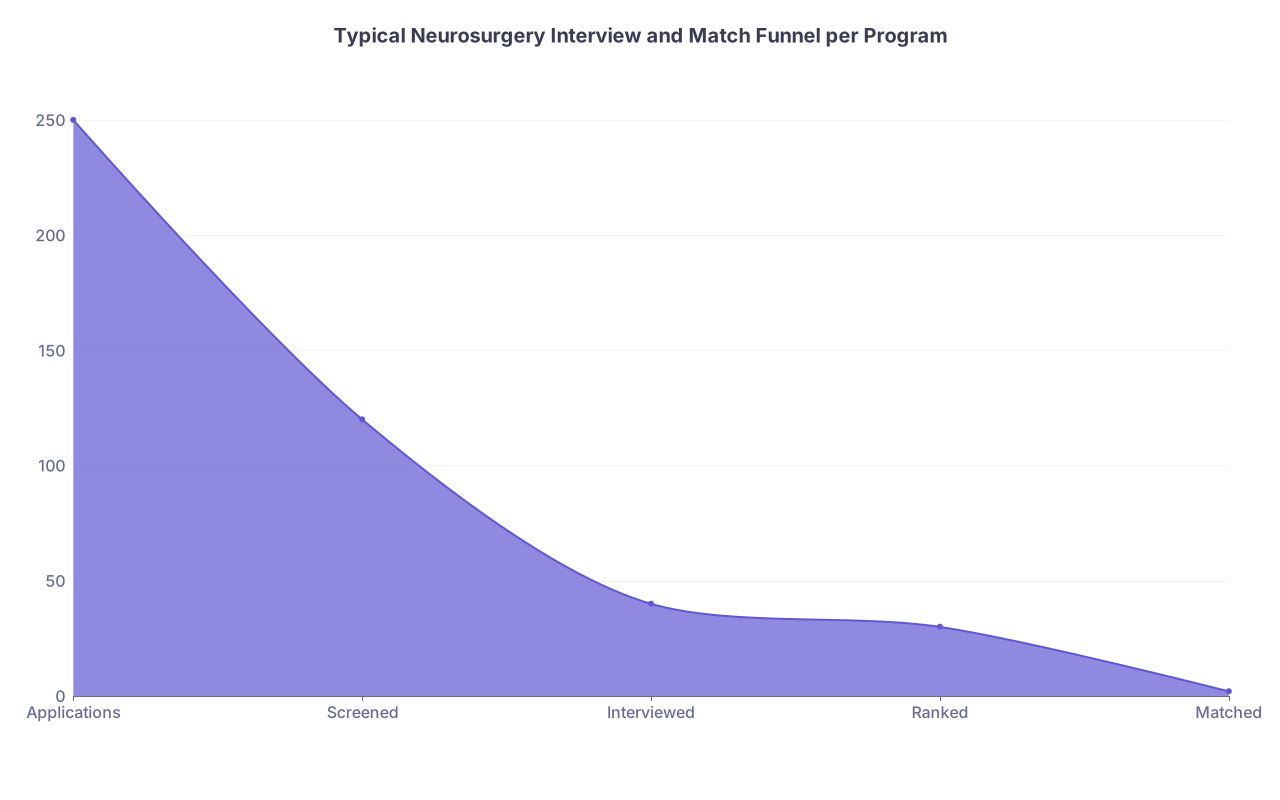
| Category | Value |
|---|---|
| Applications | 250 |
| Screened | 120 |
| Interviewed | 40 |
| Ranked | 30 |
| Matched | 2 |
Notice how brutal the drop‑offs are. That “screened to interviewed” step is absolute murder.
On interview day, the dynamics are:
- Everyone is “good enough” on paper. They would not be there otherwise.
- Programs are hunting for red flags and exceptional strengths.
- Resident impressions matter enormously. Informal conversations, pre‑interview dinners, and Zoom socials are not fluff.
The other wrinkle: because neurosurgery is so small, applicants often share a similar list of programs. That creates cluster effects. Top‑tier applicants will overlap at the same big‑name institutions and then disperse to different second‑tier programs. A single overconfident or underprepared interview can cost you at multiple places simultaneously.
8. Rank Lists: Tiny Changes, Big Outcomes
Here is where the small‑numbers theme hits its peak: rank lists.
Say a program has 2 positions and ranks 30 applicants. They will typically match within their top 10–15. Now imagine two minor shifts:
- Applicant A, a strong but not superstar candidate, initially sits at #9.
- A last‑minute call boosts Applicant B (known to the chair) from #11 to #7.
- A resident concern nudges Applicant A from #9 to #11.
End result: Applicant A falls off that program’s realistic match window. That is how “small” political or interpersonal factors—an extra phone call, one resident’s negative comment, a lukewarm away rotation—transform into full‑blown match consequences.
On the applicant side, your rank choices matter even more because of:
- The small number of total interviews (many neurosurgery applicants have 10–15, not 25+ like IM).
- The scarcity of back‑up specialties. You cannot casually dual‑apply neurosurgery and dermatology with equal seriousness. The signals conflict.
You need a rank list strategy that recognizes two truths:
You should not “punt” on your dream programs.
High reach programs occasionally dip further down their list than you think.You cannot afford a top‑heavy fantasy list.
If you rank 5 ultra‑competitive places then a big gap to two realistic ones, and everyone above you in that region stays put, you can slide right through to nothing.
9. Red Flags and Non‑Linear Consequences
In a big specialty, a moderate red flag can be absorbed. In neurosurgery, it can be fatal. Because people talk. And there are not many people.
Common red flags that disproportionately hurt in this field:
- Repeated low‑effort evals on neurosurgery rotations
- Documented professionalism issues
- Dishonesty about research or publications (coauthors will find out)
- Interpersonal friction with residents or nurses
What makes neurosurgery different is how quickly those red flags move through the network. Someone will mention it at SNS meetings, via email lists, or just over coffee. Not as a malicious smear. As risk management.
The non‑linear part: one incident at one program can wipe out half a dozen potential programs where those faculty train together, review grants together, or sit on boards together.
10. What Actually Moves the Needle (If You Are Serious About Matching)
Let me be very clear. You do not “hack” the neurosurgery match with gimmicks. You increase or decrease your odds in a system with tight constraints and low tolerance for nonsense.
The applicants who consistently match neurosurgery, especially from non‑top‑tier schools, generally combine:
- Solid to strong Step 2 CK (not necessarily 260+, but not weak)
- 1–2 serious neurosurgery mentors who will pick up the phone for them
- At least one neurosurgery research project with visible output
- Strong home neurosurgery performance
- 2+ away rotations where they are clearly above average
Then they:
- Apply realistically across program tiers. Not just to the big brand names.
- Do not sabotage themselves with arrogance, weird behavior, or burnout on away rotations.
- Listen when mentors say, “This is not the year to be picky.”
If your file is weaker in one dimension (e.g., Step 2 mid‑230s), you must overperform elsewhere and accept that your target should be breadth, not prestige.
FAQ (Exactly 4 Questions)
1. How many away rotations should a serious neurosurgery applicant do?
Typically two, occasionally three. One at a “reach” academic program and one at a realistic target where you would genuinely be happy. A third is reasonable if your home program is small or if you need another venue to prove yourself, but stacking four+ aways usually backfires—fatigue, diminishing returns, and more chances to pick up a mixed review.
2. Can I match neurosurgery without a home neurosurgery program?
Yes. It is harder, but it happens every year. You need to substitute structure: early identification of an external neurosurgery mentor, a dedicated research home (often at a nearby academic center), and strategically chosen away rotations where you function as “their student.” Programs understand the no‑home‑program disadvantage; they do not excuse weak performance, but they will credit a strong story built externally.
3. How bad is it to have a mediocre Step 2 score in neurosurgery?
“Bad” depends on context. A 238 with excellent clinical performance, strong letters from known neurosurgeons, and meaningful research can still match—usually at less name‑brand programs. A 238 with thin neurosurgery engagement and generic letters is in deep trouble. In a small‑numbers specialty, lower scores narrow your viable program universe sharply; they do not automatically shut it down if the rest of your application screams reliability and upside.
4. Should I dual‑apply if I am worried about not matching neurosurgery?
If your neurosurgery signals (rotations, letters, research, Step 2) are clearly below the usual bar, then yes, you should at least have a serious backup plan. But dual‑applying neurosurgery and another highly competitive specialty (derm, ortho, ENT) rarely works well because you cannot convincingly commit to both. The dual‑applications that make sense are usually neurosurgery plus a more forgiving field aligned with your interests (neurology, radiology, maybe general surgery), with explicit guidance from mentors who know your file and the current match climate.
Key points to walk away with:
- Neurosurgery runs on tiny absolute numbers: small class sizes, limited programs, and very few real second chances. That magnifies every decision and every impression.
- Personal knowledge—away rotations, letters from known neurosurgeons, and behind‑the‑scenes phone calls—carries more weight than raw metrics once you clear the basic academic bar.
- You cannot control the entire game, but you can control whether you are a known, reliable quantity to several programs rather than a good but faceless CV in a very small, very picky stack.