The way most students talk about “integrated vs independent plastics” is outdated, superficial, and frankly dangerous for real career planning.
Let me be blunt: integrated plastic surgery is now one of the most competitive—and strategically unforgiving—matches in American medicine. Independent plastics still exists, but as a shrinking, structurally biased backdoor that only works for a very specific type of applicant who plays a long game correctly.
You cannot treat them as interchangeable “two paths to the same place.” They are different ecosystems with different gatekeepers, timelines, and failure points.
I am going to break this down in concrete terms: actual competitiveness, strategy gaps, and how you should think about these paths as they exist now, not as they existed 10–15 years ago.
1. Reality Check: What “Competitiveness” Actually Means in Plastics
Plastic surgery is not just “a competitive specialty.” It is in the absolute top tier of competitiveness, alongside derm and ENT. The integrated pathway, especially, is brutal.
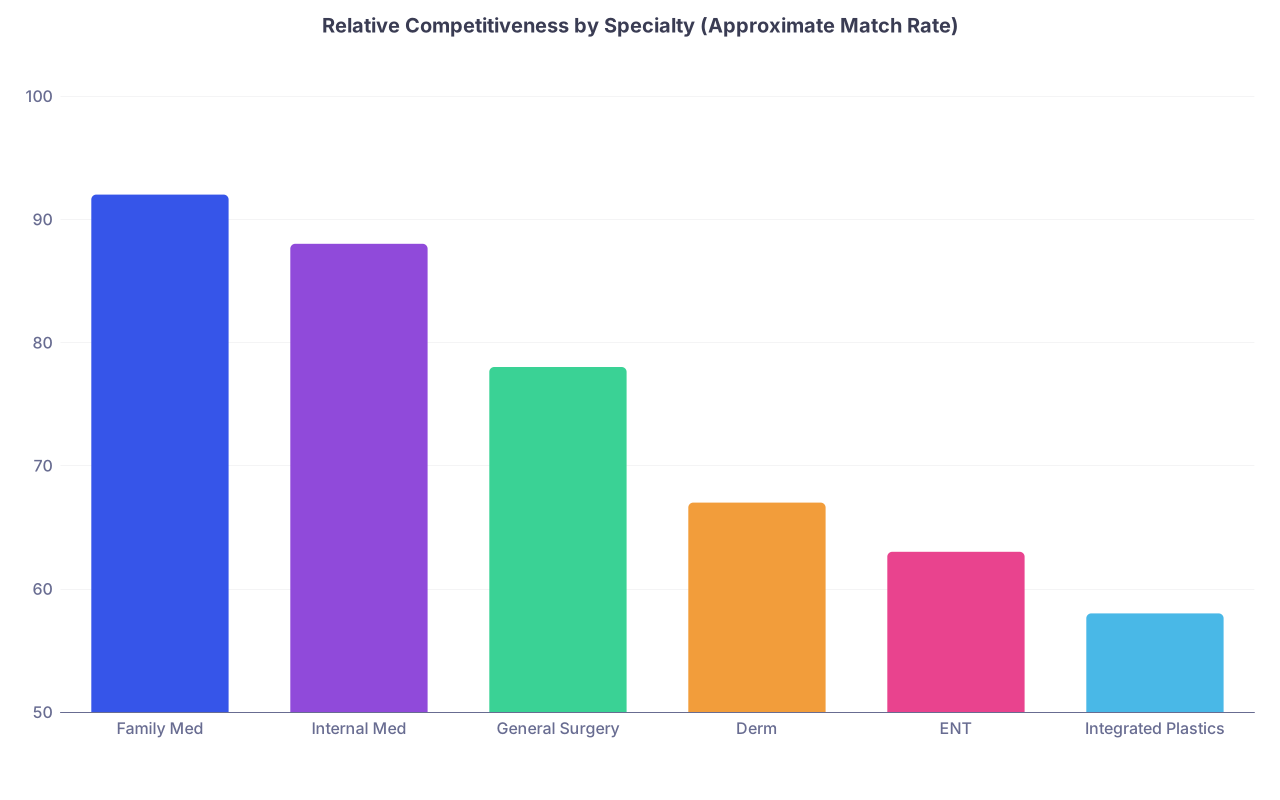
| Category | Value |
|---|---|
| Family Med | 92 |
| Internal Med | 88 |
| General Surgery | 78 |
| Derm | 67 |
| ENT | 63 |
| Integrated Plastics | 58 |
These are rough, ballpark numbers, but the hierarchy is directionally correct: integrated plastics is a low‑supply, high‑demand match. You are applying to a specialty that fills 200–300 PGY‑1 spots a year nationwide, depending on the year, across all programs.
Independent plastics? Even smaller. And a fraction of those spots are truly in play for non‑home residents.

Let me define “competitiveness” the way PDs and applicants actually experience it:
Board scores / exams
- Step 1 is now pass/fail, but programs still know your Step 1 timing and your school.
- Step 2 CK: high 240s+ is the real floor at top programs; 250+ for comfort.
- For independent: ABSITE performance and reputation inside general surgery matter more than Step at that point.
Research volume and quality
- Integrated: 5–15+ pubs/abstracts/posters in plastics‑adjacent fields is now the median at many top programs.
- Independent: a solid record helps, but your operative log and faculty support from your general surgery (or other) program carry more weight.
Letters and institutional reputation
- Integrated: 2–3 letters from plastic surgeons who are known in the field or at least at your target tier.
- Independent: letters from your general surgery PD and plastic surgeons at your institution are critical. “Known” names still matter, but your performance as a resident is central.
Fit with the plastic surgery culture
- Work ethic, technical aptitude, being “coachable,” professional polish, and the ability to function on a small, tight‑knit team. Programs are tiny. One bad hire can poison a department for years. They are risk‑averse.
That is the baseline. Now the pathways.
2. Integrated Plastics: The Front Door (That Barely Opens)
Integrated plastic surgery is a 6‑year residency straight out of medical school. No prior residency required. It is the default path now.
How competitive is integrated plastics, concretely?
Look at any recent NRMP Charting Outcomes for integrated plastics applicants and you will see a few patterns:
- Mean Step 2 CK for matched US MD applicants is usually in the high 240s to low 250s.
- Mean number of research items is typically in the teens (and that is mean, not 90th percentile).
- The unmatched rate among US MD seniors who rank plastic surgery as their only specialty is high—often 35–45% or worse depending on the year.
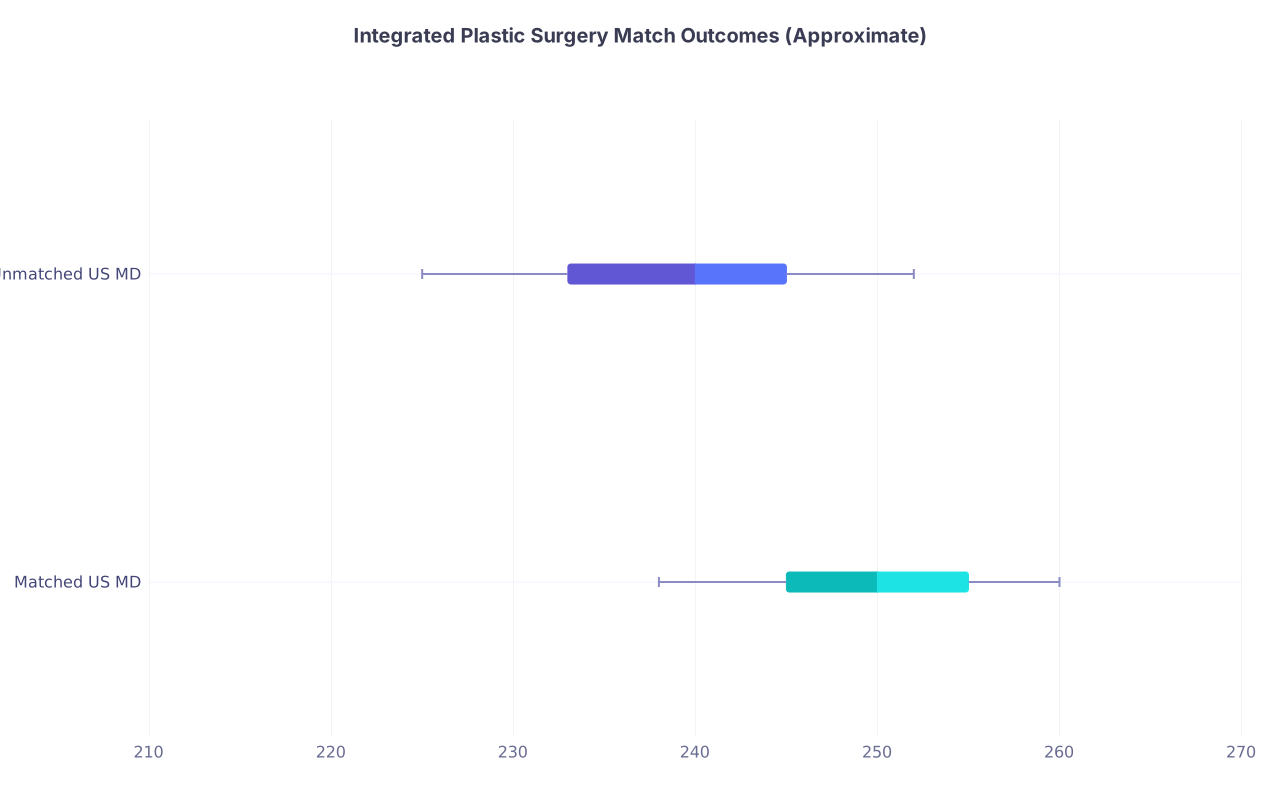
| Category | Min | Q1 | Median | Q3 | Max |
|---|---|---|---|---|---|
| Matched US MD | 238 | 245 | 250 | 255 | 260 |
| Unmatched US MD | 225 | 233 | 240 | 245 | 252 |
Does that mean you absolutely must have a 250+? No. But if you are far below that, you need compensatory strengths that are obvious: major research output, tight connections in plastics, a home program with strong pull, or a compelling nontraditional background that programs actually value (and most “unique” stories are not that valuable).
Integrated plastics selection filters
Think like a PD filling 2 spots out of 300 applications.
Typical initial filters:
- Screen 1: Fail any USMLE step? Auto‑cut at most programs.
- Screen 2: Step 2 CK below a certain threshold (235–240 at many competitive places).
- Screen 3: No meaningful plastics exposure or research? Into the “unlikely” pile.
- Screen 4: No compelling letters from surgeons? Hard to justify an interview.
You end up with 30–80 applicants for 2–3 interview slots per position. That is the bottleneck.
What actually separates the interviewed from the rest?
- Sustained plastically relevant research (hand, craniofacial, microsurgery, outcomes, device development).
- A narrative that shows early and consistent commitment to plastics, not “I decided in January of MS3.”
- Strong performance in surgery clerkship and sub‑internships.
- Direct advocacy from a plastic surgeon the PD trusts.
This is why medical students who “decide on plastics late” are usually in trouble. Not impossible, but you are now competing with people who started in M1, took a research year, and spent 2 summers in lab.
3. Independent Plastics: The Shrinking, Biased Backdoor
The old model was: everyone did general surgery or ENT, then applied for an independent plastic surgery residency (3 years) after finishing or in the last few years of training. That path is fading.
Programs have shifted their positions heavily toward integrated slots. Independent positions still exist, but they are fewer and often reserved—explicitly or implicitly—for “known quantities.”
| Feature | Integrated Plastics | Independent Plastics |
|---|---|---|
| Entry point | After medical school (MS4) | After other residency (primarily GS) |
| Total training length | 6 years | 5+2 or 5+3 (often 7–8 years total) |
| Number of positions | Higher, increasing | Lower, decreasing |
| Main selection criteria | Scores, research, med school | Residency performance, ABSITE, OR skill |
| Typical applicant | MS4 with heavy plastics CV | PGY3–5 GS resident with strong record |
Independent plastics is not:
- A simple backup for people who don’t match integrated.
- A casual second attempt after a mediocre general surgery residency.
- A generic fellowship application with a wide open field.
It is:
- A small niche market heavily influenced by relationships and reputation.
- Strongly biased toward residents from places with established plastics departments.
- Brutal if you are at a low‑reputation or non‑academic general surgery program without a plastics presence.
Independent pathway competitiveness
The applicant pool for independent plastics is older, smaller, and heavily self‑filtered. You do not see loads of weak residents applying because most know they have no shot.
Competitive factors for independent:
General surgery residency pedigree
- University‑based, academic programs with plastic surgery services send more residents into plastics.
- Community or low‑volume programs can still succeed, but it is a steeper climb.
ABSITE scores and operative performance
- High ABSITE helps demonstrate underlying knowledge and work ethic.
- Case logs that show real operative exposure, not just retracting.
Plastic surgery integration during residency
- Rotations on plastics.
- Research with plastic surgeons.
- Strong letters from plastics faculty who know your daily work.
Research and professional involvement
- Publications, presentations at ASPS, ASMS, or subspecialty societies.
- Reputation as someone who “shows up” at meetings and on collaborative projects.
The “competitiveness gap” between an integrated PGY‑1 spot and an independent PGY‑6 spot is not as wide as students think. It is just that the independent pool is more self‑selected and relationship‑driven.
4. Strategic Gaps: Where Students Consistently Miscalculate
Here is where most people go wrong.
Mistake 1: Treating independent as a guaranteed Plan B
The number of independent plastics positions is shrinking. Programs prefer an integrated model they can shape from day one. Many have completely phased out independent spots.
Depending on the year, some independent positions are de facto earmarked for:
- Their own general surgery residents.
- Residents from specific partner institutions.
- Known applicants who have rotated multiple times.
On paper, all positions are “open.” In reality, the market is not symmetrical.
So if you go into general surgery thinking, “If I do not match integrated, I will just do independent later,” here is the hard truth:
You might have signed up for 5+ years of a specialty you do not truly want, with only a small probability of later transitioning into plastics. That is not a smart risk profile unless you would be content as a general surgeon.
Mistake 2: Starting serious plastics planning too late
If you are reading this in MS4 fall and just decided on plastics after enjoying your sub‑I, you are behind—unless you already have a monster CV by coincidence. Most successful integrated applicants:
- Start plastics‑adjacent research in preclinical years.
- Use M0–M1 summers for research blocks.
- Build relationships with plastic surgeons early.
- Plan audition rotations / away rotations in M4 at target programs.
Once M4 starts, your ability to add substantial new items to your CV for the same‑cycle match is basically over. That is harsh, but true.
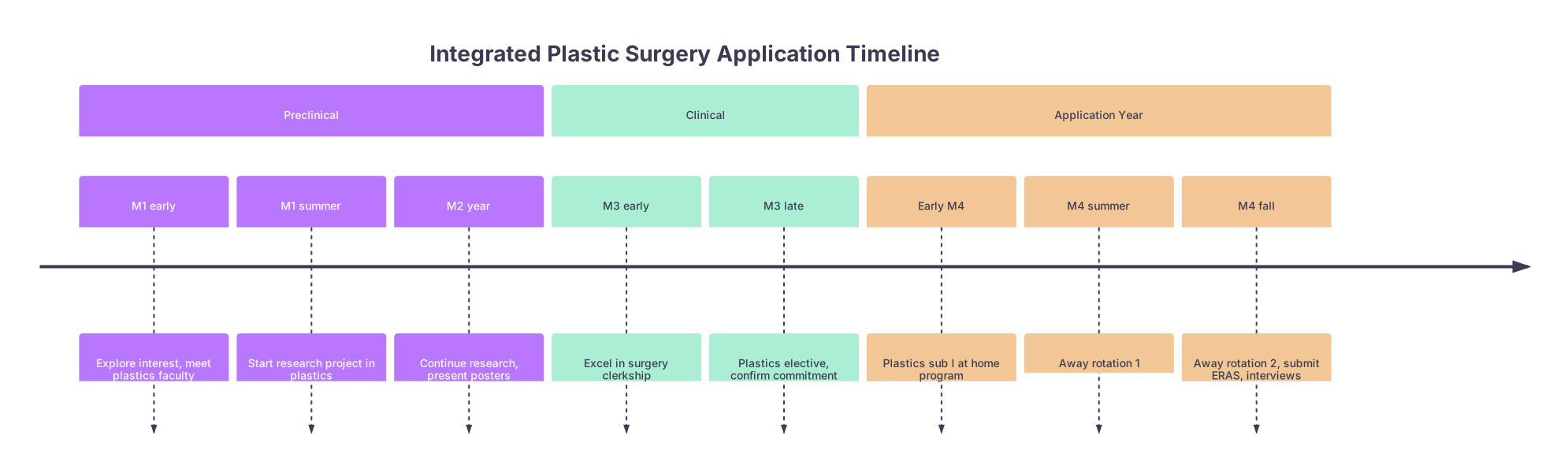
| Period | Event |
|---|---|
| Preclinical - M1 early | Explore interest, meet plastics faculty |
| Preclinical - M1 summer | Start research project in plastics |
| Preclinical - M2 year | Continue research, present posters |
| Clinical - M3 early | Excel in surgery clerkship |
| Clinical - M3 late | Plastics elective, confirm commitment |
| Application Year - Early M4 | Plastics sub I at home program |
| Application Year - M4 summer | Away rotation 1 |
| Application Year - M4 fall | Away rotation 2, submit ERAS, interviews |
If your timeline is shifted by 1–2 years, your strategy has to change.
Mistake 3: Ignoring institutional context
Students love to quote national averages. PDs care about who vouches for you.
Huge difference if:
- You are at a med school with a strong plastics department (UTSW, Michigan, Penn, NYU, etc.) and can generate 5 letters from well‑known surgeons.
- Versus a med school with no plastic surgery residency and a single part‑time plastic surgeon who barely knows the national players.
You can absolutely match from a “non‑name” school, but you must compensate:
- Extra away rotations (smartly chosen).
- Research at a major center (research year, or remote collaborative work).
- Strong Step 2 CK and clinical evals.
Mistake 4: Underestimating how small programs are
A typical integrated plastics program might have 1–3 residents per year. Total resident complement 6–15.
This changes everything:
- Culture fit matters far more than in a 10+ per year Internal Medicine program.
- A single red flag, even a subtle one, can kill an application.
- Programs will call around informally about you if they are seriously interested.
You are not just a board score and CV. You are someone they might have to share call with 1:3 for the next 6 years.
5. Concrete Strategy: If You Want Plastics, How Do You Actually Play This?
Now to the part you actually care about: what to do.
The strategy diverges dramatically based on where you are in your training and how strong your portfolio is.

Scenario A: Preclinical / Early Clinical (M1–early M3), very committed to plastics
Your playbook:
Anchor yourself to a plastics mentor early
- Identify the plastic surgeons at your home program who are actively publishing.
- Ask to help with retrospectives, chart reviews, or data collection.
- Show up. Respond quickly. Take initiative.
Rack up meaningful research
- Aim for at least a few first‑author papers or abstracts by M4.
- Present at local and national meetings (ASPS, regional societies).
- Get your name on plastics‑adjacent projects (wound healing, hand, craniofacial, outcomes).
Crush Step 2 CK
- You need a score that keeps you out of the auto‑reject bin.
- Do not take Step 2 “just to pass early”; schedule it when you can perform.
Be surgical‑strong on rotations
- Surgery clerkship honors.
- Show reliability, grit, and teachability in the OR and wards.
Plan smart away rotations
- 2 aways is typical for integrated plastics.
- Choose programs that are realistic reaches and matches for your profile.
- Treat away rotations as month‑long interviews.
You are playing an “integrated or bust (with a later reassessment)” game here.
Scenario B: Late decision (late M3 / early M4), decent but not stellar portfolio
This is where people get themselves into trouble. You have three main paths:
Apply integrated plastics now, plus a serious backup
Pros:- You keep the door open immediately.
- If you match, you are in.
Cons: - You burn your one clean shot at integrated if your file is clearly underpowered.
- You risk looking lukewarm if your backup is too different (e.g., FM or Psych).
Delay plastics and strengthen first (research year) Pros:
- You can build a plastics‑relevant CV that actually competes.
- You avoid a weak first application that brands you as “unmatched plastics” in your record.
Cons: - Extra year of training.
- Requires funding, visa considerations if international, and real commitment.
Abandon integrated, plan for a different home specialty you would accept as final Pros:
- More rational if your profile will never reach plastics levels (e.g., multiple Step failures, severe academic issues).
- Avoids years of sunk cost chasing a low‑probability target.
Cons: - You are closing the plastics door unless independent becomes unexpectedly realistic later.
If you are in this category, you cannot just throw an application at plastics “to see what happens.” The match is public. PDs talk. That weak attempt can haunt a future application, whether integrated or independent.
Scenario C: You are already in general surgery and still want plastics
This is the independent game.
Your strategy depends heavily on your current institution:
You are at a program with a plastics department / fellowship
- Get yourself on plastics rotators as early as allowed.
- Do plastics call or assist cases beyond the bare minimum.
- Join or initiate research projects with the plastics faculty.
- Aim for strong ABSITE scores to demonstrate baseline knowledge.
- Tell your PD your goals early enough for them to support you and not feel blindsided.
You are at a program with no plastics footprint
- You are now at a geographic and political disadvantage.
- You must:
- Network externally: attend ASPS and regional conferences, introduce yourself to faculty at other institutions.
- Seek external electives or mini‑rotations (even if unofficial) at plastics programs.
- Push for visiting research collaborations or a focused research block.
- Your PD’s letter is still crucial; you must be a stellar resident in your home program first.
Time your independent application strategically
- Many apply in PGY3–4 for PGY6 entry (depending on the structure).
- Make sure by the time you apply you can show:
- Multiple strong letters from plastic surgeons.
- A solid research track record.
- Good reputation in the OR.
And be brutally honest with yourself: if your general surgery performance is mediocre—average ABSITE, lukewarm faculty support—independent plastics is a very long shot.
6. The Psychological Trap: Identity vs Probability
There is another quiet gap that no one in official advising documents addresses: the psychological trap of “plastics or failure” identity.
I have seen this exact arc too many times:
- M2: Student decides on plastics, builds whole identity around it.
- M3–M4: They chase research and away rotations, neglect realistic backup planning.
- Match: They do not match plastics. Panic. Scramble into a random prelim or undesired categorical spot.
- PGY1–2: They are miserable, still clinging to the dream of later independent plastics, even when the odds are 5–10%.
That is how you end up with residents in their early 30s, burned out, realizing they built 8+ years of training on fantasy math.
You cannot make good decisions if you treat plastic surgery as a moral referendum on your worth. It is a niche field with artificially constrained slots, not a ranking of human value.
You need a floor specialty—another field that you can live with long‑term if plastics never happens. For some people that is general surgery. For others it is ENT, ortho, or even a completely different domain like anesthesia or radiology.
If you don’t have such a specialty, you should not be taking all‑or‑nothing bets on plastics.
7. Integrated vs Independent: Which Path Makes Sense For Whom?
Let me make this very concrete.
Integrated plastics is appropriate for you if:
- You are early in training (M1–M3) and willing to commit now.
- You can realistically reach:
- Step 2 CK in the high 230s–250s range.
- A research profile with several plastics‑relevant items.
- Strong letters from plastics or surgical faculty.
- You are okay with 6 years of very intense training starting right after med school.
Integrated is a bad idea to chase aggressively if:
- You are already in academic trouble (Step failures, repeated courses).
- You have discovered plastics very late without a plausible way to build a competitive CV before application season.
- You do not have any surgical field you can tolerate if you pivot.
Independent plastics is appropriate to consider if:
- You actually like general surgery (or your base specialty) enough to complete it if plastics never materializes.
- You matched or are training at a program with decent surgical volume and at least some plastics presence.
- You have the bandwidth to build a second‑order niche (plastics‑oriented research, advanced rotations) during residency.
Independent is fantasy for you if:
- You are at a very small community general surgery program with no academic output, poor case volume, and no plastics exposure—and you are not willing to move or hustle externally.
- Your current PD would not write you a glowing letter.
- You are already struggling clinically.
8. Putting It All Together: Strategy, Not Hope
Let me summarize the hard, unromantic logic that should govern your decisions.
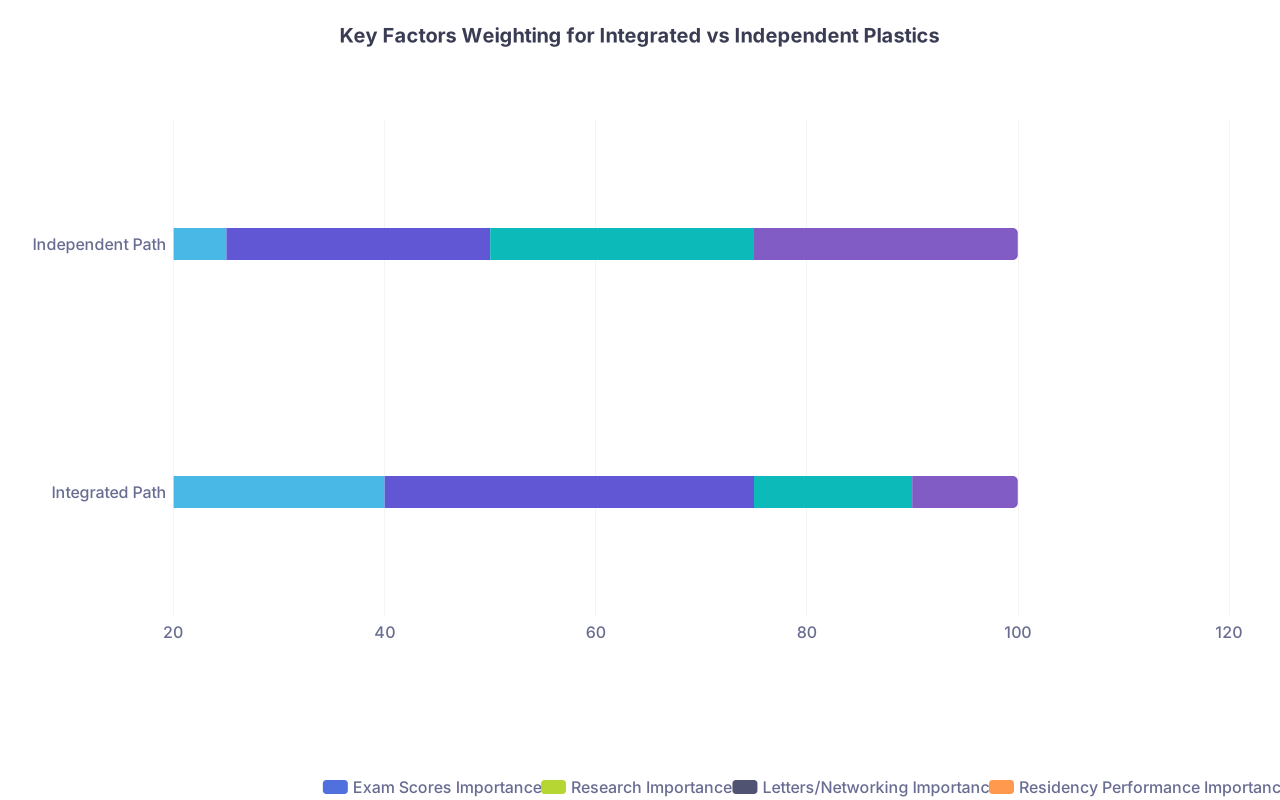
| Category | Exam Scores Importance | Research Importance | Letters/Networking Importance | Residency Performance Importance |
|---|---|---|---|---|
| Integrated Path | 40 | 35 | 15 | 10 |
| Independent Path | 25 | 25 | 25 | 25 |
(Percentages are conceptual, not literal. The point is the relative weight shifts.)
Integrated leans harder on:
- Board scores.
- Research productivity.
- Med school / institutional pedigree.
Independent leans harder on:
- Residency performance and OR reputation.
- PD and faculty letters.
- Demonstrated integration with plastic surgery services.
Neither path is “easier.” They are difficult in different currencies.
If you are early in the process, you trade time and flexibility now (committing early to plastics, stacking research, choosing away rotations carefully) for a shorter total training time if you match.
If you take the independent path, you trade longer training, more uncertainty, and intense dependence on your residency environment for a second shot at the same destination.
9. Final Distinctions You Should Not Ignore
Two final points people routinely underestimate.
Training culture differences
Integrated residents:
- Are “plastics people” from day one.
- Grow up in a specialty that expects subspecialization, complex recon, and high‑demand patients.
- Often have earlier exposure to aesthetics, microsurgery, craniofacial, etc.
Independent residents:
- Arrive with mature general surgical skill, more comfort with sick patients, and a different sense of clinical responsibility.
- Sometimes need more time initially to adapt to the aesthetic and microsurgical side, but they often handle complex inpatient care and big recon naturally.
Many PDs like a mixed model (some integrated, some independent) because of the complementary strengths. But the market is drifting toward integrated‑heavy, and you should not plan your life assuming the past decade’s balance will persist.
Geographic and mentorship inertia
You are more likely to match plastics (integrated or independent) if:
- You are physically present in an environment with active plastic surgeons.
- You are repeatedly seen in their ORs, clinics, and research meetings.
- Those surgeons attend the same meetings as your target PDs and can casually say, “We have a great applicant you should look at.”
This is why research years at big plastics centers (UTSW, Pitt, Michigan, Duke, etc.) can radically change your trajectory. They move you into the right ecosystem.

Do not underestimate this effect. Relationships still run this field.
Key Takeaways
- Integrated and independent plastic surgery are not interchangeable “two routes to the same job.” They are distinct ecosystems with different gatekeepers, metrics, and failure modes.
- Integrated plastics demands early commitment, high Step 2 CK, substantial plastics‑relevant research, and real mentorship; independent demands stellar residency performance, strong surgical pedigree, and deep integration into a plastics environment.
- The worst strategy is vague hope—treating independent as an easy backup or applying integrated with an obviously underpowered application. Make a deliberate choice early, build a realistic floor specialty, and align your actions with the actual structure of the field, not with wishful thinking.