Most students misunderstand which specialties are actually “competitive” until it is far too late.
Dermatology, radiology, and anesthesiology all get lumped together as “lifestyle specialties.” That label hides a crucial fact: they live in different universes of competitiveness, risk, and planning.
Let me break this down specifically.
You are trying to answer at least three questions:
- How hard is it to match into derm vs rad vs anesthesia right now?
- What profile (scores, research, letters) do you realistically need for each?
- How fragile is your plan if something goes wrong — one bad clerkship, one low Step 2 score, a late decision?
If you approach all three fields with the same strategy, you are going to get burned. Especially with dermatology.
The Competitiveness Landscape: Derm vs Rad vs Anesthesia
First, you need a mental map. Not vibes. Data plus reality.
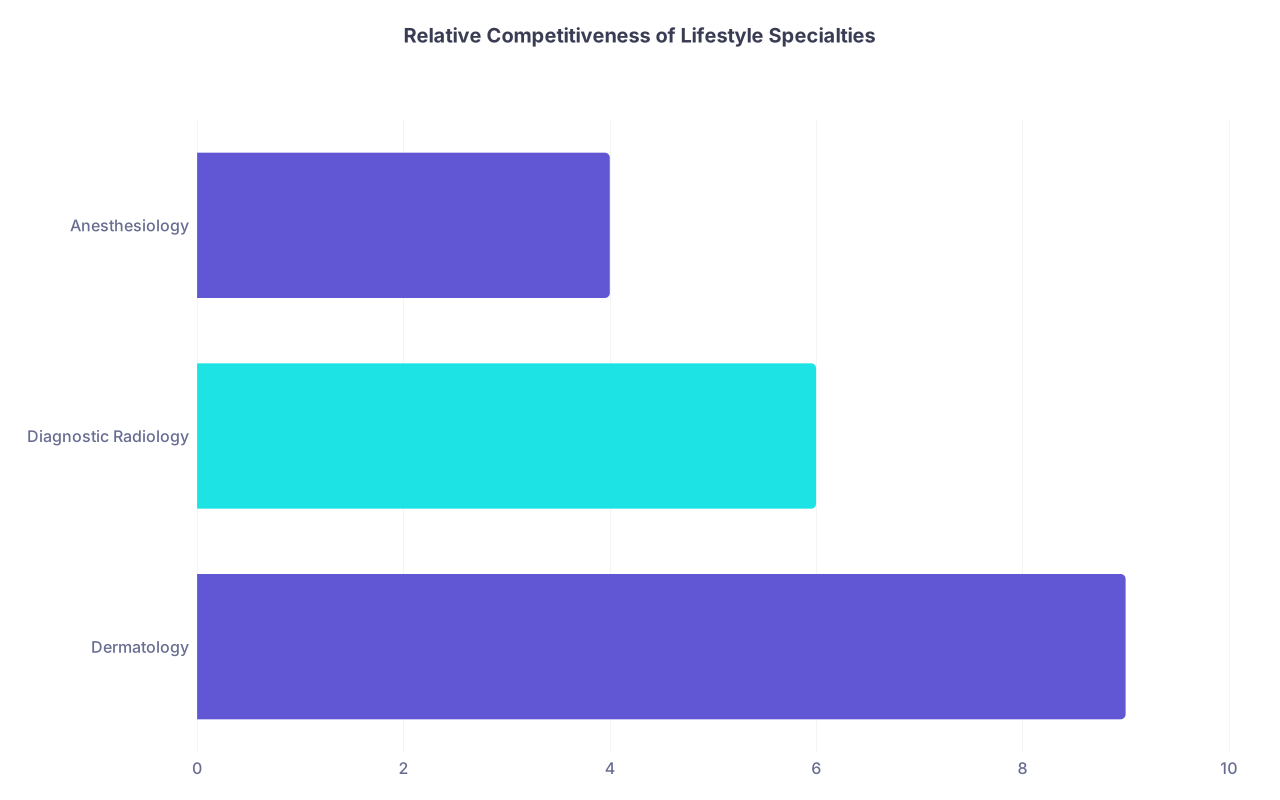
| Category | Value |
|---|---|
| Dermatology | 9 |
| Diagnostic Radiology | 6 |
| Anesthesiology | 4 |
Score here is a rough relative competitiveness index (1–10), integrating fill rates, applicant quality, and selectivity. This is not abstract. It matches what I see in actual applicant pools.
Dermatology: Ultra-competitive, research-heavy gatekeeper
Dermatology sits in the same tier as plastics and neurosurgery for competitiveness. People outside the match cycle often do not appreciate how brutal it is.
Common features:
- Very high Step 2 CK expectations (mid–260s for many academic programs, high 250s for others).
- Heavy emphasis on academic pedigree, research, and letters.
- Many applicants with derm research years, multiple publications, often from “brand-name” institutions.
Unmatched derm applicants with Step 2 in the 250s and a stack of abstracts is not rare. I have personally seen more derm applicants take extra research years or do a prelim year and reapply than in almost any other specialty.
Diagnostic Radiology: Competitive, but rational
Diagnostic radiology is competitive, but it is not derm.
Patterns I repeatedly see:
- Strong applicants with Step 2 in the 240s–250s, decent but not insane research, and solid letters are matching consistently into good programs.
- There is a long tail of programs: ultra-competitive academic programs at the top, but many community and mid-tier academic programs that are accessible with a reasonable application.
- Applicants can safely dual-apply (e.g., DR + TY/prelim medicine or even DR + another specialty) if they plan well.
Radiology is competitive in the sense that weak applications can absolutely miss. But it is not an “everyone has 10 papers and did a T32 derm research year” kind of field.
Anesthesiology: Historically a safety, now a solid mid-tier
Anesthesia used to be the classic “backup lifestyle specialty.” That era is fading, but not gone.
Reality now:
- Fill rates are high. More US seniors want anesthesia than before.
- Top-tier anesthesia programs are legitimately competitive, especially coastal academic centers.
- Still, the overall bar is noticeably lower than derm and somewhat lower than radiology.
- Good Step 2 in the 230s–240s plus consistent clinical performance and decent letters will match many applicants comfortably, especially with a broad list.
You can miss anesthesia if you are careless (weak letters, poor interview skills, too few programs), but it is far more forgiving than derm and more forgiving than most top radiology tiers.
Hard Numbers and Structural Differences
You should not decide your specialty purely on vibes. Let’s frame the three side by side with the pieces that actually matter to you as an applicant.
| Factor | Dermatology | Diagnostic Radiology | Anesthesiology |
|---|---|---|---|
| Overall competitiveness | Very high | High | Moderate |
| Research expectation | Strong to heavy | Moderate | Low to moderate |
| Step 2 target (US MD, strong programs) | 255–265+ | 245–255+ | 235–245+ |
| Dual-apply flexibility | Low | Moderate | High |
| Backup safety | Weak | Moderate | Strong (if applied broadly) |
Are these exact cutoffs? No. But they are honest targets from what I have seen repeatedly in real cycles.
How Programs Actually Screen and Sort You
Stop thinking of this as “holistic” in the first round. There is a quiet algorithm at every program.

| Step | Description |
|---|---|
| Step 1 | ERAS Applications |
| Step 2 | Auto screen out |
| Step 3 | Lower priority bin |
| Step 4 | High priority bin |
| Step 5 | Mid priority bin |
| Step 6 | Interview invite |
| Step 7 | Limited invites |
| Step 8 | Step 2 above cutoff |
| Step 9 | School and class rank |
| Step 10 | Research and fit |
Dermatology screening culture
Derm is ruthless upfront. The early sort is unforgiving:
- Step 2 cutoff is often very high. Dropping below 245–250 at some academic derm programs is a quiet death.
- Research is baked into early filters. They look for:
- Dermatology-specific publications or abstracts.
- Time spent in derm labs / research fellowships.
- Home department connection (electives, mentors, away rotations).
- School reputation matters more than in many other fields. Coming from a low-profile school means you carry extra burden: higher scores, more research, stronger letters.
Holistic review is talked about more than it is practiced in derm screening. It appears later, at the level of “who do we rank higher among the interviewees?”
Radiology screening culture
Radiology uses a more flexible version of the same flow chart.
Patterns:
- Step 2 cutoff tends to be lower than derm but still real. Think 235–240 at many programs, higher at the top.
- Research helps, but it is not nearly as essential. A few projects, maybe a radiology-related abstract, is often enough.
- School name helps but will not make or break you as sharply as in derm.
- Strong letters from radiologists carry weight, but they will seriously consider applicants without heavy specialty-specific research if the rest of the file is strong.
Radiology feels like internal medicine with higher numbers and more math-brain applicants: structured, but not insane.
Anesthesiology screening culture
Anesthesia is where you see actual holistic review more frequently.
Common patterns:
- Step 2 cutoffs are more forgiving (mid–220s at some places, higher at competitive programs).
- They pay closer attention to:
- Clerkship narratives.
- Professionalism.
- Fit with OR culture (team behavior, communication).
- Research is often optional. A few projects show motivation, but lack of publications rarely kills an otherwise strong application.
In anesthesia, a slightly lower numerical profile can often be offset by strong letters and a well-told story of consistent OR interest and good team function.
Strategy: Timing Your Decision and Risk Tolerance
Here is where I see people sabotage themselves: they decide late and aim for derm without building a derm file, or they half-commit to radiology and annihilate their Plan B.
If you are considering dermatology
You either commit early or you accept you are on hard mode.
You should be:
- Identifying derm mentors in MS2 or very early MS3.
- Getting onto derm research projects early enough to have products (accepted abstracts, posters, maybe a paper) by the time ERAS goes in.
- Protecting Step 2 CK like your life depends on it. Because for derm, it does.
- Doing at least one strong home rotation and often an away rotation at a realistic target program.
Late switch to derm (end of MS3 / early MS4) with no derm research, modest Step 2, and no strong derm letters is a near-suicidal move unless you are willing to take a research year.
If you love derm but are not sure you can make the metrics, you need a genuine backup strategy ready: medicine, peds, IM subspecialty interest, maybe prelim + reapply if you are dead set. But do not pretend derm is “lifestyle so it must be like anesthesia.” It is not.
If you are considering diagnostic radiology
Radiology gives you more levers and more time.
You can:
- Decide mid–MS3 after realizing you like imaging and still build a solid application.
- Piece together:
- A radiology elective.
- One or two imaging-related projects or case reports.
- Strong Step 2 performance.
- Build a safe dual strategy: DR + TY/prelim, or DR plus a genuinely acceptable backup field if you are borderline.
What burns radiology applicants is not usually lack of potential. It is:
- Overestimating their application (e.g., 230 Step 2, no rads research, only a few programs applied to).
- Underapplying — sending 20 apps when they should have sent 60–80.
- Ignoring program tiers and geography, applying narrowly to coastal big-name centers with no safety net.
Radiology rewards a rational, data-driven application strategy. If you are realistic about your file and cast a wide net, the risk is manageable.
If you are considering anesthesiology
Anesthesia is the most flexible from a planning standpoint.
You can:
- Decide later in MS3 or even early MS4 and still be fine, if your general profile is decent.
- Apply fairly broadly and secure interviews across a range of academic and community programs.
- Use anesthesia as a legitimate backup for other competitive fields (e.g., radiology, EM in some cycles) if you apply intelligently.
The mistake I see:
- People treat anesthesia as “automatic safety” with:
- Low Step 2.
- Major professionalism concerns.
- Weak letters.
- Minimal programs applied to.
- Then they are shocked when they do not match.
Anesthesia is forgiving, not magical. But if you can function well in the OR, work in teams, and show consistent interest, the door is open wider than derm or radiology.
Work-Life and Lifestyle Reality: Not All “Lifestyle” Is the Same
You are not just optimizing for match odds. You are choosing a life.
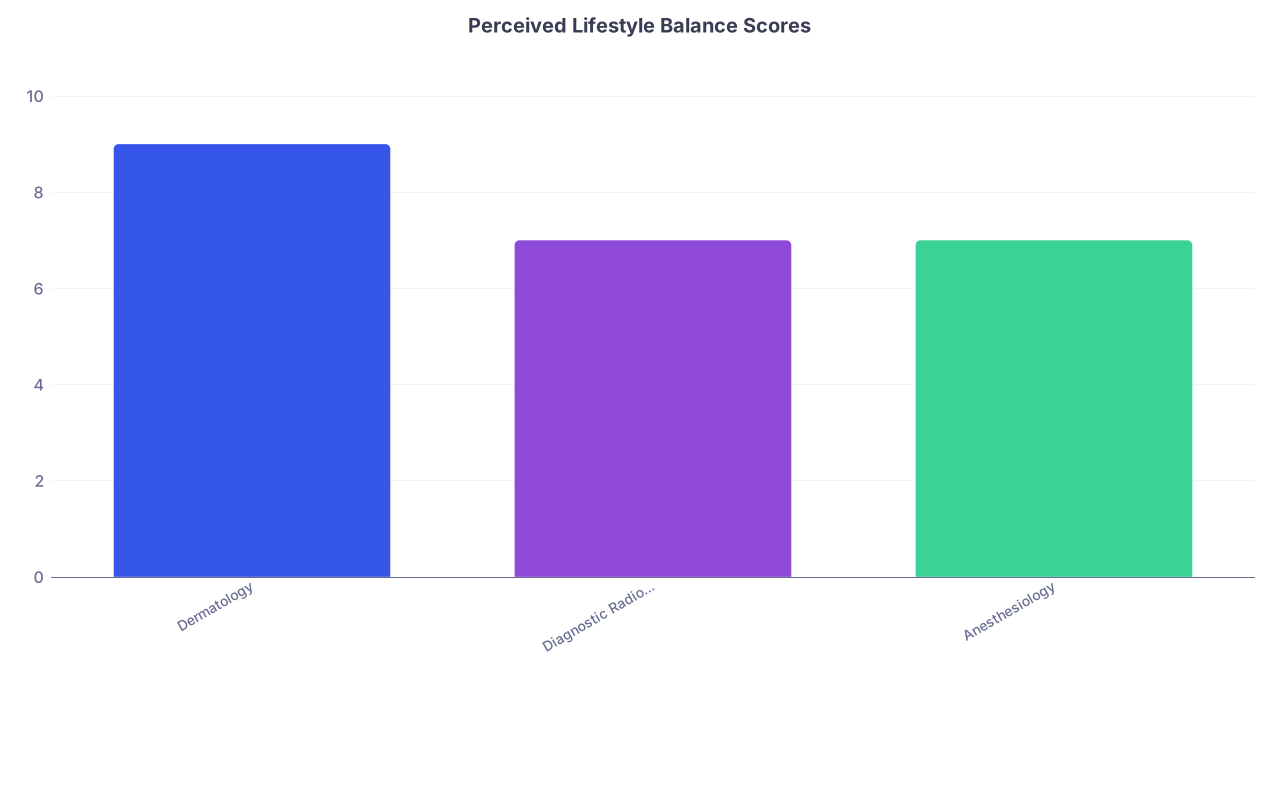
| Category | Value |
|---|---|
| Dermatology | 9 |
| Diagnostic Radiology | 7 |
| Anesthesiology | 7 |
These are not evidence-based scores, they reflect what many residents and attendings report informally about day-to-day lifestyle and controllability after training. Now let me correct some myths.
Dermatology lifestyle: real, but narrow path
Yes, derm has excellent controllable lifestyle in many settings:
- Mostly outpatient.
- Few true overnight emergencies.
- Many part-time and private practice options.
- High compensation relative to hours.
But:
- Academic derm can still be intense.
- Cosmetics can be busy, business-heavy, and very patient-demanding.
- Practice options in competitive urban centers can be saturated; new grads sometimes end up in less desirable locations initially.
You are paying a massive upfront competitiveness price for a future with high control over your schedule. That trade can be worth it, but you should see it clearly.
Radiology lifestyle: good but misrepresented
Radiology lifestyle is often sold as “sit in a dark room, chill, make money.” That is not the whole truth.
Reality:
- Day-to-day workflow is intense: constant reading, high cognitive load, interruptions, and responsibility.
- Call can be heavy, especially in training and early career: nights, weekends, significant ER volume.
- Teleradiology and overnight reads can offer flexibility but can also turn into high-volume, high-stress shifts.
The upside: flexible practice models (academic, group practice, telerads, subspecialty niche), high compensation, and the ability to adjust hours later in your career. Lifestyle range is wide.
Anesthesiology lifestyle: variable and often misunderstood
Anesthesia is not “9–5 and go home” for most full-time clinicians. It is:
- Early starts (you are there before everyone else in the OR).
- Variable end times: cases run over, add-ons happen.
- Call that can be either tolerable or brutal depending on:
- Practice setting.
- Coverage model.
- Trauma level.
But anesthesia has:
- Good pay-to-hours ratio at many private groups.
- Some shift-based setups that allow significant control.
- ICU, pain, and other subspecialty paths that diversify your practice.
It is a lifestyle field in the sense of earning potential and flexibility, not because the days are automatically easy.
Risk Management: What Happens If Things Go Wrong?
This is where competitiveness differences really matter. You are not planning for your best-case self. You are planning for the version that gets a 238 Step 2 or a mediocre derm letter.
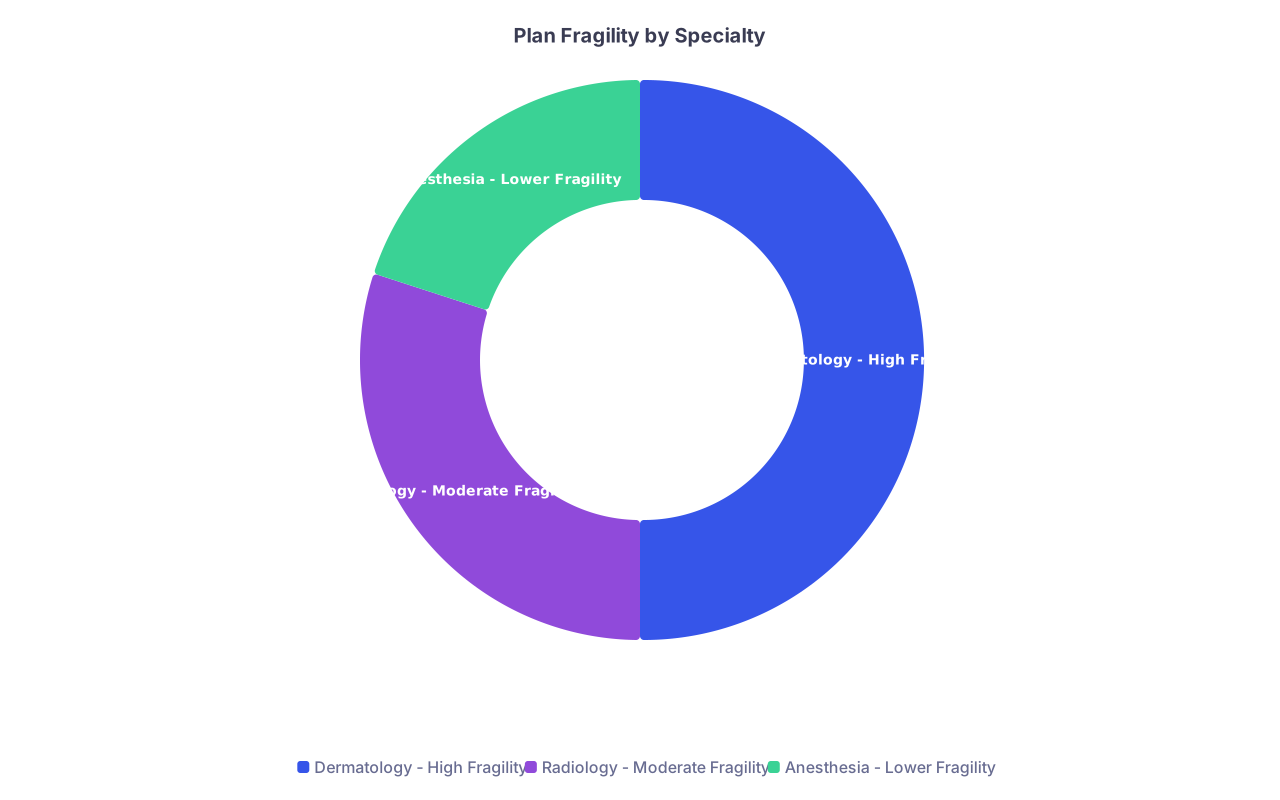
| Category | Value |
|---|---|
| Dermatology - High Fragility | 50 |
| Radiology - Moderate Fragility | 30 |
| Anesthesia - Lower Fragility | 20 |
In dermatology, a single weak point can sink you
Examples I have seen:
- One low Step 2 score (low 230s) in an otherwise decent derm file → no interviews at realistic derm programs, forced scramble or reapplication.
- No derm research despite good scores → dramatically fewer interviews, match only through strong home program connections or not at all.
- Generic letters with no derm-specific advocacy → application looks indistinguishable from strong medicine applicants, gets triaged out.
Backup planning in derm must start early:
- Identifying an acceptable alternative (IM, peds, maybe medicine subspecialty later).
- Considering a research year proactively if your metrics lag.
- Accepting that you might do a prelim/transitional year and reapply.
In radiology, you have more room to recover
Common scenarios:
- Step 2 in low 230s, no research: still matchable with:
- Broad application list (80–100+).
- Openness to less competitive regions and community programs.
- Mediocre rads letters but strong medicine letters: still salvageable, especially if Step 2 is decent.
- Late interest: if you secure even a single solid rads letter and a couple of projects, doors remain open.
Radiology lets you scale effort: the harder you work and the broader you apply, the more you lower your risk.
In anesthesiology, you can absorb more damage
You can still match anesthesia even if:
- Step 2 is modest, provided it is not catastrophically low.
- You have no specialty-specific research.
- You have strong, specific letters describing your OR performance, work ethic, and team behavior.
The caveat: red flags (failures, professionalism violations, severe pattern of poor clinical comments) will haunt you everywhere, including anesthesia. But the baseline competitiveness of the field gives you more buffer.
How to Honestly Choose Among Them
Forget the prestige noise. Ask three ruthless questions.
1. Are you willing to live your life around derm-level competitiveness?
If you choose dermatology, you are signing up for:
- A score-driven, research-heavy, hyper-selective match.
- A non-trivial chance of needing extra time, research years, or reapplication.
- A very narrow narrative: you must look like a derm person early and often.
If that excites you and your metrics are already top-tier, fine. If not, you may be trying to brute-force yourself into a box that does not fit.
2. Do you actually like the work of radiology or anesthesia?
I have seen more regret from people who chased “lifestyle” than from people who picked a less competitive specialty they actually liked.
Radiology:
- Do you enjoy image-heavy, detail-oriented, often solitary work?
- Are you okay with less patient face time?
- Can you handle high-volume, cognitively intense reading all day?
Anesthesia:
- Do you like acute care, physiology, procedures, and the OR environment?
- Are you comfortable with high-acuity moments and boredom in between?
- Can you function well under time pressure and team dynamics?
If the day-to-day sounds boring or draining, no lifestyle compensation is going to fix that long term.
3. What is your risk tolerance for not matching your first choice?
Plain language:
- Low tolerance for risk, average-to-good stats, want a decent lifestyle: anesthesia is the safest.
- Moderate tolerance for risk, good stats, like imaging and cognitive work: radiology is a defensible target.
- High tolerance for risk, top stats, strong academic drive, and willing to play the research game early: dermatology becomes realistic.
The worst position is pretending you have high risk tolerance while actually having none, and then collapsing emotionally when derm does not pan out and you have no coherent backup.
Sample Applicant Profiles and Likely Outcomes
To make this real, let me give you three composite applicants I have seen versions of many times.
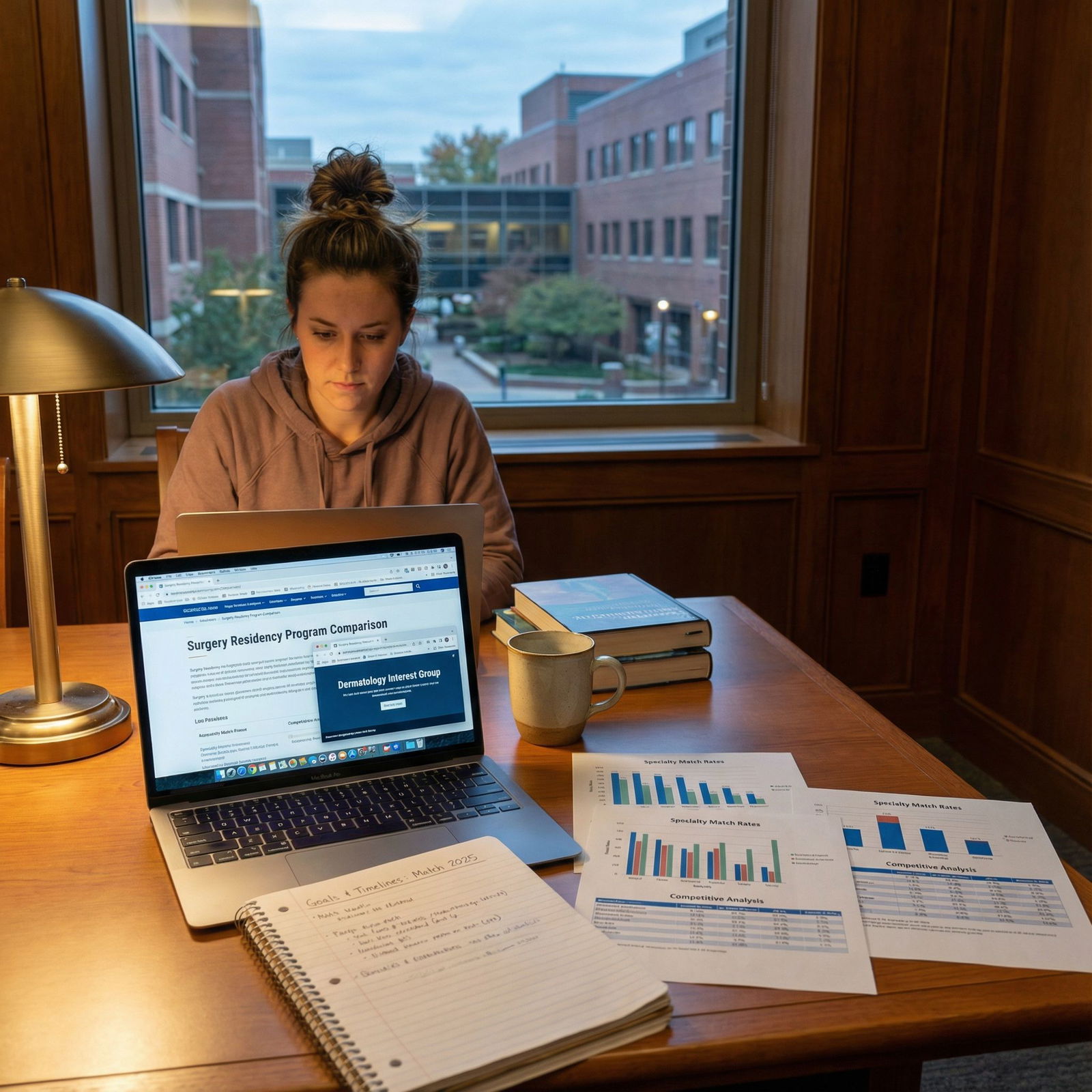
Applicant A: Strong but not elite
- US MD, upper-middle-tier school.
- Step 2: 248.
- Class rank: top 25%.
- Research: 2 posters in general medicine, 1 case report.
- No dedicated derm or rads research.
- Decent clinical comments.
Dermatology: Very poor odds unless they commit to a research year, accumulate derm-specific output, and accept high risk. Applying directly without that is almost a waste of ERAS fees, except maybe at a strong home derm department that knows them well (and even then, slim).
Radiology: Strong candidate for mid-tier academic and community programs, especially with:
- A radiology elective.
- At least one strong rads letter.
- Broad, sensible application list.
Anesthesiology: Very competitive for many programs, including good academic and private groups, assuming solid letters and interview performance.
Applicant B: Elite on paper, but late decision
- US MD, top-20 school.
- Step 2: 262.
- AOA.
- Research: 5 pubs in cardiology.
- Zero derm or rads projects.
- Decides late MS3 they “want lifestyle.”
Dermatology: Mixed. The scores and pedigree are there, but derm committees will see no specialty commitment. One rushed derm elective and a last-minute letter help, but not enough at many programs. They are competitive but will underperform their metrics compared to students who built derm CVs for years.
Radiology: Very strong. Even with no rads-specific research, the combination of numbers, school, and overall productivity will open many doors. An easy top- or high mid-tier match if they avoid self-sabotage.
Anesthesiology: Overkill. They can match almost anywhere they want in anesthesia, if they can verbally explain why the switch makes sense.
Applicant C: Middle-of-the-pack clinically, uncertain
- US DO or lower-tier US MD.
- Step 2: 232.
- Average clinical comments.
- No research.
- Values lifestyle, not sure where to go.
Dermatology: Realistically, no, unless they are willing to:
- Take extra years.
- Build a heavy derm research portfolio.
- Accept a high chance of not matching even then.
Radiology: Possible at lower-tier or community-heavy programs if:
- They apply very broadly.
- They secure at least one strong rads mentor / letter.
- They accept less competitive geography and program prestige.
Anesthesiology: Most rational target. They can match into many anesthesia programs with:
- Strong, specific letters.
- Demonstrated interest in OR rotations.
- A wide enough rank list.
FAQ (Exactly 4 Questions)
1. Should I dual-apply if I am going for dermatology?
If your metrics are anything short of outstanding (high 250s+ Step 2, strong derm research, solid home support), yes, you should strongly consider dual-applying. The usual pattern is derm + medicine or derm + prelim/TY with an eye on reapplying. What you should not do is pretend derm is as forgiving as anesthesia or radiology. It is not. If you would be devastated not to match anywhere, you need a serious backup.
2. Is diagnostic radiology becoming less competitive with telerads and AI?
So far, no. Programs are still filling, and top spots remain competitive. There is noise about AI, but hospitals still need radiologists, and trainees are not fleeing the field. In fact, interest has rebounded after a brief dip years ago. Do not bank on a future collapse in competitiveness to make your application better than it is. Apply based on your current reality, not speculative workforce projections.
3. Can anesthesiology be a true “backup” if I do not have perfect scores?
Yes, anesthesia is one of the few lifestyle-friendly specialties that can still function as a real backup, especially for US grads with reasonable Step 2 and clean professionalism records. But a backup only works if you treat it seriously: strong letters, coherent narrative, enough programs, and genuine interest. If your backup application looks half-hearted, you can still miss.
4. If my Step 2 is lower than I hoped (e.g., low 230s), which of these three should I realistically consider?
Dermatology is essentially off the table unless you are prepared for a very long, risky road with extra research years and still no guarantee. Radiology is possible if you are flexible on geography and program status and you apply broadly. Anesthesiology becomes the most rational target, especially if you can secure strong clinical letters and show you work well in the OR environment. In that score range, “lifestyle plus safer match odds” tilts heavily toward anesthesia.
Bottom line: Dermatology, radiology, and anesthesia are not the same kind of competitive. Derm is an ultra-selective academic club with a lifestyle payoff. Radiology is a high-but-rational bar with a wide middle. Anesthesia is the most forgiving, still competitive but realistically attainable. Know your numbers, know your risk tolerance, and choose the field whose day-to-day work you can stand doing for 30 years, not just the one with the nicest rumor about lifestyle.