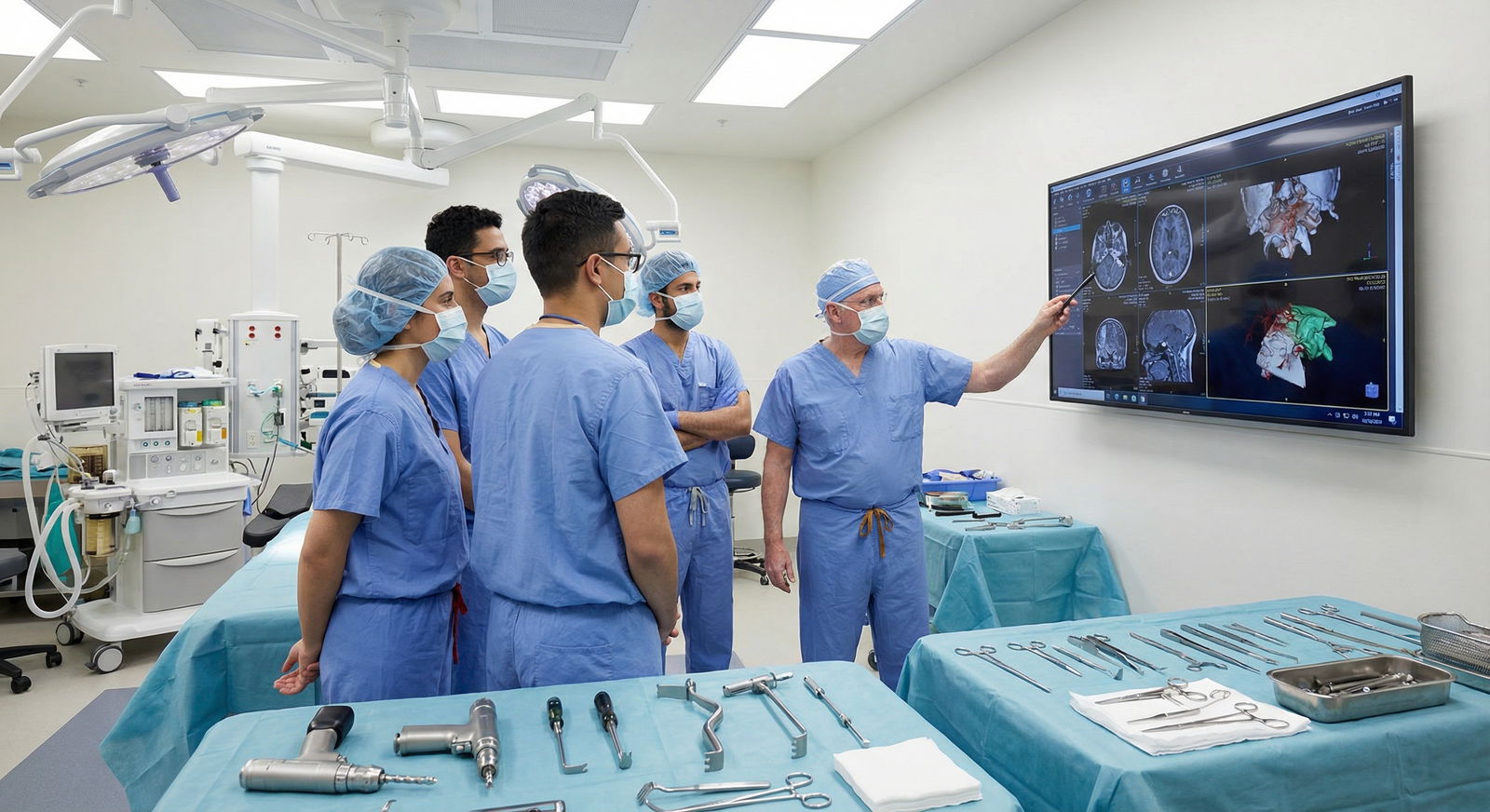
The myth that “all the competitive IM fellowships are basically the same” is wrong. Cardiology, GI, and Heme/Onc are not interchangeable—and the game you are playing for each one is slightly different.
Let me break this down specifically, the way fellowship PDs and chiefs talk about it behind closed doors.
Big Picture: How Competitive Are Cards, GI, and Heme/Onc Really?
If you are aiming for a hyper-competitive IM subspecialty, you are essentially choosing between three heavyweights: Cardiology, Gastroenterology, and Hematology/Oncology. All three:
- Are highly desired by residents.
- Have limited fellowship spots relative to demand.
- Expect serious academic output at competitive programs.
- Reward strong letters from big-name attendings.
But the flavor of competitiveness is different.
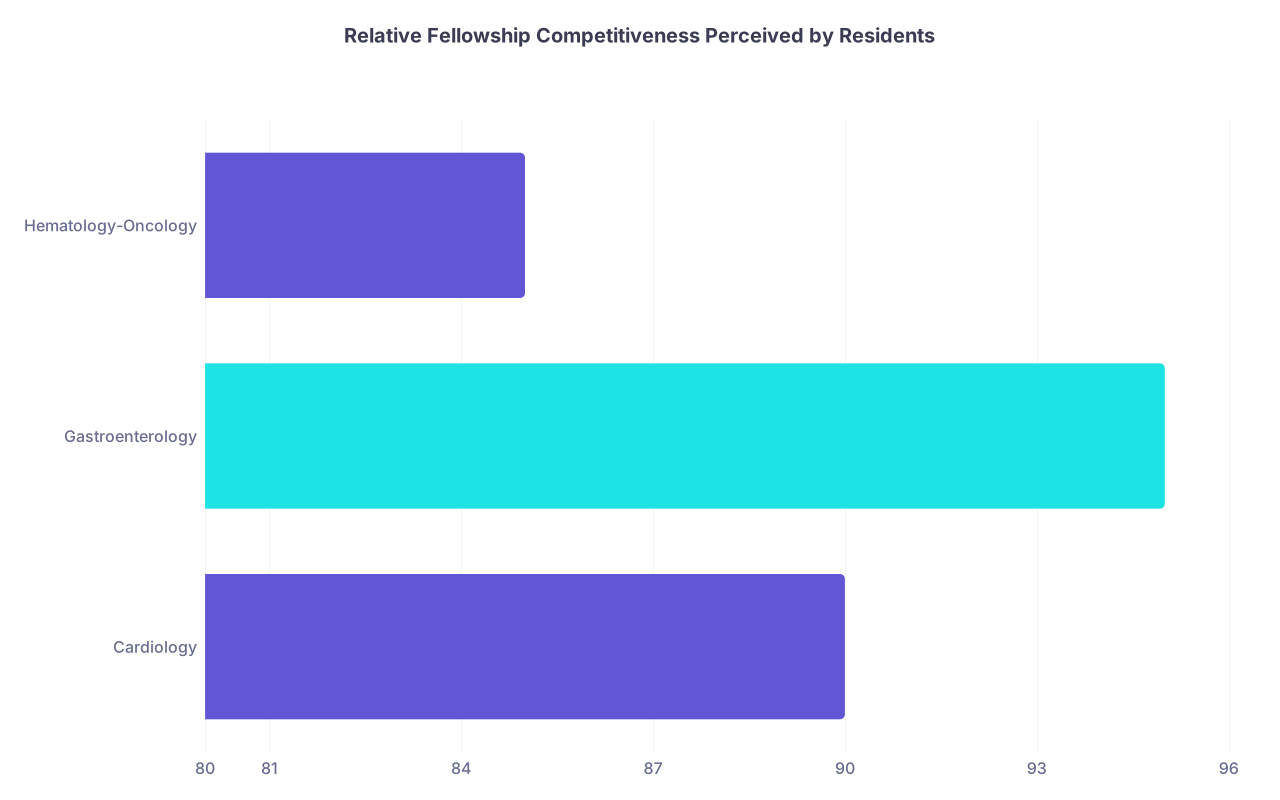
| Category | Value |
|---|---|
| Cardiology | 90 |
| Gastroenterology | 95 |
| Hematology-Oncology | 85 |
These are not official NRMP numbers; this reflects what residents and PDs actually say when they are being honest: GI is usually seen as the tightest bottleneck, Cards not far behind, and Heme/Onc very competitive but a bit more variable across programs.
Now, one step more concrete.
Most people underestimate three things:
- How much program prestige and research matter at the top tier.
- How unforgiving these fields can be if you are an average resident at a mid-tier program without a plan.
- How different the day-to-day life and long-term lifestyle are among the three, despite similar “competitiveness.”
So you cannot just ask “which fellowship is hardest”; you have to ask, “Which one fits my strengths, my CV, and the way I want to practice?”
How Programs Actually Judge You
Forget the brochure language. Here is how these fellowships usually sort applicants.
| Factor | Cardiology | Gastroenterology | Hematology-Oncology |
|---|---|---|---|
| Research volume | High | Very high | Very high |
| Research type | Clinical/outcomes, imaging | Outcomes, IBD, liver, quality | Clinical trials, translational, malignancy |
| Letters of rec | Critical | Critical | Critical |
| Program prestige | Very important | Very important | Important |
| Procedural interest | Strong plus | Strong plus | Less central |
| Step/ITE scores | Helpful, not decisive | Helpful, not decisive | Helpful, not decisive |
Pattern I have seen repeatedly:
- If you are at a big-name university program, your bar is research productivity plus strong faculty advocacy.
- If you are at a solid but non-elite academic or community program, your bar is much higher: you must outwork your co-residents and manufacture visibility.
And for all three subspecialties, people overestimate scores and underestimate:
- Sustained, focused research in that field.
- A PD who will pick up the phone and say, “Take this person.”
Cardiology: The Procedural, High-Intensity Giant
Cardiology is where a lot of “I love physiology and critical care” residents end up. Or try to end up.
What Makes Cards Competitive?
Cardiology has several features that drive demand:
- High acuity, intellectually satisfying physiology.
- Highly procedural: caths, PCI, EP studies, ablations, devices.
- Strong compensation, especially for interventional and EP.
- Clear sub-identity in the hospital: cardiology feels like its own empire.
From a numbers standpoint, cardiology fellowship fill is very high and the proportion of US grads is high. At strong university programs, Cardiology match feels like a mini-Match all over again.
Programs look for:
- Clear commitment to CV medicine early in residency.
- Some combination of echo, imaging, heart failure, EP, or outcomes research.
- People who look like they can handle intensity and volume on busy cardiology services.

What a Competitive Cards Applicant Looks Like
Picture a PGY-3 at a solid university program:
- 3–5 cardiology-related abstracts or posters, maybe one manuscript.
- At least one project with the cards division, ideally a cardiology attending as primary mentor.
- Strong letters from a cardiology division chief or well-known cardiologist.
- Evidence of leadership: chief year, QI projects on telemetry, chest pain pathway, HF readmissions, etc.
If you are targeting top-tier places (think MGH, Duke, Penn), the bar moves to:
- Multiple first- or second-author papers.
- Recognizable names in letters.
- Demonstrated “trajectory” toward academic cardiology.
If you have zero research and average evals? You can still match cardiology, but not at those programs. You will be looking at smaller or more clinically oriented fellowships.
Cards-Specific Culture and Lifestyle Reality
Here is where residents sometimes fool themselves.
Cardiology culture, in many places, skews:
- High-intensity
- Procedure-heavy
- Call-heavy, especially during training and for interventional/EP
Think:
- Overnight STEMI activations.
- Post-cath complications.
- ICU co-management of shock, mechanical support, ECMO.
Outpatient general cardiology or imaging can be more balanced, but the training years? Brutal in many programs.
Cards tends to attract residents who:
- Like speed and procedures.
- Tolerate (or even enjoy) high-pressure decision-making.
- Are not allergic to busy call schedules.
If you want more longitudinal, slower-paced, relationship-based care, you may find Heme/Onc a better psychological fit.
Gastroenterology: Quietly The Tightest Bottleneck
If I had to name one field that residents consistently underestimate until late in PGY-2, it is GI.
Ask most PDs privately and you will hear some version of: “GI is arguably the hardest IM fellowship to get into at a strong program.”
Why Is GI So Competitive?
Several reasons:
- Procedure-based with very lucrative practice patterns.
- High demand in both community and academic settings.
- Chronic diseases (IBD, liver disease, functional bowel) that guarantee job security.
- Scope-heavy skillset that is hard to replace with non-physician practitioners.
GI fellowship class sizes are often smaller than cardiology at comparable institutions. Fewer spots, massive demand.
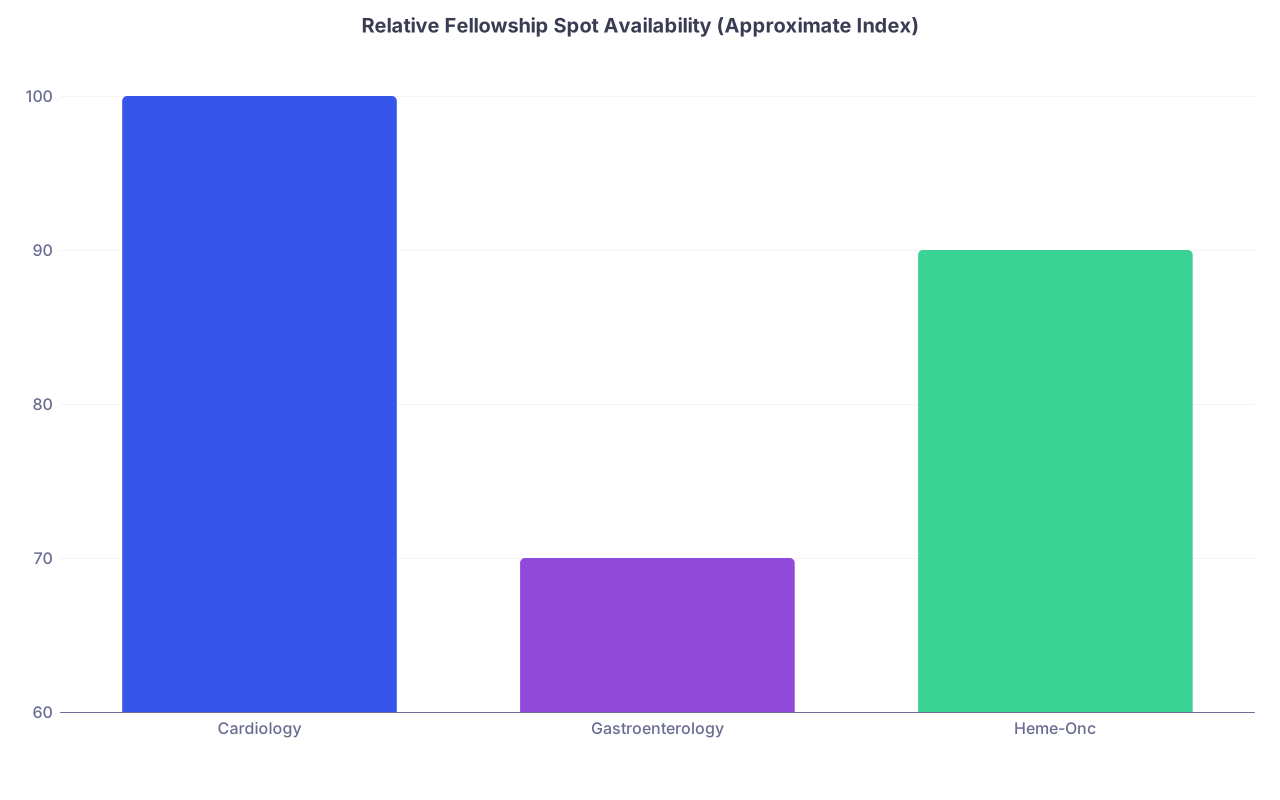
| Category | Value |
|---|---|
| Cardiology | 100 |
| Gastroenterology | 70 |
| Heme-Onc | 90 |
Again, not exact numbers, but you feel this discrepancy in match cycles: more residents want GI than there are decent training spots.
What GI Programs Really Care About
GI likes the “total package,” but heavily academic places are ruthless about research.
A strong GI applicant tends to have:
- Consistent GI or liver-focused research: IBD, cirrhosis, NAFLD, colon cancer screening, endoscopy outcomes.
- Presentations at DDW, ACG, AASLD, or relevant society meetings.
- At least a few publications, even if some are case reports or retrospective chart reviews.
Letters? Crucial.
- You want at least one serious letter from a GI faculty member who can say, “This person is the best candidate we have this year.”
- Bonus points if your GI division is strong and well-known; those relationships between division chiefs absolutely matter.

GI Culture and Day-to-Day Work
Here is the trade-off people are chasing:
- Procedures: EGD, colonoscopy, ERCP, EUS. Highly technical, satisfying to do well.
- Clinic: IBS, IBD, cirrhosis, chronic abdominal pain, GERD, screening and surveillance.
The lifestyle can end up very good in community GI practice, but GI fellowship itself is not cushy:
- Procedure days that run long.
- Call for GI bleeds, ERCP emergencies, foreign body removals.
- Sick liver patients and complicated IBD flares.
The subtle point: GI rewards residents who like procedure volume but do not necessarily crave the acute CV-ICU adrenaline that cardiologists deal with. You will still get emergencies (massive GI bleed at 2 a.m.), but the overall mix skews more toward elective procedures and longitudinal disease management.
Why GI Feels “Most Competitive” at Many Programs
From the resident side, this is the pattern:
- Many residents decide on GI later (after enjoying endoscopy during PGY-2 rotations).
- GI sections at some programs are relatively small and picky about who they support.
- There may be only 1–2 “home” GI spots per year.
This leads to:
- Multiple strong internal candidates for very limited home spots.
- Heavy reliance on external applications and away-rotation-style networking.
If you are late to GI, with no GI research and no close relationships with the division, you are starting at a disadvantage compared to cards or Heme/Onc, where the path to meaningful research can sometimes be slightly more flexible.
Hematology/Oncology: Research-Heavy, Intellectually Intense
Heme/Onc is the subspecialty people gravitate to if they like complex pathophysiology, longitudinal relationships, and do not mind bad news.
It is also more heterogeneous in terms of competitiveness. Top-tier Heme/Onc programs are absolutely brutal to match. Mid-tier or more clinically oriented programs can be more attainable than similar-level GI spots.
What Drives Heme/Onc Demand?
- Intellectually rich: complex malignancies, molecular diagnostics, immunotherapy, transplant.
- Rapidly evolving therapies and clinical trials.
- Deep patient relationships over years of treatment and surveillance.
- Strong compensation at many practices, especially in community oncology groups.
The catch: the emotional load is real. You are dealing with death, relapse, chronic incurable disease, and long, difficult family meetings.

Academic Expectations in Heme/Onc
Among the three, Heme/Onc might lean hardest into pure research identity at the high end.
A typical strong applicant at a research-heavy program:
- Several oncology or hematology projects.
- At least a few abstracts/posters and ideally 1–2 peer-reviewed articles.
- Ties to disease-focused groups: leukemia, lymphoma, solid tumor, transplant, benign hematology, etc.
- A clear story: “I intend to build a career in breast oncology research,” or “My interest is malignant hematology and transplant outcomes.”
Top Heme/Onc programs want people who can help sustain their grants and trials. They like candidates who show they can move from “staff on a project” to “future PI.”
At more clinical programs, the bar for research drops, but you still look better with some scholarly activity in oncology or hematology.
Heme/Onc Culture and Lifestyle
The culture is a bit different from Cards and GI.
- Clinic-heavy and longitudinal.
- A lot of time spent in family meetings, goals-of-care discussions, multidisciplinary tumor boards.
- Inpatient services with high acuity but also a lot of coordination (chemo regimens, complications, transfusions, infections).
Call can be demanding, especially at academic centers with busy inpatient leukemia or transplant units, but it is not “STEMI call” with middle-of-the-night caths every weekend.
Personality-wise, Heme/Onc tends to attract:
- People who value deep relationships.
- Those comfortable with uncertainty and counseling in gray zones.
- People willing to accept emotional heaviness as part of the job.
If you want procedures and quick fixes, Heme/Onc will frustrate you. If you want to walk with patients through years of treatment, it might be the most satisfying of the three.
Cards vs GI vs Heme/Onc: Head-to-Head Comparison
You are probably trying to map: “Where do I fit, and how hard is it for me given my current situation?”
Let’s put them directly against each other.
| Dimension | Cardiology | Gastroenterology | Hematology-Oncology |
|---|---|---|---|
| Overall competitiveness | Very high | Extremely high | Very high (varies by program) |
| Fellowship spots | Relatively more | Fewer | Moderate |
| Research expectation | High, but some clinical paths | Very high, especially at top places | Very high at academic centers |
| Procedural intensity | Very high (cath, EP, etc.) | High (endoscopy, ERCP, EUS) | Low–moderate (biopsies, LPs, etc.) |
| Acute vs chronic mix | Heavy acute and chronic | Moderate acute, lots of chronic | Chronic and relapsing, some acute |
| Emotional load | Moderate–high (MI, ICU, death) | Moderate (bleeds, cancer screening) | Very high (cancer, mortality) |
| Lifestyle potential | Variable, demanding for interventional/EP | Often excellent in community practice | Variable, can be good but emotionally taxing |
Now, about how they judge residents.
How Your Background Changes The Game
Competitiveness is not absolute; it is relative to your profile and your training environment.
If You Are at a Big-Name Academic IM Program
You have structural advantages:
- Built-in cardiology, GI, and Heme/Onc research infrastructure.
- Faculty with national reputations who can write high-impact letters.
- Home fellowship programs that routinely take internal candidates.
Your main risk is not using those advantages early enough.
For top-tier Cards / GI / Heme/Onc from a strong home program, you generally need:
- To pick your subspecialty by mid-PGY-2 at the latest.
- Attach yourself to 1–2 mentors in that division.
- Produce tangible research output by the ERAS submission date.
- Be known as reliable and strong clinically on those services.
If you coast through PGY-1 and half of PGY-2 “keeping options open” with zero directed research, then declare last-minute GI, you will be one of those “late deciders” who struggle.
If You Are at a Mid-Tier or Community IM Program
Here is where reality bites a bit.
You can absolutely match any of these fellowships, but:
- Name recognition helps less.
- Research infrastructure may be weaker.
- You may not have strong home fellowships in all three fields.
So your strategy shifts:
- Maximize any research you can get, even retrospective chart reviews, QI projects, or multi-site registries.
- Go hard on networking: conferences, virtual research collaborations, email outreach to GI/Cards/Heme attendings at larger centers.
- Be clinically excellent, to the point your PD feels compelled to fight for you.
You will likely need a slightly “wider net” of programs on your rank list. Those at small community IM programs matching GI at a big academic center are almost never casual about it. They usually have:
- A clear research story.
- PD and mentors who picked up the phone.
- A very polished application.
Step Scores, ITEs, and the “Numbers Game”
Everyone loves to obsess over Step 1/2 and ITE scores. For these three fellowships, the honest assessment:
- Very low or failing scores will hurt you.
- High scores are a positive signal but not the main determinant.
- Past a certain threshold, your subspecialty-specific CV matters more.
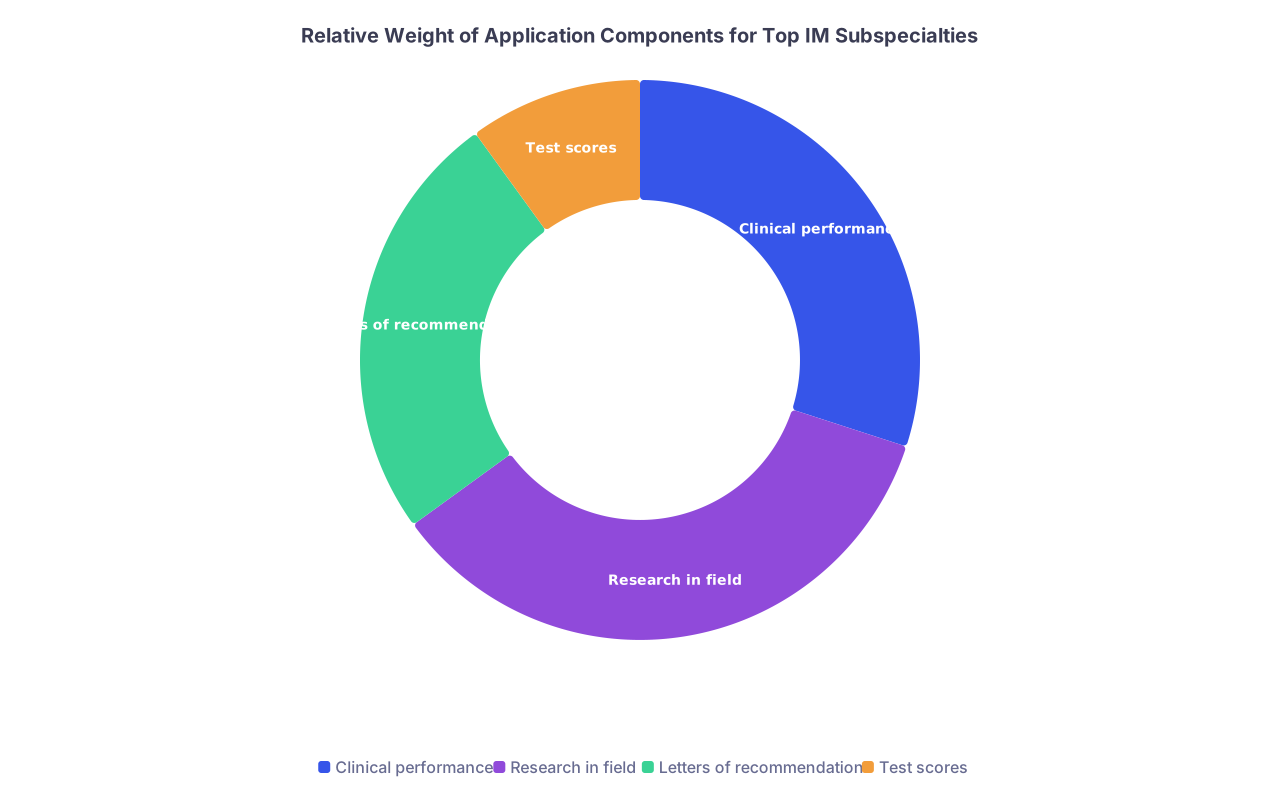
| Category | Value |
|---|---|
| Clinical performance | 30 |
| Research in field | 35 |
| Letters of recommendation | 25 |
| Test scores | 10 |
The residents I have seen get burned are the ones with 250+ Step 2 but no research, weak letters, and no real relationship with any subspecialty division.
You want your application to scream: “I am already functioning as a junior cardiologist / gastroenterologist / hematologist-oncologist in training.” Scores alone will never do that.
Strategic Advice: Choosing Between Cards, GI, and Heme/Onc
Now the uncomfortable part. You probably can make yourself competitive for one of these if you are intentional early enough. Maybe two. Hardly ever all three at a high level simultaneously.
Ask Yourself These Questions
Do you actually like procedures?
- Love them and want more: Cards or GI.
- Neutral/barely interested: Heme/Onc may fit better.
How do you handle death and bad news?
- You tolerate it but prefer fewer end-of-life discussions: Cards or GI.
- You are okay with heavy conversations and long, difficult courses: Heme/Onc.
What kind of day do you enjoy?
- Fast-paced, ICU rounds, acute decompensations, chest pain: Cardiology.
- Blocks of procedures with some clinic and consults: GI.
- Longer clinic visits, multi-step treatment planning, tumor boards: Heme/Onc.
What is your honest academic appetite?
- Comfortable with moderate research, maybe not aiming for R01-level career: community Cards or GI, clinically heavy Heme/Onc.
- Serious about academics: any of the three, but lean where you can build a niche (e.g., imaging in Cards, IBD in GI, leukemia in Heme/Onc).
Do Not Try To “Game” Competitiveness
A bad idea I hear too often:
“I heard GI is the hardest, so maybe I should do Heme/Onc instead because it is slightly easier.”
This is backwards. You will be doing this for decades. You cannot outsmart your own preferences.
What you should do:
- Choose the field whose day-to-day work aligns with how you like to think and interact with patients.
- Then build the strongest possible application for that field.
You will be far more competitive as a clearly committed future oncologist with a solid Heme/Onc portfolio than as a half-hearted pseudo-GI applicant with flimsy GI experience.
Timeline: When You Must Decide and Act
If you are an IM resident, this is the rough timeline you should be operating on.
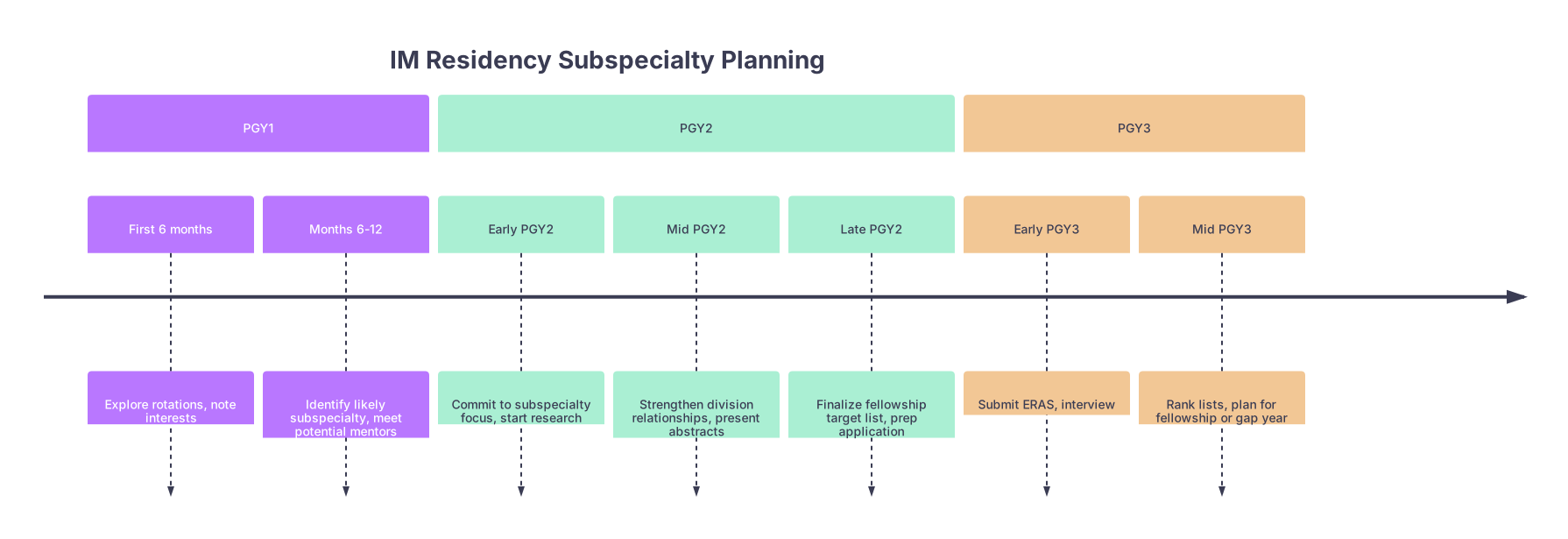
| Period | Event |
|---|---|
| PGY1 - First 6 months | Explore rotations, note interests |
| PGY1 - Months 6-12 | Identify likely subspecialty, meet potential mentors |
| PGY2 - Early PGY2 | Commit to subspecialty focus, start research |
| PGY2 - Mid PGY2 | Strengthen division relationships, present abstracts |
| PGY2 - Late PGY2 | Finalize fellowship target list, prep application |
| PGY3 - Early PGY3 | Submit ERAS, interview |
| PGY3 - Mid PGY3 | Rank lists, plan for fellowship or gap year |
If you are late PGY-2 with zero targeted research and vague interest in “maybe Cards or GI or Heme/Onc,” you are behind. Not doomed. But behind.
In that case, you may need to:
- Sharpen the decision quickly.
- Take on high-yield projects that can generate at least abstracts before application submission.
- Use PGY-3 to pad publications if you end up applying a year later or using a chief year / research year.
Turning Reality Into A Plan
Let me be blunt. For hyper-competitive IM subspecialties, “seeing how things go” is a plan to end up disappointed or scrambling for a backup.
Here is a structured way to approach it.
- By the end of PGY-1, narrow to 1–2 likely subspecialties.
- Early PGY-2, choose one primary target among Cards, GI, or Heme/Onc.
- Attach yourself to at least one mentor in that division.
- Get on concrete projects that will realistically yield:
- At least 1–2 abstracts.
- Hopefully 1+ manuscripts by ERAS, or at least “submitted” status.
- Crush your rotations in that subspecialty. Be the intern/resident they remember.
- Make sure your PD is aware of your plan early enough to advocate for you.
If you do that, then Cards vs GI vs Heme/Onc becomes less about “which is impossible” and more about “where do I fit and where do I want to build a career.”
Because at the end of the day, all three are competitive, all three are selective, and all three will screen out anyone who looks unfocused or half-committed.
Your job is to decide who you are becoming early enough that your application actually reflects it.
Once that is in place, then you can start worrying about finer-grained details—specific programs, geographic preferences, balancing fellowship prestige vs lifestyle. But that is a next-level strategy conversation, and it deserves its own deep dive.