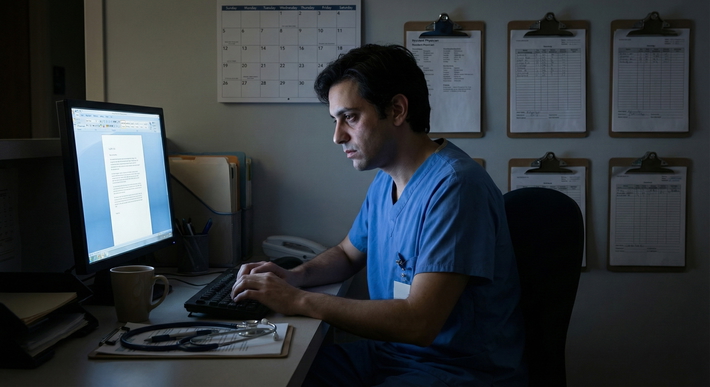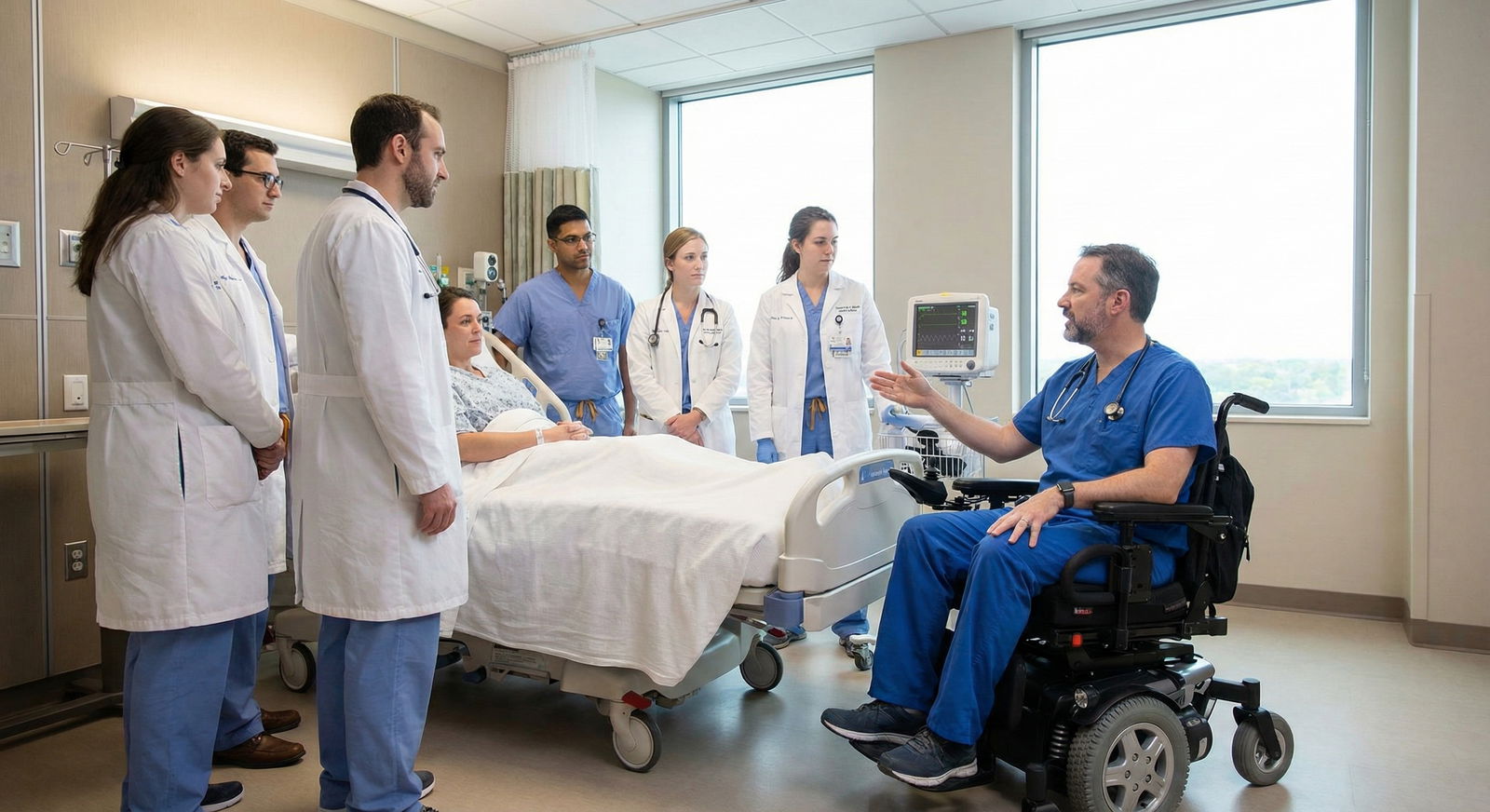
You are in the workroom at 5:15 a.m. The vascular surgery chief is rattling off the day’s cases. First start at 7:00, then a long thoracoabdominal aneurysm, then “add-ons as they come.” Everyone nods. You glance at your CGM graph buried under your gown and lead vest. You ate at 4:15. You are already trending down. You know that once you scrub in, it may be hours before you can step away.
The unspoken question: Can you actually do this safely, day after day, with type 1 diabetes?
Let me answer that first: Yes, you can. But not with wishful thinking, and not by pretending you are identical to every other resident. The programs that get this right do it because they treat type 1 diabetes like the serious, constant physiologic variable that it is—and they engineer around it.
This is not about lowering standards. It is about avoiding preventable disasters, burnout, and attrition in people who are already doing something hard while also running an endocrine ICU in their own body 24/7.
Let me break this down specifically.
1. What Makes Procedural Specialties Different for Type 1 Residents
Medicine residents sprint between consults and notes, but they can usually grab juice or a snack between patients. ICU residents are glued to monitors but can usually step out of a room if they must.
Procedural specialties are structurally different:
- You are physically tethered: scrubbed, gowned, gloved, leaded, sterile.
- You are time-tethered: cases run long, add-ons compress breaks, turnovers vanish.
- You are optics-tethered: any request to step away can be read as “weakness” in some cultures, especially surgical ones.
So the risk profile shifts:
Hypoglycemia risk becomes front-loaded and catastrophic.
Low in the charting room? Annoying. Low at hour 5 of a Whipple when you are first assist? Dangerous.Hyperglycemia becomes sneaky and cumulative.
Multiple 12–18 hour days with poor access to insulin adjustments, dehydration, and erratic meals will push average glucose higher. That accelerates fatigue, slows cognition, and over months wrecks control.Sleep and circadian chaos amplify everything.
Night float, 28-hour calls (where they still exist), home call for emergent cases at 3 a.m. All of this sits on top of basal-bolus requirements that do not care about your schedule.
Here is the framing I use: a resident with well-managed type 1 diabetes can meet the same performance standards as peers, but the system has to stop assuming that “just power through” is a safety strategy.
Common Procedural Environments Where This Matters
- General surgery, vascular, cardiothoracic, surgical oncology
- Orthopedics, neurosurgery, ENT, plastics
- Interventional cardiology, interventional radiology, GI with heavy ERCP workload
- OB/GYN with high L&D and emergent C-section volume
- Anesthesiology (yes, anesthesia is procedural in all the relevant ways)
Each has slightly different demands, but the underlying issues are the same: long fixed procedures, heavy call, unpredictable emergencies, and packed blocks that leave no slack.
2. Core Safety Principles: What Actually Needs to Be True
Before we talk accommodations, we need clear operational goals. This is what “safe and sustainable” looks like for a resident with type 1 diabetes in a procedural specialty:
- No unrecognized severe hypoglycemia while performing or assisting in procedures.
- Reasonable ability to maintain average glucose in a target range consistent with long-term health, not just surviving residency.
- Workflow that allows the resident to treat out-of-range values without repeatedly having to choose between immediate patient care and self-preservation.
- A program culture where using diabetes tech (CGM, pump), checking glucose, and briefly stepping away when necessary are normalized, not punished.
Those are non-negotiable. They are not “extras” or “nice to have.” If a program or attending implicitly demands that a resident violate these, they are demanding unsafe practice.
Let me be explicit: I have seen residents pass out from hypoglycemia after ignoring symptoms because they were terrified of stepping away from the table. That is not “grit.” That is a safety failure.
3. Pre-Match and Onboarding: Getting This Right From Day 1
You cannot retrofit this at PGY-3. The conversation has to happen early, before someone is already drowning.
Pre-Match Conversations (Applicant and Program Responsibilities)
For the resident:
- Decide what you need to disclose in interviews versus post-match. Legally, you are not required to disclose a disability in the application process. Practically, if you know you will need specific accommodations (time-limited breaks from the OR, guaranteed access to CGM alarms, etc.), it is usually smarter to feel out program culture in advance.
- Ask targeted questions that reveal flexibility without oversharing:
- “How do you handle residents with medical conditions who need periodic breaks or brief time away during long cases?”
- “What is your culture around residents using wearable health devices in the OR?”
For the program:
- If an applicant discloses type 1 diabetes, the correct response is not “Are you sure you can do this?” The correct response is, “Here is how we structure long days and support residents who need predictable access to hydration, food, and brief physiologic breaks. What has worked for you so far and what do you anticipate needing?”
- Avoid knee-jerk “this will be a problem in trauma / transplant / CT” reflex. The ADA and basic fairness standards do not allow you to preemptively assume someone cannot perform core job functions if reasonable accommodations can make it possible.
Onboarding: Formalizing Accommodations
The moment someone matches, you should be thinking structurally, not ad hoc.
Get Occupational Health / Employee Health involved early.
Not to gatekeep, but to document that this is a qualified individual with type 1 diabetes who may need accommodations under ADA or equivalent frameworks.Set up a formal accommodation plan that is:
- Written
- Specific
- Shared with relevant leadership (program director, key attendings, chiefs) in a need-to-know framework
Clarify the tools the resident uses:
- Multiple daily injections vs. insulin pump
- CGM with real-time alerts vs. fingerstick-based monitoring
- Any comorbidities (hypoglycemia unawareness, celiac, gastroparesis) that change the calculus
| Topic | Who Leads | When |
|---|---|---|
| Disclosure & broad needs | Resident | Pre-start or early PGY-1 |
| Formal accommodation paperwork | Occupational Health | During onboarding |
| Rotation-specific logistics (OR, cath lab) | Program Director + Chiefs | 1–2 months before rotation |
| Tech policies (CGM, pump, phones) | Hospital IT/OR leadership | Before first procedural rotation |
If you skip this front-end work, you end up with panicked, case-by-case negotiations in the OR hallway. That is exactly what burns people out.
4. Concrete Accommodations in the OR, Procedural Suites, and Call
This is what people actually want to know: What does “reasonable accommodation” look like in practice for a surgical or procedural resident with type 1 diabetes?
I will go system by system.
A. Glucose Monitoring During Procedures
The baseline safety requirement is simple: the resident must be able to monitor their glucose and respond to abnormal values during long procedures without undue delay.
For CGM users:
- Allow CGM wear in the OR, cath lab, or procedural suite.
There is no credible infection control reason to ban a covered sensor under scrubs and gown. If OR leadership resists, push them to produce actual infectious disease or sterile field data. They usually cannot. - Allow CGM alerts to be audible or tactile:
- Silent modes that still deliver strong vibration through gown and lead
- Or placing a paired device (phone or receiver) on a nearby non-sterile shelf where an RN or circulator can glance at trend arrows if alerted
For non-CGM users:
- Build in pre-case and mid-case capillary glucose checks:
- Mandatory check before a case expected to exceed 2–3 hours
- Agreement that if the case exceeds a certain length, the resident can step out during a natural pause for a quick check
The most common administrative mistake is treating diabetes tech as “gadgets” instead of essential medical devices.
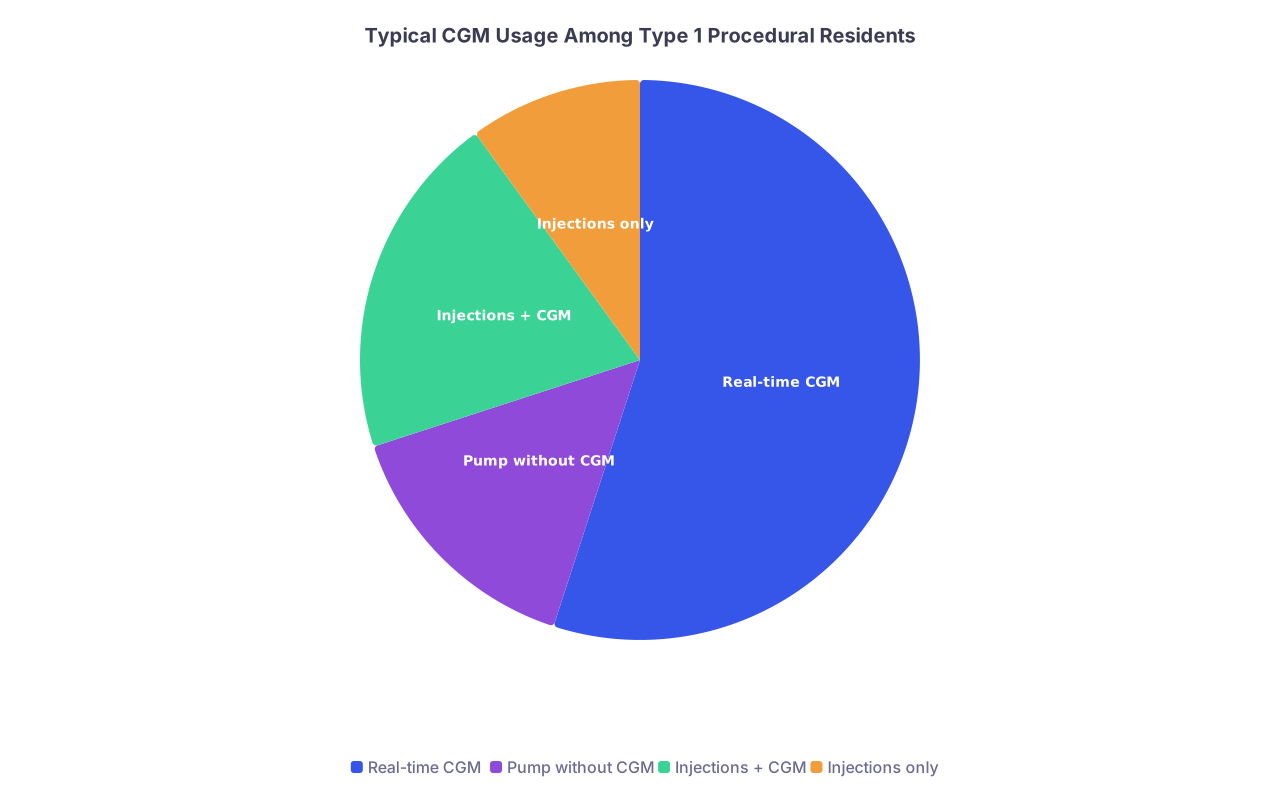
| Category | Value |
|---|---|
| Real-time CGM | 55 |
| Pump without CGM | 15 |
| Injections + CGM | 20 |
| Injections only | 10 |
Is this exact distribution universal? No. But in most recent cohorts, over half rely on CGM as a primary safety tool.
B. Ability to Treat Hypoglycemia Promptly
This needs to be pre-negotiated, not improvised.
Essential elements:
- The resident has immediate access to fast-acting carbs in or just outside the OR / procedure room.
That means:- Glucose tablets in a scrub pocket or under gown in a sterile, sealed container.
- Or a pre-approved, always-available carbohydrate source at the anesthesia workspace or with the circulator.
- Clear agreement that if the resident states, “I need 5 minutes to check and treat my blood sugar,” the team will:
- Use a natural pause: when scrub-turnover happens, during prepping/drapping, during closure, or when attending is doing a step alone.
- Not demand a detailed explanation mid-case. Diabetes status is not a public show-and-tell.
In higher-acuity environments (trauma laparotomy, emergent C-section), the resident should frontload safety:
- Slightly higher glucose targets before known emergent calls.
For example, aiming for 140–180 before a case likely to be chaotic and prolonged, rather than pushing for 90–110 and risking rapid drops. - Written protocol with anesthesia:
- If the resident becomes symptomatic but cannot step away immediately, anesthesia can administer IV dextrose in a defined emergency scenario.
Hypoglycemia is not negotiable. Programs that respond with “Just try to eat more before cases” are signaling they do not understand type 1 physiology.
C. OR Culture and “Looking Weak”
Here is where things usually break.
Symptoms of impending hypoglycemia—sweating, tremor, cognitive slowing—are exactly what you do not want in a scrubbed operator. Yet many residents will push through because they are terrified that stepping away will be interpreted as soft, unreliable, or “not a real surgeon.”
Leadership has to dismantle that before it happens:
- Program director and key attendings should explicitly say, in front of the resident and ideally in front of chief residents:
“Managing your diabetes in a way that keeps you safe and effective is part of your professionalism, not a distraction from it. If you need a 3–5 minute break or time to treat a low, you take it. We will work around that.” - Chiefs should be tasked with reinforcing this on day 1 of each rotation:
“If you say you need a diabetes check, I will cover. You are not going to be penalized for that.”
If you leave this as an unspoken “I am sure it will be fine,” it will not be fine.
5. Scheduling, Call, and Longitudinal Training Structure
Now zoom out from the OR to the whole training program. Diabetes management is not just about individual cases, it is about pattern and predictability.
A. Rotations and Work Hours
I am not arguing for shorter hours solely because of diabetes. But thoughtful structuring matters:
- Avoid clustering all the worst rotations back-to-back.
Three high-intensity, prolonged-call blocks in a row is brutal for any resident; for a type 1 diabetic, it can be the difference between good control and complete metabolic chaos. - Consider modest, targeted adjustments:
- Guarantee one predictable mealtime window on high-volume services. Example: “Every resident will be relieved for at least 20 minutes between 11:30 and 14:00, and again between 17:00 and 20:00 barring true mass casualty events.”
- Allow the resident to trade the rare brutally inhumane 36-hour “tradition” call with a colleague if it significantly destabilizes their glucose control.
We are not talking about cutting total clinical exposure. We are talking about distributing it in a way that does not repeatedly punish someone for having a pancreas that stopped working.
B. Night Float, Home Call, and Emergencies
Overnight glucose management on call is where many residents with type 1 diabetes quietly start to break.
Key supports:
- Reasonable sleep opportunity.
Not guaranteed sleep (this is residency), but a culture that does not glorify needless all-night charting or “face time.” If there is a lull, the resident should rest. Their diabetes will not forgive 4 nights of “sleeping” 1 hour in a chair. - Flexibility in how the resident structures basal and bolus insulin on night shifts:
- Some will need to adjust basal down slightly overnight due to less consistent eating.
- Others may need pump profiles specifically for call nights.
Programs should not micromanage that, but they should understand that “I need to adjust my night-shift insulin plan” is not optional tinkering.
For home call with emergent cases (orthopedics, neurosurgery, OB, ENT):
- Explicit plans for the “3 a.m. call-in” scenario:
- Resident keeps fast-acting insulin, basal if needed, and carbs ready in a go-bag.
- If using a pump, verify supplies and battery/charge at the start of each home call period.
- If possible, frontload a slightly higher glucose target before trying to grab pre-call sleep.
This is basic risk management. It also stops the cumulative erosion of glycemic control across months of irregular call.
6. Technology Policies: CGMs, Pumps, Phones, and the OR
Hospital policy often lags behind reality by a decade. So you will see blanket rules like “no personal electronic devices in the OR” that were written before CGMs and Bluetooth pumps were ubiquitous.
Here is how to drag policy into the present without turning the OR into a gadget circus.
CGMs and Insulin Pumps
Technically:
- CGMs and pumps are FDA-approved medical devices that the user relies on for moment-to-moment safety.
- They do not belong in the same category as personal phones, AirPods, or watches.
- Interference with other equipment (electromagnetic, radiofrequency) is negligible and has not been shown to cause clinically relevant issues in OR environments.
Operationally:
- Allow residents to wear CGMs and pumps under scrubs and gowns.
- Pumps with tubing should be secured clearly (e.g., clipped to waistband, secured with tape if needed) to avoid line entanglement. This is practical, not conceptual.
- Policy can specify:
- Devices must be fully covered by non-sterile layers.
- Alarm volume should be set to vibrate when possible.
- Screens can be checked only if the resident is not scrubbed or through a brief glove change, depending on role.
If your infection control committee objects, ask for data. Almost always, the resistance is cultural, not scientific.
Phones and Receivers
The trickier part is phones, which often serve as the display / control unit for modern CGMs and pumps.
Here is a compromise framework that works:
- The phone or receiver is allowed in the OR on a non-sterile stand or shelf, screen facing away from the field.
- The resident can check readings:
- During non-critical portions of the case,
- When not scrubbed (e.g., stepping out for a quick check),
- Or via staff if needed (“Can you confirm my CGM is above 100 and trending stable?”).
- Texting, calls, and unrelated use remain restricted per standard OR policy.
You differentiate between medical monitoring and personal device use, rather than banning the tool entirely.
7. Evaluation, Competence, and Fairness
Here is where programs get anxious: “If we make accommodations, are we lowering standards? Are we creating unfair advantages or disadvantages?”
Let us be blunt. You judge the resident on performance. You modify the environment so that their chronic disease does not artificially sabotage that performance.
The resident must still:
- Master procedural skills.
- Handle call responsibilities appropriate to level.
- Meet professional and knowledge standards.
What you do not do:
- Penalize someone because they stepped out of one case for 5 minutes to treat hypoglycemia.
- Interpret “I need a quick diabetes check” as a lack of commitment.
- Assign fewer operative opportunities purely because of type 1 diabetes, unless the resident themselves requests a specific modification and it does not compromise training requirements.
So the evaluation conversation looks like:
- “Your case logs, intraoperative performance, and decision-making are at or above level. You have also managed your diabetes in a way that did not compromise patient care. That is exactly what we expect.”
- Or, if there is an issue: “Your diabetes management has occasionally interfered with performance (for example, recurring symptomatic lows during last month’s cases). We need to work together—with your endocrinologist and occupational health—to adjust your plan so that does not continue. We are not questioning your place in the specialty, but we cannot ignore it either.”
That is adult-to-adult, not paternalistic, not panicked.
8. Common Failure Patterns and How to Avoid Them
Let me walk through what tends to go wrong in real life, because I have watched these patterns repeat.
Failure 1: The “Silent Hero” Resident
Resident decides that raising accommodations will brand them as “high maintenance.” So they:
- Say nothing formal to the program.
- Try to run their old med-student plan in a 80-hour surgery schedule.
- Start stacking lows during long cases, correcting with huge carb loads, then spiking high.
- Over weeks to months, A1c climbs, exhaustion sets in, and performance slips.
Fix: Normalize early disclosure within the program. The PD should say on day one: “If you have any chronic illness, including diabetes or others, come talk to me or occupational health. We will build support in, not wait until you crash.”
Failure 2: The “One Helpful Attending” Problem
One attending is excellent: knows about the resident’s diabetes, protege-style support, helps them step out when needed. Everyone else is clueless or mildly hostile. The resident survives that attending’s rotation, then hits a wall elsewhere.
Fix: Do not rely on a single champion. Institutionalize the plan. That means PD-level ownership and concrete briefings to chiefs and key faculty on each rotation.
Failure 3: Tech-Ban Overreach
OR leadership bans phones and all personal devices; lumps CGMs and pumps into that. Resident is forced to run blind or fingerstick once preoperatively.
Fix: Separate categories in policy: “Personal electronics” versus “Medically necessary devices and their interfaces.” Provide written guidance and get buy-in from infection control and risk management.
9. Building a Proactive Support System
You do not need a 40-page protocol to support one or two residents with type 1 diabetes. You need a small set of clear, enforced norms.

| Step | Description |
|---|---|
| Step 1 | Resident discloses type 1 diabetes |
| Step 2 | Occupational health assessment |
| Step 3 | Written accommodation plan |
| Step 4 | Program director briefing |
| Step 5 | Rotation specific planning |
| Step 6 | OR and call logistics defined |
| Step 7 | Ongoing check ins each 6 months |
| Step 8 | Adjust plan as training progresses |
Pragmatically, this means:
- One senior administrator (often the PD or associate PD) owns the issue.
- Occupational health helps write the initial plan and updates it annually or when tech changes (e.g., switching to hybrid closed-loop pump).
- At the start of each major procedural rotation, a brief (5–10 minute) check-in:
- “Anything about this rotation that worries you from a diabetes perspective?”
- “Do we need to adjust break expectations, call structure, or communication with this attending group?”
This is not complex. It just has to be intentional.
10. The Future: Where This Should Be Going
Type 1 diabetes is not going away. The number of medical trainees with type 1 is increasing because survival and childhood management have improved. You will have these residents. The question is whether you manage that reality competently, or you push them out through neglect.
Emerging directions that will make this easier:
- More widespread use of hybrid closed-loop systems, which flatten a lot of the glucose chaos of unpredictable schedules.
- Better integration between CGMs and hospital systems, so real-time data can be viewed in safe, HIPAA-compliant ways (without hacky phone-in-OR workarounds).
- Stronger regulatory and accreditation scrutiny on how programs handle chronic disease and disability. This will eventually force standardization—programs that get ahead of the curve will look better and will recruit better.
But you do not need future tech to be decent now.
You need:
- A spine about accommodations.
- Clear rules.
- And basic respect for the fact that running a pancreas manually while learning to operate is not easy, and that the resident doing it has already demonstrated a high level of discipline just to get here.
Key Takeaways
- Residents with well-managed type 1 diabetes can safely and fully train in procedural specialties, but only if programs treat diabetes management as a core safety issue, not an afterthought or “personal problem.”
- The most effective accommodations are concrete and small: guaranteed access to glucose monitoring and treatment during long cases, flexible policies for CGM/pump use, and modest scheduling adjustments that preserve total training while preventing metabolic burnout.
- Culture is the hinge: explicit support from leadership and normalized, written protocols prevent the “silent hero” pattern that ends with burnout, poor control, or avoidable emergencies in the OR.