
What If My Doctor Won’t Write the Letter I Need for Accommodations?
What are you supposed to do when the one person who can “unlock” your accommodations… just won’t?
That’s the nightmare scenario, right? You finally work up the courage to ask for disability accommodations—on exams, in clinicals, for Step, for school, for work—and then your doctor hesitates. Or says no. Or says, “I don’t really do that sort of thing.” And suddenly your whole future feels like it’s hanging on one signature that you can’t get.
You’re not overreacting. This can mess things up. But it doesn’t have to be the end of the story.
Let’s walk straight into the worst-case thinking and pick it apart.
Why Your Doctor Might Refuse (And Why It Feels So Personal)
The first awful thought that pops up is usually:
“They don’t believe me. They think I’m faking. They think I’m weak.”
Sometimes, yeah, a provider is being dismissive or ignorant. I’ve seen that.
But a lot of refusals are less about you and more about them.
Common reasons doctors refuse to write accommodation letters:
- They’re scared of “saying the wrong thing” to a high-stakes body (NBME, MCAT, USMLE, school, employer).
- They don’t understand the disability/accommodations process at all.
- They think writing this letter will take a ton of time they don’t have.
- They don’t feel “qualified” to assess learning disabilities, ADHD, psych conditions, etc.
- They think accommodations = giving you an “unfair advantage.”
- They barely know you and aren’t comfortable putting their name on a strong statement.
None of that makes it less stressful. You just need to understand the type of hesitation so you can decide what to do next.
Because there’s a big difference between:
“I’m not sure what to write, I don’t usually do this,”
and
“I don’t believe you need this and I won’t support it.”
Those are not the same problem.
And they don’t need the same solution.
First: Figure Out Exactly What Kind of “No” You’re Dealing With
You need clarity. Vague “I’m not comfortable” is the worst. Ask directly.
Something like:
“Can you help me understand what your concerns are about writing this documentation for accommodations?”
Then listen. Painful, but necessary.
Most refusals fall into a few buckets. Here’s how they usually sound in real life, and what they actually mean.
| Doctor Response Type | What It Often Means |
|---|---|
| Vague discomfort | They feel out of their depth |
| “I don’t do paperwork” | Time/effort avoidance |
| “You seem fine to me” | Minimizing / knowledge gap |
| “I’m not that kind of doctor” | Wrong specialty / scope concerns |
| “This could backfire on you” | Fearful about labels / stigma |
Now what each really is:
1. Vague discomfort / “I don’t really know how to do these”
This is fixable. They’re afraid of messing up documentation standards. That’s where you bring very specific forms, example letters, or guidelines from the testing agency or disability office. You can literally say:
“The accommodations office has specific guidance for providers. If I send that to you and fill in as much background as I can, would you be willing to review and sign if you agree?”
Sometimes they just need a script.
2. Time avoidance / “I don’t have time for this kind of paperwork”
This one stings because it sounds like: “Your functioning isn’t worth my time.”
But often it’s just burnout and bad boundaries.
Here, you’re basically negotiating effort. Ask:
“Is there a way I could make this easier? The form is 2–3 pages. I can send you a draft summary of my history and the accommodations requested, and you can edit as needed.”
Or offer a specific follow-up visit:
“I’m happy to schedule a dedicated appointment just to review this with you.”
If they still refuse? That’s a data point about this provider. Not about your legitimacy.
3. “You seem fine to me” / blatant minimizing
This is the ugly one. The “you’re high-functioning so you don’t need help” mindset. Or the “I did med school without accommodations, so…” generation.
If they’re questioning whether your symptoms are “bad enough,” you can gently push back:
“I’ve been evaluated and diagnosed with [condition]. The issue isn’t whether I look ‘fine,’ it’s that without accommodations, I’m unable to perform to my potential and it significantly worsens my symptoms. Would you be willing to document what you have observed, even if you don’t feel comfortable recommending specific accommodations?”
But if they basically say “I don’t think you need this” after you’ve explained and provided documentation, you’re in misaligned-values territory. They’re not the right person. And trying to convince them can be emotionally brutal.
4. Wrong specialty / “I’m not qualified to say this”
This one is often legit. Your PCP might honestly not feel qualified to confirm, say, ADHD or a specific learning disorder if they didn’t diagnose it.
You can ask:
“Would you be comfortable writing a letter confirming [diagnosis] as documented in my chart and referring to my neuropsychologist/psychiatrist for detailed testing results?”
Or ask if they’ll refer you to someone more appropriate (neuropsych, psychiatry, specialist).
5. “This could backfire” / fear-based concern
Sometimes a doctor worries that a formal disability label will hurt you long term. Residency, licensing, credentialing, malpractice—the boogeyman list.
Reality: testing agencies and schools already have systems for this. Disability documentation is not some career death sentence. Is bias real? Yes. But so is the risk of failing out or burning out without accommodations.
You can say:
“I understand your concern. I’ve thought about those risks, and I still feel that having accommodations is necessary for me to succeed and stay healthy. Would you be willing to support my request?”
If they still refuse, you’ve at least made it clear this is your informed choice.
What If This Was Your Only Doctor?
This is the scenario that makes your stomach drop:
“I only have one psychiatrist/PCP/neurologist. If they say no, I’m screwed.”
You’re not actually trapped, but it might take some uncomfortable steps.
Here’s the mental model: you have three levers to pull.
Clarify and re-ask, more specifically.
Sometimes the first ask is too broad: “Can you write me a letter for accommodations?”
Try something narrower:“For my school/Step exam, they’re asking for documentation confirming my diagnosis, history, functional limitations, and past accommodations. Would you be willing to write a letter that includes those things you’ve observed in my treatment with you?”
Specific is less scary than “write me a magic letter that forces the NBME to bend to my will.”
Loop in the disability office / testing agency early.
People underestimate this. Don’t just silently panic.Email your med school disability office or the testing body (NBME, MCAT, etc.) and say, plainly:
“I have a diagnosed condition and previous treatment, but my current provider is hesitant to write the documentation. What alternative documentation will you accept? Are there templates or guidance I can give my provider to make this easier?”
I’ve watched students learn that a combo of:
- neuropsych testing report,
- old IEP/504 plan, and
- brief confirmation from a current provider
was enough. The doctor didn’t need to write a 5-page essay.
Start building a backup plan with another provider—now, not later.
This is the part nobody wants to hear when timelines are tight, but if your gut says “this doc will never truly be in my corner,” don’t tie your whole future to them.
Yes, it’s a pain. New patient intake. Wait lists. More co-pays. More emotional labor.
But ask yourself: am I comfortable letting this one person hold veto power over my entire testing accommodations future?If the answer is no, then you already know what you need to do, even if it sucks.
How Much Power Does One Letter Actually Have?
It feels like everything hangs on “that one letter.” But it’s usually not that simple.
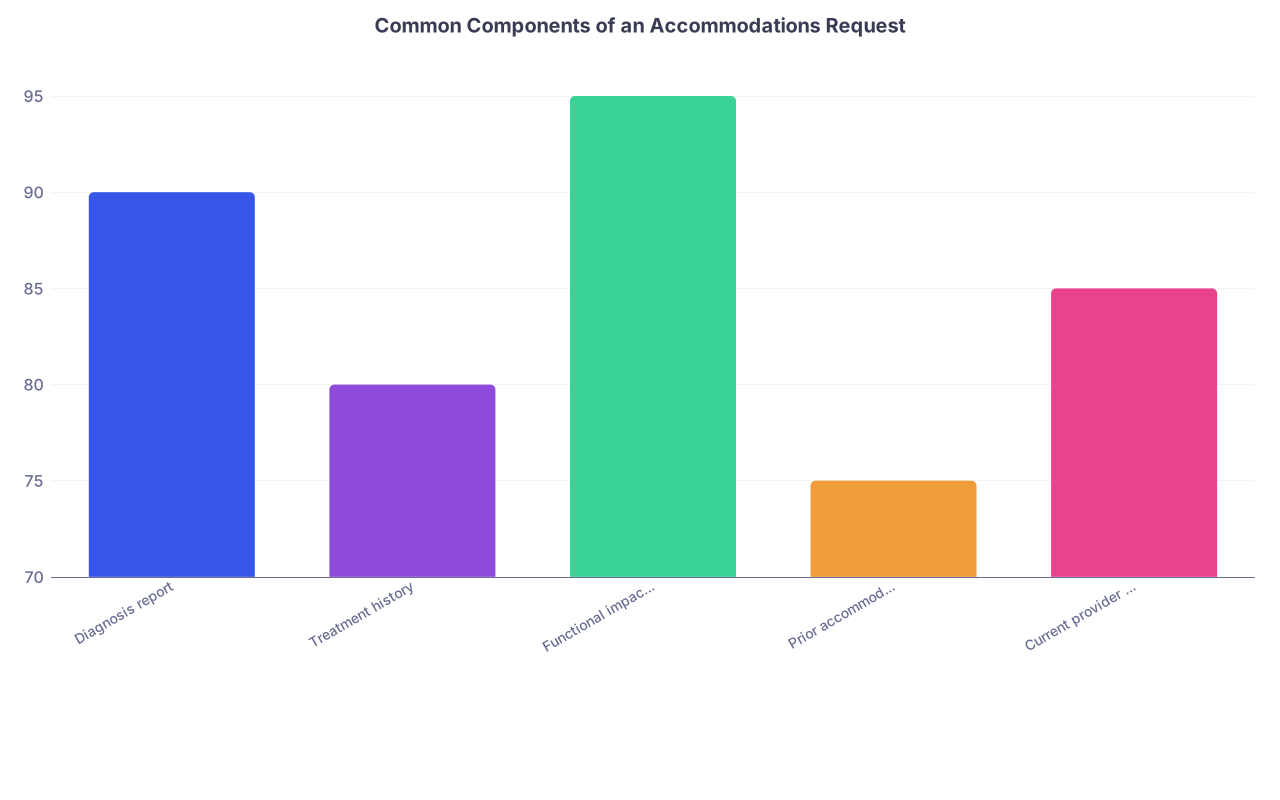
Most big systems (NBME, USMLE, MCAT, med schools) look at a package of documentation:
- Diagnostic reports (neuropsych testing, prior evals)
- Treatment history
- Functional impact (how your condition affects major life activities)
- Past accommodations (undergrad, prior exams)
- Current provider statement
One weak or missing piece doesn’t always kill the whole thing—especially if other parts are strong.
| Category | Value |
|---|---|
| Diagnosis report | 90 |
| Treatment history | 80 |
| Functional impact description | 95 |
| Prior accommodations | 75 |
| Current provider letter | 85 |
Those percentages aren’t real data, but the idea is: most systems want corroboration from multiple angles.
So if your current doctor won’t write the perfect glowing letter you imagined, ask yourself:
“What other documentation do I already have—or could I realistically get—that shows the same thing?”
You might have more than you think: old IEPs, college disability office letters, prior psych evals, treatment summaries from previous providers, old testing results.
Scripts You Can Actually Use (So You’re Not Staring at a Blank Message Draft)
Because the anxiety spiral really spikes when you open the portal and can’t even figure out how to ask again.
Here are a few word-for-word starters you can adapt.
To clarify their refusal:
“Hi Dr. [Name],
Thank you for your time during our last visit. I wanted to follow up about the letter for disability accommodations. You mentioned you were not comfortable writing it. Could you clarify if your concern is about time, the specific wording, or your role in making the diagnosis? Understanding this will help me figure out next steps with my school/testing agency.
Thank you again,
[Your Name]”
To offer structure and make it easier for them:
“Hi Dr. [Name],
The disability office/testing agency provided specific guidance for medical providers writing documentation. I’ve attached that here, along with a brief summary of my history and the accommodations being requested. Would you be willing to review this and write a letter based on your experience treating me, if you feel it’s appropriate? I’m happy to schedule an appointment specifically to go over this.
Best,
[Your Name]”
To your disability office when your doctor won’t play ball:
“Hi [Coordinator Name],
I’m a student with a diagnosed [condition] seeking accommodations for [exams/clinical duties/etc.]. My current provider is hesitant to write a detailed letter, although I have prior documentation from [neuropsych testing, previous school, etc.]. What alternative forms of documentation can you accept in this situation, and do you have any templates or guidance I can share with my provider to make it easier for them?
Thank you for your help,
[Your Name]”
You don’t have to be perfect. You just have to be clear.
When You Should Seriously Consider Switching Providers
This is the part everyone postpones until they’re already in crisis.
Sometimes the question isn’t, “How do I convince this doctor?”
It’s, “Why am I still with a doctor who doesn’t believe my disability is real enough to support?”
There are a few red flags that, in my opinion, justify seriously planning an exit:
- They dismiss your symptoms because your grades are “too good” or you’re “too functional.”
- They make moral judgments about accommodations (“I don’t believe in extra time.”)
- They imply this could ruin your career, instead of helping you weigh pros/cons like an adult.
- They refuse to even read guidelines from disability offices.
- They keep “forgetting” to do the forms after multiple reminders and appointments.
If you’re hearing comments like, “You just need to try harder,” or “Med school is hard for everyone,” that’s not a small disagreement. That’s a provider whose philosophy conflicts with your reality.
You deserve care that doesn’t treat your disability as an annoyance or a character flaw.
Yes, finding a new doctor is a hassle. Waiting lists are real. Telehealth sometimes helps, sometimes doesn’t. But the cost of staying with someone who won’t support you when it really counts? That’s enormous.
The Future-of-Medicine Piece You’re Probably Not Saying Out Loud
Here’s the extra layer of anxiety: you’re not just a patient. You’re also an applicant, or a med student, or a future physician.
So this whole fight for accommodations isn’t just about now. It’s also quietly asking:
“Is this what the profession really thinks of people like me? Am I always going to have to justify my disability to colleagues who think I’m gaming the system?”
You’re not imagining it. Medicine has a long, ugly history of ableism. We romanticize suffering. We idolize “pushing through.” We treat accommodations as weakness—or worse, dishonesty.
But here’s the uncomfortable truth: the system is changing because people like you refuse to disappear.
- More residents are disclosing ADHD, ASD, chronic illness, psych conditions.
- More students are demanding Step accommodations and actually getting them.
- More disabled physicians are speaking openly about their conditions and practices.
You fighting for your accommodations now isn’t just personal survival. It is the future of medicine, whether you wanted that responsibility or not. Every time someone insists:
“I have a disability, I deserve equal access, and I won’t apologize for that,”
it chips away at the old “suffer in silence” culture.
You’re not being dramatic for asking. You’re doing exactly what we tell patients to do—and watching the profession squirm when the mirror is held up.
You’re Not Out of Options—Even If It Feels Like It
Let me be blunt: you might not get the exact accommodations you want, on the exact timeline you want, from the exact doctor you thought would help.
There might be delays. Extra appointments. Appeals. Awkward emails.
You might cry in your car after a visit where a doctor makes you feel like you’re begging.
None of that means you’re wrong for asking.
It means the system is built with friction, and you’re feeling every jagged edge of it.
But you still have moves:
- You can clarify the “no” and see if it’s actually a “maybe, with guidance.”
- You can pull in your disability office or testing agency to back you up.
- You can use older documentation creatively.
- You can switch providers—not instantly, but intentionally.
- You can remember that needing accommodations doesn’t make you less of a future doctor. It makes you the kind of doctor who will remember what this felt like when a patient is scared to ask you for help.
Years from now, you probably won’t remember the exact wording of the letter or which portal message finally worked; you’ll remember whether you abandoned yourself to keep things “easy,” or whether you backed yourself even when a doctor wouldn’t.