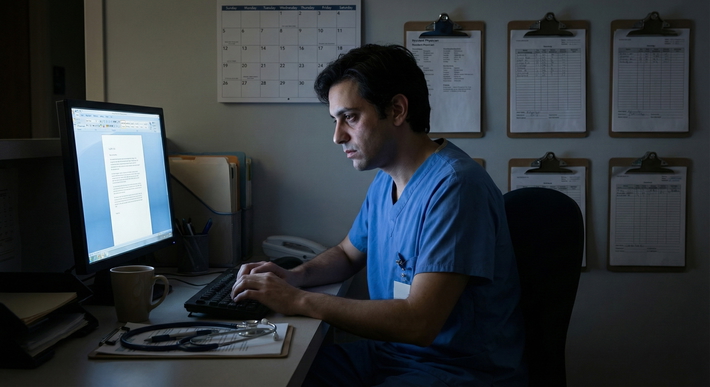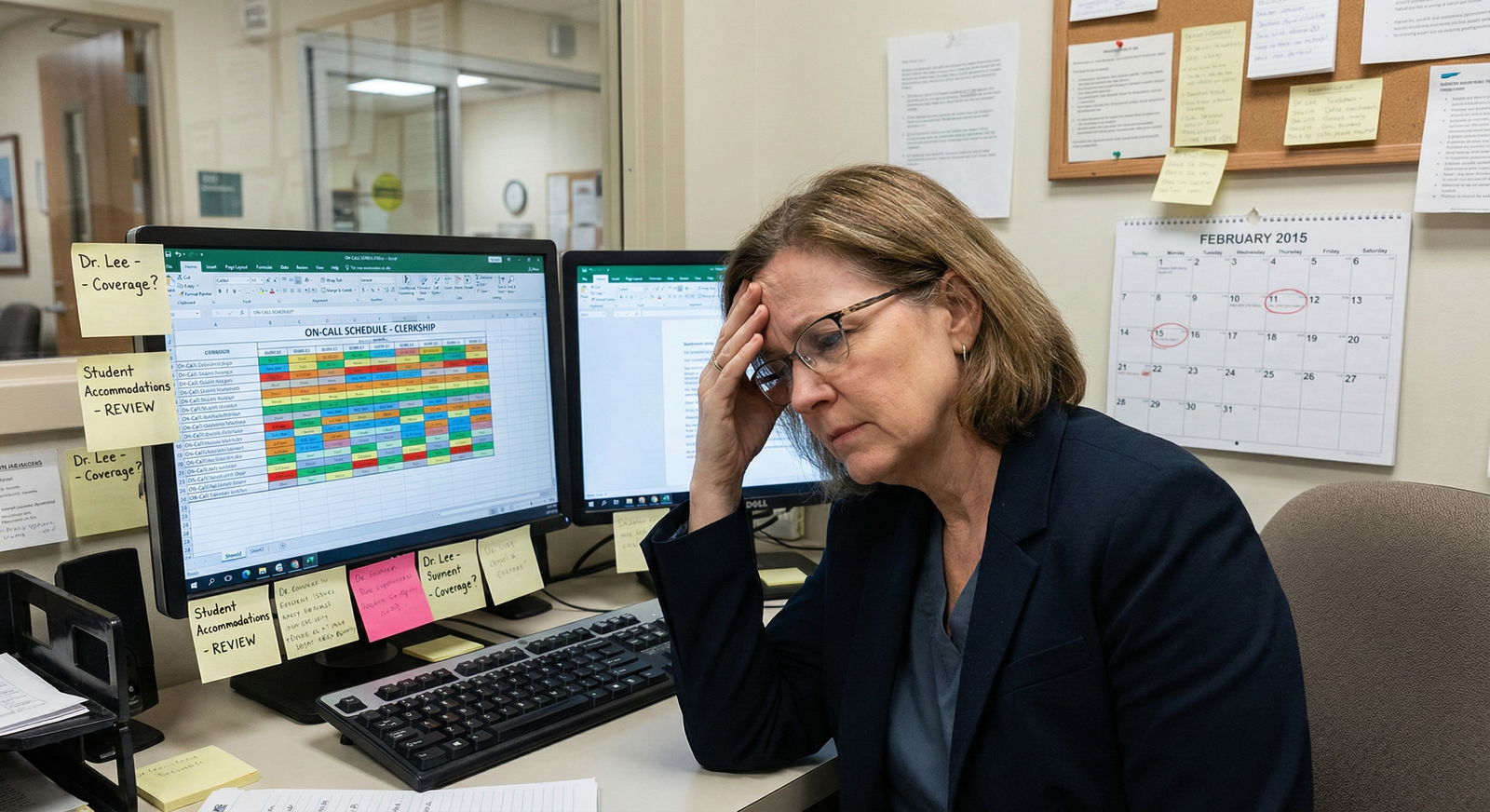
It’s August, first week of your third year. You’re on your very first clerkship. You’ve got your white coat, your badge, your stethoscope – and an email from Disability Services you’ve read at least ten times.
“In light of the essential requirements of the clinical curriculum, we are unable to continue certain previously granted accommodations…”
You’re sitting in your car in the hospital parking lot, AC blasting, trying not to cry because you actually thought this part was going to be better. You had documentation. You had approval. You had this all “sorted” in pre-clinicals.
Now you’re wondering:
Can they really do this?
Am I going to fail rotations?
Do I have to disclose everything to my attending?
Is this career over before it even started?
Let’s walk through this without sugarcoating it, but also without assuming your life just went up in flames.
First: Yes, This Happens. No, You’re Not Crazy.
I wish I could say this scenario is rare. It’s not.
You get generous exam accommodations for pre-clinical years – extended time, separate room, breaks, maybe even reduced course load. Faculty grumble behind closed doors but tolerate it because everything is classroom-based and relatively contained.
Then clinical years start and suddenly the language changes. You hear phrases like:
- “Real world expectations”
- “Essential technical standards”
- “Patient safety”
- “Unpredictable nature of clinical medicine”
And magically, accommodations that worked perfectly fine for standardized exams are “not feasible” on the wards. Or they tell you they’re only valid for written tests, not for OSCEs, not for call schedules, not for rounding expectations.
You will absolutely feel like the rug’s been pulled out from under you.
But here’s the part you’re probably not being told clearly:
Schools can adjust accommodations between pre-clinical and clinical years.
They cannot just arbitrarily yank them without a process, justification, or alternatives.
The question is whether what they’re doing is:
- A legal, documented, defensible change based on essential requirements
or - A lazy, discriminatory, inconsistent attempt to make you “fit the mold” because it’s inconvenient to support you now that you’re around patients.
Both happen. I’ve seen both.
What’s Actually Changing Between Pre-Clinical and Clinical?
You’re not wrong that the game shifts.
In pre-clinicals, your “job” is to learn and pass exams. The environment is controlled. Timed blocks, quiet rooms, predictable schedules.
In clinical years, your “job” is to function on a team taking care of patients in an environment that is:
- Unpredictable
- Time-sensitive
- Physically and mentally demanding in weird, inconsistent ways
That’s the line schools use to restrict accommodations they previously approved. Sometimes they’re right. Sometimes they’re absolutely not.
Here’s a very rough breakdown of what tends to be treated differently:
| Accommodation | Usually OK Pre-Clinical | Often Fought in Clinical |
|---|---|---|
| Extended test time | Yes | Sometimes |
| Separate test room | Yes | Sometimes |
| Breaks during exams | Yes | Sometimes |
| Flexible deadlines | Sometimes | Often No |
| Modified call schedule | N/A | Often Fought |
| Reduced patient load | N/A | Often Fought |
You’ll notice a pattern: anything that touches “patient care” or “team function” suddenly becomes “essential” and therefore “hard to accommodate.”
Here’s what that means for you: if they’re revoking or changing accommodations, they need to be very specific about why something is incompatible with an essential requirement. Vague hand-waving about “this is how it’s done” doesn’t cut it legally.
Can They Just Revoke My Accommodations?
Short answer: they can modify, but not arbitrarily revoke. And they need documentation, not vibes.
Longer answer, without legalese:
They’re allowed to:
- Reassess accommodations when the environment substantially changes (like going from classroom to hospital).
- Say no to accommodations that would fundamentally alter essential requirements or create a genuine safety issue.
They are not allowed to:
- Decide “well, now you’re in clinicals so we don’t do accommodations anymore.”
- Let one cranky clerkship director override disability services just because “back in my day we worked 120 hours.”
- Punish you for needing accommodations by giving you worse schedules, worse evals, or fewer opportunities.
If you’re being told, “We can’t do that anymore,” your automatic response should be:
“What changed, specifically, in the program or essential requirements that makes this no longer reasonable? And what alternative accommodations can we explore?”
If they flail when you ask that, that’s a red flag.
The Nuclear Fear: “What If I Fail Because of This?”
This is what’s really keeping you up at night, right? Not the policy words. The “what if I get kicked out because I can’t keep up without accommodations?”
Let’s name some actual worst-case scenarios so they stop haunting you from the shadows:
- You can’t keep up with call schedules or physical demands and you start making mistakes.
- You get poor evaluations because you’re “slow,” “disorganized,” or “not proactive” – code words for “your disability is showing.”
- You fail a clerkship because they refused to honor what you need, then blame you for “performance issues.”
- You’re terrified to push back because you don’t want to be labeled “difficult,” so you just silently suffer and burn out.
I’ve seen versions of all four. None of them are automatic doom, but they do become much harder to fight if you don’t document everything.
Here’s the ugly truth: programs and schools will happily use “professionalism” and “clinical performance” as shields if you later file a complaint. Your job is to make sure there’s a clear record that you asked for help, flagged concerns early, and tried to engage in good faith.
That paper trail between you and Disability Services and Student Affairs is your lifeline if things go south.
What You Should Do Immediately (Not Six Weeks From Now)
You don’t wait. You don’t hope it magically gets better. You act while things are still “informal.”
Get everything in writing.
If someone tells you something verbally – “we can’t do X anymore” – send a follow-up email:
“Just to confirm our discussion today, my understanding is that [summarize]. Is that accurate?”
Then save every response. All of them.Loop Disability Services back in.
Don’t just accept, “The clerkship director says no.” Respond with:- “Can we schedule a formal interactive process meeting with Disability Services, Student Affairs, and the clerkship leadership?”
If they ignore that phrase – “interactive process” – that’s another red flag.
- “Can we schedule a formal interactive process meeting with Disability Services, Student Affairs, and the clerkship leadership?”
Ask for their written technical standards and essential functions.
Most med schools have a document somewhere that describes what a student “must be able to do” with or without reasonable accommodation. Read that thing like it’s an exam question stem.Compare your accommodations to those standards.
Does what you’re asking actually blow up an essential function? Or is it just “we’ve never done this before” laziness?
If this feels like a lot for you to manage when you’re already overwhelmed on rotations, yeah. That’s exactly the problem. And why so many disabled students just accept whatever they’re told. You’re not weak for feeling like you’re drowning.
Is It Ever Legit That They Can’t Provide the Same Accommodations?
Yes. Sometimes it’s actually real.
Examples that are genuinely tricky:
- You want guaranteed no overnight call in a specialty where nights are core to patient care (e.g., surgery, OB).
- You ask for so many breaks that you’d miss entire critical parts of rounds or procedures.
- You request something that literally shifts your workload onto other students in a way that’s clearly unfair and unsustainable.
But even then, the answer should not be: “So you’re out of luck.”
It should be: “Let’s talk about alternative accommodations that still let you meet the essential requirements.”
That can look like:
- Adjusting how feedback is delivered
- Building in protected time for documentation catch-up
- Structuring your schedule differently within reason
- Allowing assistive tech or alternative note-taking strategies on the wards
- Being thoughtful about which rotations are scheduled when (e.g., not all the most physically demanding ones back-to-back)
The problem is most schools don’t volunteer alternatives. They just say “no.” You will often have to be the person who says, “Okay, if not this, then what can we do?”
The Huge, Uncomfortable Issue: Disclosure and Stigma
You’re probably terrified that if you push for accommodations in clinical years, your attendings and residents will know. And they’ll label you. And it’ll hit your evals. And programs won’t rank you.
You’re not imagining that. That bias exists.
I’ve heard attendings casually say in workrooms, “Yeah, they have accommodations.” Like it’s a character flaw. Or, “Medicine might not be the right field for them.” The ableism is not subtle.
But here are a couple of grounding points:
- You don’t have to disclose diagnoses. You can talk about functional limitations instead. “I need X to perform consistently,” not “I have Y condition.”
- Legally, information about your accommodations should be shared only on a need-to-know basis. Whether your school actually honors that… varies. A lot.
What I’ve seen work best:
Students decide very intentionally who to tell, what to tell them, and how to frame it. Something like:
“I’ve worked with Disability Services to structure supports so I can be reliable and effective on the team. That may mean [concrete accommodation], but my goal is to complete all the core components of this rotation at the expected level.”
You’re allowed to both need help and demand to be evaluated fairly.
When You Need Outside Backup (And You Probably Will)
There’s a point where internal meetings and polite emails stop being enough. If you’re here:
- They revoked accommodations with no alternatives.
- Your performance is tanking because of this.
- You’re being told your issues are “professionalism” when they’re literally about disability.
It’s time to bring in outside leverage:
- A disability rights lawyer who actually knows higher ed / health professions. Not an uncle who “does contracts.”
- Sometimes a mental health provider who can clearly document the impact and need for specific supports.
- Occasionally state or federal civil rights offices, but that’s a slower, more nuclear route.
I’m not telling you this so you freak out and assume you’ll end up suing your med school. I’m telling you because schools behave very differently when they know you’re not isolated and powerless.
And no, asking for a consultation with a disability rights lawyer is not “too extreme” or “dramatic.” It’s you protecting your future in a system that has a track record of quietly squeezing out disabled trainees.
The Emotional Part Nobody Takes Seriously Enough
You’re not just dealing with logistics. You’re dealing with:
- Fear that you were wrong to even try to be a doctor
- Shame every time you feel “slower” or “less capable” on rounds
- Exhaustion from masking your disability to look like you’re coping
- Constant anxiety that one bad eval, one failed rotation, will end this entire path
It’s not just annoying. It’s crushing.
You need support that isn’t just “try mindfulness” and “remember why you started.” Actual support. A therapist who understands disability. Maybe other disabled med students or residents (search Twitter, Reddit, or student groups – they’re out there). People who won’t gaslight you by saying “everyone struggles” when actually, no, not everyone is being denied the basic tools they need to function.
You are not weak for needing accommodations. You are not “less of a doctor” because your brain or body doesn’t match the outdated template medical training was built around.
You’re someone trying to survive a system that still assumes “good doctor” = non-disabled, hyper-resilient, endlessly available human robot.
They’re wrong. Full stop.
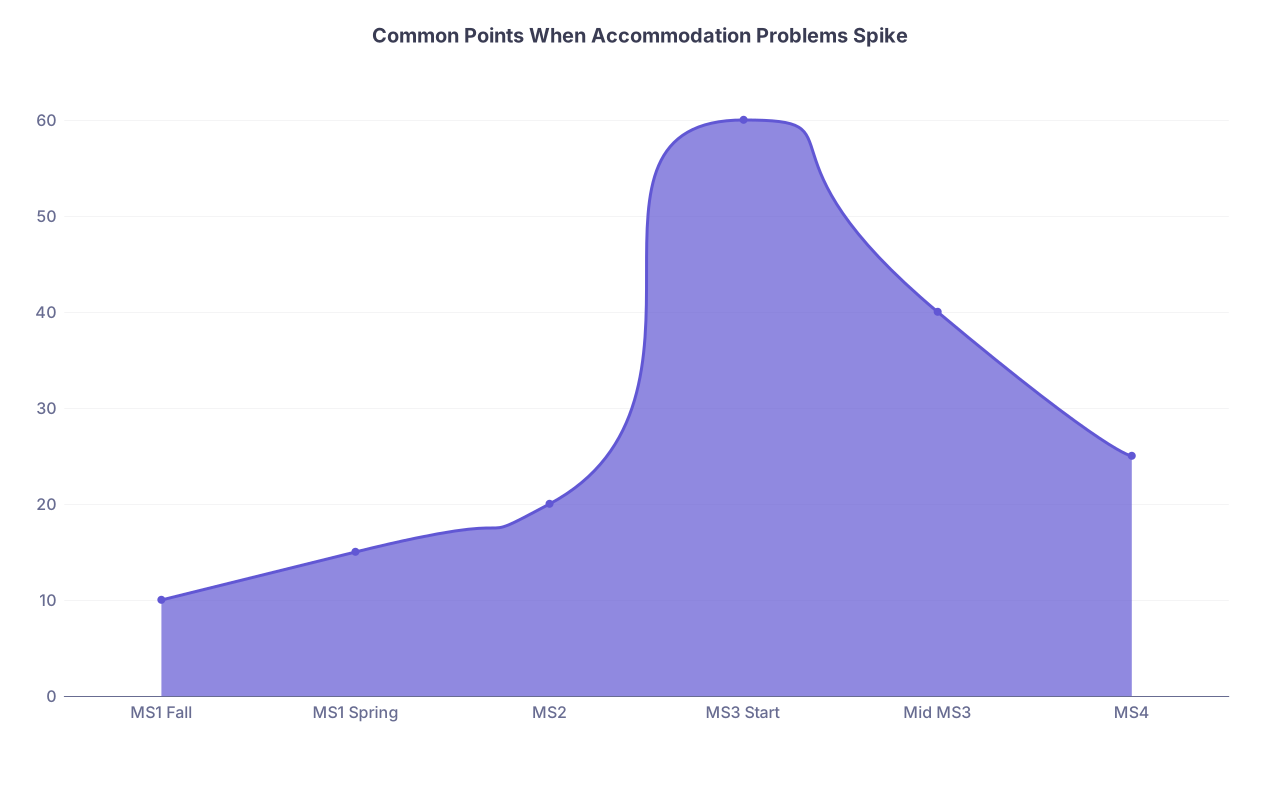
| Category | Value |
|---|---|
| MS1 Fall | 10 |
| MS1 Spring | 15 |
| MS2 | 20 |
| MS3 Start | 60 |
| Mid MS3 | 40 |
| MS4 | 25 |

| Step | Description |
|---|---|
| Step 1 | Notice change in accommodations |
| Step 2 | Request written explanation |
| Step 3 | Contact Disability Services |
| Step 4 | Interactive process meeting |
| Step 5 | Monitor and document |
| Step 6 | Involve Student Affairs or Dean |
| Step 7 | Consult disability rights lawyer |
| Step 8 | Resolved? |
| Step 9 | Still unresolved? |

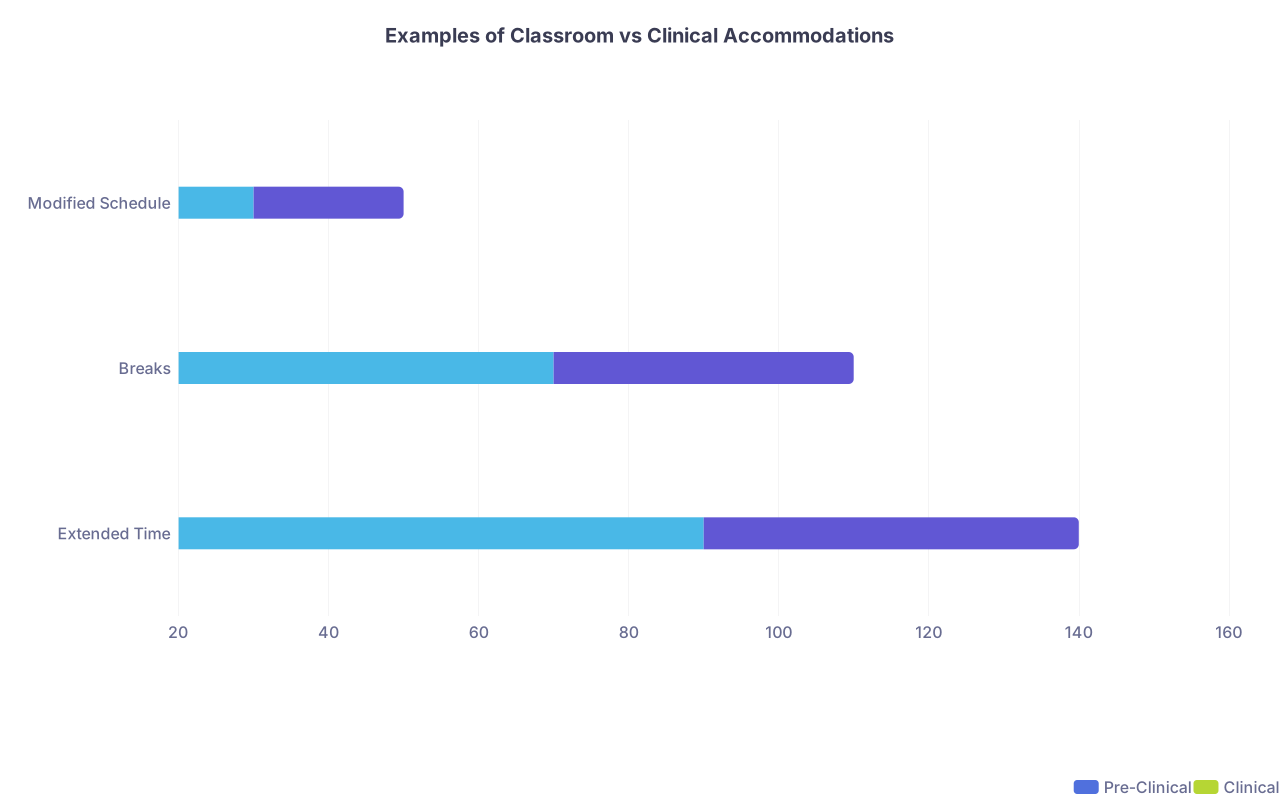
| Category | Pre-Clinical | Clinical |
|---|---|---|
| Extended Time | 90 | 50 |
| Breaks | 70 | 40 |
| Modified Schedule | 30 | 20 |

FAQs (The Stuff You’re Probably Too Afraid To Ask Out Loud)
1. What if they say, “Maybe medicine just isn’t the right field for you”?
That sentence is usually weaponized ableism disguised as concern. Unless they can show that even with reasonable accommodations you absolutely cannot meet the essential functions of training and practice, this is opinion, not fact. Ask them to put their concerns in writing, tied directly to specific essential standards, and to outline what accommodations they’ve actually tried. Spoiler: they often backpedal when asked to be that concrete.
2. Will this ruin my chances at residency if I fight for accommodations?
Not automatically. Programs don’t see your accommodation history on your application. What can hurt is if your evaluations tank because your needs weren’t met. Fighting for accommodations is actually protecting your performance. Yes, you might get labeled “difficult” by a few people. But quietly suffering and failing is worse. I’d rather have a paper trail showing you advocated appropriately than a mystery of bad evals with no context.
3. Can they fail me on a rotation because I “wasn’t fast enough” if that slowness is disability-related?
They can fail you for not meeting defined, documented performance standards – but if your slowness is directly tied to a disability and they refused reasonable accommodations, that’s a huge problem for them, not just you. That’s discrimination territory. Which is why you always want contemporaneous emails saying things like, “I’m struggling with X aspect because of Y limitation; can we revisit my accommodations?” It links your performance issues to their refusal to support you.
4. What if I’m so burnt out from this fight that I just want to quit?
Wanting to quit in the middle of this doesn’t mean you’re not “meant” to be a doctor. It means you’re a human being in a system that’s grinding you down. Before making any permanent decision, talk to someone outside the school who actually gets disability and medical training – a therapist, a mentor at another institution, a disability rights advocate. Sometimes the right move is to leave. Sometimes it’s to transfer. Sometimes it’s to stay and fight with better support. But don’t let one unsupportive institution convince you that you are the problem.
If you remember nothing else:
- They can modify, but not arbitrarily revoke, accommodations – and they owe you a clear, documented explanation tied to essential functions.
- Document everything and push for an actual interactive process; don’t just accept “no” from one annoyed clerkship director.
- You’re not less capable or less deserving because you need accommodations; the system is rigid, not you being “too much.”