

The way most DOs “wing” a gap year is a disaster.
You are either running a 12‑month campaign or you are wasting the year.
You’re a DO targeting ACGME. That means you’re already playing on “prove it” mode. One gap year can fix your file—or permanently brand you as driftwood. The difference is whether you structure the year week by week.
I’ll walk you through a 12‑month, structured roadmap: what to do each quarter, each month, and what absolutely must be done by when.
Assumptions I’ll use:
- You’ve already graduated or will graduate just before the gap year
- You are aiming for ACGME programs (not just osteopathic-designated)
- You either need to: improve exams, strengthen clinical exposure, and/or repair a weak application
If any of that sounds like you, this timeline is built for you.
Big-Picture Structure: How This 12‑Month Gap Year Should Look
At this point you need a macro plan before micro details.
Your year should be built around four pillars:
- Scores – USMLE Step 2 CK (if not taken), COMLEX Level 2, or score repair
- Clinical work – hands-on, US-based, recent; ideally paid
- Research / scholarly work – especially for competitive specialties or weak academic record
- Application polish – letters, narrative, networking, ERAS strategy
Layout for the year:
| Quarter | Primary Focus | Secondary Focus |
|---|---|---|
| Q1 (Months 1-3) | Testing & gap analysis | Start clinical/research role |
| Q2 (Months 4-6) | Solidify role & output | Prep ERAS materials |
| Q3 (Months 7-9) | Application execution | Maintain productivity |
| Q4 (Months 10-12) | Interview season | Backup planning & continued work |
And as a quick visual:
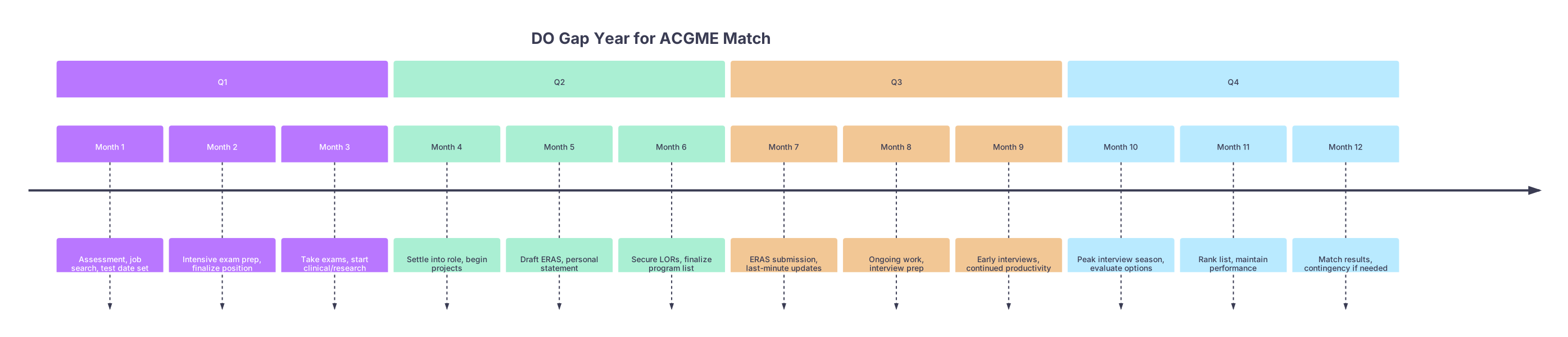
| Period | Event |
|---|---|
| Q1 - Month 1 | Assessment, job search, test date set |
| Q1 - Month 2 | Intensive exam prep, finalize position |
| Q1 - Month 3 | Take exams, start clinical/research |
| Q2 - Month 4 | Settle into role, begin projects |
| Q2 - Month 5 | Draft ERAS, personal statement |
| Q2 - Month 6 | Secure LORs, finalize program list |
| Q3 - Month 7 | ERAS submission, last-minute updates |
| Q3 - Month 8 | Ongoing work, interview prep |
| Q3 - Month 9 | Early interviews, continued productivity |
| Q4 - Month 10 | Peak interview season, evaluate options |
| Q4 - Month 11 | Rank list, maintain performance |
| Q4 - Month 12 | Match results, contingency if needed |
Now let’s go quarter by quarter, then zoom down to month and week level when it matters.
Quarter 1 (Months 1–3): Stabilize, Test, and Secure Your Anchor Role
At this point you’re setting the foundation. If you screw this quarter up, the year never really recovers.
Month 1: Full Assessment & Commitments
Goals this month:
- Decide your specialty target(s)
- Clarify if you need a score repair or first-time exam
- Lock in at least one structured role starting by Month 3
Week 1–2: Brutal self-audit
Sit down with:
- COMLEX scores (Level 1/2)
- Any USMLE scores
- Dean’s letter/MSPE if available
- Prior ERAS if you already tried to match
Ask:
- Are my board scores below the median for my target specialty?
- Did my prior application have generic letters? Weak personal statement?
- Did I have recent US clinical experience in that specialty? (Within 12 months of the next Match is best.)
Action items:
- Decide: Do I need to take (or retake) USMLE Step 2 CK?
For many DOs targeting ACGME IM, EM, anesthesia, rads, etc., the answer is yes unless your COMLEX is truly strong. - Identify 2–3 specialties you’d actually be okay matching into, ranked.
Week 3–4: Lock test date + hunt for roles
You should:
- Register and schedule any pending exams:
- Step 2 CK (if planning to take it)
- COMLEX Level 2 or Level 3 if relevant to your timeline
- Start aggressive outreach for:
- Clinical jobs: prelim year, non‑ACGME fellow, hospitalist scribe, research coordinator with clinic time, urgent care/clinic positions where DO graduates can work (depending on your state and license status)
- Research positions: paid or unpaid, but under a name that programs respect
Expected weekly output:
- 10–20 emails to program coordinators, research directors, and attendings
- 3–5 applications to posted clinical/research roles
- At least 3 phone calls/LinkedIn messages to alumni or DO-friendly faculty
Month 2: Exam Prep + Finalizing Role
This month is split: half-day exam, half-day job/role.
If you’re taking Step 2 CK or COMLEX Level 2/3 in this gap year, you want it done by the end of Month 3 at latest—so it’s in your ERAS file early.
Weekly structure (for exam takers):
Monday–Friday:
- 4–6 hours UWorld/AMBOSS/COMBANK questions + review
- 1–2 hours content review and Anki (if you use it)
2–3 evenings per week:
- Emails, Zooms, calls to secure your clinical/research position
- Paperwork, credentialing, onboarding tasks
Week 2: Take a baseline NBME (for Step) or COMSAE
Use it to confirm test date is realistic. If your baseline is a disaster, you move the test slightly—but don’t drift for months.Week 3–4:
- One practice exam per week
- Continue closing in on one concrete position starting Month 3:
- At this point, verbal confirmation is not enough. You want start dates, role description, and supervisor name.
Month 3: Execute on Exam + Start Role
By Week 2–3 of Month 3:
You should be taking your key exam(s). Not just “studying indefinitely.”
- 1–2 full-length practice tests in the final 10 days
- Final week: taper your hours slightly, focus on weak topics, get sleep
Immediately after the exam (within 3–5 days):
- Start or ramp up your:
- Research position
- Clinical job
- Formal observership/externship (if limited by visa/licensing or you’re an international DO grad)
You want documentable activity on your CV starting this month that continues at least through February of the Match year.
At this point you should:
- Have a scheduled start date and be physically present in your role
- Notify potential letter writers: “I’ll be working with you closely this year; I’m applying in the upcoming Match.”
Quarter 2 (Months 4–6): Build Track Record and Assemble Application
You’re past the setup phase. Now the year either starts to look like a real narrative—or just “gap year, did some stuff.”
Month 4: Stabilize into Your Routine
Your daily life should settle into something like this:
If research-heavy role:
- 6–8 hours/day on:
- Data collection/entry
- Chart review
- IRB paperwork
- Manuscript drafting
- Weekly meetings with PI
- 6–8 hours/day on:
If clinical-heavy role:
- Full clinical days
- Weekends/evenings for:
- Reading in your field
- Small QI project or case report
Your objective this month:
- Be the person they trust enough to offer:
- A strong letter of recommendation
- Your name on abstracts/posters
By end of Month 4:
- Identify 2–3 faculty who are possible letter writers
- Verbalize your goals: “I’m a DO applying to ACGME programs in X this year; I’d love to be involved in projects and get feedback that helps me be competitive.”
Month 5: Draft ERAS Materials
At this point you’re about 4 months from ERAS opening. Do not wait.
Week 1–2: Core ERAS content
- Update full CV with:
- New role(s)
- Responsibilities with specific language (“managed database of 300 patients,” not “helped with research”)
- Outline personal statement:
- Why this specialty
- Why you, as a DO, bring specific strengths (OMM background, holistic approach, extra clinical exposure)
- A gap‑year narrative that’s concrete, not apologetic
Week 3–4: Personal statement draft + activity descriptions
- Write a complete draft of your personal statement
- Tight, no sob story, no vague “always wanted to help people”
- For each ERAS experience entry:
- Quantify (“enrolled 45 patients,” “abstract accepted at regional EM meeting”)
- Connect to specialty when possible
Month 6: Lock Letters and Program Strategy
This month is non‑negotiable for letters and program planning.
Week 1–2: Ask for letters
Ask in person when possible:
“Would you feel comfortable writing me a strong letter of recommendation for [specialty] residency?”
You should walk away with:
- At least 3 strong letters in your target specialty
- 1 additional “flex” letter (e.g., a strong IM letter if you’re applying IM + FM, etc.)
Provide:
- Your CV
- Personal statement draft
- A short bullet list of things you’ve done with them
Week 3–4: Build your program list
Use FREIDA, program websites, and match data to build a realistic list:
| Specialty Type | Baseline DO Competitiveness | Recommended # Programs |
|---|---|---|
| Less competitive (FM, psych, peds) | Moderate | 25–40 |
| Mid (IM, anesthesia, EM at DO-friendly sites) | Challenging | 40–60 |
| Competitive (rads, ortho, derm) | Very high | 60+ plus parallel plan |
Filter for:
- DO-friendly or historically DO-accepting ACGME programs
- States where you’d actually live
- Places where your school or mentors have connections
At this point you should:
- Have a draft rank of programs (A, B, C tiers)
- Be clear if you’re dual-applying (e.g., IM + FM) and adjust your letters and narrative accordingly
Quarter 3 (Months 7–9): Application Execution and Early Interviews
This is game time. Your earlier structure should now pay off.
Month 7: ERAS Opens and Submits
ERAS typically opens in early summer and programs can start reviewing in September (exact dates change yearly—check them).
Week 1: Final polish
- Revise personal statement with 1–2 trusted reviewers (not 10 people—too many cooks ruins it)
- Double-check:
- Dates for all roles
- That your gap year activities are clearly labeled with start and (if known) end dates
- No unexplained voids
Week 2–3: ERAS entry and upload
- Enter all experiences, publications, posters, presentations
- Upload photo (professional, neutral, no white coat glamour shot)
- Confirm all letters are assigned correctly to specialties
Week 4: Submit ERAS early in the submission window
Early is better. No, not “on the last morning.”
Aim for day 1–3 of the submission window.
Parallel tasks:
- Continue full productivity in your role—no slacking because “I submitted ERAS.”
Month 8: Invitations Start, Work Continues
At this point, you should not be living in your inbox 24/7, but you must respond quickly to interviews.
Week 1–2: Interview prep basics
Create a one‑page summary for:
- Why this specialty
- Why DO → ACGME is an asset (distinct training, OMM mindset, adaptability)
- Gap year story in 3–4 crisp sentences:
“I finished DO school in 202X, then spent this year in a clinical research position in X where I’ve done Y and Z. It’s strengthened my skills in A and confirmed my interest in B.”
Conduct 2–3 mock interviews:
- One behavioral (tell me about a time…)
- One specialty‑style (case discussions if relevant)
Week 3–4: Track responses and adjust
Use a simple spreadsheet to track:
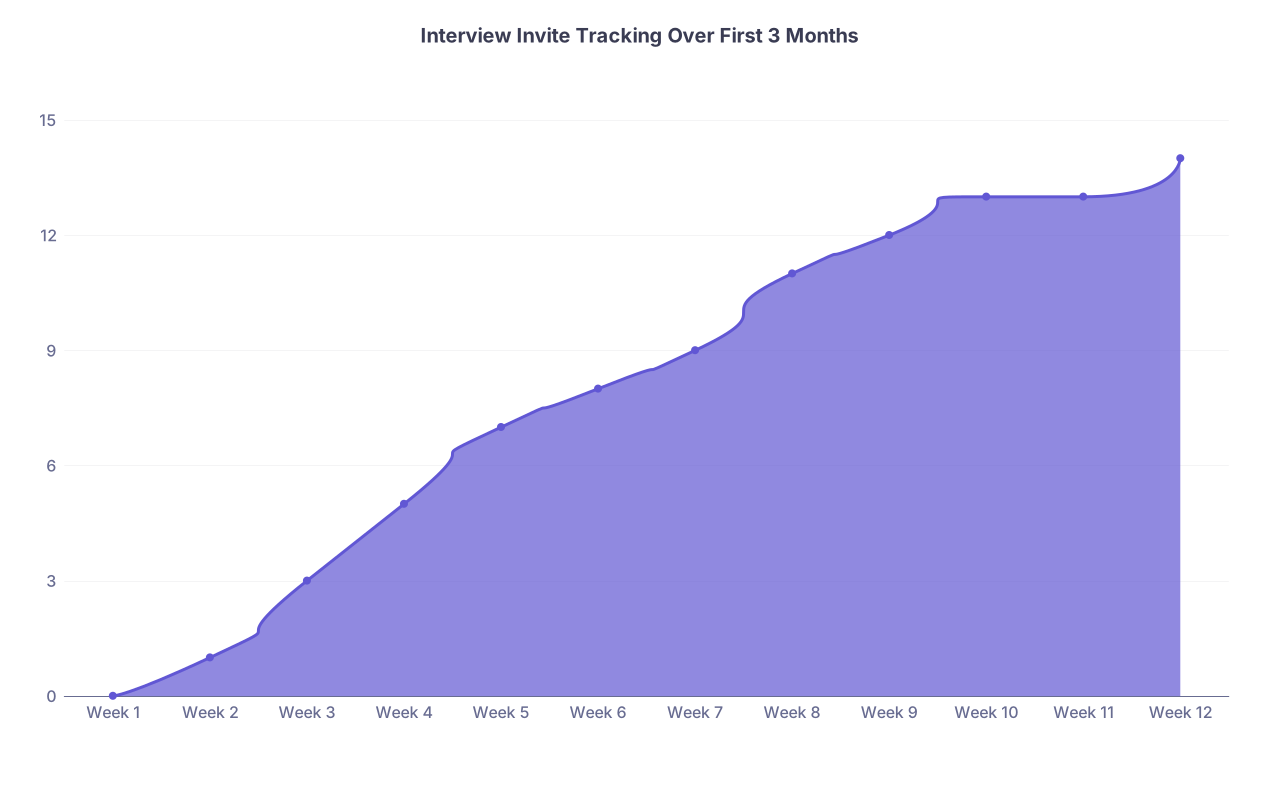
| Category | Value |
|---|---|
| Week 1 | 0 |
| Week 2 | 1 |
| Week 3 | 3 |
| Week 4 | 5 |
| Week 5 | 7 |
| Week 6 | 8 |
| Week 7 | 9 |
| Week 8 | 11 |
| Week 9 | 12 |
| Week 10 | 13 |
| Week 11 | 13 |
| Week 12 | 14 |
If by the end of Month 8 you have zero interviews:
- Ask your mentors to review:
- Your program list
- Personal statement
- Any red flags in your file
- Consider sending polite update emails to a small set of top programs:
- 4–6 sentence updates on new responsibilities, projects, or scores
Month 9: Early Interviews & Continued Output
You’re likely interviewing now while still working.
At this point you should:
- Maintain a consistent work schedule
- Treat your gap‑year environment as an “informal audition”
- Show up on time
- Be the problem-solver
- Avoid gossip and complaints—word spreads faster than you think
Interview week structure:
- If interviews are virtual:
- Block full days for them
- Ensure quiet, professional background, wired internet
- If in‑person:
- Schedule your travel so you’re not showing up sleep-deprived to interviews or to your gap-year job after redeyes
Keep a simple reflection note after each interview:
- 3 things that went well
- 2 things to improve
- Overall feel (culture, DO-friendliness, resident vibe)
Quarter 4 (Months 10–12): Interviews, Rank List, and Contingency
You’re in the endgame. But the year still matters.
Month 10: Peak Interview Season
This month is often the most chaotic.
At this point you should:
- Have a critical mass of interviews (for most applicants, 8–12+ total across all specialties is where matching becomes realistic, though it varies strongly by field)
- Still be performing well in your gap-year role
Week‑by‑week priorities:
- Weekly:
- 1–4 interviews
- Ongoing duties at your job or research position
- End of each week:
- Update your tentative rank order for programs based on actual experience
Don’t over-email programs with “interest” messages; 1 targeted communication to genuine top‑choice programs is reasonable, a barrage looks desperate.
Month 11: Rank List and Strengthening Narrative
Here’s where a lot of people slack. Don’t.
Early in the month:
- Meet with:
- A mentor at your gap‑year site
- Possibly your school’s advisor if they’re actually helpful
- Reality-check your rank list:
- Are you ranking programs you’d be miserable at just for prestige?
- Are you under-ranking perfectly solid, DO-friendly, mid-tier ACGME programs because they’re not “fancy”?
Mid‑month:
- Certify your rank list on time. No heroics on the last day.
Throughout the month:
- Continue to:
- Show up to work
- Push any projects toward completion (poster submitted, abstract sent, manuscript drafted)
This is not just optics. If you don’t match, these outputs become the foundation of your next application cycle or SOAP plan.
Month 12: Match Outcome and Next Moves
This month has two branches. You hope for the first, but you prepare for the second.
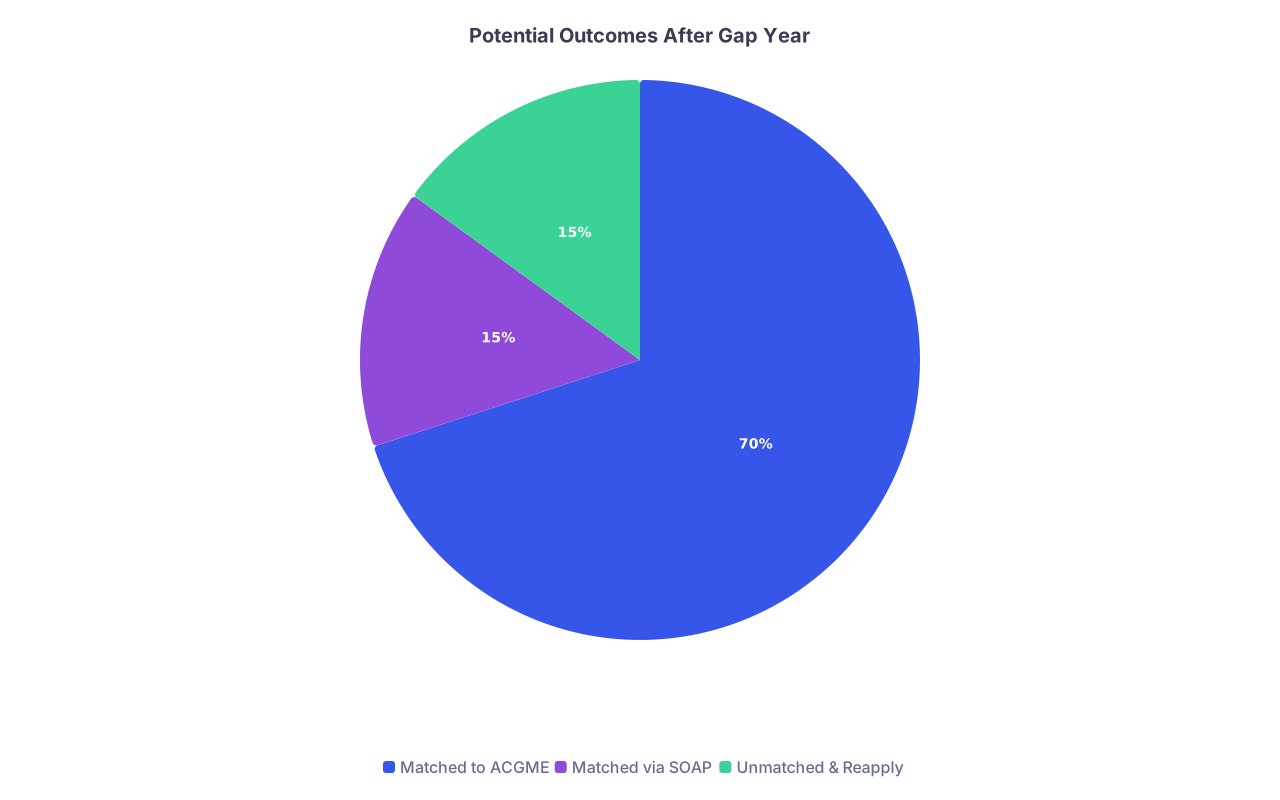
| Category | Value |
|---|---|
| Matched to ACGME | 70 |
| Matched via SOAP | 15 |
| Unmatched & Reapply | 15 |
If you MATCH:
- Confirm start date and onboarding requirements
- Decide how long you’ll stay in your gap-year role:
- Many residents work through June
- Ask your current mentors for:
- Final letters documenting your work
- Permission to list them as references ongoing
If you go through SOAP:
- Stay physically and mentally present at your gap-year role; people can advocate for you in real time
- Lean on:
- Program directors who know you
- Alumni and DO networks
- Accept that you may pivot specialty. Survival > dream specialty in SOAP.
If you UNMATCH after SOAP:
At this point you should:
- Have a candid talk with:
- At least one PD or senior faculty who knows you well
- Ask:
- “Is another application year realistic for me in X specialty?”
- “Should I pivot to Y or Z?”
Then, decide fast:
- Another structured year (ideally not another vague research year with nothing to show)
- Or a new path (prelim, non‑residency clinical, different specialty, etc.)
Gap-Year Weekly Template That Actually Works
For most DOs targeting ACGME, a standard good week in the heart of your gap year (say Months 4–9) looks like:
- 40–50 hours clinical or research work
- 5–8 hours:
- Specialty reading
- Board maintenance (if needed)
- Working on abstracts, posters, or manuscripts
- 1–2 hours:
- Networking emails or Zooms
- Updating CV, tracking interviews, etc.
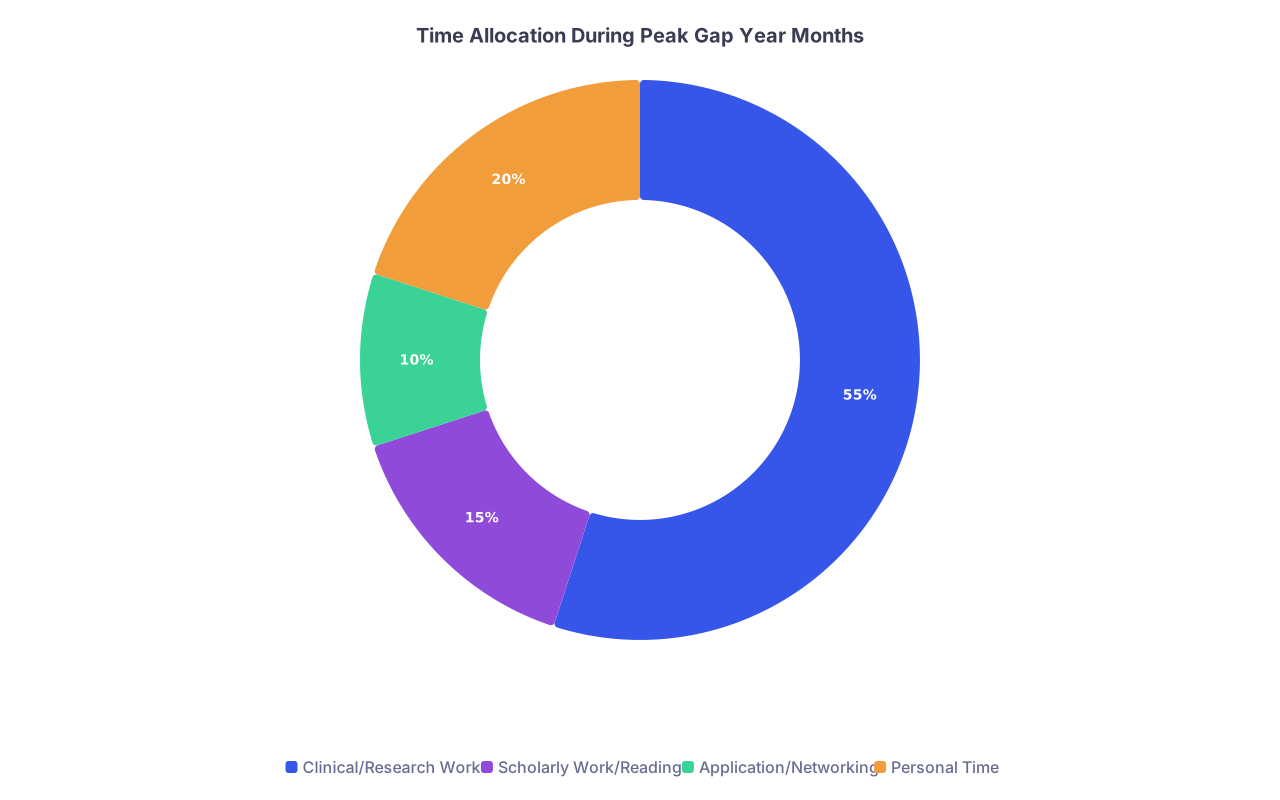
| Category | Value |
|---|---|
| Clinical/Research Work | 55 |
| Scholarly Work/Reading | 15 |
| Application/Networking | 10 |
| Personal Time | 20 |
If your actual week looks more like:
- 10–20 hours of loose observership
- 20+ hours of “studying” with nothing scheduled
- No regular check-ins with mentors
…then the year isn’t pulling its weight.
Common Pitfalls to Avoid (DO-Specific, ACGME-Focused)
You’re a DO aiming at ACGME. Specific landmines you can’t step on:
Assuming COMLEX alone is enough in competitive fields
Many ACGME programs still strongly prefer or expect Step 2 CK. Ignore this at your peril.Unstructured “research year” with no output
A line that says “research fellow” but zero abstracts/papers looks bad. Aim for at least:- 1–2 poster/abstract submissions
- 1 manuscript in progress or submitted
Letting your clinical skills go stale
If your year is all research, try to get at least:- Clinic exposure with your PI
- Regular patient contact of some sort
Programs want to know you can still function in a hospital.
Not owning your gap year in interviews
You need a concise, confident story:- “I used this year to strengthen X, Y, and Z, and here’s what I’ve achieved.”
FAQs
1. If I’m a DO with only COMLEX scores, do I absolutely need USMLE Step 2 CK for ACGME?
No, not absolutely. But for many ACGME programs—especially in IM, EM, anesthesia, and any competitive specialty—Step 2 CK gives you a common yardstick. If your COMLEX scores are average or below for your target field, taking Step 2 CK during the gap year and scoring well can dramatically change how PDs read your file.
2. Is a research year or a clinical job better for DOs targeting ACGME?
If forced to choose, recent, hands-on clinical work in your specialty usually beats a vague research role. Best case is a hybrid: a research coordinator or clinical research job inside the department you want, with some patient contact. Pure research only makes sense if you’re going for an academic or competitive field and you can realistically get tangible output (posters, papers) out of it.
3. How many interviews do I need to feel “safe” for matching as a DO?
There’s no magic number, but as a rough rule:
- For less competitive fields (FM, psych, peds), 8–10 solid ACGME interviews usually puts you in a reasonable zone.
- For IM and similar, 10–12+ is more comfortable, especially if your scores are borderline.
- For very competitive specialties, you often need more—and a parallel plan.
If you’re sitting at 3–4 interviews by late in the season, you should be talking seriously with mentors about SOAP and backup pathways.
Key takeaways:
- Your gap year must be structured: early exam completion, sustained clinical/research work, and an aggressive ERAS timeline.
- As a DO targeting ACGME, you can’t afford “float time”—every month should either repair a weakness or showcase a strength.
- By Month 12, your year should read like a clear story of progress, not an apology tour.


