You’re three weeks out from your last interview. Your ERAS dashboard is quiet. Your inbox is too quiet. Your friends are talking about “update letters,” “LOIs,” “reminder emails.” Someone in your class claims, “If you don’t email your top three, you’ll drop on their rank list.”
So you open a blank email to that ACGME osteopathic-recognized program you loved.
Subject line: “Very Interested in Your Program!”
Your cursor blinks.
This is exactly where people blow it. Not during the interview. After. With post-interview communication that quietly (or loudly) pushes them down rank lists—especially DO applicants who already worry they’re under extra scrutiny.
Let’s talk about the mistakes that sink DOs on rank lists after interviews—and how to avoid every single one.
1. Treating Osteopathic Programs Like They’re “Grateful” to Hear from You
A lot of DO applicants walk into post-interview communication with this mindset:
“They should be happy I’m so interested. I’m a good fit. I’ll let them know I’m ranking them highly.”
That attitude leaks. And PDs smell it.
Common flavors of this mistake:
Overly casual emails
“Hey Dr. Smith, just wanted to say I really vibed with your program. Hope to see you in July!”You are not texting a friend. You’re talking to a program director who is deciding whether to trust you with their patients at 3 a.m.
Implicit entitlement
Phrases like:- “I’m confident I’d be an asset to your program.”
- “I know I’d thrive at your institution.”
- “I believe I’m an excellent fit for your residency.”
Alone, these lines aren’t criminal. But when the tone is more about you selling yourself than you understanding them, programs pick up on it as self-focused and somewhat tone deaf.
Subtle DO insecurity leaking out
Some DOs write things like:- “As a DO student, I believe I offer a unique perspective…”
- “I know DOs have to work harder to prove themselves, and I’m ready to do that in your program.”
This reads as apologetic at best, needy at worst. They invited you to interview. At that point, they already see you as a legitimate candidate.
Fix:
Assume they value you, or they wouldn’t have interviewed you. Your emails should:
- Sound professional, not casual.
- Focus on what you appreciated and how you align with their values.
- Avoid playing the “DO chip on shoulder” card.
You want quiet confidence. Not “please like me because I’m a DO.”
2. Overcommunicating: The “Neediness” That Drops You Down
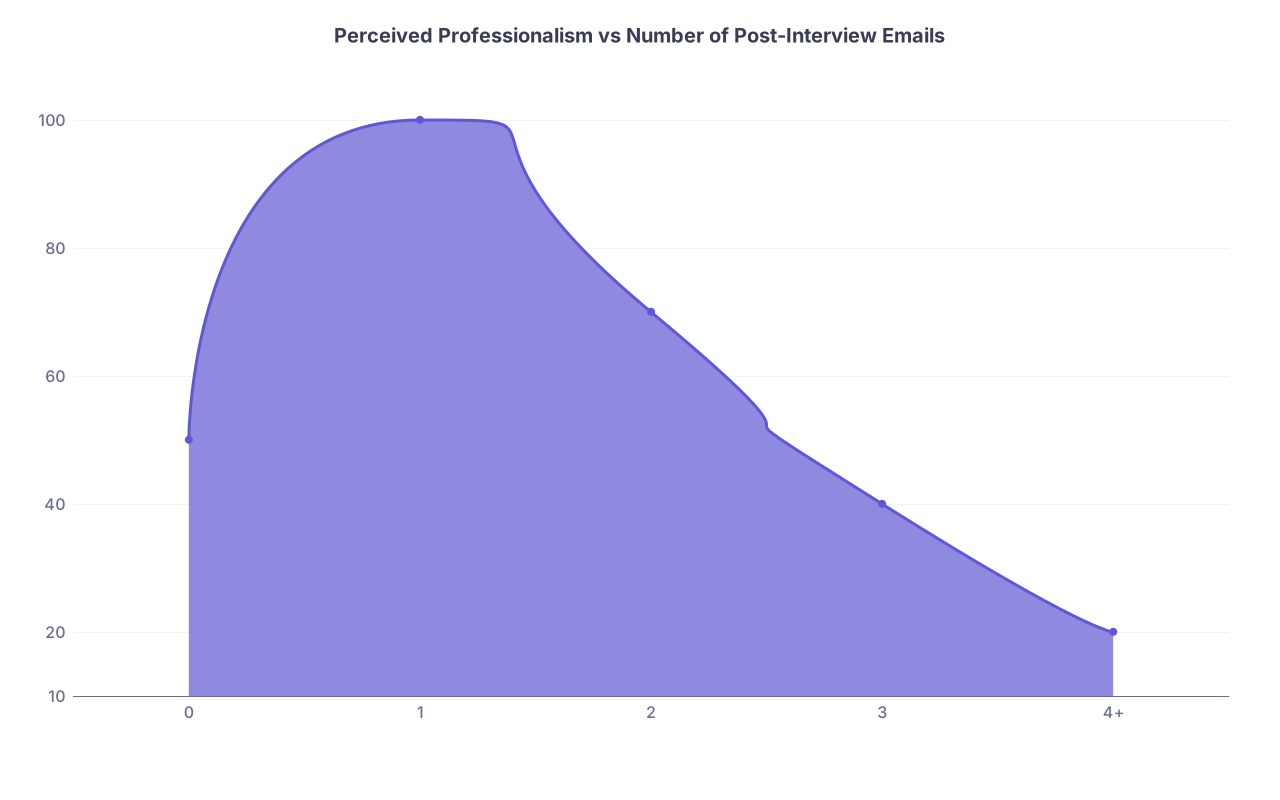
| Category | Value |
|---|---|
| 0 | 50 |
| 1 | 100 |
| 2 | 70 |
| 3 | 40 |
| 4+ | 20 |
Here’s something residents gossip about all the time: “The applicant who emailed three times in two weeks.”
DO applicants—especially in competitive regions or specialties—often panic and overdo it, trying to “make sure they remember me.” The result is the opposite. They remember you, but not the way you want.
Classic overcommunication mistakes:
Multiple “update” emails that say nothing new
- Week 1: “Thank you for the interview.”
- Week 2: “Just wanted to reaffirm my interest.”
- Week 3: “I remain enthusiastic about your program.”
That’s not dedication. That’s noise.
CC’ing multiple faculty on the same message
Emailing the PD, APD, and program coordinator all separately (or worse—CC’ing them on the same “I’m very interested” email) is a good way to annoy your future bosses.Last-minute “panic emails” the week before rank lists are due
These usually read like:- “I know rank lists are due soon, and I wanted to let you know I remain very interested.”
Translation in program-brain: this person is trying to game the process.
What programs actually want:
- One thoughtful thank-you email within 24–72 hours of interview day.
- Maybe one follow-up/update if:
- You have meaningful news (new publication, AOA, Alpha Omega Alpha’s osteopathic counterpart, new leadership role, dramatically updated Step/COMLEX score, etc.).
- Or this is your clear #1 and you’re sending a single, carefully worded letter of intent (LOI).
That’s it. More than that starts to read as insecurity and poor boundaries.
You want to look like a future colleague. Not a future problem.
3. Sending Dishonest or Sloppy Letters of Intent (LOIs)
This is the big one. The one that quietly destroys credibility, especially for DOs already fighting outdated biases.
The LOI mistakes that hurt you:
3.1 Telling Multiple Programs “You’re My #1”
I’ve seen this more than once: applicant swears to three different programs that they’re “my top choice” or “I will rank you #1.” Programs talk. Faculty move. Coordinators gossip. When this gets exposed, it obliterates your reputation.
Even if you never get “caught,” your tone often gives you away:
- Generic LOIs with no specifics about:
- Unique features of the program
- Specific rotations you liked
- People you actually met
- Same 3–4 sentences sent everywhere with minor word swaps.
You might think, “They’ll never know.” They do know. Or at least, they suspect. Being perceived as manipulative is one of the fastest ways to drop.
Rule:
You get one true LOI that says or clearly implies “You are my #1 choice.” One. Period.
If you’re sending that kind of letter to more than one program, you’re not being strategic—you’re being dishonest.
3.2 Overpromising in Ways That Sound Fake
- “I will absolutely rank your program first.”
(NRMP rules do not allow programs to solicit this. Programs get nervous if you’re too explicit.) - “If given the opportunity, I will do everything in my power to never let you down.”
No one believes this. Residents are human. - “Your program is the perfect fit in every single way.”
Nothing is perfect. This sounds like you copied a script.
Program directors are used to flattery. They’re bored of it. What stands out is specificity, not dramatics.
3.3 Making It About You, Not About the Program
Another classic:
“I am looking for a program where I can get strong training, have a high fellowship match rate, and live in a city with lots of opportunities.”
That’s completely generic and fully self-centered.
Better approach:
- Reference specific elements:
- OMT continuity clinic built into PGY-1 year
- The DO-heavy faculty leadership
- Their track record of placing grads in certain fellowships
- A particular resident you spoke with and what they said
- Then tie those elements back to:
- Your training
- Your values
- Your background as a DO
Bottom line:
An LOI can help a little if:
- It’s honest
- It’s specific
- It’s rare (not one-of-twenty)
A sloppy or manipulative LOI? That can absolutely hurt you.
4. Violating the Unspoken Rules of NRMP / NMS Communication
Many osteopathic residencies now live in the ACGME/NRMP world, but some DO students are still stuck in old myths from the pre-merger days. That mismatch causes trouble.
Here’s where DOs sometimes get burned:
4.1 Trying to Discuss Rank Lists Directly
You don’t ask:
- “Where will I be on your rank list?”
- “Can you tell me if I’m ranked to match?”
- “If I rank you highly, will you rank me to match?”
Programs are legally constrained in what they can say. When you push them to break those rules, you look unprofessional and risky. You’re the person who might cause a compliance headache later.
Programs will sometimes volunteer vague supportive language:
- “We will rank you highly.”
- “We look forward to working with you in the future.”
- “We think you would do well here.”
Never, ever quote that back or leverage it in later emails.
4.2 Interpreting Every Vague Compliment as a Promise
The other mistake: reading too much into vague “we liked you” messages.
You then email back:
“Thank you so much for ranking me highly. I will rank you highly as well.”
They never said that. Now you’ve twisted their words into a mutual promise. It’s a bad look.
The safest posture:
- Assume no promise means… no promise.
- Assume friendly language is polite, not binding.
- Rank programs in your true order of preference regardless of what they say.
Programs can absolutely move you down if they think you’re naïve about the match rules.
5. Copy-Paste, Generic, and Tone-Deaf Emails
| Type | Red Flag Phrase | Stronger Alternative |
|---|---|---|
| Generic | "Your program is excellent." | "Your dedicated OMT clinic for PGY-1s stood out." |
| Needy | "I really hope you consider me." | "I appreciated the opportunity to interview with you." |
| Overpromising | "I will never let you down." | "I would work hard to contribute positively to your team." |
| Pushy | "Please respond to let me know you got this." | (No request for read receipt) |
Most PDs skim emails for 5–10 seconds. If your message reads like it was sprayed to 30 programs, it blends into the trash pile.
Common lazy errors:
Using the wrong program name or specialty
I have seen: “I enjoyed learning about your internal medicine program” sent to a family medicine residency. That’s an instant, “Nope.”Copy-paste intros:
- “I was impressed by your commitment to medical education.”
- “Your residents seem very happy and well-supported.” These are fine once. Not for every single email you send.
No reference to anything specific:
- No mention of location
- No name of any resident/faculty you met
- No specific clinical or educational features
This screams “mass template.” DO students already worry about being filtered out. Don’t give anyone a reason to label you lazy.
What a solid thank-you email looks like:
- Sent within 24–72 hours
- 3–6 sentences
- Includes:
- Explicit thank you
- Specific detail from interview day:
- “The discussion about OMT continuity in clinic with Dr. Patel”
- “The osteopathic recognition curriculum you described”
- “The PGY-2 ultrasound workshop residents mentioned”
- A line about fit that’s not over-the-top
That’s it. No filler. No drama.
6. Ignoring How DO Bias Still Quietly Operates
You already know this, but let’s say it plainly: some programs still have a subtle (or not so subtle) bias against DOs. They may not say it out loud, but you feel it in:
- Their historic match lists
- Their resident profiles
- Comments like “We’ve had a few DOs do very well here.”
Because of that, your post-interview communication is under a bit more microscope. Not fair, but real.
Here’s how DOs unintentionally feed that bias:
6.1 Unpolished Writing
Errors that DOs sometimes get unfairly tagged with:
- Repeated grammar mistakes
- Lack of capitalization (especially “i” instead of “I”)
- Overuse of exclamation points!!!
- Text-language: “u”, “bc”, “idk”
For anyone, that’s bad. For DOs, it plays right into the lazy stereotype that some older PDs still quietly carry. You don’t need to sound like a professor, but you do need to sound like someone who writes orders clearly and communicates professionally.
6.2 Over-focusing on OMT in Non-OMT Programs
If you’re applying to ACGME programs with osteopathic recognition or heavy DO presence, talking about OMT is great.
If you’re emailing a program where:
- They have zero OMT clinic
- Their website doesn’t mention osteopathic anything
- Their current residents are 100% MD
Then a long paragraph about wanting to do daily OMT on inpatients feels off. They’ll question whether you understand what their training actually looks like. Or whether you read their website at all.
Mention your osteopathic background. Sure. But don’t try to retrofit a program into something it’s not. That misalignment makes PDs nervous.
6.3 Sounding Apologetic for Being a DO
You don’t write:
- “Even though I’m a DO…”
- “Despite my COMLEX-only background…”
- “I know I’m not an MD but…”
Ever.
The programs that want you don’t need that. The programs that don’t want DOs won’t suddenly change their mind because you apologized.
Present yourself as a physician. Period. Your DO training is a plus, not a disclaimer.
7. Timing Mistakes: Too Early, Too Late, or Too Often
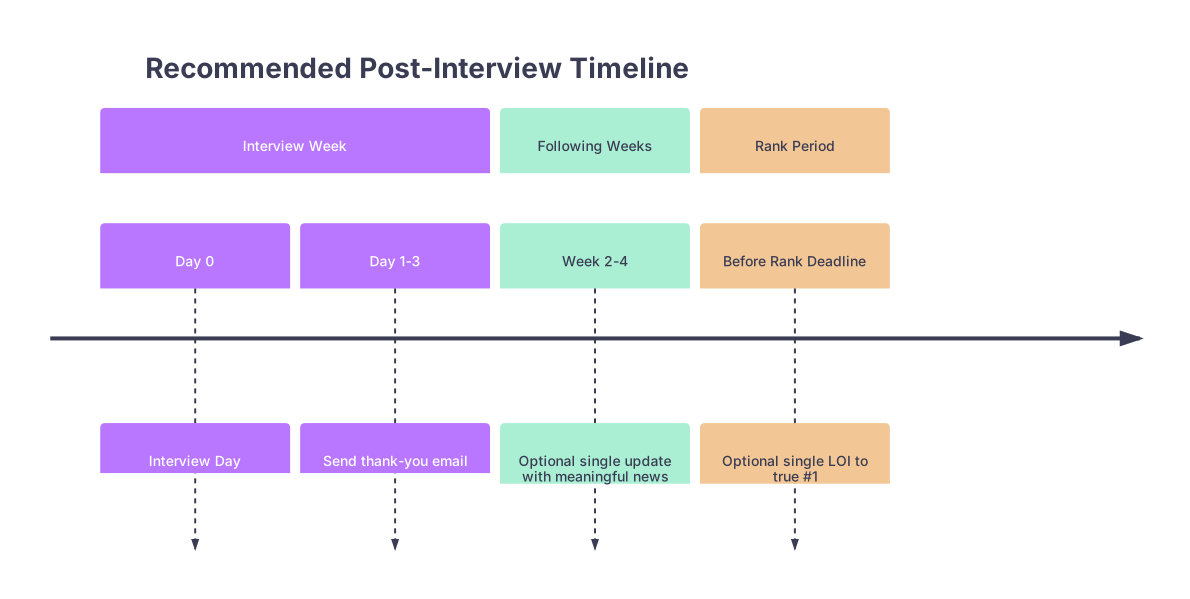
| Period | Event |
|---|---|
| Interview Week - Day 0 | Interview Day |
| Interview Week - Day 1-3 | Send thank-you email |
| Following Weeks - Week 2-4 | Optional single update with meaningful news |
| Rank Period - Before Rank Deadline | Optional single LOI to true #1 |
You can send the right content at the wrong time and still hurt yourself.
7.1 Instant Same-Day Emails That Feel Mechanical
Sending a thank-you email from your car in the parking lot 5 minutes after the interview ends can feel robotic. It’s obvious you had a template ready and just swapped names.
Is it fatal? No. But it doesn’t help.
Better: draft a basic skeleton in advance, then customize and send later that day or the next morning once you’ve had a moment to reflect and add 1–2 specific details.
7.2 Radio Silence, Then Sudden Intense Interest
If you:
- Don’t send any thank-you
- Don’t send any communication for a month
- Then suddenly email, “I have decided your program is my top choice.”
It looks inconsistent. Programs wonder: What changed? Are we a backup plan? Did they just get rejected somewhere else?
If you think a program might be in your top tier, send a normal thanks within a couple of days. You can always later decide they’re your #1 and send a single LOI. But you can’t retroactively fix complete silence.
7.3 Emailing Right Around Rank Deadline in Panic Mode
Programs are swamped and finalizing lists close to the rank deadline. Your breathless, “I remain very interested!!” email at 11 p.m. the night before rank lock doesn’t move you up. If anything, it reinforces that you don’t understand their process or time constraints.
Aim:
- Thank-you: within 1–3 days
- Update (if any): 1–3 weeks after interview, if you actually have content
- LOI to true #1: comfortably before rank deadline, not the night before
8. Forgetting the Coordinator and Residents Are Watching Too

The PD isn’t the only one who sees your communication.
Program coordinators notice:
- How you address them
- Whether you’re polite
- Whether your emails are demanding or disorganized
Residents notice:
- Your tone in thank-you notes
- Whether you mention them (or clearly forgot who you spoke to)
- Whether you reply when they reach out
Here’s a mistake I’ve seen sink people: being extremely formal and obsequious to the PD, then curt, sloppy, or dismissive with the coordinator. Guess whose opinion the PD trusts a lot? The coordinator’s. They often say, “This applicant was difficult to schedule with” or “Their emails were a mess.” That matters.
Treat everyone—coordinators, chiefs, residents—as future colleagues you want to impress, not just boxes in the process.
9. When to Say Nothing At All
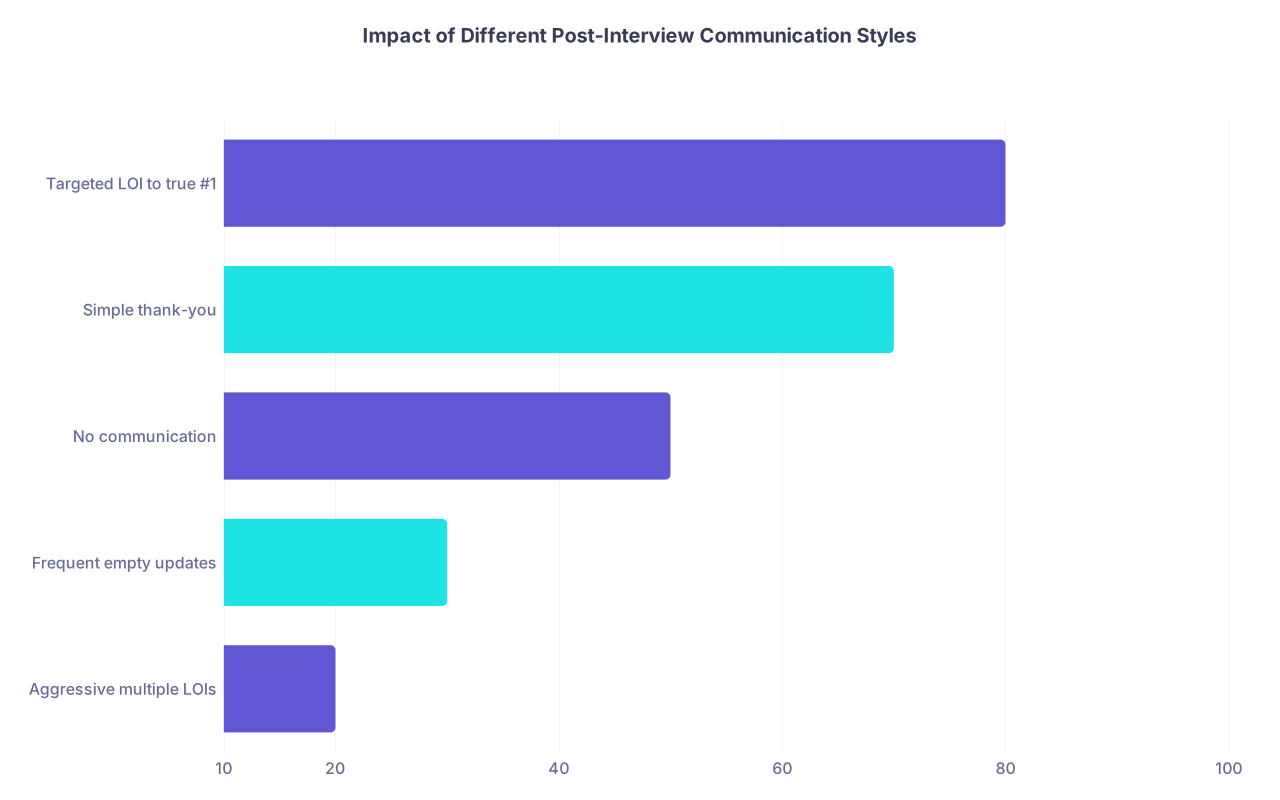
| Category | Value |
|---|---|
| Aggressive multiple LOIs | 20 |
| Frequent empty updates | 30 |
| No communication | 50 |
| Simple thank-you | 70 |
| Targeted LOI to true #1 | 80 |
Silence isn’t the worst thing you can do. Far from it.
Let me be blunt:
- A clean interview day + no post-interview email will not tank you.
- A messy interview day + 5 carefully worded emails will not save you.
Communication is a small nudge. Not a magic spell.
You should seriously consider skipping extra communication if:
- You don’t have anything genuine to say.
- You’re tempted to lie (about rank order or your level of interest).
- You’re mainly emailing because everyone else is, and you’re afraid of doing less.
Programs will quietly reward authenticity and professionalism over strategy theater.
FAQ (Exactly 4 Questions)
1. Do I have to send a thank-you email to every program?
No. It’s polite and slightly positive, but not mandatory. If you send one, keep it short, specific, and professional. If you truly have nothing real to say and you’re going to copy-paste something generic, silence is better than looking lazy.
2. As a DO, should I explain why I didn’t take USMLE if I’m COMLEX-only?
Not in a post-interview email. If they cared, they asked during the interview. Post-interview communication isn’t the place to re-litigate your exam choices. Focus on fit, your training, and what you appreciated about the program.
3. Can a strong LOI move me up a rank list as a DO?
Sometimes a little, rarely a lot. An honest, specific LOI to your true #1 can serve as a tiebreaker if they’re on the fence between similar applicants. It won’t make a low-tier candidate leapfrog clearly stronger ones. Think “nudge,” not “rescue.”
4. If a program tells me I’ll be ranked highly, does that mean I’ll match there?
No. “Ranked highly” is non-committal and intentionally vague. They may rank 40 people “highly” for 10 spots. You should never depend on their language when building your list. Rank programs in the exact order you prefer them, regardless of what they say.
Key points to walk away with:
- Sloppy, needy, or dishonest post-interview communication hurts DO applicants more than silence ever will.
- One thoughtful thank-you and, at most, one honest LOI to your real #1 is plenty. Anything beyond that risks pushing you down rank lists, not up.