Interview Day Missteps DO Applicants Make When Discussing OMM and Training
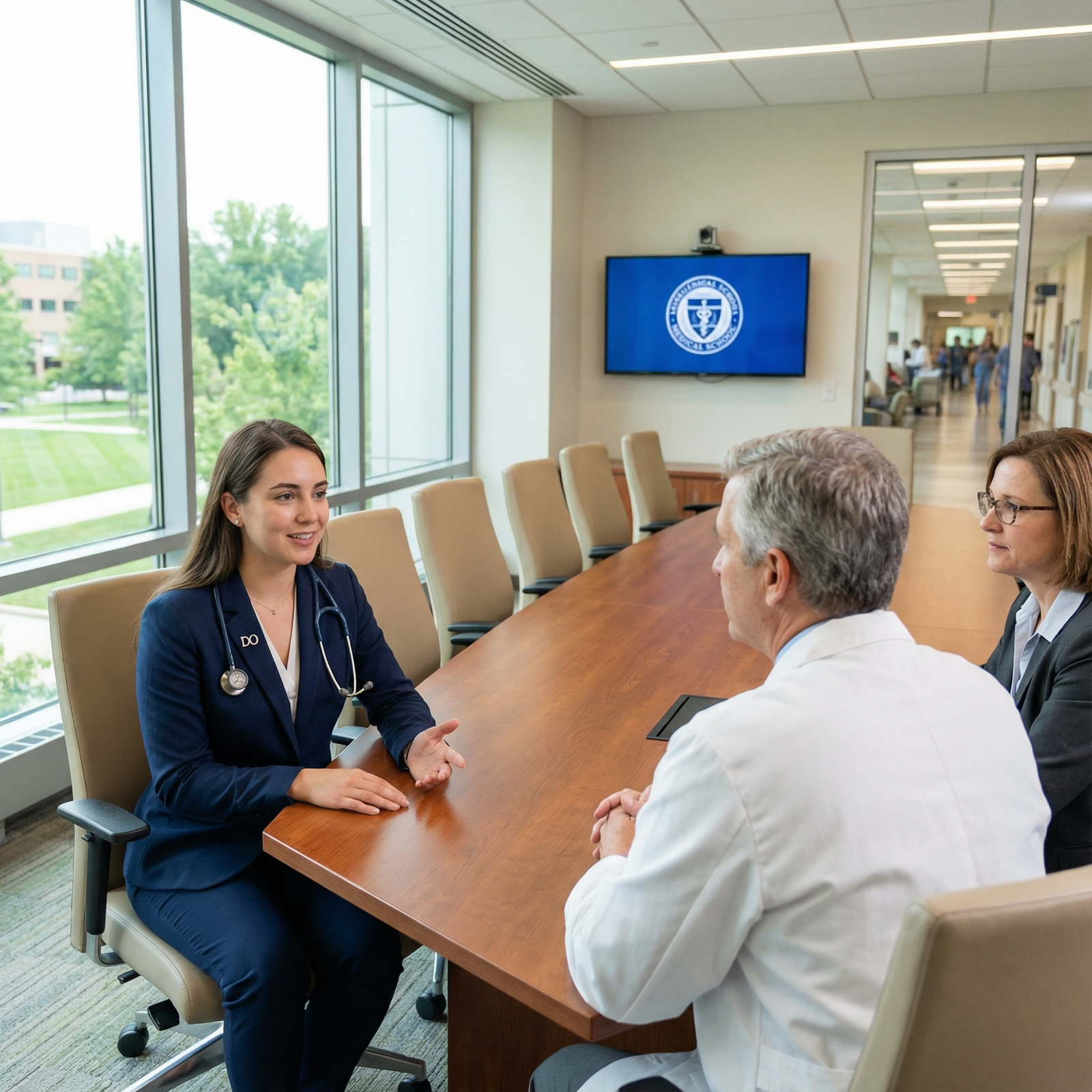
It is 8:42 a.m. on interview day. You are sitting across from the PD and two faculty at a community osteopathic IM program. You are on your third cup of coffee, second suit of the season, and fifteenth version of the same answer. The PD leans back and asks:
“So tell us how you see OMM fitting into your future practice.”
You pause. Your brain serves up three options: a vague line about “holistic care,” that one story from OMM lab you barely remember, or the dangerous truth that you have not thought about OMM since COMLEX Level 2 PE practice sessions.
This is the moment people blow it.
Let me walk you through the mistakes that torpedo otherwise solid DO applicants when the conversation shifts to OMM, osteopathic identity, and their training. Because programs may tolerate a mediocre answer about research. They do not tolerate red flags about your understanding of osteopathic medicine.
Mistake #1: Acting Like OMM Is An Embarrassing Side Feature
The fastest way to lose an osteopathic program’s respect: talk about OMM like it is a quirky elective you got stuck with, rather than part of your professional identity.
I have seen this live. Applicant with decent scores, good letters, strong clinical comments. Then they say something like:
- “Honestly we barely used OMM on rotations; it’s not really practical.”
- “I see it more as a school requirement than something I’ll really use.”
- “I am more interested in real medicine, but it is a nice adjunct.”
The room gets cold after that.
Here is the issue. You chose a DO school. Programs expect you to be able to articulate at least:
- What makes osteopathic training distinct.
- How you conceptualize OMM, even if you will not use it daily.
- That you do not see it as pseudoscience or fluff.
You do not have to promise you will run a full-time OMM clinic. But if you minimize or mock OMM, you are telling an osteopathic program you fundamentally do not respect part of the profession.
Avoid this mistake by:
Preparing one clear, honest stance on OMM.
Something like: “I see OMM as a tool that can improve function and decrease pain for some patients, especially when combined with standard medical care. I may not use it on every patient, but I value having the skill set.”Separating “how often I will use it” from “how much I respect it.”
You can say: “In critical care, time is limited and I likely will not use hands-on treatment often, but the osteopathic focus on structure, function, and whole-person care still shapes how I approach patients.”Never calling it “extra” or “not real medicine.”
You can question evidence thoughtfully. You cannot dismiss the entire domain and expect a DO program to rank you.
Mistake #2: Giving Vague, Cliché “Holistic” Answers With Zero Substance
Another common failure: hiding behind buzzwords.
“I like osteopathic medicine because it is holistic and treats the whole person, not just the disease.”
If that is your entire answer, you sound like you memorized your school’s marketing brochure and nothing else.
Faculty have heard this line thousands of times. It is lazy and content‑free when you stop right there.
They want to know what “holistic” actually means to you in practice. How it changes your differential. How it shapes your communication.
Red flags in this category:
- Repeating “mind, body, spirit” without one concrete example.
- Saying “we look at the musculoskeletal system more” and then drawing a blank when they ask how.
- Being unable to connect osteopathic principles to an actual clinical scenario.
Fix this by having 2–3 specific, ready-to-use examples:
One for primary care, one for acute care, maybe one from an OMM clinic or MSK complaint.
For example:
“On my FM rotation, I had a patient with chronic low back pain and a long opioid history. My osteopathic training pushed me to spend more time on posture, occupational strain, and stress factors. We used some simple MFR and HVLA, but just as importantly, we reframed his pain within a functional context, set activity goals, and reduced his opioid use over several months.”
“In the ED, I could not do a full OMM treatment, but I still used osteopathic thinking by looking for rib dysfunction in a patient with pneumonia and significant splinting. That focus on mechanics changed how I coached his breathing exercises and positioning.”
Those kinds of details separate you from the “I treat the whole person” crowd who clearly have not thought beyond the slogan.
Mistake #3: Overstating OMM Skills Or Experience You Do Not Actually Have
Another way to blow your credibility: pretending you are an expert manipulator when you barely passed your practicals.
Programs can smell this.
Applicants say things like:
- “I use OMM all the time on rotations.”
- “I am very comfortable with all techniques, including cranial.”
- “I have done hundreds of treatments.”
Then the faculty member who occasionally teaches at your school asks a few pointed questions. What are your go-to techniques for acute neck pain in an anticoagulated patient? How do you adjust your approach for someone with severe osteoporosis? Explain your reasoning behind choosing lymphatic techniques vs soft tissue in a septic patient.
You stumble. They know you inflated your experience.
Do not make this mistake. Overstating skill is worse than under‑stating it.
Better approach: honest, specific, and modest:
“I have a solid foundation in common techniques like soft tissue, ME, and HVLA for spine and rib dysfunction. On rotations I used them occasionally for musculoskeletal complaints, always discussing with my attending. I am not advanced in cranial techniques and would need more training to feel comfortable using them independently.”
“I would like more structured mentoring in OMM during residency, but I also understand the primary focus of this program is [internal medicine/emergency/etc.], so I see OMM as a complementary skill rather than the main focus of my training.”
They will respect that.
Mistake #4: Having No Clue How OMM Fits The Specialty You Are Applying To
This one is astonishingly common.
Applicant is interviewing for EM, surgery, radiology, anesthesia, pathology—more “procedural” or “analytic” specialties. Then the faculty ask:
“How do you see your osteopathic training and OMM fitting into this specialty?”
And the answer is either:
- “Honestly I probably will not use OMM much in this field.” (full stop)
- Some forced, unrealistic claim: “I want to do full 30-minute OMM sessions in the trauma bay.”
Both are bad.
You must have a realistic, specialty‑specific vision. Even if the “OMM” portion is small, the osteopathic mindset better show up.
For example, better responses:
Emergency Medicine:
“I do not expect to perform lengthy OMM treatments in a busy ED. However, I can see targeted techniques being valuable for certain MSK issues, headaches, or rib dysfunction when time allows. Even more, the osteopathic focus on structure and function changes how I assess trauma, respiratory distress, and pain, and I think it improves my physical exam and procedural comfort.”
Anesthesia:
“I might not use manipulative treatment daily, but osteopathic training shapes how I think about airway anatomy, respiratory mechanics, and positioning in the OR. It also pushed me to see patients as more than a case number and to pay attention to baseline function, pain history, and fears, which matters when you are putting someone to sleep.”
Pathology:
“I probably will not be performing OMM in my work, but osteopathic training still influences me through a systems‑based lens, always connecting structure and pathology, and remembering there is a living person attached to every specimen. That matters, especially when you are part of tumor boards and multidisciplinary teams.”
The mistake is not “I will not use OMM every day.” The mistake is “I have never thought about how my DO background fits this specialty.”
Mistake #5: Trashing Your DO School, OMM Faculty, Or COMLEX On Interview Day
You will be frustrated with parts of your school. Everyone is. But some applicants make the suicidal choice to vent that on interview day.
Examples I have actually heard:
- “Our OMM department is kind of a joke.”
- “We were forced to learn techniques I will never use; it was a waste.”
- “COMLEX is poorly written; I focused on USMLE since that is the real exam.”
You might think this sounds honest. To a program, it sounds arrogant and unprofessional. You are talking to people who often took COMLEX, taught in OMM labs, or still supervise OMT clinics. You are directly insulting their peers and training.
How to be honest without setting yourself on fire:
You can acknowledge limitations without being contemptuous.
Instead of: “Our OMM education was terrible.”
Say: “Our OMM training was stronger in outpatient MSK than in hospital‑based applications. I would like more experience integrating it into inpatient and acute care settings, and I am looking for mentors who can help me do that realistically.”
Instead of: “COMLEX is trash, I only cared about Step.”
Say: “I took both COMLEX and USMLE. Preparing for both was challenging, but it pushed me to have a broad fund of knowledge. I recognize that COMLEX emphasizes certain osteopathic concepts, and that shaped how I studied.”
Professional, measured criticism is fine. Disrespect is not.
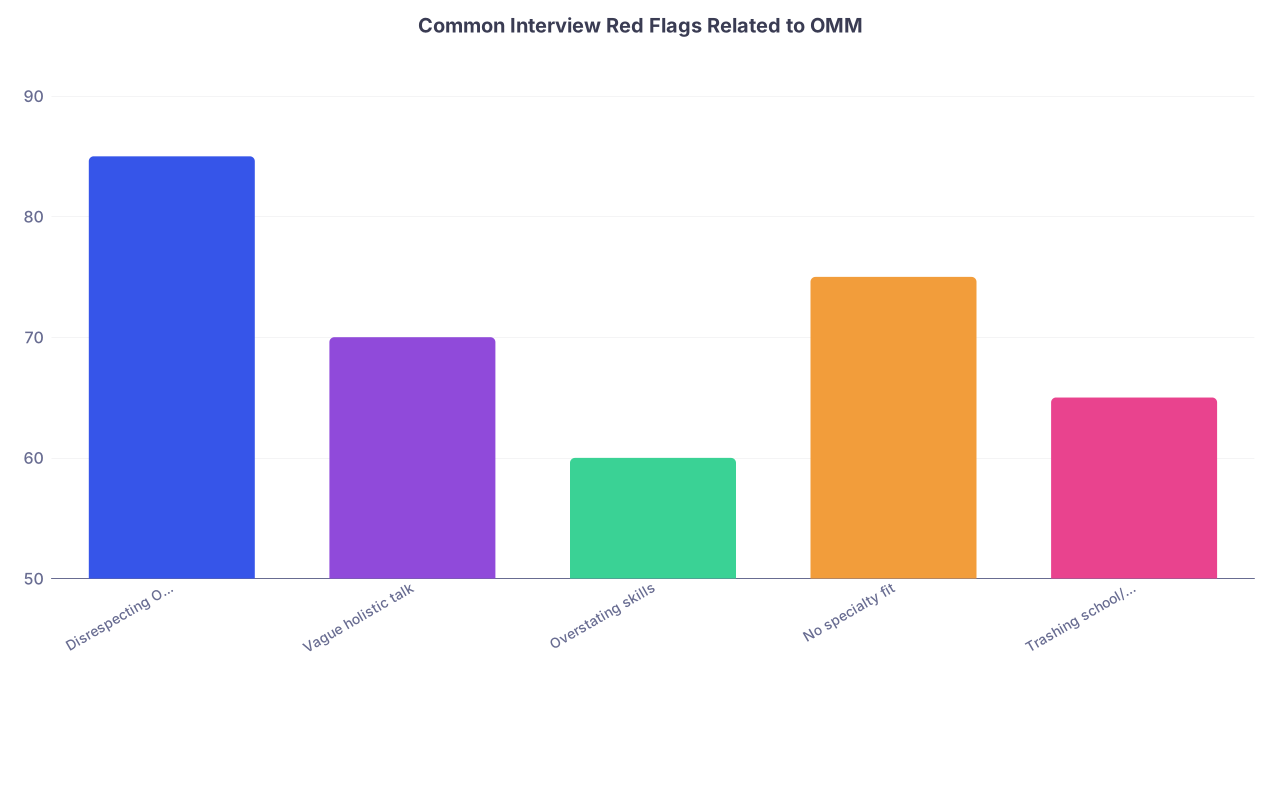
| Category | Value |
|---|---|
| Disrespecting OMM | 85 |
| Vague holistic talk | 70 |
| Overstating skills | 60 |
| No specialty fit | 75 |
| Trashing school/COMLEX | 65 |
Mistake #6: Not Knowing Your Own OMM/OMT Experiences Cold
You put OMM-related experiences on ERAS: OMM fellow, TA for lab, OMT clinic volunteer, case report on HVLA for neck pain. Then the interviewer asks you about them and you look surprised, like they just pulled it from a different person’s application.
Programs absolutely will probe any osteopathic- or OMM-related bullet you listed.
The mistakes:
- Forgetting the details of that case you wrote up.
- Being unable to explain what you actually did as an OMM TA.
- Not remembering the frequency or structure of an OMT clinic you volunteered in.
This reads as either careless or dishonest.
Avoid this by doing a targeted review before interview season:
Make a one-page “OMM snapshot” for yourself that covers:
- Every OMM/OMT experience you listed.
- Specific techniques you used or learned.
- One patient story from each that you could tell clearly.
- Any faculty mentors’ names and roles.
You should be able to answer, quickly and calmly:
- “What did you actually do in that OMT clinic?”
- “Tell me about a patient who benefitted from OMM.”
- “What did you learn as an OMM TA that changed your approach to physical exam?”
If you cannot do that, you are not interview‑ready.
Mistake #7: Dodging Or Panicking When Asked About Evidence For OMM
Someone on the panel—often the MD faculty or the research‑oriented DO—asks:
“What is your understanding of the evidence for OMM? Where do you see its strengths and limitations?”
I have seen applicants do one of three wrong things:
Blind cheerleading: “There is a lot of evidence that OMM works for almost everything. It is very effective and underused.” (with no specifics)
Total disavowal: “The evidence is weak, to be honest. I do not really believe in it.”
Panic + word salad: “Well, holistic mind‑body, uhm, touch increases endorphins…”
All three erode your credibility.
You are not expected to be a walking meta‑analysis. But a mature, balanced answer signals that you are a thoughtful physician, not a believer or a cynic.
A better way to handle this:
“From what I have read, the evidence for OMM is mixed. There is some reasonable data supporting its use in certain conditions, like low back pain and some aspects of respiratory function, often with modest effect sizes. For other claims, especially more expansive ones, the evidence is weaker or inconsistent. I see OMM as a tool that can help some patients when used appropriately, but I think it needs to be integrated with evidence-based medicine and patient preference, not used as a replacement for standard care. I would like to get better at critically appraising new studies as they come out.”
That answer does three things well:
- Acknowledges limitations without trashing the field.
- Avoids exaggerated claims you cannot support.
- Shows you think like a modern physician.
Mistake #8: Ignoring The Program’s Actual Culture Around OMM
Every program sits somewhere on a spectrum:
- OMM‑heavy, with dedicated OMT clinic time and faculty fellows.
- Osteopathic‑aware, respectful, occasionally using OMM but not central.
- Nominally DO, but functionally indistinguishable from an ACGME MD program with minimal OMM use.
Applicants make two opposite mistakes:
- Selling themselves as an OMM zealot to a program that barely uses it.
- Downplaying or disowning OMM at a program that is proud of its osteopathic identity.
Both send the message: “I did not bother learning who you are.”
You avoid this by doing 30 minutes of homework per program:
Look for:
- Do they list OMM/OMT clinic in their curriculum?
- Do they have an NMM/OMM fellowship?
- Do faculty bios emphasize osteopathic interests?
- Do current residents mention OMM on their profiles or social media?
Then you calibrate:
If they are OMM‑heavy:
“I saw that you have structured OMT clinics and NMM fellows. I am interested in maintaining and improving my OMM skills, and I would value the chance to get formal supervision while learning how to apply it realistically in your patient population.”
If they are osteopathic‑aware but not heavy:
“I understand OMM is not the main focus of this program, but I appreciate that osteopathic principles are respected here. My priority is to become an excellent [specialty] physician, and I see OMM as an additional skill set I can use when appropriate.”
If they are minimal OMM:
“I chose a DO school intentionally and I value that background. I do not expect structured OMT time here, and I am comfortable focusing primarily on [specialty] training while maintaining my osteopathic mindset in how I assess and communicate with patients.”
The key: match your message to reality.

| Step | Description |
|---|---|
| Step 1 | Start Interview Day |
| Step 2 | Standard Background Questions |
| Step 3 | No OMM Discussion |
| Step 4 | Osteopathic Identity Question |
| Step 5 | OMM Experience Question |
| Step 6 | Detailed OMM Integration Discussion |
| Step 7 | Principles & Occasional Use |
| Step 8 | Osteopathic Mindset, Minimal Technique Use |
| Step 9 | DO Applicant? |
| Step 10 | Program OMM Level |
Mistake #9: Confusing “Osteopathic” With “OMM Only”
One last conceptual error that trips people up: reducing osteopathic medicine to manipulative treatment alone.
People answer questions like:
“How has your osteopathic training shaped you as a clinician?”
With: “I learned OMM techniques like HVLA and muscle energy…”
Then they stop.
That is narrow and frankly a bit shallow.
Programs are listening for something bigger: how your osteopathic education changed how you think. Your physical exam. Your communication. Your bias toward function over just lab values.
If all you can talk about is “I crack backs,” you sound like a technician, not a physician.
You need a broader, integrated narrative:
Something like:
“My osteopathic training pushed me to see patients as dynamic systems where structure and function constantly influence each other. That affects how I examine a patient with heart failure—I pay close attention to their ability to move, breathe, and perform daily tasks, not just their ejection fraction. It changed how I talk to patients with chronic pain, where I focus on function, coping, and gradual improvement instead of just pain scores. OMM is one expression of that mindset, but the principles show up in every patient encounter, even when I do not lay hands on them for treatment.”
That is the level you are aiming for. You are selling a professional identity, not a bag of techniques.
Quick Reference: Safe vs. Dangerous Phrases About OMM
| Situation | Dangerous Phrase | Safer Alternative |
|---|---|---|
| Frequency of OMM use | "I probably won't use OMM at all." | "I will use it selectively when it benefits patients." |
| Evidence for OMM | "It works for almost everything." | "Evidence supports some uses; others are less clear." |
| Talking about your school | "Our OMM department is a joke." | "Our inpatient OMM exposure was limited." |
| Specialty integration | "I’ll do full OMM on most patients." | "I see targeted use in specific situations." |
| Identity as DO | "I’m basically an MD with extra classes." | "My DO training shapes how I think and examine." |
FAQ (Exactly 5 Questions)
1. What if I genuinely do not plan to use OMM much in my future practice?
Then say that, but say it intelligently. Programs do not expect every DO to be an OMM specialist. They do expect respect for the training and a coherent explanation. Frame it as: “My primary focus will be [specialty skills], but I value my osteopathic background for how it shapes my exam, communication, and understanding of structure–function. I will use hands-on treatment when it clearly benefits the patient and fits the clinical setting.”
2. How much detail should I know about OMM research for interviews?
Enough to not embarrass yourself. You do not need study names and p‑values memorized. You should know broad themes: some evidence supports OMM for low back pain and certain musculoskeletal complaints; claims for broader systemic effects are more controversial; and OMM should be integrated with evidence-based standard care, not replace it. If you can say that calmly and clearly, you are above average.
3. What if my school’s OMM training truly was weak—should I hide that?
Do not lie. But do not trash them either. Acknowledge gaps in a professional way: “Our OMM exposure was stronger in lab than in real clinical settings, so I feel more confident with basic techniques than with integrating them on busy inpatient teams. I’m looking for opportunities during residency to see how experienced physicians realistically incorporate OMM, even if only occasionally.” That shows insight rather than resentment.
4. How do I handle a faculty member who clearly dislikes OMM and is testing me?
You stay balanced. If they say, “Do you really think this stuff works?”, avoid defensiveness or blind loyalty. Something like: “I think OMM can be helpful for some patients, especially with certain musculoskeletal issues, but it is not magic and it should be held to the same evidence standards as other treatments. I see it as one tool I can offer, not a cure‑all.” Reasonable, thoughtful, and hard to attack.
5. Do I need to demonstrate OMM techniques or talk through them in detail during interviews?
Usually not, but be prepared. Some OMM-heavy programs may ask how you would approach a common complaint—low back pain, rib dysfunction, headache. They are not grading your cranial strain patterns; they are listening for safety, basic competence, and reasoning. Have 2–3 techniques you can describe clearly and safely, and do not pretend to know advanced techniques you never truly learned.
Key Takeaways
- Do not disrespect, dismiss, or overhype OMM; take a balanced, honest position that shows thought and maturity.
- Anchor every “osteopathic” answer in specific examples, realistic specialty fit, and an understanding that your DO identity is bigger than just manual techniques.
- Know your own OMM experiences, your program’s culture, and your limits cold—nothing sinks an interview faster than bluffing about skills you do not have.