A mediocre DO sub-I does not end your shot at an ACGME residency. It just means you have to stop pretending everything is fine and start running a repair protocol.
If you are reading this, you probably had one of these:
- A lukewarm evaluation from an ACGME away rotation
- An attending who “expected more” and put it in writing
- A sub-I where you were invisible, slow, or overwhelmed
- Or worst: no letter, vague feedback, and a pit in your stomach
I have seen DO students match competitive ACGME programs with a bad or forgettable sub-I on their record. The ones who make it do not minimize it. They treat it like a complication in the OR: identify, stabilize, repair, and document.
This is how you do that.
Step 1: Get Uncomfortably Honest About What Actually Happened
You cannot fix what you refuse to name. “It was fine” is not a diagnosis.
You need a precise, unemotional description of the problem. Not vibes. Not how you felt. What happened.
1. Collect the data
Do this within 1–2 weeks of the rotation ending, while details are still fresh.
- Pull your evaluation(s)
- Pull any mid-rotation feedback emails
- Re-read your daily notes, task lists, messages in EPIC/PowerChart, etc.
- Think through 3–5 concrete “bad days” on that rotation
Now write down, in plain language:
- What you were criticized for
- What did not get mentioned that should have (e.g., independence, efficiency)
- Any direct quotes from attendings or residents that stuck with you
Typical patterns I see in “mediocre” DO sub-Is:
- “Hardworking, pleasant, but needs to work on efficiency and prioritization.”
- “Quiet on rounds, would benefit from more active participation.”
- “Medical knowledge appropriate for level; should improve presentations and clinical reasoning.”
- “Shows promise but still requires a lot of guidance.”
Translation:
- They did not trust you like an acting intern.
- They did not see you as someone they would want as an intern on July 1.
- They could not comfortably write “top 10%” or “no reservations.”
That is the problem. Not that they hated you. That they could not strongly endorse you.
2. Identify which axis you failed on
Most sub-I underperformance falls into 3 buckets:
- Workhorse / Reliability
- Late notes
- Missed tasks
- Frequently needed reminders
- Seemed disorganized, overwhelmed, or scattered
- Clinical reasoning / Knowledge
- Could not answer basic questions at your level
- Weak problem representations, no clear assessment and plan
- Could not connect findings to management decisions
- Professional presence / Ownership
- Too quiet, not proactive
- Did not “own” patients; waited to be told every step
- Poor communication with nurses / team
- Awkward with patients or families
Write this out in one sentence for yourself:
“On my IM sub-I at X, I came across as a reliable but passive student who did not own patients or speak up.”
Or:
“On my surgery sub-I, I looked slow and behind on the basics — presentations, pre-op workup, and post-op plans were not tight enough.”
No drama. Just a clinical description of your own performance problem.
Step 2: Secure the Damage and Control the Paper Trail
You cannot delete a mediocre evaluation, but you can:
- Prevent it from defining your whole application
- Generate better data points that overshadow it
- Control how programs interpret it in context
1. Figure out if this sub-I will/should generate a letter
First critical decision: do you actually want a letter from this rotation?
Ask yourself:
- Did any attending explicitly offer to write you a letter?
- Did anyone say, “I’d be happy to support your application,” or did you get generic praise?
- If they wrote you a letter right now, what is the strongest they could reasonably say?
If the honest answer is: “they would probably write a bland, generic letter,” then:
- Do not ask them for a letter
- Use this rotation only for transcript / CV purposes, not as a flagship experience
Your ACGME narrative is built on anchor letters, not every possible letter.
2. Decide your LOR (Letter of Recommendation) strategy
You want at least:
- 1–2 strong specialty-specific letters (from rotations where you shined)
- 1 letter that clearly vouches for your work ethic + teachability + growth
- Optional: 1 osteopathic letter (if programs require/prefer it)
| Priority Level | Type of Letter |
|---|---|
| 1 | Strong specialty-specific ACGME letter |
| 2 | Strong home institution letter |
| 3 | Letter highlighting growth / improvement |
| 4 | Generic but positive DO letter |
| 5 | Mediocre sub-I letter |
General rule: a mediocre sub-I letter sits at priority 5. Only use it if you have no alternatives.
Better options:
- Do a home program sub-I (if you have not already) and crush it
- Do another ACGME away at a slightly less cutthroat site where you can safely improve
- Get a letter from an attending who has seen you both before and after you fixed your issues
Step 3: Run a 4–8 Week Performance Rebuild Block
You do not fix a mediocre sub-I by hoping the next one “goes better.” You fix it by running a structured performance upgrade.
Core goals of the rebuild phase
- Fix the specific weaknesses identified (efficiency, presentations, reasoning, etc.)
- Prove you can accept feedback and change behavior rapidly
- Enter the next critical rotation with rehearsed habits, not good intentions
Here is a practical 4–8 week protocol.
1. Technical skills: notes, presentations, and plans
You need to become obviously better at the daily grind.
Daily SOAP note drills (2–3 weeks):
- Pick 1–2 sample patients per day (from memory or de-identified notes)
- Write or re-write a full SOAP note as if you were on service
- Then compare against:
- UpToDate recommendations for the actual problems
- Example notes from a resident you respect (ask for a de-identified template)
Focus on:
- Condensing subjective data to what matters
- Clear problem lists with prioritized issues
- Bullet-pointed plans with:
- Dx (what tests / when)
- Tx (meds, fluids, procedures)
- Monitoring / follow-up items
Presentation bootcamp (2–3 weeks):
Pick 5–10 real patients you saw or common cases in your specialty:
- CHF exacerbation
- DKA
- COPD flare
- Appendicitis
- GI bleed
Practice out loud:
- 2–3 minute new patient presentation
- 30–60 second ICU or progress note style update
Do this daily. Record on your phone 2–3 times per week. Listen back once. You will hear:
- Rambling HPI
- Disorganized data
- Missing “so what” in the assessment
- No clear plan
Rewrite and re-present the same case more cleanly.
2. Clinical reasoning: thinking like an intern
You likely got tagged as “appropriate for level” or “needs development” in reasoning. That reads as “not ready to make independent decisions.”
Fix it like this:
Case-based reasoning sessions (3–4 per week):
- Use a resource like:
- NEJM Resident 360 cases
- Online MedEd or similar case questions
- UWorld (if you still have access)
- For each case:
- Force yourself to write:
- 1–2 sentence summary
- Differential (top 3, with why)
- Initial management steps
- Only then check the explanation
- Force yourself to write:
You are training speed + structure of thinking. Not just right answers.
3. Workflow and efficiency
Common complaint: “Pleasant, but slow and needs to work on time management.”
This is how you get faster:
- Create fixed morning check-in routines:
- Timebox: “By 8:15 I must have: vitals, labs, overnight events, plus a first draft plan for each patient.”
- Pre-build note templates with:
- Problem-based format
- Common issues for your specialty (HTN, DM, COPD, CAD, post-op care, etc.)
- Simulate rounds:
- 3–4 cases in a row
- Limit yourself to 2–3 minutes each in practice
If you are going into IM, surgery, OB, EM—does not matter. The intern who can quickly extract what matters and propose a reasonable plan is the one who gets trusted.
4. Communication and ownership
This destroys more sub-Is than knowledge gaps.
You need to look and sound like someone who owns patients:
- On every rotation, for each patient:
- Know: code status, allergies, primary diagnosis, current IV meds, lines/tubes, any overnight events
- Pre-empt: “Today our main issues are X and Y; I am planning to do A, B, C.”
- Speak early on rounds:
- Do not wait for direct questions
- Volunteer: “I checked X; Y has been stable; I am concerned about Z.”
If you are naturally quiet, script yourself:
- “The three main problems today are…”
- “My plan for this is…”
- “I am not certain, but I thought about X, Y, and Z and I would do ___.”
You want attendings to think: “Ok, they are thinking like an intern. I can work with this.”
Step 4: Choose Rotations Strategically After a Mediocre Sub-I
Your next moves cannot be random. You need deliberate placements that let you show growth.
1. Decide your priority objectives
You likely have to juggle:
- Getting at least one glowing ACGME specialty letter
- Showing trajectory (you got better)
- Not overexposing yourself to super-malignant places that will burn you again
Your priority object is simple:
“I need one rotation where I clearly perform above the level of my previous sub-I, and an attending who sees that and writes it.”
2. Choose the right environment
You do not need a “big name” program now. You need:
- Attendings who actually teach
- A culture where students can own patients
- Reasonable volume so you are not drowning from day one
Red flags if you just had a mediocre sub-I:
- Ultra-competitive away at a top-10 program in your specialty
- Services known for chew-them-up malignant culture
- Rotations where students are mostly scut with no real responsibility
Safer and more strategic options:
- Home program sub-I where faculty know you and want you to succeed
- Regional mid-tier ACGME program with a strong reputation for teaching
- DO-friendly ACGME sites that routinely take osteopathic students
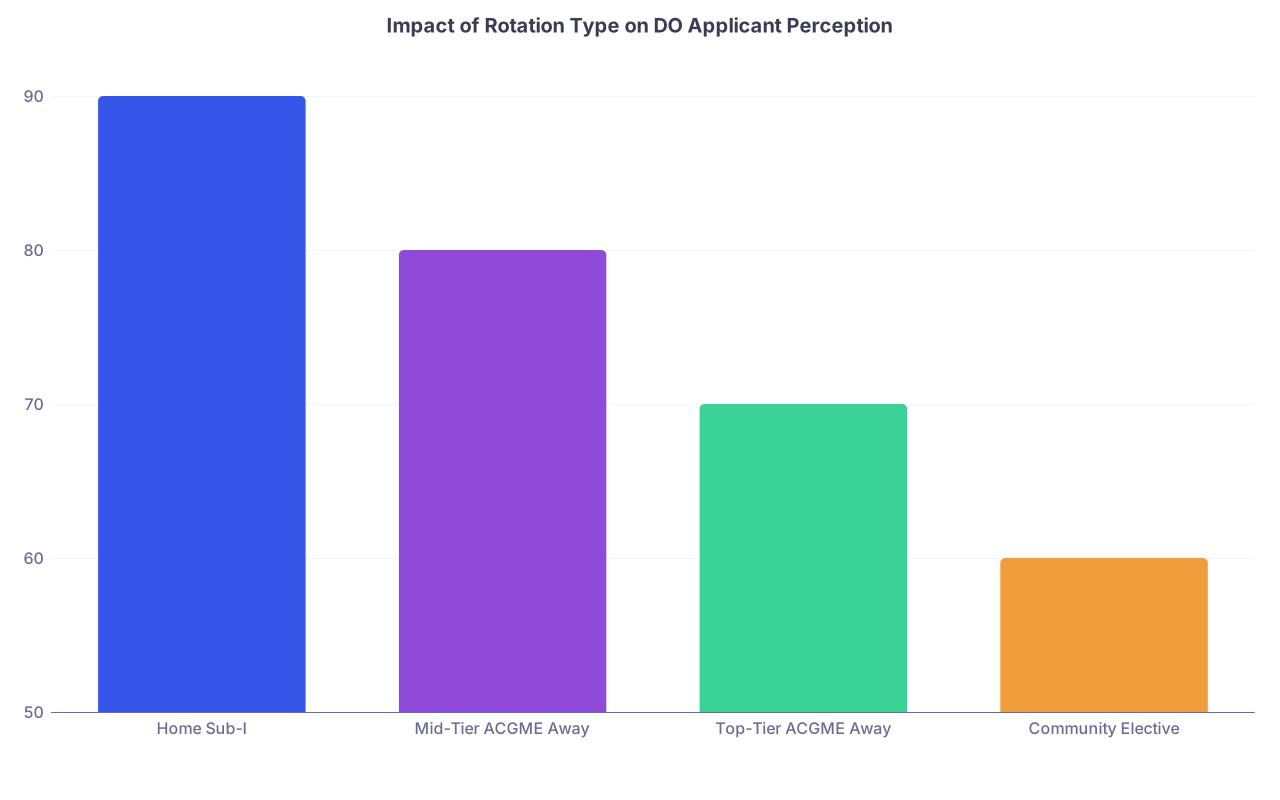
| Category | Value |
|---|---|
| Home Sub-I | 90 |
| Mid-Tier ACGME Away | 80 |
| Top-Tier ACGME Away | 70 |
| Community Elective | 60 |
(Think of these numbers as “average potential to help your narrative” when you just had a mediocre performance. Top-tier away sounds sexy but is not always your best move right now.)
3. Tell faculty you want feedback early and often
On day 1–2 of your next critical rotation:
Say something like:
“I want to be very clear about my goal this month. I had a previous sub-I where I did not perform at the level I expect from myself. I have worked specifically on presentations, efficiency, and ownership. I would really value frequent, direct feedback so I can keep improving.”
Two reasons this matters:
- You preemptively frame that if they see issues, you want to know now, not in the eval
- You plant the idea that you are on an upward trajectory, not stagnant
You are not going to write this story in ERAS. Your attendings will write it in their letters. Give them the raw material.
Step 5: Rebuild Your Narrative in Your Application Documents
Now we fix how your story looks on paper: ERAS application, personal statement, MSPE, and (if needed) an explicit explanation.
1. Understand how programs actually read your file
Program directors are pattern readers. They skim for:
- Step/COMLEX scores
- Class rank / quartile
- MSPE summary language
- Letters: any “red flag” phrases, any “top X%” superlatives
- Trend: flat, declining, or improving performance
A single mediocre rotation is survivable if:
- The rest of your story shows consistency or clear improvement
- Your recent performance contradicts the “meh” image
- Someone credible writes: “This student is now ready for intern-level responsibility.”
2. Use the “challenge / growth” frame (carefully)
You do not write: “I was bad on my first sub-I.” That is stupid.
You can say something like this in a personal statement or short paragraph (if your school gives you that space):
“Early in my fourth year, during an acting internship, I realized that my efficiency and patient ownership were not at the level expected of an incoming intern. I sought direct feedback, restructured my pre-rounding and note-writing approach, and worked deliberately on concise, problem-based presentations. On my subsequent sub-internships, I took primary responsibility for patient care, consistently anticipated next steps, and received strong evaluations for reliability and clinical reasoning.”
Key pieces:
- You own the deficiency
- You clearly state what you changed
- You point to subsequent evidence (later evaluations / letters)
You are not confessing. You are documenting growth.
3. Coordinate with your letter writers
When you ask for letters from later rotations, say this out loud:
“I had an earlier sub-I where I did not meet expectations in efficiency and ownership. I have worked very specifically on those areas. If you feel that you have seen clear improvement and would be comfortable commenting on that growth, I would be grateful if you could highlight it.”
You are not telling them what to write. You are asking them to describe what they have actually seen:
- “By the end of the rotation, she was functioning at the level of a strong intern.”
- “He actively sought feedback and I saw marked improvement in his presentations and clinical reasoning.”
- “Compared to other students, she quickly integrated feedback and took real ownership of her patients.”
That language is gold when your earlier eval is mediocre.
Step 6: Triage Your Program List Like a Strategist, Not a Dreamer
A mediocre DO sub-I should influence your risk distribution.
Not crush your ambitions, but modify them.
1. Put programs in 3 buckets
Bucket A – Realistic / Strongly DO-Friendly
- Historically take DOs consistently
- Rank DOs highly, not just token spots
- Have programs where your Step/COMLEX, GPA, and LORs are in the solid middle or above
Bucket B – Stretch but possible
- Mixed DO/MD applicant pool
- Some DOs in recent classes, but fewer
- Your numbers are competitive, but your narrative needs to be clean and growth-oriented
Bucket C – Lottery tickets
- Almost no DOs historically
- Hyper-competitive academic centers
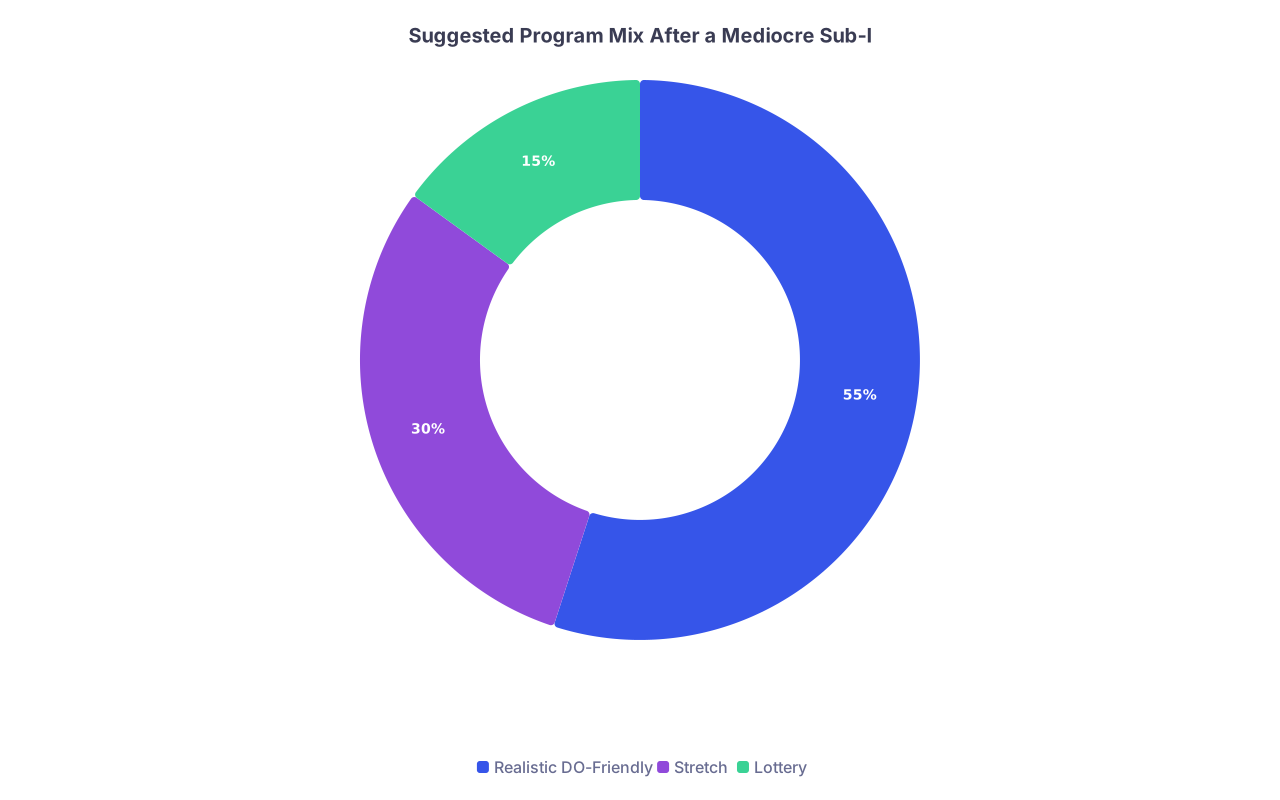
| Category | Value |
|---|---|
| Realistic DO-Friendly | 55 |
| Stretch | 30 |
| Lottery | 15 |
After a mediocre sub-I, you lean a bit heavier into:
- More applications to Bucket A and the better part of Bucket B
- Fewer pure ego-driven Bucket C applications
2. Pay attention to how programs talk about sub-Is and away rotations
On their websites / social media / open houses, look for:
- “We value applicants we know from our rotations” = away rotation performance matters
- “We welcome DO applicants and do not require ACGME sub-I at our site” = your meh sub-I elsewhere may hurt less
You need a cluster of programs that:
- Already like DOs
- Care more about your overall application and recent letters than about one rotation
Step 7: Handle Questions About the Sub-I in Interviews (If It Comes Up)
Sometimes it will. Especially if that rotation is on your transcript and someone read the eval carefully.
You prepare one clean, non-defensive script.
Pattern:
- Own it succinctly
- Name the specific issues (not vague “I struggled”)
- Describe what you changed
- Point to evidence of improvement
Example:
“On one of my early sub-internships, my attending gave me feedback that I was not as efficient or proactive as expected for someone functioning as an acting intern. I was getting tasks done, but I was not driving patient care or anticipating needs. I took that seriously. I sat down with my senior resident to redesign how I pre-round, structured my notes around problem lists instead of systems, and started explicitly proposing plans on rounds. On my subsequent sub-Is, I consistently took primary ownership of my patients, and my evaluations and letters from those rotations reflect that growth.”
Stop talking. Wait.
You are not asking for forgiveness. You are showing you are coachable and now ready.
Step 8: Watch for One Big Red Flag and Fix It Early
There is one scenario that is much worse than a single mediocre DO sub-I:
Multiple rotations with the same negative theme.
If you keep hearing:
- “Quiet, passive, not proactive”
- “Struggles with efficiency and prioritization”
- “Needs to work on clinical reasoning”
…across different sites and time points, you do not have a “bad luck sub-I” problem. You have a core performance problem.
At that point, you need:
- A trusted faculty mentor to review evaluations line by line with you
- Possibly formal coaching through your school (yes, it exists; ask student affairs)
- To consider adjusting your specialty choice if your chosen field demands strengths directly opposite your persistent weaknesses
Better to pivot early than match into a residency where you will be unsafe and miserable.
Step 9: Mental Reset – Stop Carrying That Rotation Like a Tattoo
You are going to have to function under pressure on your next rotations. You cannot do that if you mentally re-live every awkward moment from the bad sub-I.
So:
- Extract lessons and specific fixes from that rotation
- Implement them in a visible way on your next block
- Then treat that previous sub-I like what it is: an early rep, not your ceiling
One line I have told students:
“Residency programs do not care if your first attempt was perfect. They care what you look like in the months before July 1.”
That is your target: how you look in the last 6–9 months of med school.
A Quick Visual: What “Rescue” Actually Looks Like
You want your performance trend to look like this:
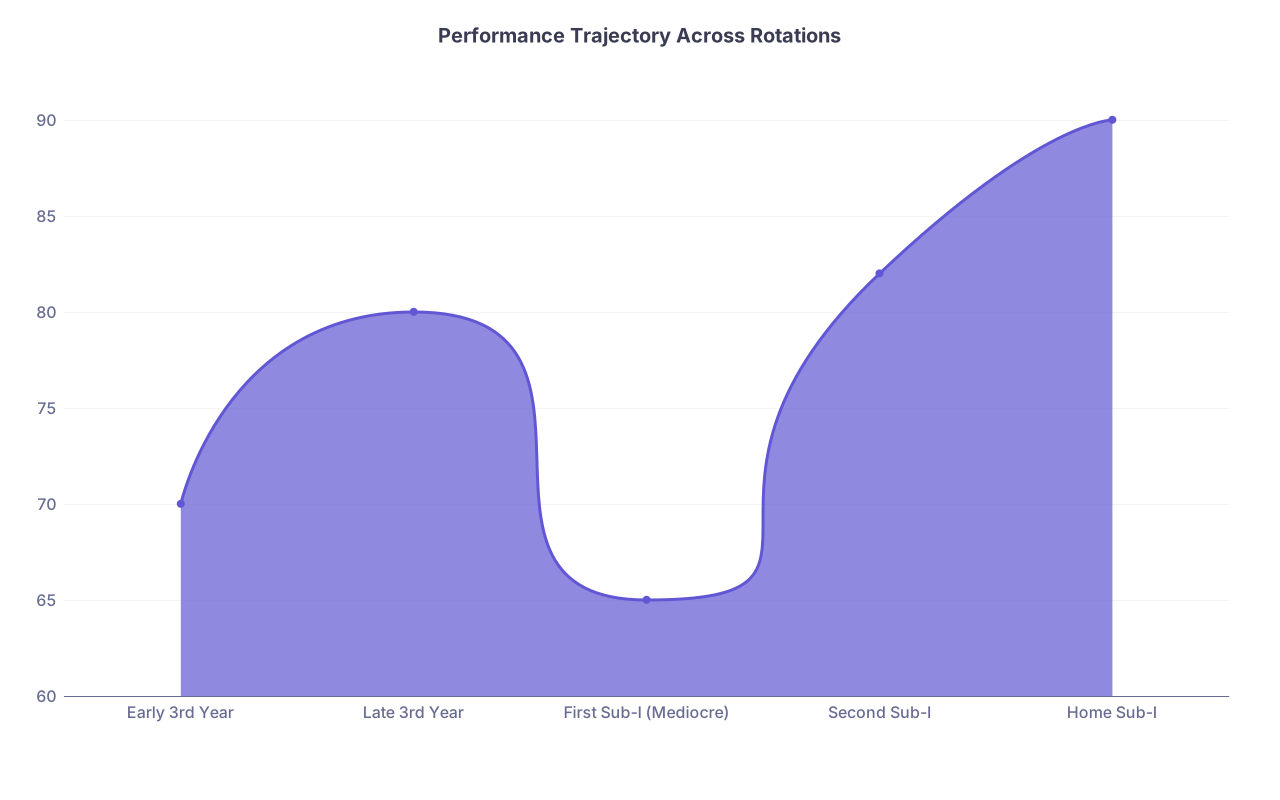
| Category | Value |
|---|---|
| Early 3rd Year | 70 |
| Late 3rd Year | 80 |
| First Sub-I (Mediocre) | 65 |
| Second Sub-I | 82 |
| Home Sub-I | 90 |
The dip is noticeable. Then the climb is undeniable.
That kind of story is believable. Program directors see it all the time.
Final Tight Summary
Three things you should walk away with:
Diagnose the problem precisely. Do not hide from the specifics of your mediocre DO sub-I. Identify whether the issue was efficiency, reasoning, ownership, or professionalism and write that sentence down.
Generate new, better data. Run a 4–8 week rebuild: fix presentations, plans, and workflow; then choose rotations where you can visibly own patients and get strong, growth-focused letters that overwrite the old narrative.
Control the story. In your personal statement, letters, and interviews, frame that sub-I as an early wake-up call that led to measurable improvement—not as a mystery blemish. One mediocre rotation will not sink you if your later performance clearly proves you are now at intern level.