It’s Monday of Match Week. Your NRMP results portal just told you the verdict:
- Maybe you matched, but not at your top choice.
- Maybe you matched, but you’re already wondering if you should “keep in touch” with some programs that ranked you.
- Maybe you didn’t match, and you’re staring at your email, cursor hovering over “Compose,” thinking: Should I email these PDs now? Ever? What do I say?
You’re in the foggy, awkward gap between rank list certification and the end of Match Week, where people start doing weird, desperate, or just misguided email outreach to programs.
I’m going to walk you through, chronologically, exactly when, whether, and how to email residency programs that ranked you — from Post–Rank List Week through Match Week, SOAP, and the weeks after Match Day.
Big Picture Rules: Before We Go Day-by-Day
At this point you should be crystal clear on the non‑negotiables:
- Once the rank order list certification deadline passes, you cannot influence this year’s Match outcome by emailing anyone.
- Program directors cannot change rank lists after the deadline. They also cannot recruit you away from a program you matched at.
- Anything that looks like “shopping around” after you’ve matched makes you look unprofessional. PDs talk. You do not want to be that story.
So your emails after Match fall into only a few legitimate buckets:
- Thank you / closure (optional, mostly unnecessary)
- Future interest (if you’re reapplying next cycle or seeking a position outside the Match in the future)
- Networking for prelim → advanced, or transfer possibilities (very niche, must be careful)
- SOAP / unmatched outreach (structured, time‑sensitive, and much more constrained)
Everything else? Noise. Or worse — a red flag.
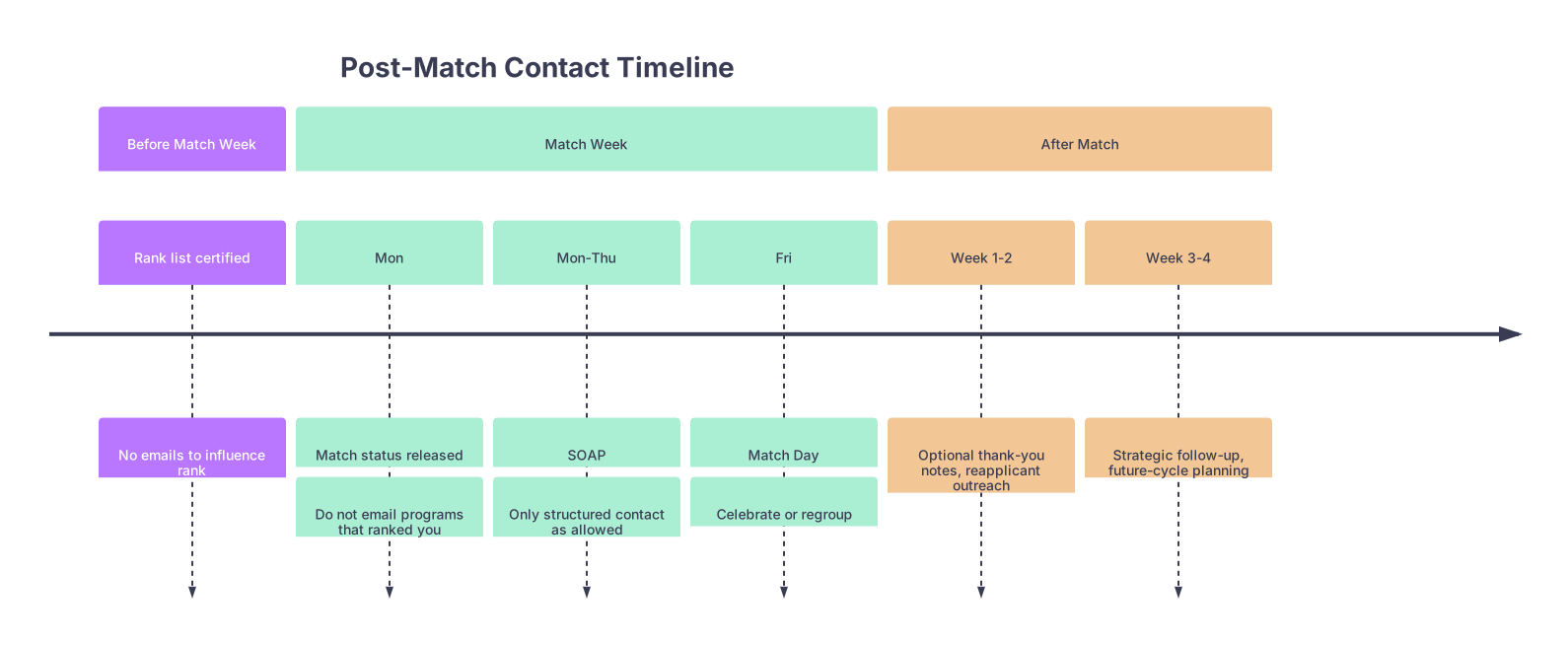
Timeline Overview: From Rank List Deadline to 4 Weeks After Match
| Period | Event |
|---|---|
| Before Match Week - Rank list certified | No emails to influence rank |
| Match Week - Mon | Match status released |
| Match Week - Mon-Thu | SOAP |
| Match Week - Fri | Match Day |
| After Match - Week 1-2 | Optional thank-you notes, reapplicant outreach |
| After Match - Week 3-4 | Strategic follow-up, future-cycle planning |
We’ll go phase by phase.
Phase 1: After Rank Lists Are In (Late Feb – Early March)
You’ve already certified your list. Programs have certified theirs. At this point you should stop trying to “influence” anything.
Should you email now? (Short answer: almost always no.)
From rank list certification → Monday of Match Week:
- Do not email programs to say “You’re my #1” or “I hope you ranked me highly” or anything in that category. It’s pointless and makes you look anxious and uninformed about how the algorithm works.
- Do not ask them where you’ll be on their list. You’re putting them in an impossible situation and they will remember you for the wrong reason.
If you absolutely must send anything in this phase:
- The only reasonable email: a brief, genuine thank-you to a program that went out of their way for you (e.g., arranged special accommodations, extra second-look day, complex schedule).
- Even then, it should not contain any ranking language. Just: “Thank you for your time and hospitality.”
Template (if you insist):
Subject: Thank You
Dear Dr. [Last Name],
Thank you again for the opportunity to interview at [Program Name] and for the time you and your team spent discussing the program with me. I appreciated [specific thing — case conference structure, resident culture, etc.].
Best regards,
[Your Name], [Med School]
Nothing else. No “I ranked you highly” hints. No “I hope to join you in July.” That period is over.
Phase 2: Match Week – Monday to Thursday (SOAP Chaos)
Monday 10 AM ET: you learn Matched / Partially Matched / Unmatched. Everything changes here.
| Category | Value |
|---|---|
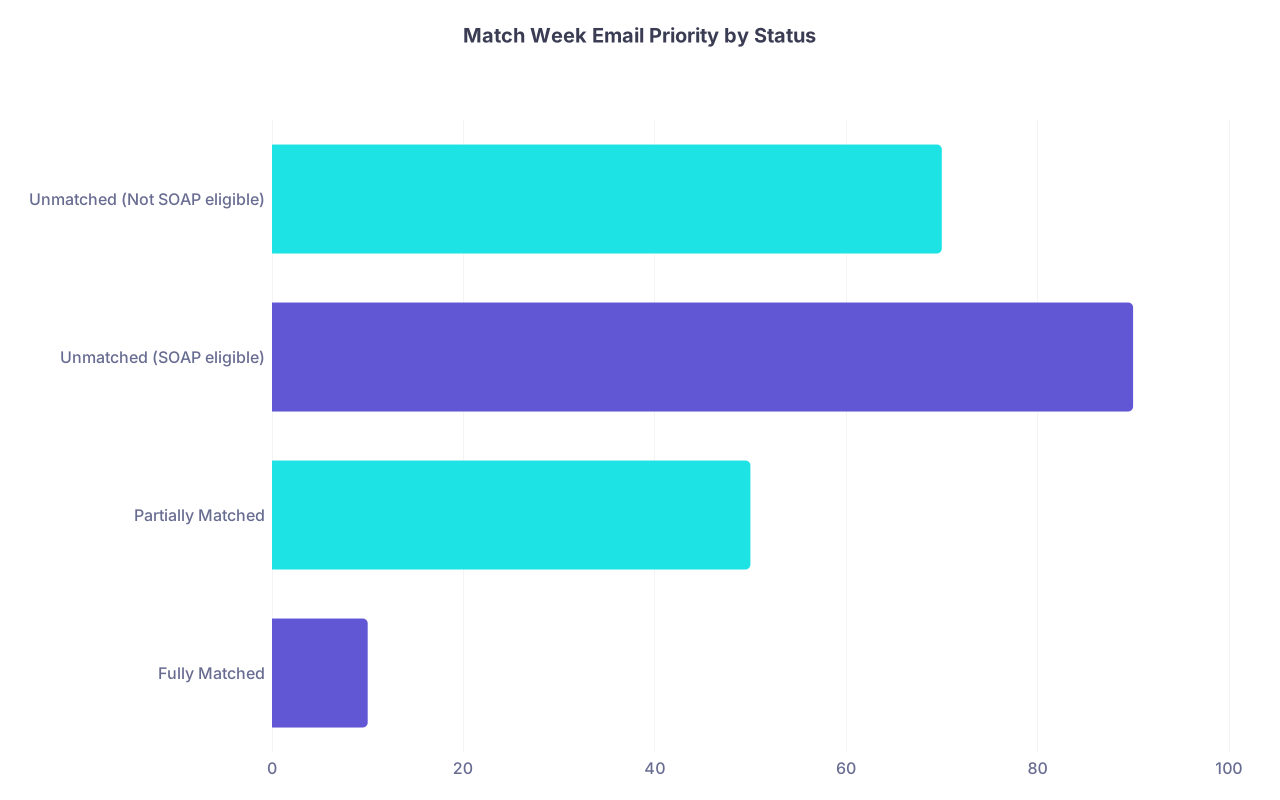
| Fully Matched | 10 |
| Partially Matched | 50 |
| Unmatched (SOAP eligible) | 90 |
| Unmatched (Not SOAP eligible) | 70 |
Scale is “urgency to email programs that ranked you” (0–100). Only one of those should even be thinking about real outreach.
If you are fully matched
At this point you should not email other programs that ranked you. At all.
- You’ve signed a binding commitment through the NRMP. Programs know this.
- E‑mailing other programs right after you matched comes across as:
- Disloyal to the program that did rank you
- Confused about the Match rules
- Potentially fishing for a way out of your contract
Only exception: a short thank-you to your home program or mentors who advocated for you. Not to programs that interviewed you but didn’t match you.
What to do instead Monday–Thursday if you’re matched:
- Confirm details with your matched program as they reach out.
- Do your onboarding forms.
- Turn off the instinct to “close loops” with every program. You don’t need to.
If you are partially matched (e.g., prelim but no advanced, or vice versa)
This gets tricky, and I’ve watched people mess it up.
Your priorities from Monday–Thursday:
- Understand your SOAP eligibility and what types of positions you’re allowed to apply to.
- Work with your dean’s office, not as a solo email warrior.
Should you email programs that ranked you but didn’t match you?
- Not during SOAP. Programs in SOAP are under intense rules and timelines.
- Unsolicited, individual, off‑SOAP emails to those programs during SOAP look unprofessional and may violate NRMP rules if they’re participating in SOAP.
If a program contacts you? Different story:
- Respond promptly, professionally.
- Keep it focused: your status, your interest, and whether they’re in SOAP or considering off-cycle positions.
But you should not be cold‑emailing random PDs begging for open spots during SOAP. There’s a formal process for that.
If you are unmatched and SOAP-eligible
You do not spend Monday morning emailing every program that ever ranked you.
At this point you should:
- Sit down with student affairs.
- Build your SOAP application list targeting programs with open spots.
- Use ERAS and NRMP tools. Not your Outlook outbox.
Direct emails?
- Only if your dean, advisor, or designated SOAP contact suggests a specific PD they know personally and offers to introduce you.
- These are usually phone calls or direct PD-to-PD messages, not you cold-emailing.
Bottom line for SOAP days:
Your “email programs that ranked me” idea is on hold. The system is structured. Work inside it.
Phase 3: Match Day (Friday) – 0 to 48 Hours After
Friday noon: You know where you matched, or that you need a plan B for the next cycle.
Two separate tracks here.
Track A: You matched
At this point you should:
- Celebrate.
- Send gratitude emails to your home institution faculty, mentors, letter writers, dean’s office.
- Respond warmly to your matched program emails.
Should you email programs that ranked you but didn’t match you?
Most of the time: No.
Why?
- They already know the outcome. Their list is done. They moved on.
- A “Thanks for ranking me even though I didn’t match there” email is awkward and adds nothing.
- At scale, PDs and PCs don’t want 100+ “thanks anyway” emails clogging their inbox.
Two narrow exceptions where an email is reasonable and not weird:
Your home or away rotation program where you interviewed, didn’t match, but have a real ongoing relationship.
- Example: You rotated at University X, did research there, they ranked you, you matched elsewhere.
- A concise update + thank-you makes sense.
Future fellowships / networking
- You matched at Program A in IM but are very interested in Fellowship at Program B where you interviewed this year.
- A forward-looking, non-desperate note can be appropriate.
What that might look like:
Subject: Thank You and Match Update
Dear Dr. [Last Name],
I wanted to thank you again for the opportunity to interview at [Program Name] this season. I appreciated [brief specific].
I’m happy to share that I matched at [Your Program, City]. I’m excited to start my training there this July. I’ve remained very interested in [their program’s niche/fellowship focus], and I hope to stay connected as I move into residency.
Thank you again for your time and consideration this cycle.
Best regards,
[Your Name]
Key features:
- Past tense. No pressure. Not fishing.
- Clear that you’re honoring your Match.
- Leaves a door open for future collaboration or fellowship, not for jumping ship.
Track B: You did not match (and are planning to reapply)
This is where reaching back to programs that ranked you can actually matter.
Not Match Day itself. You’re not thinking straight and PDs are flooded.
At this point you should wait 24–72 hours, then start targeted outreach.
Phase 4: 3–14 Days After Match – Strategic Emails for Unmatched/Reapplicants
This is the only window where emailing programs that ranked you the previous cycle is genuinely useful for your career.
Your goals:
- Get honest, specific feedback about your application.
- Signal continued interest for a future cycle.
- Identify any programs with potential off-cycle or PGY-2 opportunities (rare, but real).
Who you email
Not everyone. You’ll drown in your own spreadsheet.
Prioritize:
- Programs where you interviewed and genuinely would train.
- Programs where you have some connection:
- Your home institution
- Away rotation sites
- Places where faculty know you by name
Skip:
- Random reach programs who clearly used you as interview filler.
- Programs where the interview vibe was clearly off or hostile. They’re not suddenly going to love you now.
What to say (and what not to say)
You’re not asking, “Why didn’t you rank me higher?”
You’re asking, “What do I need to improve to match next time?”
Example template:
Subject: Request for Feedback – [Your Name], [Specialty] Applicant
Dear Dr. [Last Name],
I hope you’re doing well after a busy Match season. I interviewed at [Program Name] on [date] and very much appreciated the opportunity to learn more about your program.
I unfortunately did not match this cycle and am planning to reapply in [specialty] next year. I would be very grateful for any brief feedback you might be able to share on how I could strengthen my application for a future cycle, whether for your program or others.
I understand your time is limited, so even a few quick thoughts would be extremely helpful as I plan the coming year.
Thank you again for your consideration and for any guidance you can offer.
Sincerely,
[Your Name]
[Med School, Grad Year]
[AAMC ID]
What you do not say:
- “I thought I was a great fit and was surprised not to match.”
- “Did I do something wrong?”
- “Was there anything specific that made you rank me low?”
- Anything guilt‑trippy or emotional.
Some PDs will ignore you. Many are exhausted. But a surprising number will give you 2–3 lines of gold:
- “Your Step 2 was below our usual range. Aim ≥240 for better chances.”
- “We were concerned about your exam failures. Address remediation clearly in your personal statement.”
- “Strong applicant; we just didn’t have space. Would absolutely consider you again.”
Capture those responses in one place. They should directly shape your reapplication year plan.
Phase 5: 2–8 Weeks After Match – Long Game, Future Opportunities
By now, the dust has settled. You’re either:
- Preparing to start residency where you matched
- Lining up a research year, prelim year, or other gap-year plan to reapply
This later window is when professional relationship-building makes sense.
If you matched
At this point you should use your past-cycle contacts strategically, but lightly:
- For future fellowship interest
- For multi-institution projects
- For letters or mentorship if you connected strongly at an away rotation
Example of a low‑friction follow-up:
Dear Dr. [Last Name],
I hope your new interns are getting ready for July. I wanted to thank you again for the chance to interview at [Program Name] last season — I especially enjoyed [specific conference, clinic, or conversation].
I am starting [Residency Program, Specialty] at [Institution] this July and remain very interested in [subspecialty/academic interest]. If there are any opportunities for multi-center projects or ways I could stay involved with [specific interest], I would be glad to hear about them as I begin residency.
Best regards,
[Your Name]
You’re no longer “the applicant who didn’t match here.” You’re “a future colleague.” That’s a big psychological shift for both sides.
If you’re reapplying
This is when meaningful, non‑desperate follow‑up helps:
- Update programs that gave you encouraging feedback with what you’re doing to improve:
- Research position
- Additional clinical work
- Score improvement
- Addressing professionalism or communication concerns
You can send one well-timed email around late April–May:
Dear Dr. [Last Name],
Thank you again for your feedback after the Match. Since then, I have [started a research position in X / enrolled in additional clinical work in Y / retaken Step 2 and improved from A to B].
I remain committed to pursuing [specialty] and plan to reapply in the upcoming cycle. I am very interested in [Program Name], both for [specific strengths] and the culture I saw on interview day.
I appreciate your guidance and will incorporate your suggestions as I prepare my new application.
Sincerely,
[Your Name]
You’re showing growth. Not begging for a spot.
When Emailing Programs That Ranked You Is Flat-Out A Bad Idea
Quick list, no nuance:
- Any time during SOAP (unless routed through official channels or explicitly invited)
- Right after you match, to ask if they have open positions or “late switches”
- To complain about where you think they ranked you
- To negotiate: “If you have future openings, I’d leave my matched program”
- To send multiple follow-ups if they don’t answer your first email
Programs remember the unprofessional outliers. Don’t be a story PDs tell at the APDIM or CORD meeting.
Comparison Snapshot: Good vs Bad Post-Match Email Motives
| Timing | Good Reason | Bad Reason |
|---|---|---|
| Before Match Week | Thanking for exceptional effort | Trying to change your rank position |
| Match Week | Responding to program-initiated contact | Cold-emailing to bypass SOAP |
| Match Day | Updating mentors, matched program | “Thanks anyway” to every program |
| 1–2 weeks after | Seeking feedback if unmatched | Demanding explanations for not matching |
| 2–8 weeks after | Future networking / reapplicant updates | Fishing for ways out of your matched spot |
FAQ (Exactly 4 Questions)
1. I matched, but I’m unhappy with the program. Can I email a program that ranked me to see if they’ll take me instead?
No. That’s a hard line. You’re bound by the NRMP Match Agreement. PDs know this and will not risk sanctions to poach you. Reaching out like that brands you as unprofessional and disloyal. If you truly have major issues (visa problems, family emergencies, program losing accreditation), you work through NRMP and your matched program, not side emails to others.
2. A PD told me during interview season, “We’ll rank you highly.” I didn’t match. Should I email them to ask what happened?
You can email for feedback, but not for an autopsy of their rank list. Do not phrase it as “I thought you’d rank me high — what changed?” Instead: acknowledge you didn’t match, you’re planning to reapply, and you’d appreciate their thoughts on how to strengthen your application. Keep it forward-looking.
3. If a program doesn’t respond to my feedback request after Match, should I follow up?
One follow-up after 10–14 days is reasonable. After that, stop. PDs are flooded, and silence often just means they don’t have time or don’t feel comfortable sharing details. Harassing them with multiple emails hurts your chances in future cycles more than it helps.
4. Is it ever mandatory to email programs that interviewed or ranked me after Match Day?
No. There is no professional expectation that you “close the loop” with every program. Most PDs honestly prefer not to get dozens of extra emails. The only people you must email are your matched program (when they contact you) and your home institution mentors/letter writers to thank them and update them. Everything else is optional and should be strategic, not reflexive.
Key takeaways:
- After rank lists are certified, your emails cannot change this year’s Match; shift from “influence” to “professionalism and planning.”
- During Match Week and SOAP, don’t freelance; follow the formal process and only email programs in structured, advisor-approved ways.
- The real value of emailing programs that ranked you comes after Match if you didn’t match (for feedback) or in the months ahead (for networking and future opportunities) — done once, briefly, and with a future-focused tone.