
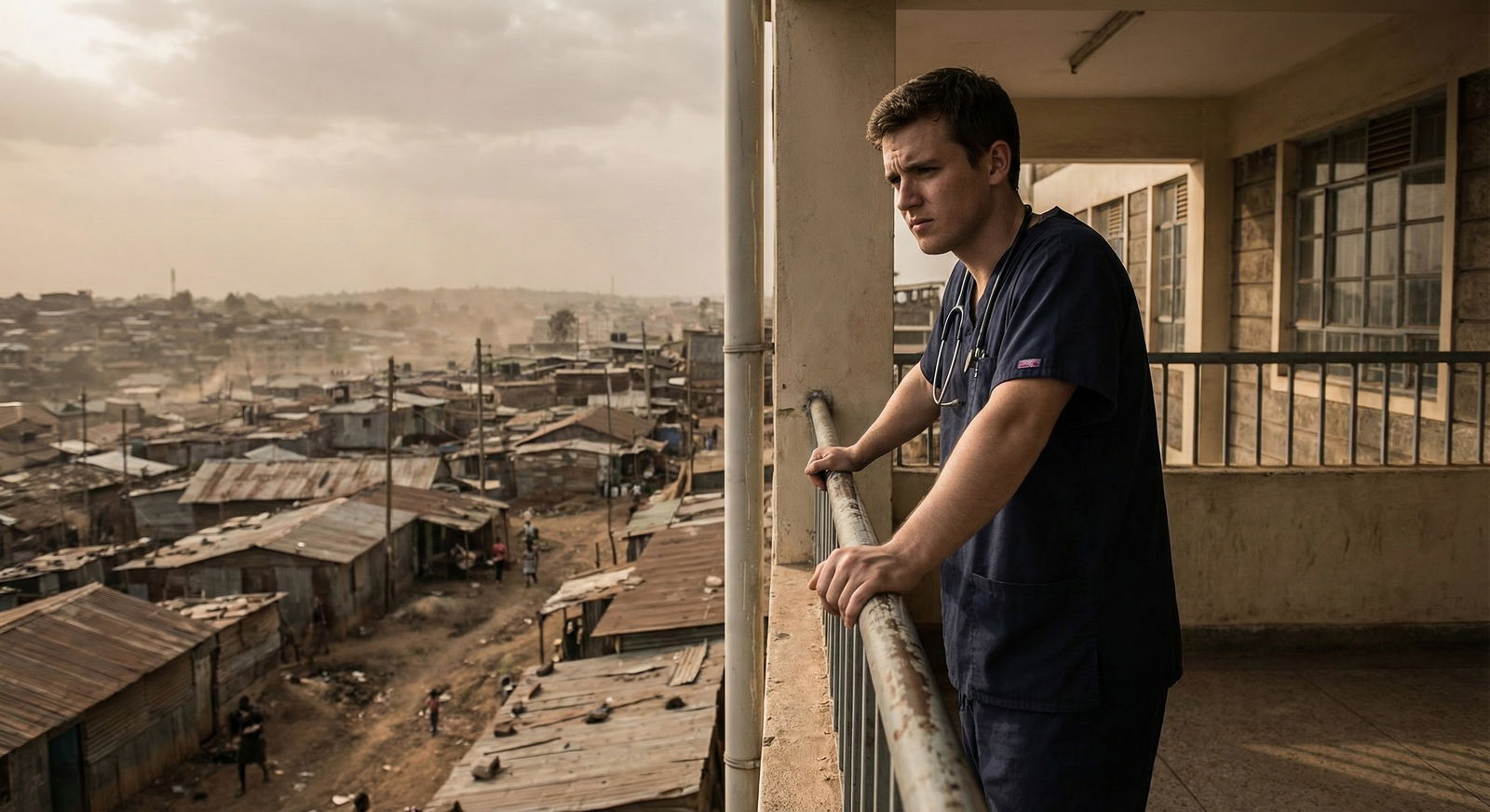
The biggest ethical failure in global health isn’t being too sensitive. It’s going anyway when you’re not ready.
If you’re scared you can’t emotionally handle extreme poverty and suffering abroad… that doesn’t make you weak. It actually might mean you’re paying attention.
I’m going to be blunt: a lot of people in global health posture like they’re “built different” and can just stomach anything. Then they quietly fall apart later. Crying in call rooms. Numb scrolling between patients. Dropping out of anything remotely global because they associate it with their worst emotional memory.
So if your brain is already asking: “What if I break? What if I freeze? What if I can’t do this?”
Good. That’s actually the beginning of ethical reflection, not a sign you’re failing some imaginary toughness test.
Let’s walk through this without sugarcoating it.
What You’re Afraid Of (And Yes, It’s Rational)
You’re not just scared of “being sad.” You’re scared of very specific things:
- Seeing starvation, preventable deaths, children suffering
- Feeling guilty you get to go home to comfort
- Being paralyzed by emotion when you’re supposed to be “professional”
- Crying in front of patients or staff and making it about you
- Realizing you’re more fragile than you thought and that maybe medicine or global health isn’t for you
- Being quietly judged by local teams or your own colleagues for “not being able to handle it”
I’ve watched students on rotations in places like rural Haiti, refugee camps in Greece, hospitals in Uganda, peri‑urban clinics in India. The ones who scared me most weren’t the teary ones.
It was the ones who saw a child die of something basic, shrugged, and said, “Well, that’s just how it is here.” That deadness? That’s the red flag.
You? You’re terrified of feeling too much.
Honestly, that’s a much better starting point.
Myth: “If I Can’t Handle It, I Don’t Belong in Global Health”
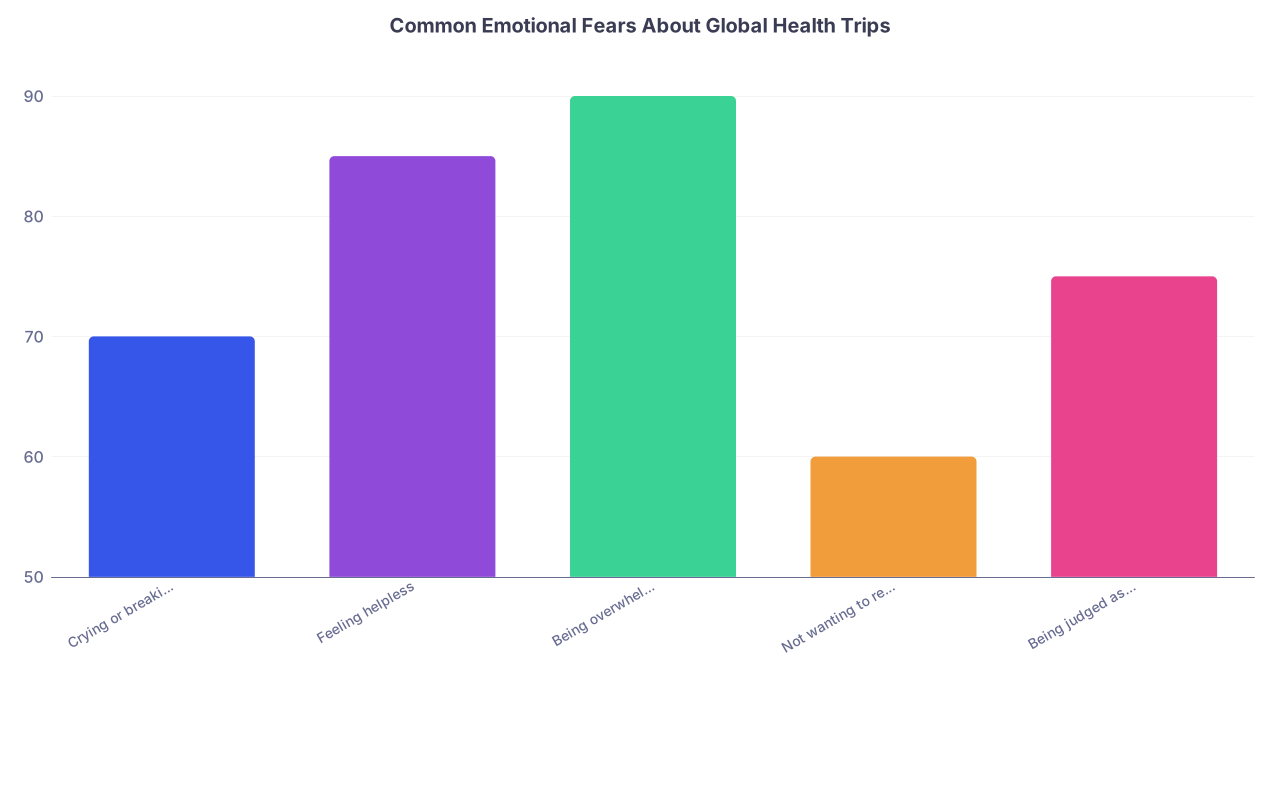
| Category | Value |
|---|---|
| Crying or breaking down | 70 |
| Feeling helpless | 85 |
| Being overwhelmed by poverty | 90 |
| Not wanting to return | 60 |
| Being judged as weak | 75 |
There’s this unspoken myth:
If you’re meant for global health, you should be able to walk into a ward with malnourished kids, families sleeping on floors, zero resources, and just… function. Maybe get “appropriately sad,” but overall be tough and steady.
That’s garbage.
Here’s what actually disqualifies you ethically:
- Going for “experience” or a cool photo when you haven’t thought about the emotional/ethical impact
- Treating the trip like trauma tourism
- Using other people’s suffering to feel “grateful” for your own life and then disappearing
- Overstepping your training because the situation is intense and you want to “help” at any cost
None of those are about crying. They’re about judgment and motives.
You can have:
- Panic in your chest when you walk into a ward.
- Tears you fight back after a patient dies.
- Nights where you lie awake and think, “What the hell are we doing?”
And still be:
- Ethical
- Useful
- Kind
- Deeply needed
Sensitivity is not the enemy. Unexamined motives are.
What It Actually Feels Like on the Ground
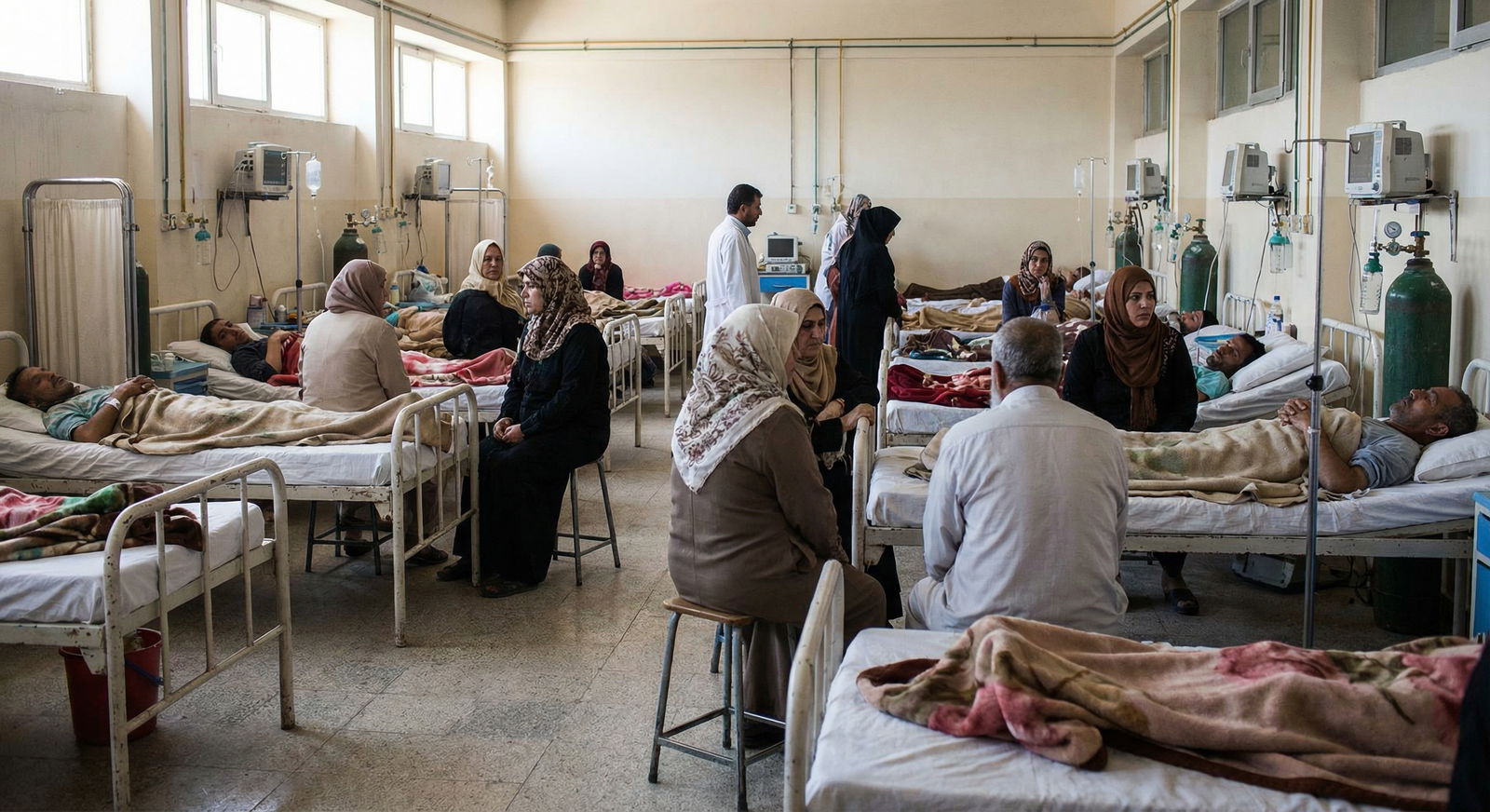
Let me paint it without the brochure gloss.
You land. It’s hot, or dusty, or humid, or just… different. Smells are different. Sounds are different. You’re already overstimulated before you see a single patient.
You walk into the hospital / clinic:
- Beds everywhere, or not enough beds
- Family members doing basic nursing care because there aren’t enough staff
- People waiting hours to be seen, sometimes days
- Kids who are clinically “fine” by local standards but who, where you come from, would be in a PICU
Then it happens:
- Someone with something completely treatable at home dies
- You realize there’s no CT, no ventilator, no dialysis, no xyz device you take for granted
- A parent begs you for something you can’t provide
And you feel this crushing, sticky mixture of helplessness, guilt, anger, and “what is even the point.”
If your body’s response to that is, “I might fall apart,” that’s not weakness. That’s your system recognizing moral distress.
The question isn’t “Will I be okay seeing this?”
The question is “Can I feel all of this and still show up for patients in a respectful, non‑self‑centered way?”
And that, honestly, can be worked on.
The Ethical Piece: When Your Emotions Matter More Than Your Image
Global health is not about you “proving” how tough and altruistic you are.
If you go abroad and are so emotionally overwhelmed that:
- You dissociate and stop listening to patients
- You start avoiding the sickest or poorest because you can’t stand it
- You break down in front of patients and they have to comfort you
- You become reckless because you’re desperate to fix something, anything
…then yeah, that’s a problem. For you and for them.
But notice: the issue is not the existence of your feelings. It’s what they do to your behavior and whose needs become primary.
You’re allowed to:
- Need to step out after a hard case
- Cry after you leave the bedside
- Tell your supervisor, “I’m really struggling with what I’m seeing; I need to debrief.”
What’s not okay is:
- Making your emotional reaction the center of the story while patients are actively suffering
- Needing constant emotional caretaking from busy local staff
- Posting trauma porn on social media to process your feelings in public
So your fear—“What if I can’t handle it?”—actually ties directly into ethics. If you’re not sure you can regulate yourself enough to keep the focus on patients, you might not be ready for some contexts yet.
That doesn’t mean never. It might mean “not this year,” or “not this extreme setting,” or “I need scaffolding and supervision, not a free‑for‑all volunteer trip.”
How to Know If You’re Actually “Not Ready” vs Just Anxious
| Sign | What It Might Mean |
|---|---|
| Constant panic imagining worst-case scenes | General anxiety, not necessarily unfitness |
| History of trauma related to illness/poverty | Needs careful planning, maybe therapy first |
| Already burned out or numb in training | High risk of moral injury on intense rotations |
| Fantasizing about being a savior hero | You might overstep and crash hard emotionally |
| No interest in pre-departure ethics training | You’re chasing experience, not responsibility |
Your brain is going to catastrophize everything. That’s what anxious brains do. But let’s separate a few categories.
1. “Anxious but curious”
You’re scared you’ll cry or feel overwhelmed, but you still feel drawn to learn, humbly, with good supervision. You’re willing to do pre‑departure training, read about ethics, talk to past participants.
→ This is usually workable. With support, boundaries, and reflection, you’ll struggle… and grow.
2. “Emotionally flooded already”
You can’t even read global health stories or see images without shutting down. You have personal trauma that overlaps (famine, conflict, forced migration, etc.) and no current support system.
→ This might not be the best time to go to an extreme setting. You’re not a bad person for needing more stability first.
3. “Burned out and hoping a trip will ‘rekindle’ you”
You’re already exhausted by your own training, feel numb at your home institution, and secretly hope a dramatic trip will “remind you why you went into medicine.”
→ Dangerous. You’re walking into a high‑intensity environment needing it to heal you. That’s a lot to put on patients and local systems.
4. “Savior fantasy that crashes into reality”
You’ve been dreaming of ‘making a difference’ and being the one who helps “the poor” for years. Then you see the scale of need and realize you are one undertrained, language‑limited student in a system you don’t fully understand.
→ Massive risk of emotional implosion. Not because you’re weak, but because your expectations were wrong.
Ask yourself honestly which category you’re closer to. If it’s 2–4, it’s okay to slow down and recalibrate rather than plow ahead.
Concrete Things You Can Do Before You Ever Get on a Plane

| Step | Description |
|---|---|
| Step 1 | Interest in global health |
| Step 2 | Self check - emotional state |
| Step 3 | Talk to mentor |
| Step 4 | Consider therapy and delay |
| Step 5 | Pre departure training |
| Step 6 | Define role and limits |
| Step 7 | Plan support and debrief |
| Step 8 | Decide setting and duration |
| Step 9 | Go or postpone |
If you’re still reading, you’re probably in the “anxious but serious” camp. Good. Here’s what responsible looks like.
Talk to someone who’s actually done this.
Not the shiny Instagram person. A real supervising physician or faculty in global health. Ask them directly:- “What did you find emotionally hardest?”
- “What did students struggle with most?”
- “Have you ever told someone not to go yet? Why?”
Insist on pre‑departure training.
If a program can’t articulate:- Your supervision structure
- Your clinical limits
- How they support emotional/ethical reflection
…that’s a huge red flag. Ethical programs take your emotional readiness seriously, not just your vaccines and passport.
- Clarify your role. In writing.
“Observer with limited hands‑on care under direct supervision” is ethically very different from “unofficial junior doctor” in an under‑resourced setting.
You’re less likely to emotionally implode if you’re not constantly being pushed way past your competence.
- Plan your exit ramps.
You’re allowed to say:- “I can’t do the ICU week; can I stay outpatient?”
- “This specific rotation is triggering; can we adjust?”
- “I need a half‑day off after that case.”
If a program treats that as weakness instead of realism, that tells you a lot.
- Get your own support in place.
Therapist. Mentor. Friend who actually understands medicine/global health. Someone you can email or message while you’re there and after you get back.
Emotional fallout doesn’t always hit mid‑trip. Sometimes it hits three weeks after you’re home and everyone else has moved on.
If You Go… and It’s Worse Than You Expected
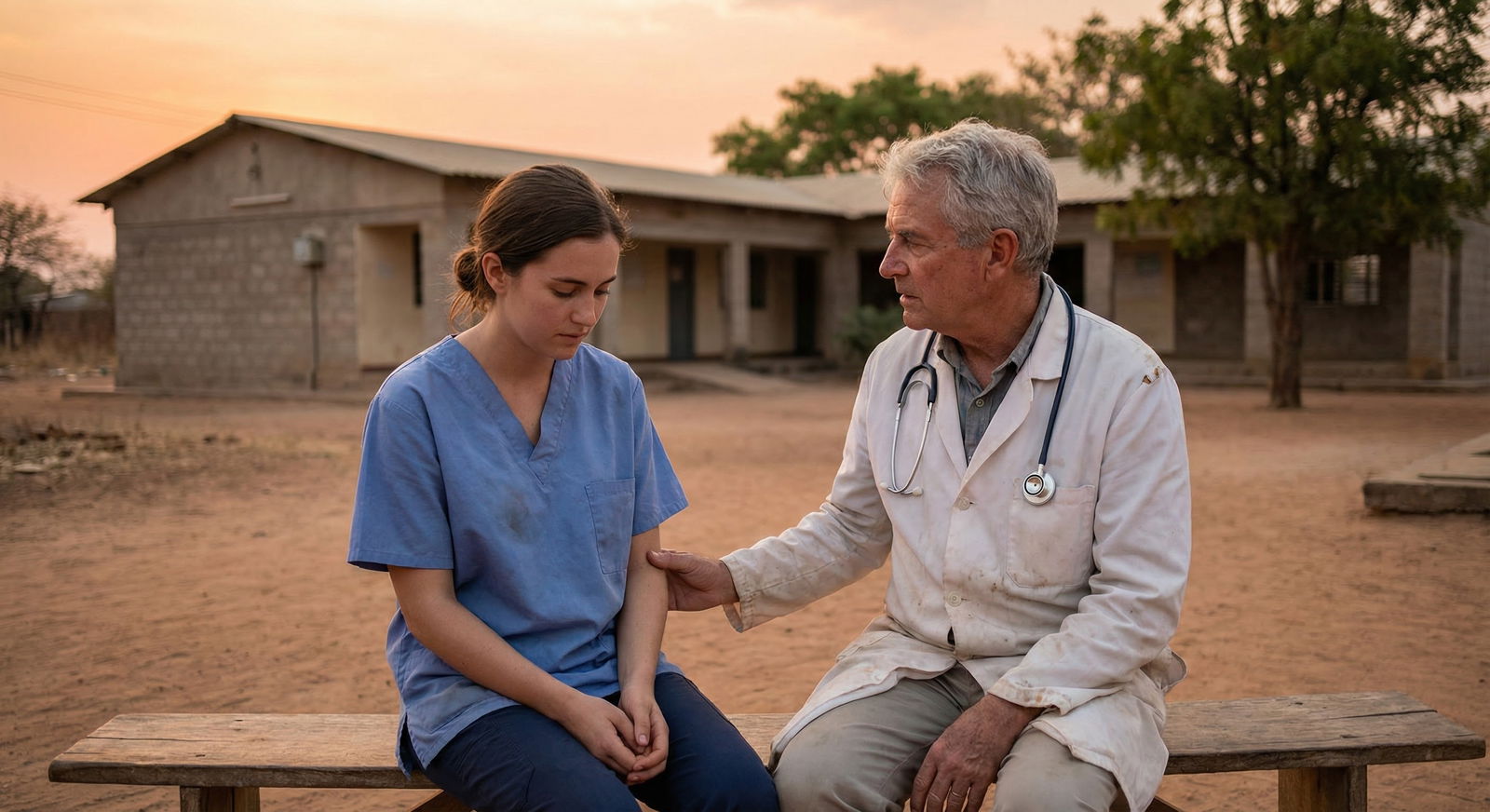
Say you go. And then the worst‑case fantasy in your head actually happens. You see something that just breaks you.
A child who dies of dehydration.
A woman with a complication that would have been fixed easily at home.
A ward so crowded people share oxygen, or don’t get it at all.
You freeze in the moment. Or you do your tasks numbly and then sob in the bathroom later. Or you get irrationally angry at the system, the world, everything.
Here’s what you don’t have to do:
- You don’t have to pretend you’re fine.
- You don’t have to perform “resilience” for your CV.
- You don’t have to keep pushing through if you’re not safe to yourself or others.
Ethical response is:
- Tell your supervisor, honestly: “I’m struggling a lot with what I’m seeing. I need help processing it.”
- Step back from the most intense settings if needed.
- Prioritize patient safety over your pride.
Worst case, you decide: “I can’t do this kind of work. Ever. It’s too much.” That’s not a failure. It’s data. You’ve learned something real about your limits.
There are a thousand ways to care about global health without standing at the bedside in a famine ward.
You’re Allowed to Care Without Destroying Yourself
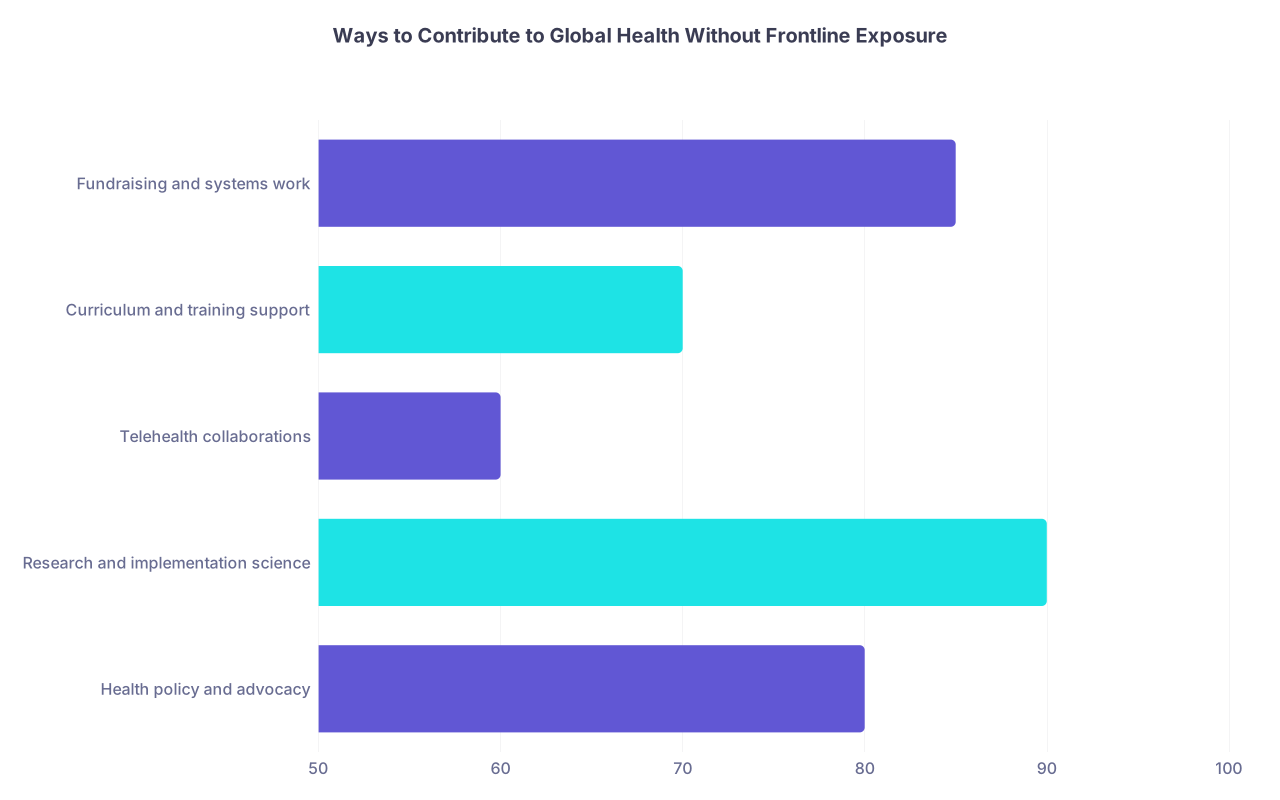
| Category | Value |
|---|---|
| Health policy and advocacy | 80 |
| Research and implementation science | 90 |
| Telehealth collaborations | 60 |
| Curriculum and training support | 70 |
| Fundraising and systems work | 85 |
Here’s the part nobody tells anxious, tender‑hearted people: global health desperately needs you. Even if you never set foot in a refugee camp.
You can:
- Work on policy that affects drug pricing or vaccine access
- Do systems research that improves care delivery in low‑resource settings
- Support training programs for local providers remotely
- Advocate at home for ethical partnerships and funding
- Work with migrants and refugees in your own city, where you have more control and support
Your worth is not proportional to how much raw suffering you’ve personally witnessed.
If your nervous system is screaming “No” at certain environments, you don’t force it until it breaks. You redirect.
That’s not cowardice. That’s longevity.
FAQ (Exactly 4 Questions)
1. Does being scared of extreme poverty and suffering mean I shouldn’t go into global health at all?
No. Being scared usually means you actually understand the gravity of what you’re considering. What might be true is that you need: more preparation, a less intense first setting, or more support than you currently have. “Global health” is huge—policy, research, education, advocacy, local immigrant health, etc. You’re not disqualified because the idea of walking into a famine ward makes your chest tighten.
2. What if I break down emotionally in front of patients or staff? Will they think I’m unprofessional?
You might tear up. That happens. A brief, contained emotional response isn’t automatically unprofessional; it can even be humanizing. The line is when your reaction becomes so big that patients or staff feel they have to comfort you or work around you. That’s where supervision, debriefing, and maybe stepping back from certain situations comes in. It’s not about never crying; it’s about not making your feelings the main event.
3. Is it unethical to go abroad if I know I’m very sensitive?
It’s unethical to go abroad without thinking seriously about how your sensitivity affects patient care and team function. If you’re doing the work—honest self‑assessment, pre‑departure training, clear role limits, plans for emotional support—you’re acting ethically. Sensitivity can actually make you more attuned to power imbalances and patient dignity. The real ethical issue is the “I’ll just wing it, how bad can it be?” attitude, not the “I’m worried I might be overwhelmed” one.
4. How do I explain to mentors or programs that I might not be able to handle certain settings without looking weak?
Be specific and frame it as protecting patient care, not protecting your ego. For example: “Given my history with X, I worry ICU/trauma/field hospital settings might compromise my ability to be fully present and useful. I’d like to focus on outpatient/teaching/research‑focused experiences where I can contribute reliably.” Serious mentors respect that. The ones who equate constant exposure to trauma with virtue are not the ones you want guiding your career.
Key points, so you don’t leave spinning:
- Being afraid you can’t emotionally handle extreme poverty and suffering doesn’t make you weak; it makes you self‑aware.
- Ethics in global health are about behavior and boundaries, not whether you cry or feel overwhelmed.
- You can care deeply about global health—and contribute meaningfully—even if you ultimately decide certain environments aren’t right for you.


