
The way most interns change rotations is lazy and expensive. You pay for it in anxiety, missed details, and a bad first impression with a new team.
You do not need a week to get ready for a new service. You need three focused days. Done right, those 72 hours will make you look like the rare intern who actually has their act together.
Below is a concrete, hour-by-hour style plan: what to do 3 days before, 2 days before, 1 day before, and the night before/day 1. Follow it and your rotation transitions stop feeling like chaos.
Big Picture: How Your 3-Day Transition Should Flow
At this point you should understand the overall shape of these 3 days before we drill down.

| Step | Description |
|---|---|
| Step 1 | Day -3 |
| Step 2 | Day -2 |
| Step 3 | Day -1 |
| Step 4 | Night Before |
| Step 5 | Day 1 |
| Step 6 | Clarify schedule |
| Step 7 | Service intel |
| Step 8 | System setup |
| Step 9 | Sleep and reset |
| Step 10 | Early arrival and rounds |
Think of it like this:
- Day -3: Logistics and schedule clarity
- Day -2: Service intel and expectations
- Day -1: Systems, templates, and concrete prep
- Night before + Day 1: Sleep, arrival, and execution
You will repeat this process every month. The better you get at it, the less each new rotation wrecks your life.
Day -3: Lock Down Logistics And Expectations
Three days before your new rotation starts, information—not motivation—is your main job. At this point you should know exactly where to be, when, and with whom.
Step 1: Confirm Schedule And Location (30–45 minutes)
Pull up:
- Your master schedule (Amion, QGenda, MedHub, whatever your program uses)
- Your program’s rotation handbook or orientation email
- Your personal calendar (phone or paper—just be consistent)
Now:
Verify:
- Start date and exact time (is “start” sign-out at 6:30 or work rounds at 7?)
- Location (unit number, clinic name, building, floor)
- Call schedule pattern (q4, night float, home call, weekends)
Enter all critical times into your calendar:
- Pre-round start time
- Rounds start time
- Regular conferences/teaching: morning report, noon conference, subspecialty conferences
- Sign-out times (AM and PM)
If any of this is unclear, email or message:
- Chief resident
- Rotation coordinator
- Senior resident on the service (if listed)
Use a short, direct message:
“Hi, I’m the incoming PGY-1 for [service] starting [date]. Can you confirm pre-round and rounds start times, and where to meet on day 1?”
Step 2: Understand the Rotation Demands (45–60 minutes)
At this point you should know what kind of month you’re walking into: lifestyle vs grinder, ICU vs consult, floor vs clinic-heavy.
Pull up your program’s rotation guide (yes, that PDF nobody reads) or your residency’s shared drive/OneNote.
Look for:
- Typical patient load for interns
- Documentation expectations (admission notes vs daily SOAP vs brief notes)
- Common procedures or tasks (paracentesis, lines, consents, triage calls)
- Call details: what counts as “cap,” when to call attending, cross-cover rules
Make a one-page summary on paper or in your notes app:
- “New Service Snapshot – [Month/Year]”
- Location:
- Usual hours:
- Pre-round start:
- Rounds start/type (table rounds, bedside, walk rounds)
- Call schedule:
- Special rules (e.g., “no heparin in this unit,” “all transfers need attending approval”)
You will look at this 10 times in the first week.
Step 3: Identify And Contact Your Senior (15–20 minutes)
Your senior can save you days of frustration if you ask the right questions before day 1.
Send a short message:
- Introduce yourself
- Confirm start date
- Ask 3–4 targeted questions
For example:
- “What time do you usually pre-round and start table rounds?”
- “How do you like notes structured?”
- “Any absolute ‘do not forget’ items for this service?”
- “What time do you expect interns to get sign-out in the afternoon?”
Do not ask things you could get from a handbook (“What does this rotation do?”). Waste their time before you arrive and they’ll remember.
Day -2: Service Intel And Cognitive Prep
Two days out, you’re past logistics. At this point you should be building a mental model of the work you’ll actually do.
Step 1: Learn the “Top 5” Diagnoses And Tasks (60–90 minutes)
Every service has a pattern. You will see the same problems over and over.
For example:
- Medicine floors: CHF, COPD, pneumonia, cellulitis, AKI
- Cardiology: ACS, CHF exacerbation, arrhythmias, post-cath care
- GI: GI bleed, cirrhosis complications, pancreatitis, IBD flare
- ICU: sepsis, ARDS, DKA, post-op shock, delirium
Make yourself a lightweight mini-guide:
- For each of the “Top 5” problems, jot:
- Key admission H&P must-haves
- Standard labs and imaging
- First-line management steps
- 2–3 “don’t miss” safety issues (e.g., “check a lactate in any hypotensive patient”)
Use sources that are fast:
- EMR order sets at your institution
- Pocket Medicine / Sanford / UpToDate skim, not full dissertations
- Saved notes from medical school or prior rotations
You’re not trying to relearn medicine. You’re refreshing pattern recognition so day 1 you look like you’ve done this before.
Step 2: Understand the Service Culture (30–45 minutes)
At this point you should know what this rotation values—speed, teaching, thorough notes, procedures, discharges, etc.
Gather intel from:
- Co-interns who just finished
- Residents in the workroom (“How’s cards month here?” overheard answer: “Rounds never end, but they pimp hard on EKGs.” That’s gold.)
- Chief email summaries (“This is a busy rotation with emphasis on X”)
Write down:
- Attending style (if known): formal vs chill, bedside vs table, detail level
- Rounding culture:
- Do they expect everything memorized?
- Is laptop-on-rounds normal or frowned upon?
- How long do rounds usually last?
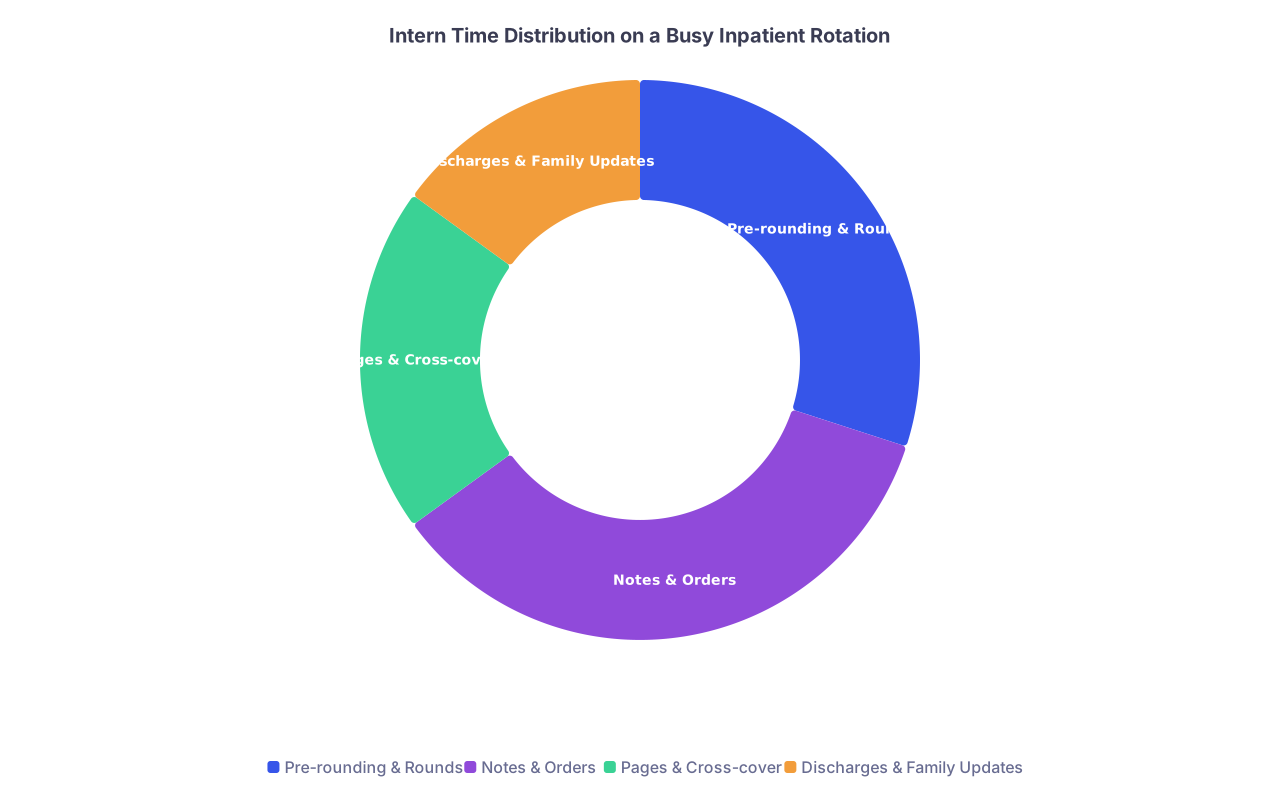
| Category | Value |
|---|---|
| Pre-rounding & Rounds | 30 |
| Notes & Orders | 35 |
| Pages & Cross-cover | 20 |
| Discharges & Family Updates | 15 |
This shapes how you prepare: an ICU rotation demands vent basics; a heme-onc consult month demands quick chart review and clean, concise consult notes.
Step 3: Clean Up Your Current Rotation (45–60 minutes)
The best way to ruin a new rotation is to drag chaos from the old one.
Two days before the switch, at this point you should:
- Start closing loops:
- Follow up any labs you ordered “just to see”
- Hand off chronic issues to the appropriate outpatient follow-up or team
- Clean up problem lists and med lists
- Tell your current team: “I switch off on [date]; what should I prioritize for clean handoff?”
You want your last-day sign-out to be short and honest:
- “Everything you see in the problem list is current.”
- “Follow-ups are scheduled here, here, and here.”
- “No mystery labs pending from three days ago.”
Your reputation follows you. Seniors talk. Leave rotations tidy.
Day -1: Tools, Templates, And Personal Reset
The day before you start the new service, you stop cramming and start optimizing your tools. At this point you should be setting yourself up for day-1 competence, not reading another UpToDate article at 11 pm.
Step 1: Build Or Update Your Note Templates (45–60 minutes)
Open your EMR and:
- Create or update:
- H&P template tailored to that service
- Daily progress note template
- Discharge summary template (if relevant)
- Consult note template (for consult services)
Keep them short and usable. Example for a medicine floor progress note:
- Subjective: overnight events, complaints
- Objective: vitals, I/O, exam by systems
- Assessment & Plan:
- Problem-based organization
- Each problem: brief summary, today’s plan, follow-up items
If your senior already sent preferred formats, mirror them. It’s not about your artistic expression. It’s about speed and team consistency.
Step 2: Create a Patient List “Skeleton” (30–45 minutes)
Most interns waste time on day 1 figuring out how to organize patients. Fix that now.
Design a simple structure (in EMR list columns, spreadsheet, or paper) with:
- Name / Room
- Admit date
- Diagnosis / main problem
- Key meds (e.g., pressors, insulin drip, anticoagulation)
- Lines/Tubes/Drains
- Disposition / barriers to discharge
- Must-do-today items (labs, imaging, consults)
| Column | Purpose |
|---|---|
| Room / Name | Identify quickly |
| Admit Date | Length of stay context |
| Primary Problem | Snapshot diagnosis |
| Key Meds/Drips | Safety-critical info |
| Lines/Drains | Daily removal checklist |
| Dispo Plan | Track discharge progress |
| Today’s Tasks | Prevent missed items |
You’ll tweak this per service (ICU needs vent settings; cards needs tele rhythm/EF), but start with a base.
Step 3: Prepare Your Physical Kit (20–30 minutes)
Yes, physical stuff still matters.
At this point you should:
- Restock:
- Pens (plural), small notebook or index cards
- Pocket reference (if you use one)
- Highlighter, small sticky notes
- Badge access:
- Make sure your ID opens the units/clinics you’re going to
- If not, email GME/security now, not at 6:45 am Monday
Lay out your:
- Scrubs or clinic-appropriate clothes
- White coat (with working penlight, reflex hammer if needed)
- Comfortable shoes (you know which ones survive 14 hours)
Step 4: Personal Reset (30–60 minutes)
You’re no good to anyone if you show up cooked from your last month.
End-of-day checklist the day before:
- Do one non-medical thing you actually enjoy (short, 30–60 minutes)
- Decide your bedtime and stick to it (you’ll fight the urge to “just review more”)
- Set alarms:
- Primary
- Backup
- Maybe a “leave the house” alarm 10–15 minutes before departure
You are not cramming for Step. You are setting up a sustainable month.
Night Before: Final Pass And Mental Rehearsal
The night before, no more new content. At this point you should be rehearsing the flow of day 1 so it’s not a surprise.
Step 1: Confirm Details And Messages (15–20 minutes)
Quick run-through:
- Meeting place and time
- Senior/resident names (look them up on the directory so you recognize them)
- Any emails from chiefs or attendings about “expectations for this rotation”
Skim your “New Service Snapshot” note from Day -3. That’s it.
Step 2: Run a 5–Minute Mental Simulation
Walk yourself through:
- Arrival:
- You show up 15–20 minutes early
- Log into computer, access the unit, find workroom
- Sign-out:
- You receive the list
- You mark new patients vs established
- Pre-rounding:
- You know how to find overnight vitals, I/Os, new labs, new imaging
- You check key meds and drips
- Rounds:
- You present 1–2 patients with a clean problem list
- You write orders right after each patient if that’s the local culture
This takes five minutes. Makes a big difference.

Step 3: Protect Your Sleep Ruthlessly
Practical steps:
- Put your phone on Do Not Disturb with exceptions only for truly critical contacts
- No heavy caffeine after mid-afternoon
- Screen off 30–45 minutes before bed (or at least use blue-light filter and read something non-medical)
You’ll be tempted to “just read one more article on ARDS” at 11:30 pm. Don’t. Being 20% sharper on rounds beats knowing one extra obscure fact.
Day 1 Morning: Execution And First Impressions
Now you’re on the rotation. At this point you should focus on systems and habits, not perfection.
Step 1: Arrive Early And Get Oriented (30 minutes early)
Aim to arrive 20–30 minutes before the time your senior told you. Not for hero points. For breathing room.
Use that time to:
- Find:
- Workroom location
- Bathrooms
- Where vital sign printouts/worklists appear (if your hospital still does this)
- Log into:
- EMR
- Paging/messaging system
- Any rotation-specific software (ventilator monitoring, telemetry viewer, etc.)
Ask one person something simple: “Where do interns usually sit on this service?” It’s a small thing that makes you look like you’re blending in, not wandering.
Step 2: Get the List And Clarify Roles (15–20 minutes)
When you meet your senior:
- Ask directly:
- “How do you like to split patients?”
- “What time do you want pre-rounds done by?”
- “Laptop on or off on rounds?”
- “Any pet peeves I should know about?” (The boldness of this question usually earns respect.)
Jot their answers in your notebook. Do not trust your adrenaline-soaked memory.

Step 3: Pre-round With a System (60–90 minutes)
Use your patient list skeleton from Day -1 and apply it:
For each patient, in the same order every time:
- Overnight:
- New vitals/fevers
- I/Os
- Nursing notes, events, rapid response calls
- Labs/Imaging:
- New labs and trends for electrolytes, renal function, CBC
- Any new imaging reports
- Meds:
- High-risk meds (pressors, anticoagulants, insulin, opioids)
- Brief bedside check:
- Are they alive, oriented, in distress?
- One or two focused questions based on their main problem
On day 1, you will be slow. That’s fine. Focus on being systematic, not fast. Speed comes by week 2.
Step 4: Present Cleanly On Rounds
Pick 1–2 patients to present first—maybe the “simpler” ones while you’re still nervous.
For each, use a tight structure:
- One-line summary (age, key history, reason for admission)
- Overnight events
- Today’s focused subjective and exam
- Assessment and plan organized by problem
If you don’t know something, say “I do not know, but I’ll check after rounds.” That’s better than guessing. People forgive ignorance; they don’t forgive lying or bluffing.
Day 1 Afternoon And Evening: Close the Loop
At this point in the day, your job is to turn the chaos of rounds into ordered plans and set yourself up for day 2.
Step 1: Translate Plans Into Orders And Notes (2–3 hours)
Right after rounds:
- Enter orders before you forget
- Update the patient list while the plans are fresh
- Start progress notes early—don’t wait until 4 pm
Use your templates. You made them for exactly this stretch of cognitive fatigue.
Step 2: Build Tomorrow’s To-Do List Before Sign-Out
- For each patient:
- List what must happen tomorrow
- Flag which items need follow-up labs, consults, imaging
- Note any expected discharges
This is not busywork. This is how you stop day 2 from feeling like day 1 again.
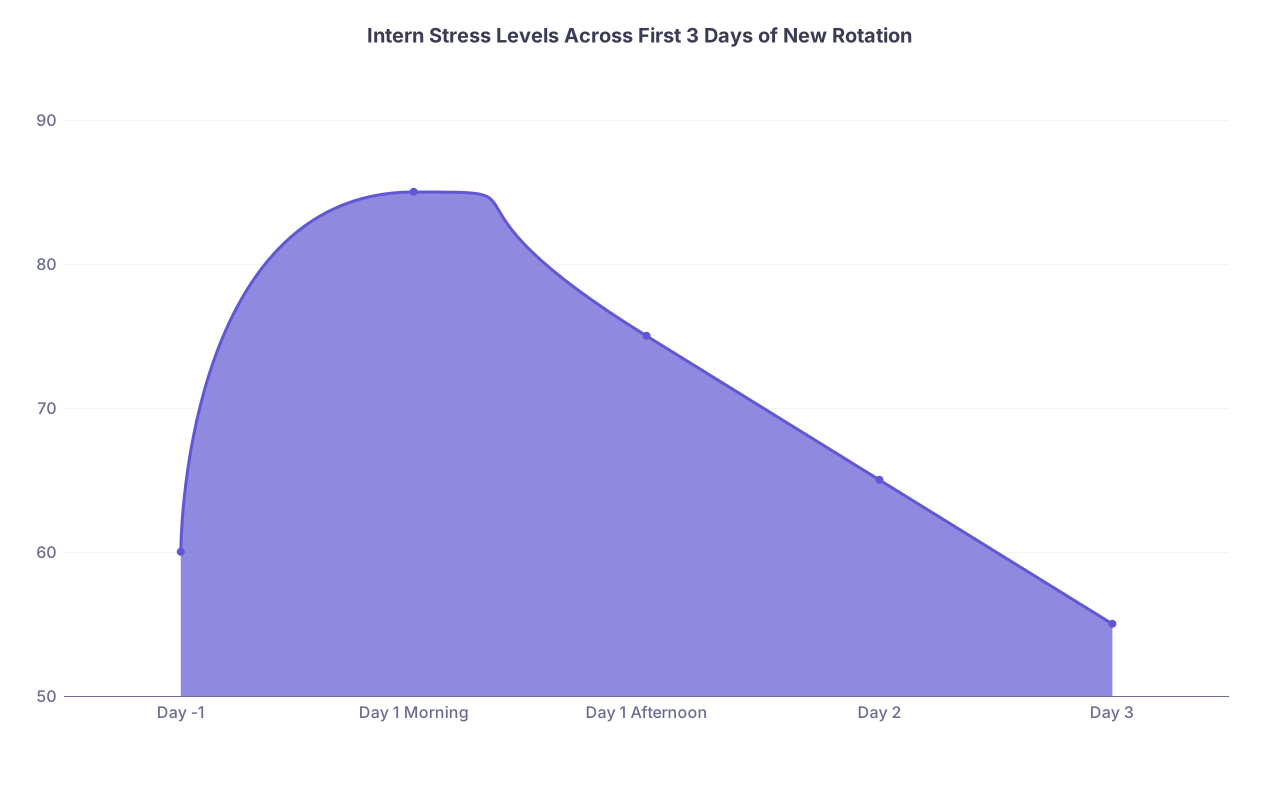
| Category | Value |
|---|---|
| Day -1 | 60 |
| Day 1 Morning | 85 |
| Day 1 Afternoon | 75 |
| Day 2 | 65 |
| Day 3 | 55 |
Step 3: Honest Debrief And Small Adjustments (15–20 minutes)
On your way home or right after:
- Ask:
- “What actually went wrong today?” (not in a dramatic way, just factual)
- “Where did I lose the most time?” (charting, pre-rounding, getting orders in)
- “What one thing can I adjust for tomorrow?” (wake up 10 min earlier, adjust patient list columns, different pre-rounding order)
Two or three small adjustments after day 1 prevent a bad pattern from becoming your whole month.
Key Takeaways
- Three focused days before a new rotation—logistics, service intel, and system setup—beat a week of vague anxiety and last-minute cramming.
- Your tools (note templates, patient list structure, personal checklist) matter more than how many articles you read the night before.
- Day 1 success is about systems and honesty: show up early, be systematic with pre-rounding, present clearly, and adjust quickly based on what actually happened.