
The biggest mistake students make before moving overseas for medical school is pretending they have “plenty of time.” You do not. A clean six‑month runway disappears faster than you think, and sloppy planning here will haunt you during orientation week.
You need a ruthless, chronological plan. So here it is—month‑by‑month, then week‑by‑week as departure gets closer. Follow it and you will land in your new country tired but functional, not panicked and broke.
Month −6: Acceptance Month – Commit, Confirm, and Start the Paper Trail
At this point you should stop “thinking about it” and start acting like you are moving.
In the first 7–10 days after acceptance
Lock in the basics:
- Formally accept your offer in writing.
- Pay any required seat deposit.
- Join the official admitted students channels (WhatsApp, Discord, Facebook group—whatever the school uses).
- Scan and save every acceptance/fee receipt in a clearly labeled folder.
Then immediately:
Check your passport
- Valid for at least 6–12 months beyond your expected program start or, better, beyond your intended return date.
- At least 4 blank pages.
- If it fails either test: submit a passport renewal this week. Not next month. Now.
Clarify program start and key dates Get precise, not vague:
- Orientation start date
- First day of classes
- Housing move‑in dates (if school‑affiliated)
- Exact location of campus and teaching hospitals
Put all this in your calendar with reminders.
Do a high‑level financial reality check
| Category | Low Estimate | High Estimate |
|---|---|---|
| Tuition & Fees | $20,000 | $60,000 |
| Housing | $6,000 | $18,000 |
| Food | $3,000 | $8,000 |
| Insurance | $800 | $3,000 |
| Flights/Travel | $800 | $2,500 |
Ask yourself:
- How much will you need before financial aid / loans disburse (deposits, visa fees, flights)?
- Where is that money coming from—savings, family, private loans?
- Start a dedicated “Move Abroad” system
If you try to keep this in your head or scattered emails, you will lose things.
Set up:
- One cloud folder: “Med School – Overseas Move”
- Subfolders:
Visa,School Docs,Finances,Housing,Medical,Travel
- Subfolders:
- A running checklist (Google Doc, Notion, whatever you actually use)
- A simple spreadsheet of:
- Deadlines
- Fees paid
- Confirmation numbers
By the end of Month −6 you should:
- Have a valid passport (or renewal in process).
- Know your exact program start and orientation dates.
- Understand the rough total cost and have a plan to cover at least the first 3–6 months.
Month −5: Visas, Documents, and Money Infrastructure
This month is paperwork heavy. Ignore it and you will be stuck at home when your classmates are at orientation.
Weeks 1–2 of Month −5: Visa reconnaissance and core documents
At this point you should be in full visa research mode.
- Study the official visa requirements
Go to:
- The destination country’s official immigration website.
- Your medical school’s “international students / visa” page.
List out, in your own words:
- Type of visa you need (student, long‑stay, etc.).
- Required documents:
- Acceptance letter
- Proof of funds (specific amounts)
- Police clearance / background check
- Medical exam or TB test (some countries require)
- Passport photos (exact dimensions)
- Health insurance proof
- Whether you must apply in person at a consulate and how long appointments take to schedule.
- Stated processing time (then mentally add a few weeks of buffer).
- Order official documents now Many students get burned here because they underestimate delays.
Common documents to request:
- Official transcripts from your college.
- Degree certificate (if already graduated).
- Birth certificate (certified copy).
- Police clearance / FBI background check (in the U.S., this can take weeks).
- Any notarized or apostilled documents the country requires.
- Start the proof‑of‑funds plan Countries are not joking about this requirement.
You may need:
- Bank statements showing required balance for the last 3–6 months.
- Sponsor letter from a parent/relative plus their bank statements.
- Approved student loan documentation.
Get clarity this month so the money is in the right account, in the right person’s name, within the correct timeframe.
Weeks 3–4 of Month −5: Banking and healthcare baselines
Set up international‑friendly banking
- Open a checking account with good international support (no foreign transaction fees if possible).
- Get a debit card and a backup credit card with:
- No foreign transaction fee.
- Strong fraud protection.
- Ask your bank:
- How to notify them of international travel.
- ATM withdrawal limits overseas.
Schedule baseline medical & dental appointments Not glamorous. Essential.
Book:
- Annual physical (mention you are moving overseas for years, not weeks).
- Dental cleaning + fix any cavities now.
- Eye exam + backup glasses if you wear them.
Ask for:
- Printed vaccination records.
- A summary of medical history and active prescriptions.
- Several months’ prescriptions if legally allowed.
By the end of Month −5 you should:
- Know exactly what your visa requires and have most documents ordered.
- Have at least one credit card that works well abroad.
- Have medical and dental appointments scheduled within the next 4–6 weeks.
Month −4: Visa Application, Health, and Housing Research
This is where the move becomes real. You’re not dreaming about it anymore; you’re building the legal and physical framework.
Weeks 1–2 of Month −4: Submit the visa (or get ready to)
At this point you should be assembling and submitting your visa application.
- Prepare and submit visa if possible
- Fill out the application exactly as instructed.
- Triple‑check:
- Name spellings match your passport.
- Dates align with your program start.
- Financial amounts meet or exceed the requirement.
- Organize documents in the expected order, with copies where needed.
If applications are not open yet:
- Complete everything else and have it ready to file the day they open.
Book your visa appointment If in‑person biometrics or interviews are required:
- Grab the earliest appointment that still leaves room for processing time before your departure.
- Keep digital and paper copies of:
- Appointment confirmation
- Receipts
- Any reference numbers
Follow through on medical/dental
- Attend your physical, dental, and eye appointments.
- Complete any required country‑specific medical exams (e.g., chest X‑ray for TB).
- Get any missing vaccinations. Some schools are strict (hepatitis B series, MMR, varicella, Tdap, etc.).
Create a digital “Health Packet”:
- Immunization record
- Medical summary
- List of medications and dosages
Weeks 3–4 of Month −4: Housing options and cost fine‑tuning
- Deep research on housing You do not need to sign a lease yet, but you must understand the market.
Figure out:
- Typical rent near campus.
- Common neighborhoods for med students.
- Average commute times and transport options.
- Safety issues (what locals quietly tell you, not just what the brochures say).
Use:
- School housing office.
- Senior students (ask brutally direct questions: “What do you wish you had known?”).
- Local rental sites.
- Draft a realistic first‑year budget
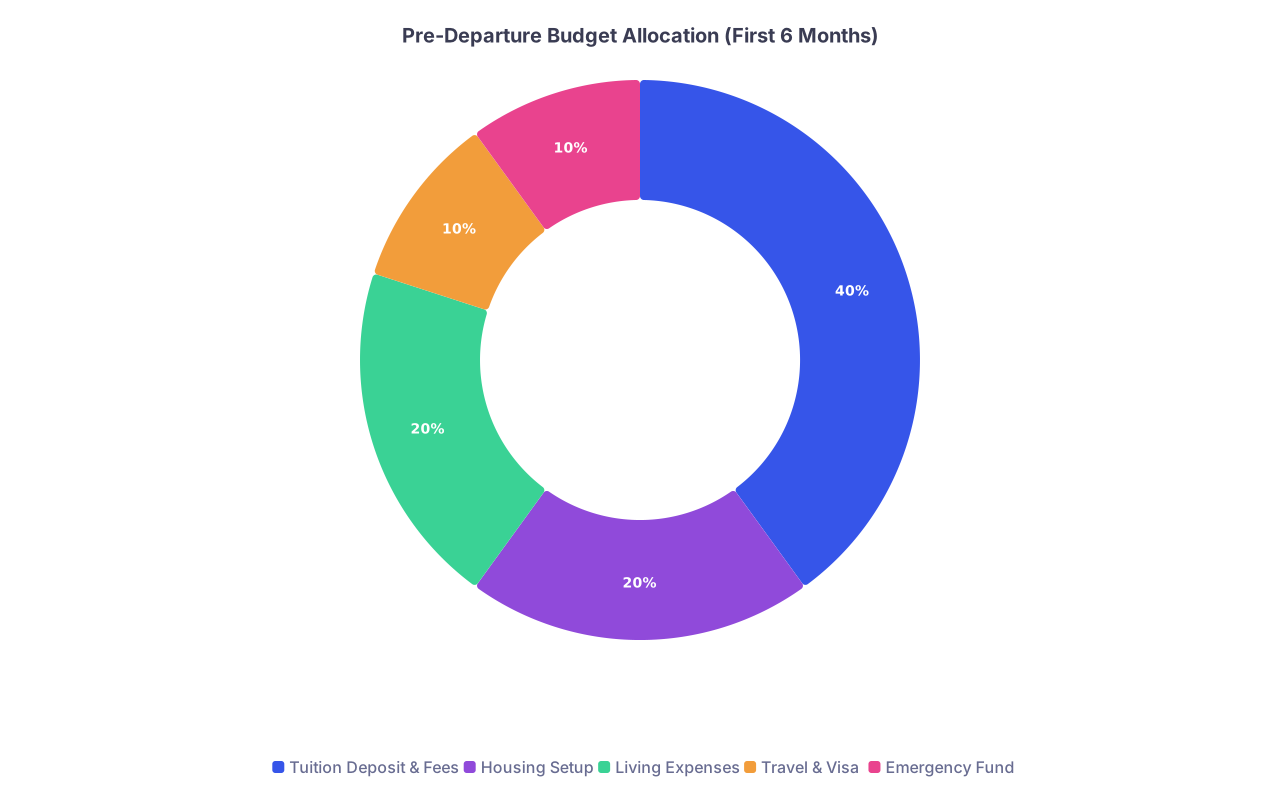
| Category | Value |
|---|---|
| Tuition Deposit & Fees | 40 |
| Housing Setup | 20 |
| Living Expenses | 20 |
| Travel & Visa | 10 |
| Emergency Fund | 10 |
Ask:
- How much do you need ready before you earn or receive anything locally?
- How much cash vs. accessible savings vs. credit?
By the end of Month −4 you should:
- Have your visa application submitted or be fully ready to submit when allowed.
- Have completed your own medical baseline.
- Understand the housing landscape and realistic budget ranges.
Month −3: Confirmations, Flights, and Locking in Housing
At this point you should be moving from “planning” to “booking.”
Weeks 1–2 of Month −3: Visa follow‑up and acceptance logistics
Track your visa status
- Use tracking tools or portals the embassy provides.
- If processing seems stalled beyond the stated timeline, follow official channels to inquire—calmly but firmly.
Clarify school requirements before arrival Confirm:
- Orientation attendance: mandatory or optional?
- Any documents you must bring in original form.
- Health insurance requirements (school plan vs. outside).
- Pre‑matriculation immunizations, background checks, or forms.
Plan pre‑departure academics You should not try to “self‑study all of med school,” but you can:
- Brush up on foundational topics (basic biochem, anatomy terms).
- Complete any required pre‑course modules or online orientations.
Weeks 3–4 of Month −3: Flights and housing decisions
- Book your flight
Target:
- Arrival 7–14 days before orientation, not the day before.
- Enough buffer for jet lag, phone setup, and errands.
Consider:
- Two checked bags vs. paying for extra later.
- Generous change policy if visa timing is uncertain.
- Arrival time during daylight if you are unfamiliar with the city.
Lock in housing (or at least the first month) Option A: School housing
- Sign the contract.
- Confirm move‑in date and what is included (furniture, utilities, internet).
Option B: Private rental
- Be careful. Scams love international students.
- Use verified platforms and, when possible, landlord references from current students.
- If long‑term lease feels risky, book:
- 2–4 weeks in a short‑term rental (Airbnb, hostel, extended stay) while apartment hunting on arrival.
Start a “Do Not Bring” mindset You will overpack. Everyone does.
Start listing:
- Things you can buy cheaply there (plates, cheap bedding, shampoo).
- Items that are country‑specific and worth packing (med‑strength OTC meds you know you need, specific devices, certain shoes).
By the end of Month −3 you should:
- Have a booked flight (or at least a target week with funds set aside).
- Have housing secured or a clear short‑term plan.
- Be watching your visa status closely but not obsessing daily.
Month −2: Life Transition – Stuff, Subscriptions, and Social Reality
Now the move collides with “real life” at home. This is where procrastinators suffer.
Weeks 1–2 of Month −2: Your stuff and your obligations
- Decide: store, sell, donate, trash Go room by room.
Label each item:
- Take in luggage
- Store (with who, and for how long)
- Sell
- Donate
- Toss
Be ruthless:
- Furniture: almost always sell or donate.
- School papers: scan what matters, trash most.
- Sentimental items: box and store with a clear label and inventory list.
Tackle financial and legal housekeeping
- Cancel or pause:
- Gym memberships
- Local subscriptions (clubs, magazines, streaming if unnecessary abroad)
- Update:
- Mailing address (to a trusted family member or a P.O. box).
- Voter registration if relevant.
Consider:
- Power of attorney to a trusted person for specific financial matters.
- Organizing key documents in one physical folder left with family (copies of passport, visa, school acceptance, insurance).
- Cancel or pause:
Clarify health insurance coverage
- What covers you until you leave?
- What will cover you abroad—school policy vs. private international student policy?
- Any gap between.
Weeks 3–4 of Month −2: Build your “Arrival Toolkit”
Set up communication tools
- Unlock your phone (carrier‑unlocked for a local SIM).
- Research local providers and typical plans.
- Install:
- WhatsApp / Signal / Telegram (whatever locals use).
- Banking apps that support international logins.
- Offline maps for your new city.
Backup everything digital
- Photos
- Important documents
- Study materials
Use:
- A secure cloud service.
- A small encrypted external drive as a backup.
- Start practicing life admin you will handle alone
If you have never:
- Called a landlord.
- Set up utilities.
- Booked your own doctor’s appointment.
Start now, at home. You will be doing all of this in a different country soon.
By the end of Month −2 you should:
- Have a clear plan for your belongings.
- Have handled basic financial and legal housekeeping.
- Be technically ready to live abroad (unlocked phone, apps, backups).
Month −1: Final Month – Packing, Goodbyes, and Last‑Minute Admin
This is crunch time. Emotionally heavy, logistically intense.
Weeks 1–2 of Month −1: Pack smart, not heroic
At this point you should be turning piles into packed bags.
- Create three packing zones
- Carry‑on bag
- Checked luggage
- Do‑not‑pack
Carry‑on must include:
- Passport + visa
- Printed copies of:
- Acceptance letter
- Housing confirmation
- Insurance
- Bank statements / proof of funds (some border agents actually ask)
- 2–3 days of clothing
- Medications (in original labeled bottles)
- Basic toiletries
- Laptop and chargers
- A small amount of local currency (if possible) and some USD/EUR cash
Checked bags:
- Clothing for multiple seasons (but do not bring your entire wardrobe).
- Lightweight professional outfits (for clinical settings or formal events later).
- Study essentials you cannot easily replace.
- Specialty items you know you will not find easily there.
Do‑not‑pack:
- Bulky textbooks (download or buy locally).
- Excessive shoes.
- Anything sentimental you would be devastated to lose in transit.
Double‑check restrictions
- Airline baggage size and weight.
- Items restricted by your destination country (certain medications, food, electronics).
Finalize bill and subscription changes
- Turn off utilities if you had any in your name.
- Cancel local services with at least one billing cycle lead time.
- Confirm no surprise renewals will hit after you leave.
Weeks 3–4 of Month −1: Goodbyes and mental preparation
- Schedule intentional goodbyes Do not rely on “I’ll see you before I go.” You will regret that.
- One family gathering.
- One small event with close friends.
- One‑on‑one time with the people who matter most.
- Prepare your “first week abroad” plan
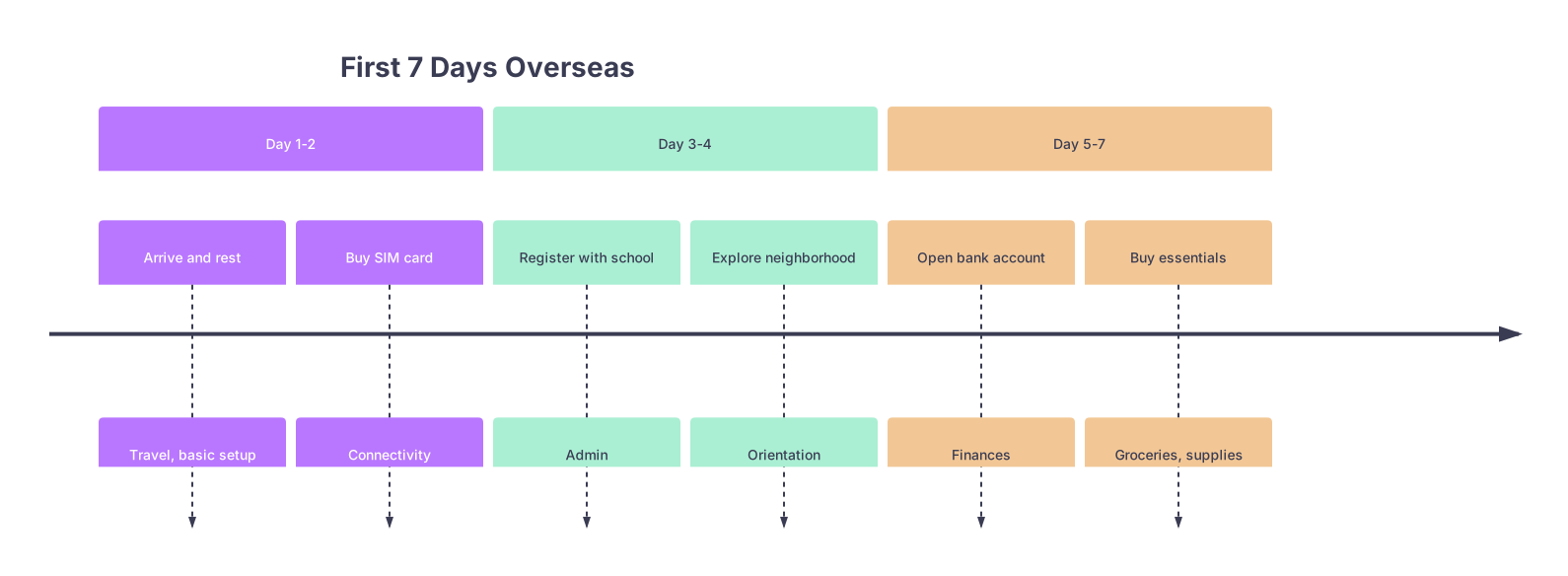
| Period | Event |
|---|---|
| Day 1-2 - Arrive and rest | Travel, basic setup |
| Day 1-2 - Buy SIM card | Connectivity |
| Day 3-4 - Register with school | Admin |
| Day 3-4 - Explore neighborhood | Orientation |
| Day 5-7 - Open bank account | Finances |
| Day 5-7 - Buy essentials | Groceries, supplies |
Write down:
- Exact address and directions from the airport to your housing.
- Backup route options if your ride falls through.
- Location and hours of:
- Nearest grocery store
- Clinic/hospital
- Pharmacy
- Campus
- Check every critical document again
- Passport, visa, acceptance letter, housing, insurance, bank cards.
- Make both digital and physical copies.
- Share the full itinerary and copies of key documents with a trusted family member.
By the end of Month −1 you should:
- Be fully packed, with bags weighed and labels attached.
- Have a clear, written plan for your first week on the ground.
- Have said your goodbyes in a way that feels more intentional than rushed.
Final Week and Final 48 Hours: Tight Checklist
Final week before departure
At this point you should be in execution mode only—no new big decisions.
- Confirm:
- Flight time, terminal, and baggage allowance.
- Airport transport on both ends.
- Print:
- Boarding passes (if available).
- Copies of key documents in a slim folder.
- Withdraw:
- A small amount of local currency (if feasible).
- Some backup cash in a major currency (USD/EUR).
Say:
- Final in‑person goodbyes.
- Clear expectations with family about communication times and frequency.
Final 48 hours
- Charge every device: phone, laptop, power bank.
- Pack:
- Snacks for travel.
- A pen for immigration forms.
- Set:
- Travel alerts with your bank and credit card companies.
- Place:
- Passport, visa folder, wallet, and phone in one dedicated spot you will not touch except to leave.
- Sleep:
- At least a few hours deliberately. Arriving half‑functional is better than arriving wrecked.
Three things to remember
- Six months is not a luxury; it is barely enough if you handle passports, visas, finances, and health correctly and on time.
- Do critical, slow, bureaucratic tasks first (passport, visa, health, housing), and leave sentimental and “nice‑to‑have” tasks for later.
- Your goal is not a perfect move; your goal is to land overseas legally prepared, financially stable for the first months, and mentally clear enough to start medical school strong.


