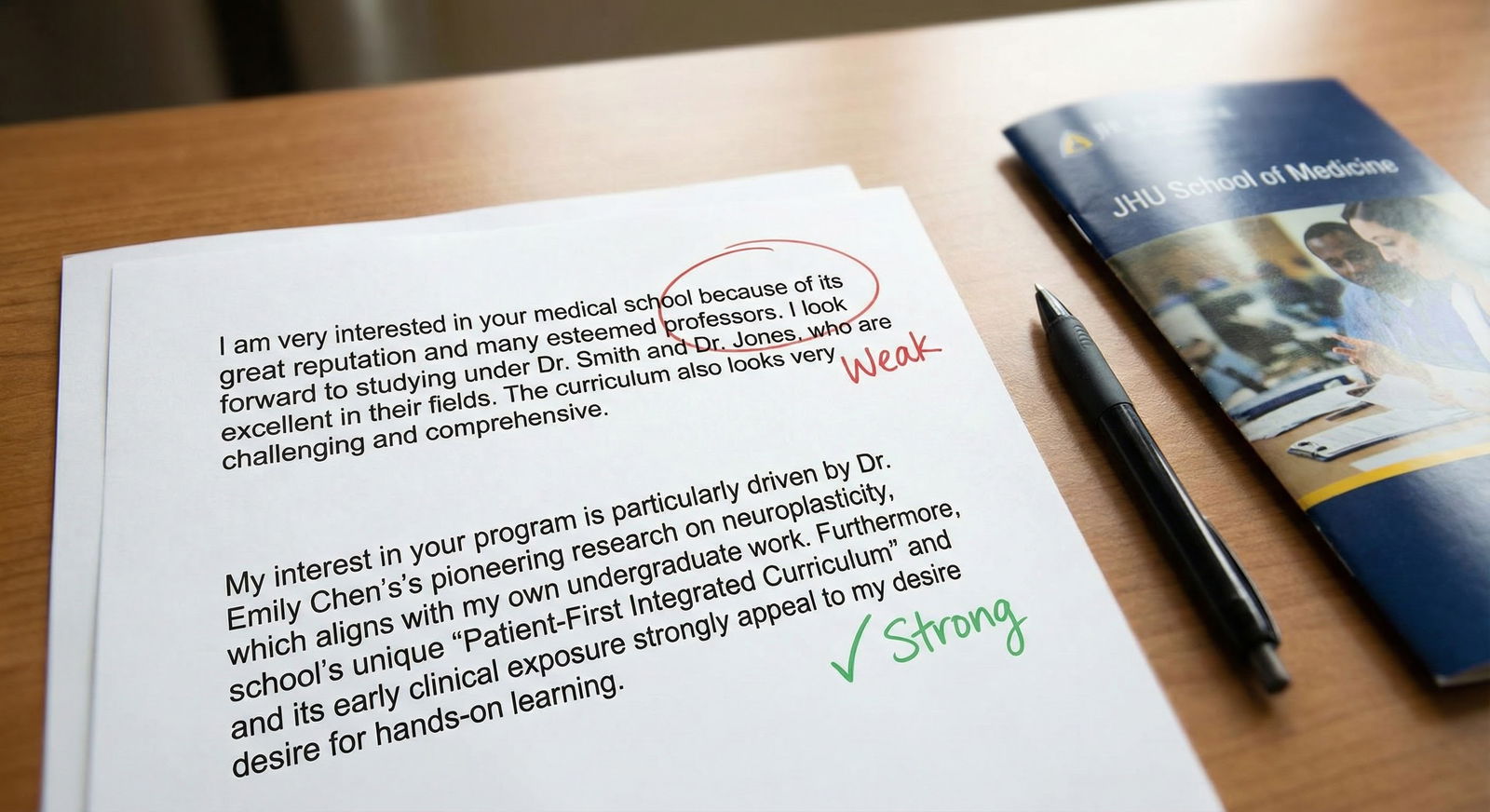
What if every other applicant told a program they were “ranking them #1”… and you didn’t say anything at all?
That’s the spiral, right? Everyone online talking about letters of intent, love letters, update letters, “signals,” “this is my top choice” emails. And you’re sitting there realizing: you didn’t send a single one. Not one “I will rank you #1.” Now your brain is like, cool, so I just sabotaged my entire future because I didn’t send extra emails?
Let me be very blunt:
No, you did not ruin your match by not sending letters of intent.
You can hurt yourself with letters if you do them badly or unethically. But not sending any? That’s not what breaks an application.
Let’s unpack this without sugarcoating it, because I know you’re not looking for fake reassurance—you're trying to figure out if you just made a fatal strategic error.
How Much Do Letters of Intent Actually Matter?
Here’s the uncomfortable truth: letters of intent sit in this weird, overhyped gray zone.
They’re not completely useless. But they’re also nowhere near as powerful as people on Reddit and GroupMe make them sound.
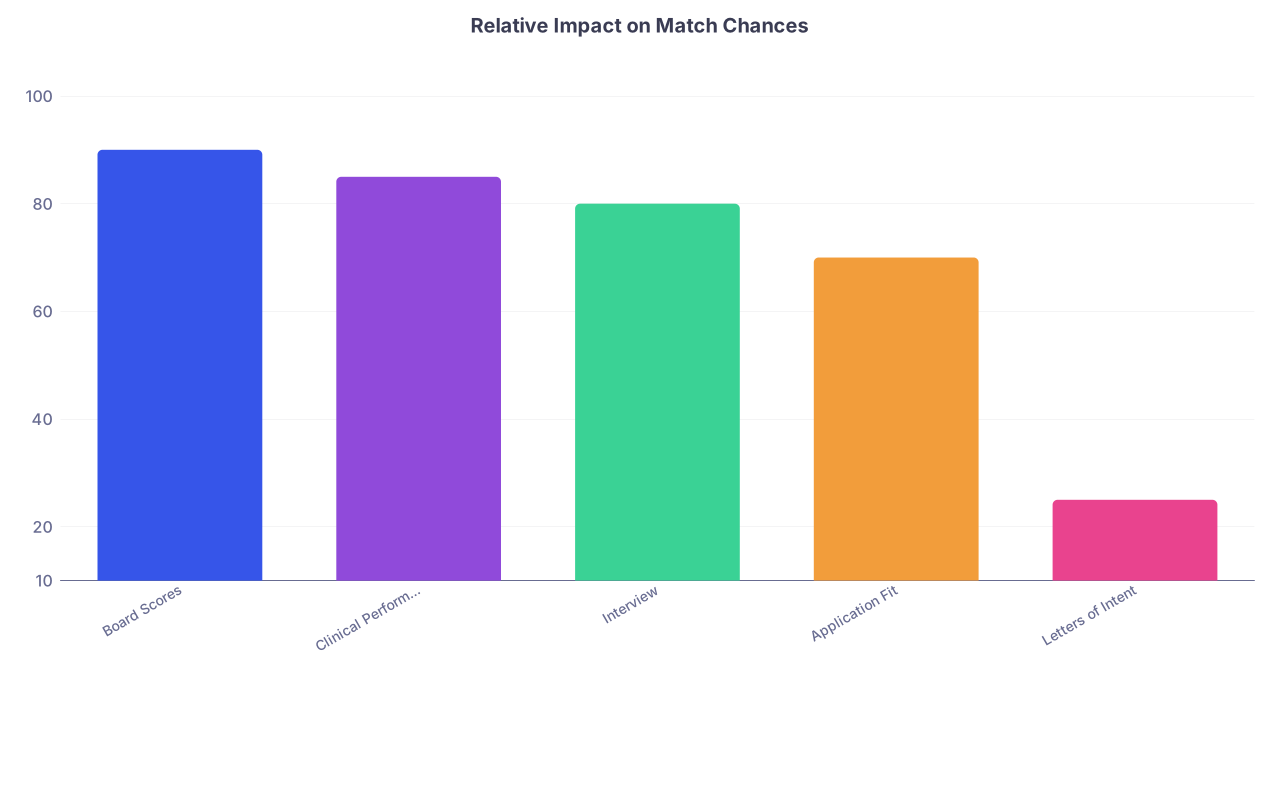
| Category | Value |
|---|---|
| Board Scores | 90 |
| Clinical Performance | 85 |
| Interview | 80 |
| Application Fit | 70 |
| Letters of Intent | 25 |
I’ve watched this play out across multiple match cycles:
- Applicants with zero letters of intent still matching at top programs.
- Applicants who wrote beautifully crafted “you’re my #1” letters… and still got ranked low or not matched there.
- Programs literally telling residents, “We don’t care about those ‘I will rank you #1’ emails; we follow our rank list process.”
Here’s the thing programs do care about:
- Your interview performance
- Your overall application (scores, clinical evals, letters)
- How well you fit what they need this year
- Whether you seem like someone they’d actually want to work with at 2 a.m.
Letters of intent? Maybe they bump you from tie-breaker #8 to tie-breaker #7. Or maybe they’re scanned once, noted generically (“interested in program”), and then the committee goes right back to the spreadsheet.
So if you’re sitting here thinking, “No letters = automatic lower rank,” that’s just not how most committees function.
The Awkward Truth: Programs Know Everyone Is Lying (Or At Least Exaggerating)
Let me say the quiet part out loud: a lot of letters of intent are fake or, at best, “strategically honest.”
“I will rank you #1.”
Sent to… multiple programs.
Programs know this. They’ve seen:
- People send “you’re my #1” to Program A… then show up in the NRMP data clearly matched at Program B they “loved more.”
- Applicants send intense love letters… then obviously rank them lower based on where they actually match.
So what happens when everyone is lying or at least heavily embellishing? The value of the signal drops.
Some programs literally say in their info sessions: “Please don’t send us letters of intent; they do not affect our rank list.”
Some read them as curiosity, some as background noise, some as minor tiebreakers at best.
Not sending one doesn’t label you as disinterested. It labels you as… normal. Or busy. Or someone whose home advisor said, “You don’t need to play that game.”
You are not automatically behind people who sent them.
“But What If My Silence Looked Like Disinterest?”
This is the core fear, right?
That PDs sat around a table with a list of names and someone said:
“Hmm, Candidate A sent us a letter of intent. Candidate B didn’t. Let’s bump B down because they didn’t send us an email.”
That’s just not how ranking works in almost every program I’ve seen or heard about.

| Step | Description |
|---|---|
| Step 1 | Interview Completed |
| Step 2 | Faculty Scores and Comments |
| Step 3 | Committee Discussion |
| Step 4 | Preliminary Rank Order |
| Step 5 | Look at Fit, Red Flags, Maybe Communication |
| Step 6 | Finalize Rank List |
| Step 7 | Ties or Unclear? |
The “maybe communication” step? That’s where a letter might matter. And even then, it’s one tiny thing among a lot of other, heavier stuff.
You know what actually looks like disinterest to a program?
- You seemed bored or disengaged on interview day.
- You complained about other programs.
- You clearly didn’t know anything about their program when they asked what drew you there.
- You talked over residents or came off arrogant.
Your silence after interviews? That doesn’t scream disinterest. It often just screams “very normal applicant.”
The people who obsess about letters of intent the most are usually applicants. Not PDs.
Common Worst-Case Scenarios You’re Probably Replaying In Your Head
Let me guess which ones are running on repeat in your brain.
1. “My top program liked me, but then I didn’t send a letter and someone else did, so they ranked that person higher.”
Could that happen in some one-off, super close tie? Maybe.
Is it happening systematically across multiple programs? No.
If a program truly loved you—faculty all gave you high marks, residents said you’d be an awesome fit—they’re not bumping you down for not sending a “you’re my #1” email. They care way more about actual performance and fit than email volume.
2. “Programs think I’m not serious about them.”
If a program needs you to send an extra email to know you care, they’re ignoring everything else you’ve already done:
- Spending hundreds or thousands to apply and travel (or prep) for interview
- Doing the interview
- Ranking them at all
Also, think from their side: applicants are ranking 10, 12, 15+ programs. They know you can’t be “absolutely 100% committed” to all of them. Mild uncertainty doesn’t offend them. They live in reality.
3. “Everyone else did it and I didn’t, so I’m behind.”
This is the classic residency application trap: assuming the loudest people online represent the norm.
Many people send zero letters. Or they send one short “thank you,” not a full-blown “letter of intent.” Lots of very strong applicants match amazingly well without any love letters.
The match is dominated by your whole application and your interview season, not by a post-interview email campaign.
Could There Be Situations Where Not Sending One Hurt You a Little?
I’m not going to pretend there’s zero possible impact in every context. There are some niche situations where a letter might help in a tiny way.
Think:
- A small program that cares a ton about people being local and staying there long term
- A field or program where they’ve explicitly said, “We’re very interested in people who really want to be here; extra communication is welcome”
- A super small rank list where they’re anxious about people matching elsewhere and a clear “you’re my #1” could reassure them
But even in those cases, it’s not, “No letter = no chance.”
It’s more like, “Letter = mild extra reassurance if they already liked you.”
You still had interviews. You still will be on rank lists. Programs still need to fill spots with actual human beings. They’re not throwing away strong candidates because those candidates didn’t send one more email.
What Actually Would Ruin Your Match? (Spoiler: Not This)
If you really want something to catastrophize about (because same), here’s the stuff that legitimately causes damage:
- Barely ranking any programs
- Leaving programs you’d actually be okay attending off your list because they’re not “perfect”
- Violating match rules or promising multiple programs you’ll rank them #1 in a way that gets back to them
- Coming across as rude, unprofessional, or uninterested on interview day
- Wild red flags in your application that were never addressed
Not sending a letter of intent doesn’t even hit the top 20 of that list.
You can match at your #1 without ever sending them a love letter.
You can send them a heartfelt “you’re my top choice” and still match at #6. I’ve seen both. Repeatedly.
“Is It Too Late To Fix This?”
Depends what “fix” means.
If you’re asking, “Can I go back in time and retroactively help my chances with letters I never sent?” No. That part’s done.
If you’re still before rank list certification and thinking about whether to send something now, here’s my honest opinion:
- A short, sincere update or thank-you email (not overdone, not “desperate energy”) is fine if you truly feel compelled.
- A last-minute “you’re my #1!” blast to multiple programs? Pointless at best and ethically sketchy at worst.
If you’re already in the waiting phase, there is nothing more to do here. The lists are either made or being finalized. Programs are not going to overhaul entire rank lists because of a last-minute email.
Your energy now is way better spent on:
- Planning where you’ll live if you match different regions
- Financial planning for potential moves
- Building a support system for match week
Not rewriting imaginary past emails.
The Future of Letters of Intent: Honestly… They’re Getting More Useless
You know how every year, there’s some new “strategy” that applicants think will be the secret key? Letters of intent used to feel like that. Then signaling tokens came along for some specialties. Preference signals. Geographic signals. All that.
Programs are overwhelmed. Their inboxes are dumpster fires of:
“I loved your program.”
“You’re my top choice.”
“I will rank you to match.”
It all blurs.
| Type of Message | Typical Program Reaction |
|---|---|
| Simple thank you | Skimmed, polite, neutral |
| Clear, honest #1 letter | Maybe noted, minor tiebreaker |
| Generic 'top choice' note | Ignored or lumped with others |
| Overly long love letter | Eye-roll, maybe mild annoyance |
Long-term? I think more programs will either:
- Officially say “we do not consider letters of intent,” or
- Use structured preference signals instead of vague, easily gamed emails
Which makes your current panic even less necessary. You’re stressing out over not participating in something that’s frankly losing value every year.
What You Can Actually Control Now
You can’t retroactively send letters. You can’t crawl into rank meetings and whisper, “By the way, they secretly loved you.” So what’s left?
Not much. And that’s both terrible and freeing.
You can:
- Make a rational, not fear-based rank list (rank in your true order of preference, not strategic guesses).
- Give yourself more options by ranking all programs where you could live and work, even if they’re not shiny.
- Plan mentally for multiple outcomes, including a less “prestigious” match or a SOAP. Not because it’ll definitely happen, but because your brain calms down when you have contingency plans.
You can’t:
- Go back and “fix” the fact you didn’t send letters of intent.
- Know which programs liked you more or less based on the vibes you’re replaying at 3 a.m.
And frankly, programs aren’t sitting there judging you for your lack of love letters. They’re too busy arguing about who seemed teachable, who seemed like a future chief, who seemed like they’d melt down under pressure.
You are not a worse candidate because you didn’t add one more performative step.
FAQ: Letters of Intent Panic Edition
1. Should I send a late “you’re my #1” letter now, right before rank lists are due?
If you’re going to send one and you genuinely mean it—and you’re okay ethically committing to that—fine, you can. But don’t expect it to dramatically change anything. And don’t send more than one “you’re my #1.” That’s how you tank your integrity for basically zero gain.
2. Will programs assume I’m less interested because I only sent short thank-you notes and no intent letters?
No. Short, normal thank-you notes are standard. Tons of matched applicants did nothing beyond that. Programs read interest in how you behaved on interview day, not in whether you joined the post-interview email Olympics.
3. Do some specialties care more about letters of intent than others?
A few smaller, community-heavy fields or super location-specific programs sometimes care more about “I want to be here long-term” signals. But even in those fields, your interview and application crush letters of intent in importance. LOIs are never the main pillar of your candidacy.
4. I matched lower than I hoped—was it because I didn’t send letters of intent?
Almost definitely not. If you matched lower, it’s usually due to a mix of competitiveness of the field, how many programs you ranked, how programs viewed your interview and file, and random match dynamics. Blaming it all on letters is a neat story your anxiety likes, but it’s rarely the real cause.
5. For future cycles, should I plan to send letters of intent next time?
If it makes you feel better and you can do it honestly, send one true “you’re my #1” letter and maybe a couple of short “very interested” notes. But don’t build your whole strategy around them. Focus on your application, your interview prep, your letters of recommendation, and your rank list. Those are the real levers.
Bottom line?
You didn’t ruin your match by not sending letters of intent. Programs rank you on your whole application and your interview, not on how many “I love you” emails you sent.
If you showed up well, applied broadly enough, and rank programs honestly, you’ve already done the heavy lifting. The rest is noise—and letters of intent are, for most applicants, exactly that: noise.