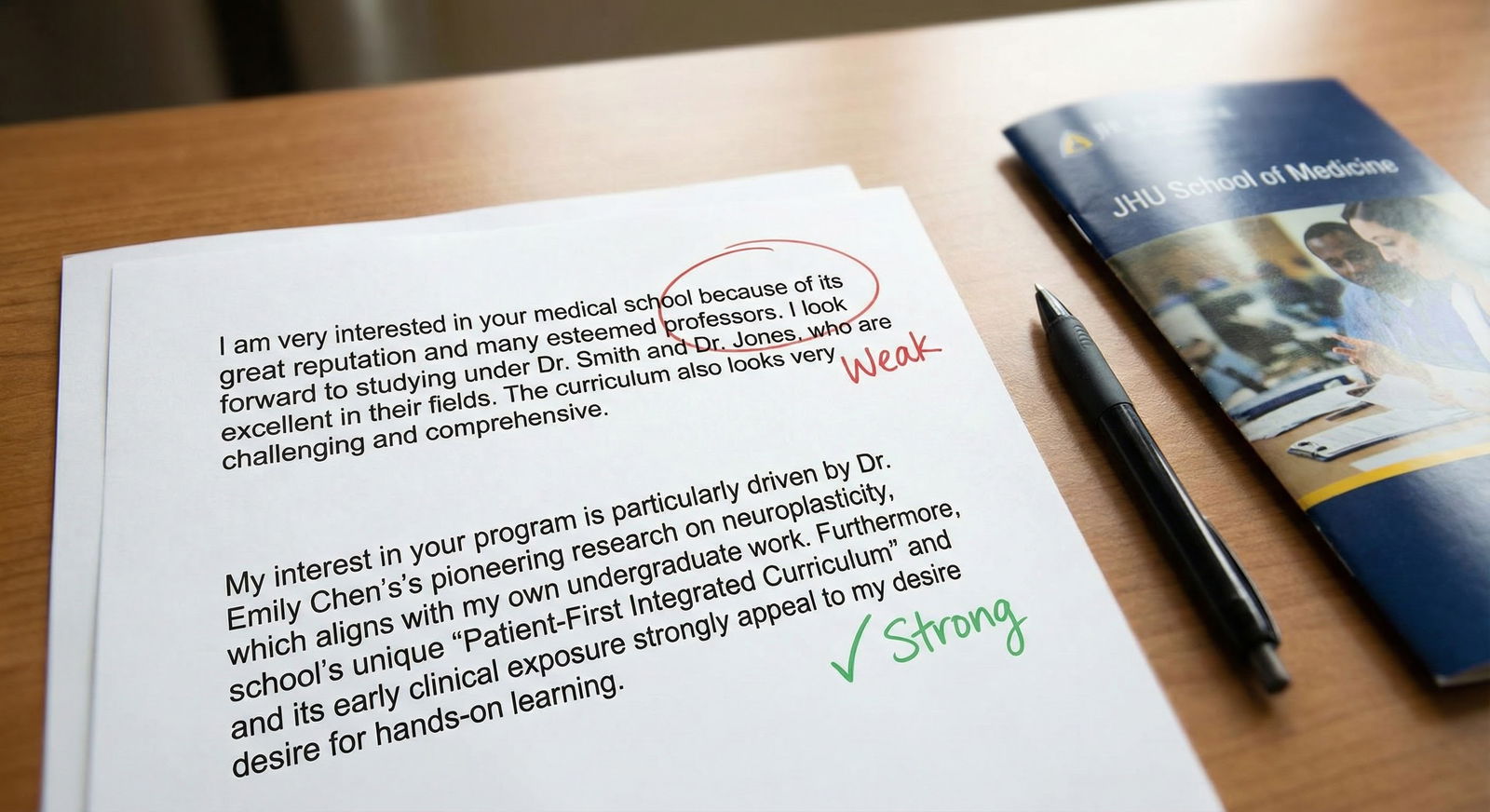
Two hours after you hit send on your letter of intent, it hits you. That program-specific project you did? The faculty member you met at a conference who said, “Email me if you apply here”? The unique reason you’d actually be a perfect fit for their health equity track? None of it is in the letter. Your stomach drops.
Now you’re staring at your Sent folder wondering if sending another email will fix it…or just make you look unhinged.
Let’s walk through this like two people who are both low‑key spiraling but trying to be rational about it.
First: How Bad Is This Really?
Let me say the part your brain doesn’t believe: forgetting a detail in your LOI almost never makes or breaks your match.
I’ve watched applicants match at places where:
- Their LOI had typos. - They never sent a letter of intent at all.
- They accidentally addressed the PD by the wrong title (still painful, still matched).
Programs don’t sit there with a red pen grading your LOI. They glance. They skim for a few things:
- Do you sound genuinely interested?
- Do you understand who they are as a program?
- Are you saying “you are my top choice” or something very close to that?
They are not cross‑referencing your LOI against your entire life story to make sure every detail is present. That’s us, at 1:30 a.m.
But your question is different: you’re not asking if it was perfect. You’re asking if you should send another one.
That’s where things get tricky.
The Core Question: Will a Second LOI Help or Hurt?
Here’s my blunt take: sending a second LOI can help in narrow, specific situations. But most of the time, it either:
- Changes nothing, or
- Slightly hurts you by making you seem frantic, disorganized, or unreliable.
Programs are very sensitive to:
- Overcommunication
- Mixed signals
- Anything that smells like “I’m also sending this exact same ‘you’re my top choice’ email to five other places”
So before you do anything, you need to diagnose what kind of “forgotten detail” we’re dealing with.
What Exactly Did You Forget?
This is where the answer really changes. Let’s break down the big scenarios.
| Scenario Type | Should You Send Another LOI? |
|---|---|
| Minor clarification / small detail | No |
| Major program-specific fit point | Maybe |
| Factual correction (non-serious) | Usually no |
| Serious error / big contradiction | Sometimes |
| New major update since LOI | Yes, but as an update email |
1. Minor detail you forgot to mention
Example:
- You forgot to mention that you grew up in their city.
- You didn’t name drop one rotation that aligns with their focus.
- You forgot to mention that you’re interested in their global health track.
This is not LOI‑resend territory.
You can live with this. Programs are looking at your entire application, not just this one email. Your ERAS, personal statement, experiences, and interview impressions carry way more weight than a side note you wished you’d added.
Sending another LOI just to wedge in: “Also I’m very interested in your global health track, I forgot to say this earlier” does not move the needle. It only:
- Adds another email they have to track.
- Risks you looking overly intense or anxious.
Verdict: Do not send a second LOI for this. You’re uncomfortable, not doomed.
2. Major program‑specific fit point you truly care about
Example:
- You actually did a research project that directly involved that institution or one of their faculty.
- You rotated there as a visiting student and forgot to clearly tie specific experiences to your interest in the program.
- You have deep, personal ties to the city that directly impact your likelihood of ranking them highly (partner job, family caregiving responsibilities, immigration/visa stability).
This might be worth a carefully framed follow‑up. But here’s the nuance:
You’re not really sending “another LOI.” You’re sending a short, calm clarification or update that adds context without contradicting anything you already said.
Something like:
Subject: Brief Follow‑Up – [Your Name], [Specialty] Applicant
Dear Dr. [PD Last Name],
Thank you again for the opportunity to interview at [Program Name]. I wanted to briefly follow up on my previous email to share one additional piece of context that I realized I hadn’t clearly expressed.
One of the reasons I’m especially drawn to [Program] is [very specific, concrete program‑fit point: e.g., “my prior work with Dr. X on Y, which aligns closely with your Z initiative” or “my partner’s job/family commitments in [city], which make [Program] not only my top choice academically but also the best fit for our long‑term stability”].
I appreciate your time and consideration.
Sincerely,
[Name], AAMC ID [XXXXX]
Key thing: you’re not re‑declaring your love. You’re adding one key fact you genuinely feel the PD would reasonably want to know when building their rank list.
If what you “forgot” is basically “I wanted to say I really, really, really like you,” that doesn’t justify another message.
Verdict: Maybe. Only if:
- The detail is truly significant to your commitment/fit, and
- You can say it once, concisely, and then stop.
3. Factual mistake or inconsistency
Example:
- You wrote “you are my top choice” to more than one program and now you’re realizing that’s risky.
- You referenced the wrong track or misnamed a faculty member.
- You conflated them with another program’s feature.
This is messy, but here’s the harsh truth: sending a second email often makes it worse.
If you emailed multiple programs saying they were your “#1,” the best thing to do now is stop. Do not keep stacking emails you might regret. Many PDs assume LOIs exaggerate anyway; they’re not shocked if an applicant isn’t perfectly exclusive.
If you made a small factual error (wrong clinic name, wrong elective title) and the overall message is still clear and respectful, let it go. They’re not going line by line scoring you on accuracy like a standardized test.
The only time I’d consider a fix is if:
- The error changes the meaning of your intent, or
- It might be seen as disrespectful (e.g., calling them a different program’s name, referencing the wrong city/state).
Then you send something short and humble:
Dear Dr. [Last Name],
I realized after sending my previous email that I mistakenly referred to [incorrect item] instead of [correct thing] when describing what I appreciated about [Program Name]. I apologize for the oversight.
I remain very enthusiastic about [Program Name] and am grateful for your consideration.
Sincerely,
[Name]
You don’t need to over‑explain. Just correct and move on.
Verdict: Usually no second LOI. Maybe a brief correction if the mistake was big and obvious.
4. Serious issue: did you misrepresent something?
If what you “forgot” is actually that your LOI unintentionally misled them (e.g., you said they’re your top choice and now that’s changed; you implied a geographic tie you don’t have; you overstated a commitment) — that’s a different ethical problem.
Programs care a lot less about you forgetting a detail and a lot more about whether they can trust what you tell them.
If your situation changed (partner got a job elsewhere, big family situation, visa complications), and that significantly affects your likelihood of actually going there if matched, I lean toward honesty.
You can send a short, straightforward update:
Dear Dr. [Last Name],
I wanted to provide a brief update since my last email. Since then, [briefly describe change in circumstance]. I still hold [Program Name] in very high regard and would be honored to train there, but I also wanted to be transparent about this development.
Thank you for your understanding and for your consideration of my application.
Sincerely,
[Name]
Will this hurt your chances? Maybe. But if matching there would now create major hardship for you or your family, that reality exists whether or not you tell them. I’d rather you be honest than matched into a situation you can’t realistically handle.
Verdict: Sometimes, yes — if your initial LOI is now materially inaccurate due to a real change.
5. You Have a Genuine Update, Not Just Regret
This one’s different from “I forgot something.” This is “something new happened after I sent my LOI.”
Examples:
- You got a new first‑author publication accepted that’s directly relevant to that program’s strengths.
- You matched into a highly selective sub‑internship or leadership role you’d mentioned you were pursuing.
- You received an institutional research award.
This is not a second LOI. This is an update email, which programs generally accept, especially if it’s concrete and relevant.
Subject: Application Update – [Your Name], [Specialty] Applicant
Dear Dr. [Last Name],
I hope you’re doing well. I wanted to share a brief update to my application. Since we last corresponded, [describe update: e.g., “my manuscript on X was accepted for publication in Y Journal”]. This work builds on the discussion we had regarding [something you talked about on interview day, if applicable].
Thank you again for your time and consideration.
Sincerely,
[Name], AAMC ID [XXXXX]
This doesn’t count as doubling down on your LOI. It’s informational. Safer. More expected.
Verdict: Yes, if it’s a real, solid update. Do not fabricate “updates” just to get another email in.
Hidden Risk: You’re Probably Underestimating How Crowded Their Inbox Is
This is the part applicants forget: you are not the only person thinking, “Maybe if I send one more email…”
PDs and coordinators are drowning in:
- ERAS messages
- Thank‑you emails
- LOIs
- “You’re my #1” notes
- Clarification questions
Sending redundant or anxious‑sounding follow‑ups doesn’t usually read as “committed.” It reads as “extra work” unless the content is clearly valuable.
You want any additional communication to be:
- Rare
- Purposeful
- Easy to skim
- Obviously adding something new and important
If your gut email draft starts with, “I just wanted to clarify…” or “I realized after sending my last email that I forgot to say…” and then launches into a paragraph of more feelings rather than new facts — that’s usually your sign to stop.
Mini Reality Check: Does Any of This Move the Rank List Needle?
Hard truth: a second LOI is almost never the thing that moves you up or down significantly on the rank list.
You know what matters more?
- How you interviewed
- Your letters of recommendation
- Your board scores (still, sadly)
- Your clinical grades and reputation
- How well they think you’ll function on their team at 3 a.m.
Letters of intent are seasoning. Not the main dish. An extra shake of salt doesn’t fix a burned entrée, and missing one shake doesn’t ruin a solid one.
I’ve seen people match at their “top choice” without a LOI. I’ve seen people send the most beautifully crafted LOIs I’ve ever read…and not match there. Programs are building a class, not handing an award to the best love letter.
That doesn’t mean your letter was pointless. It just means it’s one small signal in a noisy system. You forgetting one detail is not the catastrophe your brain is making it.
If You Decide Not to Send Another LOI: How Do You Live With It?
Because that’s honestly the bigger problem. Not the letter. Your brain.
Here’s the reframe that usually helps:
You’ve already done something most applicants never do — you clearly told a program you’d be thrilled to train there. That signal is already in their hands. The marginal gain from tinkering with it is tiny compared to the emotional energy you’re burning.
So the move now:
- Commit that you will only email a program again if you have a real update or a truly significant correction.
- Save your emotional energy for the part you cannot control: waiting.
- Let yourself be imperfect. Everyone’s application has some “I wish I’d…” moment.
You don’t need to win this process by micromanaging every sentence. You need to be good enough, consistently, across years of work. You’ve already done that. That’s why you got the interview in the first place.
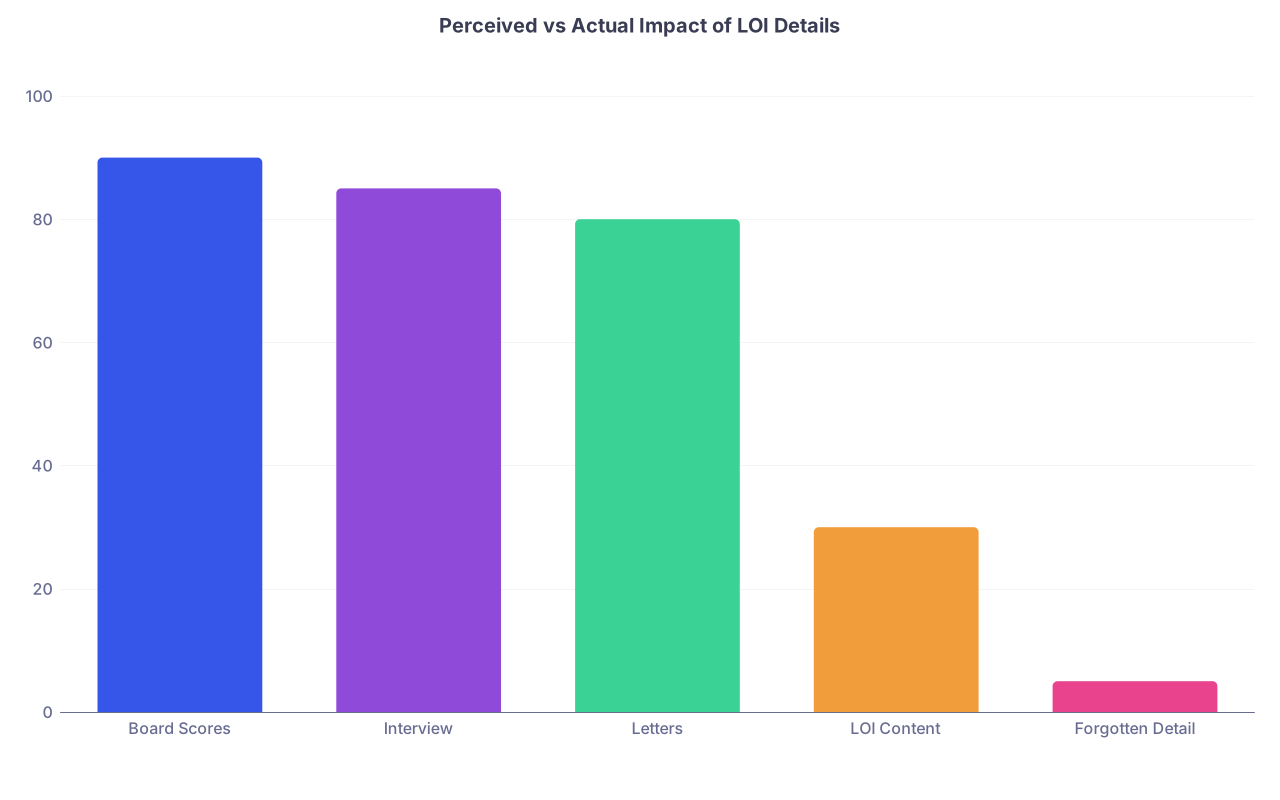
| Category | Value |
|---|---|
| Board Scores | 90 |
| Interview | 85 |
| Letters | 80 |
| LOI Content | 30 |
| Forgotten Detail | 5 |

| Step | Description |
|---|---|
| Step 1 | Realize you forgot detail |
| Step 2 | Send short update email |
| Step 3 | Do not send another LOI |
| Step 4 | Send brief correction |
| Step 5 | Is it a major new fact or update? |
| Step 6 | Does it fix serious error? |
FAQs
1. Will sending multiple LOIs to the same program hurt my chances?
It can. One thoughtful LOI plus one necessary follow‑up (true update or real correction) is usually fine. But three, four, five “just wanted to add…” emails make you look anxious, impulsive, or unable to let things go. PDs don’t want to wonder if you’ll be like that as a resident when things are stressful. When in doubt, err on sending less, not more.
2. What if I told more than one program they’re my “#1 choice”?
This happens more than people admit. Do not send more emails trying to “fix” it unless something truly changed. At this point, you can’t cleanly undo it. Programs know applicants aren’t always completely exclusive with LOIs, and many PDs already assume these letters are…let’s say “optimistic.” Focus on building an honest rank list for yourself now instead of trying to retroactively repair the optics.
3. Is it okay to change my mind after I’ve already sent a LOI saying they are my top choice?
Yes, because life is messy. If your change of heart is minor (“I now slightly prefer Program B over A but would still be happy at A”), you don’t need to send anything. If it’s a huge swing due to a major life change, and there’s a real chance you wouldn’t actually want to match there anymore, I lean toward a short, honest update. It might cost you, but matching where you truly don’t want to be is worse.
4. How long should a follow‑up or correction email be?
Think “phone screen,” not “personal statement.” Three to six sentences. One clear purpose. No emotional essay, no re‑arguing your whole candidacy. If you can’t explain why you’re emailing in under a paragraph, you probably don’t need to send it. PDs are reading this between clinic notes; do not give them homework.
5. I already sent a second LOI and now I’m panicking. Did I ruin everything?
Almost certainly not. You’re magnifying this in your own head because you care and you’re exhausted. Most likely, they skimmed it, thought, “Okay, this applicant’s very enthusiastic,” and then moved on. The only real mistake now would be to keep sending more. Draw a line. Tell yourself, “That’s it, I’ve said my piece,” and shift your focus to your rank list, your sanity, and remembering you are more than this one email chain.
Key points to walk away with:
- Forgetting a detail in your LOI almost never decides your match; your overall application and interview do.
- A second LOI should only happen if you’re providing a truly important new fact, serious correction, or real update — not just soothing your own anxiety.
- One solid message is almost always better than a chain of increasingly anxious ones. Send less, be clear, and then let your application do its job.