
What If I Change My Mind After Sending a ‘Top Choice’ Letter?
What if you already told a program they were your “absolute top choice” in a letter of intent… and then realized they’re actually not? Are you basically doomed, unethical, and about to get blacklisted from the entire profession?
That’s exactly the kind of thing that keeps my brain spinning at 2 a.m.
Let me just say it out loud so you don’t have to: this whole “top choice letter / letter of intent” culture is kind of a mess. There’s a ton of pressure, no real rules, weird ethics, and you’re supposed to make a near‑binding emotional commitment to a place you visited for like 8 hours.
And then what happens if your priorities change?
Let’s walk through the nightmare scenarios you’re imagining—and what’s actually realistic.
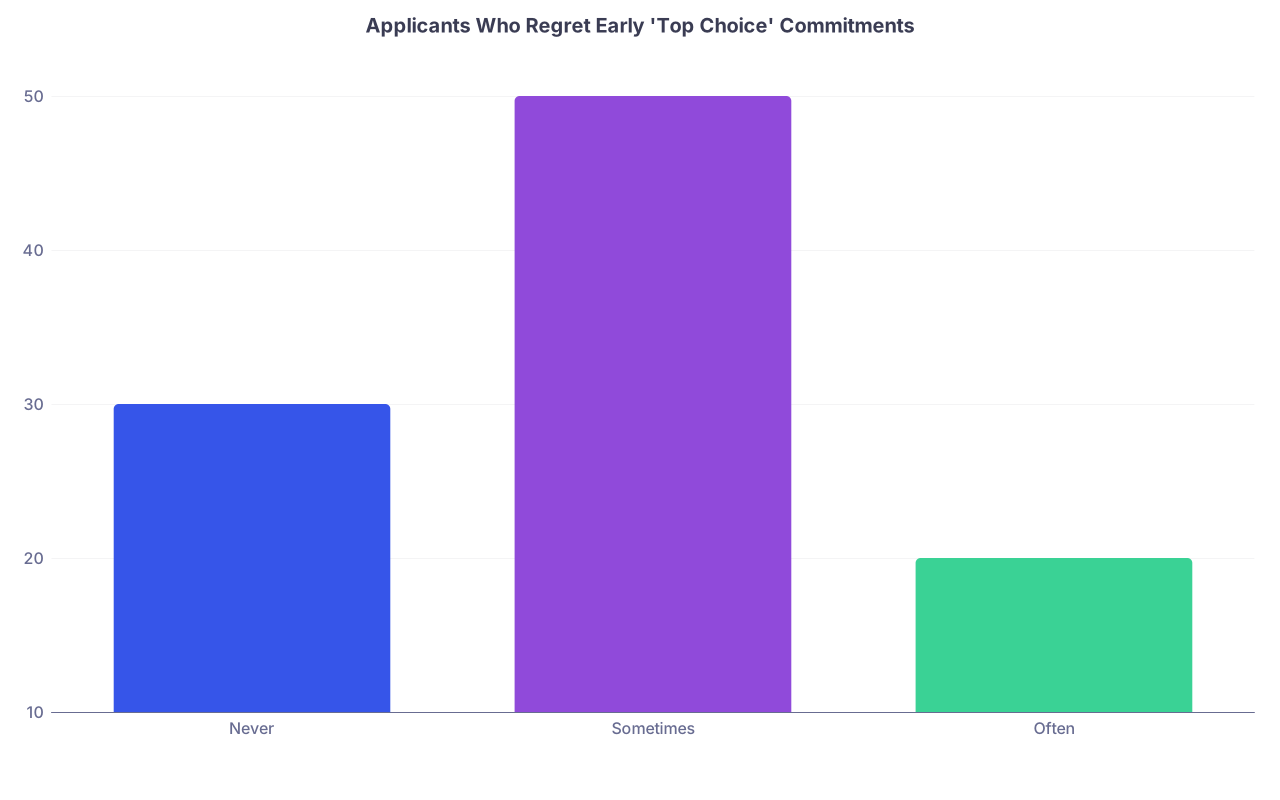
| Category | Value |
|---|---|
| Never | 30 |
| Sometimes | 50 |
| Often | 20 |
What a “Top Choice” Letter Really Means (Versus What You Think It Means)
You know what programs hear all the time?
“You’re my top choice.” “You’re my number one.” “If accepted, I will attend.” “You are my absolute favorite place in the universe and I dream in your logo colors.”
The match and med school admissions world is full of this language. People throw it around like confetti, but it sounds like a blood oath when you’re the one typing it.
Here’s the brutal truth I’ve seen over and over:
Programs know students change their minds.
They see it every year. People get unexpected acceptances, partner match issues, financial aid swings, family emergencies.Your letter isn’t legally binding.
The NRMP rules (for residency) and med school admissions ethics guidelines frown on programs coercing you. You, as an applicant, aren’t signing a contract by sending a “top choice” email. It’s not the Match; it’s not an enrollment deposit.But. It is an ethical statement.
When you say “I will rank you #1” or “I will attend if accepted,” you’re making a promise. Not legally. But professionally. And that does matter in this world.
The fear you have is basically: “If I change my mind, am I a liar and a terrible future physician?”
Not automatically. What matters is:
- how early you wrote it
- how specific you were
- what changed
- and how you handle it now

The Main Scenarios (And How Bad They Really Are)
Let’s break down the big “oh no” situations that spiral in your head.
Scenario 1: You Sent a Vague “Very Interested” Letter
Stuff like:
- “You are among my top choices.”
- “I am very interested in your program.”
- “I could easily see myself training here.”
If this is what you sent and now you’re leaning elsewhere?
You’re fine. Completely fine.
Programs get this all the time. It’s basically a “please don’t forget me” nudge. There’s no ethical trapdoor here. You don’t owe them an update saying, “Actually, you’re not among my top anymore.” They’re not expecting that level of transparency.
Your worst‑case fear here (“What if they rank me highly because I sounded really into them??”) is overblown. One mildly enthusiastic email is rarely shifting their whole rank list just for you.
Scenario 2: You Said “Top Choice” But Not “I Will Rank You #1”
Example:
- “You are my top choice and I’d be honored to train at your program.”
- “Your program is my favorite so far.”
This is where things start feeling icky when your feelings change.
Impact in real life:
- Some PDs take this kind of language seriously.
- Some literally roll their eyes because they get 50 “top choice” emails.
- Most know applicants are anxious and trying to improve odds.
If you later decide another program is your true #1, have you committed a felony? No. But you’re flirting with being sloppy with your words.
How bad is it?
- Ethically: It’s gray. Not great, not catastrophic.
- Professionally: Minimal fallout unless you blatantly contradict yourself somewhere visible (like social media or shared faculty).
Would I send a follow‑up email saying “Just kidding, not actually top choice anymore”? No. That usually causes more confusion and draws attention to something they probably didn’t take as seriously as you did.
Scenario 3: You Explicitly Promised “I Will Rank You #1”
This is the big one that’s probably chewing at your stomach.
You wrote something like:
- “I will be ranking your program #1.”
- “If offered a position, I will definitely attend.”
- “You are my number one choice and I will commit to you in the Match.”
And now… another program blew you away. Or your partner matched somewhere else. Or your family situation changed. Or frankly, you just realized you were panicking when you wrote that email.
This is where the ethics actually matter.
Is it illegal? No.
Does NRMP send a SWAT team to your apartment? No.
But could it burn a bridge if they find out? Potentially, yes.
Here’s the key: The ethical obligation is proportional to how clear your promise was and how much the program may have relied on it.
But notice: you don’t even know if they relied on it. They may have shrugged and said, “Add them to the ‘likes us’ pile.”
I’ve seen:
- people send a #1 letter to Program A, then later send an almost-identical “you are my #1” to Program B (this is straight‑up dishonest, and yes, directors talk)
- people send one sincere #1 email, later change rank because of partner match / health / family, and never hear a word about it
- a PD angry because they felt misled by a “I will rank you #1” email when the applicant clearly didn’t
So the fear is not imaginary. But it’s not automatic doom either.
| Statement Type | Ethical Risk If You Change Mind |
|---|---|
| “Very interested / strong interest” | Low |
| “Among my top choices” | Low–Moderate |
| “Top choice / favorite program” | Moderate |
| “I will rank you #1 / I will attend” | High |
Okay, But If I Change My Mind, What Do I Actually Do?
Let me split this into two buckets: before the rank list is due / decision made, and after.
Before You Submit Your Final Rank List or Decision
You’re allowed to change your mind. That’s just… being human.
If you sent a strong “I will rank you #1” email and genuinely can’t in good conscience do that anymore, you have three realistic options:
Keep your new rank list, don’t say anything.
This is what most people do. It’s also what torments you at 3 a.m.Will the program know? Only if:
- someone on faculty mentions your different decision
- they see you matched somewhere else and remember your letter
- they care enough to feel betrayed (not guaranteed)
Ethically, this is shaky, but if something substantial changed (partner match, new family situation, serious financial or health concerns), I personally think this is defensible.
Email them to clarify, briefly and politely.
This is the “rip off the bandaid” path. It feels terrifying, but can actually preserve integrity.Something like:
Dear Dr. Smith,
I wanted to update you because I previously expressed that I planned to rank your program first. Since that time, some personal circumstances have changed, and I’ve had to adjust my final rank list to reflect those new realities.
I remain very grateful for the opportunity to interview at [Program] and continue to think highly of your training and faculty. Thank you again for your consideration.
Sincerely,
[Name]Short. No oversharing. No justifications in paragraphs. Just owning the change.
Downsides:
- Awkward.
- They might be annoyed.
Upsides: - You are not secretly hoping they never notice.
- If anyone ever mentions it later, you can say you notified them.
Don’t send “I will rank you #1” emails in the first place.
I know, this is useless advice retroactively. But I’m putting it here anyway because this entire anxiety spiral usually comes from feeling pressure to play that game.Soft lesson: in the future, be careful what you promise in writing.
After You’ve Already Matched / Matriculated Somewhere Else
So Match Day or decision day happens. You end up at another program or school. The one you sent “top choice” to did not get you. Now your brain is going:
“Do they hate me?”
“Will they blacklist me from fellowship?”
“Will they remember my name and talk about me in PD group chats for years?”
Realistically?
- Most programs are busy and move on. They offered interviews to 100+ applicants. They got ghosted on love letters before. You’re not the first.
- A small fraction of PDs really care about that stuff and may remember your name for a while. But those are the exception.
Does this ruin future applications (fellowship, jobs) automatically?
No. That would require:
- them remembering you
- them having a reason to interact with you again
- them caring enough to hold a grudge
Could it ever matter?
Yes, in niche situations. Example: you later apply to that same place for fellowship and the PD absolutely remembers your “you were my #1” email and calls it out. I’ve heard of it happening. Rarely. Usually when the email was very explicit and they really believed it.
But is that common enough that you should assume your future is wrecked? No.

| Stage | Activity | Score |
|---|---|---|
| After Sending | Relief for doing something | 3 |
| After Sending | Immediate doubt | 4 |
| Waiting | Obsessively checking email | 5 |
| Waiting | Second guessing priorities | 5 |
| Changing Mind | New favorite emerges | 4 |
| Changing Mind | Anxiety about ethics | 5 |
| Outcome | Match result arrives | 4 |
| Outcome | Worry about burned bridges | 4 |
How Programs Actually Use These Letters (So You Can Stop Overestimating Them)
You’re imagining your letter of intent projected in a conference room, PD pointing at it, saying:
“See, they promised us. Rank them to match. We trust every word.”
Reality is usually much more boring.
From conversations residents have had with PDs and what’s commonly reported:
- Some programs barely look at these letters.
- Some skim them to confirm interest.
- A few really do keep track of “this person said we’re #1.”
But—even at those places—your entire rank position isn’t hanging on one email. They have committee impressions, interview scores, application strength, institutional priorities.
Could your “you’re my #1” nudge them a little up? Yeah, occasionally. Especially if they’re trying to avoid ranking people who are clearly going somewhere else.
But your brain is giving that email 1000x more power than it probably had.
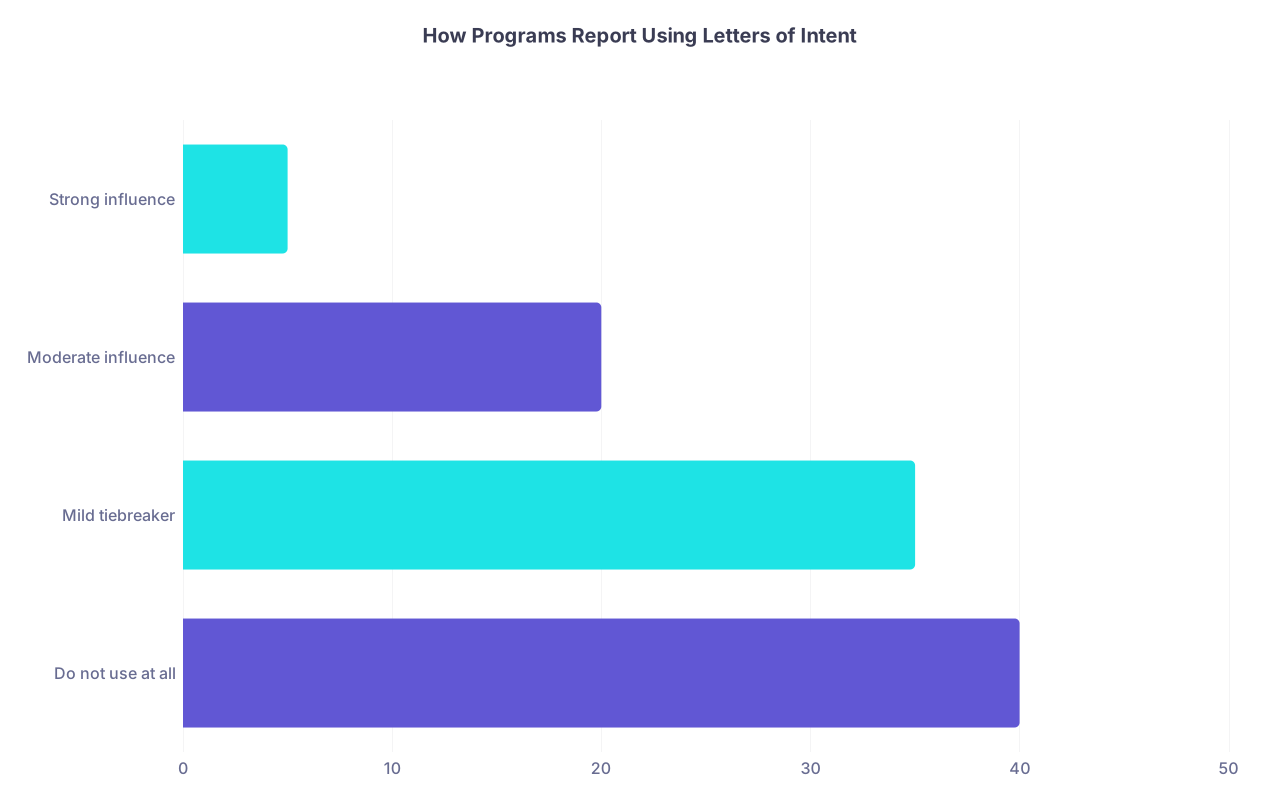
| Category | Value |
|---|---|
| Do not use at all | 40 |
| Mild tiebreaker | 35 |
| Moderate influence | 20 |
| Strong influence | 5 |
How to Avoid This Mess Next Time
I know that doesn’t help right this second, but you’re clearly the kind of person who thinks ahead—maybe a little too much, honestly.
A few rules I wish more of us followed:
Don’t promise anything you’re not genuinely ready to follow through on.
If your gut says “I think this is my #1 for now,” don’t write like it’s forever. Leave yourself space.Use softer, honest language:
- “You are currently my top choice.”
- “At this time, I plan to rank your program very highly.”
- “Your program stands out to me more than any other I’ve seen so far.”
Those words matter. They’re truthful but less absolute.
Accept that there is always uncertainty.
Things change. The system basically forces us to make “final” decisions before all information is in (like late interview offers, financial aid packages). Don’t pretend you have 100% control or knowledge. You don’t.Remember your reputation is built over years, not one email.
Your behavior as a student, resident, colleague—how you show up on the wards, how you treat nurses, your actual integrity in real situations—that’s what people really remember.
One over‑earnest email written while panicking at midnight is not the defining moment of your career.

When the Guilt Won’t Shut Up
Here’s the part that nobody says out loud: a lot of this is really about you wanting to feel like a good person.
You care about being honest. You care about keeping your word. That’s good. That’s exactly the kind of person I’d want as my doctor.
But you’re also stuck in a system that basically encourages half-truths:
- Programs send “you are highly ranked” emails to many people who won’t match there.
- Applicants send “top choice” emails to multiple places sometimes.
- Everyone dances around the fact that nobody can promise outcomes.
So you’re trying to be squeaky clean in a muddy game. No wonder your brain is melting.
If you genuinely feel sick about that email:
- Write a short clarifying note if your conscience needs it and it’s still before rank submission.
- If it’s already over and you’re matched/matriculated somewhere else, accept this as one imperfect decision in a stressful year, and commit to doing better next time.
Not “perfect.” Just better.
Because if you try to retro‑fix every anxious what‑if, you’ll never escape the loop.

FAQ: Changing Your Mind After a ‘Top Choice’ Letter
1. Can a program report me or punish me for changing my mind after a top choice letter?
In practice, almost never. There’s no formal mechanism for “this applicant said we were #1 but ranked us #3.” The NRMP is concerned with serious Match violations (like coercion or agreements outside the Match), not your panicked email wording. Could a PD privately decide they don’t like what you did? Sure. But there’s no official punishment machine for this.
2. Is it ever okay to send more than one “you’re my #1” letter?
No. I’m just going to say it bluntly: that’s lying. If you say “you are my top choice / I will rank you #1” to two different places, that’s knowingly deceptive. People do it, yes. Some get away with it, yes. But if your whole anxiety is about being ethical, this is the line: don’t do that.
3. What if I wrote “I will rank you very highly” and now I might not?
That language is squishy for a reason. “Very highly” isn’t a specific ranking position. If they end up 2nd, 3rd, even 4th, you can still reasonably say you ranked them highly. I wouldn’t lose sleep over that. That’s world’s apart from “I will rank you #1.”
4. If I tell a program they’re my #1, does it actually increase my chances?
Sometimes, but not as much as people think. For some programs, it’s a mild tiebreaker—if they’re comparing a few similar applicants, they might lean toward the one who seems very likely to come. For others, they literally don’t care. It’s never going to overcome a huge gap in interview performance or application strength.
5. Should I ever email a program to say I changed my mind about them being #1?
If you clearly, explicitly promised “I will rank you #1” and now you can’t, and it’s still before the rank deadline, I think a brief, respectful update is the most honest option—especially if the change is due to understandable reasons (partner, family, major new information). If your earlier language was fuzzier (“top choice,” “among my favorites”), I’d usually just leave it alone.
6. How do I write interest letters without boxing myself into a corner again?
Use truthful but non‑absolute language. Say things like “currently,” “at this time,” “among my very top choices,” or “I plan to rank your program very highly.” Focus more on why you like them than on numeric promises. Describe genuine fit, specific experiences on interview day, and what you’d bring to the program. You can show strong interest without tattooing “#1 forever” on your forehead.
Open the last “top choice” or interest email you sent (or drafted). Read the most absolute sentence in it. Ask yourself: “If my situation changed tomorrow, would I still be okay standing by this line?” If the answer is no, soften that sentence today.