
The most common mistake MS1s make with “research summer” is simple: they treat it like another exam block and then wonder why they hit a wall by Thanksgiving.
You are not supposed to sprint all summer. You are supposed to build a sustainable research rhythm and protect your mental health so MS2, boards studying, and ongoing projects do not crush you later.
Let me walk you through this summer chronologically—month by month, then week by week, then day by day—so you know exactly what to do when, and how to spot the warning signs that you are doing too much.
Big-Picture Timeline: How Your Summer Should Look
At this stage, you need a clear mental map. Here is the 10‑week research summer most schools give you, broken into phases.
| Phase | Weeks | Primary Focus |
|---|---|---|
| Onboarding | 1–2 | Setup, training, scoping |
| Deep Work | 3–7 | Data collection/analysis |
| Production | 8–9 | Writing, figures, abstracts |
| Transition | 10 | Handover, reflection |
And yes—built into every phase: rest, boundaries, and mental health checkpoints.
Before Summer Starts: Last 4–6 Weeks of MS1
At this point you should stop “hoping research works out” and start treating it like a real project.
4–6 weeks before: Lock the project and expectations
Do this before MS1 finals chaos truly hits.
Confirm your role and scope
- Have a 20–30 minute meeting (Zoom is fine) with your PI.
- Clarify:
- Deliverables: “By August, I expect you to…” (If your PI cannot finish that sentence, that is a red flag.)
- Time expectations: Hours per week. Typical range: 20–35 hours, not 50.
- Mode: In-person vs remote; fixed hours vs flexible.
- Ask directly: “Is there a realistic path to a poster or abstract by the end of this year?”
Get access squared away
- Submit every form now:
- IRB training (CITI)
- EMR access if chart review
- REDCap / data tools
- Statistical software (R, SPSS, Stata, Prism, Python; whatever the lab uses)
- If you wait until June, you will spend Week 1 doing nothing and feel behind.
- Submit every form now:
Clarify your summer boundaries
- Tell your PI up front:
- “I will be treating this as 30 hrs/week.”
- “I will not be checking email past 7 p.m. or on Sundays unless we have a deadline.”
- Reasonable PIs respect this. The ones who push back now will be worse under pressure.
- Tell your PI up front:
Mental health baseline
- Quick self-inventory:
- Sleep: average hours, any chronic deficit?
- Mood: already edging toward burnout after MS1?
- Existing therapy/psych care: keep those appointments going.
- If you are already exhausted, your goal this summer is different: 60–70% research, 30–40% active recovery.
- Quick self-inventory:
Week-by-Week Plan: 10-Week Summer Between MS1–MS2
Week 1–2: Onboarding and Building a Routine
At this point you should not be grinding 8‑hour data marathons. You are learning the system and setting the tone.
Core goals:
- Understand the project deeply.
- Set up workflows.
- Establish a sane weekly schedule.
Concrete tasks:
- Read:
- 5–10 key papers your PI or mentor suggests.
- The existing protocol or draft manuscript if it exists.
- Training:
- Finish CITI / HIPAA modules.
- Learn lab/clinic workflows: how charts are pulled, how data are logged.
- Mini-milestones:
- By end of Week 1: You can restate the research question and primary outcome in plain language.
- By end of Week 2: You have done a small real task (e.g., abstracted 5–10 charts, cleaned a small data subset, drafted a background paragraph).
Structure your week (sample 30-hour week):
- 4 days x 6 hours research
- 1 day “light” (2–3 hours admin / reading)
- 2 days fully off
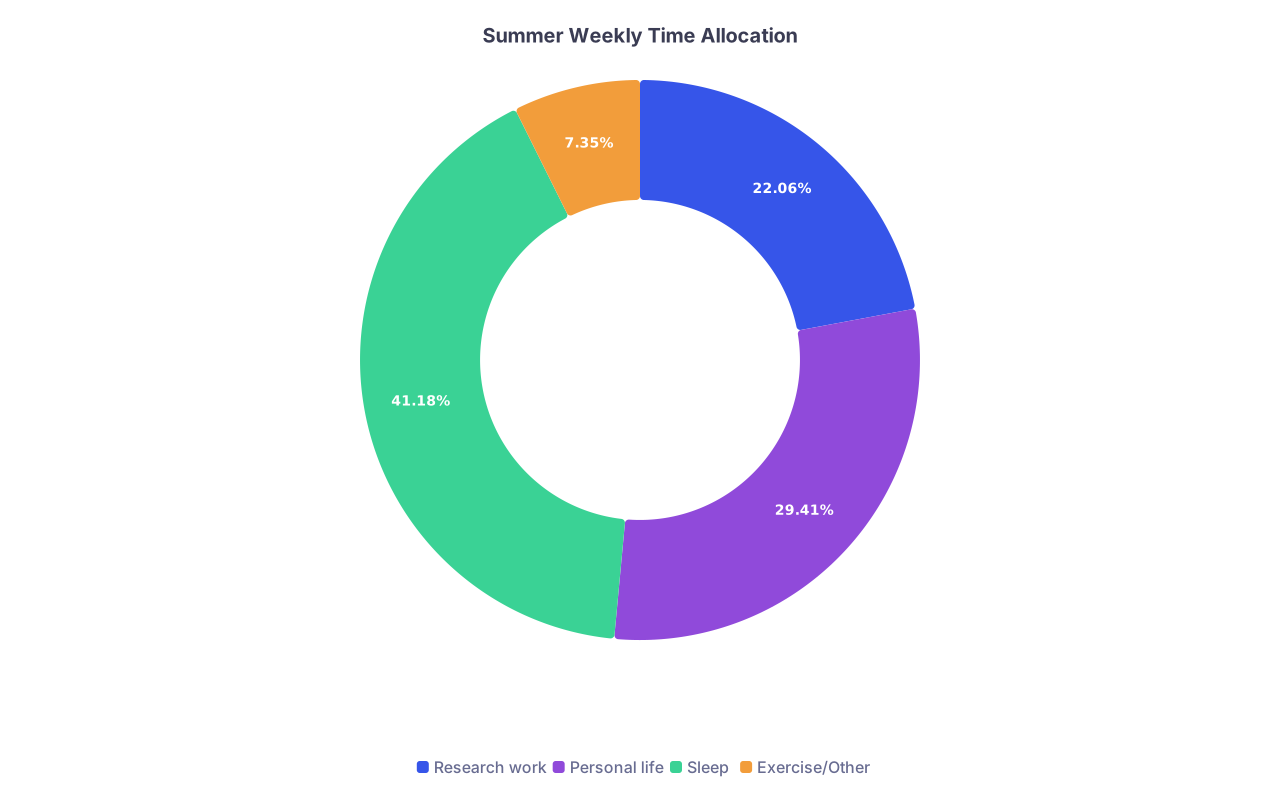
| Category | Value |
|---|---|
| Research work | 30 |
| Personal life | 40 |
| Sleep | 56 |
| Exercise/Other | 10 |
Mental health checkpoint (end of Week 2):
- If you already feel:
- Dread opening your laptop.
- Guilt when you stop working.
- Pressure to “always be available”.
- Then you need to reset expectations with your PI now, before habits harden.
Script: “I want to be consistent and productive. For me that means ~30 hours/week with evenings and one day off to avoid burnout. Here is the schedule I plan to follow…”
Week 3–5: Deep Work – Data, Code, or Chart Review
This is the engine of your summer. At this point you should be in a predictable rhythm.
Primary goals:
- Make measurable, trackable progress.
- Start producing something future you can build on (clean datasets, analysis scripts, figures).
Your weekly structure should now look like:
- M/T/Th: 5–6 hours focused data/analysis work.
- W: 3–4 hours + lab meeting / check-in.
- F: 4–5 hours + weekly review.
- Sat or Sun: completely off. Non-negotiable.
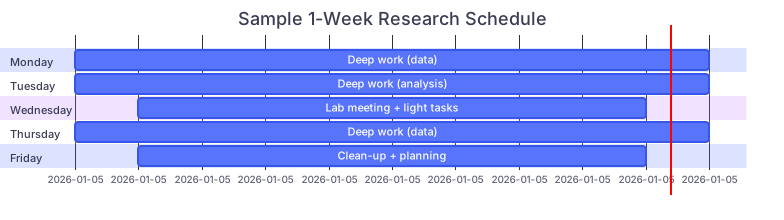
| Task | Details |
|---|---|
| dateFormat HH | mm |
| Monday: Deep work (data) | 08:30, 5h |
| Tuesday: Deep work (analysis) | 08:30, 5h |
| Wednesday: Lab meeting + light tasks | 09:00, 4h |
| Thursday: Deep work (data) | 08:30, 5h |
| Friday: Clean-up + planning | 09:00, 4h |
Daily focus (Weeks 3–5):
- 1–2 blocks of true deep work:
- 90–120 minutes each.
- Phone in another room.
- Email closed.
- 1 block of “light work”:
- Formatting, literature searching, organizing spreadsheets, updating notes.
End-of-week mini deliverables:
- Week 3: Clear written plan of your data pipeline or outline of your analysis.
- Week 4: 25–50% of your target data abstracted / initial rough analysis run once.
- Week 5: 75%+ of your target data abstracted / analysis code running without major errors.
You are not aiming for perfection here, you are aiming for momentum.
Mental health rules for this phase:
- Do not increase your hours just because “there is so much to do.”
- Symptoms you are drifting toward burnout:
- You recheck the same spreadsheet cells three times and still cannot remember what they mean.
- You feel annoyed every time your PI emails you, even if the request is reasonable.
- Your entire identity starts feeling like “I am the student who must get a publication.”
When those show up, you cut 2–3 hours from the next week and take a real day off. That is not laziness. That is lifespan extension.
Week 6–7: Analyze, Interpret, and Start Writing
At this point you should have something “real” in hand—clean data, preliminary results, or a detailed proposal if things moved slowly.
Core goals:
- Lock the primary analysis or core findings.
- Begin turning work into products: figures, tables, draft text.
Practical milestones:
- Week 6:
- Meet with mentor/PI to review initial results.
- Clarify:
- Main outcomes to highlight.
- Subgroup or secondary analyses worth doing.
- Realistic targets: abstract, poster, internal presentation, manuscript section.
- Week 7:
- Draft:
- 1–2 figures or tables.
- A rough introduction or methods section.
- A short 200–300 word abstract-style summary.
- Draft:
Weekly time balance starts to shift:
- 50–60%: analysis / data checking.
- 20–30%: writing / figure creation.
- 10–20%: meetings, literature trimming, admin.
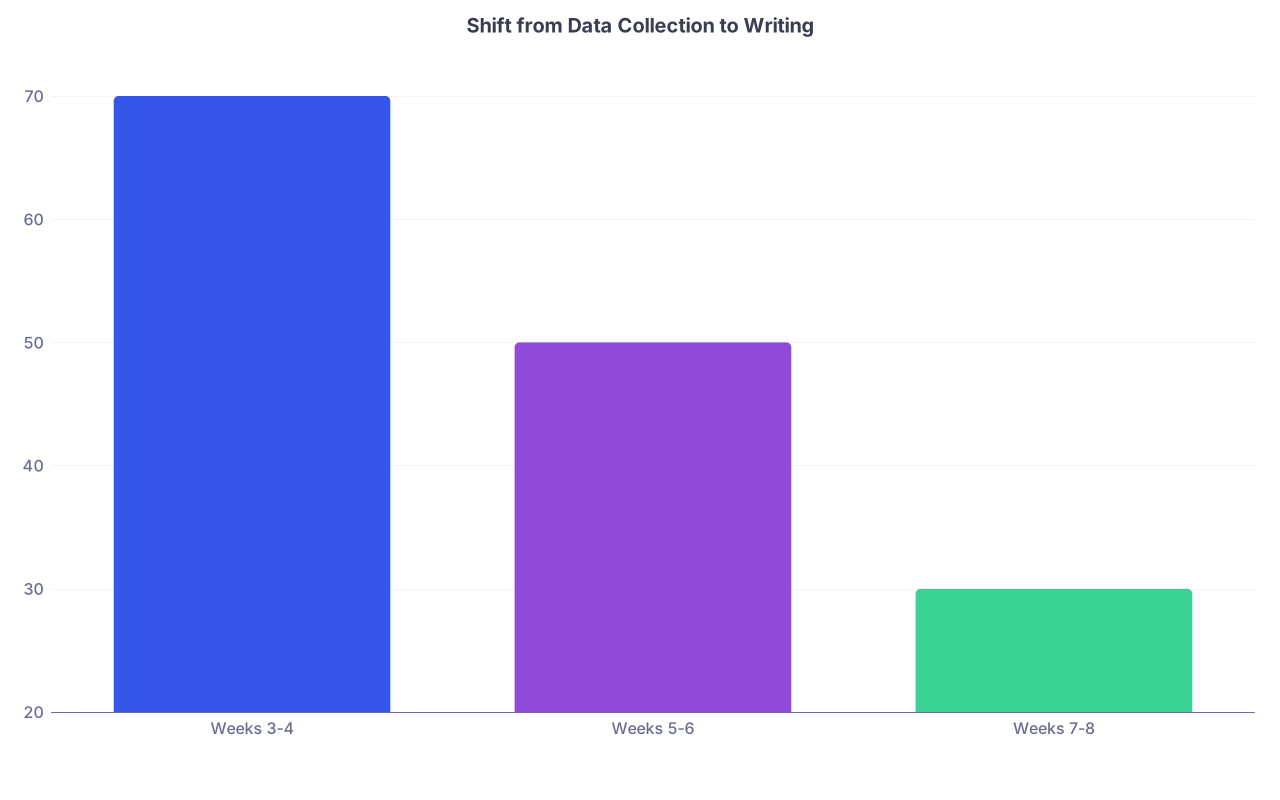
| Category | Value |
|---|---|
| Weeks 3-4 | 70 |
| Weeks 5-6 | 50 |
| Weeks 7-8 | 30 |
(Here the value is "% of time on data collection"—you want that number dropping.)
Mental health checkpoint (end of Week 7):
- Ask yourself:
- “If I stopped right now, would I have something I could hand off that is actually usable?”
- “Have I gone more than 7 days without a full day where I did zero research?”
- If the answers are “no” and “yes” respectively, you need to:
- Block a full off-day this week.
- Use one workday as a “light + planning only” day.
This phase often feels stressful because ambiguity shrinks. You now know what your results look like. This is where imposter thoughts kick in (“The data are boring, I wasted my summer”). That is normal and not a reason to burn yourself out trying to manufacture significance.
Week 8–9: Production – Posters, Abstracts, Manuscripts
At this point you should be converting work into visible outputs. Not just “doing more analyses.”
Primary targets (pick 1–2, not all):
- Abstract for:
- Your school’s research day.
- A regional specialty meeting (ACP, ACC, etc.).
- Poster draft.
- Manuscript outline and partial draft.
Week 8 to-do list:
- Lock your main story:
- 1–2 key findings.
- 1–2 secondary messages.
- Draft:
- Full abstract (even if there is no submission yet; you can adapt later).
- Basic poster layout (titles, headings, space for tables/figures).
- Get feedback:
- Send to mentor/PI by mid-week with a concrete question:
- “Does this framing match what you envisioned for this project?”
- “Are there any fatal flaws in how I am interpreting this result?”
- Send to mentor/PI by mid-week with a concrete question:
Week 9 to-do list:
- Revise based on feedback.
- Freeze at least one stable product:
- Poster PDF.
- Final abstract text.
- First-pass manuscript sections (Intro + Methods at minimum).
- Document everything:
- Where the data live.
- How to re-run your analyses.
- Unanswered questions / things left undone.
This is also when stress spikes if you have perfectionist tendencies. Set a “good enough” bar: Your summer outputs do not need to be New England Journal material. They need to be coherent, honest, and reproducible.
Week 10: Transition, Handover, and Re-Entry to MS2
At this point you should be ending, not escalating.
Goals:
- Leave the project in a state where future-you (and your PI) can pick it back up easily.
- Mentally detach enough to start MS2 refreshed, not resentful.
Concrete tasks:
Create a living handoff document (2–4 pages max)
- Sections:
- Project summary: question, dataset, primary outcomes.
- What is done:
- Data: % complete, where it is stored.
- Analysis: which scripts / analyses are final vs exploratory.
- Writing: which documents exist and where.
- What is next:
- Clear bullet points: “Run X sensitivity analysis”, “Reformat Table 2 for journal Y”.
- Outstanding issues or limitations you discovered.
- Sections:
Final meeting with your PI/mentor
- You bring:
- Handoff doc.
- List of outputs (submitted / draft).
- Draft plan for the next 6–12 months (even if it is light).
- You ask:
- “What is your expectation for my involvement during MS2?”
- “What are realistic endpoints for this project—poster only, or a paper?”
- “Can we roughly map deadlines onto my MS2/Step schedule?”
- You bring:
Mental reset before MS2
- Take at least 3–5 consecutive days with:
- No research work.
- Minimal school email checking.
- Use it intentionally:
- Sleep.
- Non-medical hobbies.
- Social things that remind you you are a human being, not just a future resident.
- Take at least 3–5 consecutive days with:
Day-by-Day Structure: How To Work Without Melting Down
Summer success is not just weeks and months. It is the rhythm of your days.
Here is how you should build a typical research day if you want to stay mentally intact.
Morning (High-Quality Hours)
At this point each day you should protect your best cognitive window.
08:30–10:30 – Deep Work Block 1
- No email first hour. Seriously.
- Choose one demanding task:
- Writing code.
- Creating a figure.
- Abstracting complex charts.
- Drafting introduction or methods.
10:30–11:00 – Break
- Leave the work area.
- Short walk, stretch, snack. No “just one email.”
11:00–12:30 – Deep Work Block 2 or Light Work
- If your brain is still sharp:
- Continue a second focused task block.
- If you feel mushy:
- Literature search.
- Organizing references.
- Cleaning up notes.
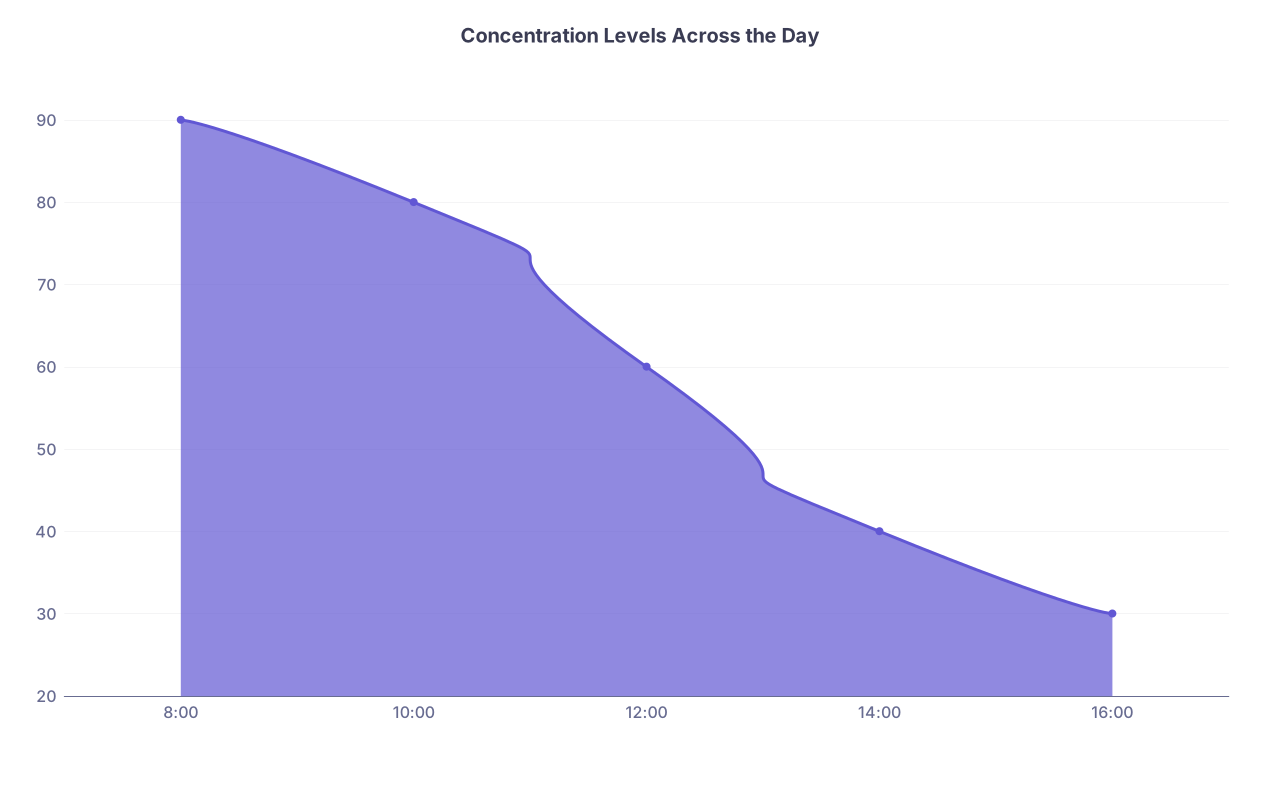
| Category | Value |
|---|---|
| 8:00 | 90 |
| 10:00 | 80 |
| 12:00 | 60 |
| 14:00 | 40 |
| 16:00 | 30 |
(Most students’ cognitive performance looks roughly like this. Stop fighting biology.)
Afternoon (Lower-Intensity Hours)
1–3 p.m. – Admin / Meetings / Low-Stakes Tasks
- PI meetings.
- Lab meetings.
- Reformatting tables, renaming variables, updating documentation.
3–4 p.m. – Wrap-Up and Tomorrow Planning
- 15–20 minutes:
- Write a 3–item “must do tomorrow” list.
- Note where you left off in analyses or writing.
- Then stop. Do not drag work into the evening by default.
Red Flags and Course Corrections: Mental Health Throughout Summer
You are in a risk zone. Between MS1 and MS2, a lot of students quietly fall apart while “just doing research.” Here is how to watch for that.
Weekly Mental Health Audit
Every Sunday (or your full off-day), run through this quickly:
- Sleep
- Average < 7 hours? Fix that before you touch new projects.
- Anxiety signs
- Constant rumination about “being behind.”
- Feeling like you cannot take an evening off without guilt.
- Mood
- Persistent irritability.
- Loss of interest in your non-medical hobbies.
- Dread at the thought of returning to research tomorrow.

If any of these are trending badly for more than 2 weeks, you are not “just busy.” You are on the edge of burnout. Adjust.
How To Pull Back Without Burning Bridges
You do not need a dramatic speech. You need a concrete, calm reset conversation.
Email script:
“I have realized that to maintain a sustainable pace and be ready for MS2 and boards, I need to keep my research commitment closer to 20–25 hours/week for the rest of the summer. I want to make sure I still deliver something meaningful, so I propose we prioritize [X and Y deliverables] by the end of August and let go of [Z lower-priority task] unless time allows.”
Reasonable mentors will accept this. If they do not, that is data about who you are working with, not data about your worth.
After Summer: Protecting Yourself During MS2
The trap: you do a productive summer, then drag the project into MS2 as if you still have 30 hours a week.
At this point (start of MS2) you should:
- Scale research way down
- Target: 2–4 hours/week.
- Ideally one afternoon block.
- Set communication expectations
- Tell your PI:
- “This semester my main priorities are coursework and Step-related studying. I can realistically commit to [2–3] hours per week on [day/time].”
- Tell your PI:
- Attach research to specific, limited tasks
- Example:
- “Finish one poster revision before October.”
- “Submit the abstract by X deadline.”
- Not: “Keep working on the project when I have time.”
- Example:
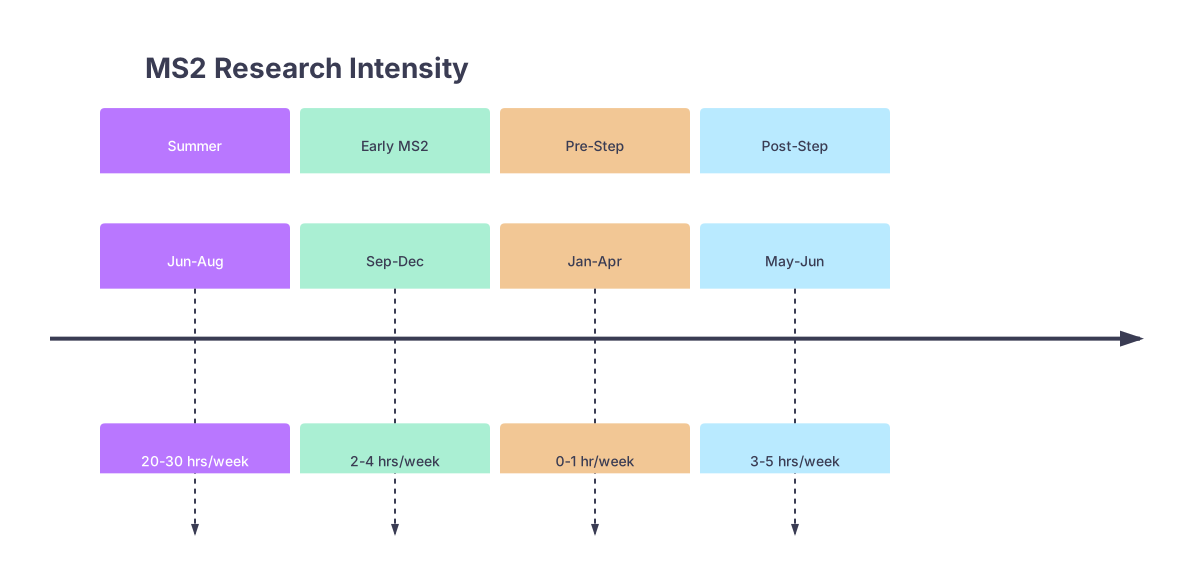
| Period | Event |
|---|---|
| Summer - Jun-Aug | 20-30 hrs/week |
| Early MS2 - Sep-Dec | 2-4 hrs/week |
| Pre-Step - Jan-Apr | 0-1 hr/week |
| Post-Step - May-Jun | 3-5 hrs/week |
If your PI wants more than this during heavy exam blocks or Step prep, you say no. Calmly. You are not a resident. You are a student with limited bandwidth.
Final Summary: What Actually Matters
Keep three things straight:
Structure beats willpower.
If you build a clear weekly and daily schedule (with real off-days), you will not need superhuman discipline to avoid burnout.Products over hours.
Judge your summer by what you created—clean data, a poster draft, an abstract—not by how many hours you sat in front of a screen.Your brain is the long-term asset.
You are not “wasting opportunity” by protecting your mental health this summer. You are making it possible to show up for MS2, Step studying, and residency applications without being half-broken already.