
The biggest legal risk new residents face isn’t a lawsuit. It’s not knowing what they’ve already agreed to.
You’ve got 4 weeks before residency starts. That’s enough time to become legally dangerous—in a good way—if you follow a tight, chronological plan. I’m going to walk you week by week, then day by day in the final stretch, through the legal and ethical essentials you actually need. Not the fluff from orientation slides. The stuff that keeps you safe when something goes sideways at 3 a.m.
Week 4 Before Residency: Get Your Foundation Straight
At this point you should stop thinking “I’ll figure it out during orientation.” You will not. Orientation is a firehose. You’ll retain maybe 10%. So this week is for big-picture legal concepts and your own paperwork.
Task 1: Read Your Contract Like a Lawyer (Or At Least Like Someone Who Cares)
Block off 2–3 hours, no phone.
Print your residency contract and mark it up:
- Highlight:
- Start/end dates
- Salary and benefits
- Duty hours language
- Moonlighting rules
- Termination clauses (“cause” vs “no cause”)
- Malpractice coverage (claims-made vs occurrence)
- Tail coverage language
Circle anything you cannot clearly explain in 1–2 sentences. That’s your “ask HR/legal” list.
| Clause Type | What You’re Looking For |
|---|---|
| Termination | Cause vs no cause, notice period |
| Non-compete | Geographic radius, time limit |
| Malpractice | Claims-made or occurrence |
| Moonlighting | Allowed, restricted, or banned |
| Duty Hours | Link to institutional policy |
Blunt truth: most residents never read their contract until there’s a problem. By then you’re arguing from ignorance. Do not be that person.
Task 2: Basic Legal Concepts You Must Know Cold
This week, you should understand these five concepts in plain language:
Standard of care
What a reasonably careful physician in your situation would do. Not perfection. Not “whatever my attending says.” This matters when you’re asked in court, “Why did you do X?”Negligence
Four elements:- Duty (you had a responsibility)
- Breach (you didn’t meet the standard)
- Causation (that failure actually contributed to harm)
- Damages (something bad happened)
Vicarious liability
The hospital and attendings can be liable for what you do. That doesn’t mean you’re untouchable—it just means lawyers will name everyone.Informed consent
Not just a signature. It’s:- Diagnosis/problem
- Proposed intervention
- Material risks/benefits
- Alternatives (including doing nothing)
- Who is doing the procedure
-
- Capacity: clinical determination (you make this)
- Competence: legal finding (a judge makes this)
If you cannot explain these to a co-intern over coffee, you’re not done yet.
Task 3: Know Your Malpractice Coverage
By the end of this week you should be able to answer:
- Do I have claims-made or occurrence coverage?
- Who provides tail coverage if I leave or switch programs?
- What’s the process if I’m named in a claim?
If your contract is vague, email GME or HR and ask—politely, but directly.
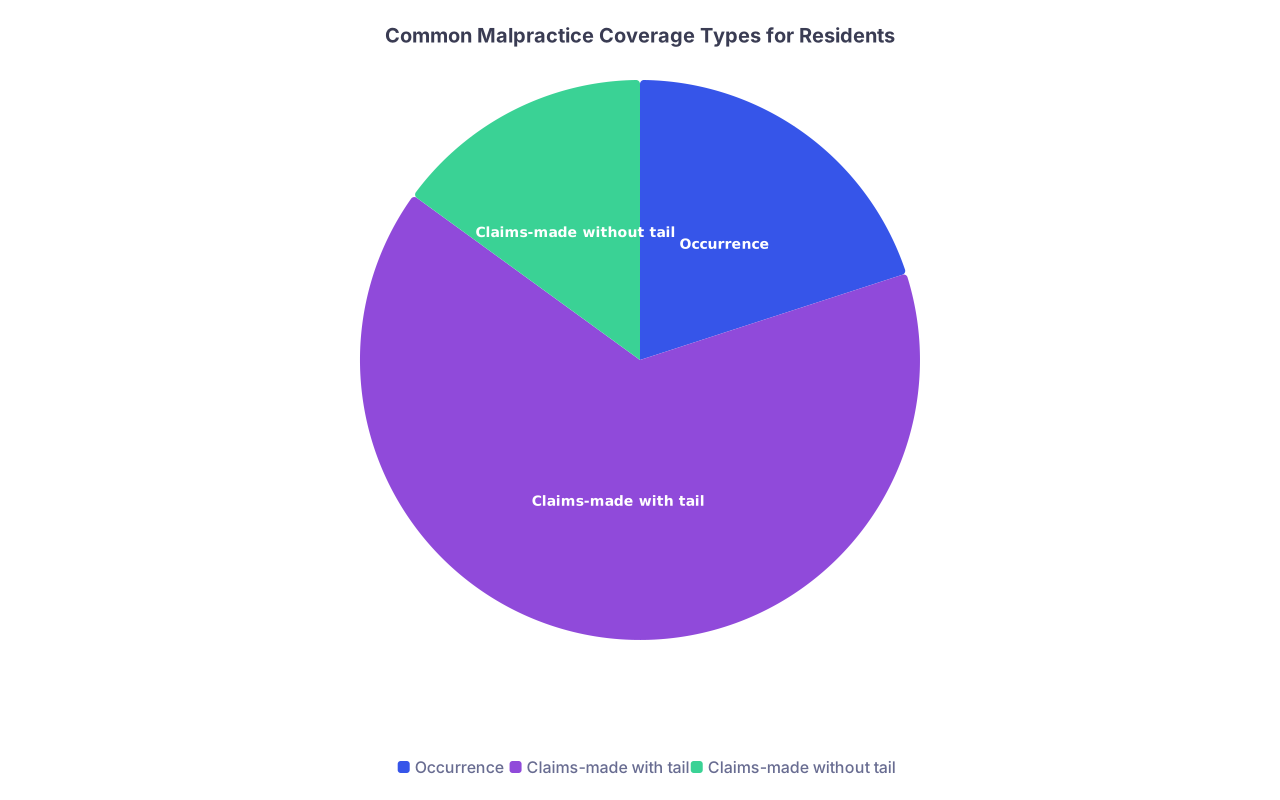
| Category | Value |
|---|---|
| Occurrence | 20 |
| Claims-made with tail | 65 |
| Claims-made without tail | 15 |
If they tell you “Residents don’t need to worry about that,” that’s a red flag. You still document the answer.
Week 3 Before Residency: Patient Rights, Consent, and Documentation
At this point you should pivot to the legal side of bedside work: what you say to patients and what you write in the chart.
Task 1: Informed Consent—How It Actually Fails
This week, focus on the scripts you’ll use.
By the end of Week 3 you should be able to:
- Get consent for:
- Central line placement
- Paracentesis
- Lumbar puncture
- Intubation (when non-emergent)
- Explain:
- Why we’re doing it
- Main risks (2–3 real ones, not a phone book)
- Alternatives
Practice out loud. Literally.
Bad: “We’re going to put in a line, sign here.”
Better: “We’re recommending a central line—a larger IV in your neck/chest—to give meds and check blood more safely. Risks include bleeding, infection, and lung injury. We can try more peripheral IVs instead, but they’re less reliable for what you need. Any questions?”
Remember: consent in emergencies is different. Document why the situation was emergent if you proceed without formal consent.
Task 2: Capacity Assessments
You’ll hear this constantly: “Does the patient have capacity?” If you hesitate, you’ve already lost time.
By end of the week, your capacity checklist should be:
The patient can:
- Communicate a choice consistently
- Understand relevant information
- Appreciate how it applies to them
- Reason about options and consequences
If 2–3 of those are shaky, you call:
- Senior resident
- Attending
- Possibly psych/ethics, depending on your hospital
Document:
- What you explained
- Their responses
- Your conclusion (“Patient lacks capacity to refuse recommended emergent surgery”)
Task 3: Documentation That Protects You
This week you also clean up your documentation habits.
You should:
- Stop copy-pasting mindlessly. Copy errors are lawsuit bait.
- Write:
- “Patient reports…”
- “I discussed…”
- “Risks and benefits reviewed including X, Y, Z…”
- Avoid:
- Blamey phrases (“nurse failed to…” “patient noncompliant without explanation”)
- Humor or sarcasm
Think: could a future jury understand what I did and why from this note?

Week 2 Before Residency: HIPAA, Social Media, and Reporting Duties
At this point you should lock down your digital footprint and understand when you’re legally required to speak up.
Task 1: HIPAA in Real Life (Not the PowerPoint Version)
By the end of this week you must know:
You can:
- Share info with providers directly involved in care
- Provide necessary info to billing/operations within the system
- Discuss cases in secure, private areas
You cannot:
- Discuss patient details in elevators, cafeterias, rideshares
- Text PHI on unencrypted platforms
- Access charts “because it’s interesting”
Simple rule: If you wouldn’t want the patient sitting behind you, do not say it.
Common traps I’ve seen:
- Opening “celebrity” charts out of curiosity
- Looking up friends/family without permission
- Group texts with patient identifiers
You get fired for this. Quickly.
Task 2: Social Media Audit
This week, you harden your online presence.
Your checklist:
- Lock down:
- TikTok
- Remove:
- Posts with patient-related stories (even if “de-identified”)
- Complaints about specific hospitals or staff
- Party photos that scream “poor judgment”
Hospital risk management absolutely looks up residents when there’s an incident. Don’t give them material.
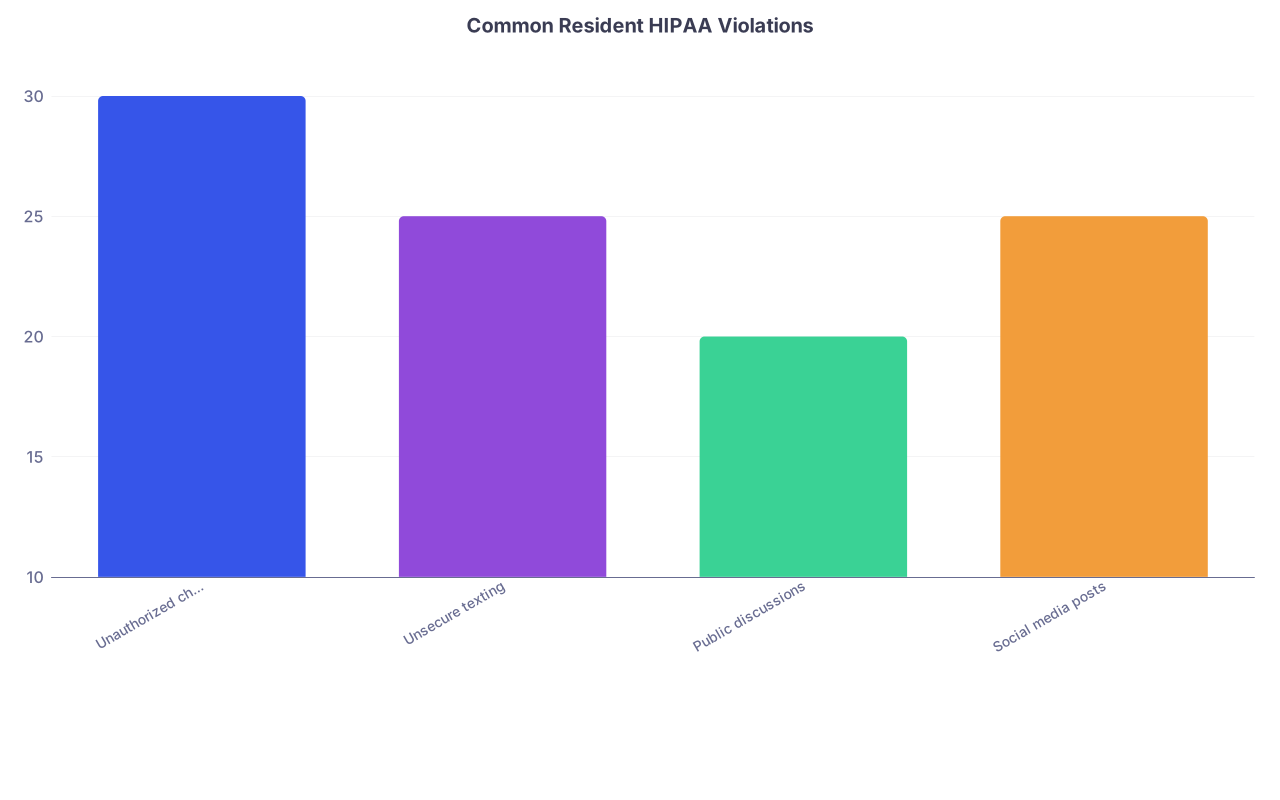
| Category | Value |
|---|---|
| Unauthorized chart access | 30 |
| Unsecure texting | 25 |
| Public discussions | 20 |
| Social media posts | 25 |
Task 3: Mandatory Reporting
By the end of Week 2 you should know, at least in your state:
What you must report:
- Suspected child abuse
- Suspected elder abuse
- Certain injuries (e.g., gunshot wounds)
- Some infectious diseases
To whom:
- Child protective services
- Adult protective services
- Public health department
- Law enforcement in specific situations
You’re not the detective. “Reasonable suspicion” is usually enough to trigger reporting duties. When in doubt: escalate to your attending and social work.
Week 1 Before Residency: Hospital-Specific Rules and High-Risk Scenarios
Now we get specific. This is the week you stop being generic and actually study your system.
Task 1: Get Your Hospital’s Policies—Now
At this point you should have or request access to:
- Institutional policies on:
- Informed consent
- Use of restraints
- Code status & advance directives
- AMA (leaving against medical advice)
- Duty hours and reporting fatigue
- Disruptive behavior/harassment reporting
Skim? No. For the following, you read carefully:
Restraints policy
- Who can order them?
- Renewal timelines for violent vs non-violent restraints
- Required documentation and assessments
AMA / refusal of care
What your institution expects you to document:- Patient’s capacity
- Risks explained
- Alternatives offered
- That they understood and still chose to leave/refuse
Code status / DNR
- How to confirm a valid existing order
- How to document code status discussions
- What counts as a valid DNR document from outside facilities
Task 2: High-Risk Night Float Scenarios
You will face these early. Better to think them through now.
By the end of this week you should be mentally rehearsed for:
The combative, intoxicated patient
- Assess capacity
- Use least restrictive measures
- Follow restraints policy to the letter
- Document threat to self/others
The AMA patient with chest pain
- Re-asses capacity
- Explain specific risks (“You could have a heart attack and die tonight. We cannot rule that out without more testing.”)
- Offer compromises (shorter stay, observation, follow-up)
- Have them sign AMA form; document your discussion
The family demanding “everything” for a clearly dying patient
- Clarify goals of care
- Use your attending and palliative care
- Document conversations and consensus—or lack of it

| Step | Description |
|---|---|
| Step 1 | Recognize high risk scenario |
| Step 2 | Assess capacity and safety |
| Step 3 | Call senior resident |
| Step 4 | Proceed per policy |
| Step 5 | Notify attending |
| Step 6 | Consult ethics or risk management |
| Step 7 | Document decision and rationale |
| Step 8 | Unclear or high stakes |
Final 3 Days: Micro-Drills, Checklists, and “What If” Plans
At this point you should stop passively reading and start active reps. Short, focused sessions.
Day -3: 30-Minute Legal Drills
Set a timer. Rotate through:
- Write a 3–4 sentence informed consent explanation for:
- Central line
- Lumbar puncture
- Write a 4–5 sentence capacity assessment note
- Write a brief AMA note template you’d be comfortable pasting and modifying on day 1
Example AMA skeleton:
Discussed recommendation for [admission / further testing] due to [specific concern]. Patient demonstrated capacity by explaining risks and alternatives in their own words. I explained risks of leaving including [X, Y, Z], up to and including death. Patient elected to leave against medical advice and signed AMA form. Encouraged to return to ED or call 911 if symptoms worsen.
Day -2: Systems Check
Your legal risk is higher when you’re scrambling with logistics. So clean these up:
- Confirm:
- Hospital access (badge, EMR login details, call room access)
- Pager or secure messaging app setup
- Prepare:
- One-page cheat sheet (physical or digital) with:
- GME office number
- Risk management / legal office
- Hospital operator
- Social work / case management
- Ethics consult line (if available)
- One-page cheat sheet (physical or digital) with:
This is who you call when you’re in over your head before something becomes a headline.

Day -1: Red-Line Scenarios and Personal Rules
The day before you start, you define your own non-negotiables. These are lines you will not cross, even if pressured.
Write down (literally, on paper):
- I will not sign that I performed a procedure I did not do.
- I will not alter the medical record after an adverse event except to add a properly dated, time-stamped addendum.
- I will not ignore a serious safety concern because “this attending doesn’t like to be called at night.”
- I will not discuss identifiable patient details on social media, even “de-identified stories.”
Then add how you’ll respond when pushed:
- “I’m not comfortable documenting that; it’s not accurate.”
- “For safety and legal reasons, I need to call the attending about this.”
- “This needs to go through official reporting channels.”
That tiny bit of pre-commitment makes it a lot easier when a tired senior says, “Just write that the line was placed aseptically, it’s what we always do.”
Week 1 of Residency: Live Execution and Real-Time Protection
Once residency starts, you’ll switch from pre-game to in-game adjustments. You won’t have a lot of free time, so you need small daily actions.
Days 1–3: Watch and Learn (But Filter Hard)
At this point you should:
- Observe:
- How seniors actually get consent
- How attendings talk through bad outcomes with families
- How serious events are documented
But—and this is key—don’t assume “common” equals “correct.”
If you see:
- Informed consent as “here’s the form, sign”
- Jokes in documentation
- Casual PHI in hallways and elevators
You mentally log: do not emulate this.
Days 4–7: Start Asking Smart Questions
You’re still new, which gives you a rare shield: you’re allowed to ask.
Use it.
Questions that make you safer:
- “For documentation, how detailed do you want the risk discussion reflected?”
- “For a patient leaving AMA with active chest pain, is there a standard approach you prefer?”
- “Who do we call here for tricky ethics issues—risk, ethics committee, or both?”

| Category | Value |
|---|---|
| Day 1 | 15 |
| Day 2 | 20 |
| Day 3 | 25 |
| Day 4 | 20 |
| Day 5 | 15 |
| Day 6 | 10 |
| Day 7 | 10 |
Fifteen to twenty minutes a day of conscious legal/ethical focus during week 1 is plenty. It compounds.
Quick Reference Timeline
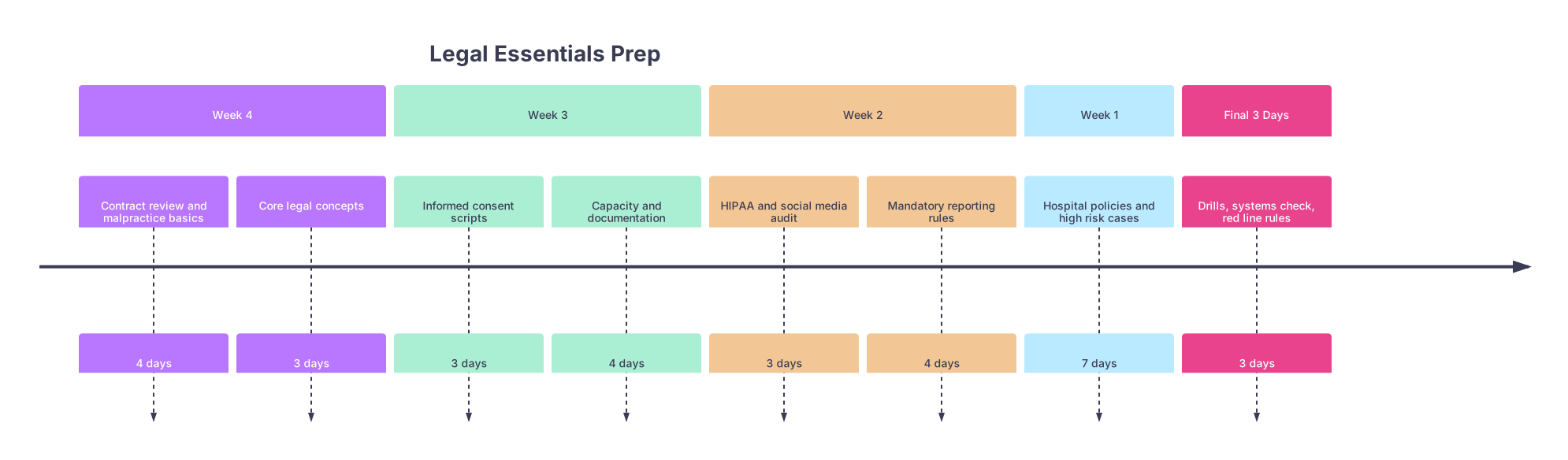
| Period | Event |
|---|---|
| Week 4 - Contract review and malpractice basics | 4 days |
| Week 4 - Core legal concepts | 3 days |
| Week 3 - Informed consent scripts | 3 days |
| Week 3 - Capacity and documentation | 4 days |
| Week 2 - HIPAA and social media audit | 3 days |
| Week 2 - Mandatory reporting rules | 4 days |
| Week 1 - Hospital policies and high risk cases | 7 days |
| Final 3 Days - Drills, systems check, red line rules | 3 days |
FAQ (Exactly 3 Questions)
1. Do I really need to worry about legal issues as an intern when attendings are “responsible”?
Yes. Attendings and institutions carry big legal responsibility, but your name will still be on the chart, on the orders, and potentially on the lawsuit. Residents absolutely get deposed. Your protection is not “the attending will handle it”; your protection is clear thinking, good documentation, and early escalation when you’re uncertain.
2. Should I buy my own malpractice insurance as a resident?
In most ACGME-accredited programs, you’re covered by the hospital or sponsoring institution. A separate personal policy is usually unnecessary and sometimes complicated. What you should do is confirm:
- Coverage type (claims-made vs occurrence)
- Tail coverage responsibility
- Whether moonlighting is covered
If you plan to moonlight outside the sponsoring institution, then a separate policy may be warranted—run that by risk management or an actual malpractice broker, not a random forum post.
3. What’s the single fastest way to get fired early in residency from a legal standpoint?
Three repeat offenders: (1) HIPAA violations, especially snooping in charts or posting about patients online; (2) Falsifying documentation—backdating notes, saying you examined someone when you did not; (3) Lying during an internal investigation. You can survive clinical mistakes if you’re honest and meticulous. You do not survive dishonesty. Ever.
If you remember nothing else:
- Read your contract and understand your malpractice coverage before day one.
- Treat informed consent, capacity, documentation, and HIPAA as core clinical skills, not side issues.
- When in doubt in a high-risk situation: escalate early, follow written policy, and document your reasoning.